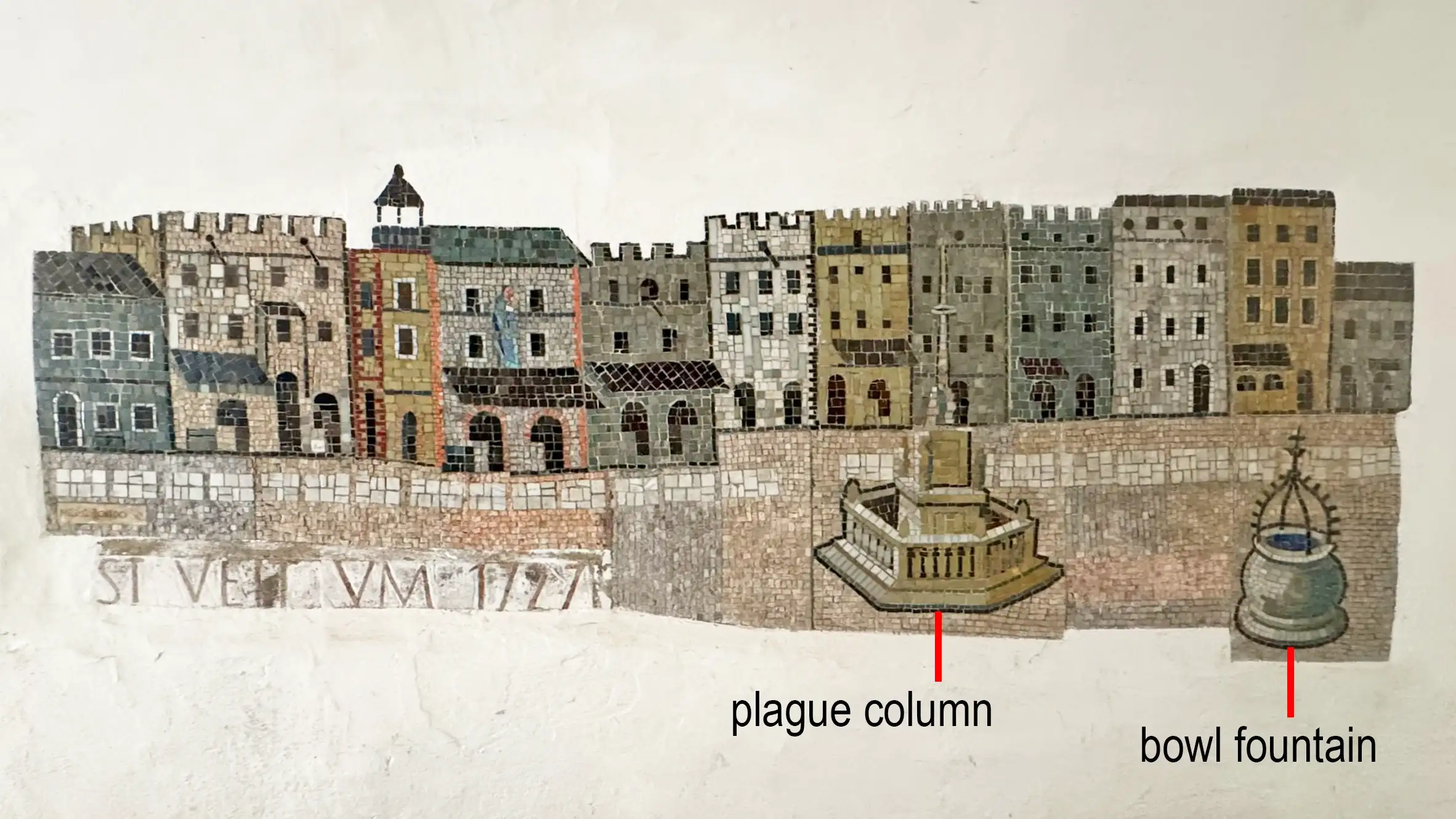
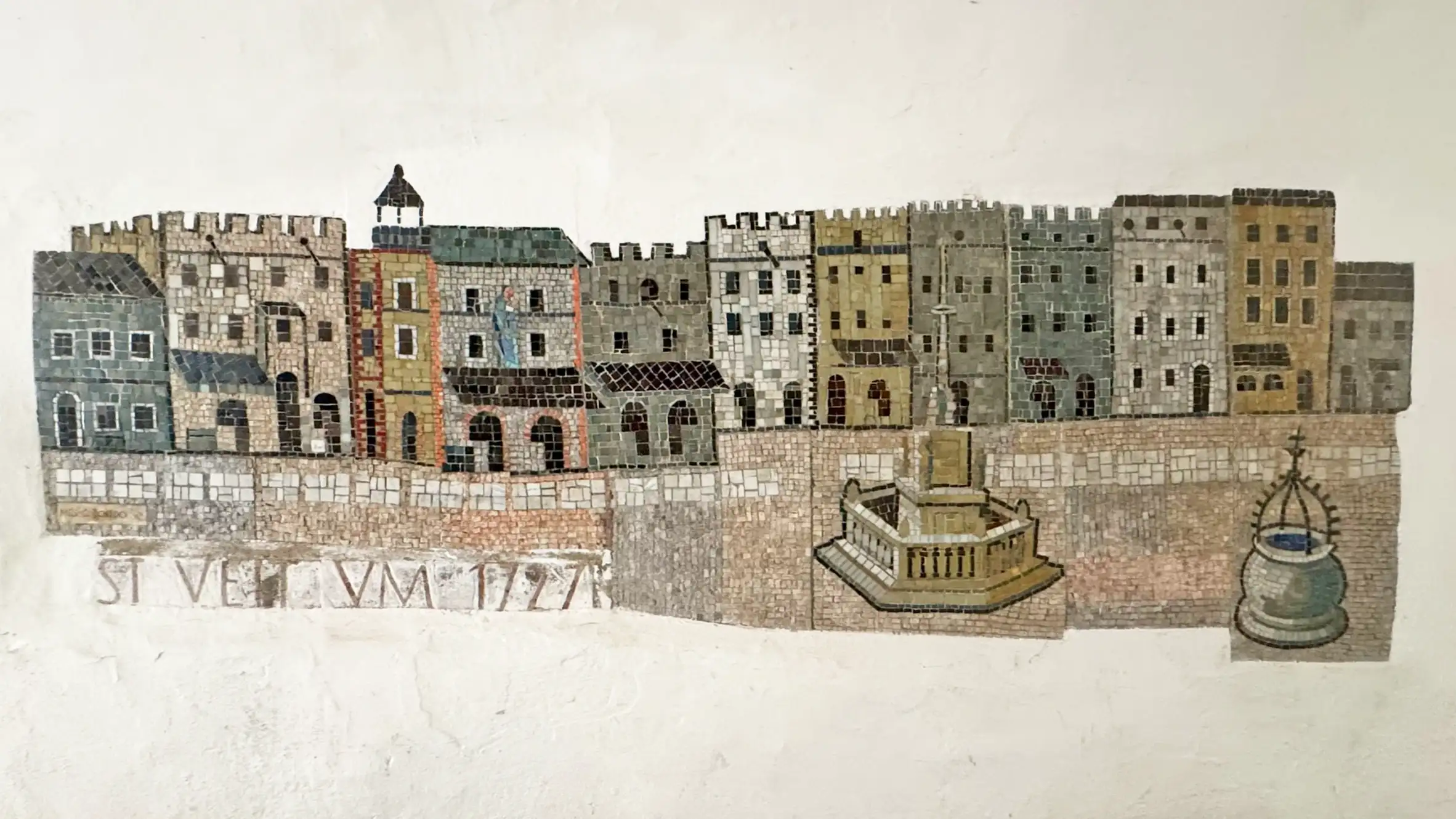
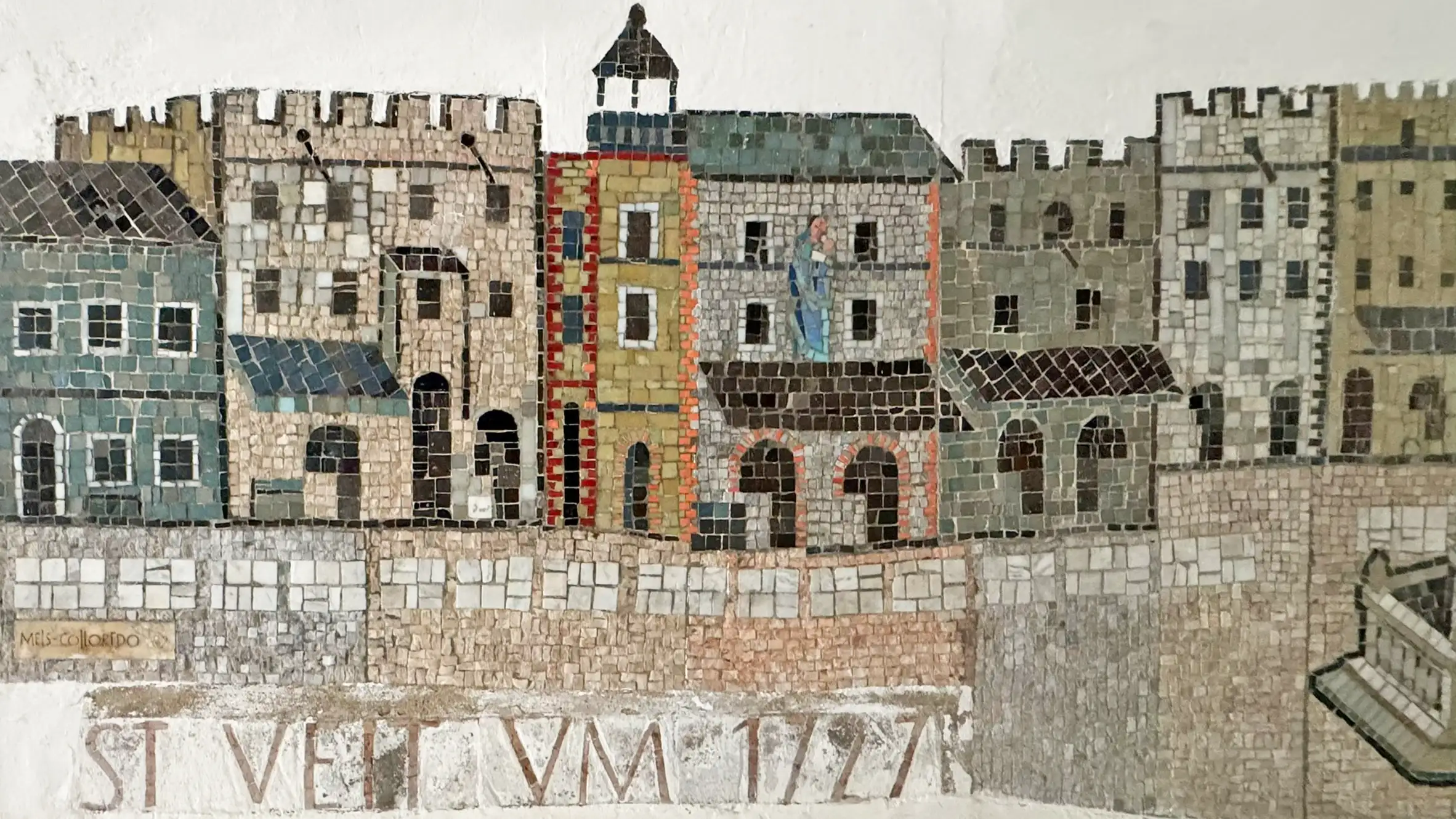
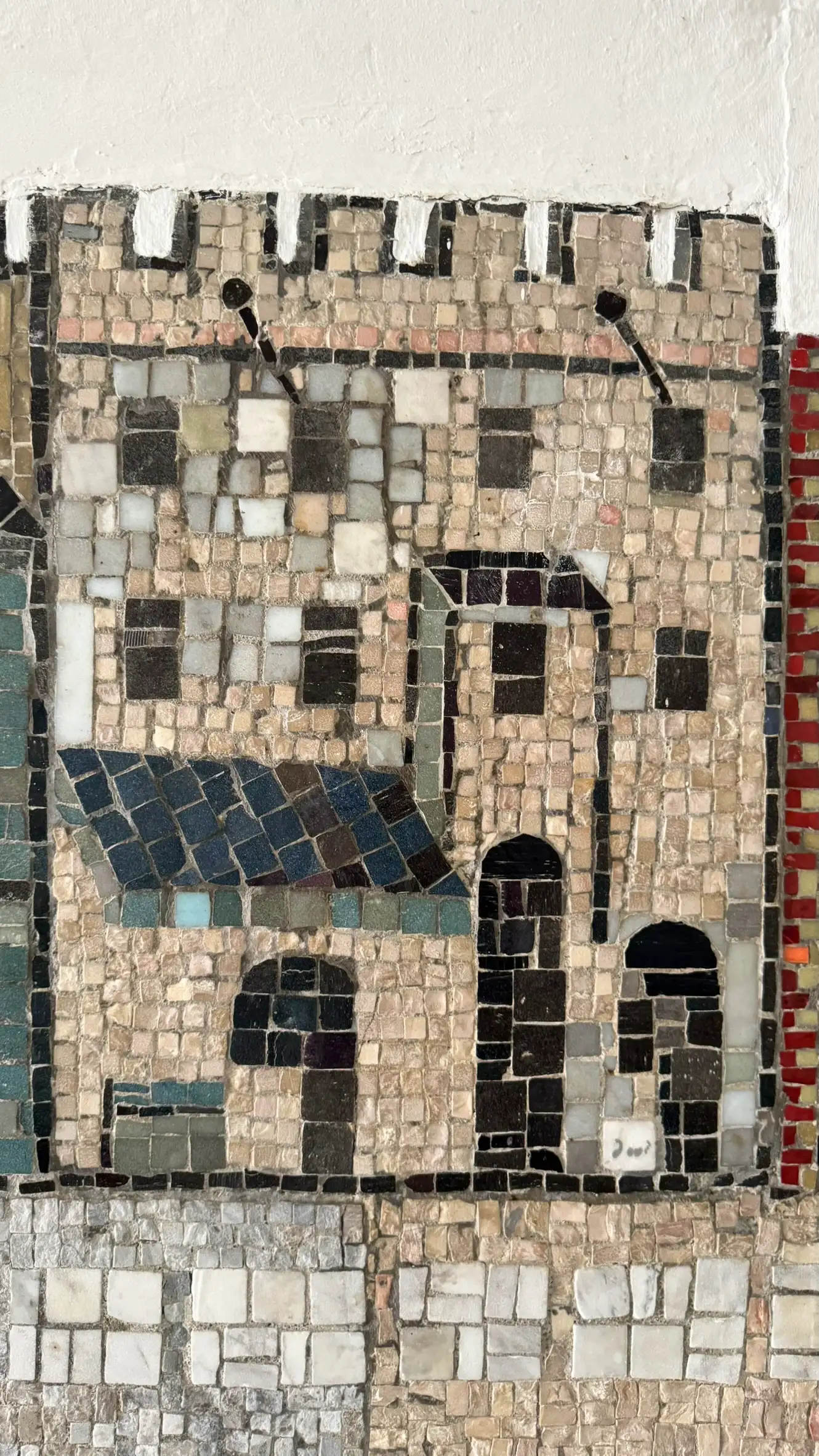
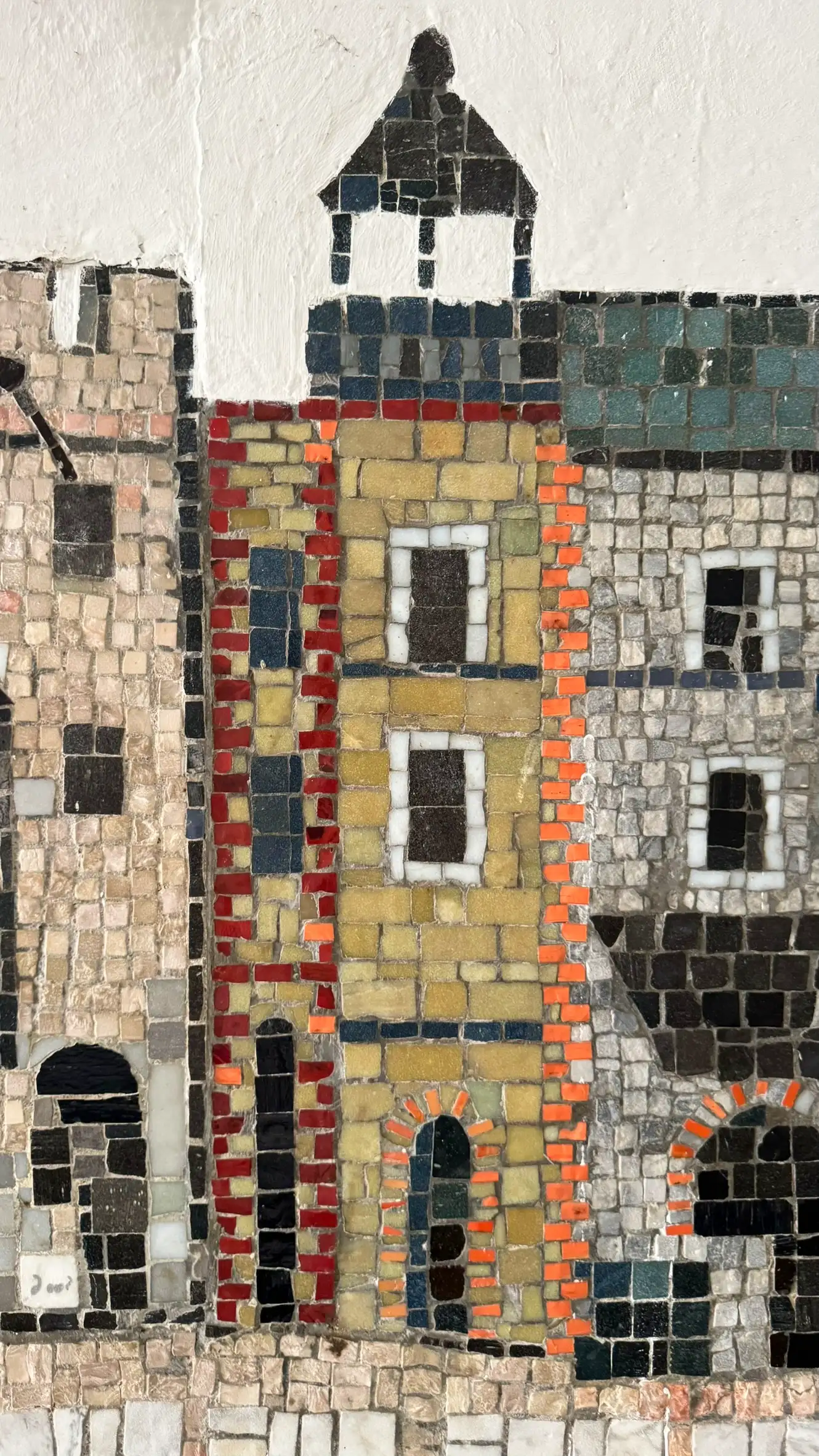
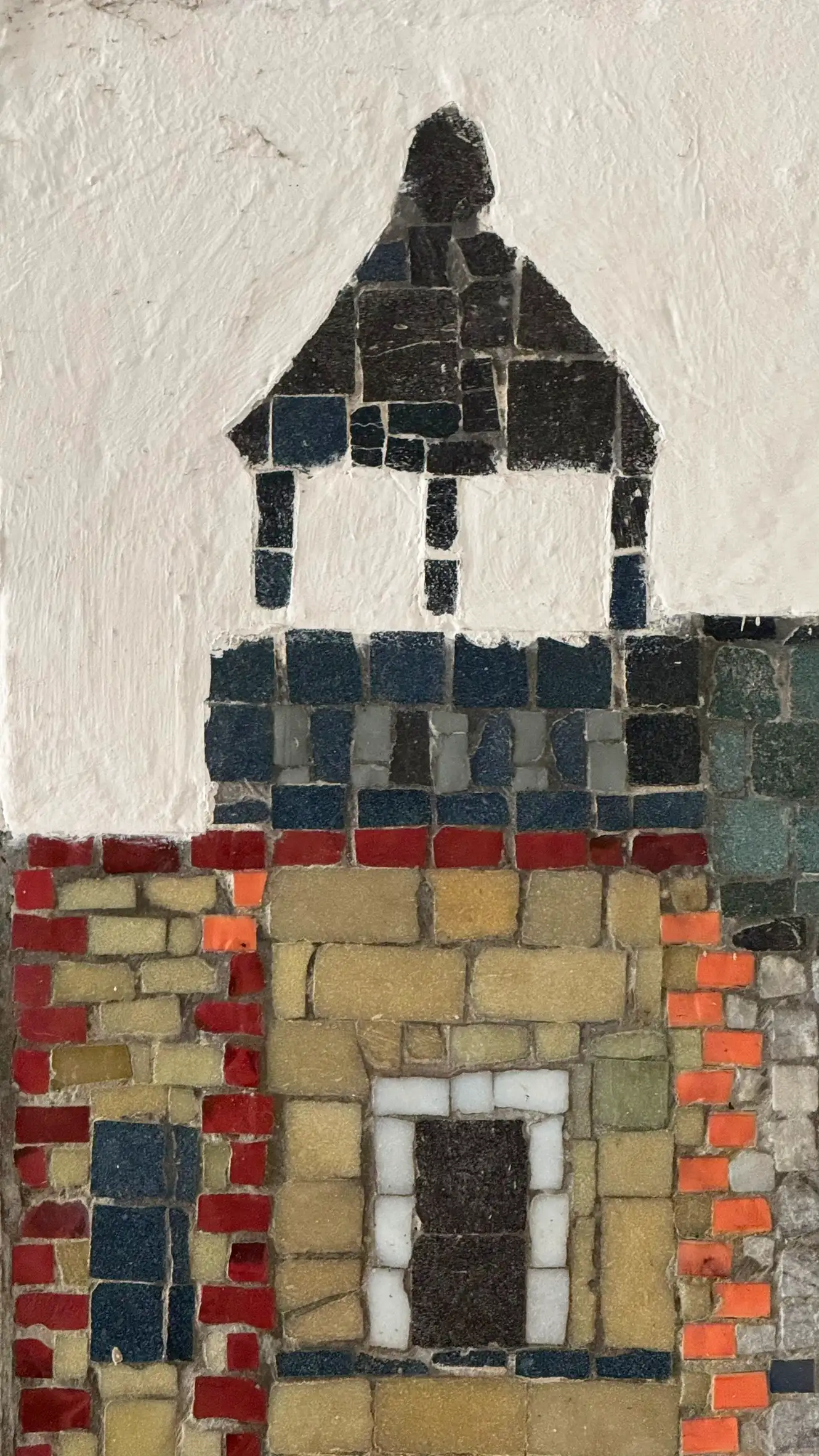
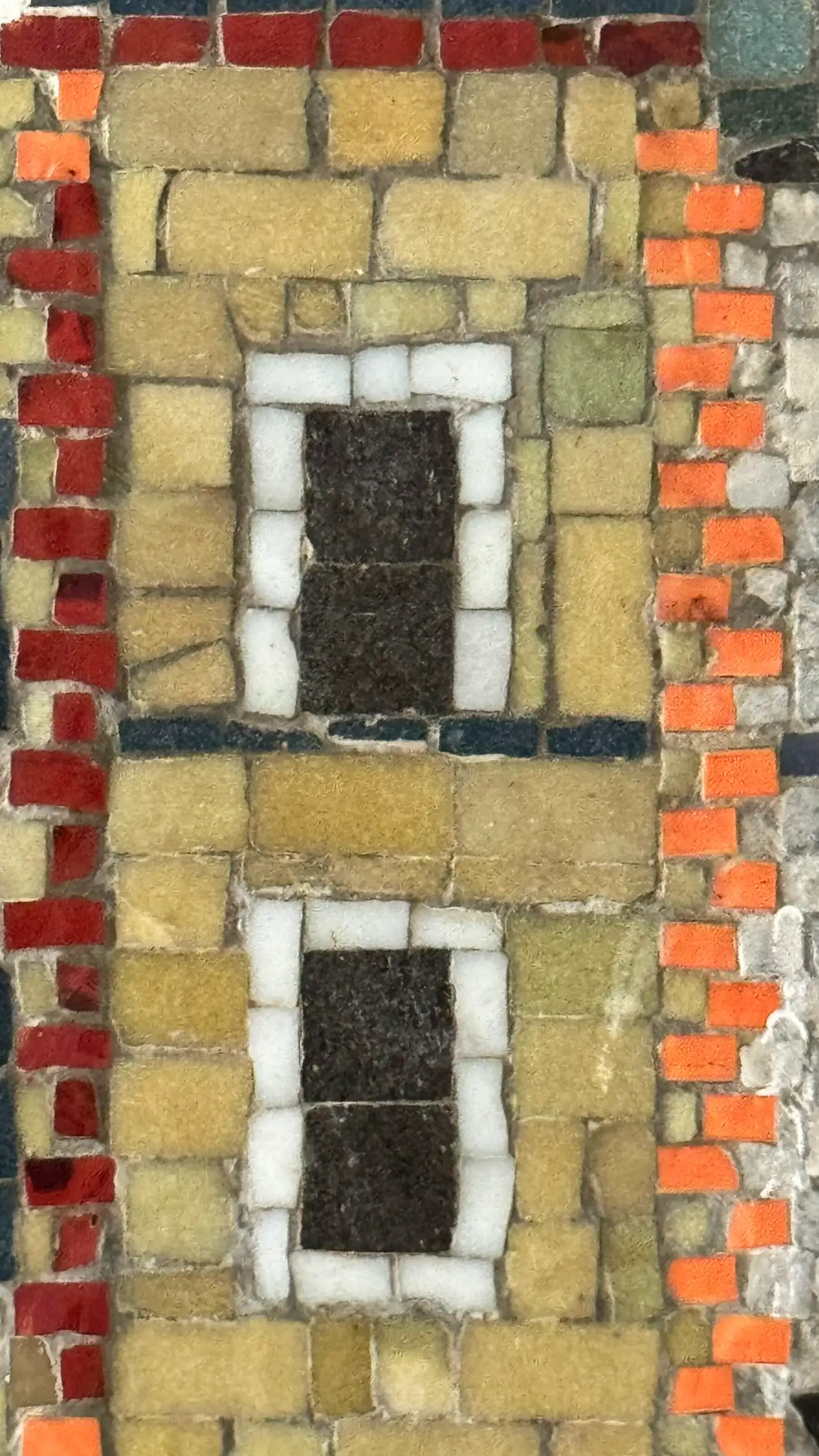
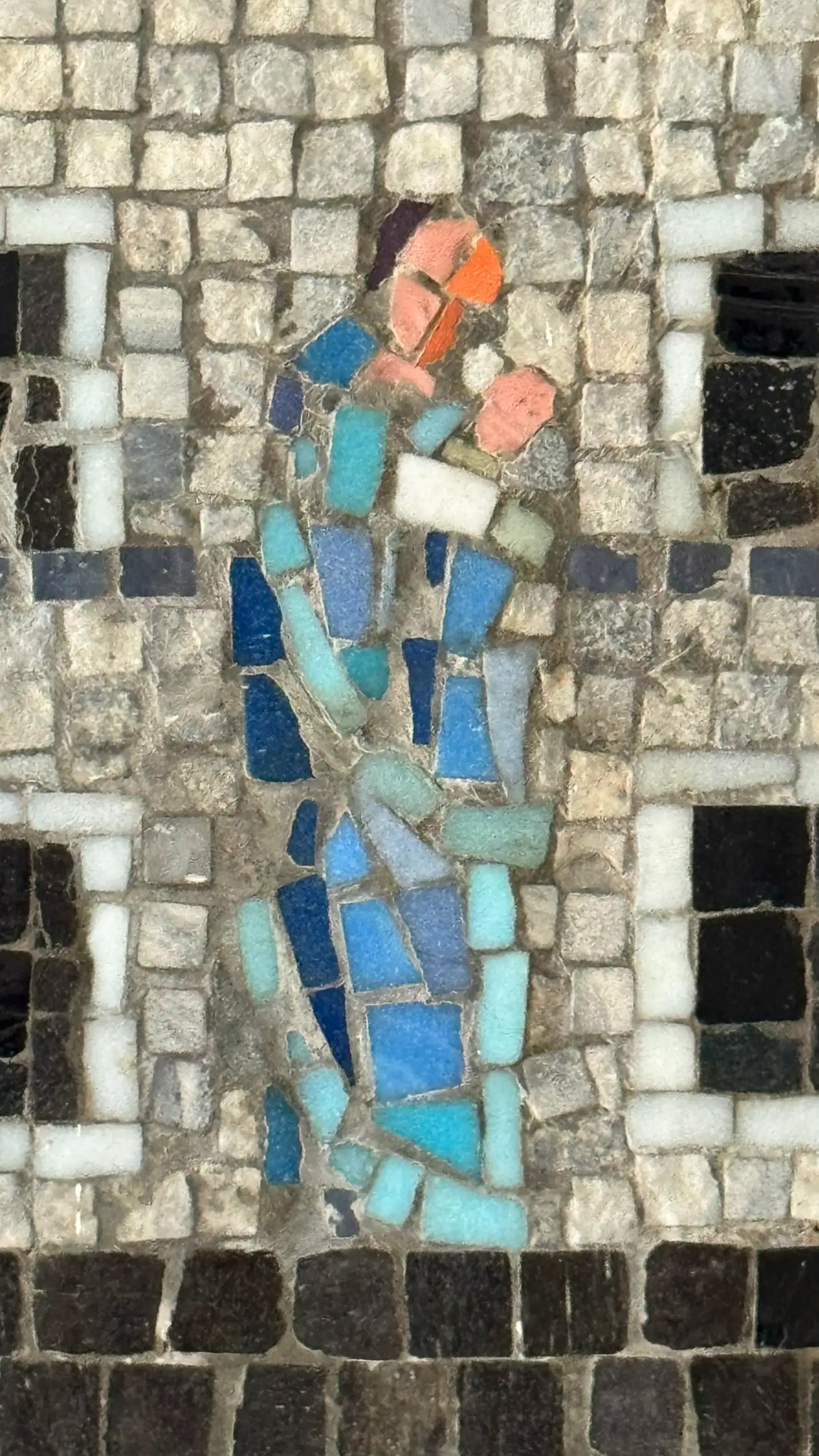
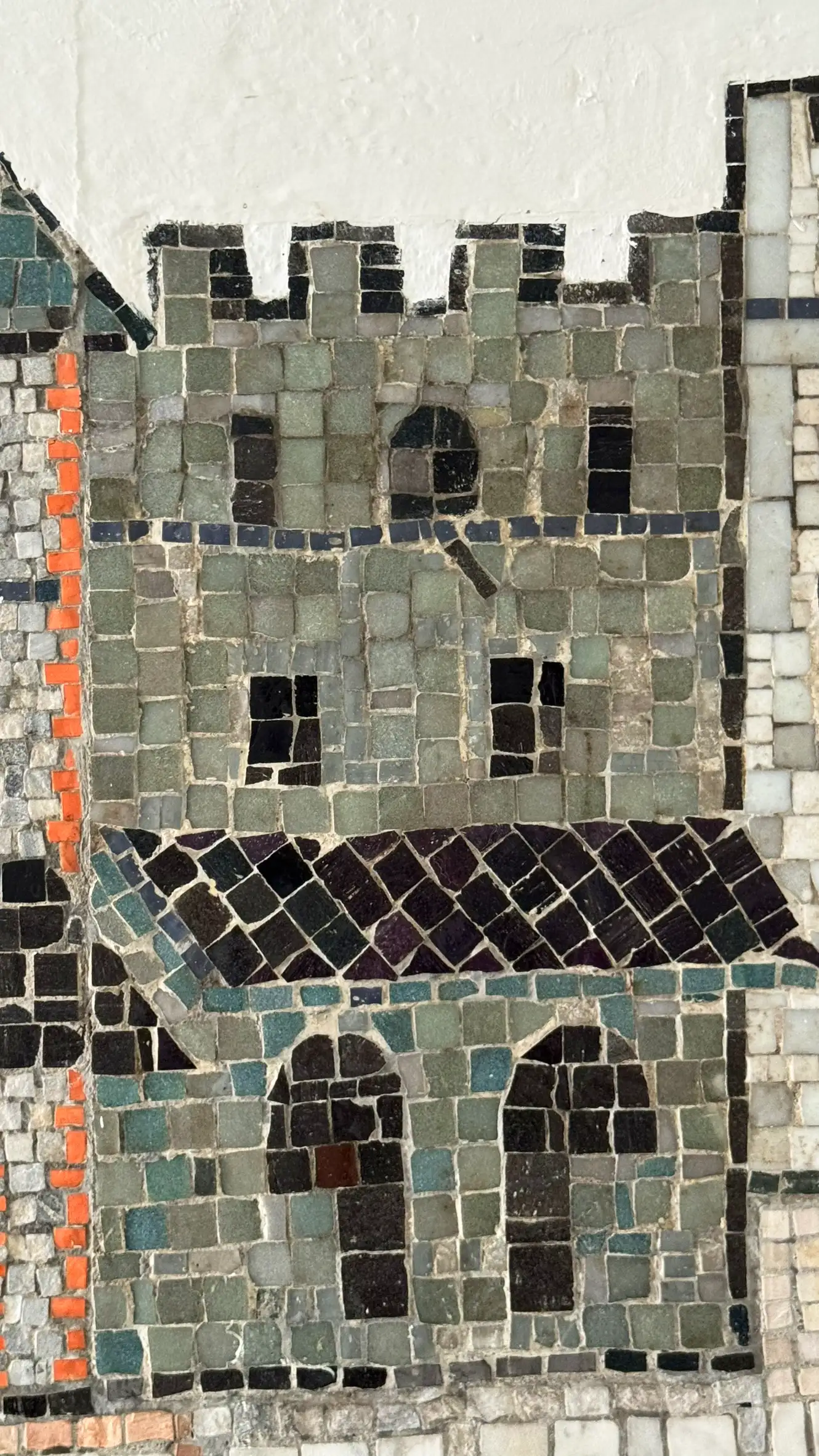
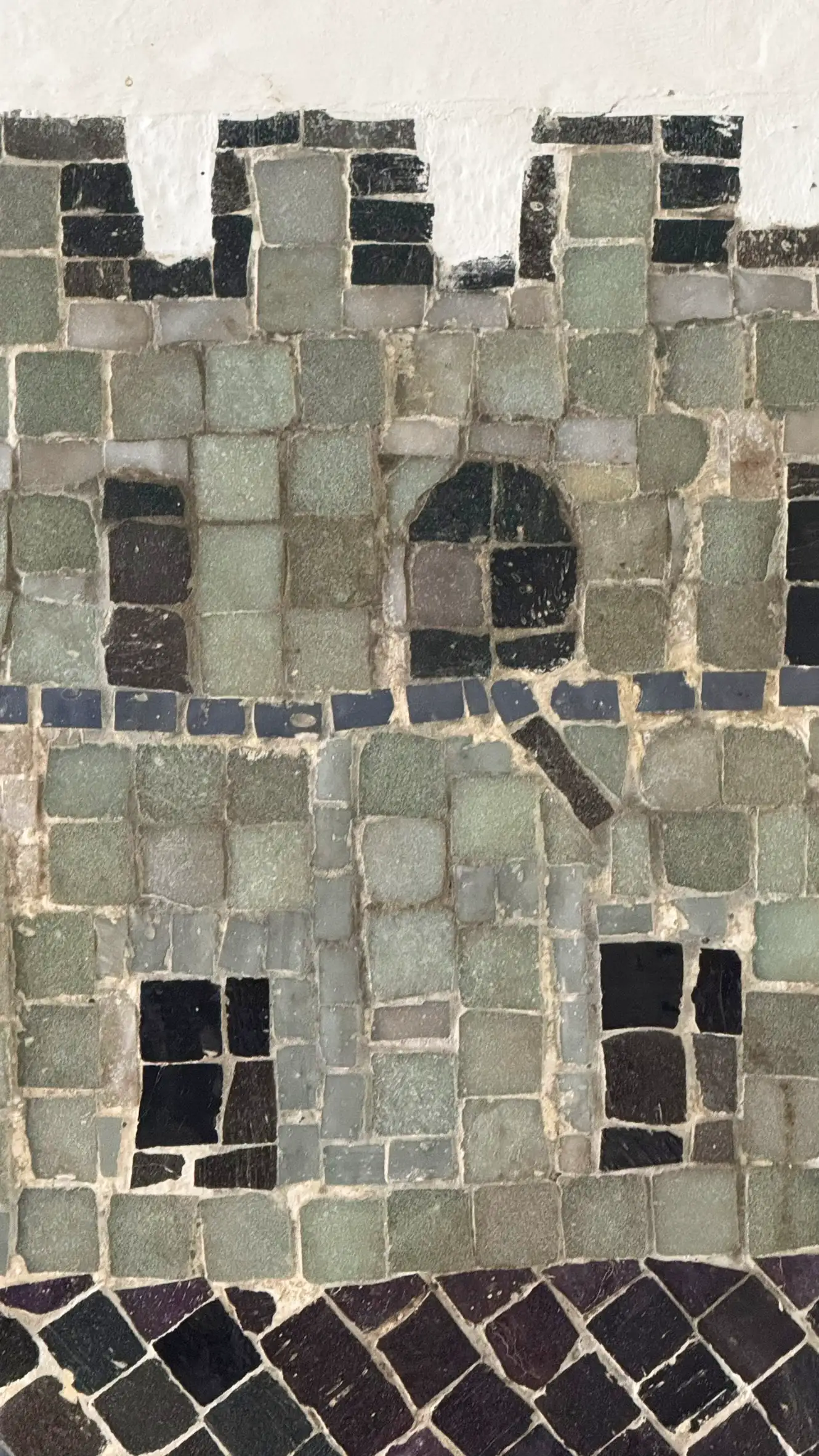
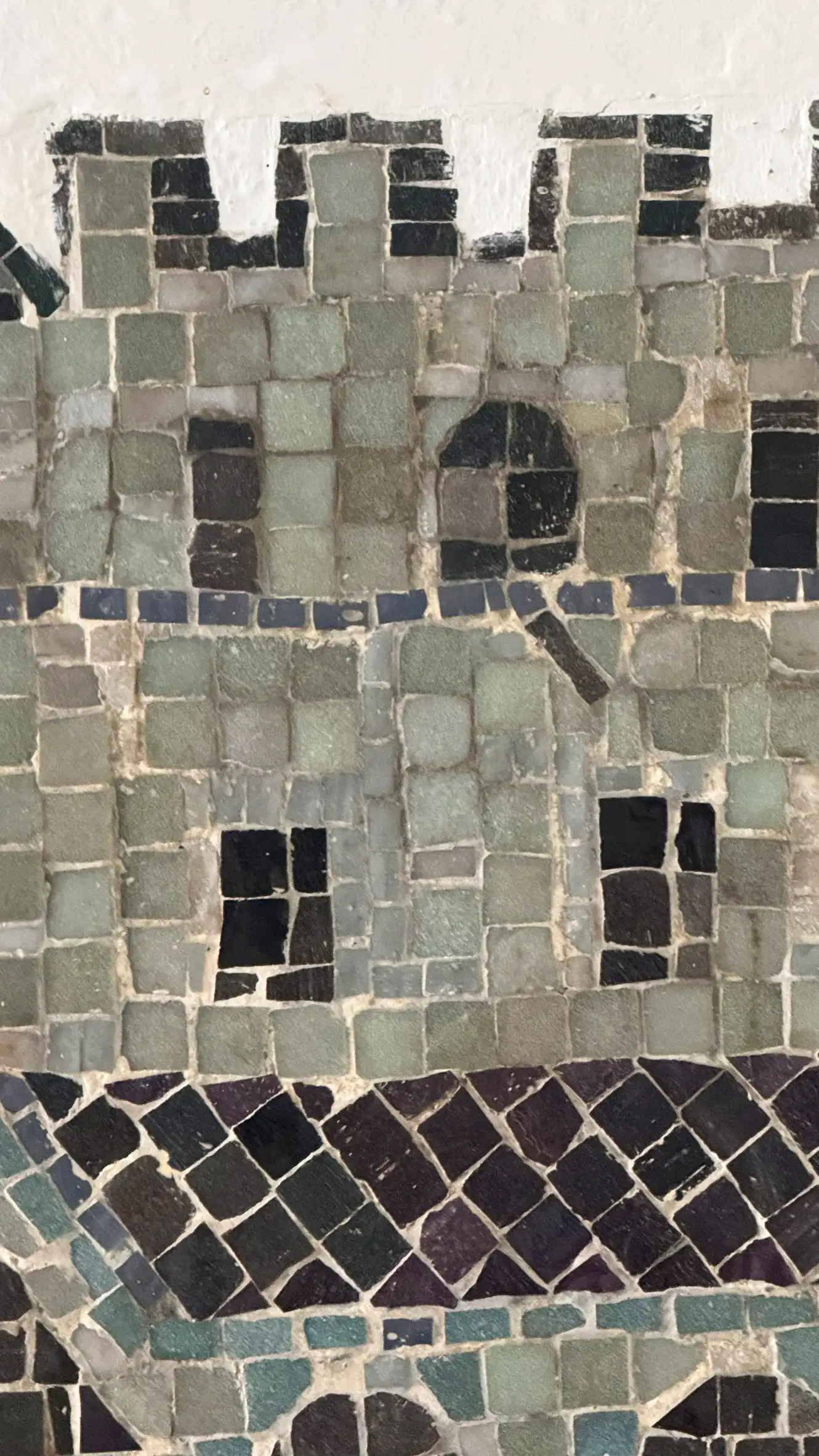
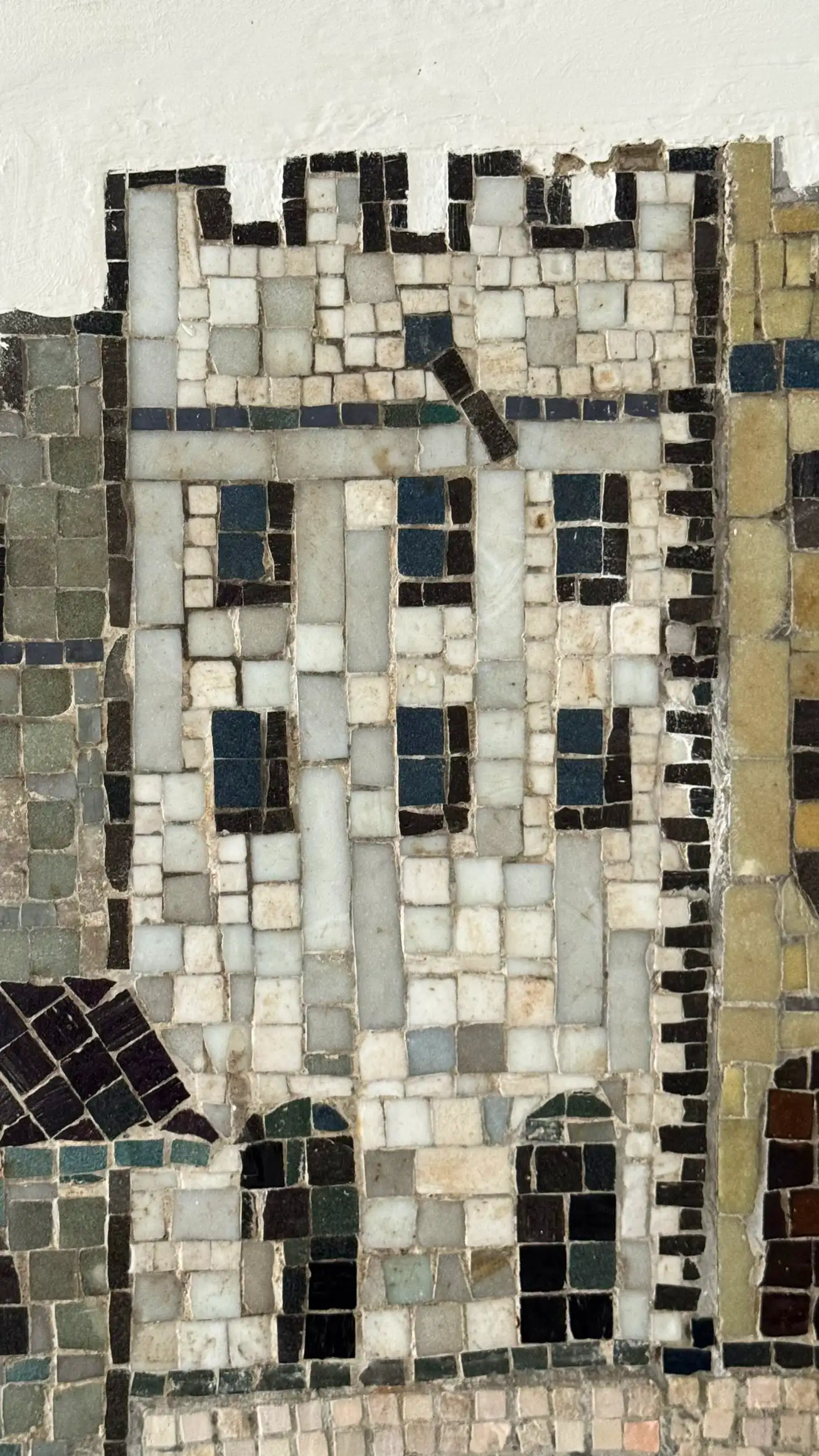
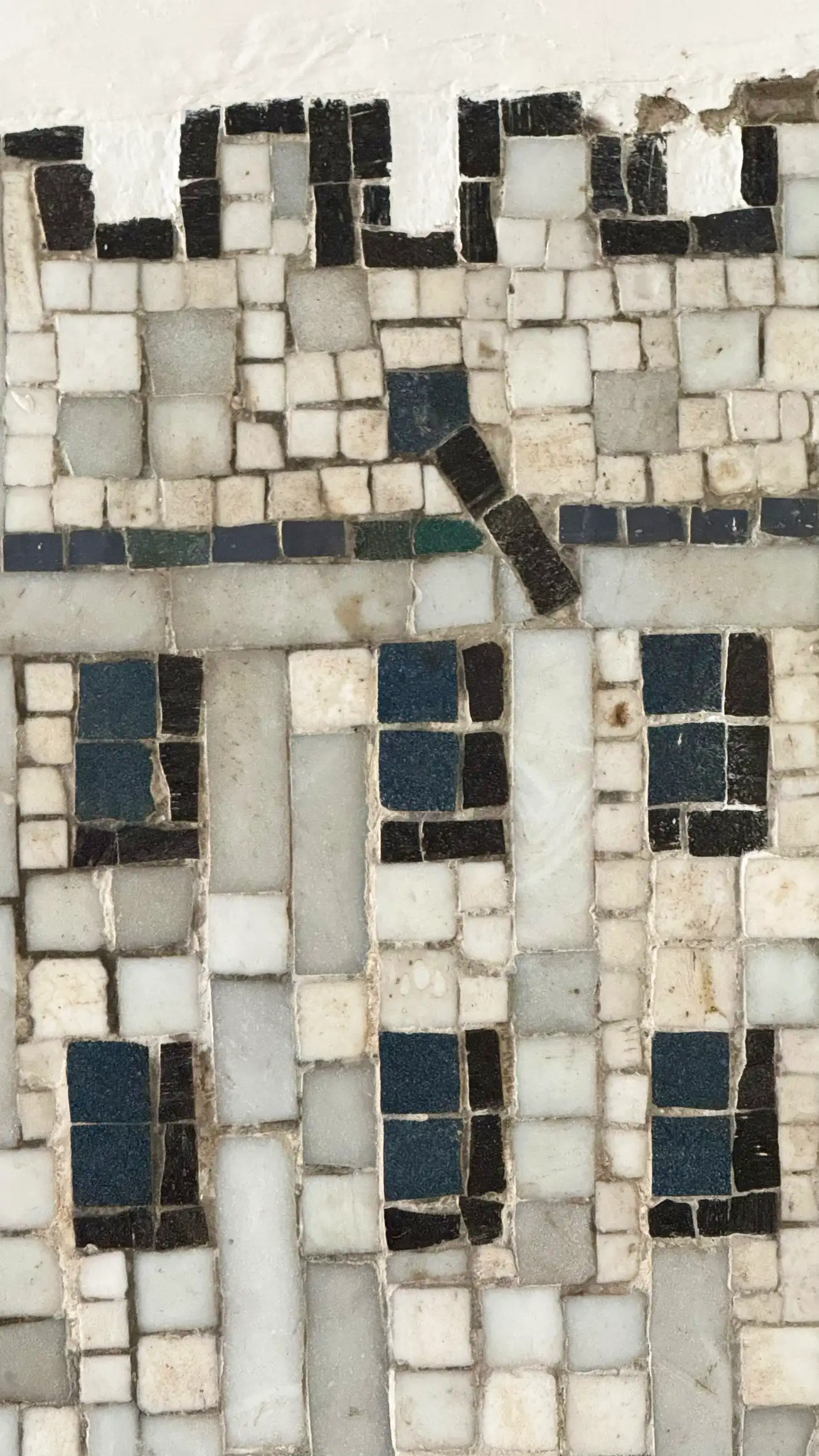
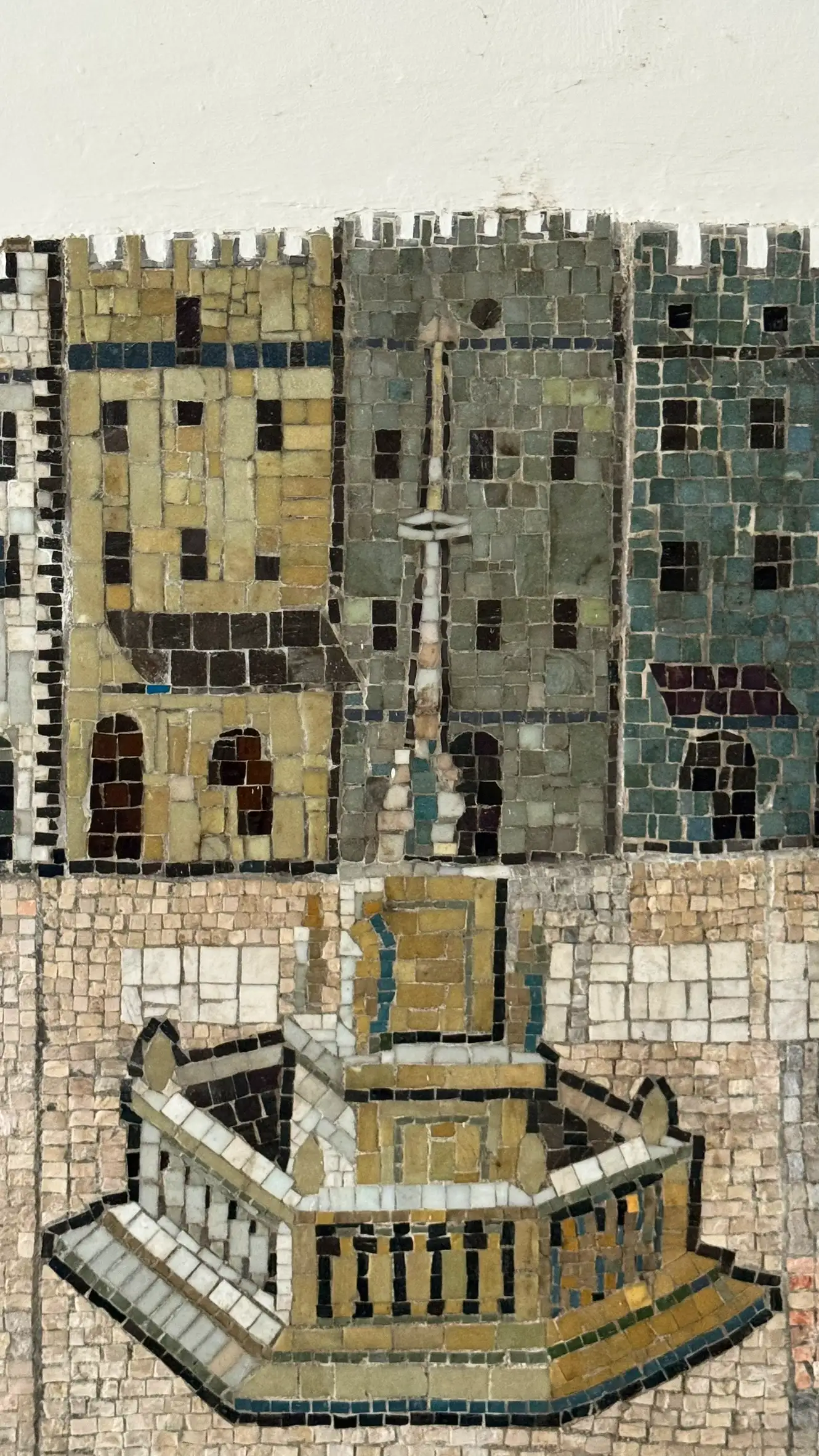
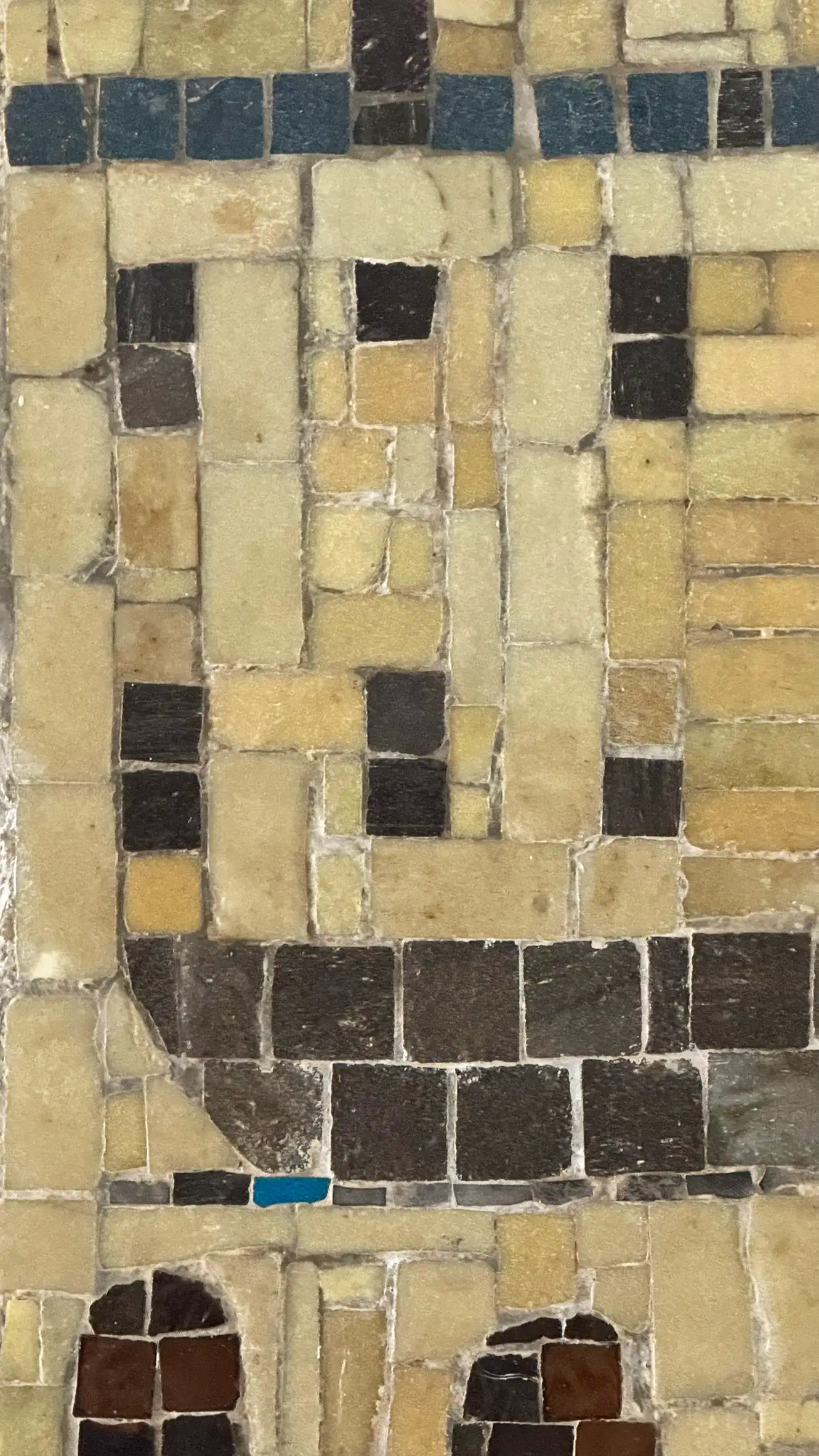
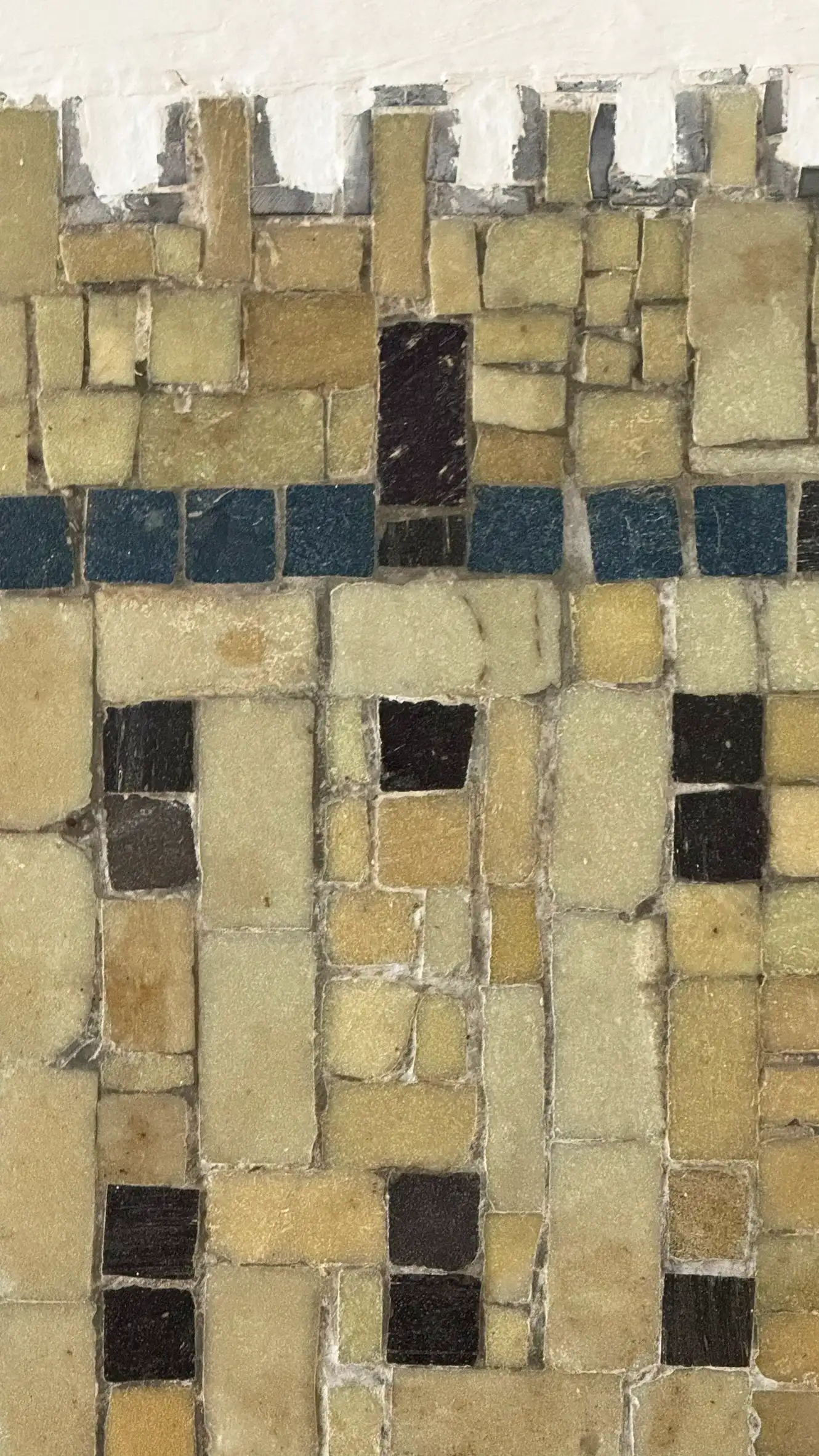
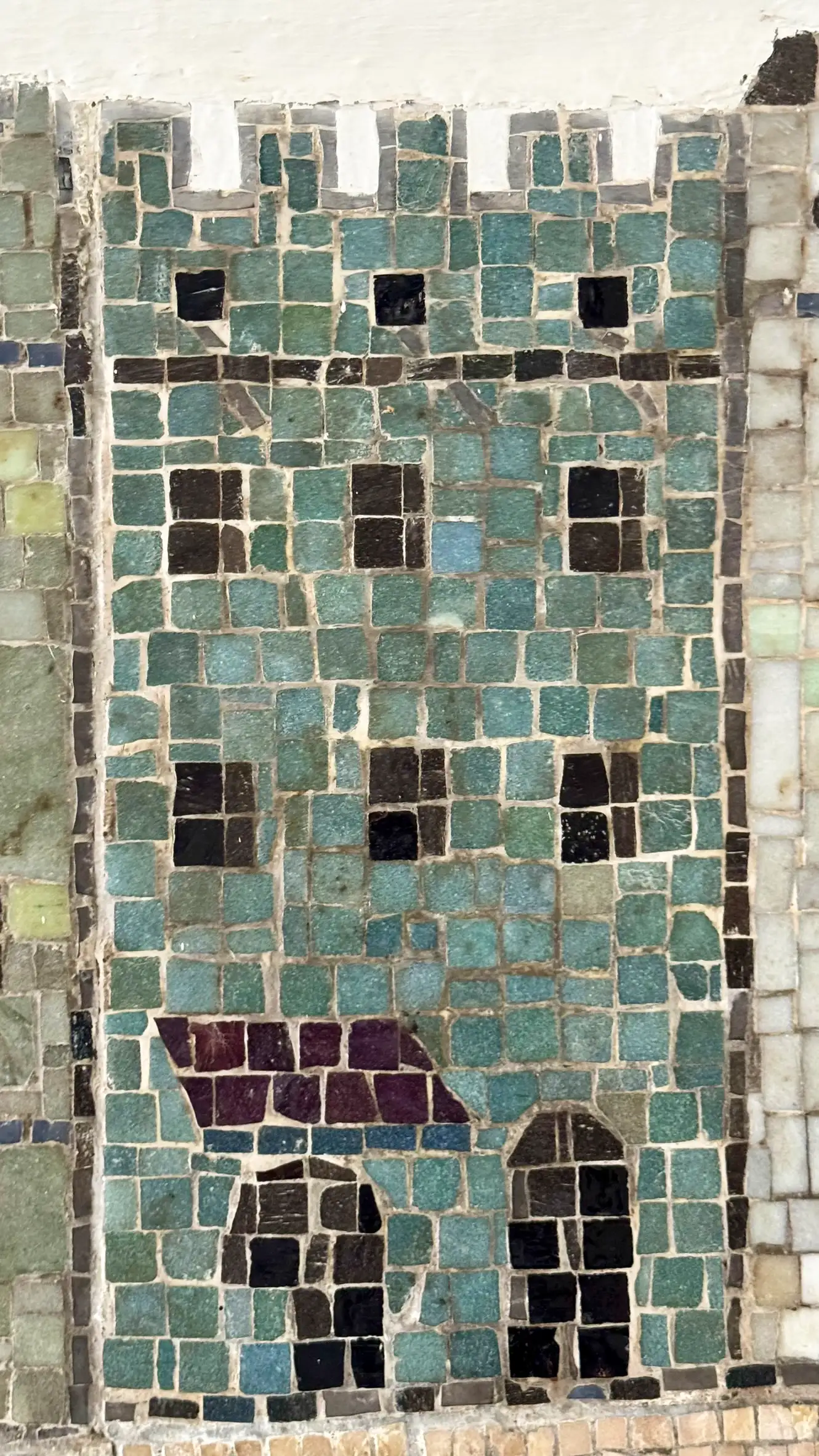
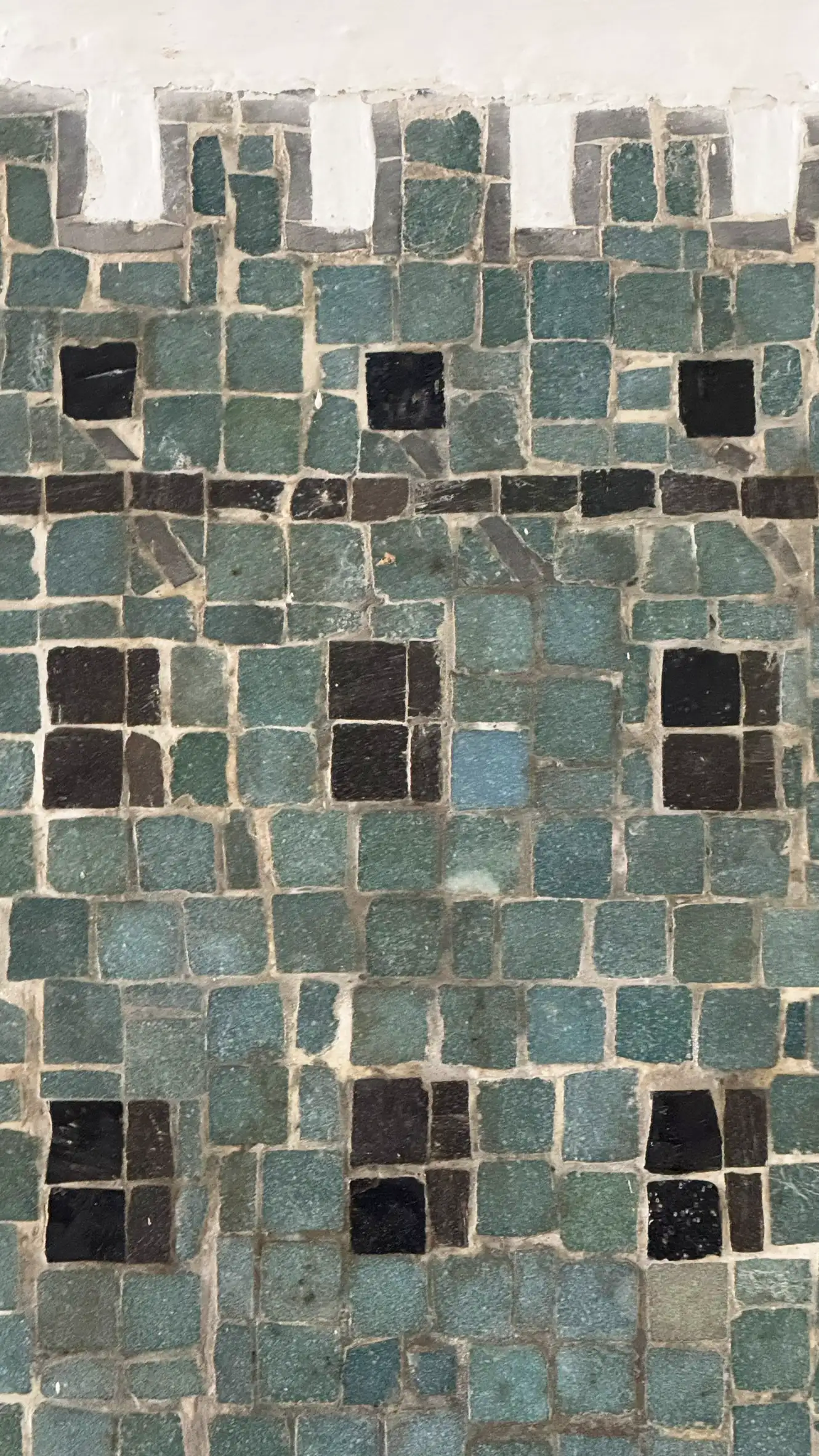
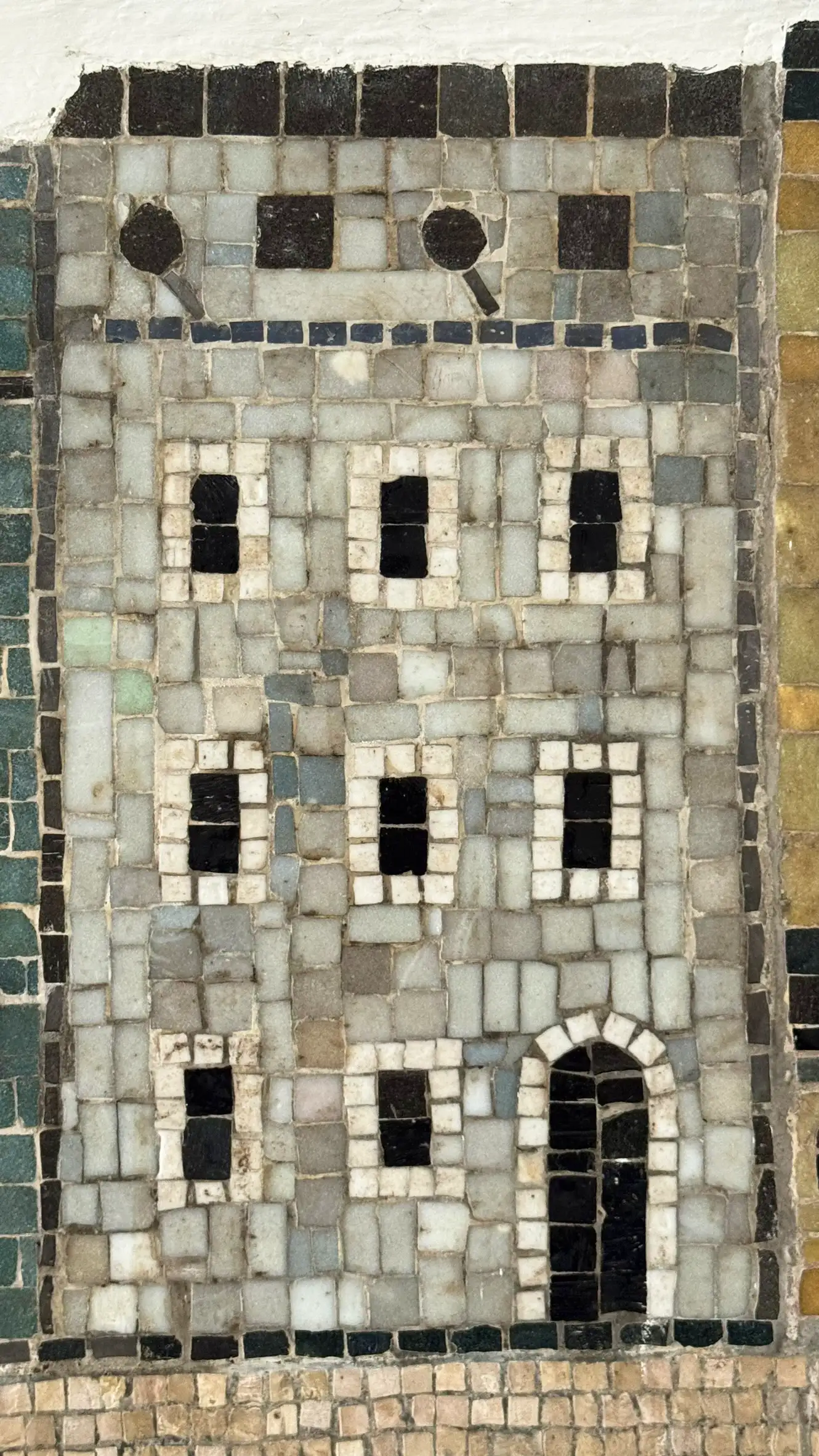
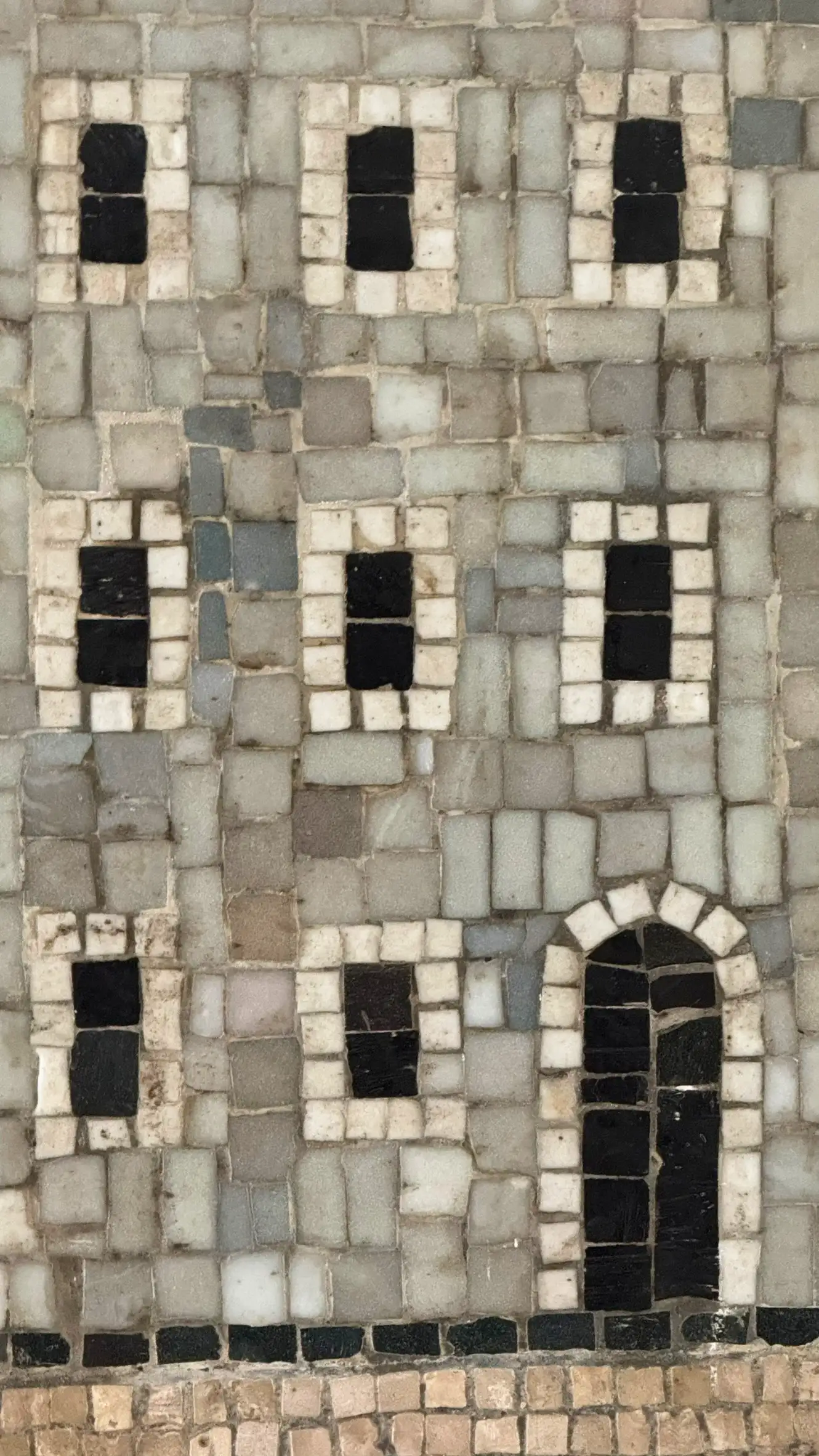
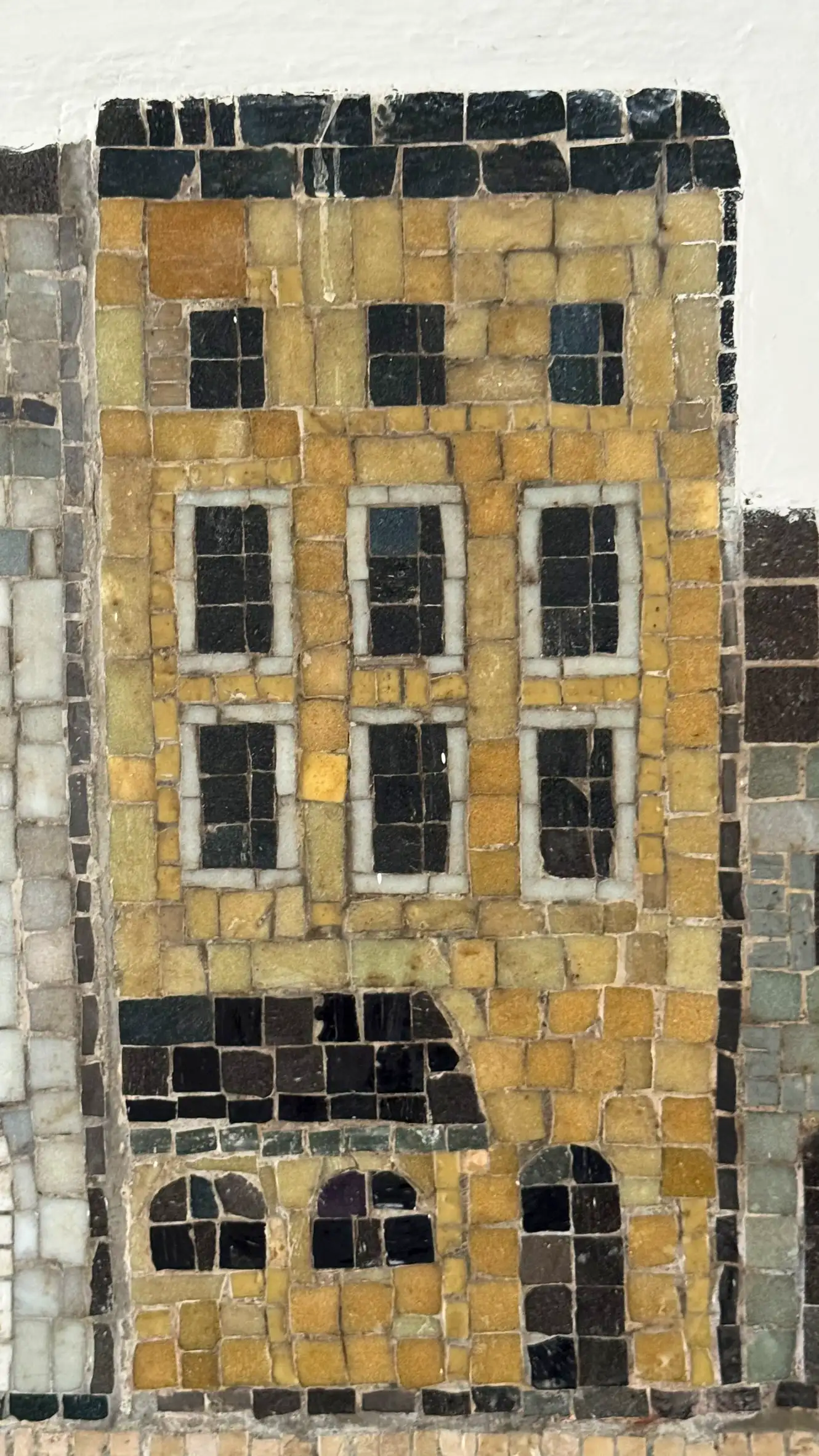
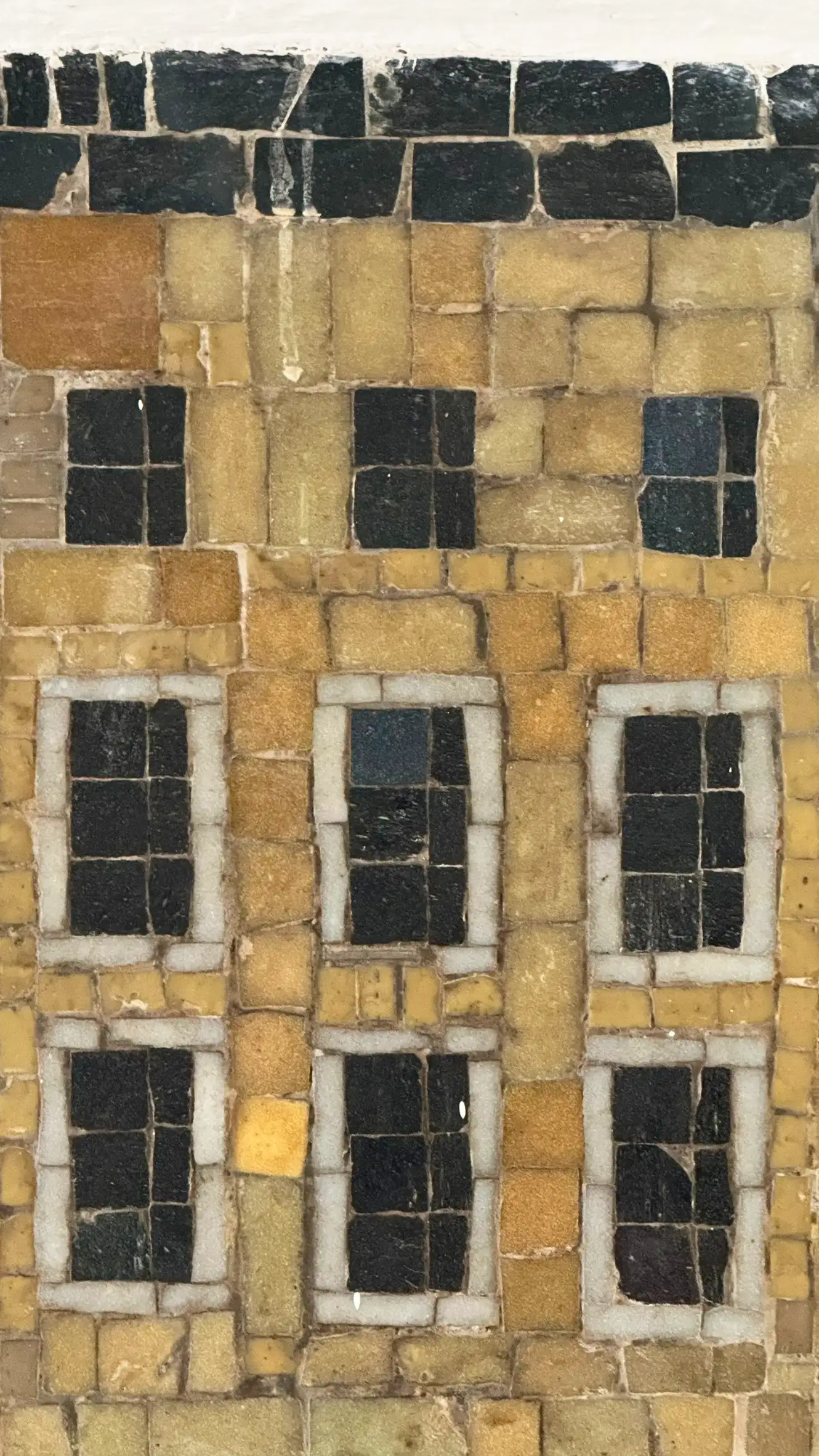
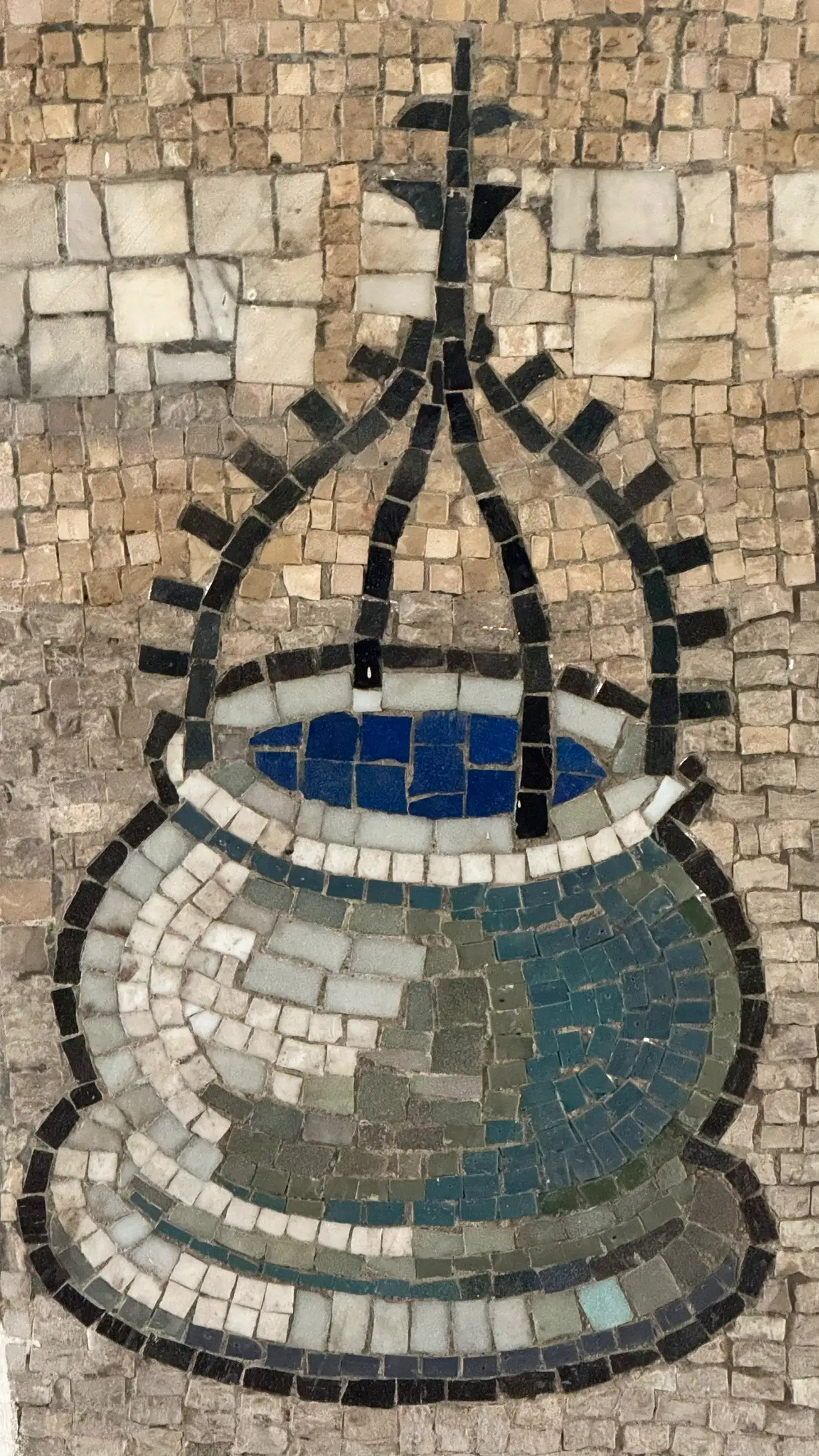
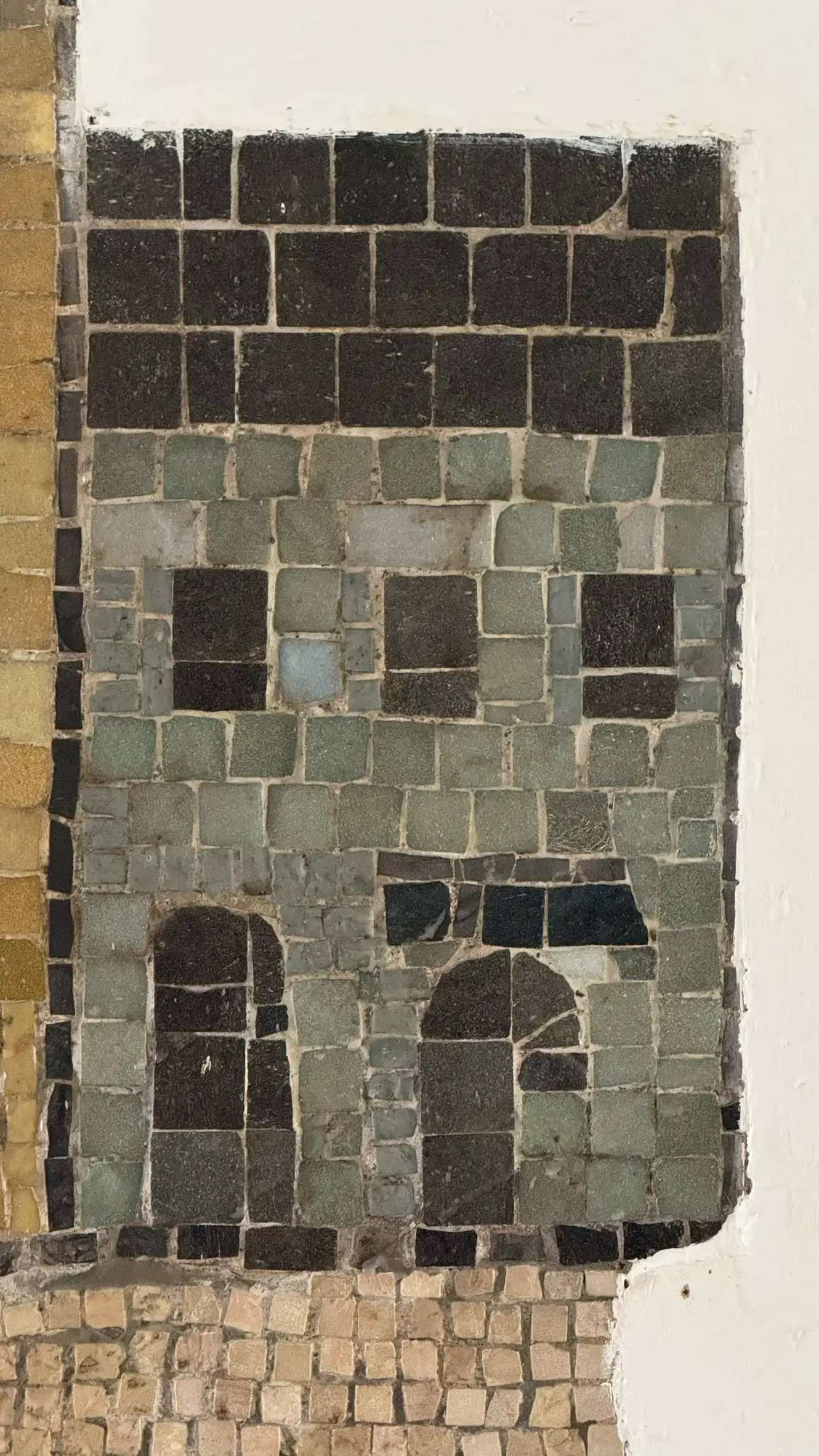
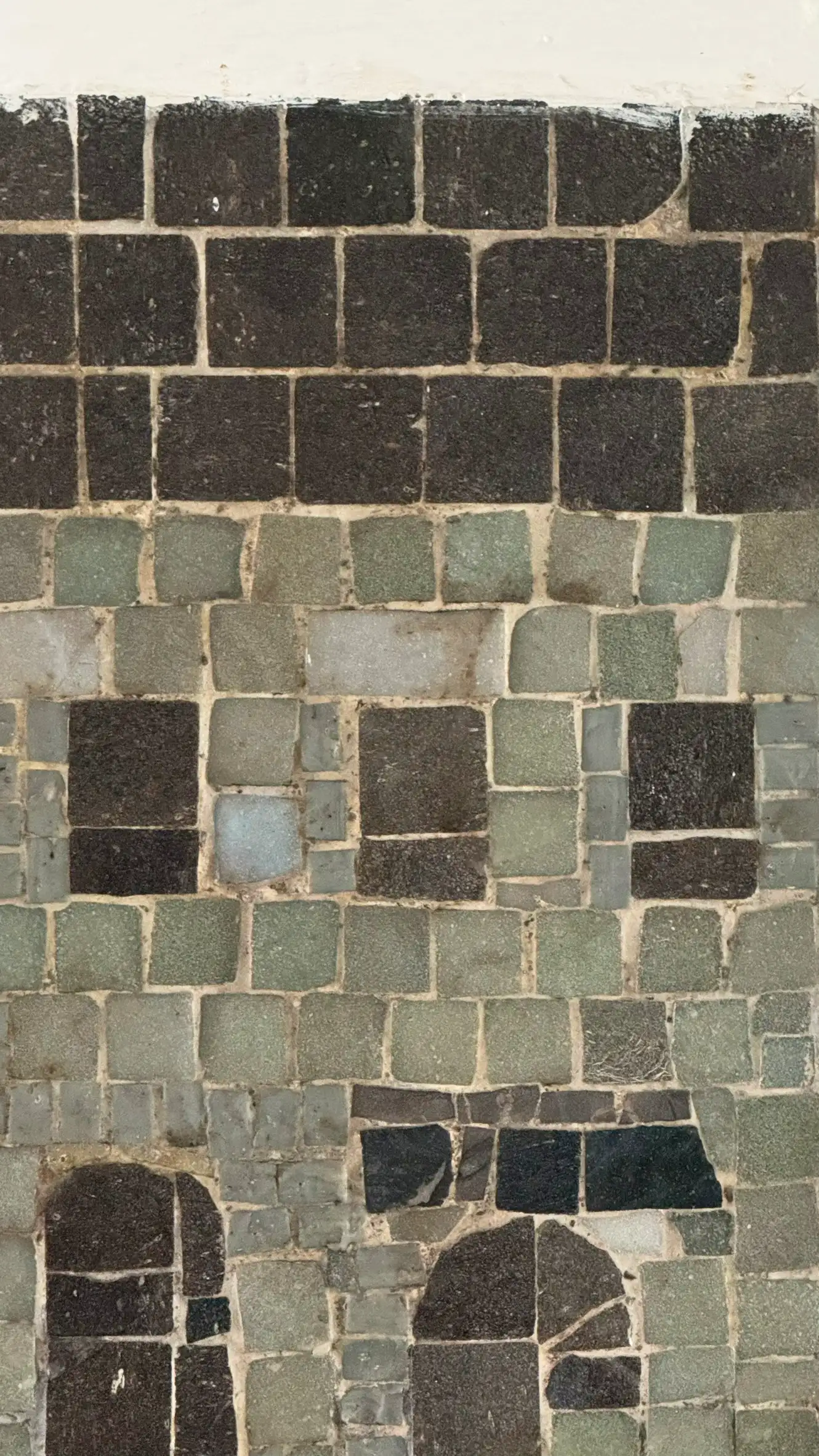
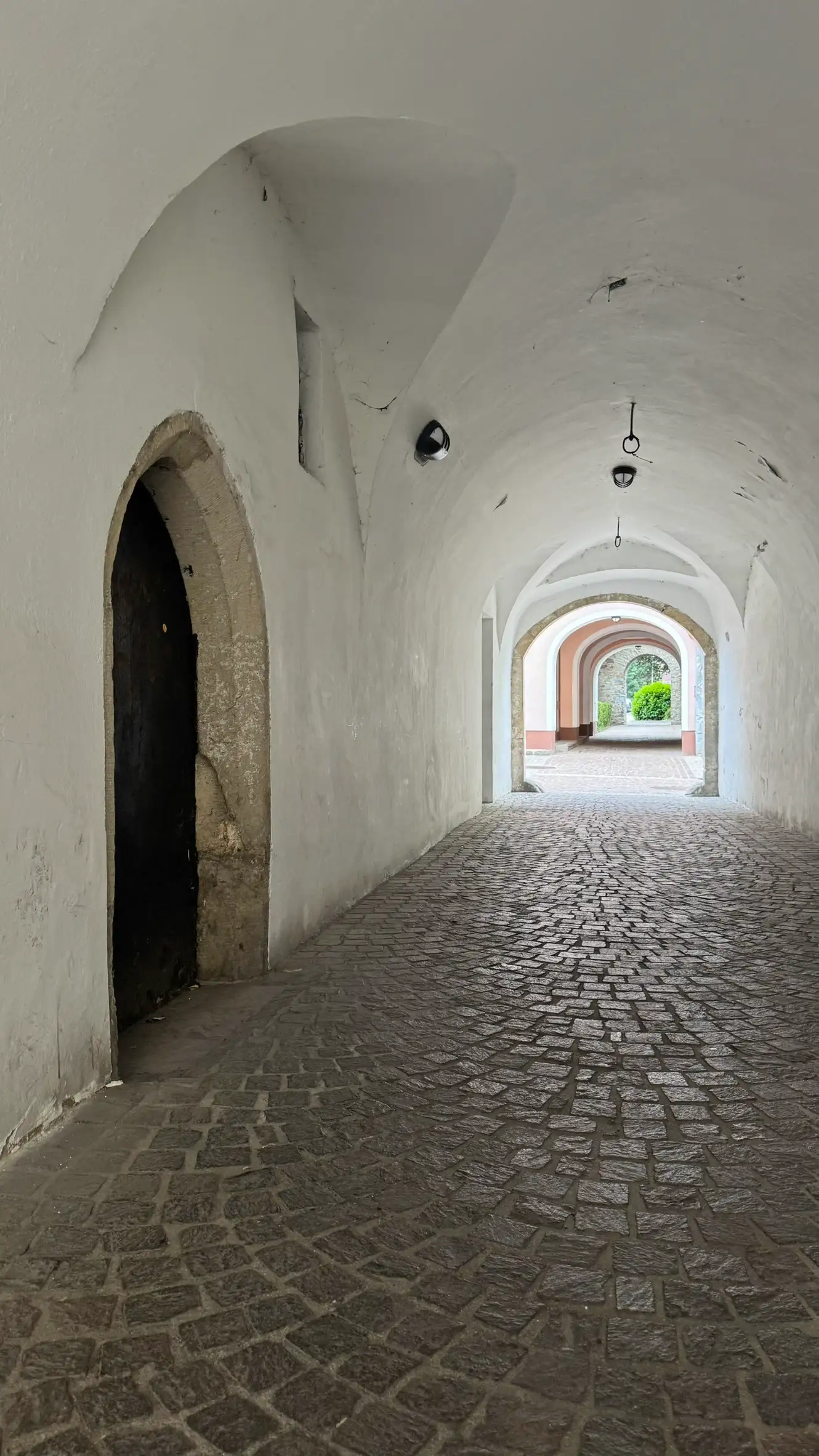
In the Sudetengasse – a charming covered passageway in the old town – you’ll find a beautifully crafted wall mosaic. It depicts the town’s main square around the year 1727, including a small fountain cross that no longer exists.
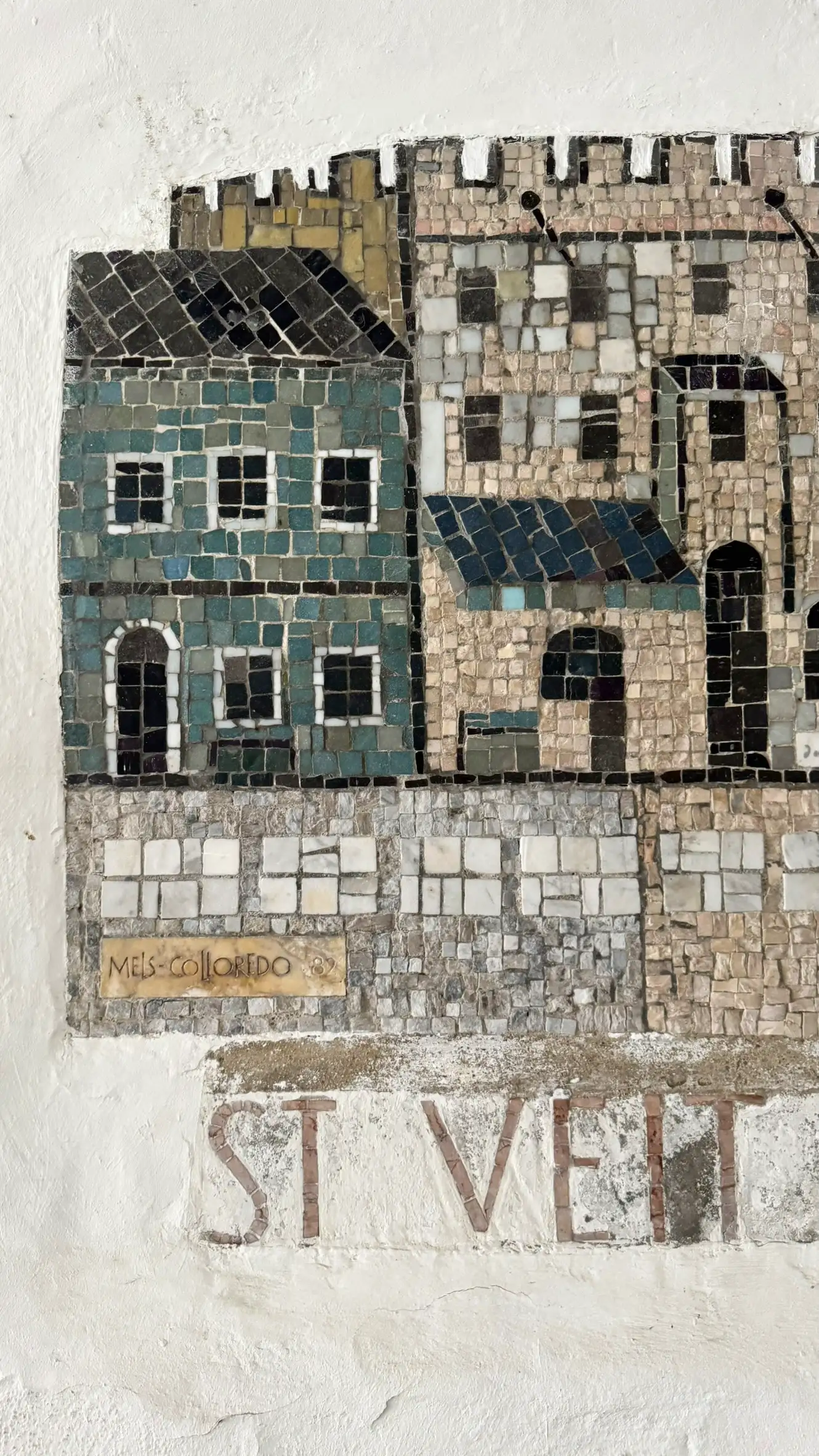
The mosaic was probably created in the 1970s and is the work of the artist Consuelo Mels-Coloredo.
The Sudetengasse itself is part of the medieval town centre and invites you to explore its historical atmosphere.
Town Mosaics in the Middle Ages
In the Middle Ages, mosaics depicting townscapes held both symbolic and communicative value. They were more than decorative art—they conveyed messages of identity, faith, and status.
1. Civic Identity and Pride A mosaic portraying the town—its buildings, streets, and fortifications—served as a striking expression of civic pride. It symbolised the unity, prosperity, and autonomy of the community. In many cases, such mosaics functioned as a visual “signature” of the town, much like a coat of arms, reinforcing its identity for residents and visitors alike.
2. Religious Symbolism Town mosaics often carried spiritual significance, reflecting the community’s belief in divine protection.
3. Prestige and Aesthetic Value The creation of mosaics demanded skilled craftsmanship and costly materials. Their presence signalled not only the town’s wealth and artistic ambition, but also its cultural connections. These works of art elevated the aesthetic appeal of public spaces, adding splendour and a sense of permanence to the urban landscape.
Mosaic in the Sudetengasse – depicting the Hauptplatz Around 1727
In the covered archway of the Sudetengasse – a charming alley adjacent to the historical main square – a mosaic is set into the wall.
This mosaic presents a miniature, detailed view of the town’s main squarearound1727, created from countless tiny stones intricately assembled into a larger scene.
A particularly striking element is the inclusion of a small fountain surmounted by a cross – an architectural feature that no longer exists on the square today.
Tesserae colours: Ionian blue, beige, silver, ash grey, black
Tesserae colours: pale brown, silver, ash grey, Ionian blue, black
Tesserae colours: pale brown, blood red, sunset orange, warm yellow, pearl white, silver, ash grey, Ionian blue, black
Tesserae colours: pale brown, blood red, sunset orange, warm yellow, pearl white, silver, ash grey, Ionian blue, black
Tesserae colours: pale brown, blood red, sunset orange, warm yellow, pearl white, black
Tesserae colours: sky blue, navy blue, pearl white, cream, peach, ash grey, black
Tesserae colours: greyish olive, silver, pearl white, black, sunset orange
Tesserae colours: greyish olive, black
Tesserae colours: greyish olive, black
Tesserae colours: greyish olive, silver grey, ash grey, pearl white, black
Tesserae colours: silver grey, pearl white, teal blue, black
Tesserae colours: greyish olive, pale brown, silver, teal blue, black
Tesserae colours: pale brown, warm yellow, teal blue, coffee brown, black
Tesserae colours: pale brown, warm yellow, teal blue, coffee brown, black
Tesserae colours: Ionian blue, coffee brown, black
Tesserae colours: Ionian blue, coffee brown, black
Tesserae colours: pearl grey, pearl white, black
Tesserae colours: pearl grey, pearl white, black
Tesserae colours: warm yellow, ochre, pearl grey, black
Tesserae colours: warm yellow, ochre, pearl grey, black
Tesserae colours: pale brown, pearl grey, ash grey, teal blue, Ionian blue, grey olive, black
Tesserae colours: grey olive, pale brown, black
Tesserae colours: grey olive, pale brown, black
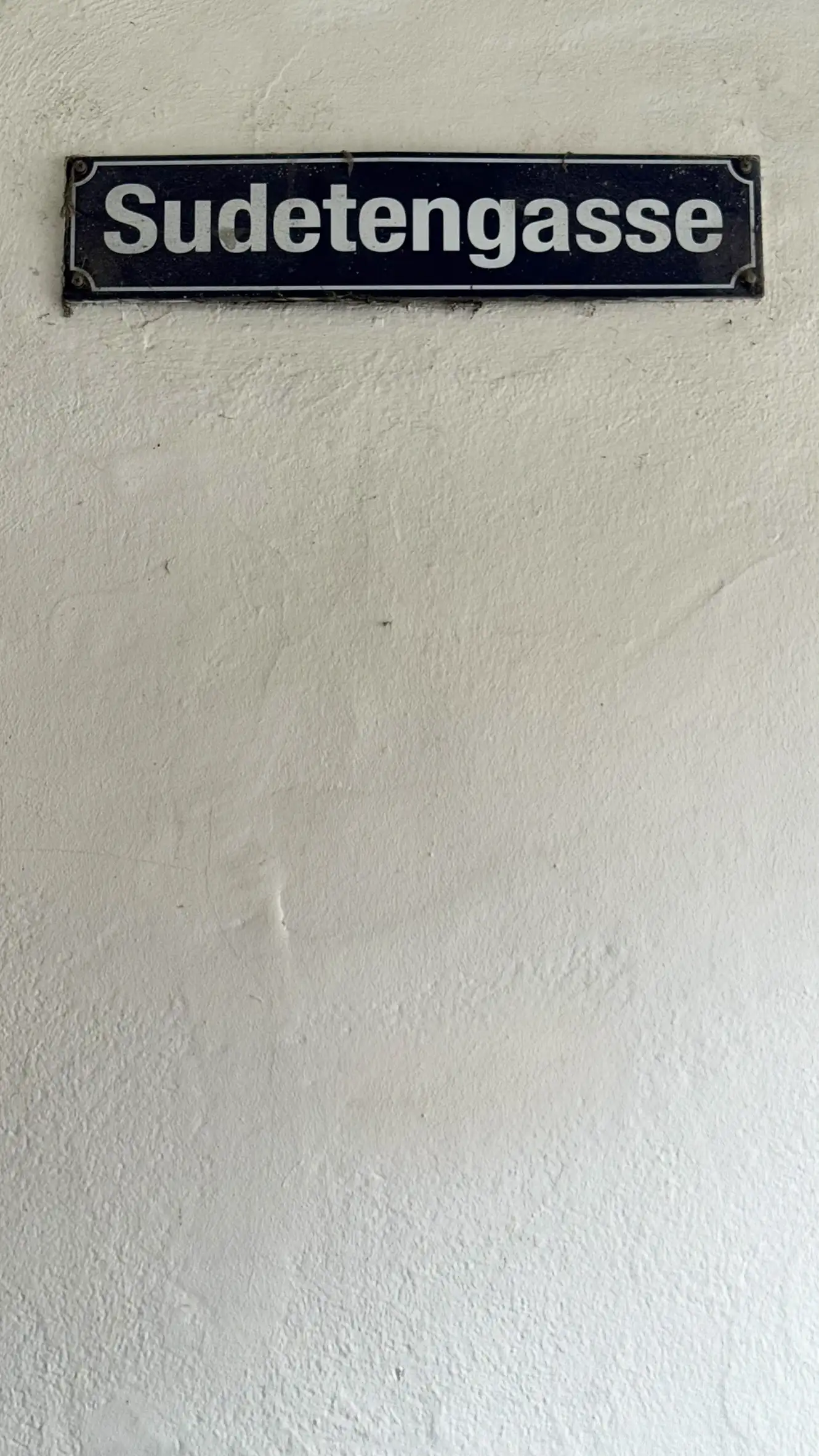
Signage – Sudetengasse
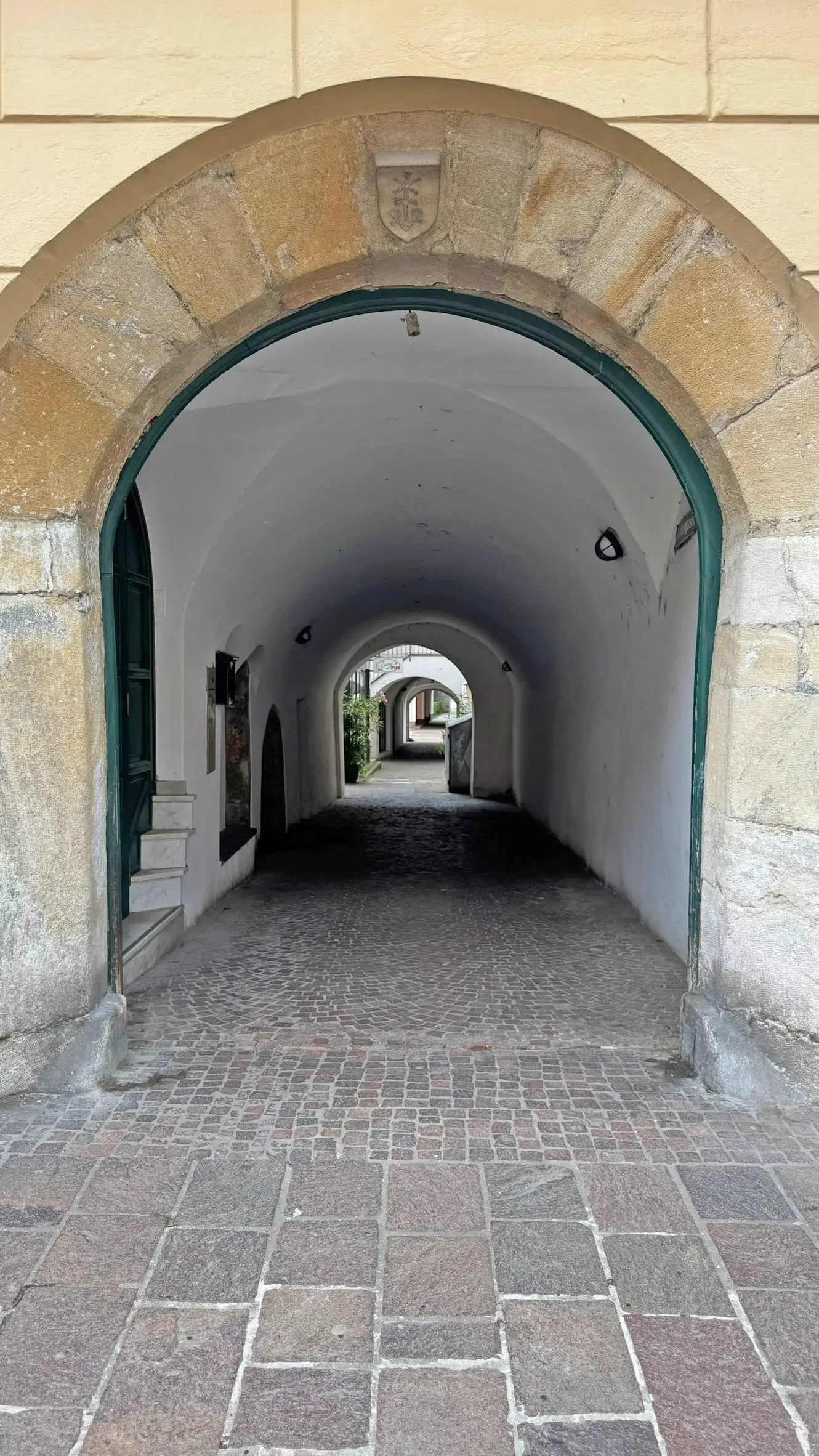
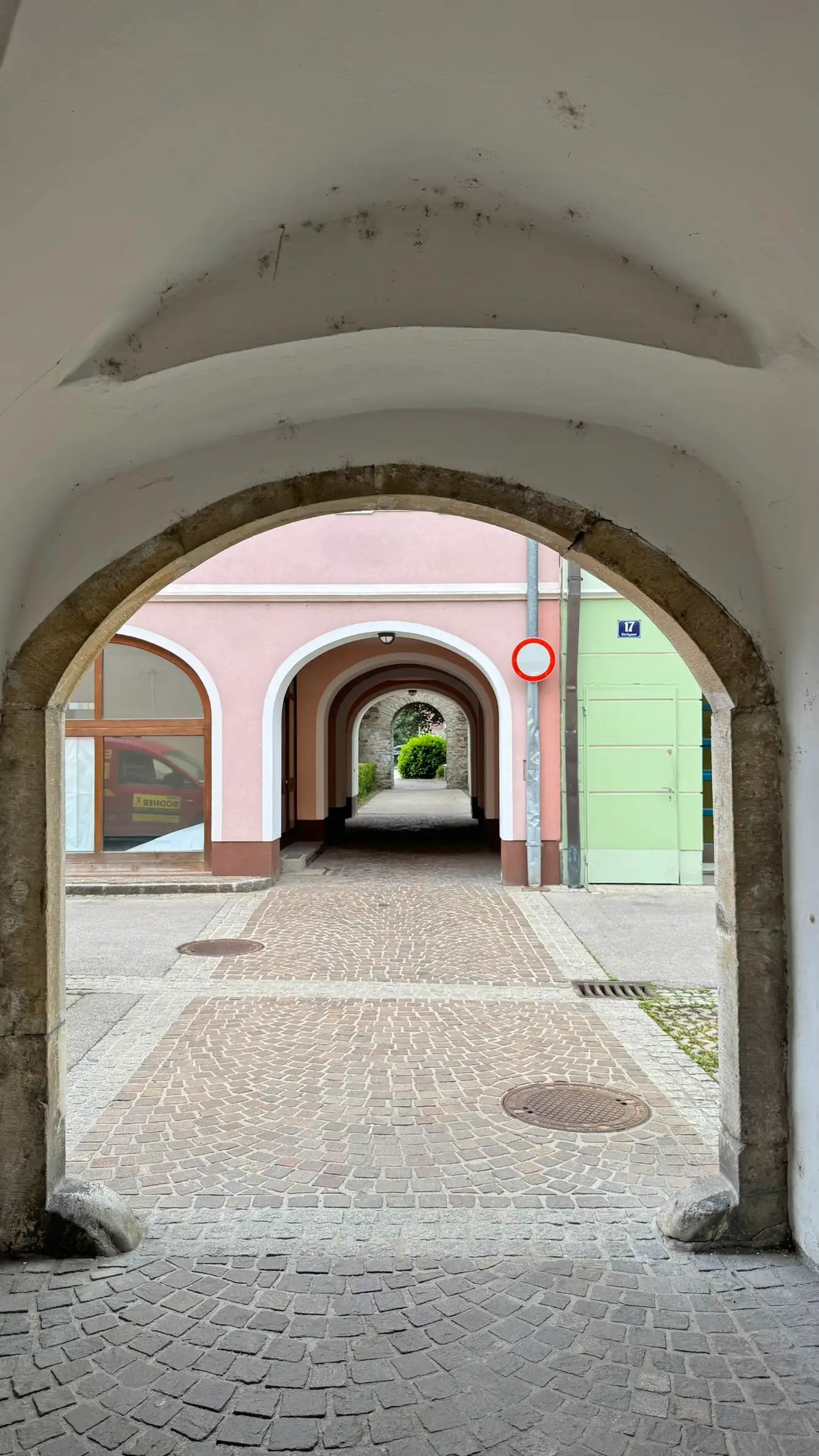
Arched entrance leading into the Sudetengasse – a covered passageway
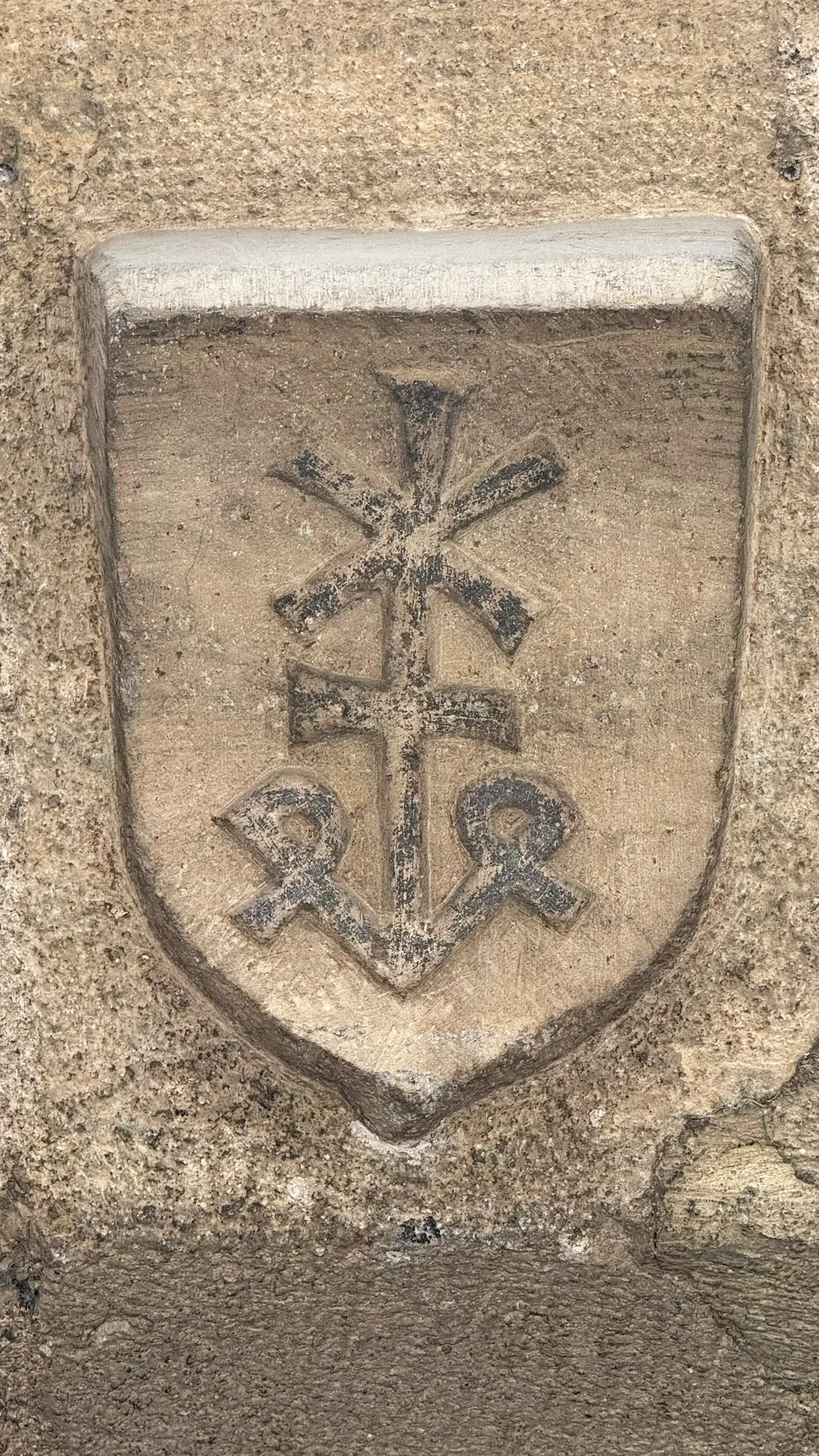
Close-up of the coat of arms on the keystone of the arched entrance
Inside the covered passageway
The covered passageway opens onto Kirchgasse.
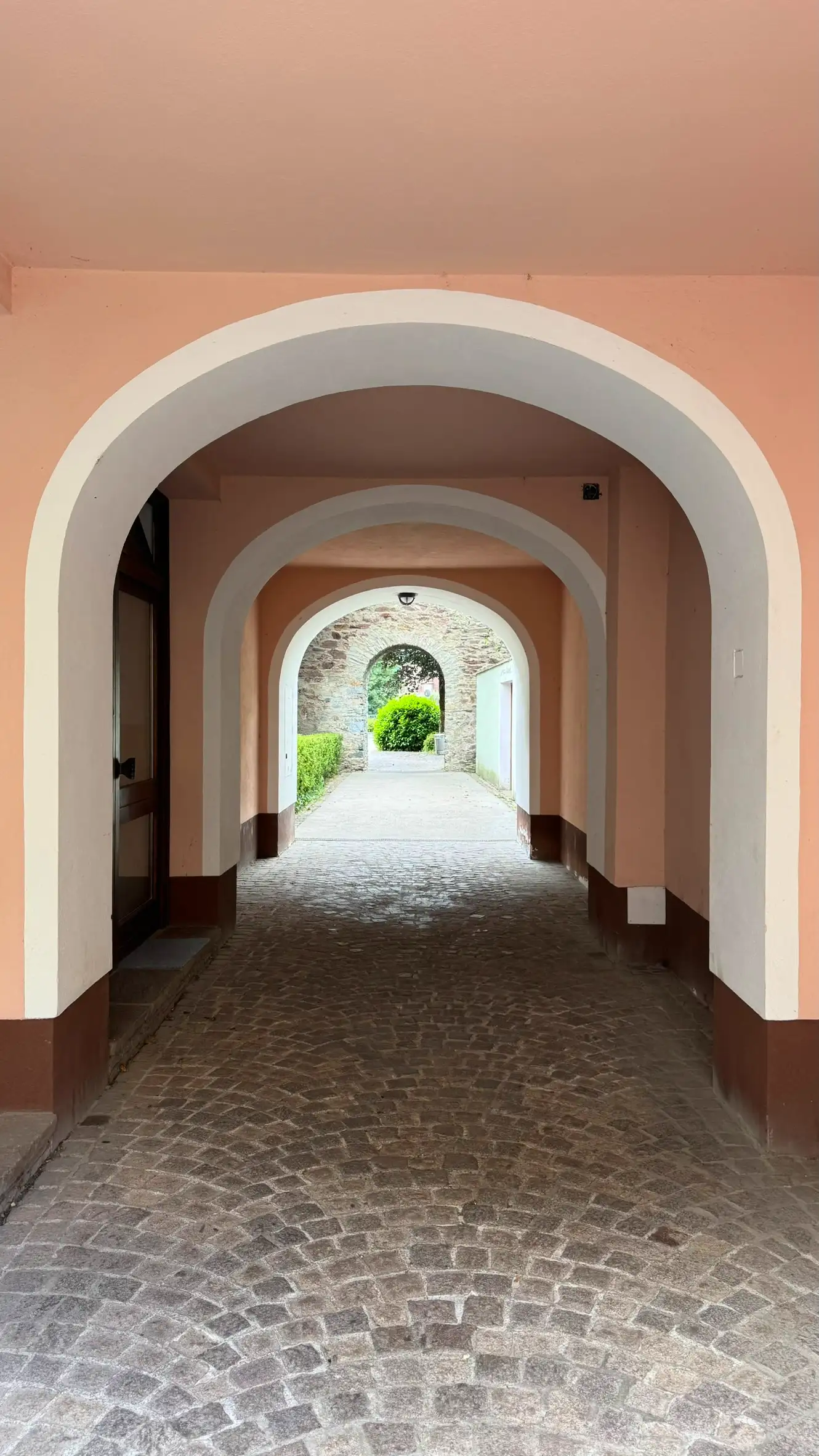
Pass through multiple arches of Sudentengasse to reach Herzog-Bernhard-Tor