The western half of St. Veit’s main square is dominated by the finely crafted Walther von der Vogelweide fountain.
The Fire of 1676 and Reconstruction
The fountain was constructed in 1676, shortly after a devastating fire that swept through the town and made the rebuilding of the town centre necessary.
Fountain | Architectural Features
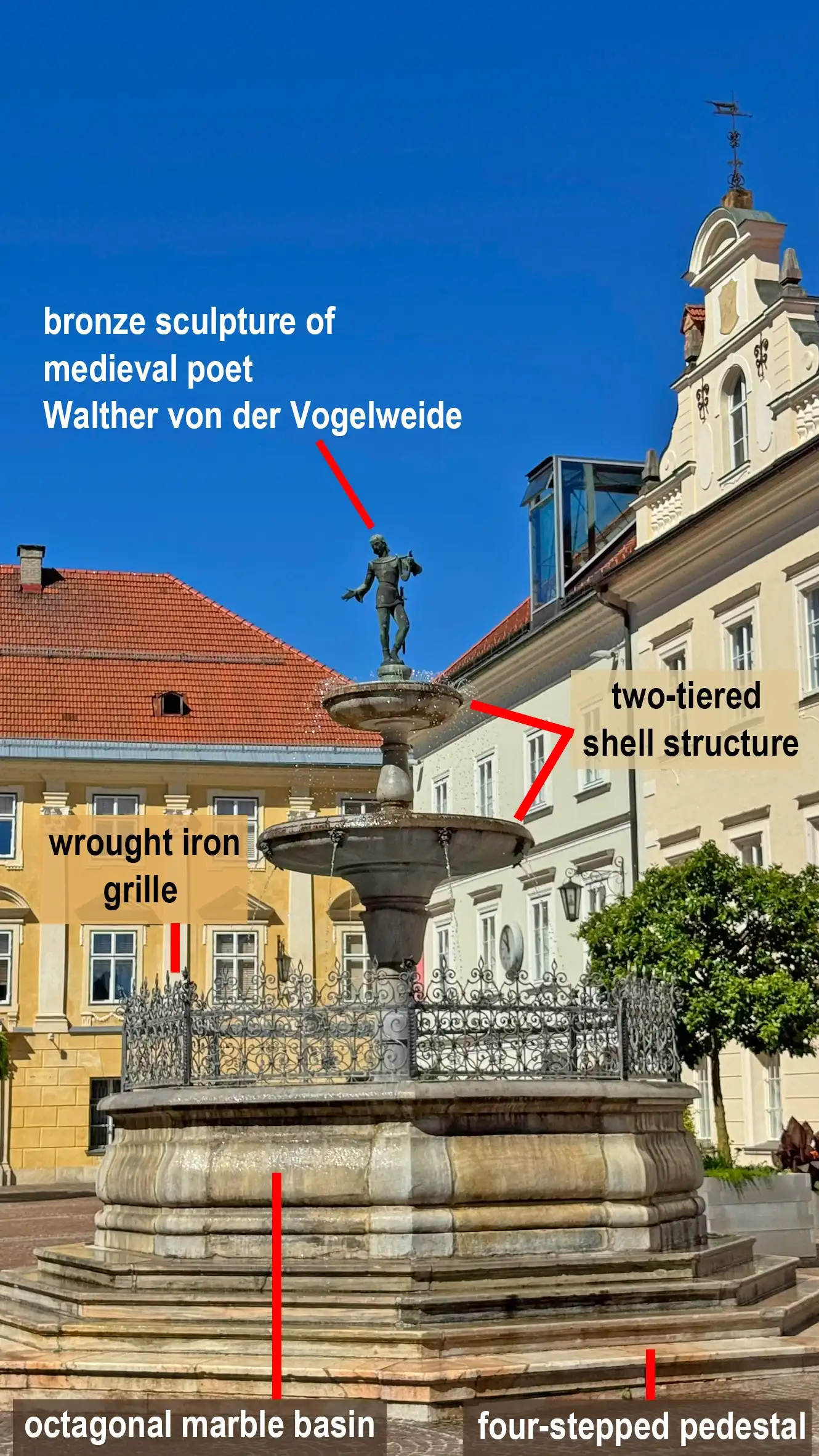
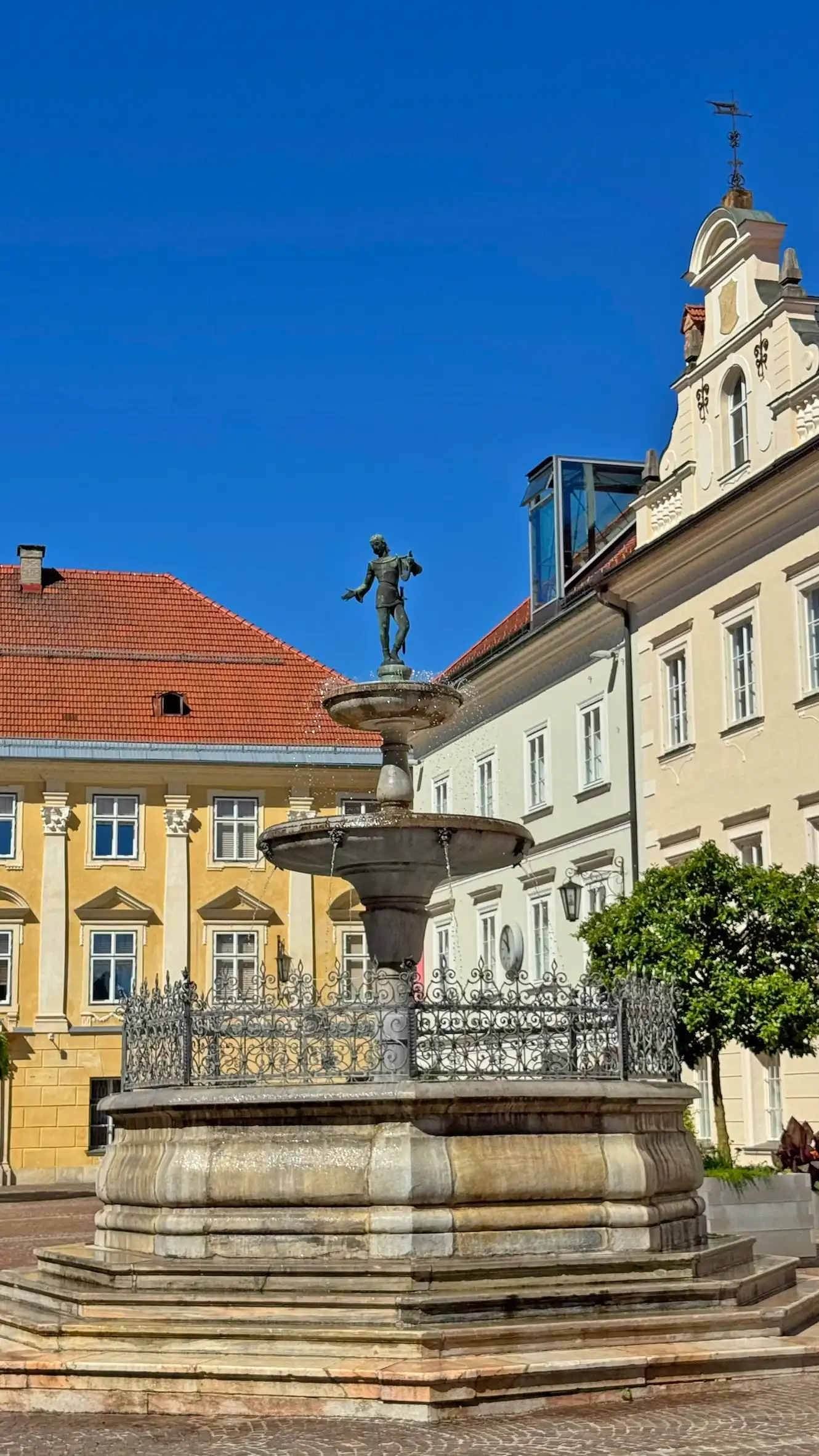
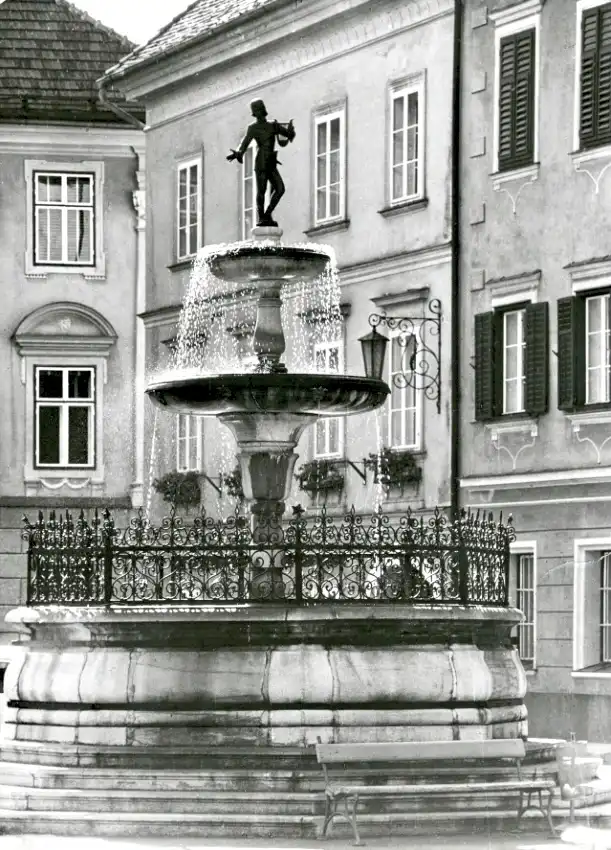
The fountain features a broad, octagonal marble basin set upon a four-stepped pedestal.
An ornate wrought iron grille encircles the basin — a typical design element of Baroque fountains built after urban fires.
In the 19th century, a two-tiered shell structure was added, giving the fountain its current vertical silhouette.
Three Different Statues | Historical Background
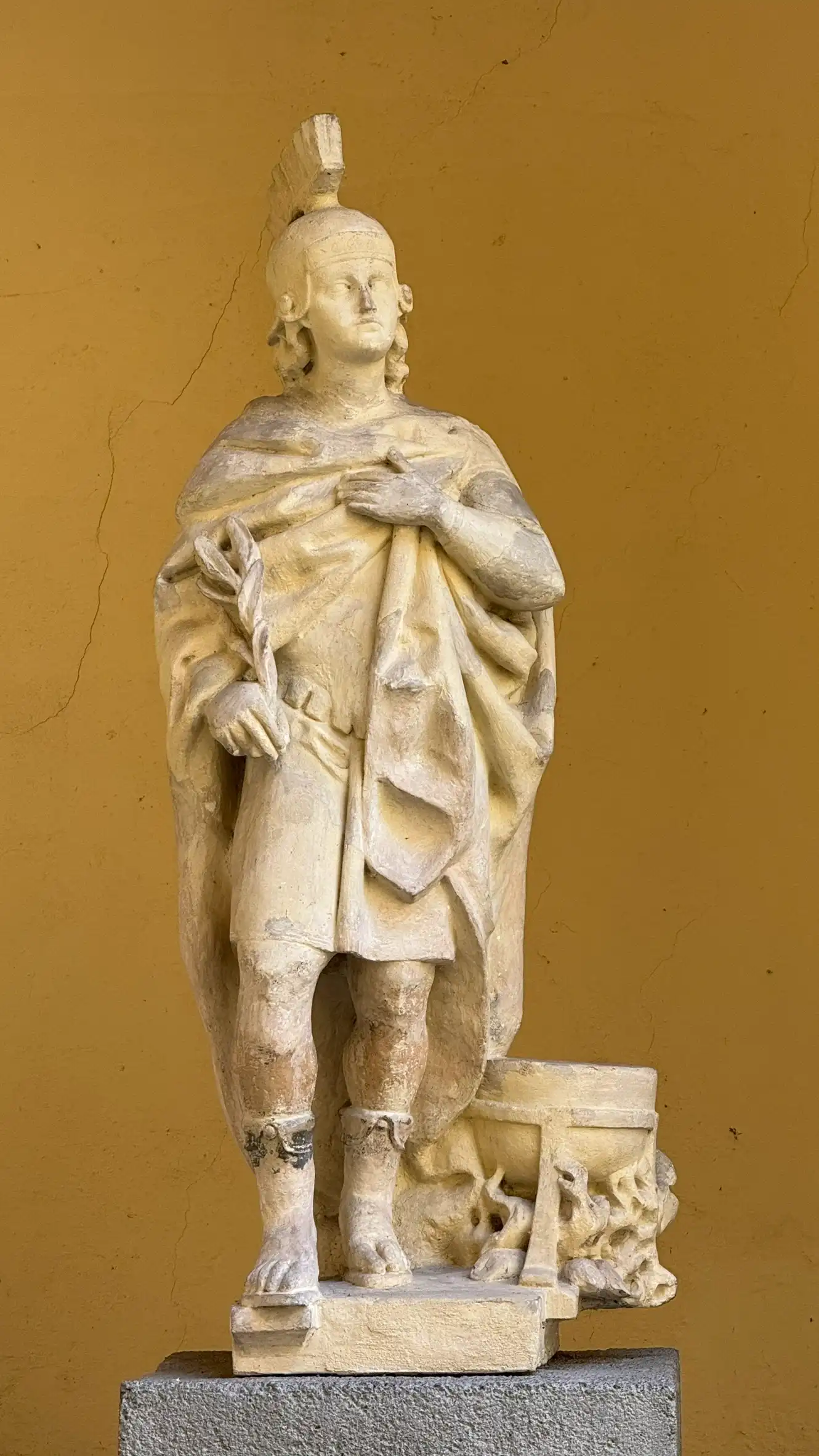
Originally, the fountain was crowned by a statue of Saint Florian, the patron saint against fire.
Around 1930, this religious figure was replaced by a stone statue of the medieval poet Walther von der Vogelweide, reflecting a cultural shift towards regional identity.
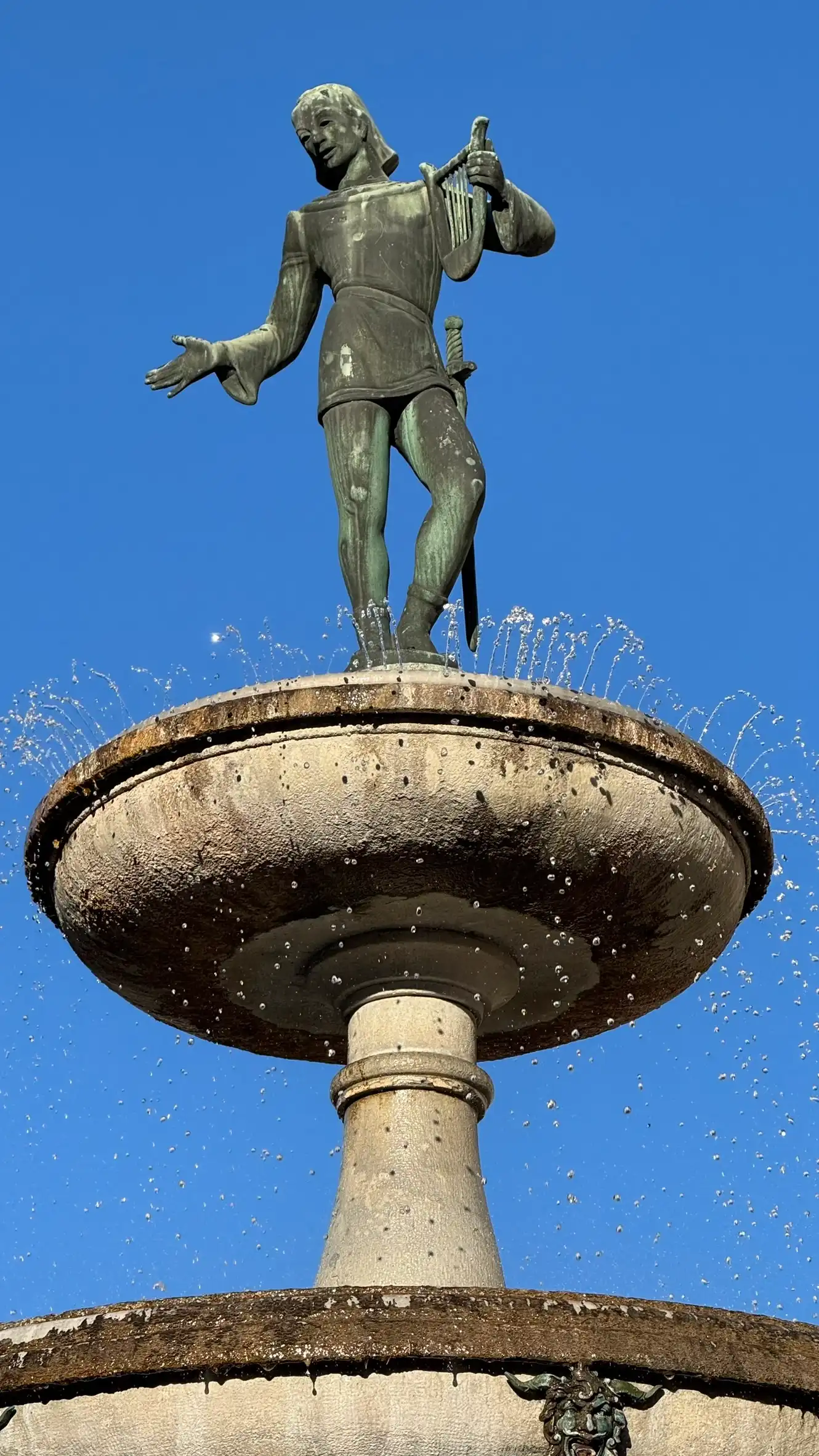
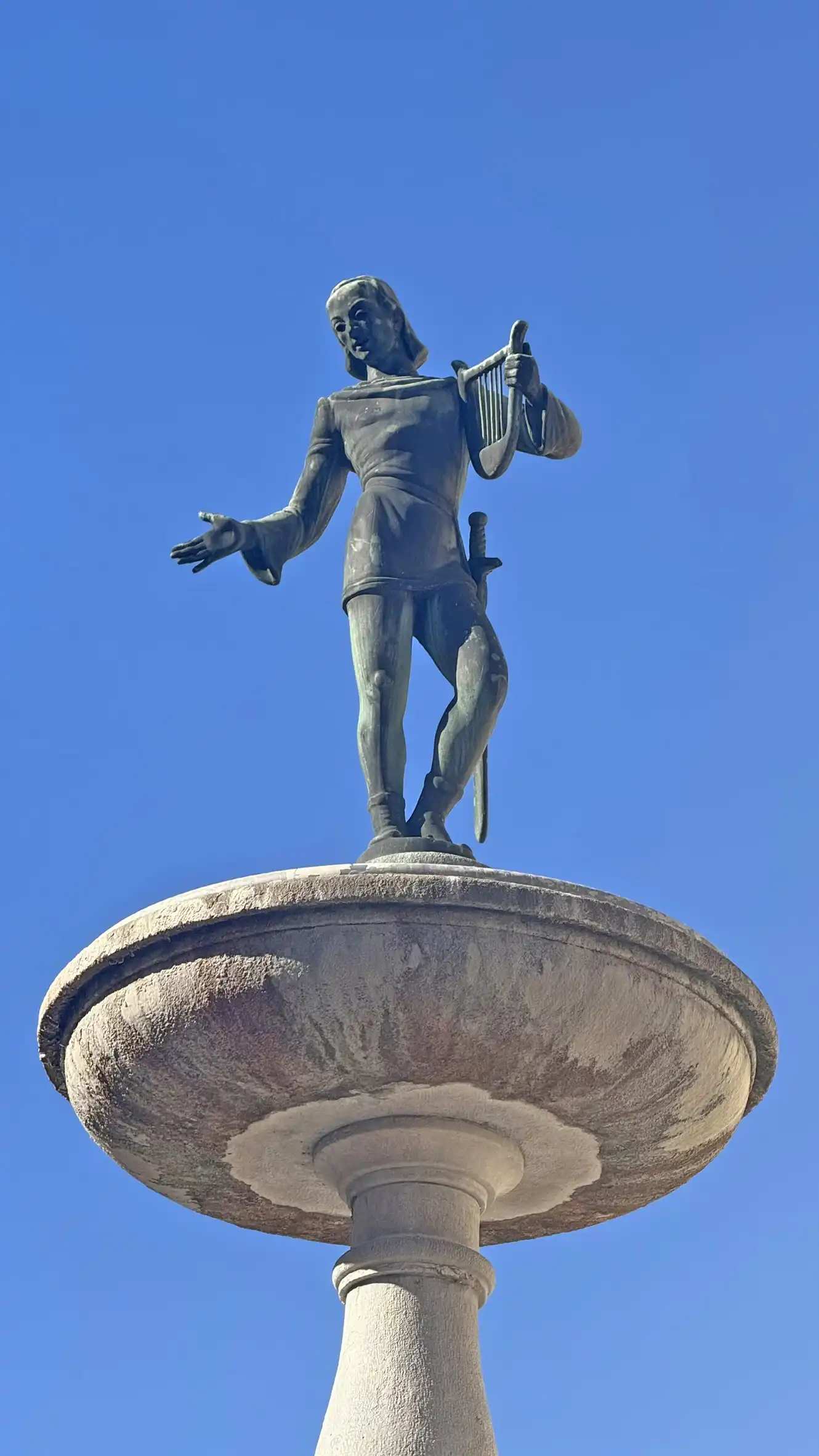
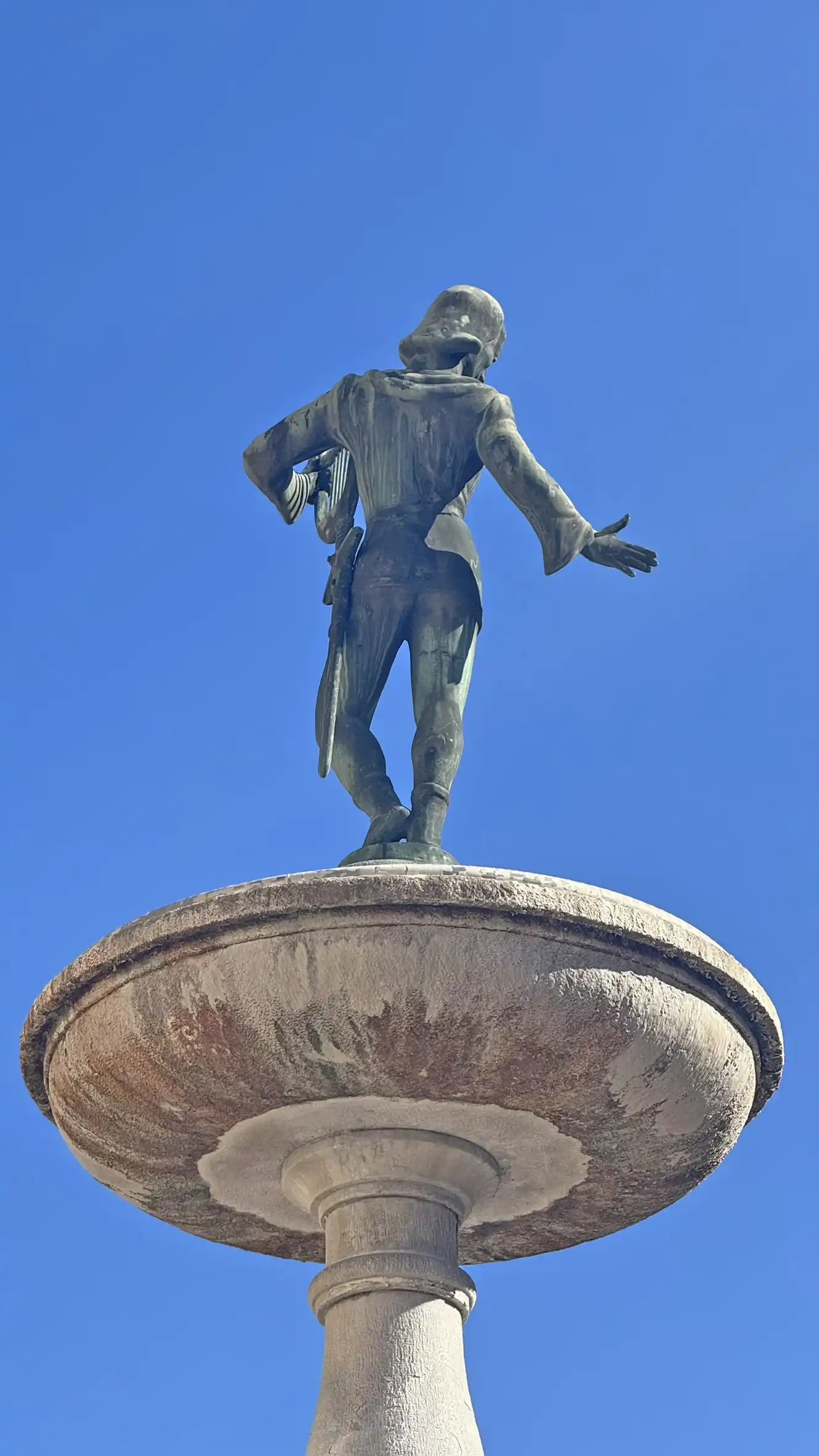
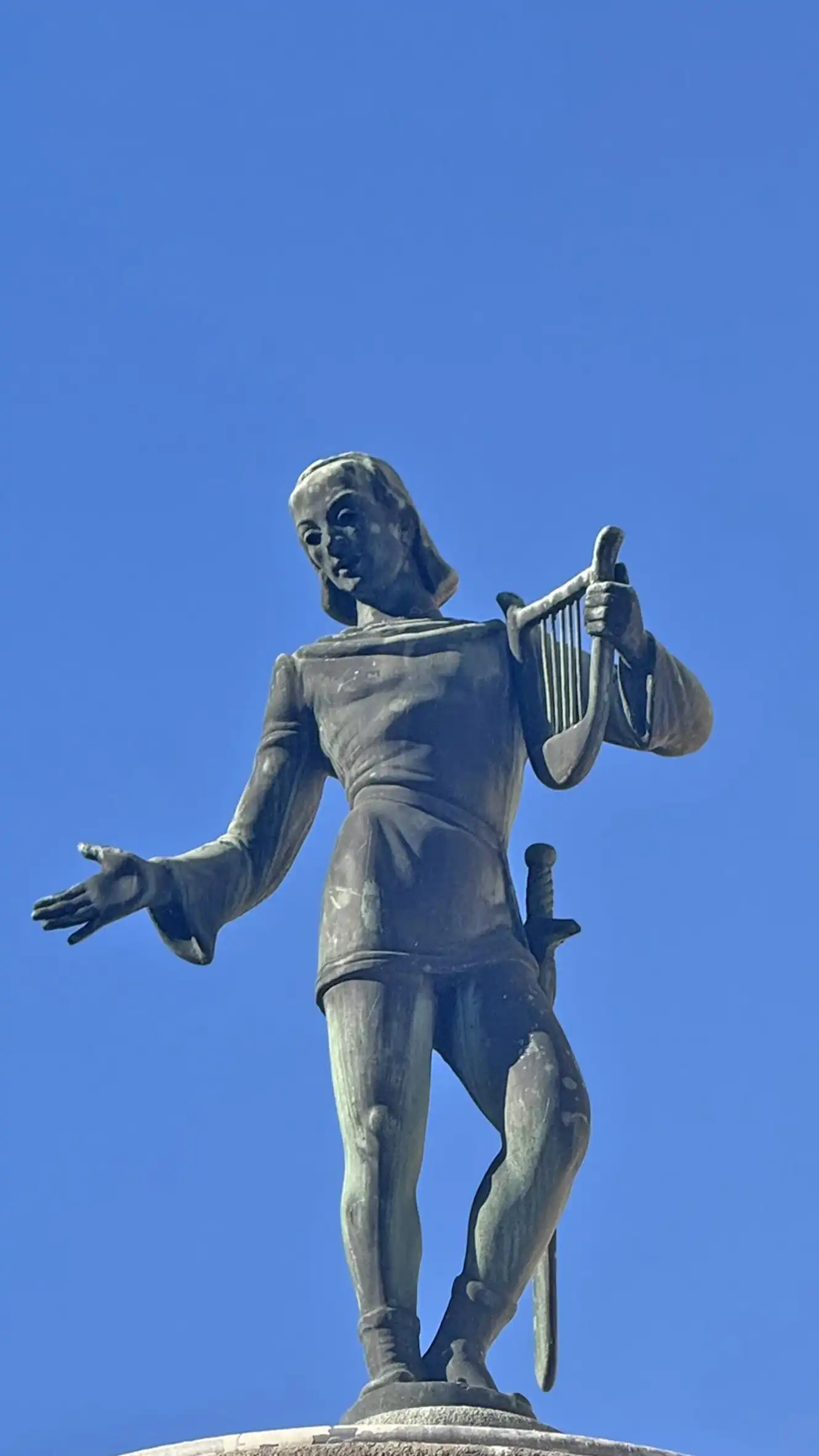
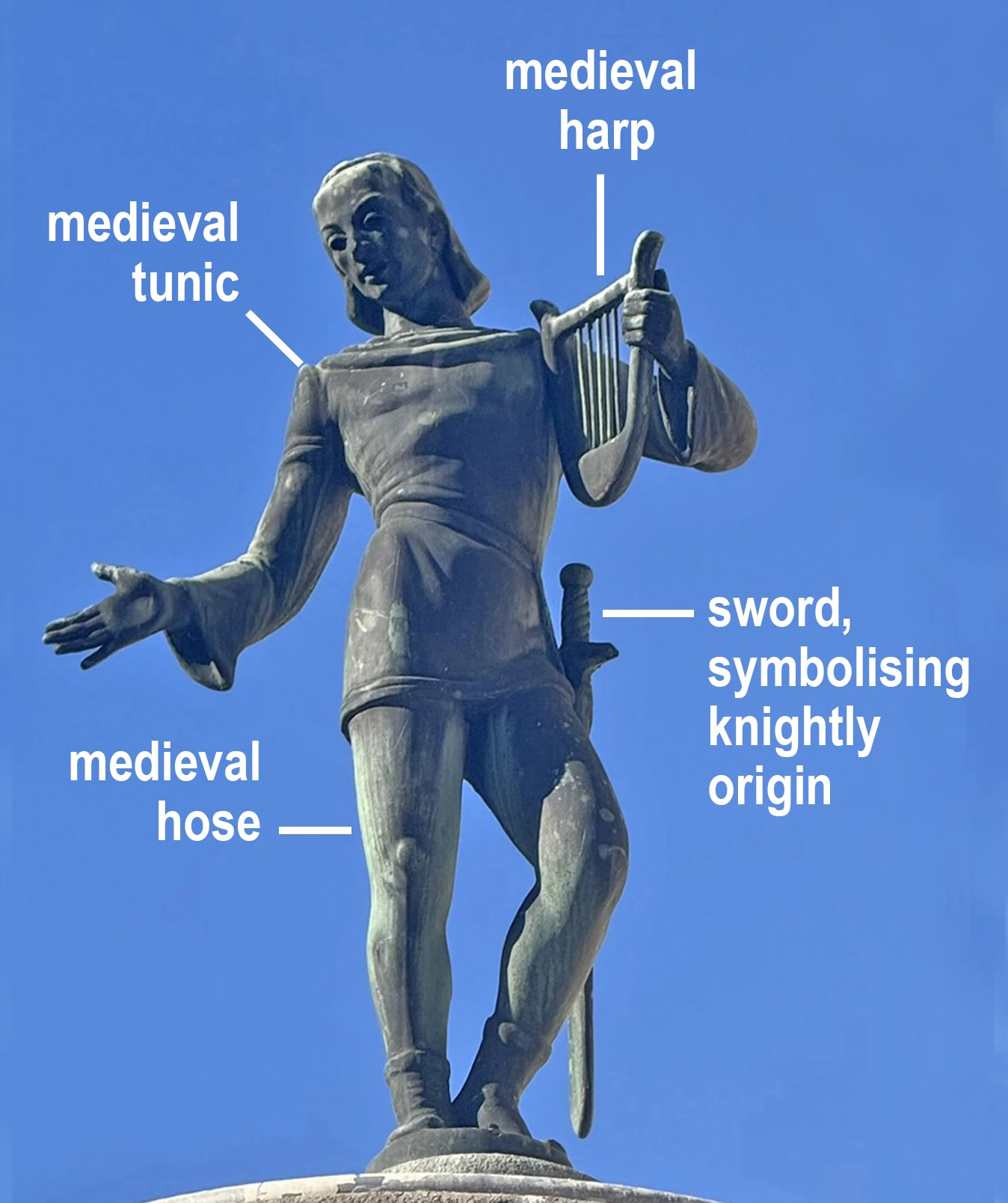
The present-day bronze sculpture was created in 1960 by Hungarian artist Lajos Szadai. It portrays the poet in detailed medieval dress with expressive features.
Location
The fountain stands in the western part of the square, just a few metres south of the town hall.
Cultural Landmark
Combining historical significance with artistic elegance, the Walther von der Vogelweide Fountain is a remarkable cultural landmark in the heart of St. Veit an der Glan.
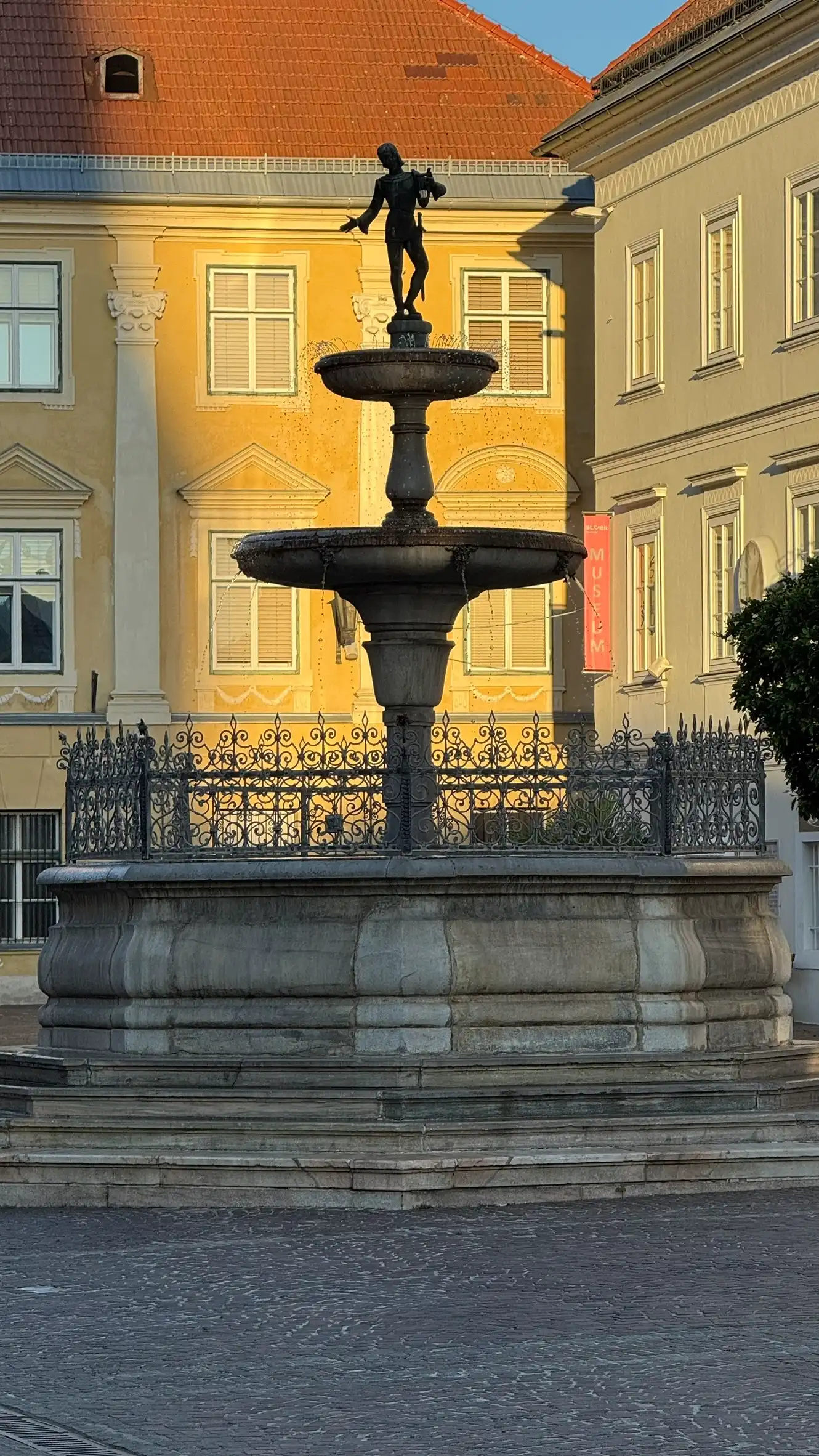
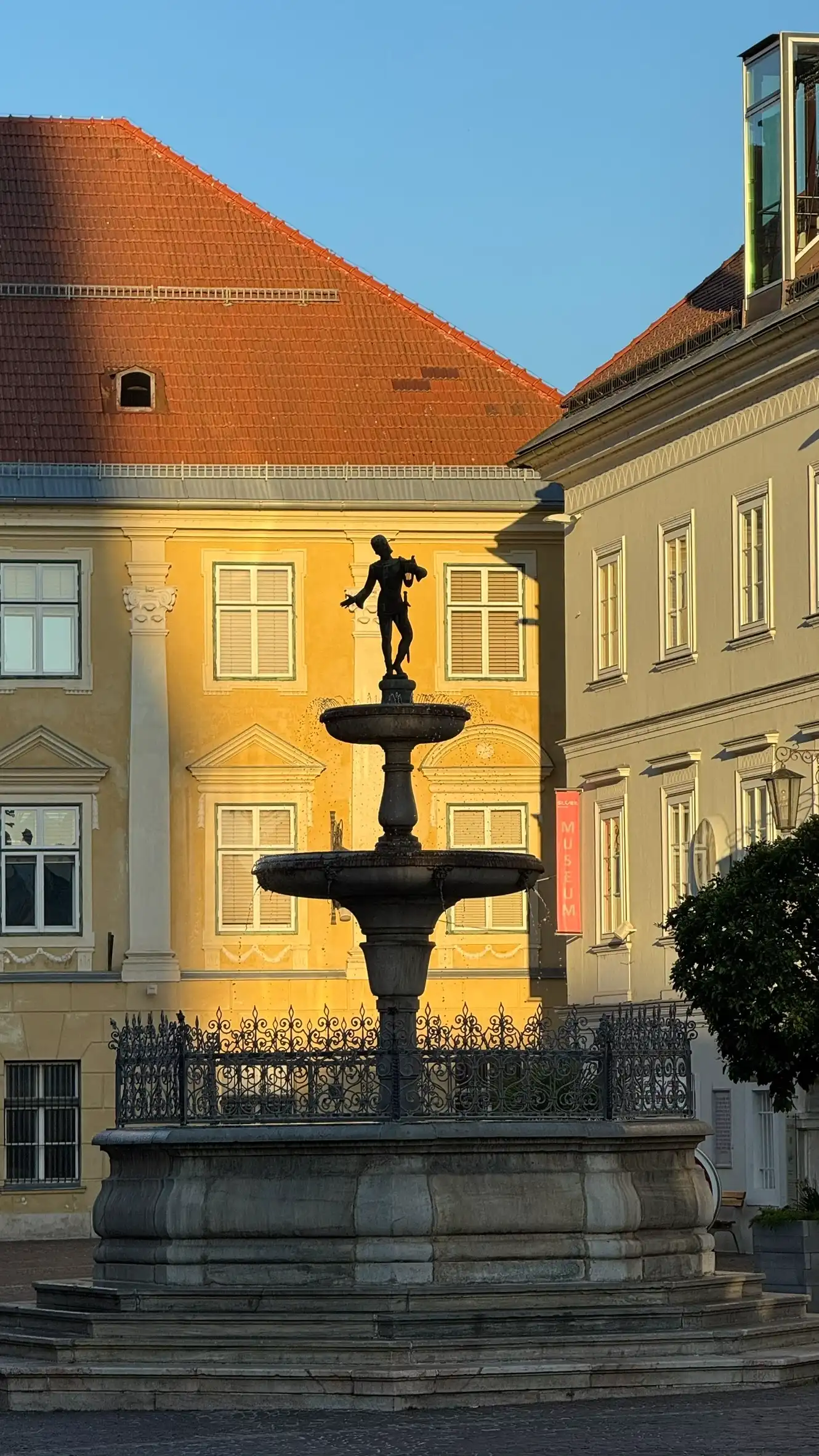
Silhouetted fountain with Palais Koller backdrop
The fountain stands in the western part of the square.
Top to bottom: statue, two shells, basin, pedestal
Bronze statue of Walther von der Vogelweide (medieval poet)
"Walther von der Vogelweide" sculpture, viewed from the front
"Walther von der Vogelweide" sculpture, viewed from the back
The medieval poet is standing on top of the fountain and holding a harp.
Walther von der Vogelweide | Short Biography
Walther von der Vogelweide (born c. 1170 CE, died c. 1230 CE) was a highly regarded medieval poet and composer. He is considered the greatest Minnesinger and is celebrated for his lyric poetry (particularly his love songs) and his contributions to the Minnesang tradition. Beyond his love songs, he also wrote political poems and songs, making him one of the first political poets in German literature.
Early Life Walther was born in Austria, likely around 1170 CE. He received a formal education at a monastic school. He is thought to have been of knightly birth.
Career and Contributions Walther von der Vogelweide’s poetry departed from the artistic conventions of his time, marked by a distinct touch of realism. His love songs are considered the pinnacle of the Minnesang tradition. He also wrote political and moralising poems, making him the first political poet in German literature. His poetry emphasises the virtues of a balanced life and reflects his disapproval of those who disturbed this harmony. He was known for his skill in crafting verse and his ability to capture a wide range of emotions and subjects.
Legacy Walther von der Vogelweide is widely regarded as one of thegreatest lyric poets in German literature prior to Goethe. His poetry has been preserved in various manuscripts and has been the subject of numerous interpretations and analyses. He was also one of the most influential figures in the development of German literature.
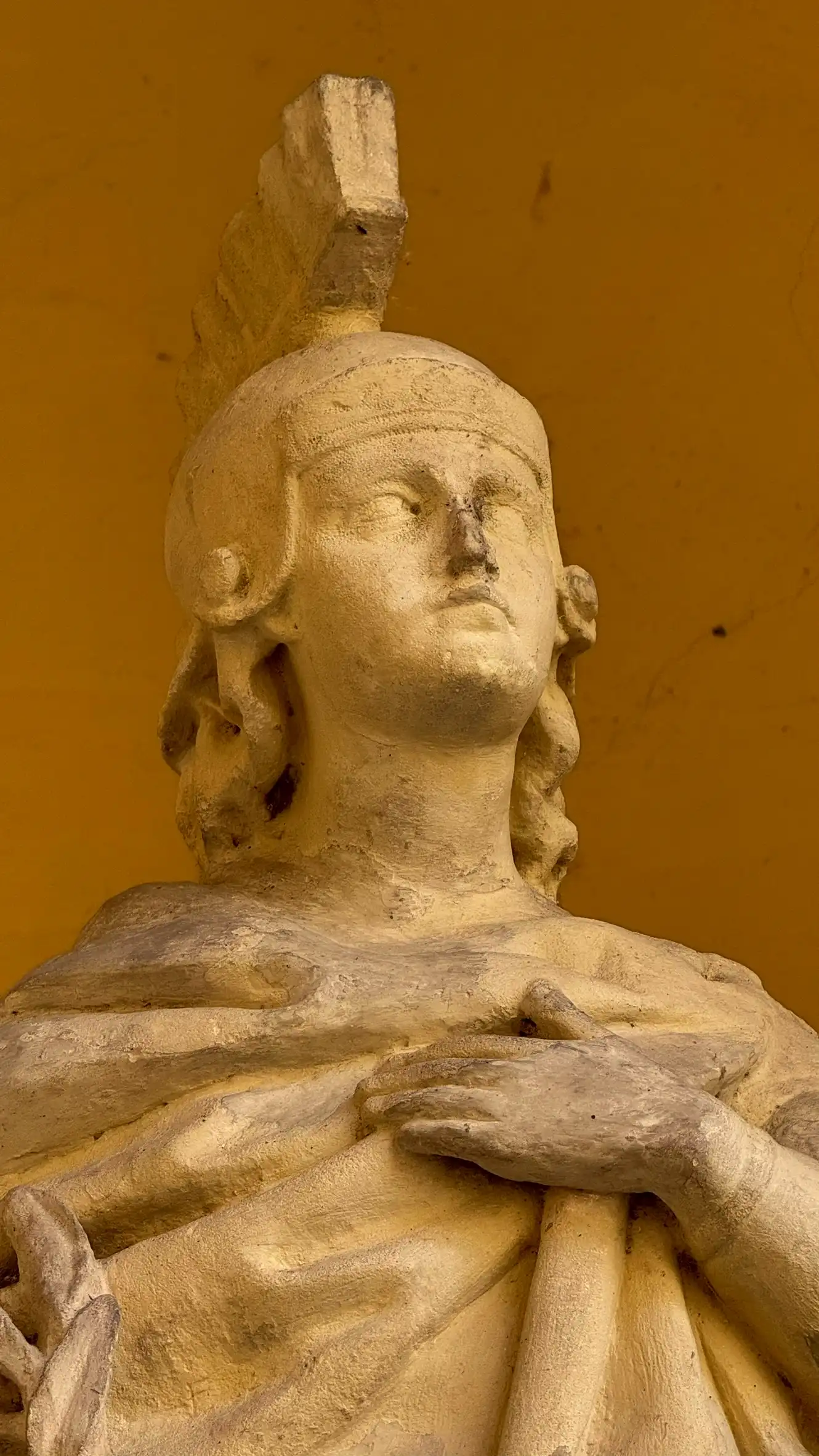
Stone Statue of Saint Florian (see images below)
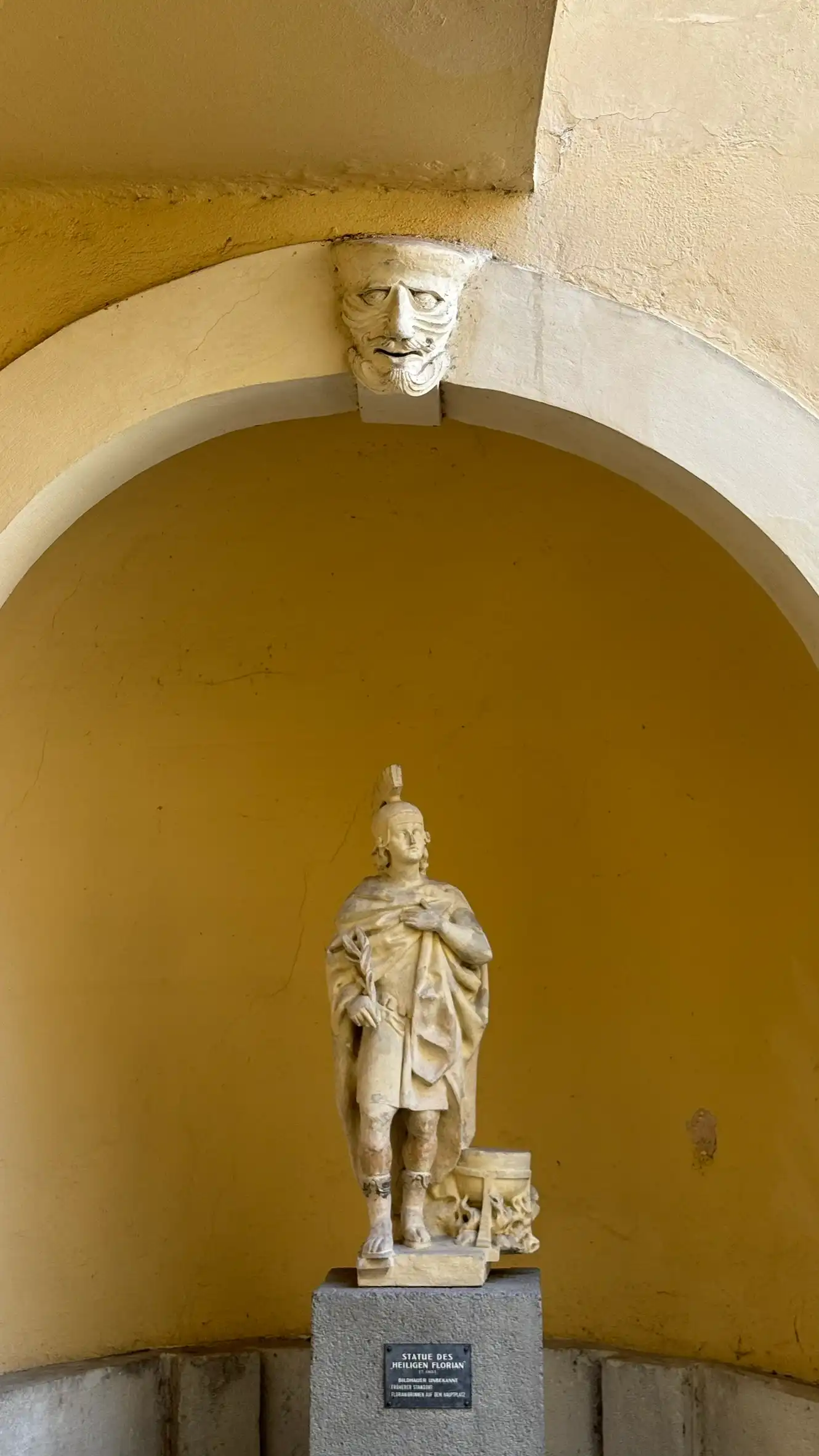
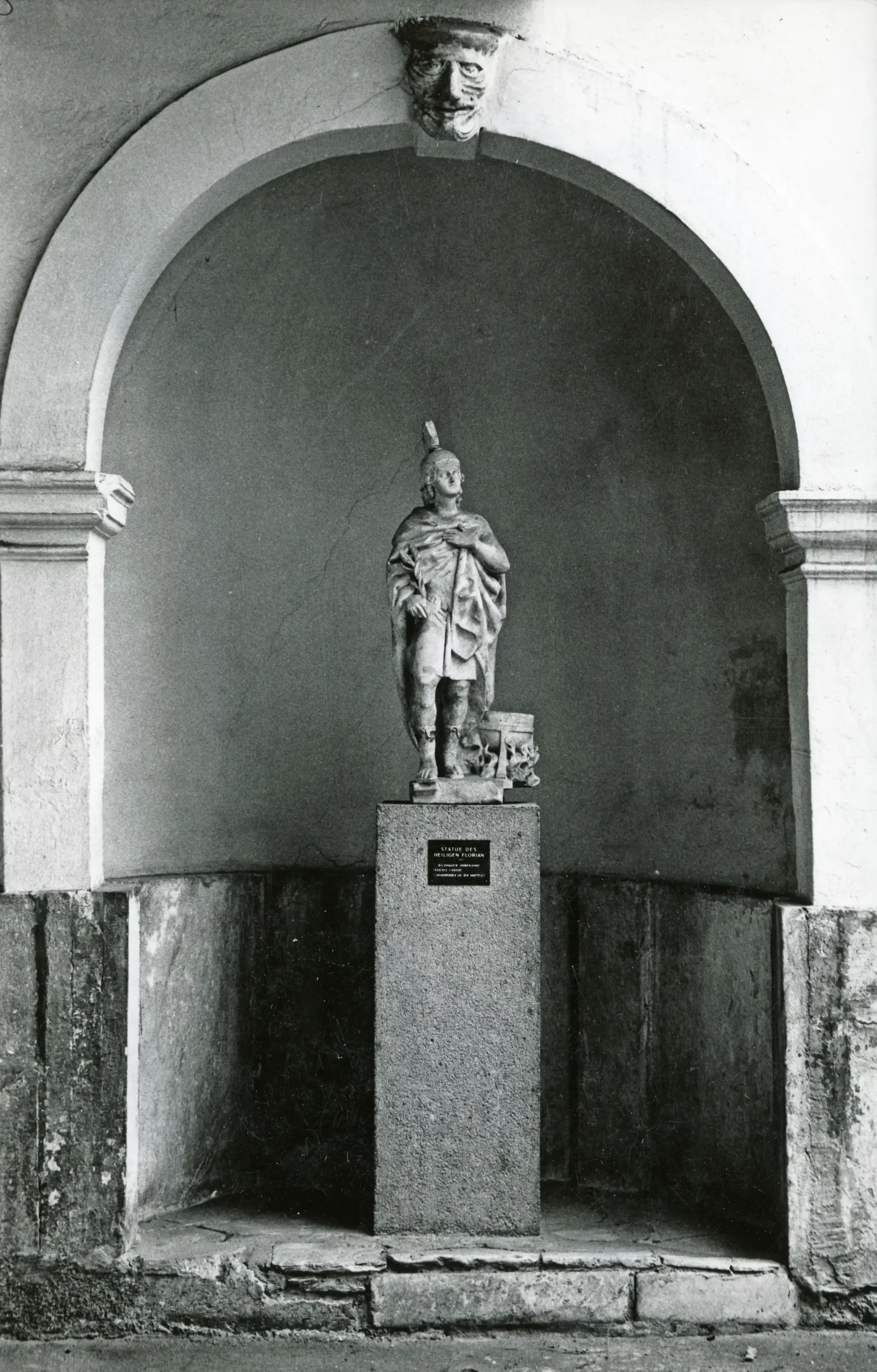
This was the original statue that stood on the “Walther von der Vogelweide” fountain. Today, it stands in an arched niche, facing the courtyard of the district authority building (Hauptplatz 28).
Around 1930, the statue of Saint Florian (mentioned above) was replaced by a stone statue of the medieval poet “Walther von der Vogelweide”.
The present-day bronze sculpture was created in 1960.
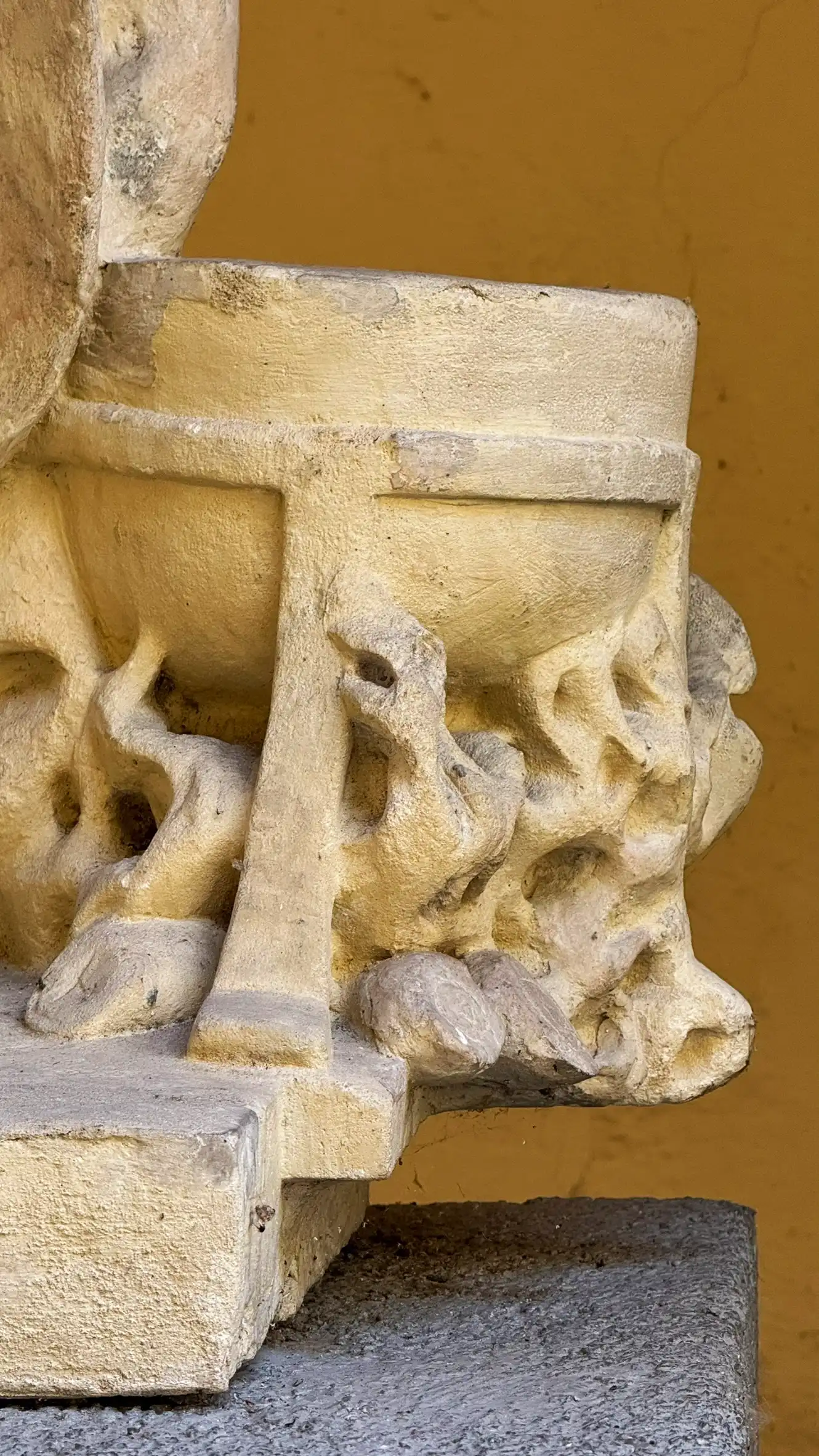
Stone statue of Saint Florian
Stone statue of Saint Florian, relocated from the Floriani Fountain (main square) to the district authority building.
The bucket of water symbolises Saint Florian’s role as the protector against fire.
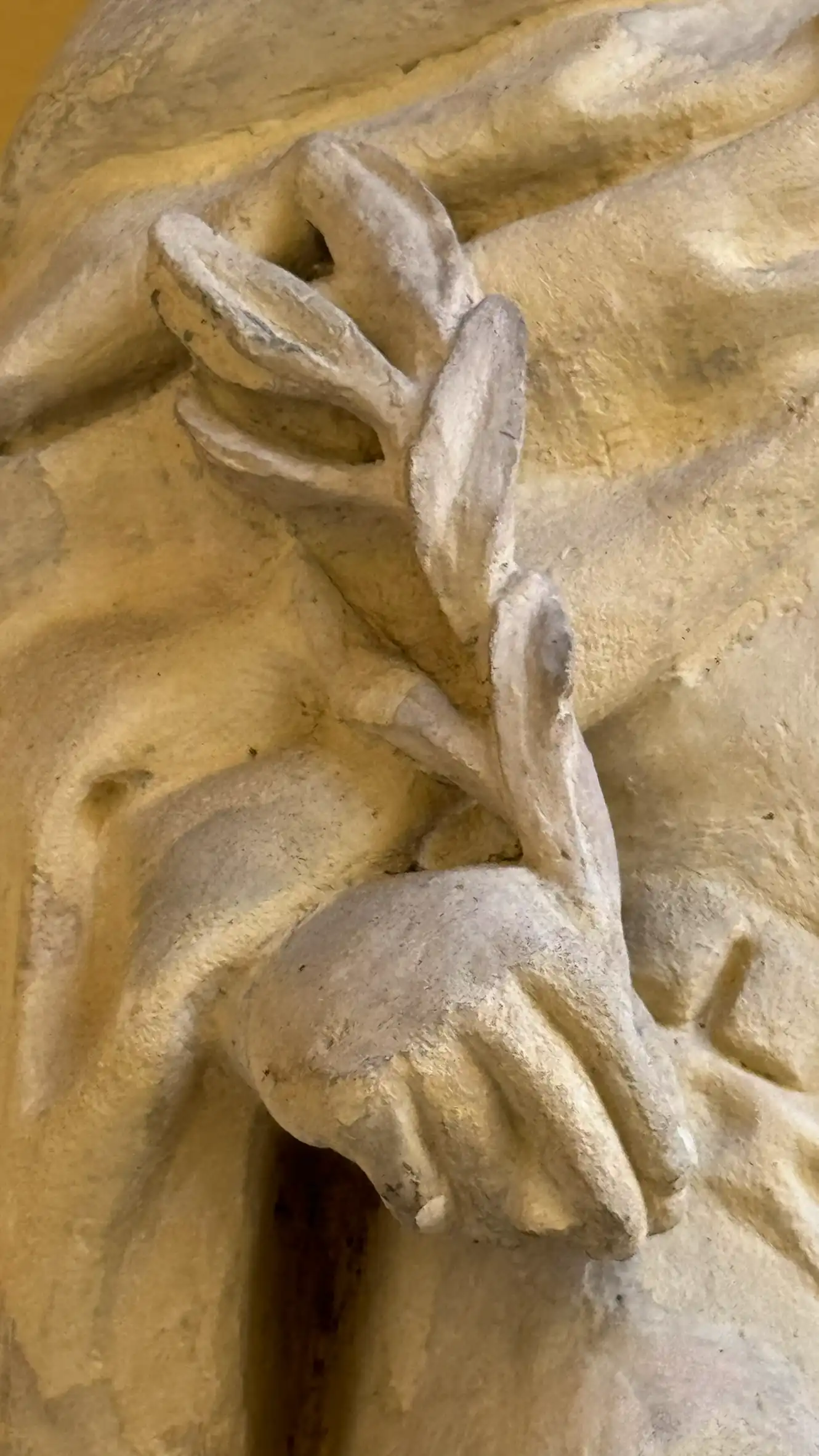
Close-up of the right hand
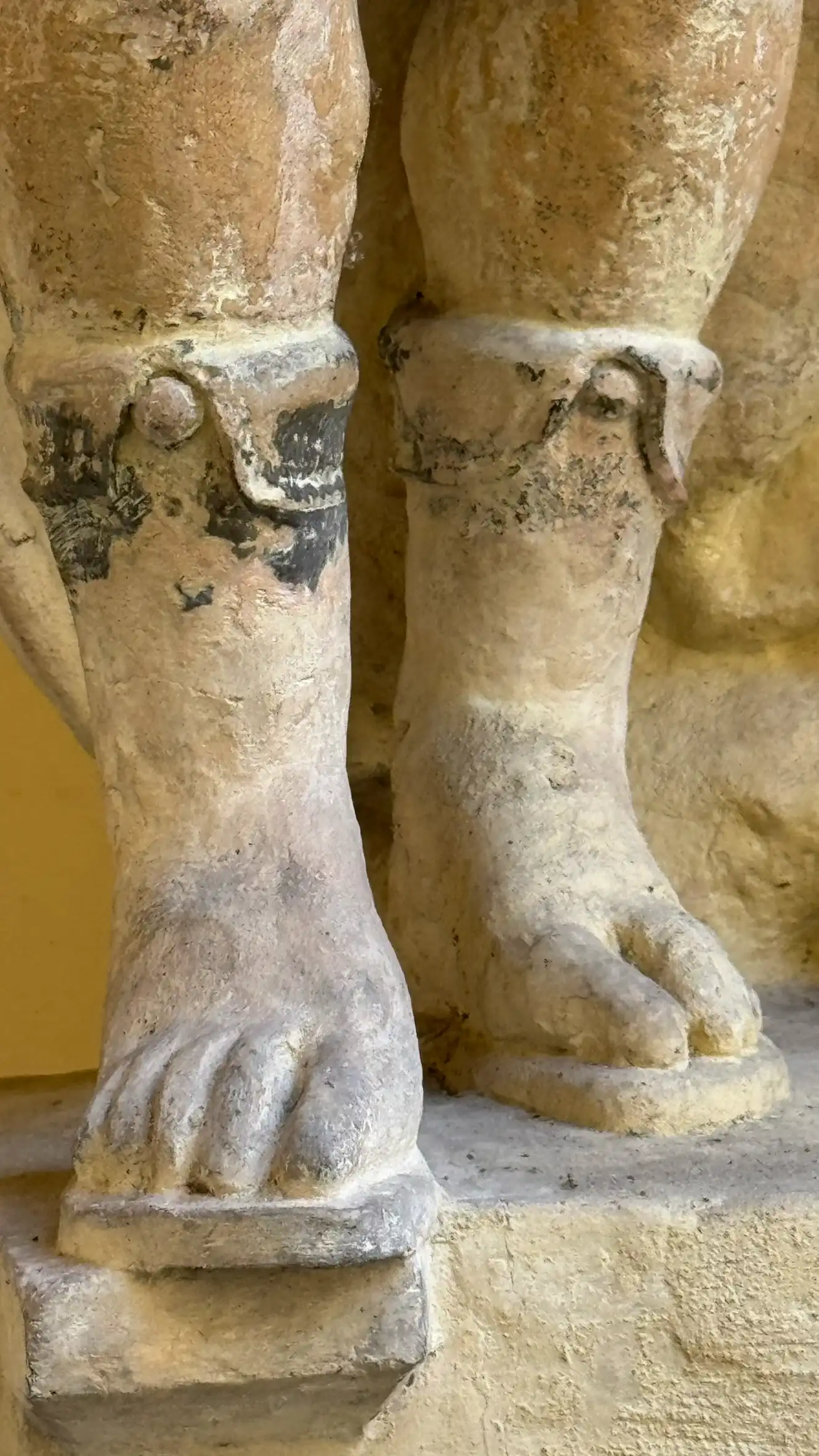
Close-up of the feet
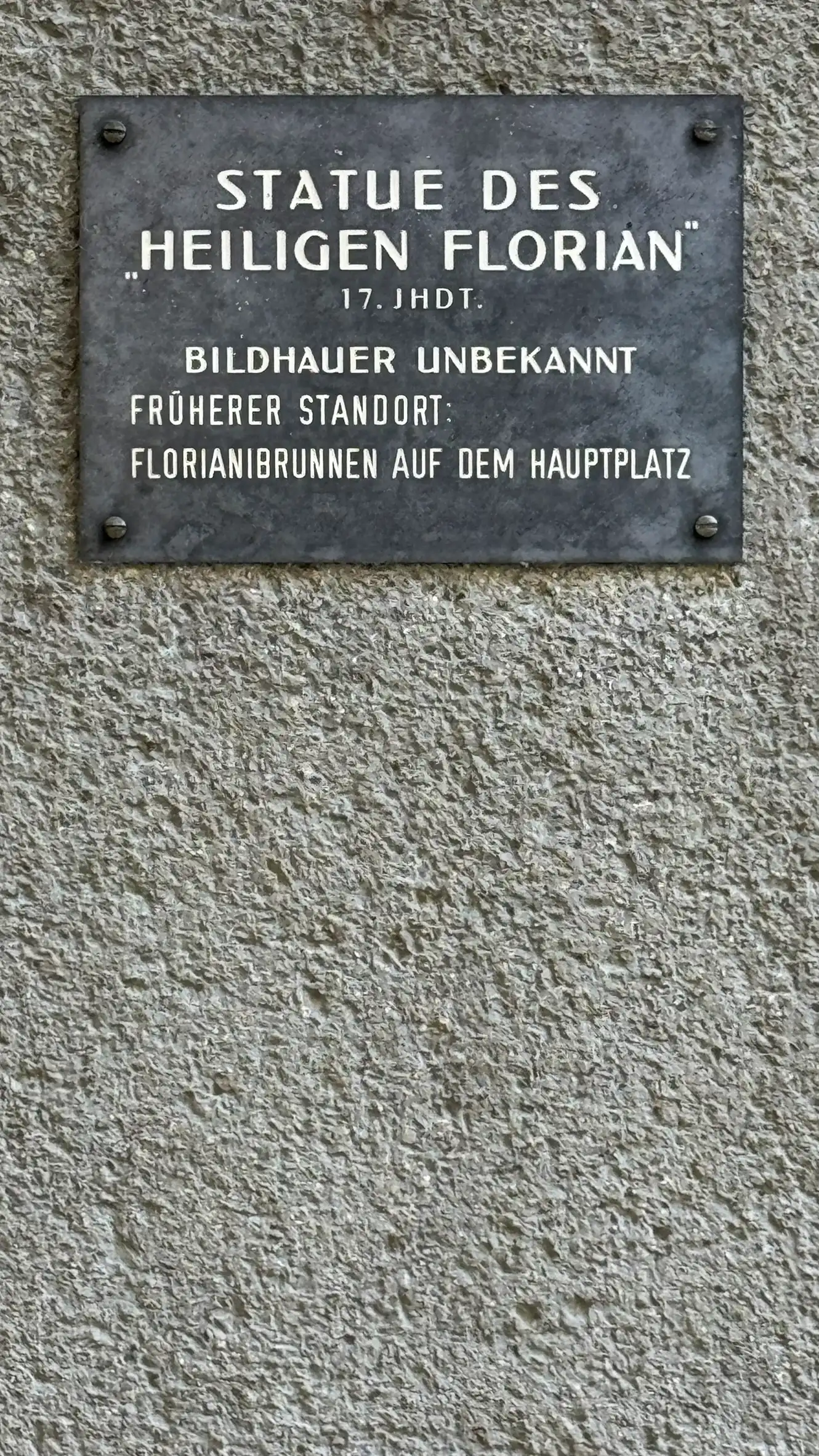
Label text: Saint Florian’s statue, 17th c. Originally on the Floriani Fountain (main square); sculptor unknown.
Statue viewed from the side
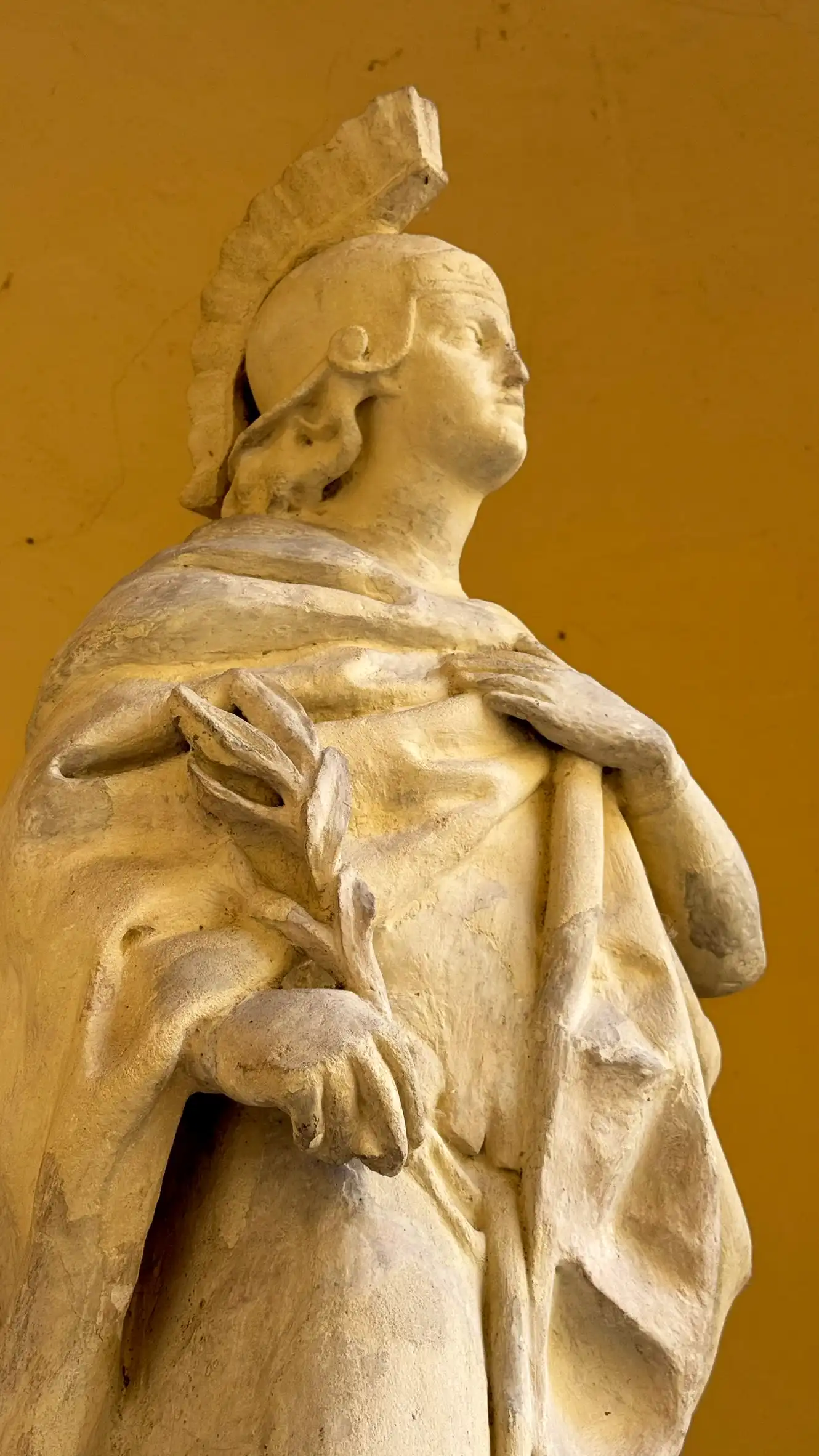
Close-up of the upper half of the statue
Historical Photograph Image Source: Archive of the Municipal Authority of St. Veit an der Glan
Stone Statue of St Florian
Formerly, the stone statue of St Florian stood atop the Floriani Fountain (now called the “Walther von der Vogelweide” Fountain).
Today, it faces the courtyard of the district authority building.
“Walter von der Vogelweide” Fountain Photographed around 1965