The Friesacher Tor was the north-eastern entrance to the medieval town. It was heavily fortified and the strongest gate in St. Veit an der Glan.
Historical Background | Construction and Reinforcement
The Friesacher Tor was one of four medieval fortified gates integrated into the town wall of St Veit an der Glan.
It was erected in the 13th century. It underwent reinforcement in the 15th century. It was reinforced again in the 16th century together with the addition of wide zwingers to the defence walls.
Location
Located in the north-eastern part of the old town, the Friesacher Tor served as a gateway to the historical trade route leading towards Friesach along the Friesacher Straße. It also provided access to the Friesacher Vorstadt (Friesach suburbs).
Demolition
The Friesacher Tor stood here until 1869.
Between 1851 and 1890, all four fortified gates – including the Friesacher Tor – were demolished to make way for urban expansion and the growing volume of vehicular traffic.
Although the gates have disappeared, several sections of the original town wall remain standing and are now protected as a heritage monument. In total, more than 1,000 metres of the wall have survived to this day.
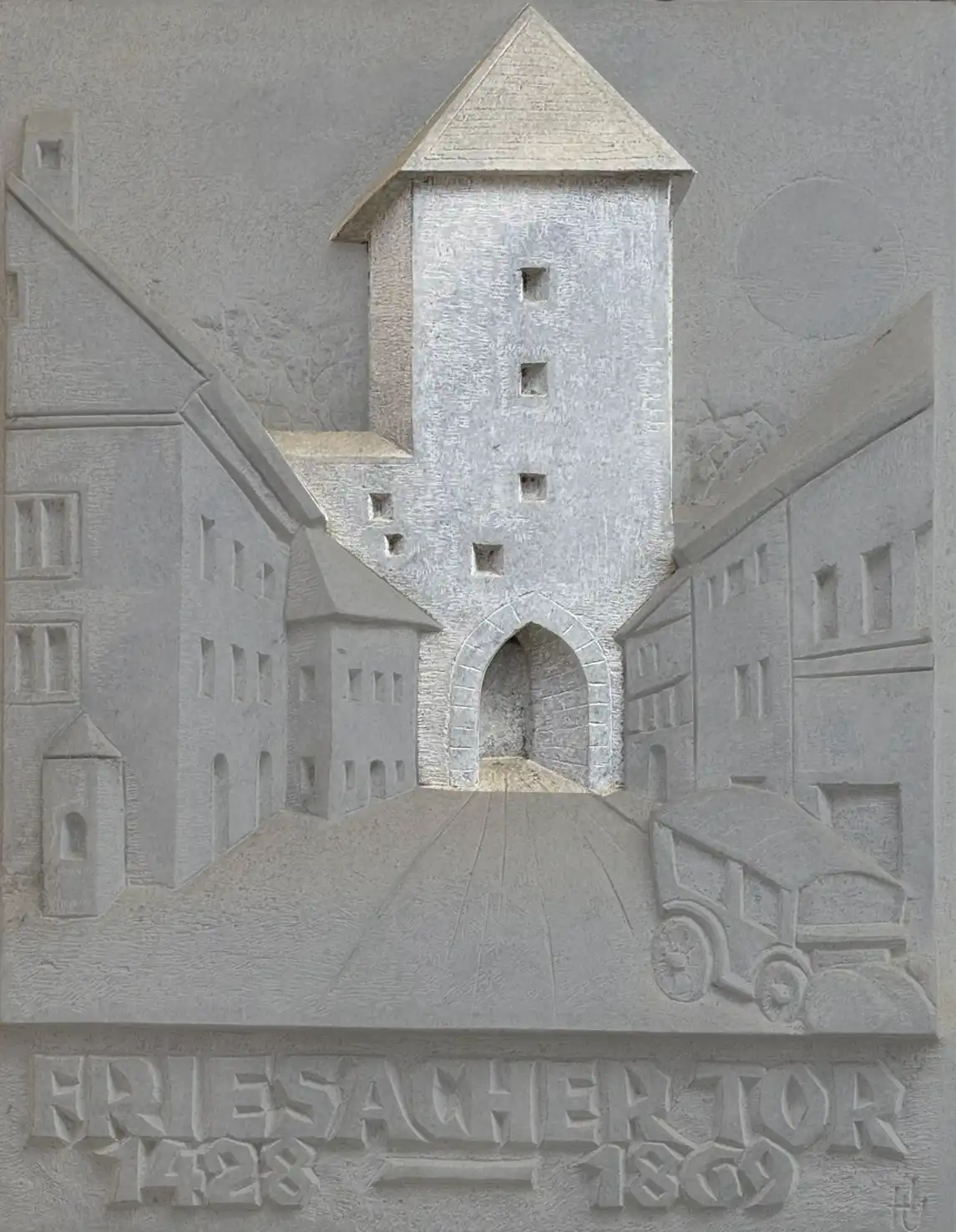
Plaque marking the former site of the "Friesacher Tor"; the gate tower is digitally accentuated.
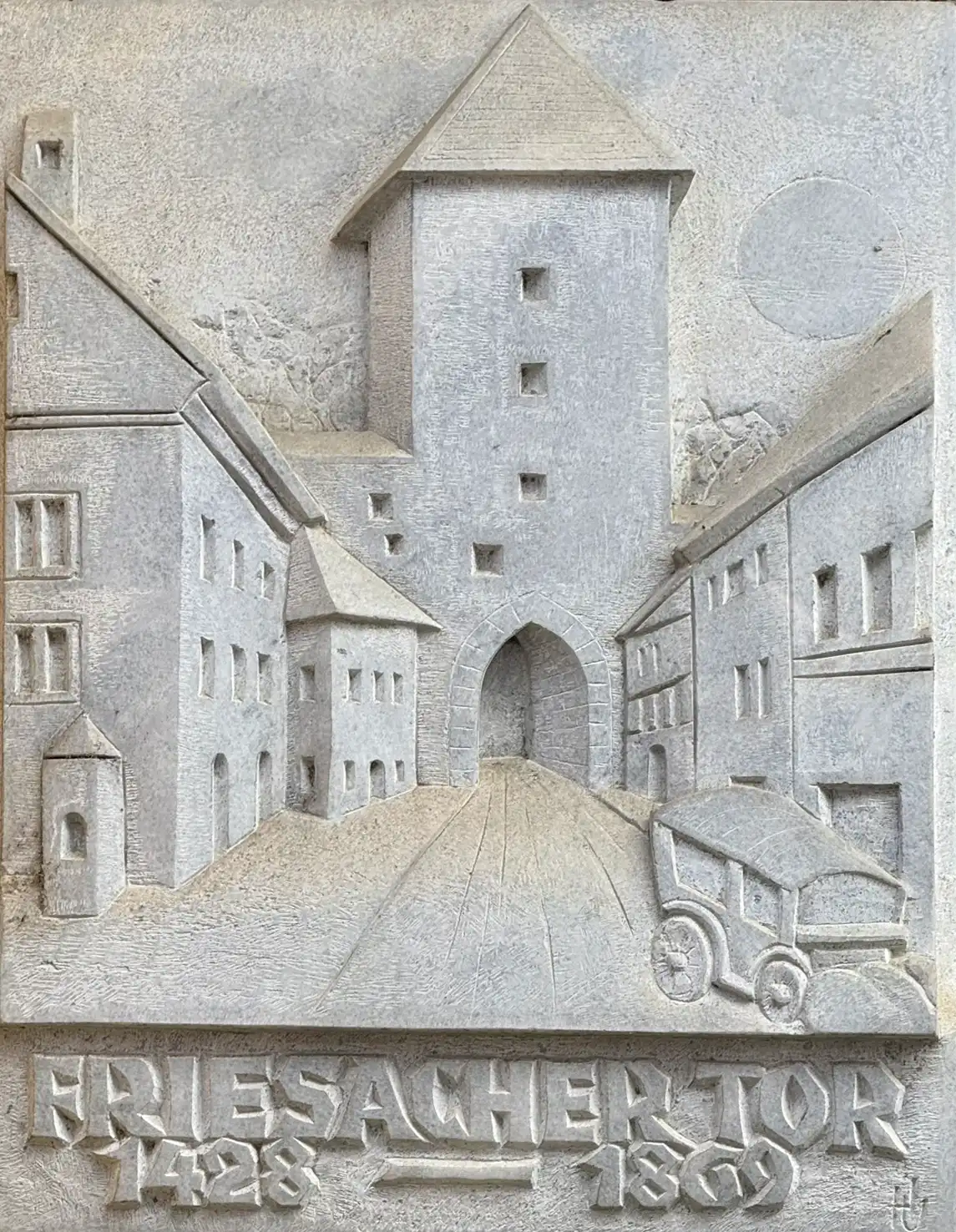
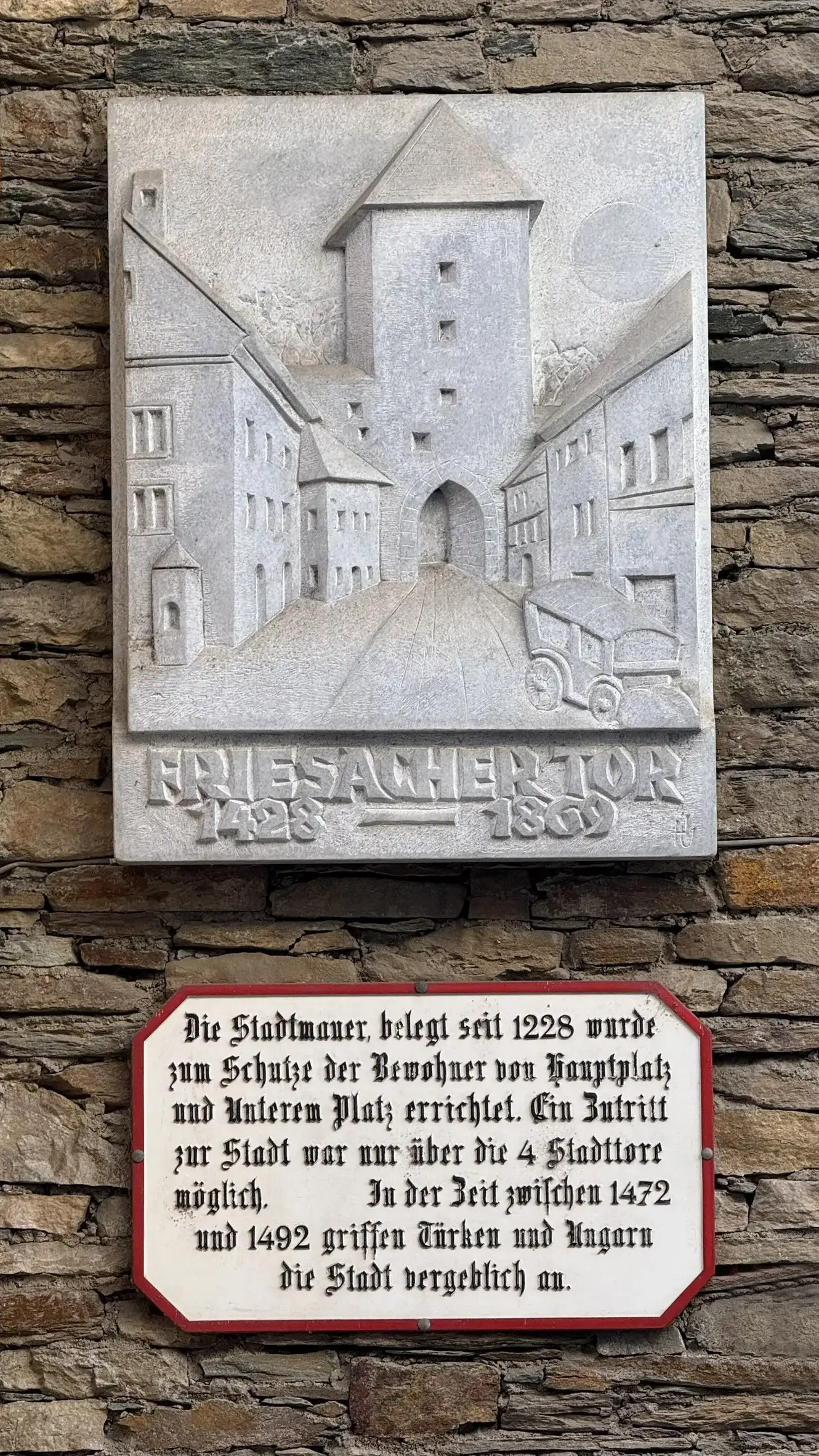
Plaque marking the former site of the "Friesacher Tor".
Text on the Location Plaque
The town wall, documented since 1228 CE, was erected to protect the residents of Hauptplatz and Unterer Platz. Access to the town was only possible through the four fortified gates. Between 1472 and 1492, the Turks and Hungarians attacked the town in vain.
Text on the location plaque
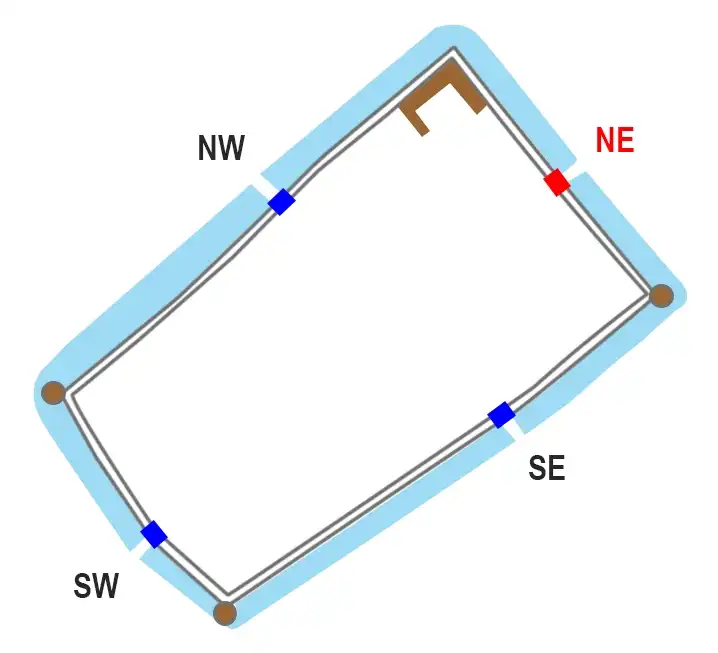
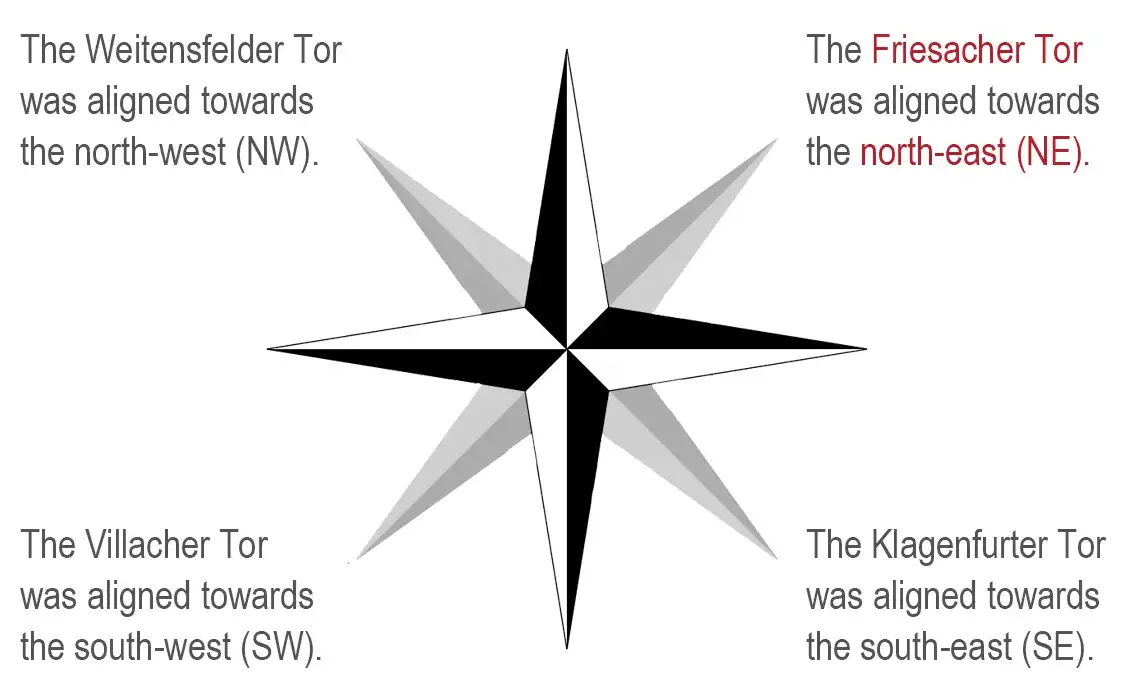
The Friesacher Tor was aligned towards the north-east (NE).
Cardinal Directions of the Four Fortified Gates
The Friesacher Tor was aligned towards the north-east (NE). The Klagenfurter Tor was aligned towards the south-east (SE). The Villacher Tor was aligned towards the south-west (SW). The Weitensfelder Tor was aligned towards the north-west (NW).
The Friesacher Tor was aligned towards the north-east (NE).