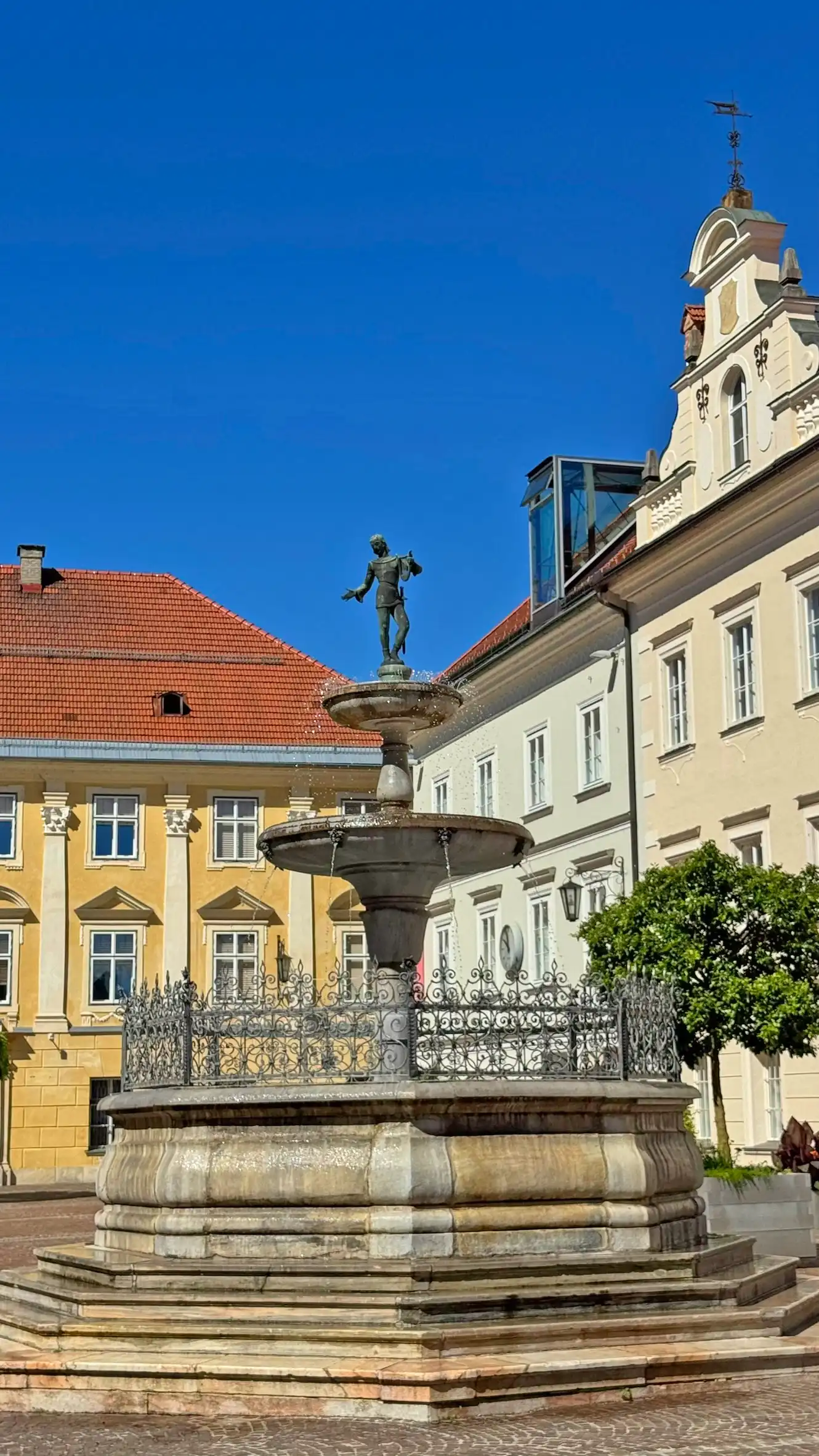
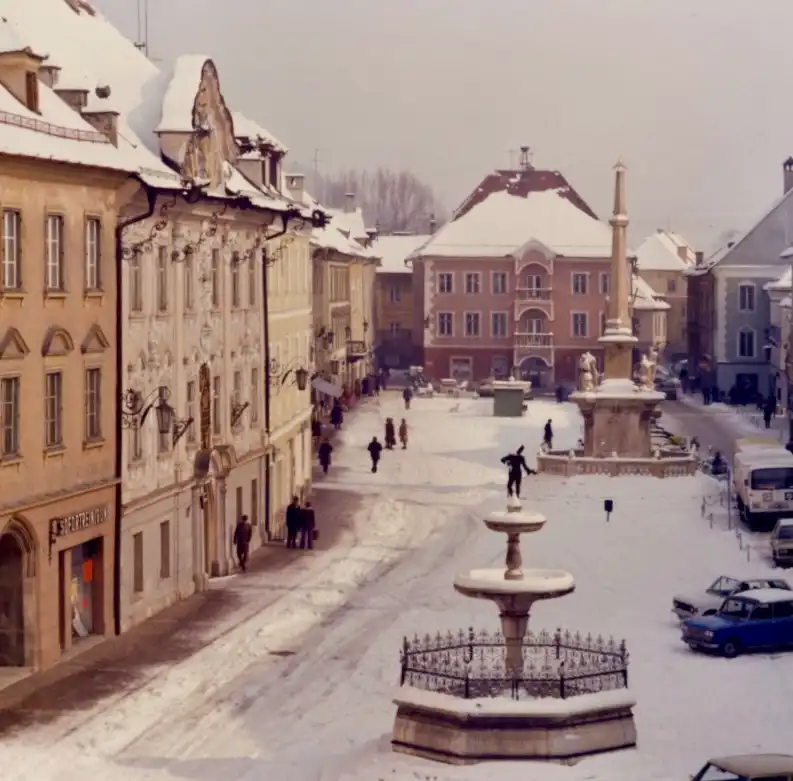
This square is a prime example of a medieval town square and a largely preserved ensemble of historical buildings. Its spatial composition is highlighted by the central plague column and a fountain in both the eastern and western halves.
Historical Development
The square evolved during the Middle Ages from what was known as the Oberer Platz (Upper Square) and became the central urban space for markets and gatherings.
The surrounding townhouses with arcaded courtyards mostly date from the 13th to 15th centuries, many with Gothic cores later remodelled in the Baroque period.
The town experienced economic growth in the 15th century due to the iron ore trade in Hüttenberg, which is reflected in the architectural development of the square.
Layout
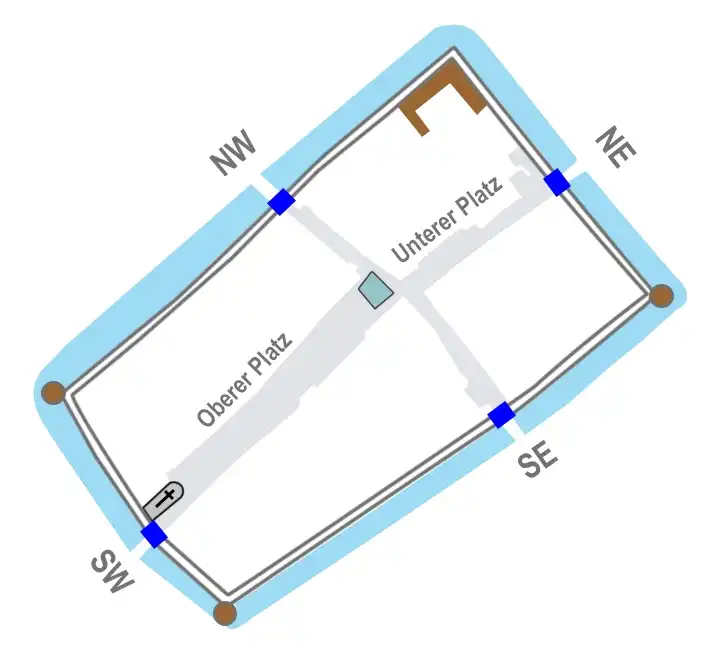
The square measures approximately 200metres in length and around 30metres in width. Its elongated, near-rectangular form runs parallel to the historic town wall and continues to shape the character of the city centre to this day.
Significance
Historically, the square was known as the Oberer Platz.
By the 14th and 15th centuries, it had already developed into a central placefortrade, social life, and civic events.
From 1406 onwards, written records distinguish clearly between the Oberer Platz and Unterer Platz, highlighting the growing significance of this urban space.
Main Square – Illuminated at Night Gallery 1
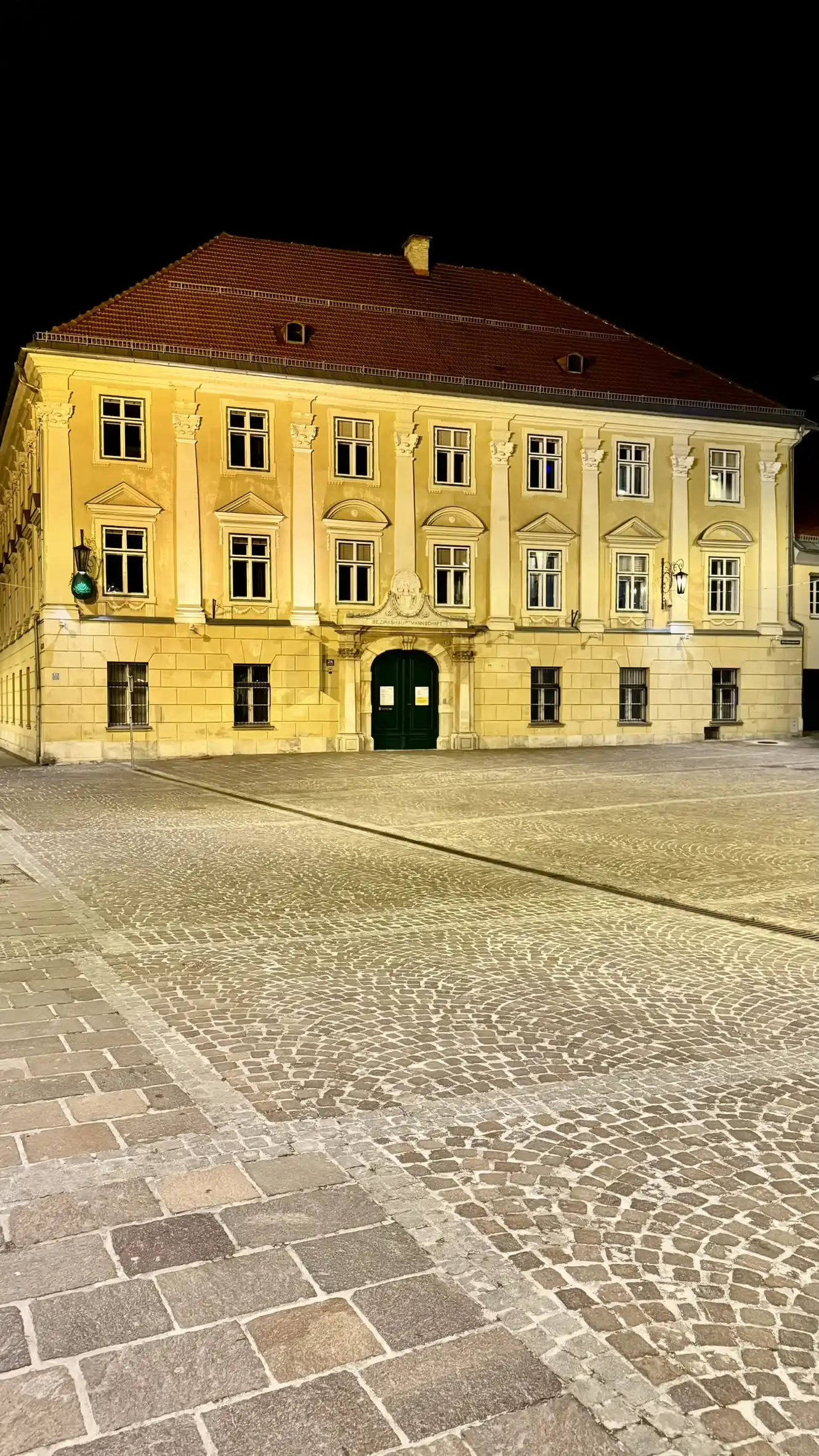
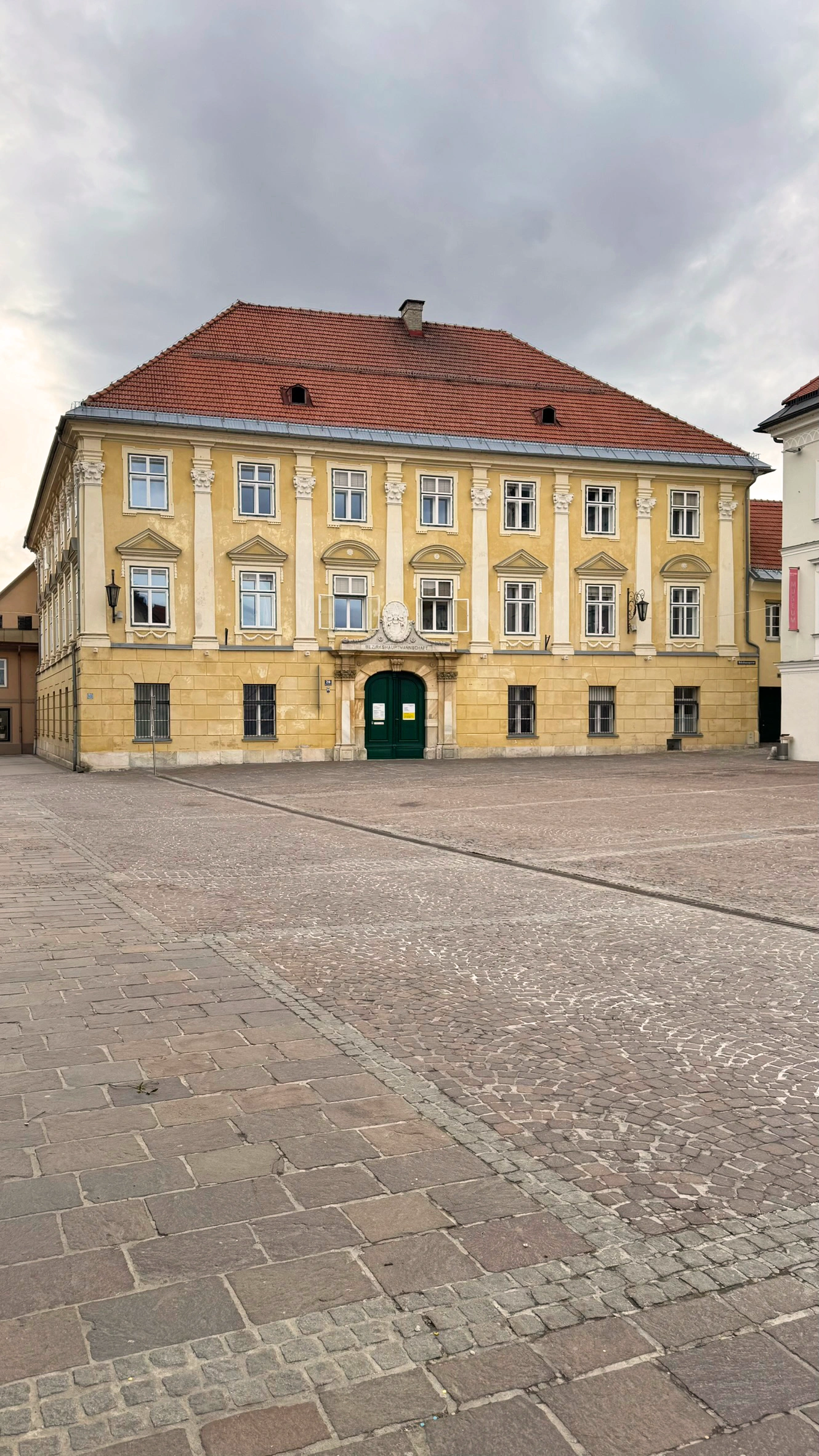
“Palais Koller” houses the district authority and stands at the western end of the main square. Illuminated at night.
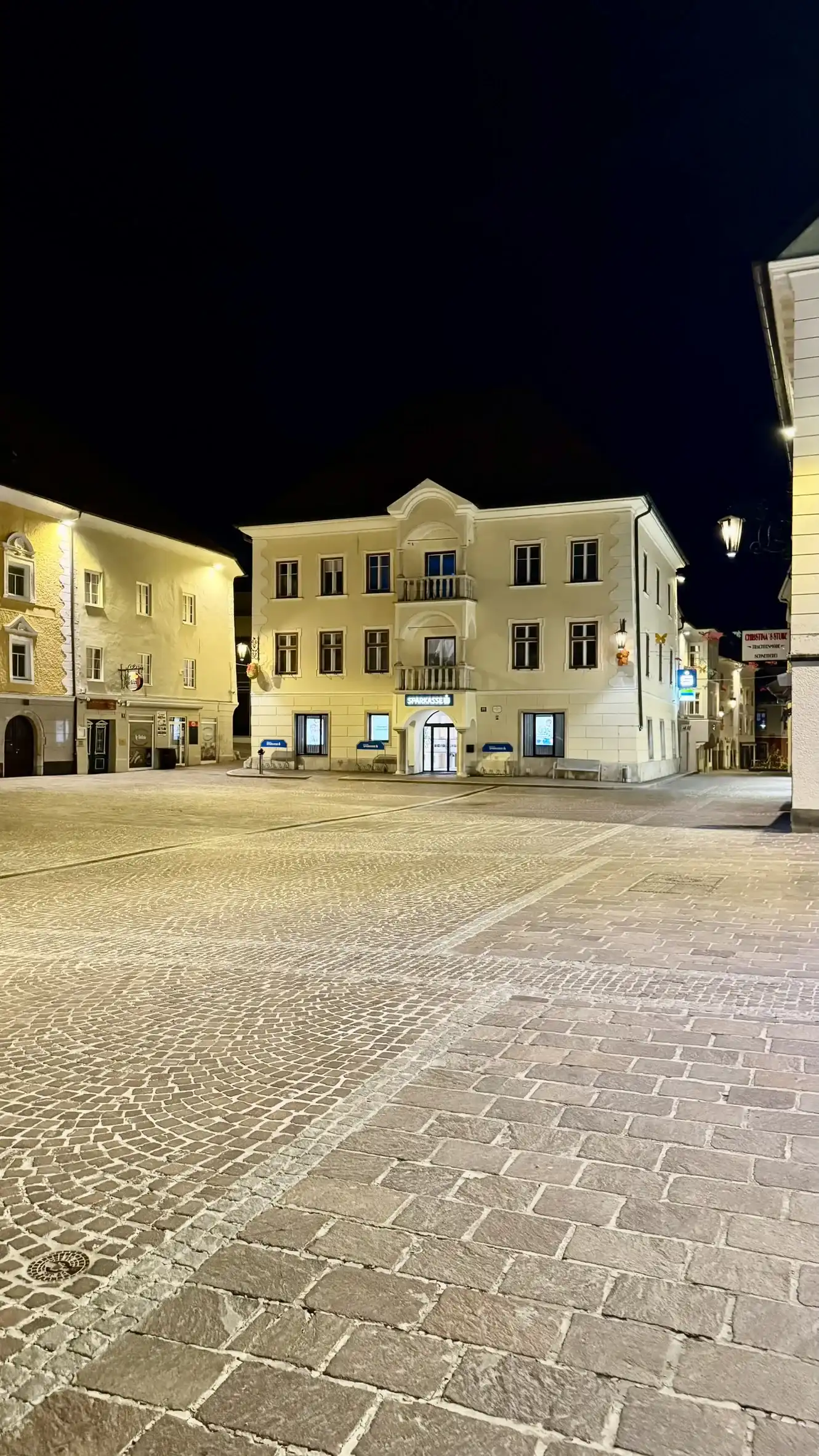
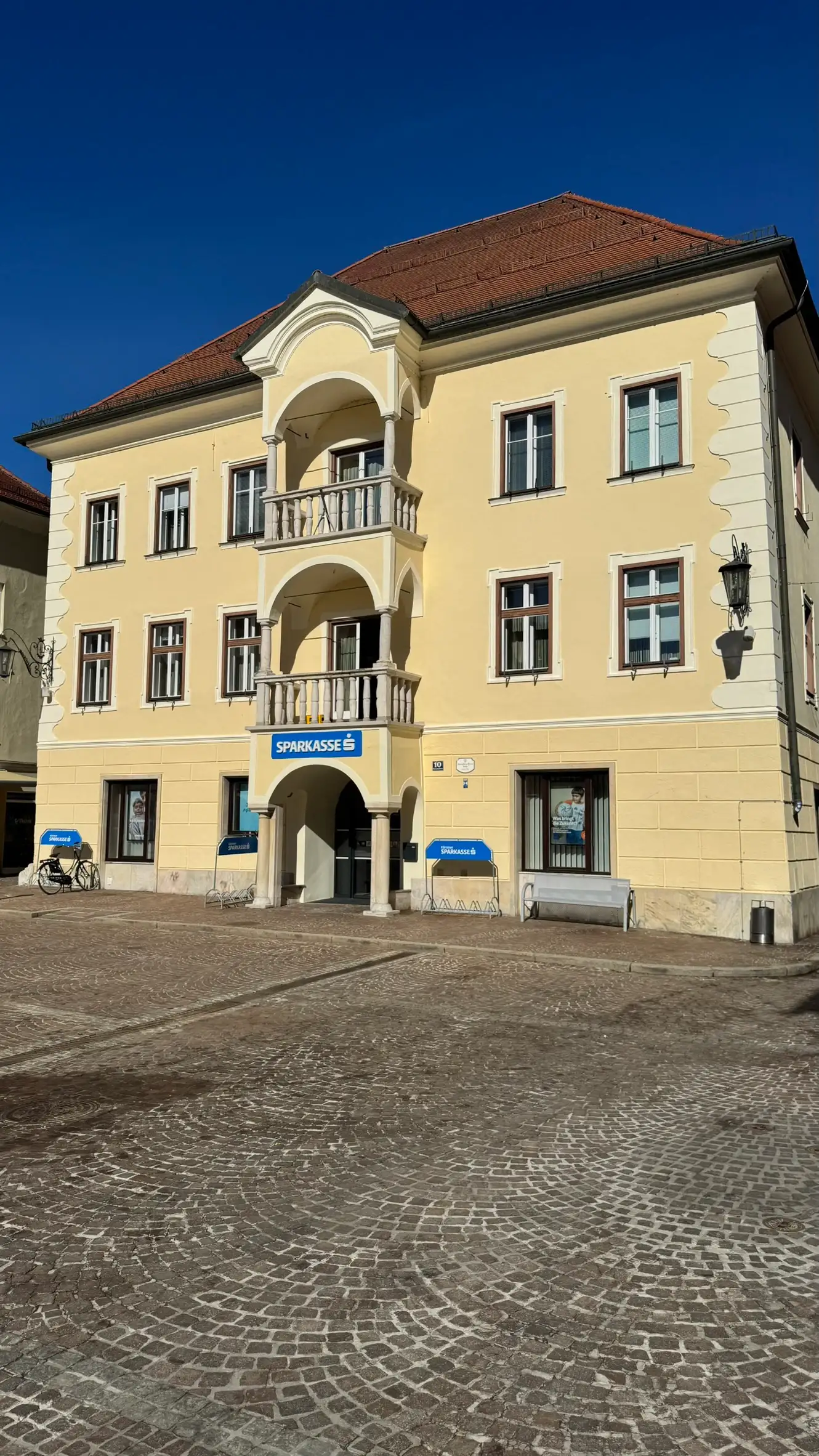
"Carinthia House" is located at the eastern end of the main square. Illuminated at night.
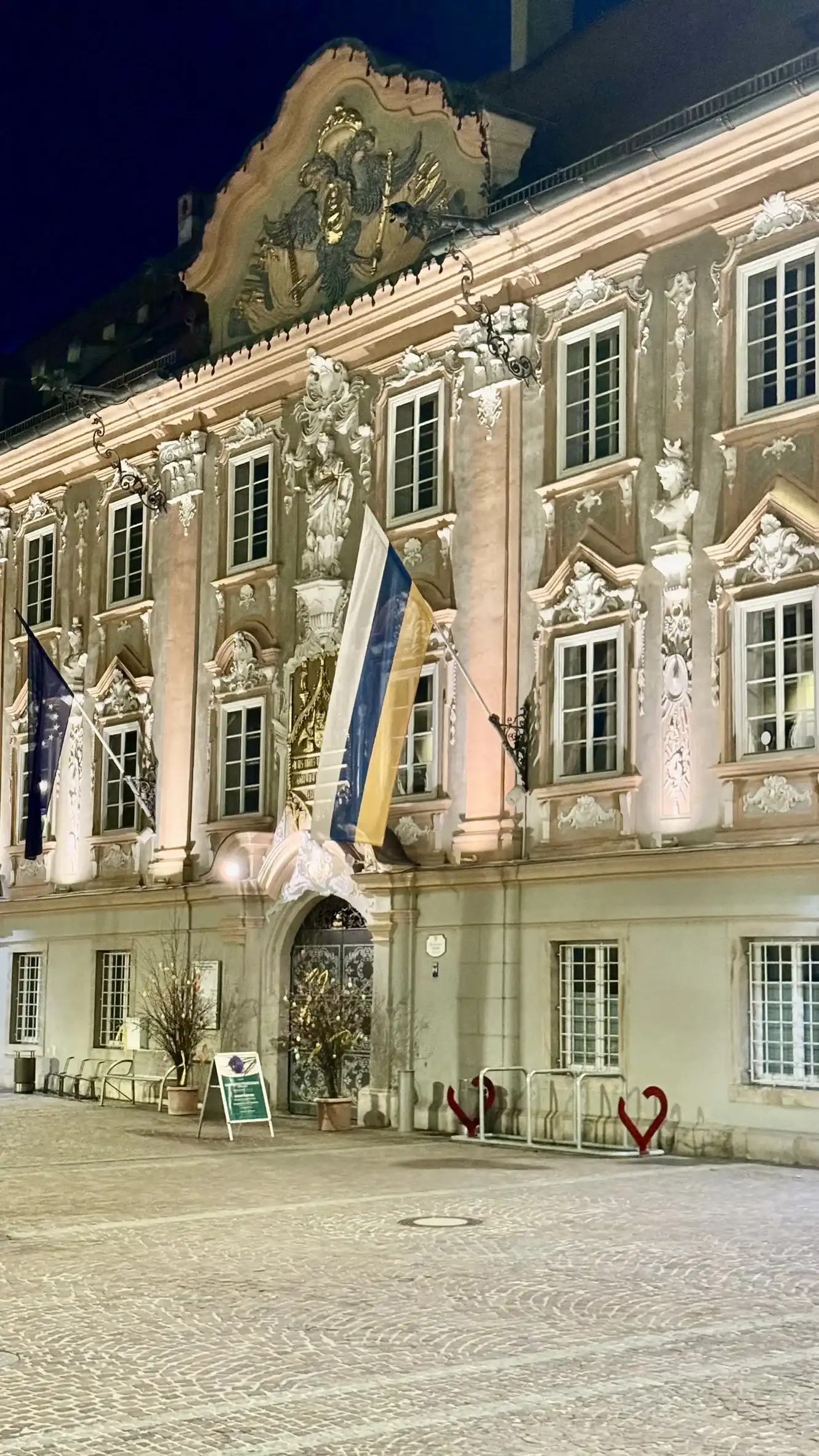
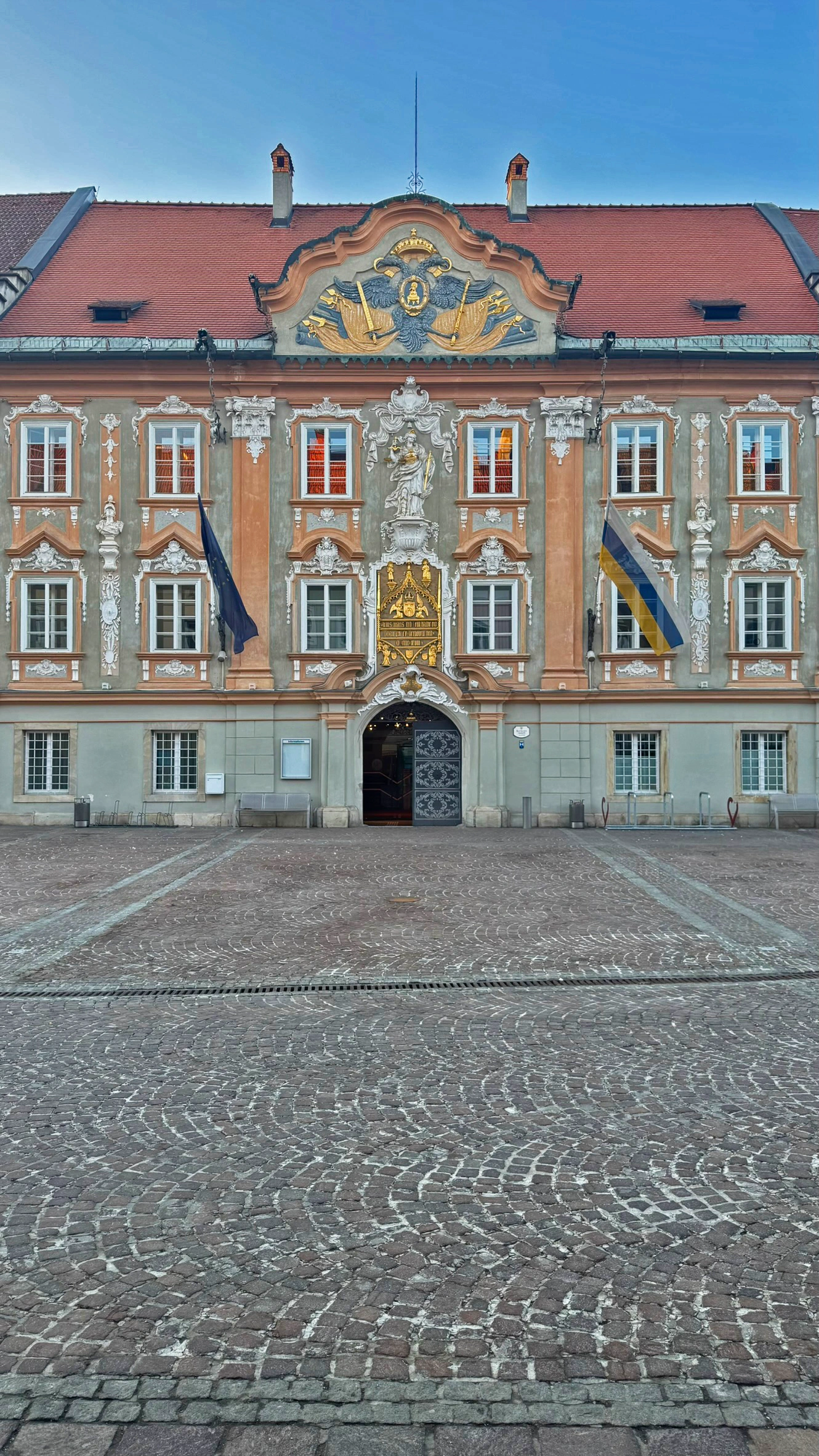
The town hall stands in the northern part of the main square. Night-time illumination.
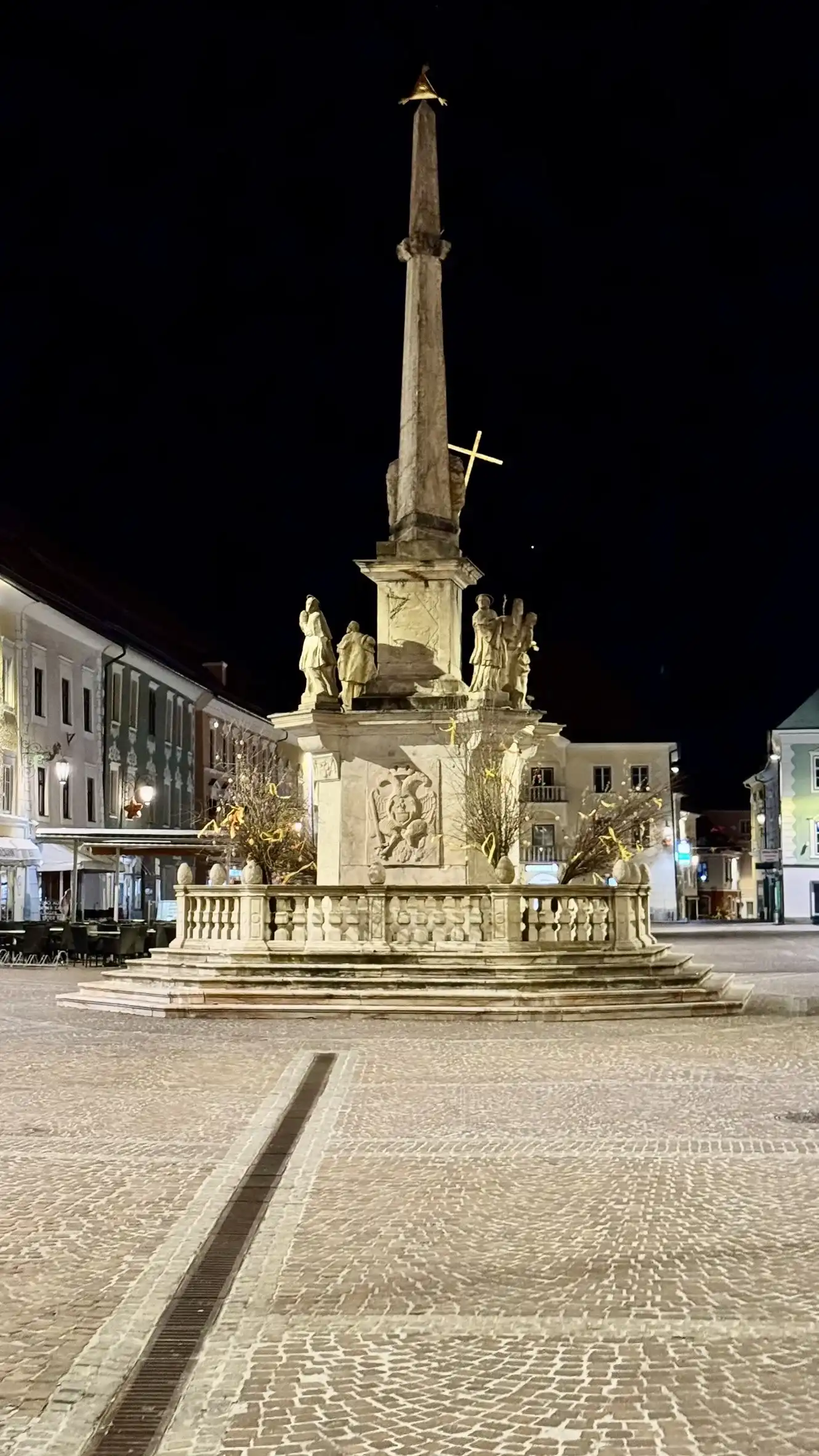
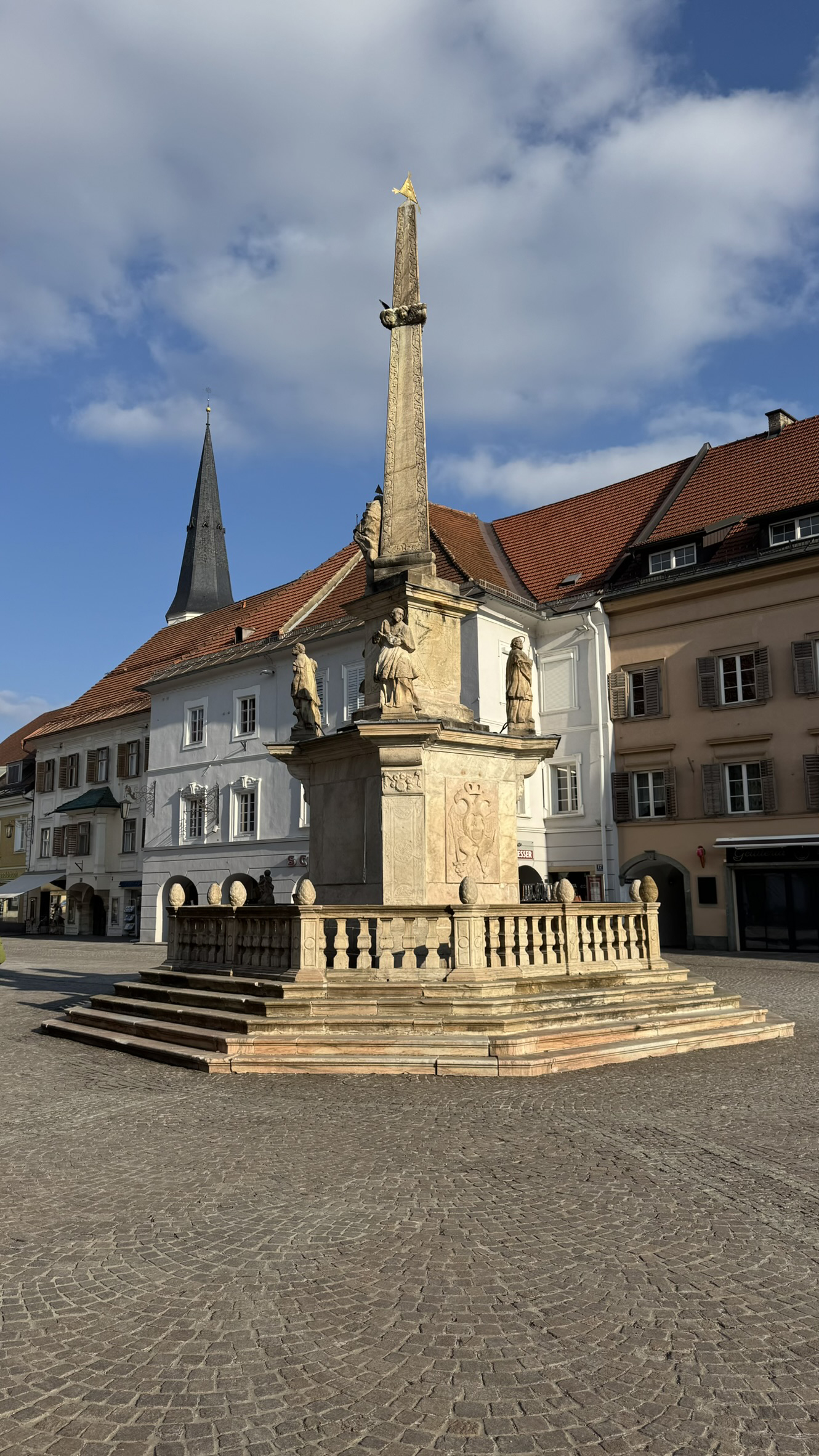
The "Plague Column" is at the centre of the main square. Night-time illumination.
Highlights of the Main Square Gallery 2
Palais Koller, at the western end of the square, is a Neoclassical building with seven window bays and three storeys.
Carinthia House, at the eastern end of the square, has a Late-Gothic core and an Early Baroque facade.
The town hall, located in the northern part of the square, has Gothic origins and an impressive Late Baroque facade.
The Plague Column is a prominent landmark at the centre of the main square.
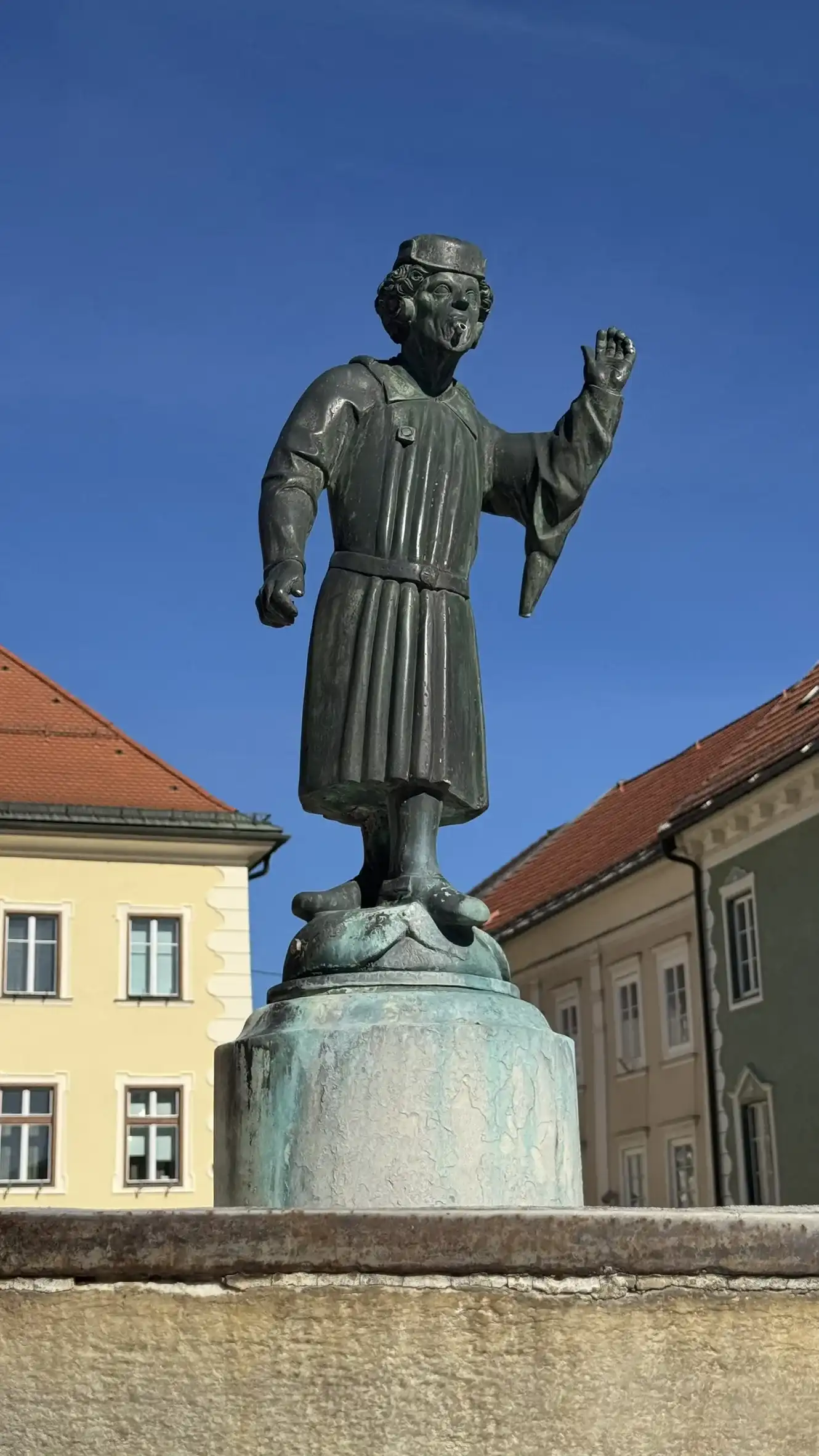
The Walther von der Vogelweide fountain dominates the western half of the main square.
The Schüsselbrunnen (bowl fountain) dominates the eastern half of the main square.
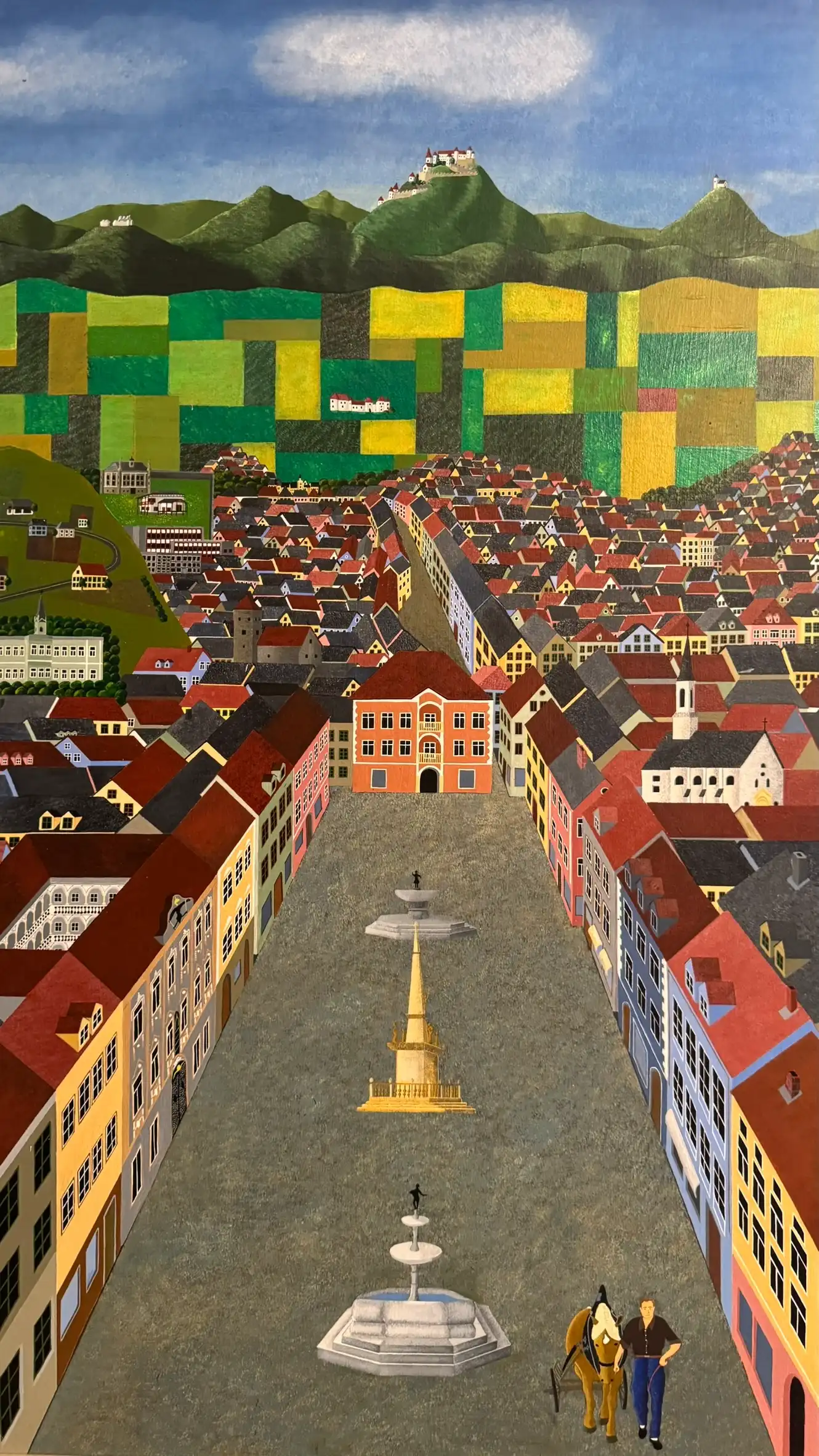
A painting of the main square with the plague column and fountains is displayed in the town hall.
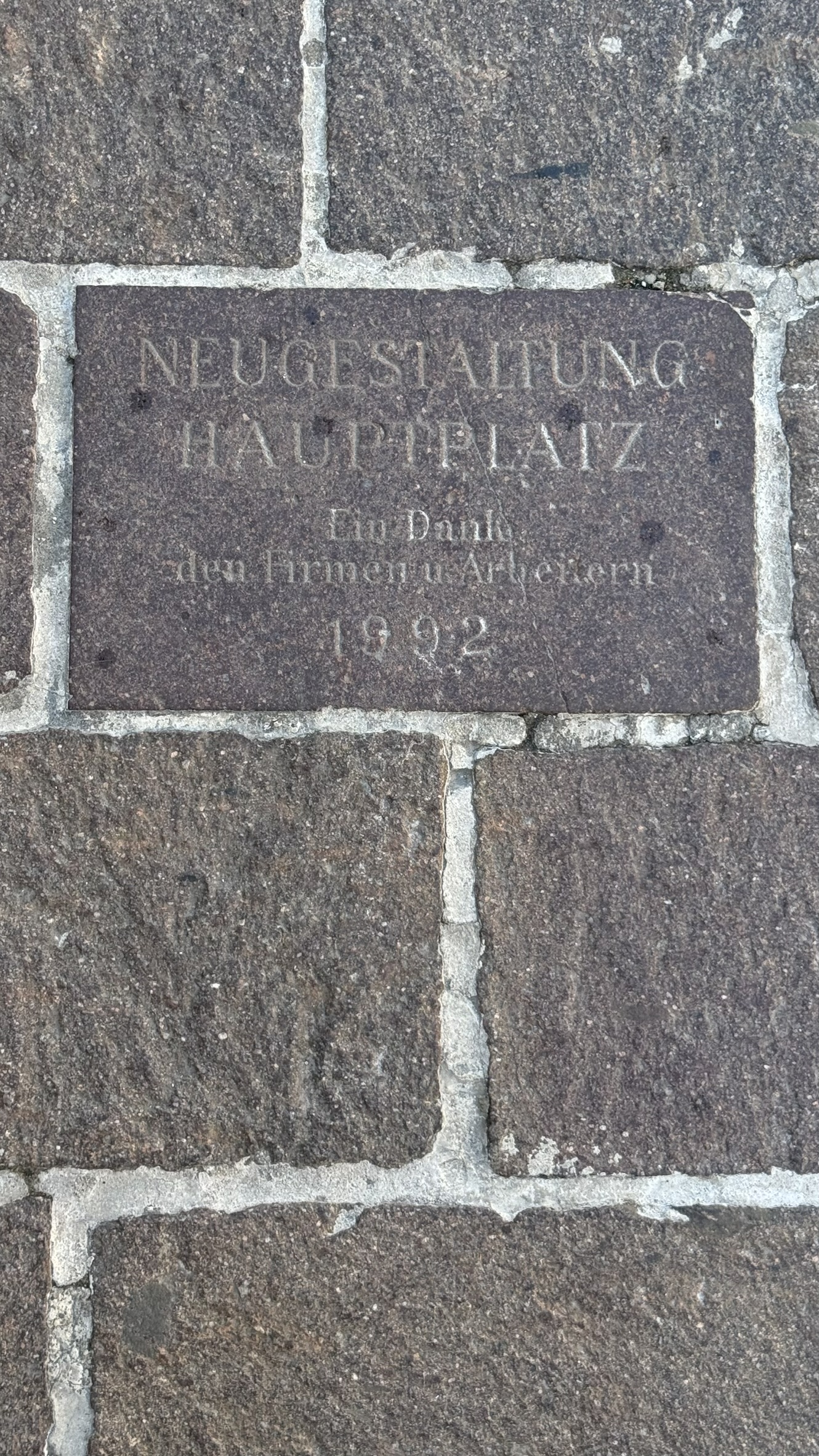
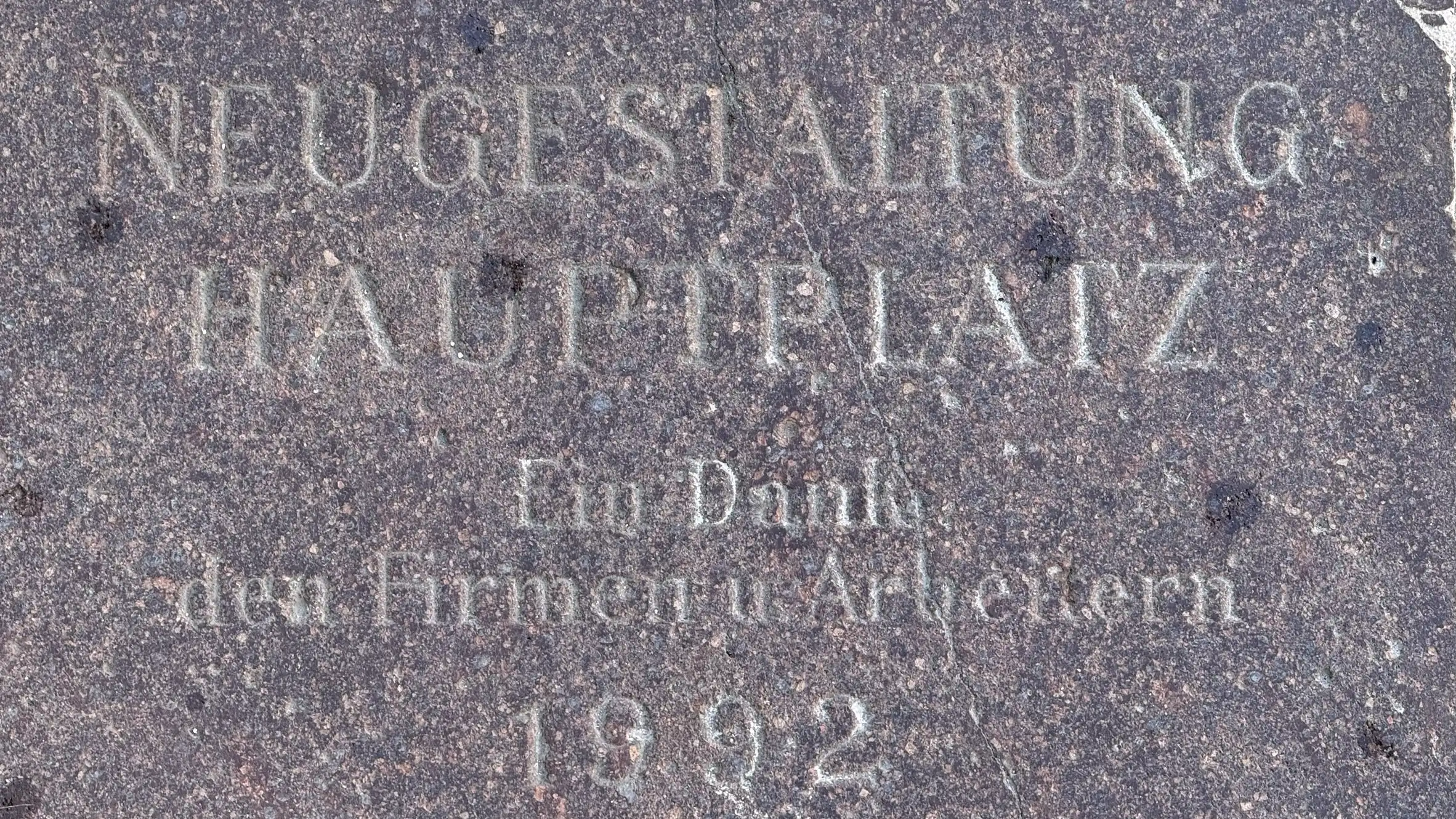
An engraved slab (dated 1992) commemorates the redevelopment of the main square.
Sights and Landmarks
Town Hall (Main Square 1)
The Town Hall dates from the 15th century and has a Gothic origin. In 1754/55, it was remodelled in the Baroque style by Marx Josef Pittner, following designs by Johann Pacher. The facade is adorned with rich stucco decoration and a statue of Justitia. Dragon-shaped waterspouts and a wrought-iron portal grille were created by Franz Ortner. The arcaded courtyard with its sgraffiti is now roofed over and used for cultural events.
Plague Column (centre of the square, near Main Square 3)
The Plague Column was erected in 1715 by Angelo de Putti. It was commissioned by the town council and the citizens. It stands in the centre of the square on an octagonal base and features a statue of a saint on the altar slab, surmounted by the Holy Trinity and an ornamental crowning feature.
Schüssel Fountain (near Main Square 13)
The fountain stands on a polygonal base decorated with coats of arms. A plaque bears the date 1566 and shows Saint Vitus in the cauldron. Above it rests a marble basin from ancient Virunum, crowned by the bronze figure known as the “Schüsselbrunnbartele”.
Walther von der Vogelweide Fountain (near Main Square 25)
The fountain was constructed after the great town fire of 1676. It originally bore a statue of Saint Florian, which is now located in the courtyard of the District Authority building (Hauptplatz 28). Around 1930, the Florian statue was replaced by a stone figure of Walther von der Vogelweide. Since 1960, the bronze sculpture of Walther von der Vogelweide created by Lajos Szadai has stood there.
Christ Child Figure (corner of Main Square 2)
The wooden figure from the 16th century stands beneath a Gothic stone canopy. It holds a cross and a globe and can be seen at the corner of the building at Hauptplatz 2.
Stone Statue of Saint Vitus (corner of Main Square 14)
At the corner of Main Square 14 stands a Late Gothic stone statue of Saint Vitus, the town’s patron and namesake. Created around 1460–1470, it demonstrates the high quality of Carinthian sculpture of the period.
Carinthia House (Main Square 10)
The three-storey, six-bay building with its Early Baroque facade stands at the intersection of the main axes of the old town. During the time of the Spanheim Dukes, it is believed to have served as their town residence.
District Authority (Main Square 28)
Built around 1780 on the site of the former Church of the Fourteen Holy Helpers. It features a Classicist façade with pilasters and a rusticated base. The windows and the basket-arched portal date from the late 18th century. The northern wing contains vaulted ceilings from the 16th or 17th century.
Museum on the Main Square (Hauptplatz 29) The Museum of St Veit is located directly on the main square and was opened in 2004 as the town’s central museum complex. Its exhibitions explore the history of the town, the railway, telecommunications and the postal service. Around 3,000 exhibits are displayed across some 1,000 m² of exhibition space. Visitors can also discover an annually changing special exhibition, a lapidarium, and a model garden railway.
Paving of the Main Square
The paving of the main square is not historical; it was laid in 1974. Since then, the municipal works department has maintained it with meticulous care, restoring any damaged areas with great precision.
Historical Square Names
Oberer Platz (later Main Square)
Originally referred to as the Oberer Platz, the current Main Square was simply called Platz in records up to 1399. Only from 1406onwards do sources clearly differentiate between Oberer Platz (Upper Square) and Unterer Platz (Lower Square).
Unterer Platz (also known as Niederer Platz)
The Unterer Platz, also occasionally called Niederer Platz, developed as a distinct area of the square no later than 1406.
The form of both the Upper and Lower Squares has remained unchanged since the 15th century.
The “Oberer Platz” of the 15th century was later renamed Hauptplatz.
Historical Photographs Image Source: Archive of the Municipal Authority of St. Veit an der Glan
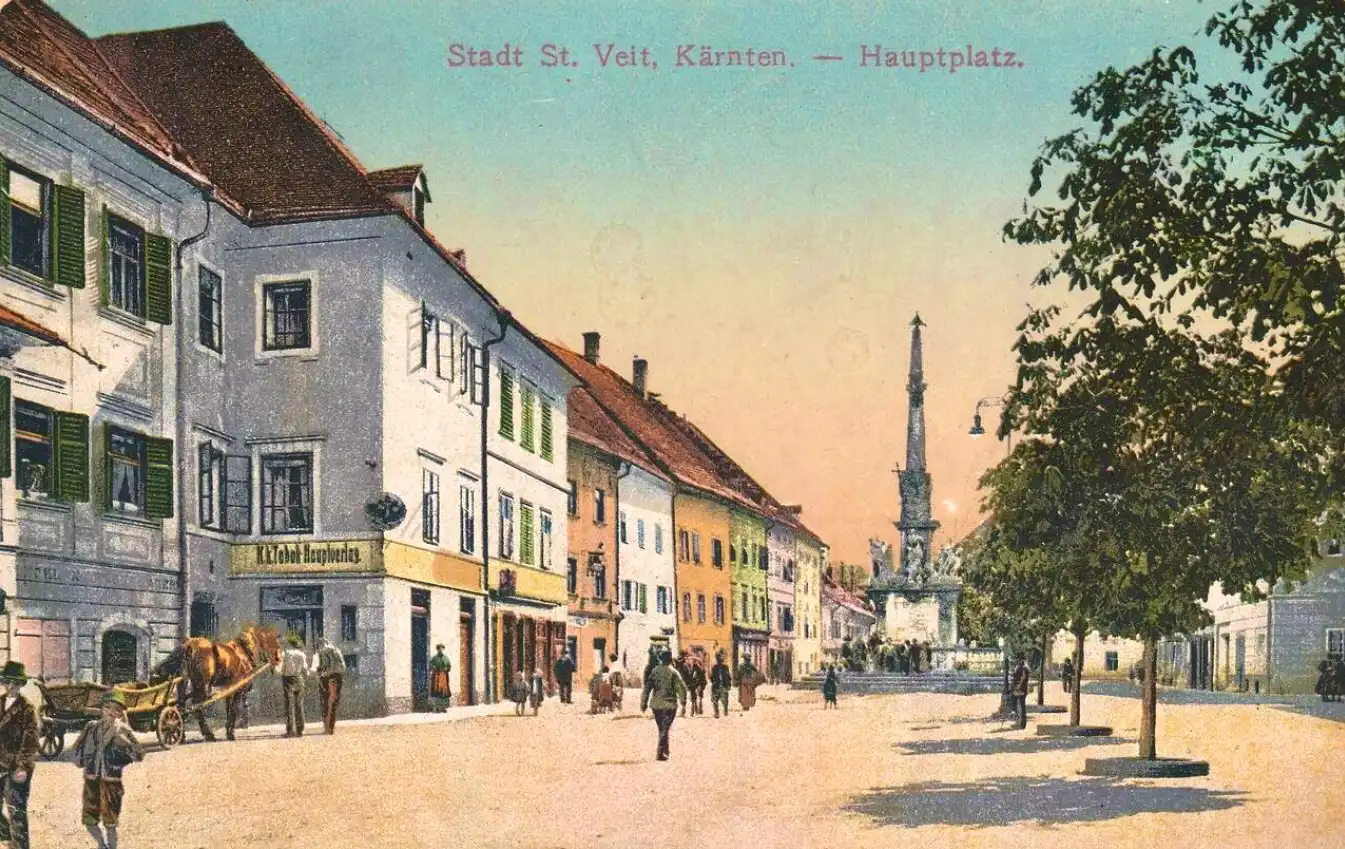
Postcard Depicting the Main Square Hand-Coloured Photograph, 1917
Camera Position: North-Eastern End of the Main Square View Direction: South-West
The plague column is clearly visible.
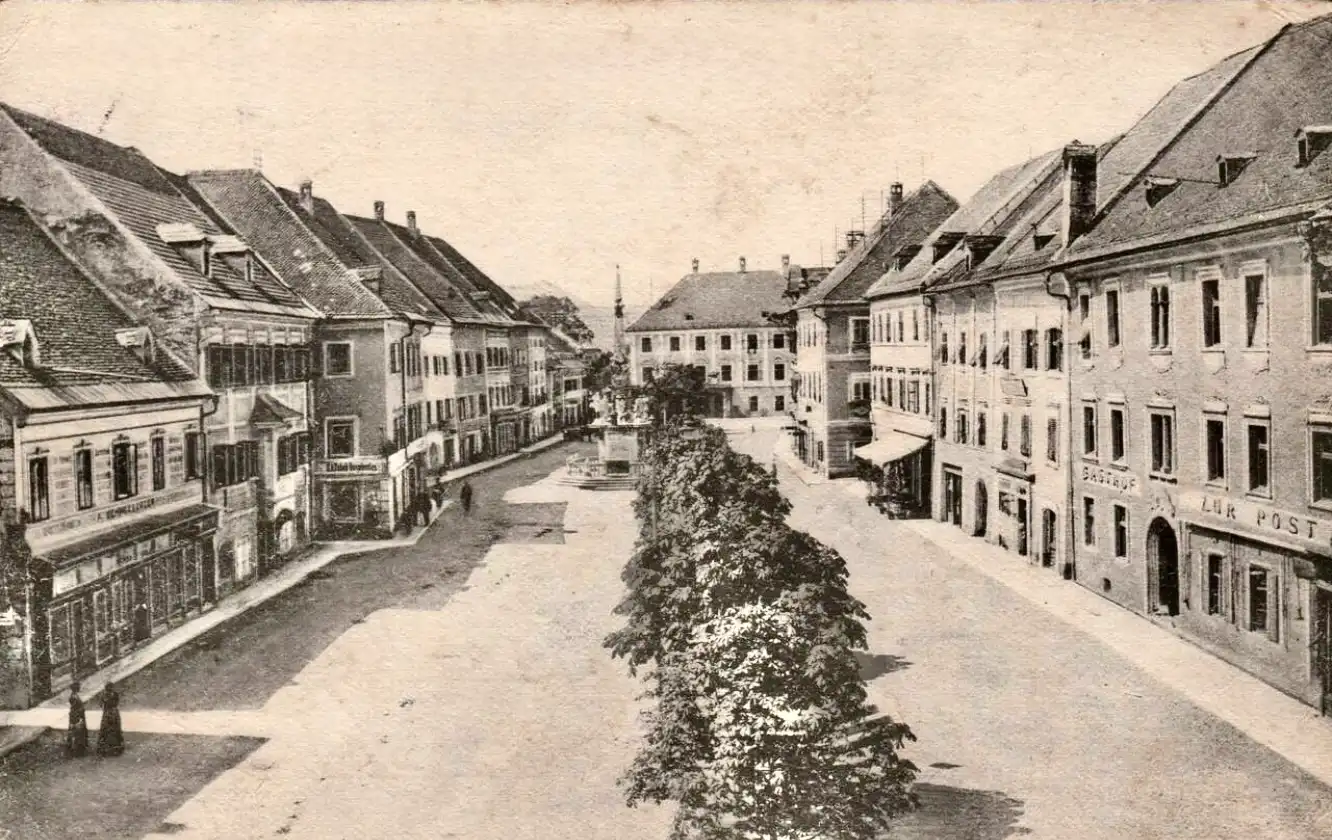
Main Square Photograph taken in 1918
Raised Camera Position: North-Eastern End of the Main Square View Direction: South-West
The following features are visible: – Row of Trees – Plague Column – District Authority Building (at the far end).
Main Square in Winter Photograph taken in December 1979
Raised Camera Position at the South-Western End of the Main Square View Direction: North-East
The following attractions are visible: – “Walther von der Vogelweide” Fountain – Plague Column – Carinthia House – Town Hall (to the left).