Oktoberplatz and the 10 October Memorial
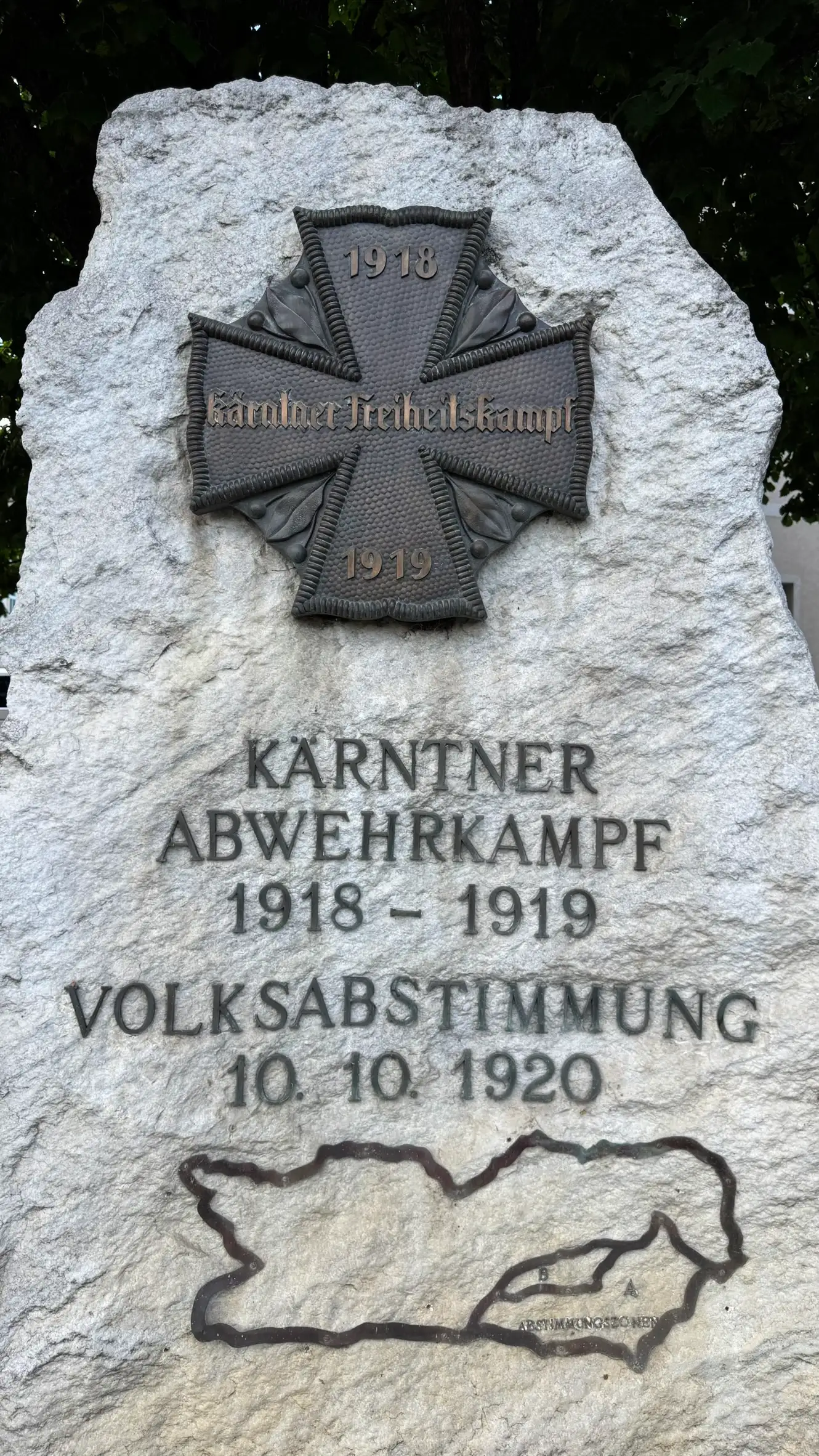
The 10 October Memorial commemorates the 1920 Carinthian plebiscite, in which the people of southern Carinthia voted to remain part of Austria. It also honours those who fought in the Carinthian defensive struggle and gave their lives for the unity of the region.
The memorial was inaugurated on 15 June 1986 during a major public ceremony attended by over 120 traditional associations and organisations from across Carinthia.
The approximately 12-tonne commemorative stone is made of Krastal marble, quarried from the Krastal Valley in Carinthia.
The inscription reads:
“In memory of the victims of the Carinthian defensive struggle and the decision of the people for a free, Austrian Carinthia on 10 October 1920.”
In 1996, the memorial was extended to include two additional plaques listing the names of those from St. Veit who lost their lives in the defensive conflict.
The memorial stands on Oktoberplatz and serves not only as a place of remembrance but also the site of annual commemorative events held around 10 October – featuring torchlight processions, speeches, music, and the participation of numerous local groups and schools.
Historical Photographs
Image Source: Archive of the Municipal Authority of St. Veit an der Glan
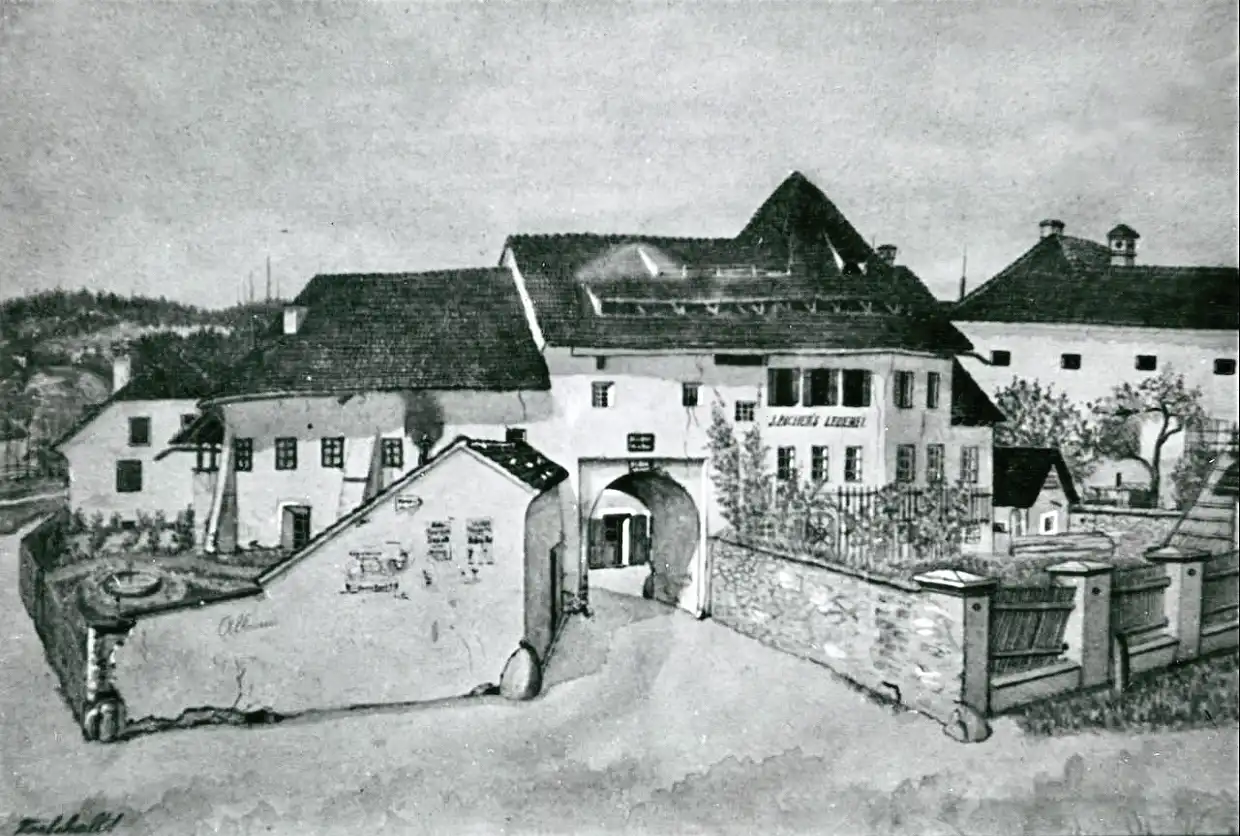
Impression of the Villacher Gate Tower
(with the spacious square in front)
Photographic retouching by hand, around 1890
The spacious square in front of the Villacher Gate Tower was named 10. Oktoberplatz after the Carinthian plebiscite that took place in 1920.
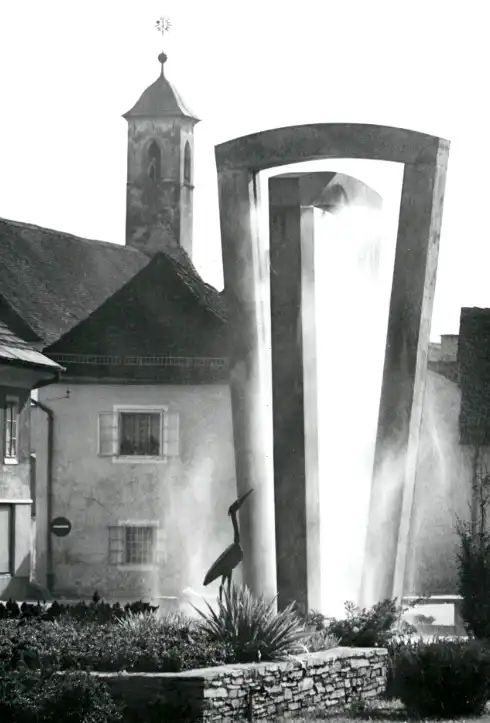
Gedenkbrunnen that once stood on the 10.-Oktoberplatz
Photographed around 1966
Creation and unveiling (1963): The fountain was newly erected on the Oktoberplatz with a handover ceremony at the end of October 1963. It was designed by the Carinthian sculptor Hubert Wilfan (at the time based in Vienna), and was commonly called the Wilfan-Brunnen. Contemporary summaries also note the fountain featured a heron motif.
Removal during square redesign: During a later redesign of the square (before 2008), the monument was dismantled and broken down into parts; some elements were reused, others disappeared.
A detailed local report states that two pieces survived locally:
– the heron figure was set up in the small Sudeten German park by the southern city wall;
– the basin/bowl was placed in the Rose Garden (Rosengarten).
The large stone blocks and arches could no longer be found and are presumed lost.