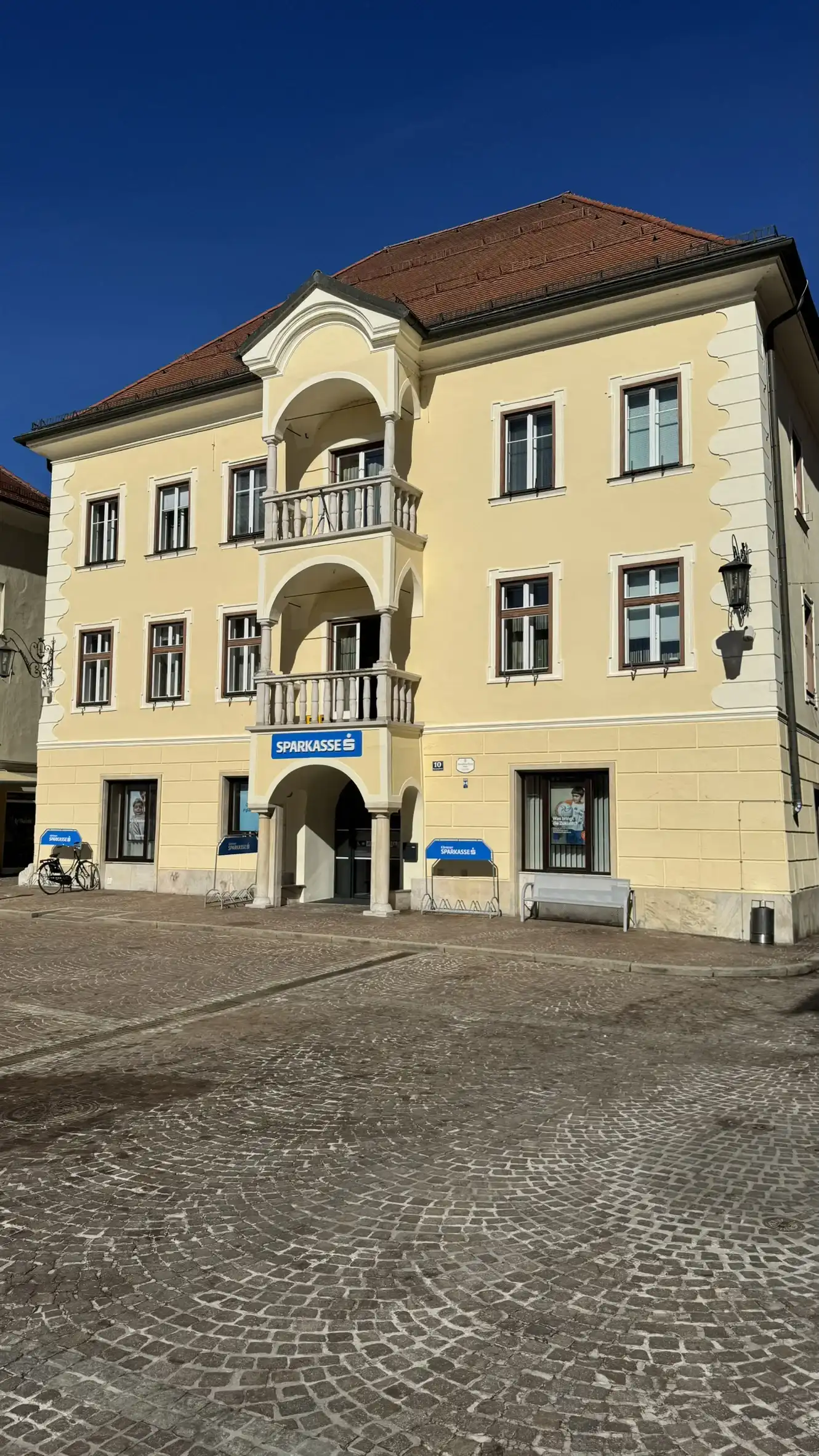
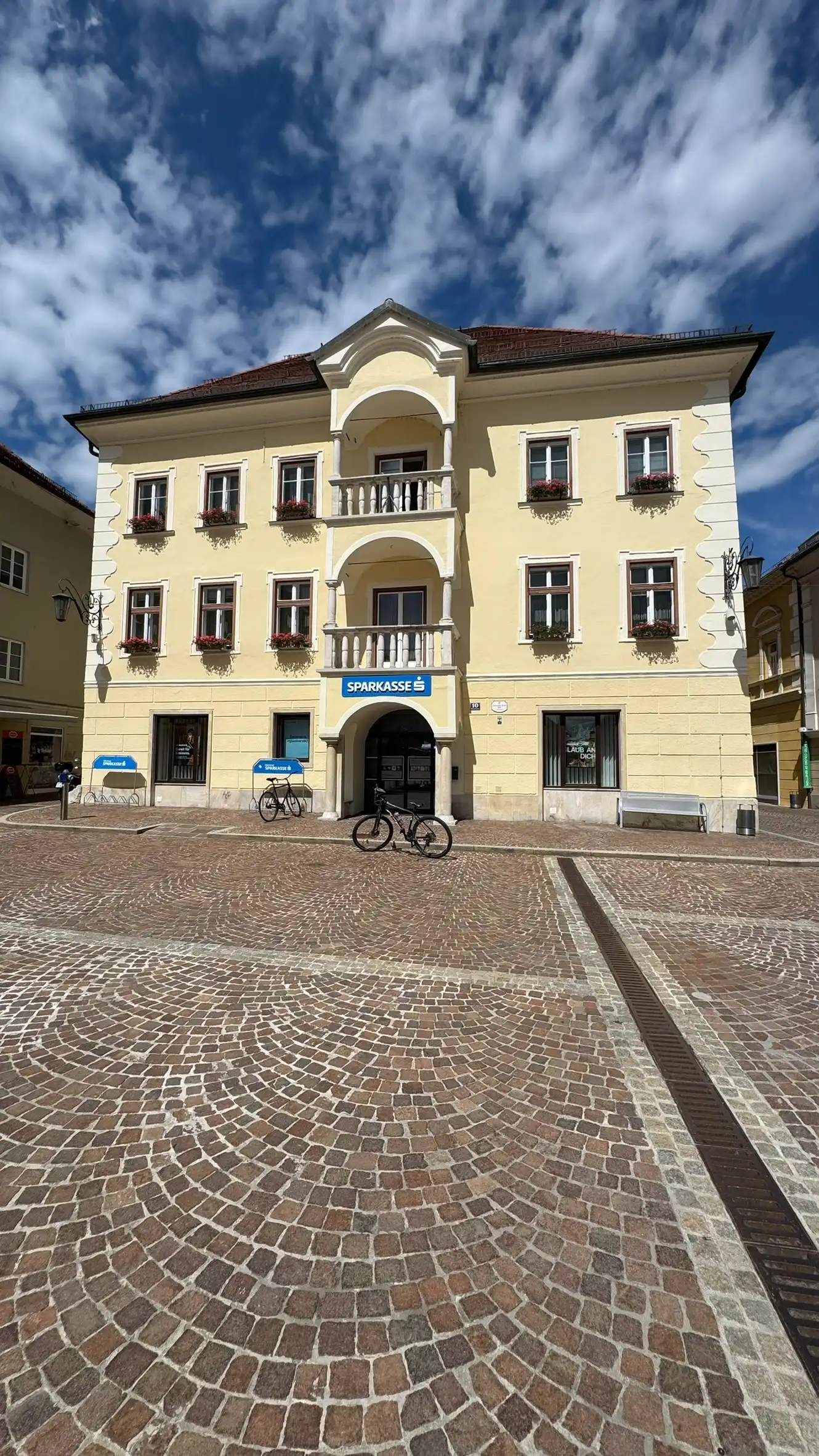
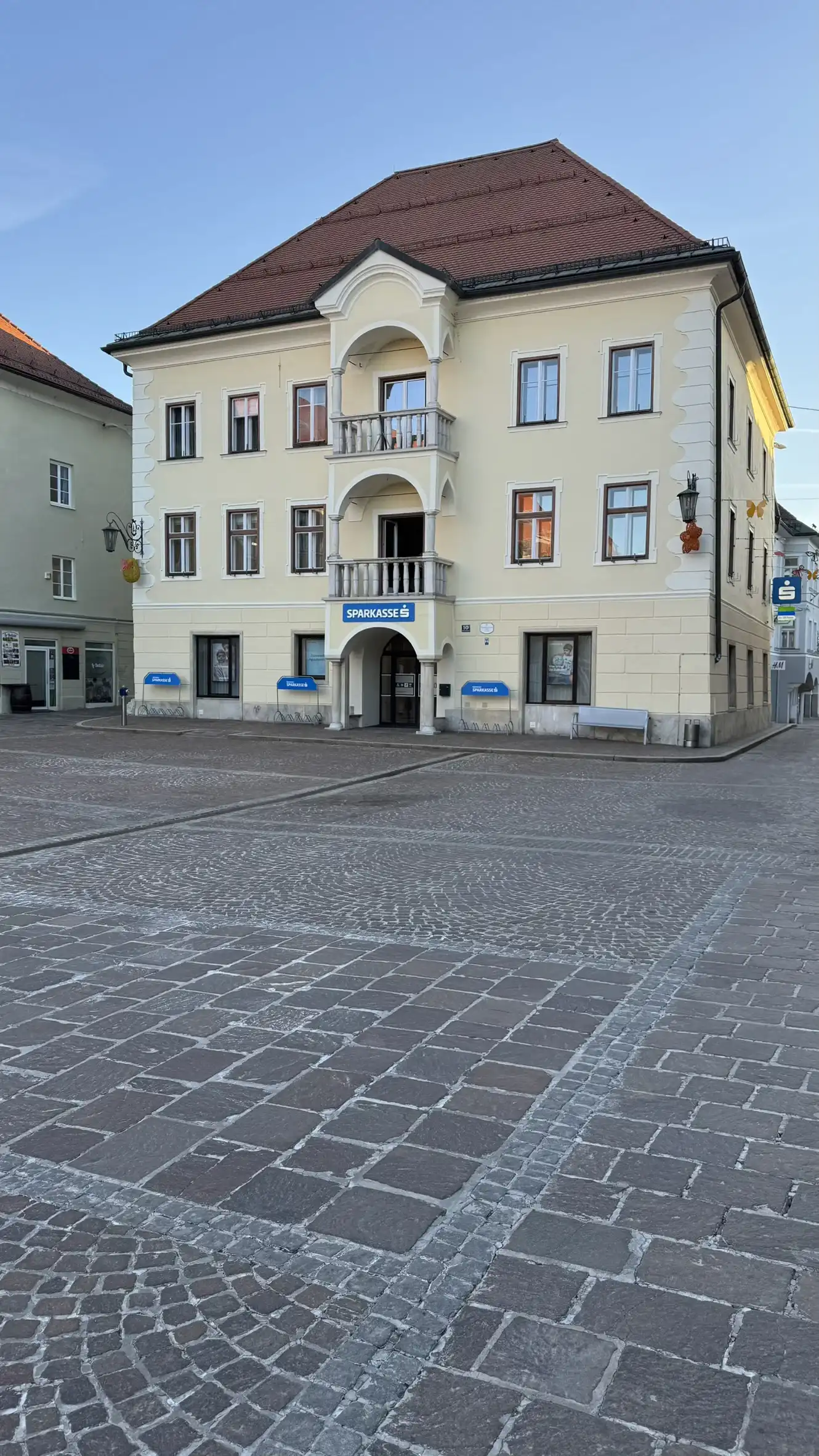
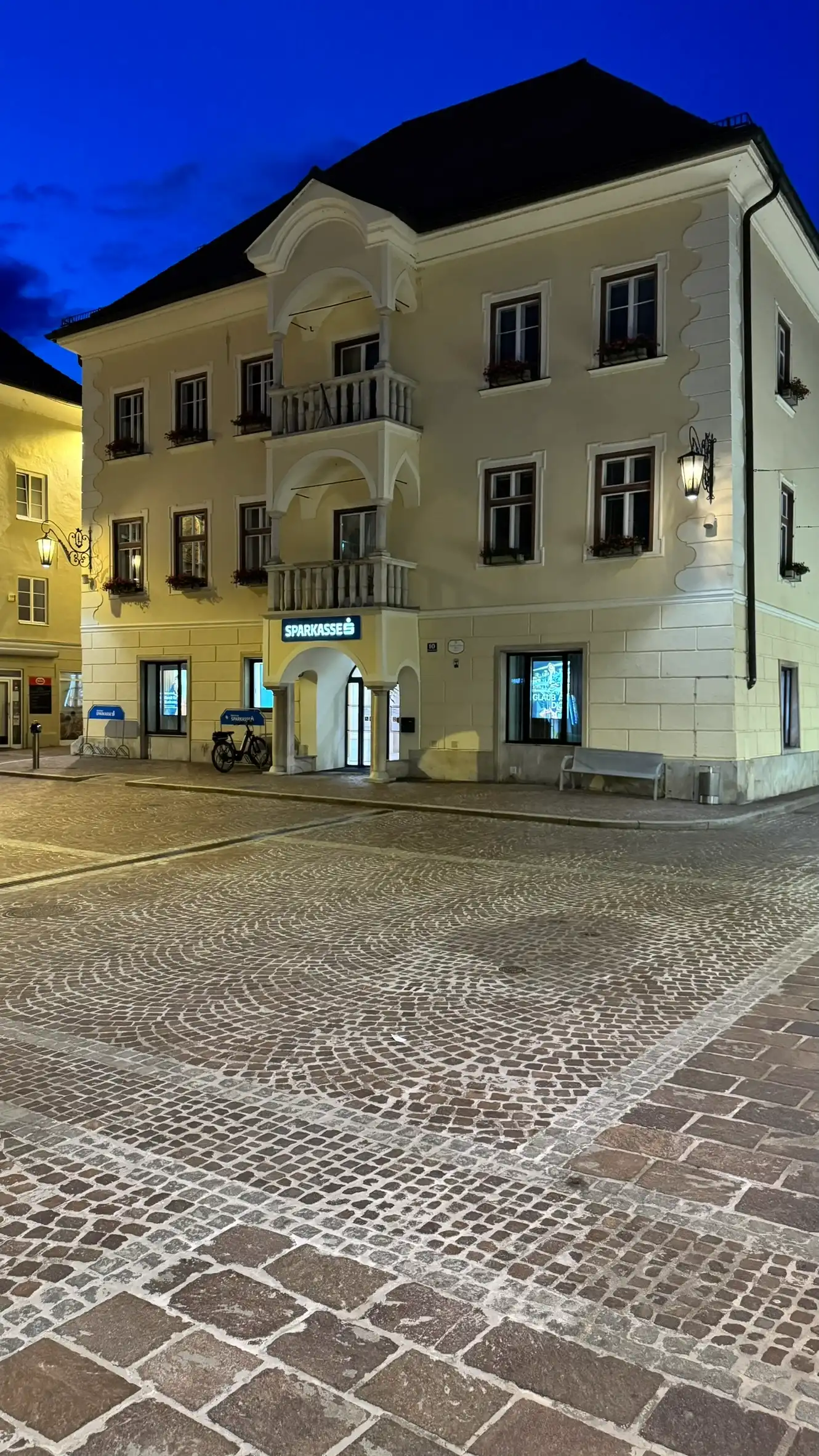
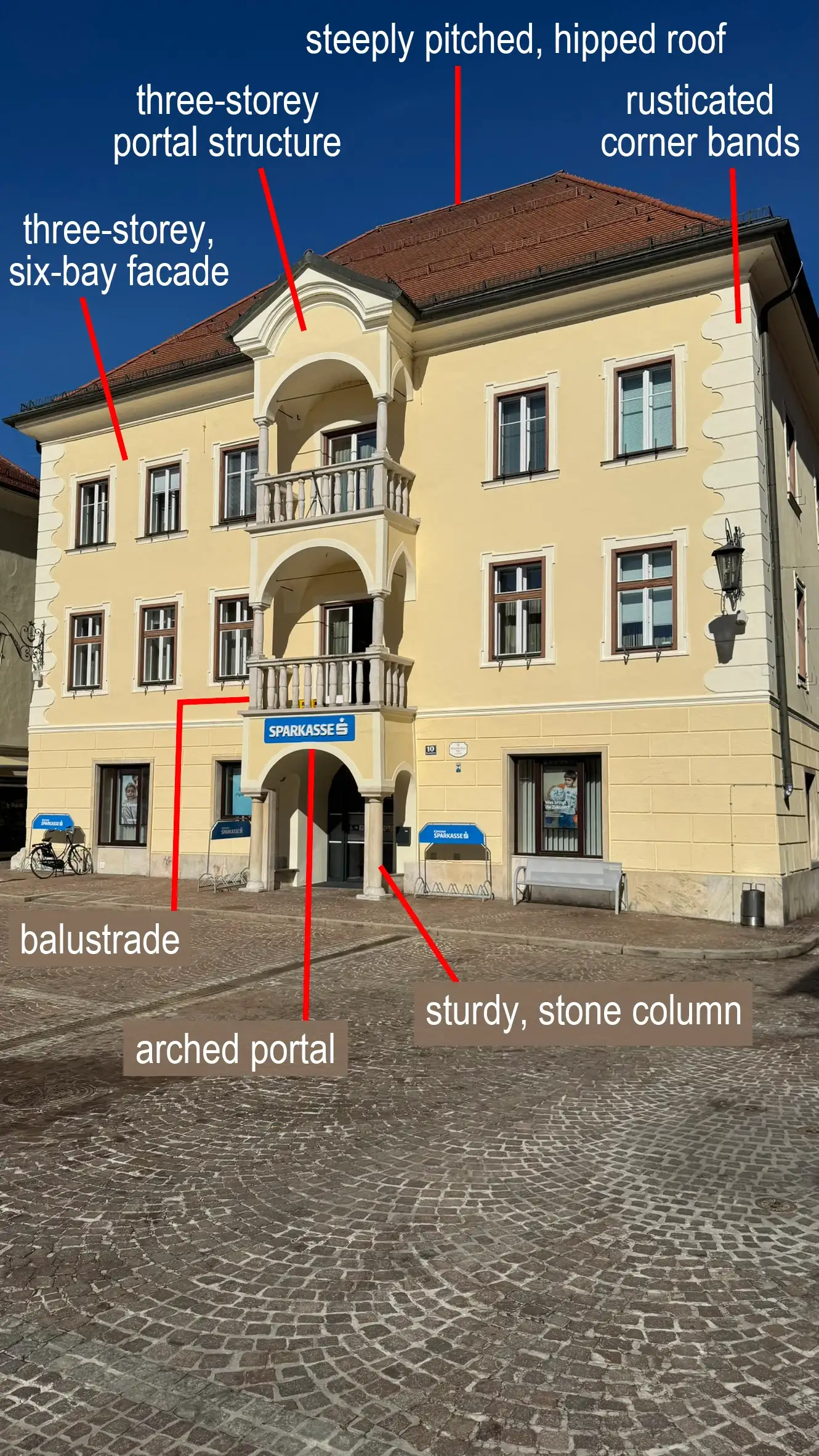
This three-storey, six-bay building with an early Baroque facade stands at a key junction – the point where the two main axes of the historical old town intersect.
Owing to its position and parallels with comparable buildings in towns such as Völkermarkt, it is believed that this was the site of a ducal townhouse of the Spanheim dukes.
Architectural History
Gothic Core Structure Beneath the Baroque exterior lies a late-Gothic structural framework, typical of Carinthian townhouses of the period.
Alterations in the 16th Century with Early Baroque Modifications The building, in its present form, dates from the mid-16th century and features a three-storey, six-bay facade. Particularly striking is the three-storey portal projection, which was added during the Early Baroque period.
Architectural Features
Early Baroque Main Facade The south-west-facing main facade opens onto the town’s main square. The facade is vertically divided into six bays, thereby creating a sense of symmetry.
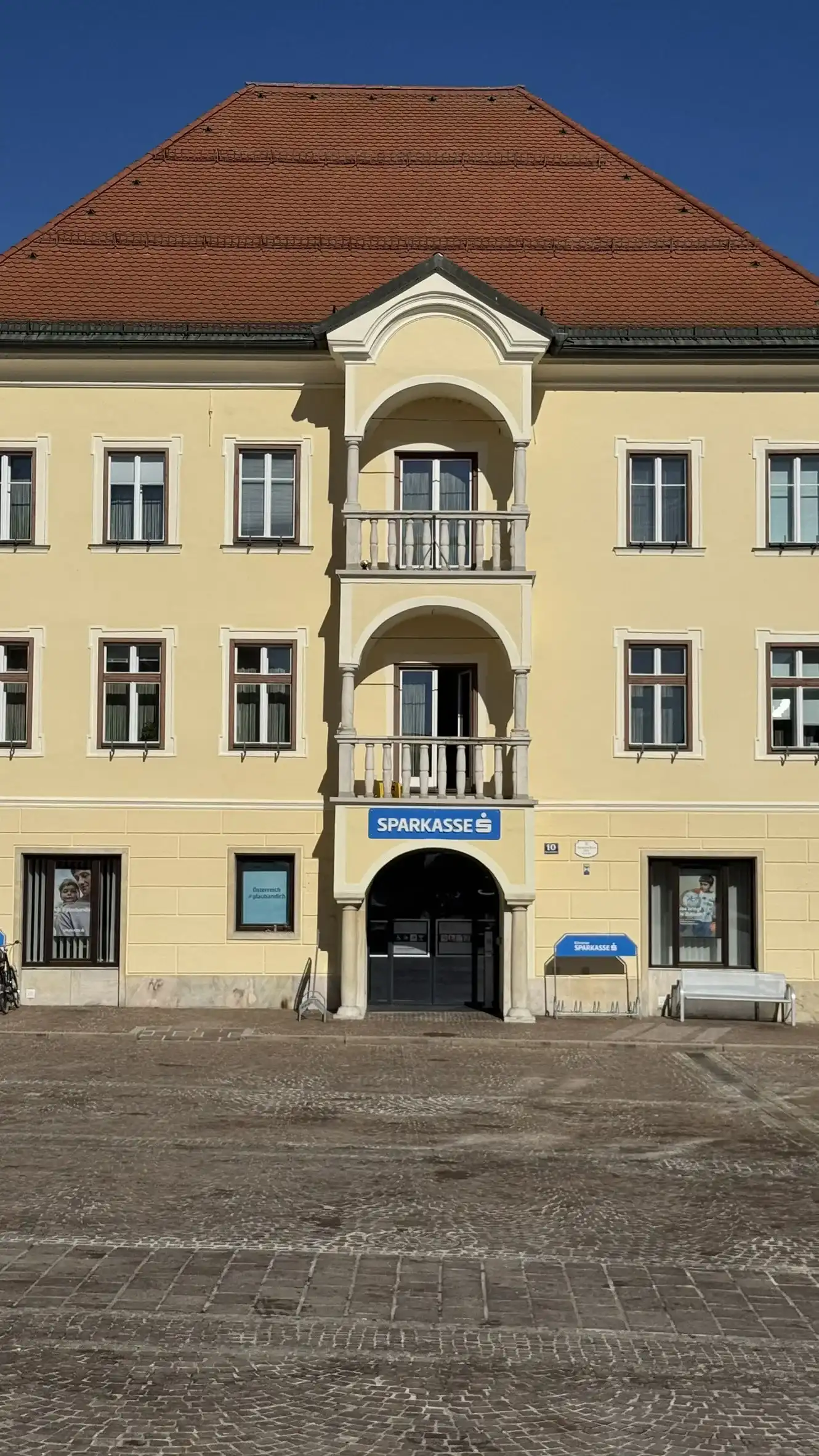
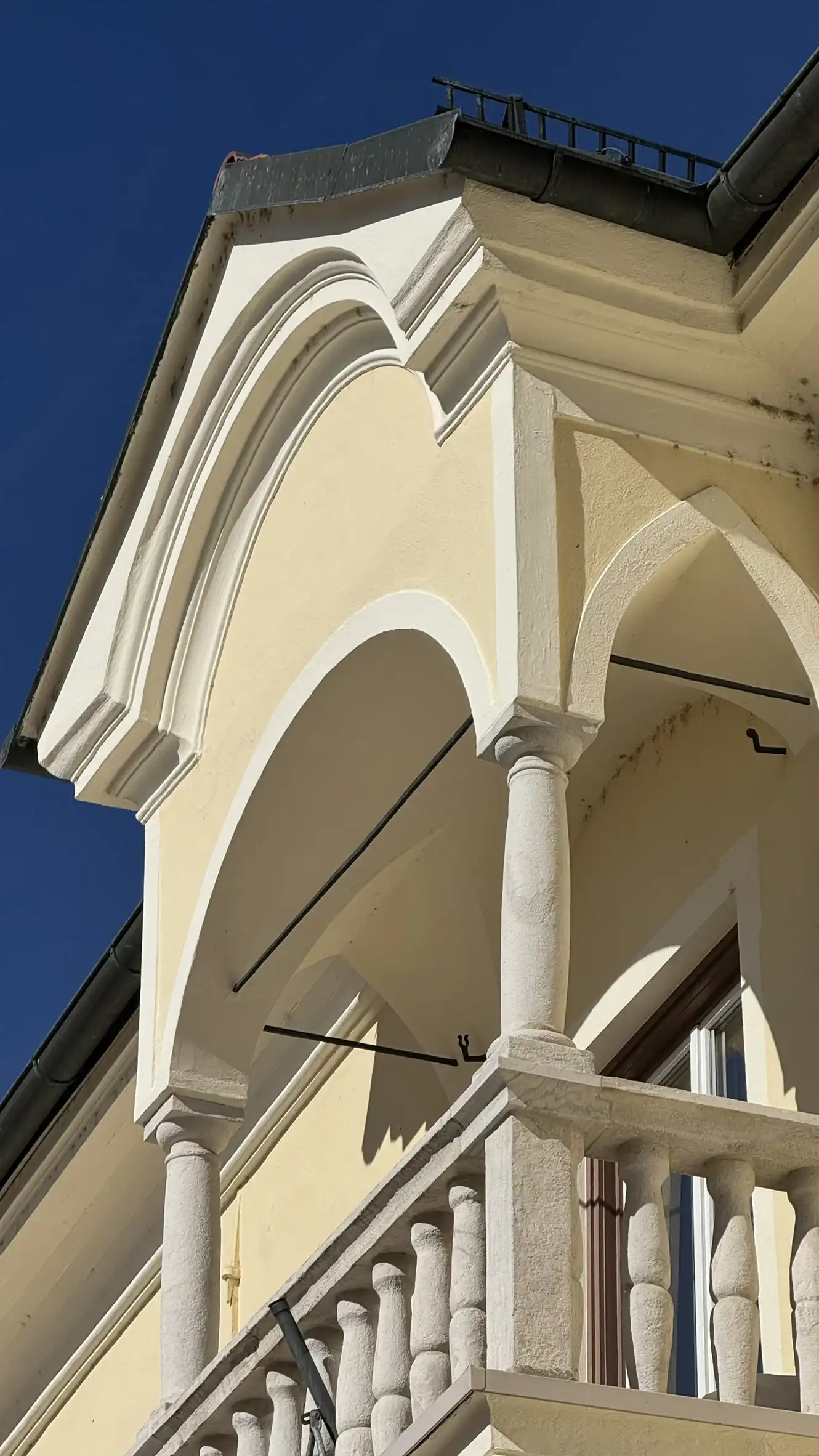
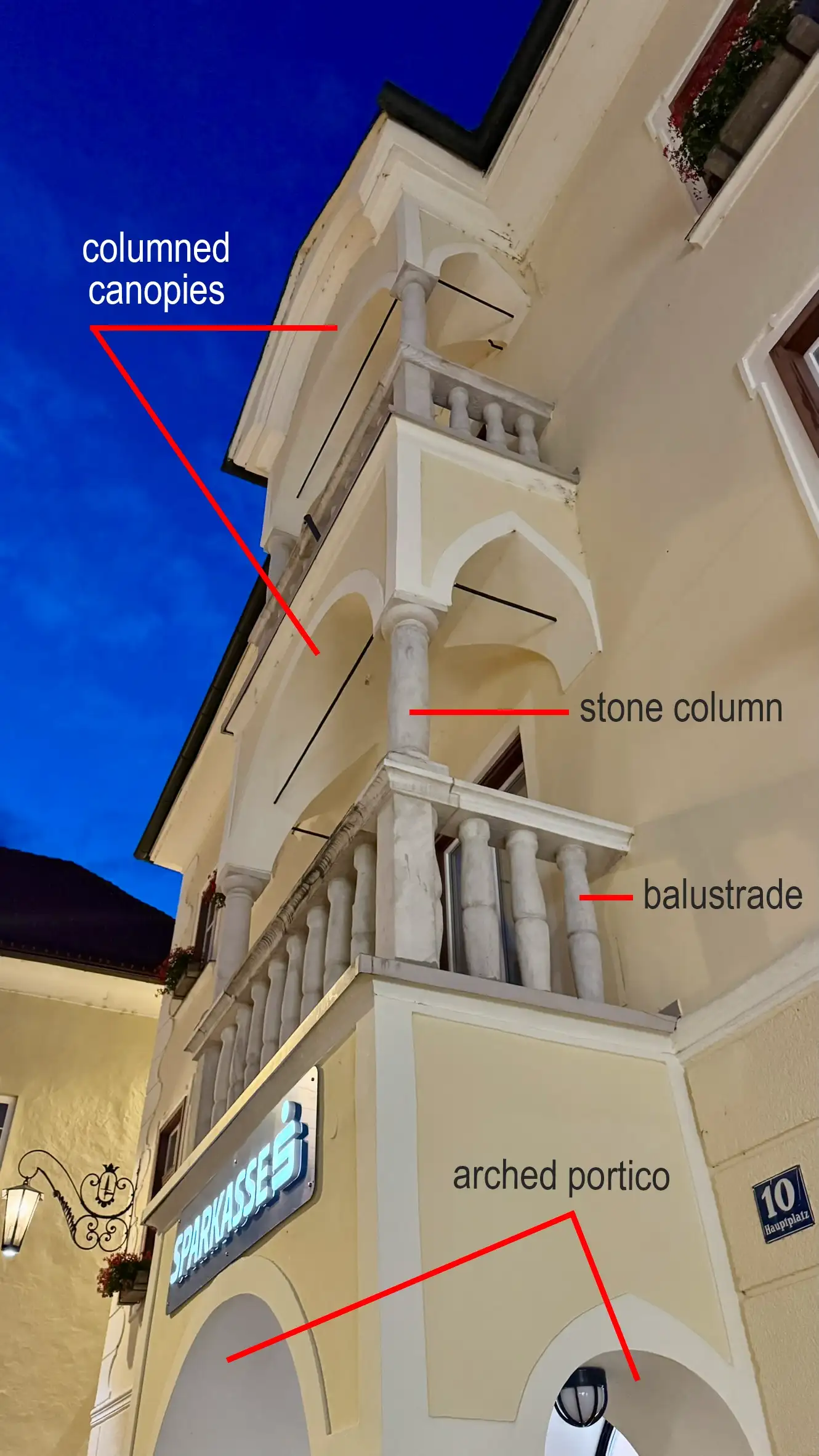
Three-Storey Portal Projection The facade is dominated by a distinctive three-storey portal projection, which was added in the mid-16th century. This projection has an arched portico at the ground level. Above the portico, two canopied balconies are vertically stacked.
Structural Description of the Arched Portico (Ground Floor): – portico with three arches – supported by two free-standing columns – projecting from the main facade – leading to the main round-arched entrance (Rundbogenportal).
The upper two storeys are vertically divided into six bays.
The three-storey portal pavilion was added in the mid-16th century.
The building stands at the intersection of the two main axes of the historical old town.
Carinthia House is located at the eastern end of the main square.
Carinthia House, illuminated at night
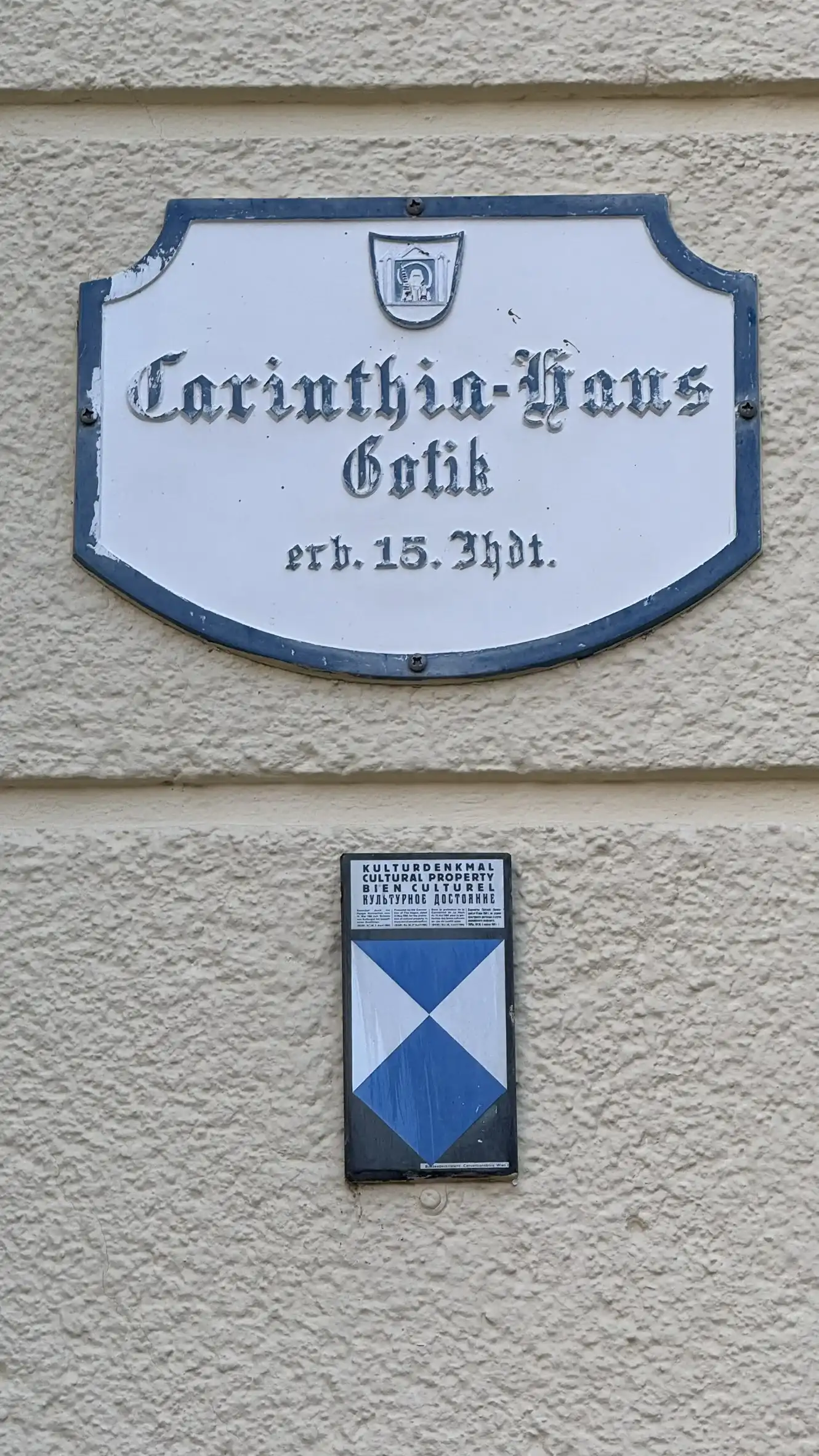
Signage, Carinthia House: Gothic; built in the 15th century
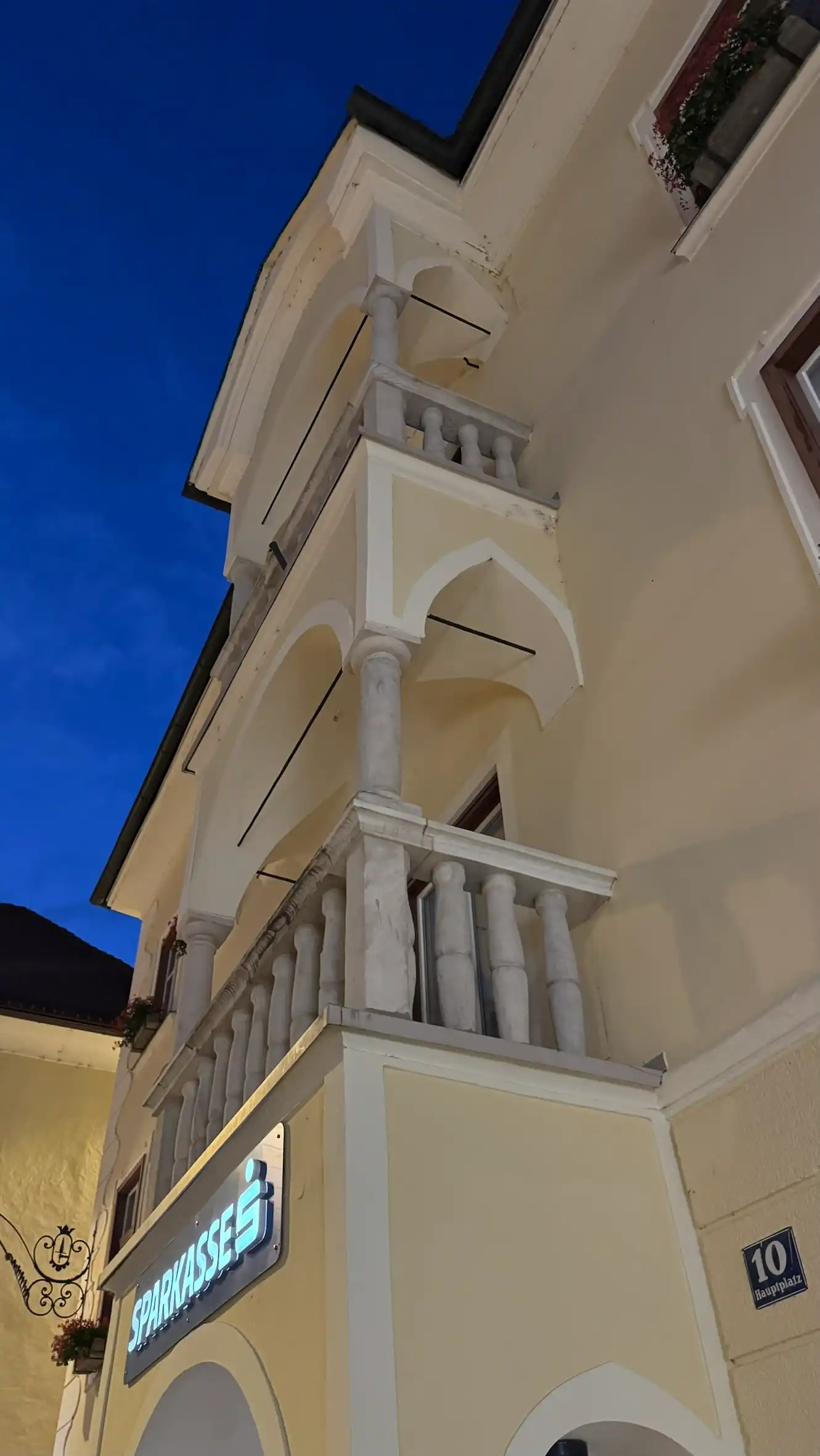
This three-storeyed projecting structure was added in the mid-16th century.
Projecting canopied balconies and balustrades of the upper two floors
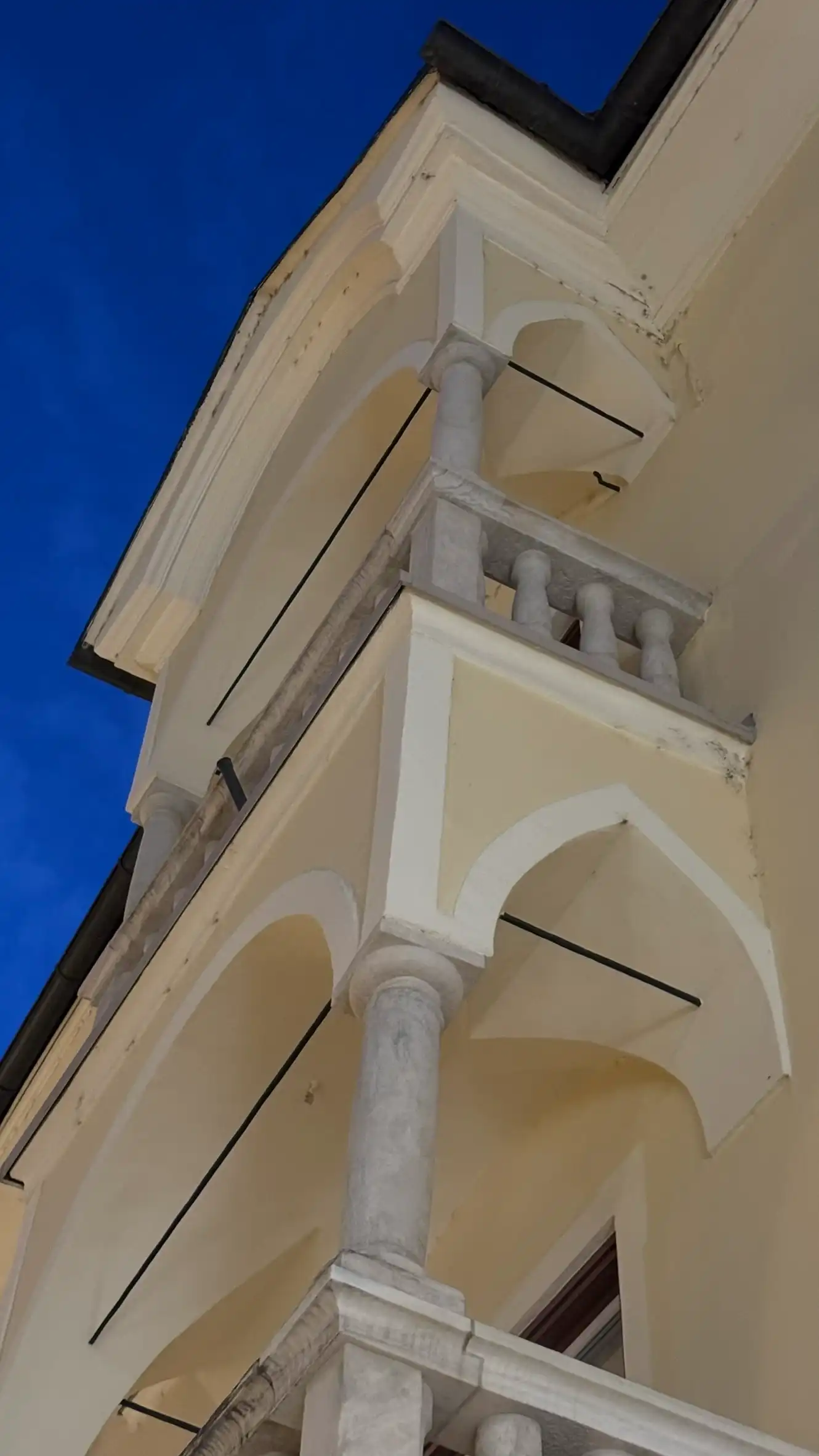
Top-floor balcony with canopy, three arches supported by two stone columns
Symbolism of Facade and Form
Symmetrical Six-Bay Arrangement | Vertical Symmetry The three-storey frontage is vertically divided into six evenly spaced window axes, giving the building a sense of symmetry and elegance.
Three-Level Window Composition | Horizontal Symmetry Each storey horizontally aligns with a row of windows.
Projecting Portal Pavilion | Vertical Emphasis The three storeys of the projecting pavilion are stacked to emphasise verticality. The arches are supported by sturdy columns.
Hipped Roof | Stability The steeply pitched, hipped roof, clad in reddish-brown tiles, reflects traditional Central European town architecture. Hipped roofs symbolised stability, authority and nobility.
Prominent Location
Standing at the eastern end of the Hauptplatz (main square), Carinthia Haus stands at a key junction – the point where the two main axes of the historical old town intersect.
The NE-SW axis connected the Friesacher Tor (NE) with the Villacher Tor (SW). The NW-SE axis connected the Weitensfelder Tor (NW) with the Klagenfurter Tor (SE).
Historical Administrative Building
The house was recorded as an administrative building during the time of the Spanheim dynasty.
Protected Heritage Status
Today, the building is a listed monument and is a part of St Veit’s protected historical ensemble.
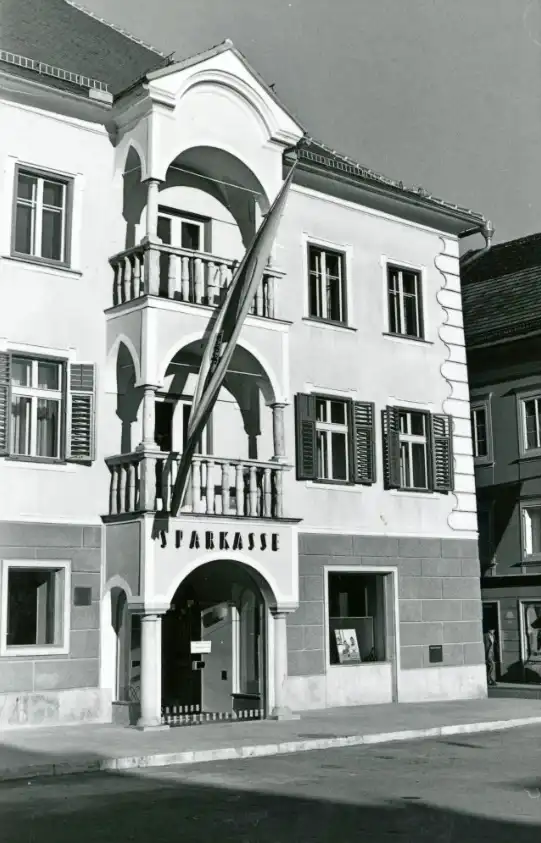
Historical Photograph Image Source: Archive of the Municipal Authority of St. Veit an der Glan