The “building plot 188“, long known as the “Borghi Wing” and the “Lazaretto”, carries an air of legend. Local tradition recounts that the first Borghi came to St. Veit as a humble journeyman mason. While dismantling an ancient tiled stove in the venerable Findenig House, he uncovered a hidden hoard of coins. Quietly pocketing his discovery, he returned to his Venetian homeland – only to reappear soon after and purchase the entire property.
The modest annex, later nicknamed the Lazaretto, gained grim importance in the 18thcentury. St Veit, then a garrison town, lodged Austrian soldiers here along with Prussian prisoners of war. Parish death records reveal that many a loyal grenadier never recovered from illness or injury and died within these walls, far from his Silesian home.
Architectural Features and Traditional Woodwork
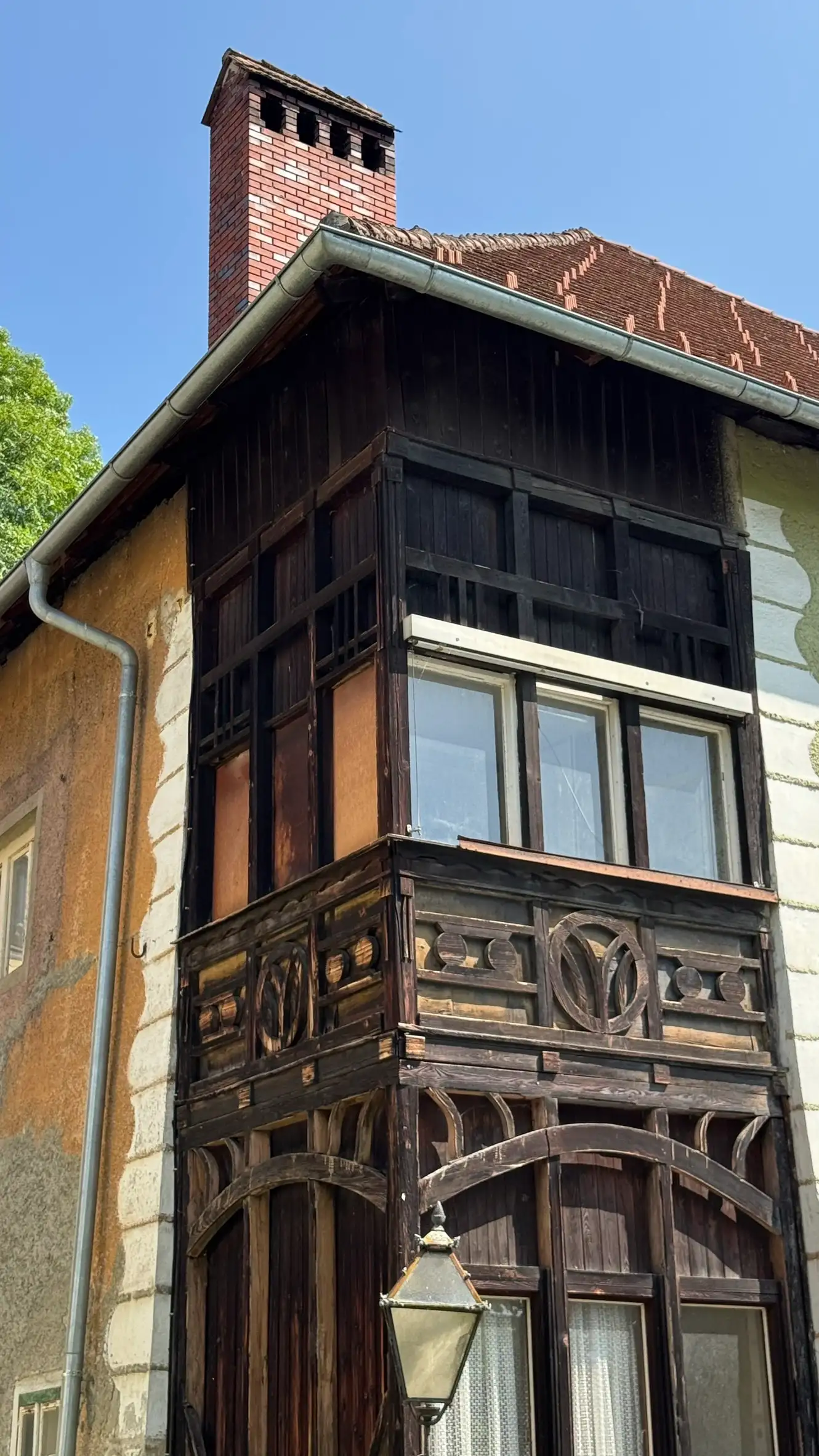
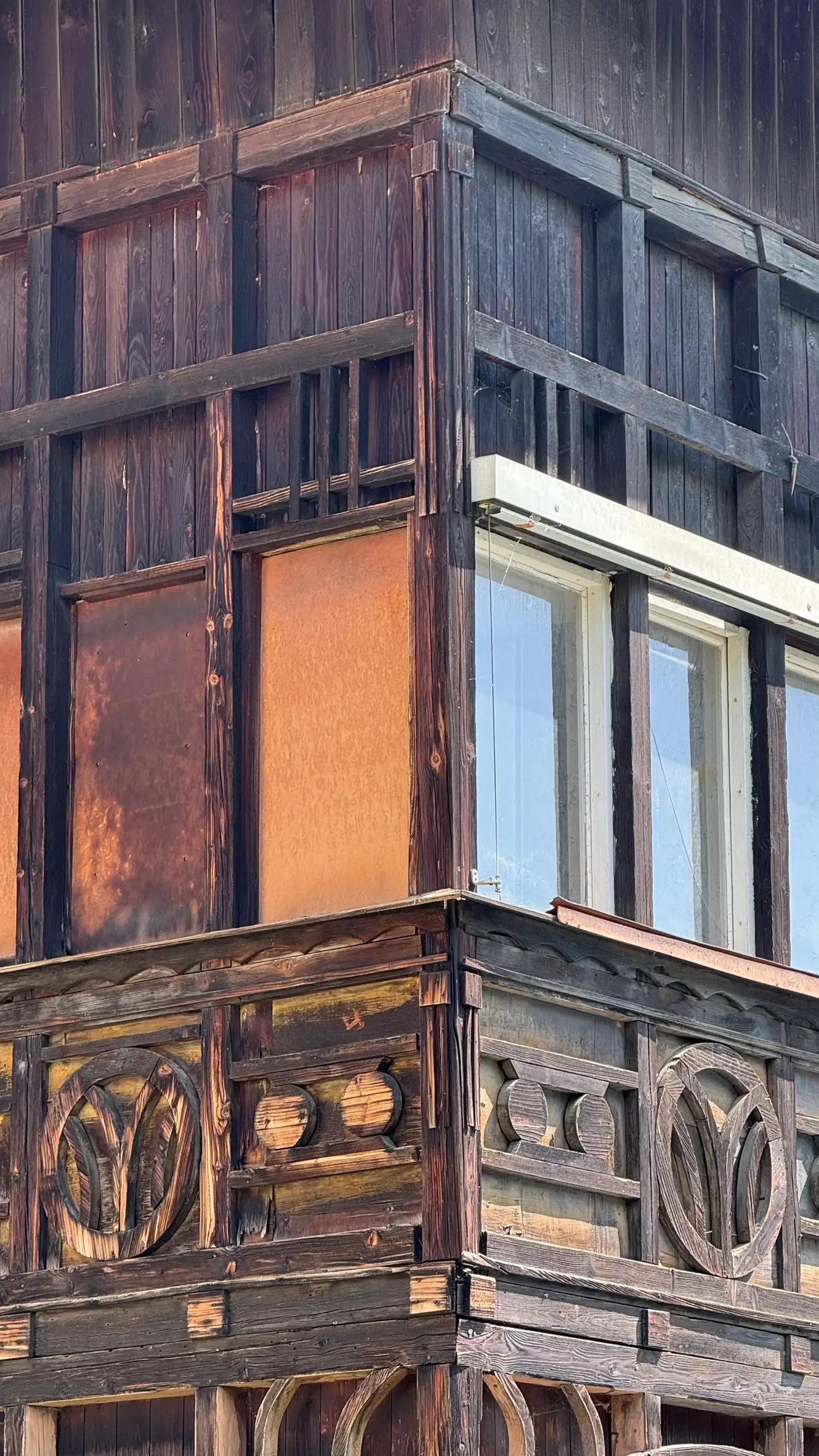
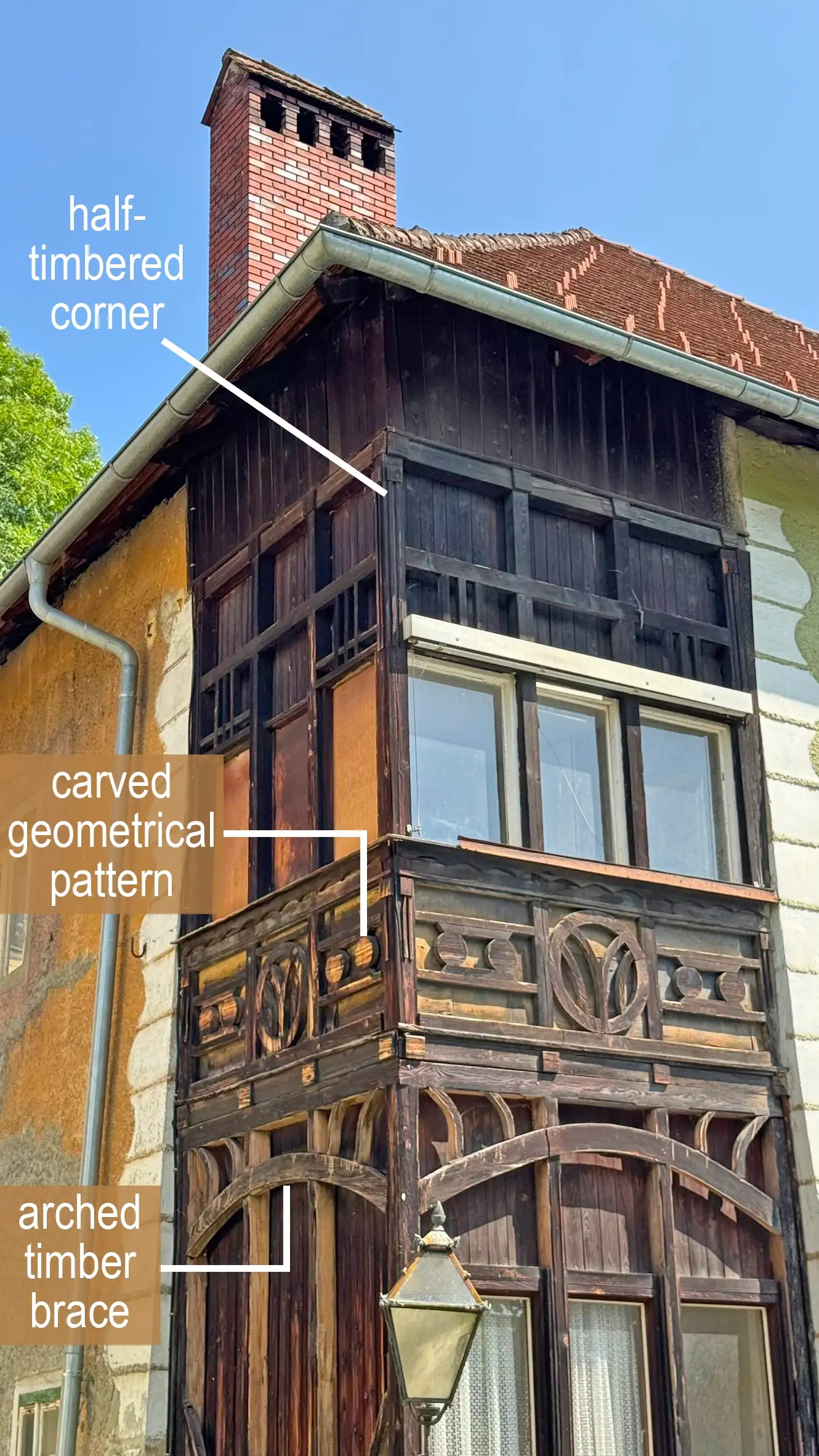
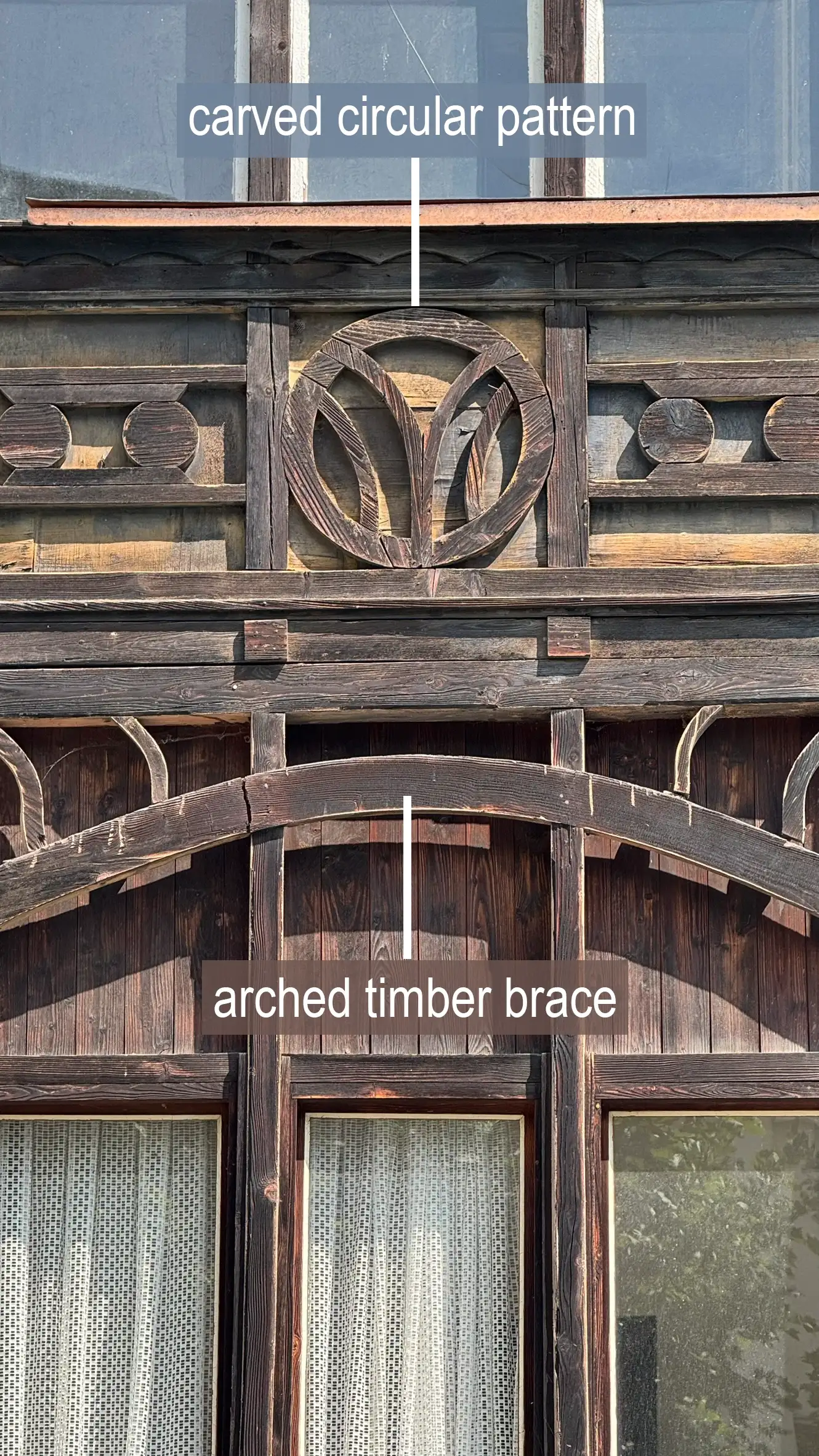
Timber Framing At the south-west corner of the building, traditional timber framing is clearly visible.
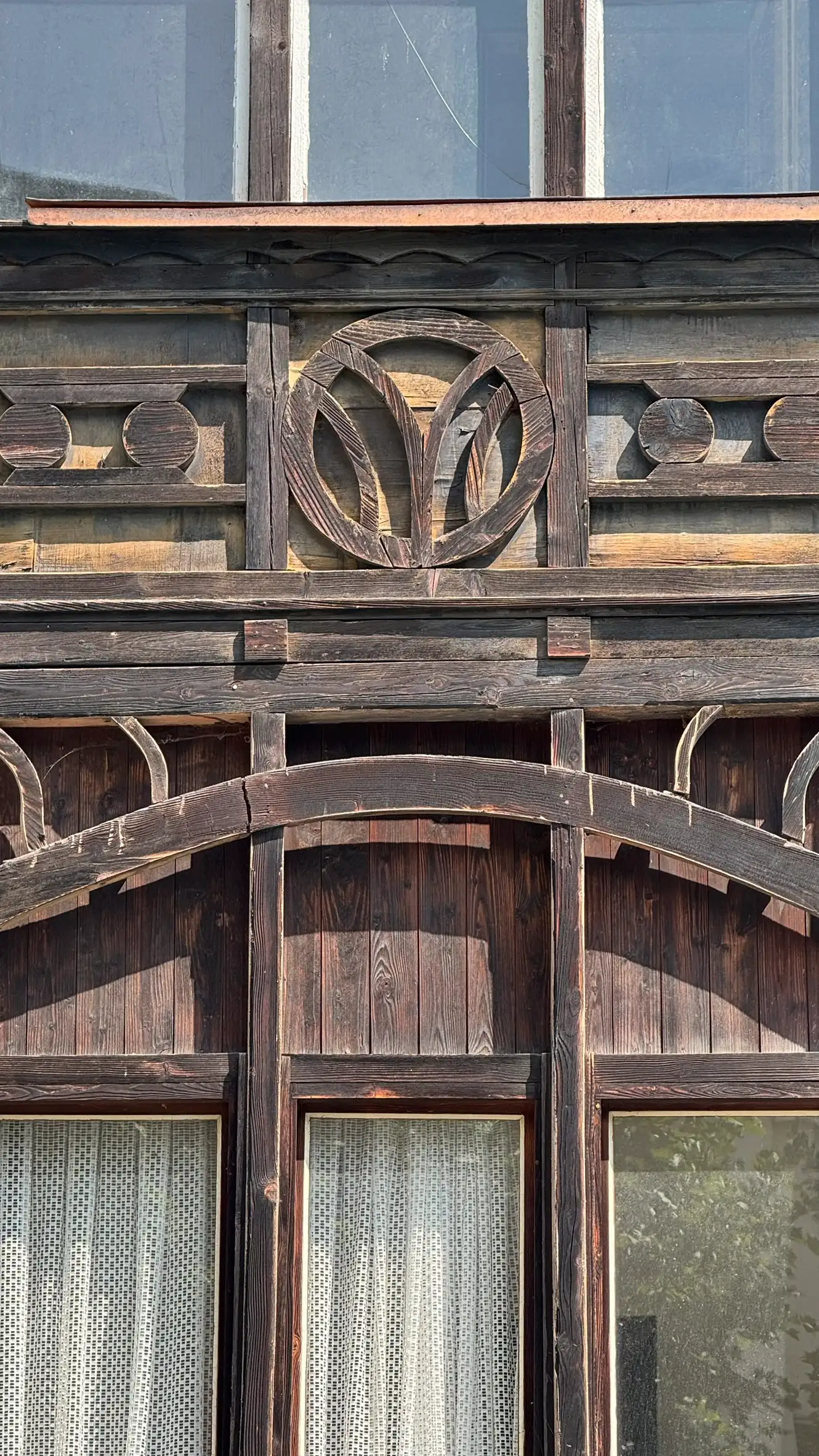
Timber Braces Arched timber braces provide structural strength while also adding decorative detail.
Traditional Woodwork The panels feature traditional woodwork carving with circular and gently curved geometric patterns.
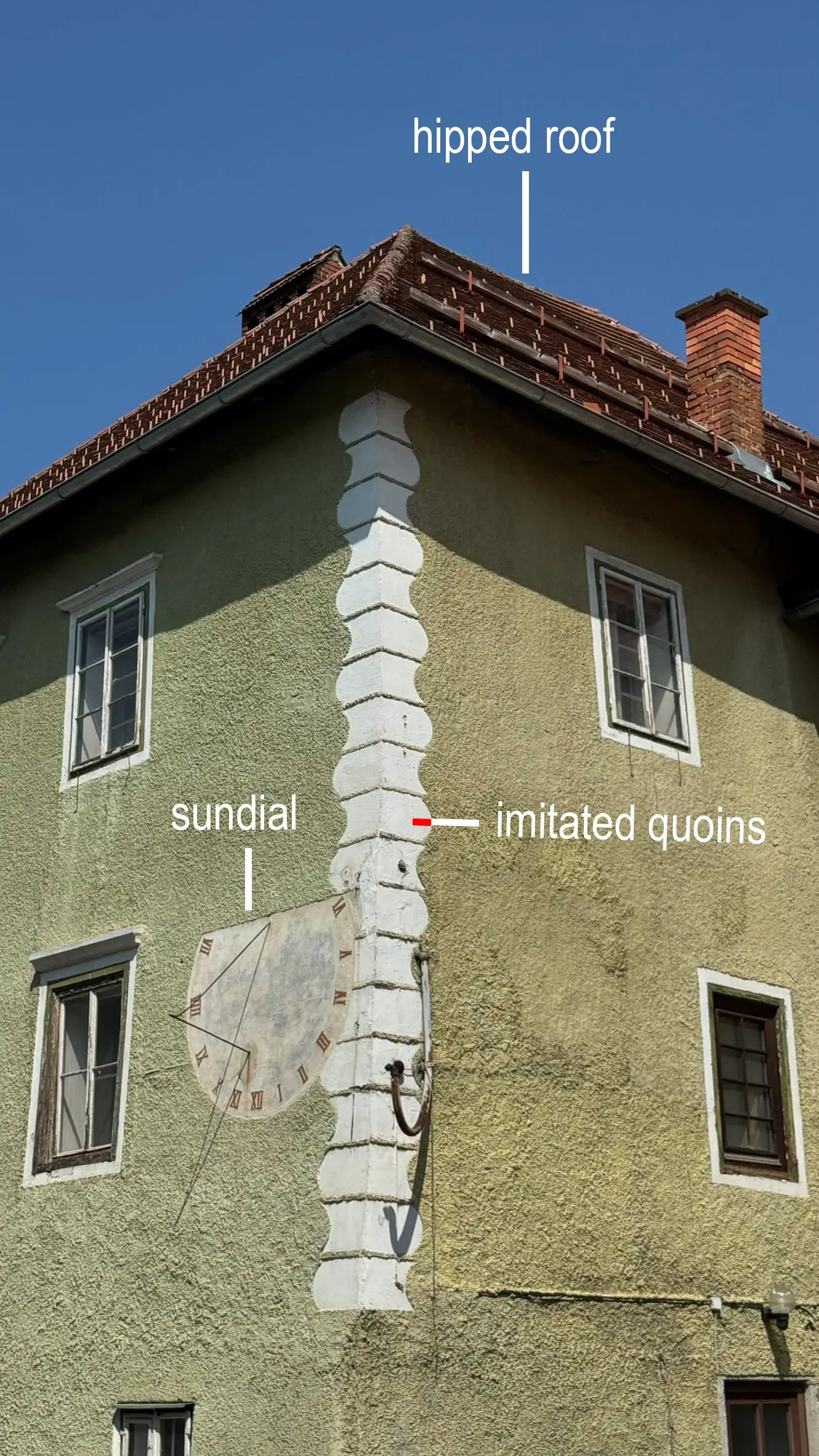
Windows Tall windows allow light to flood into the interior. Roof Prominent brick chimneys are present on the hipped roof.
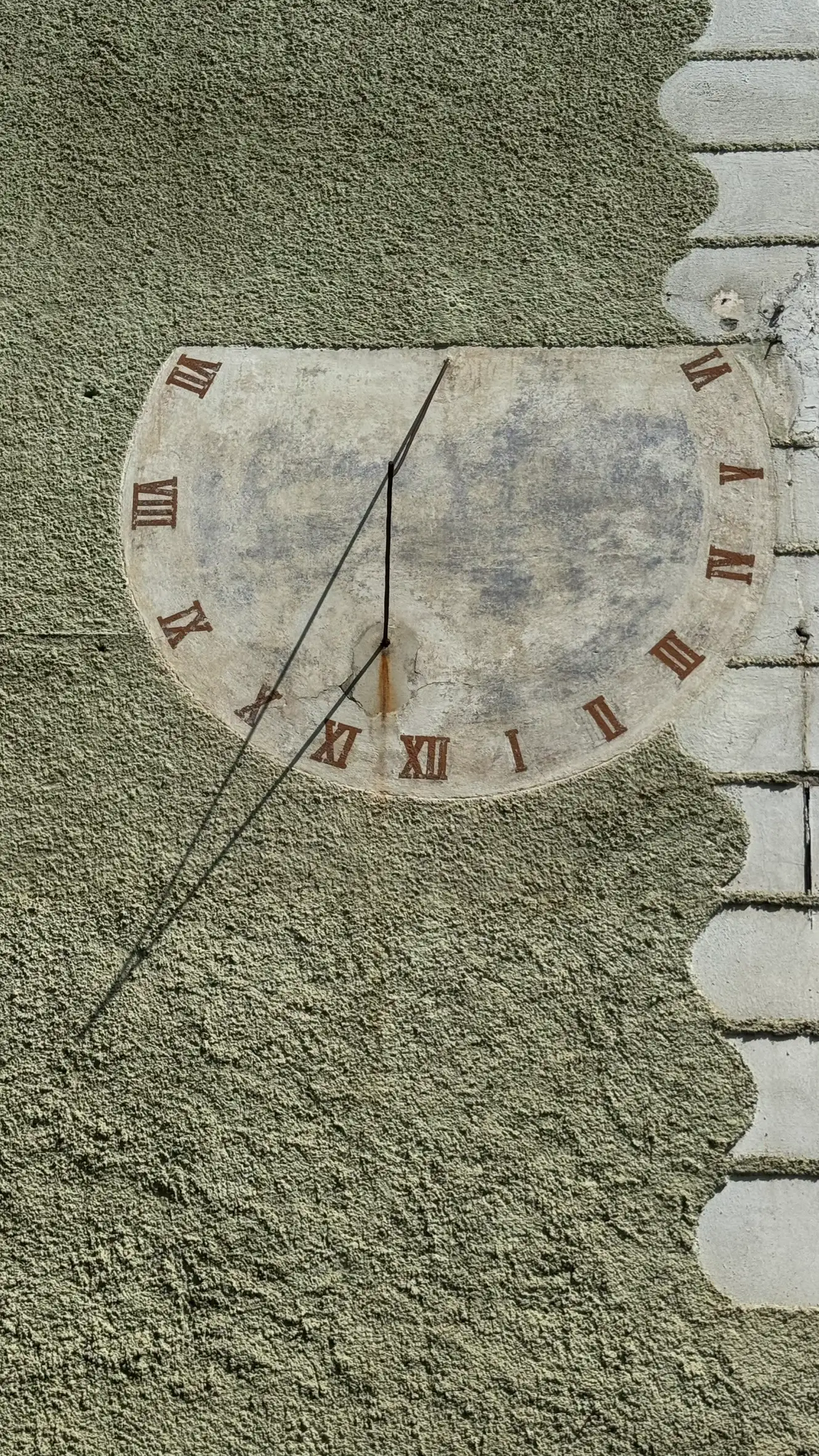
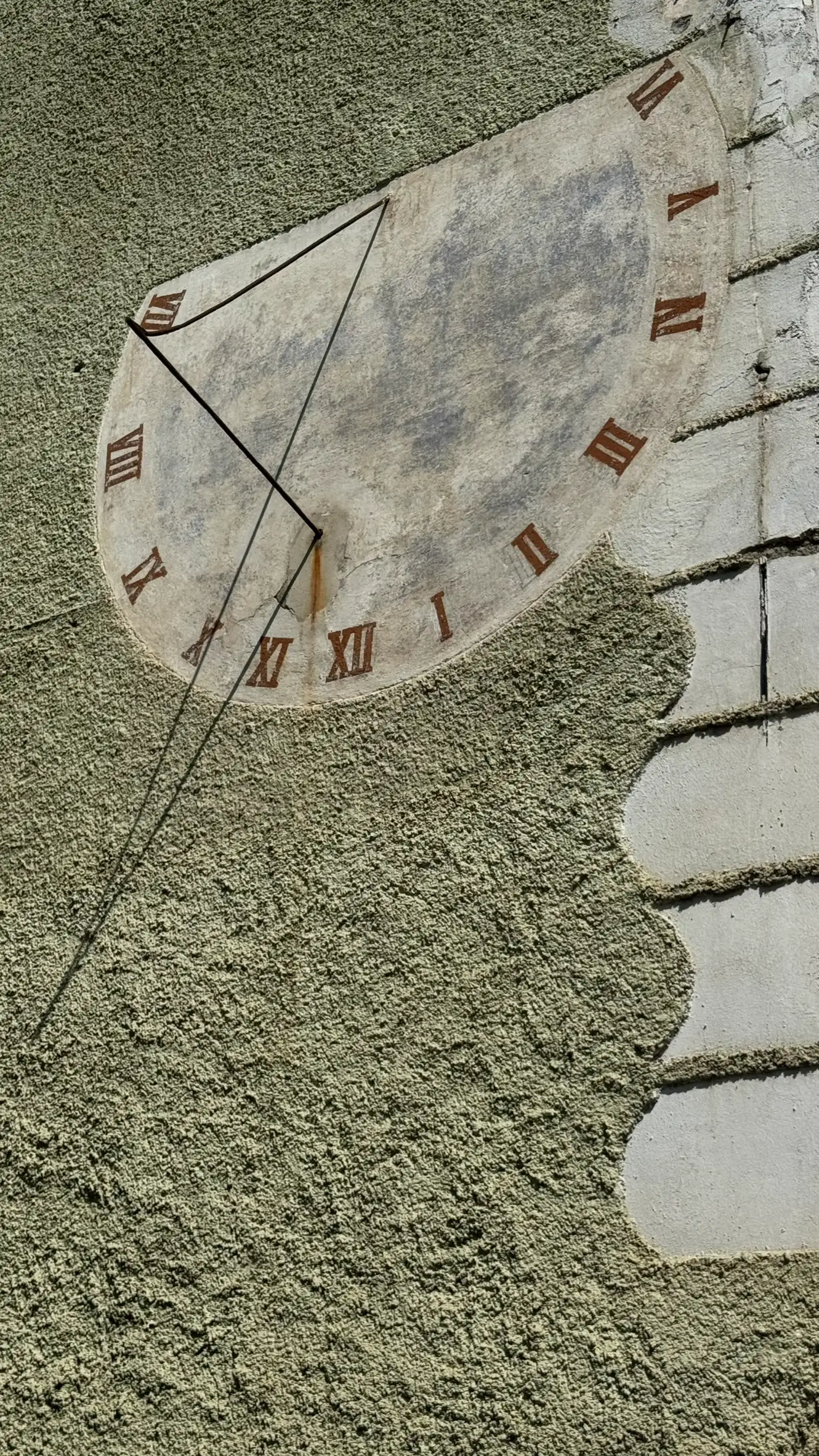
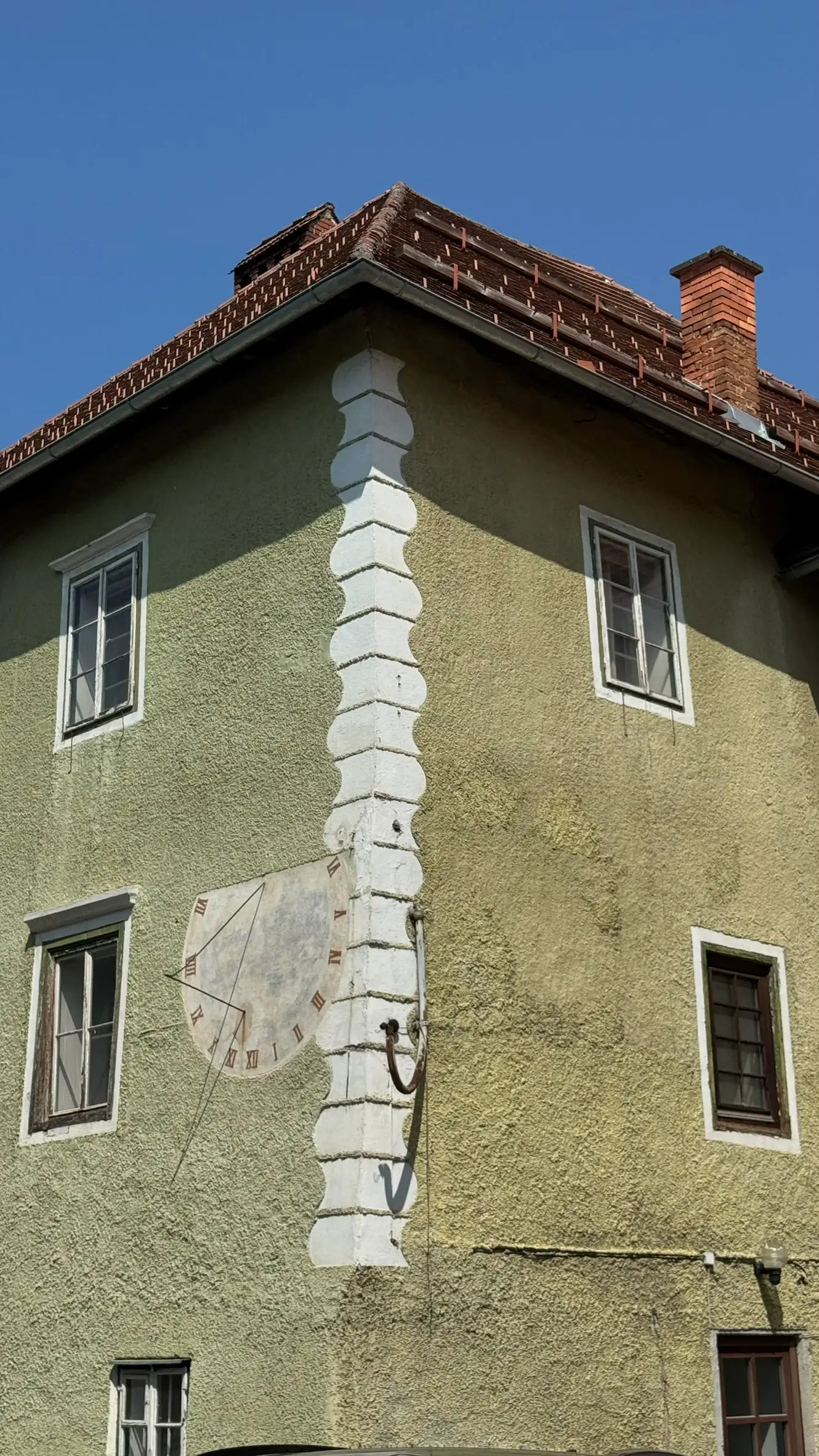
Sundial On the south facade, a sundial recalls earlier ways of telling the time.
Imitation Quoins At the south-east corner, imitation quoins have been applied, giving the impression of solid masonry construction.
Half-timbered corner with dark framing and decorative geometric panels
Decorative panels with carved circular and oval patterns, typical of traditional timber work
Arched timber brace providing structural support and rhythm
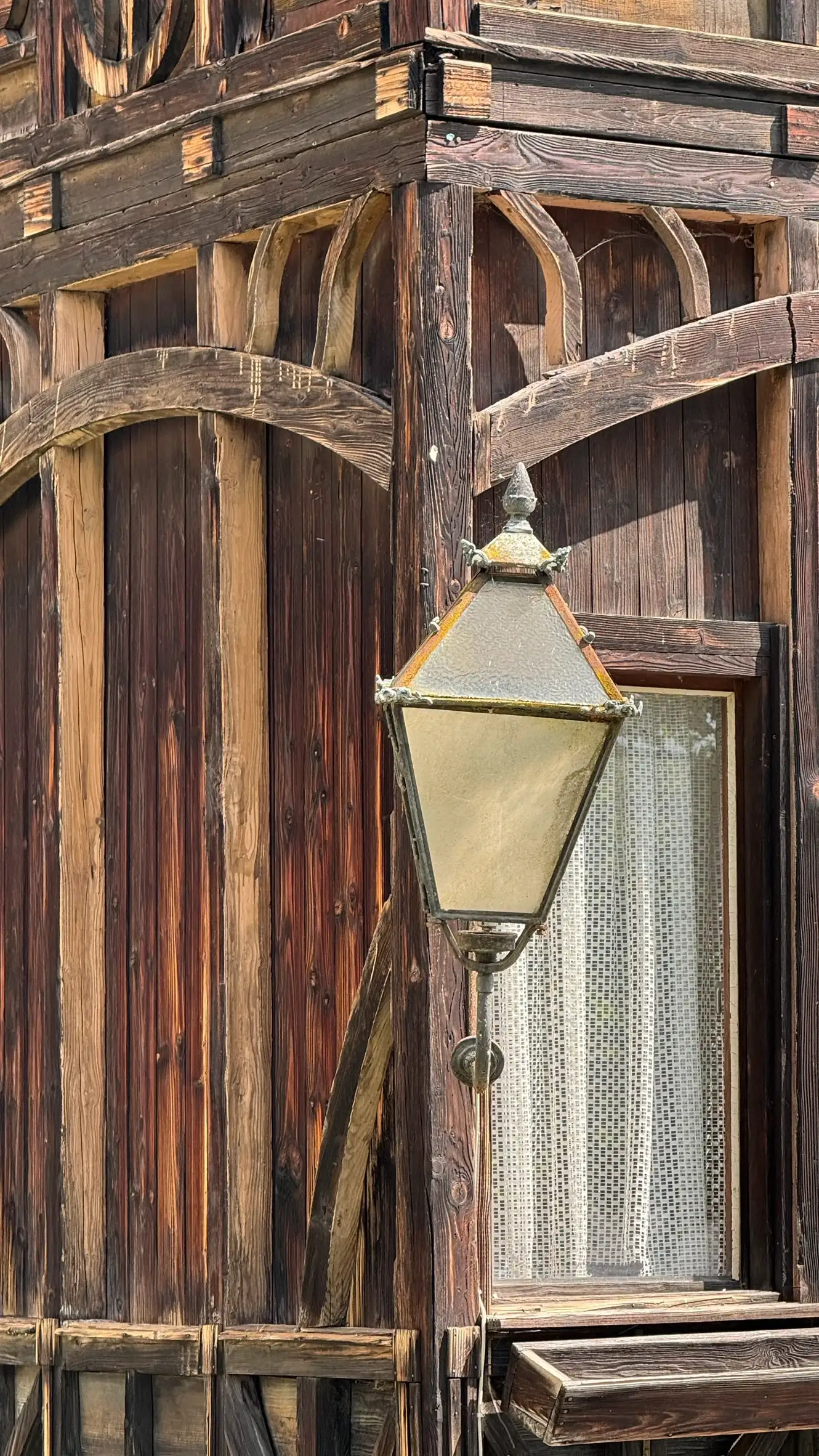
Historical wall-mounted lantern adds period character
Beautifully preserved sundial on the south-facing facade
Sundial and imitated quoins
Corner of south and east facades with imitated quoins