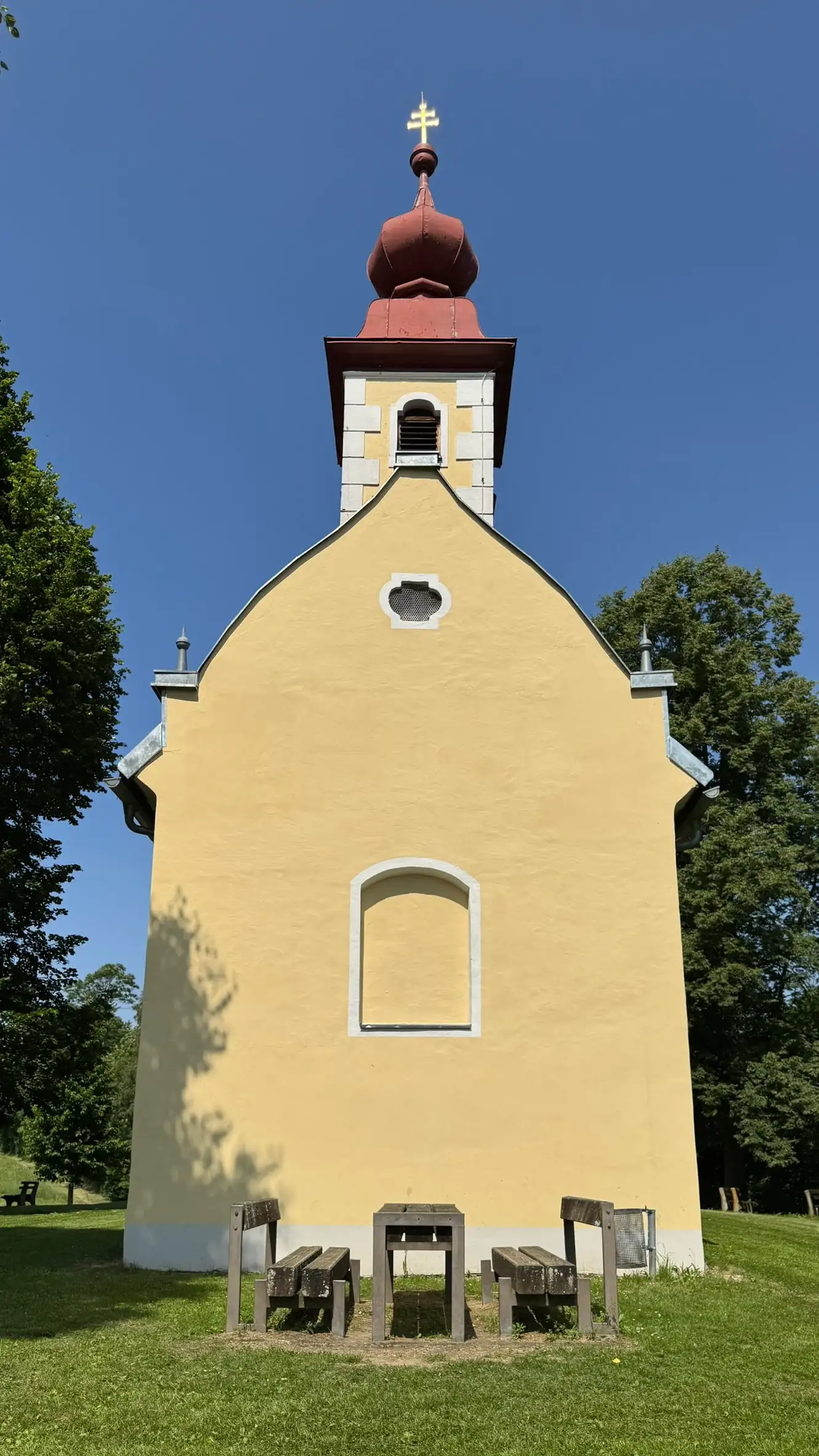
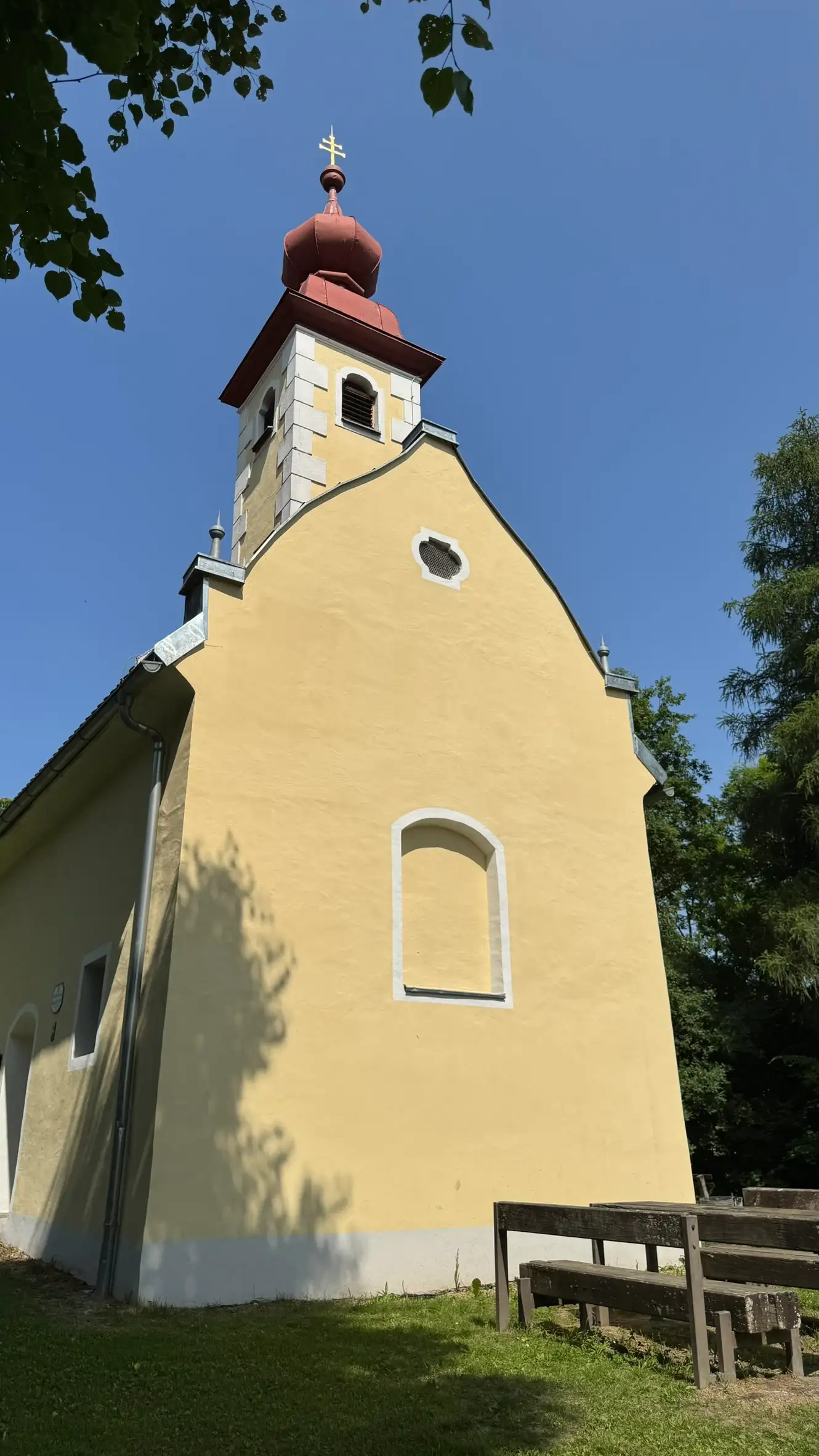
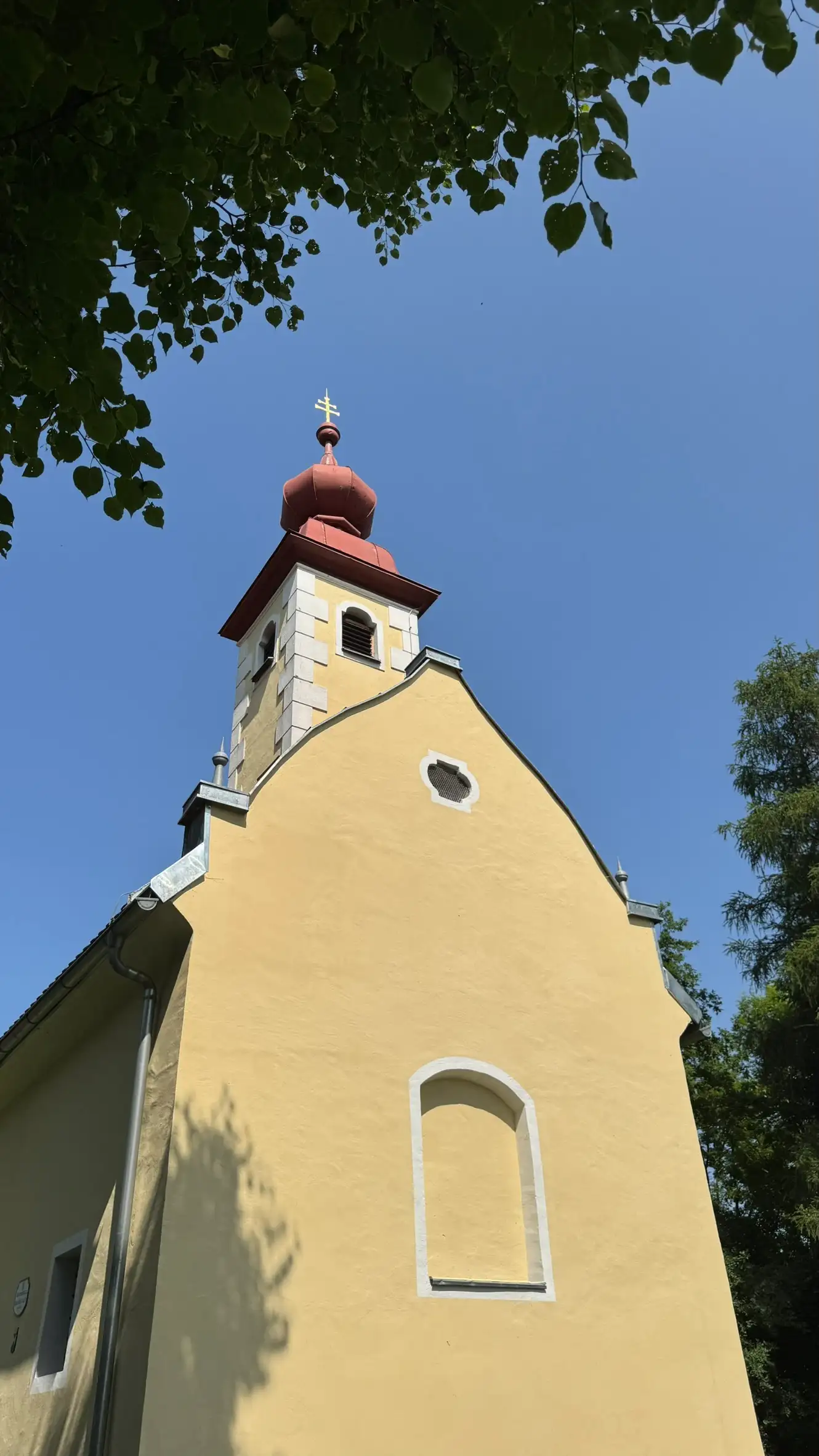
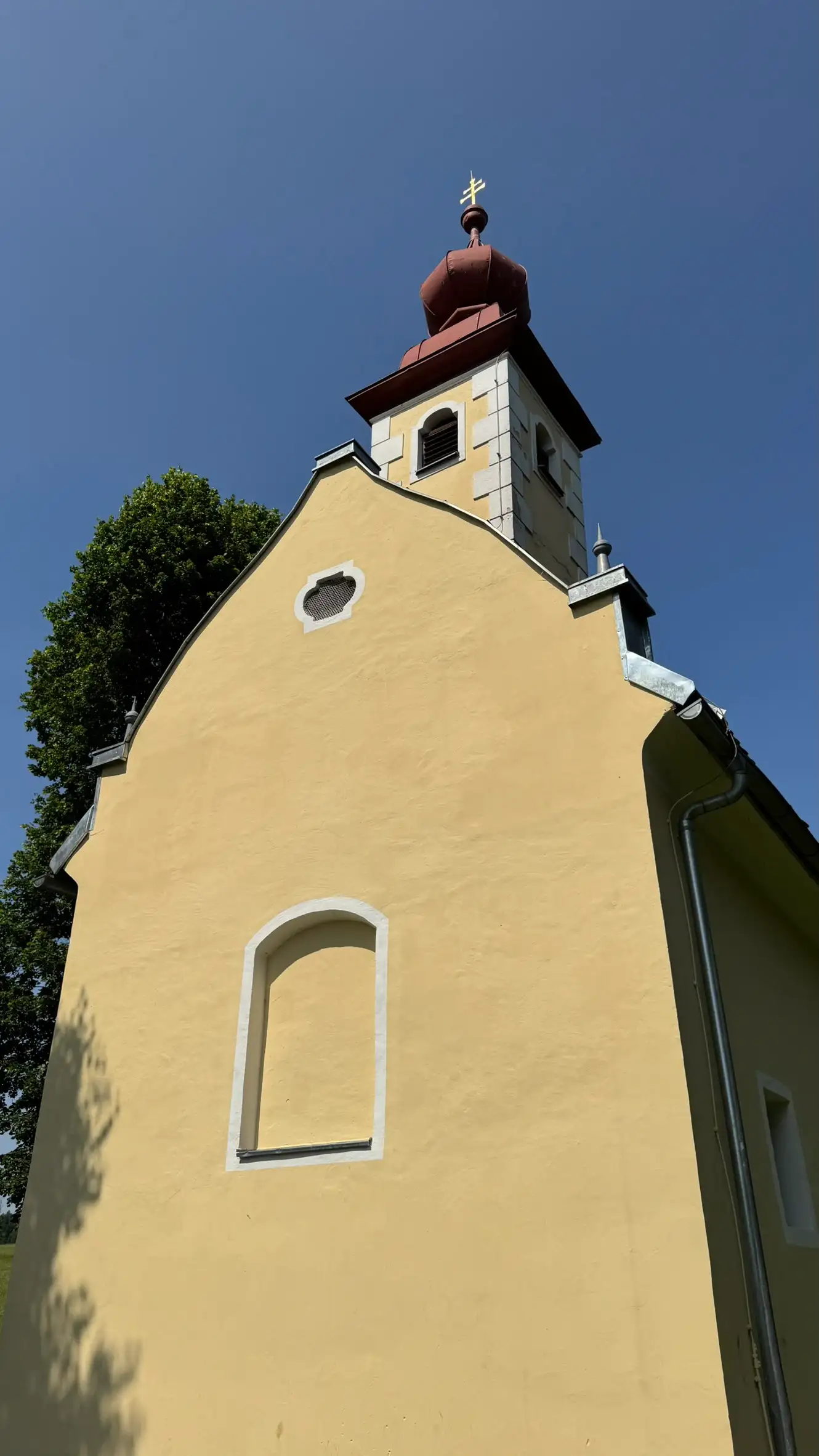
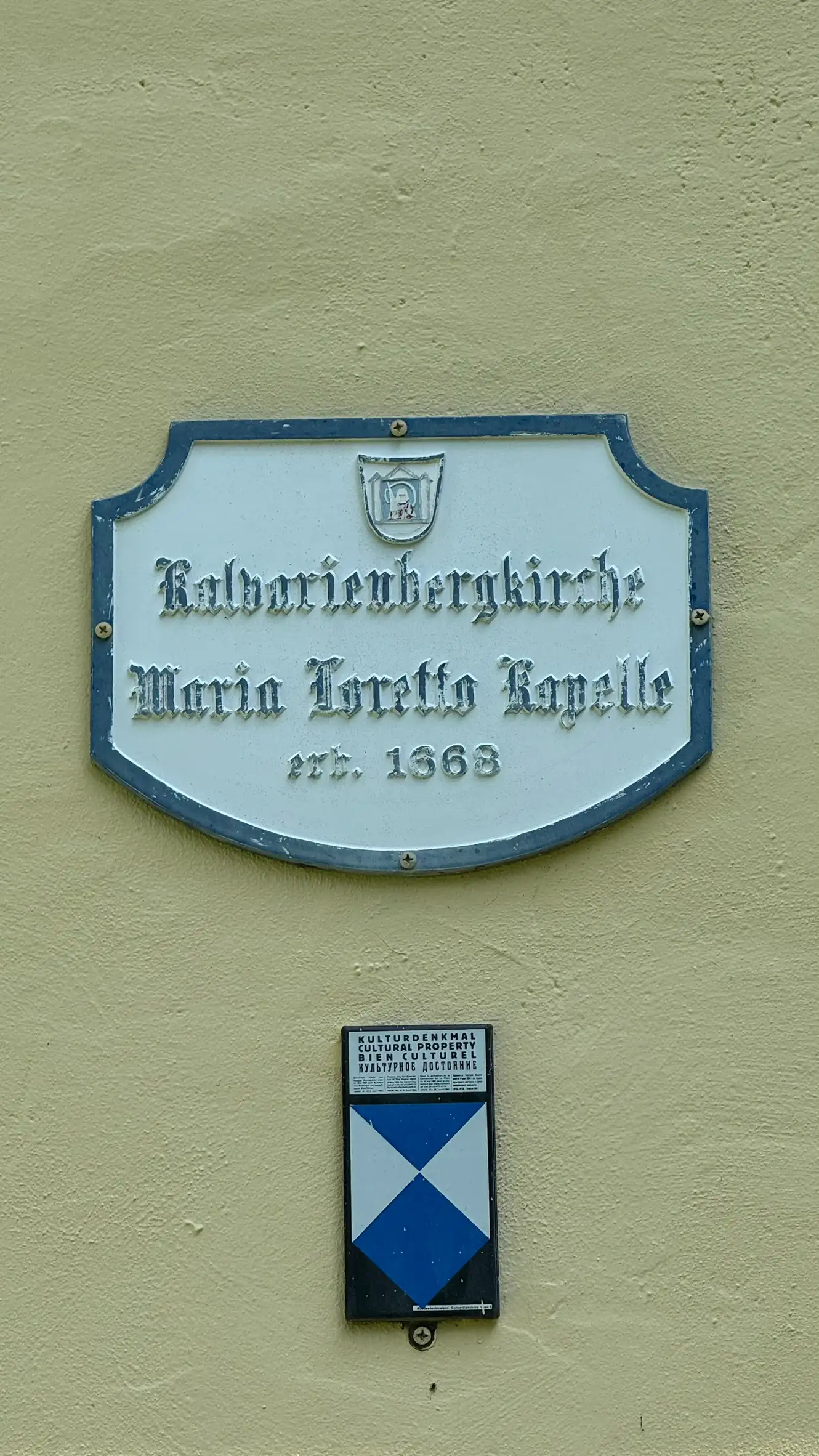
Calvary Church of Maria Loretto
Location
The Calvary Church of Maria Loretto stands on a hill to the northwest of St Veit an der Glan.
Panoramic Views
The Calvary Church is a popular local destination for hill walkers and hikers. It offers shady paths, benches, and panoramic views over the town and surrounding countryside. The area covers roughly three hectares of woodland, providing a peaceful spot to relax and reflect.
Endowment and Construction
The Calvary Church was endowed by Ruep Felsensteiner, then Mayor of St Veit, and built in 1658. Both he and his wife rest in a crypt inside the church.
East-West Orientation
The church is built along an east-west axis.
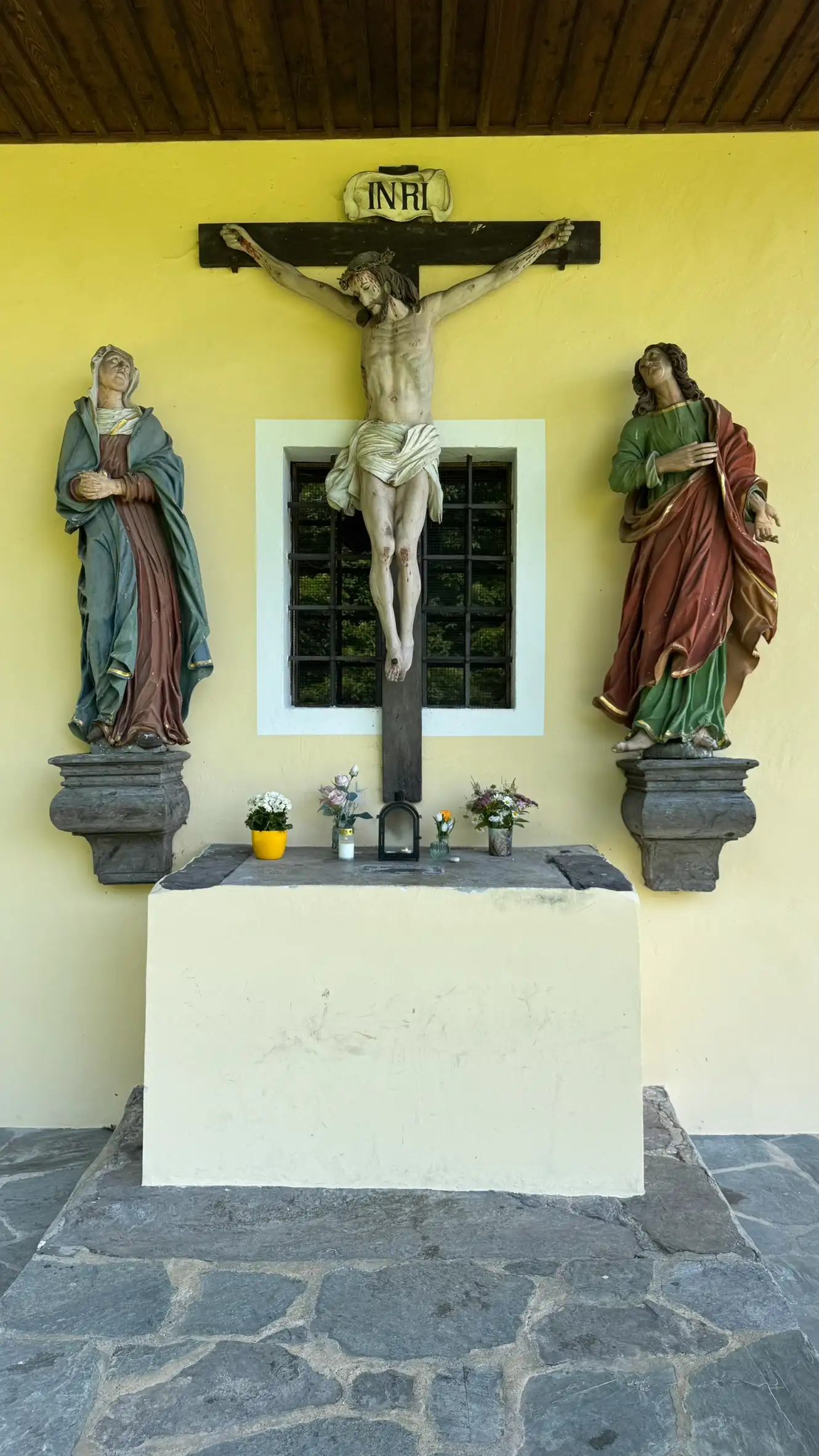
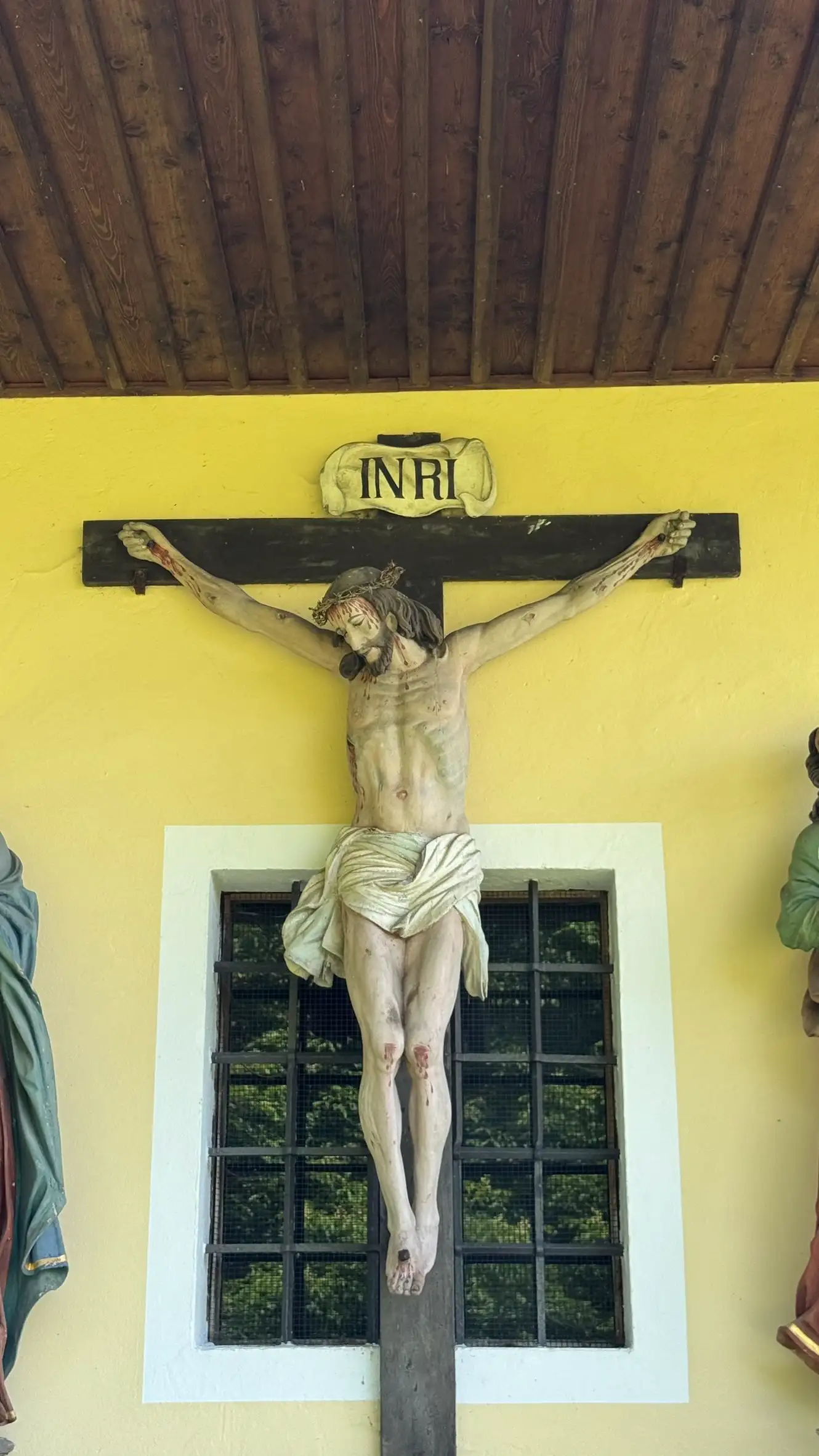
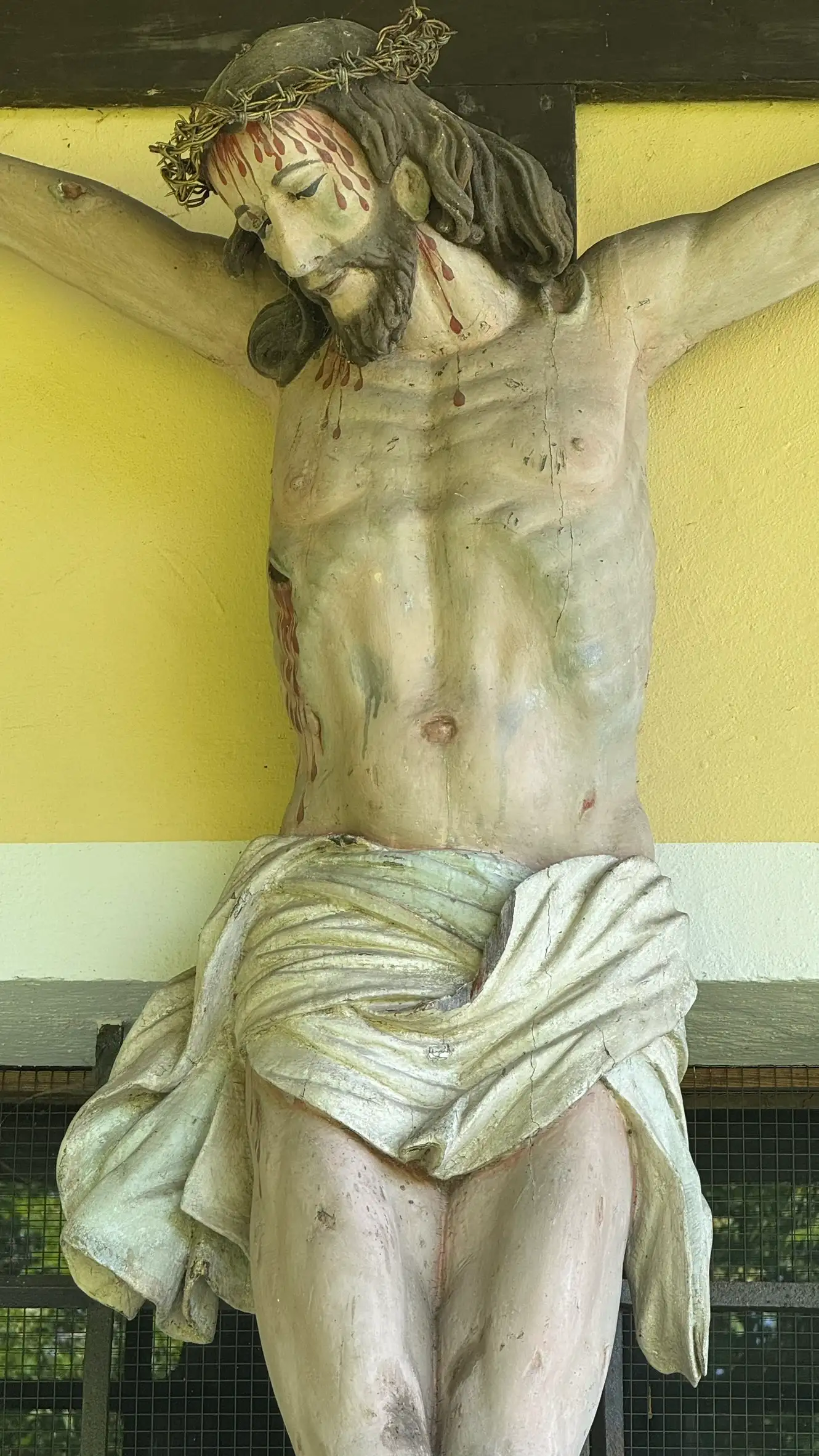
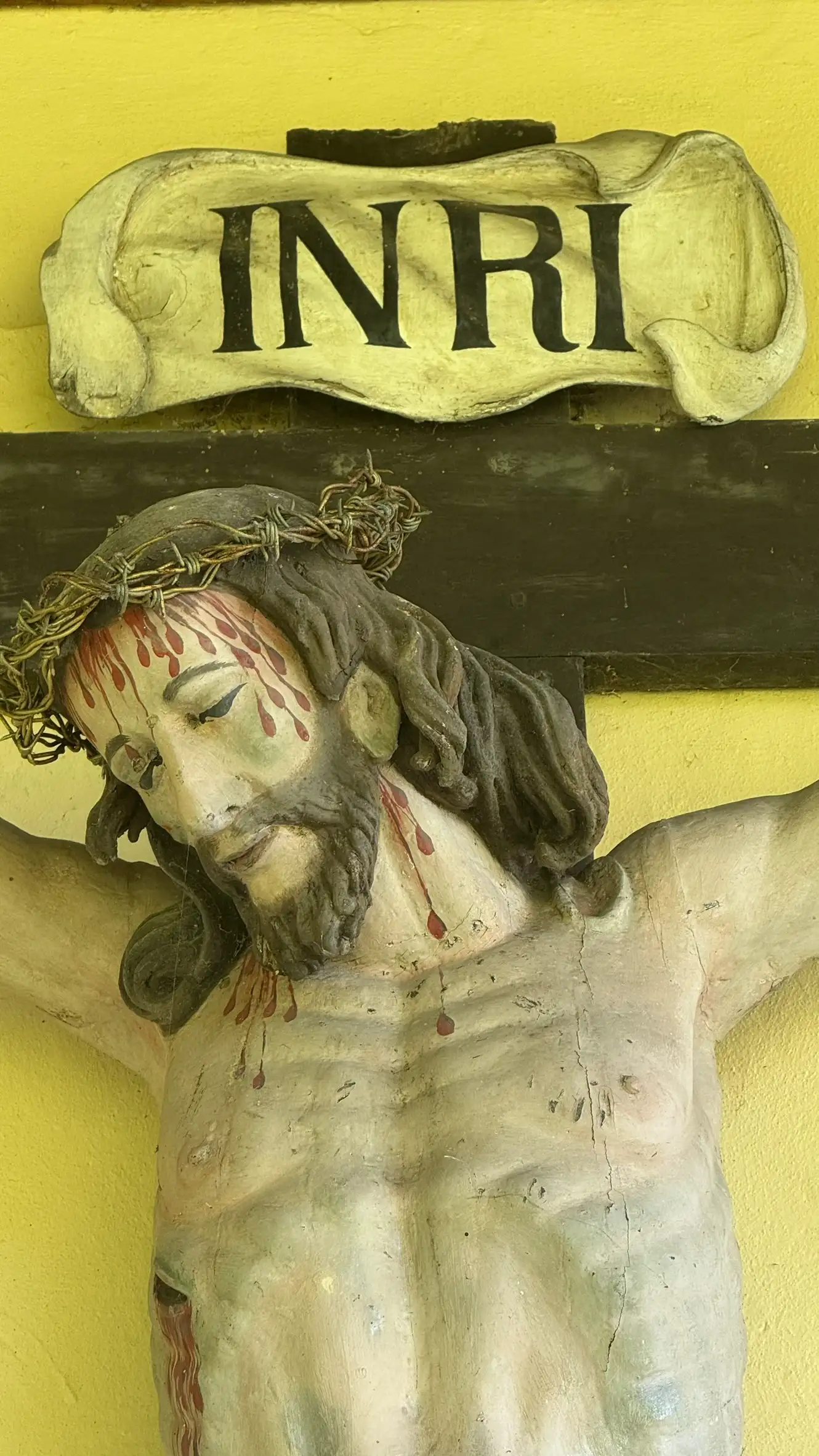
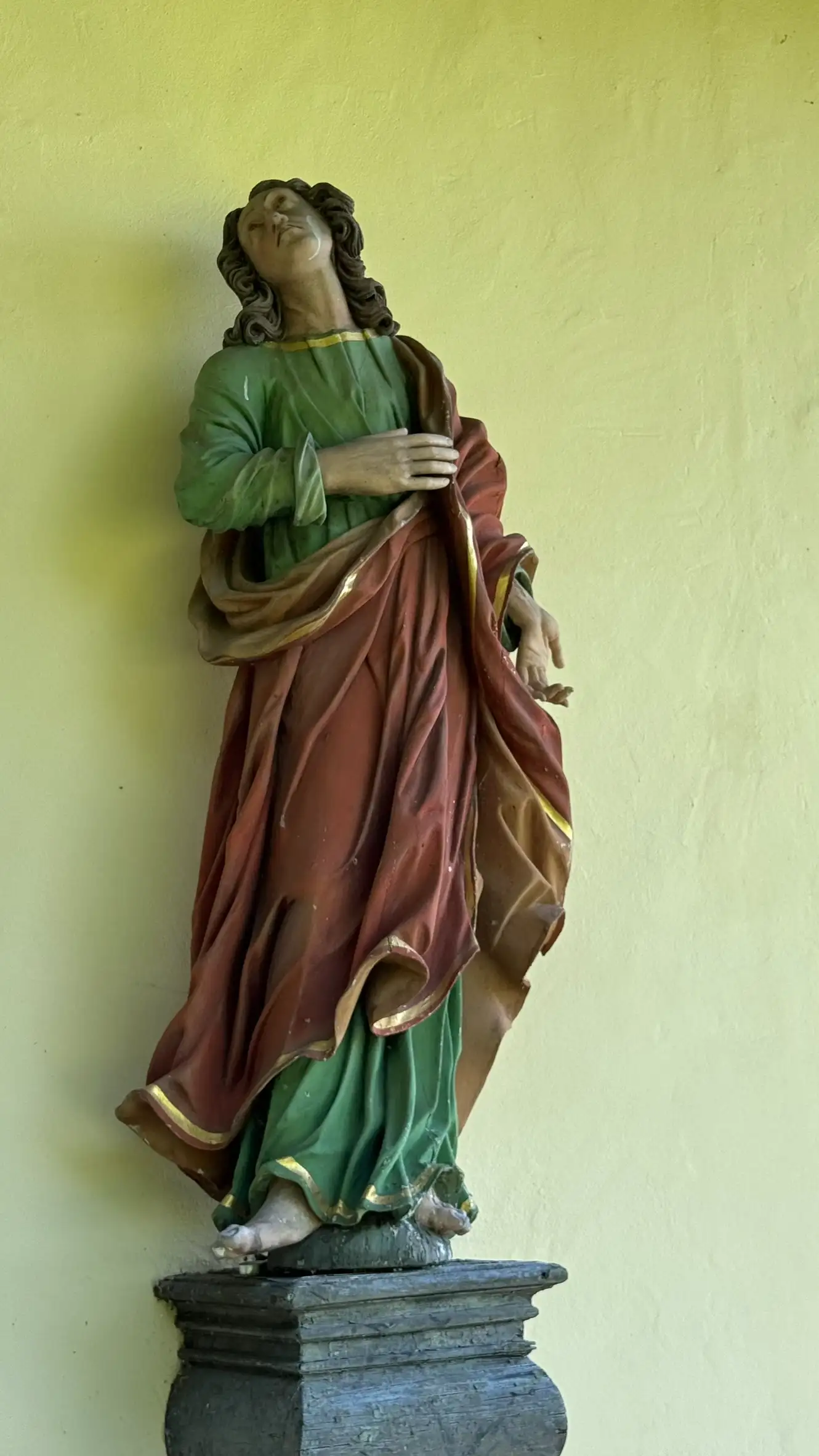
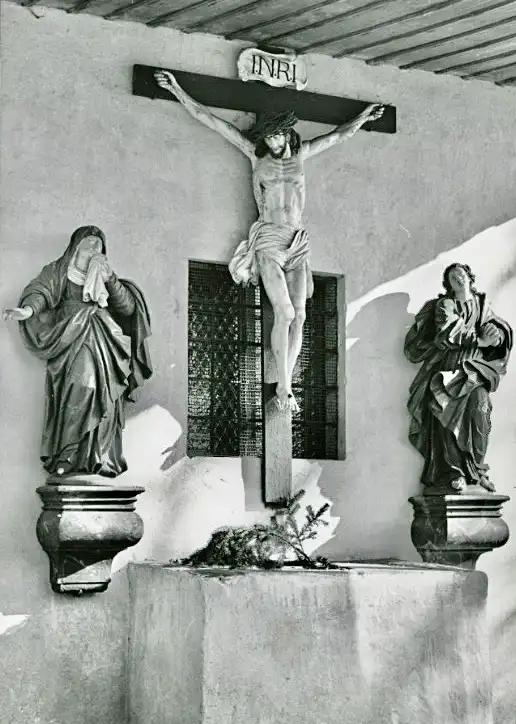
At the church’s western end, a wooden canopy houses a Baroque crucifixion group (dating from 1729) crafted in the workshop of Johann Pacher.
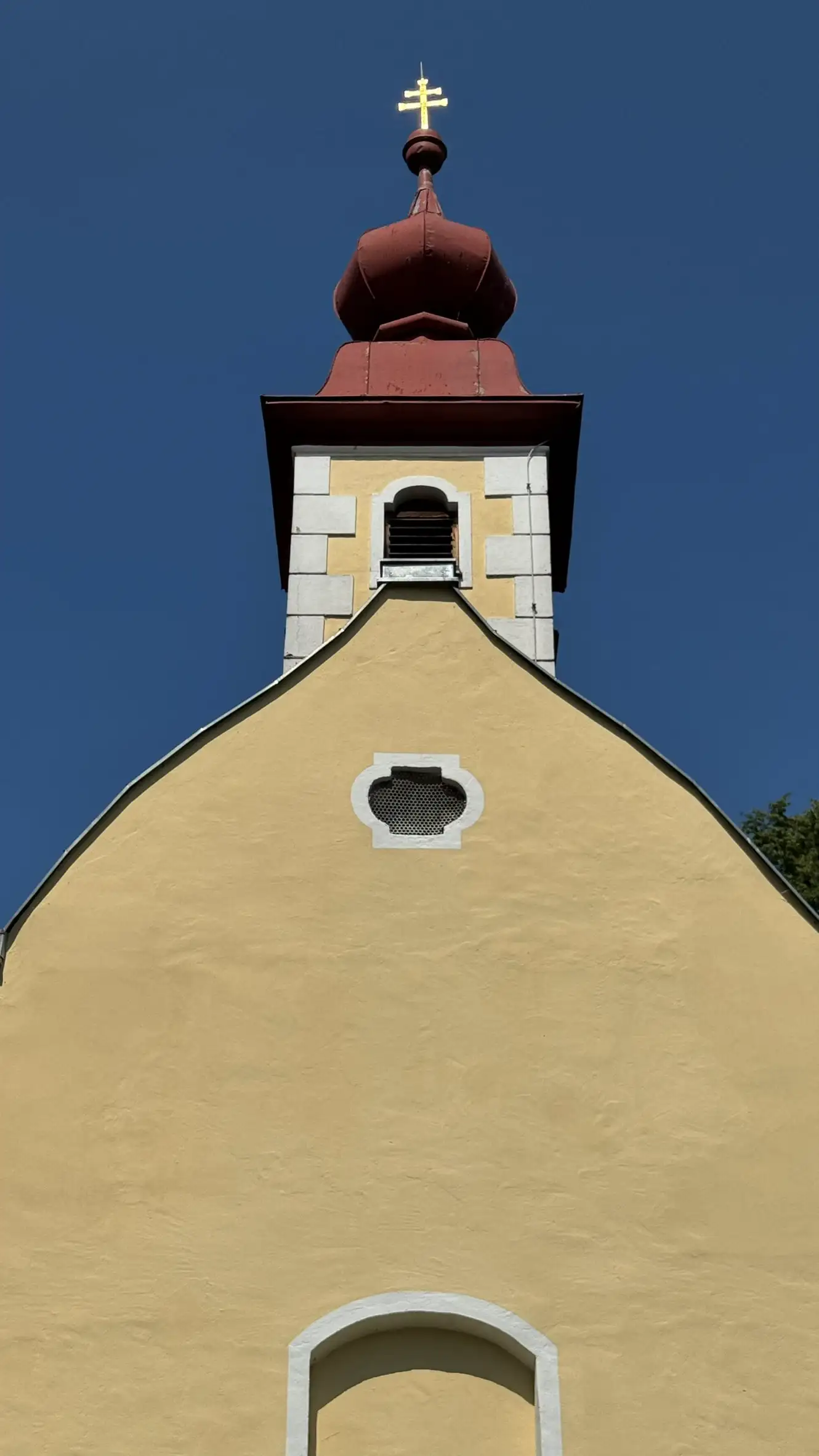
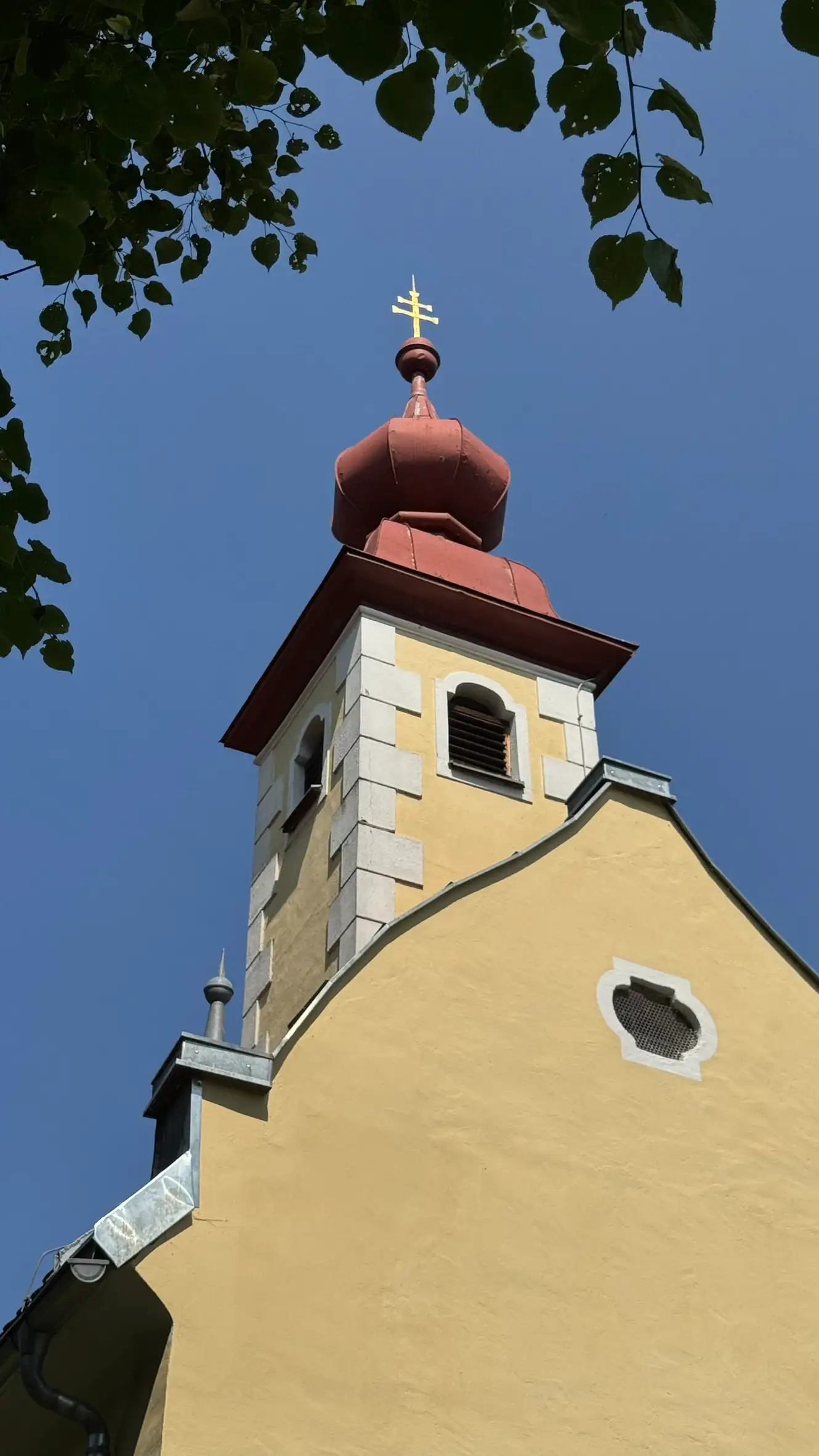
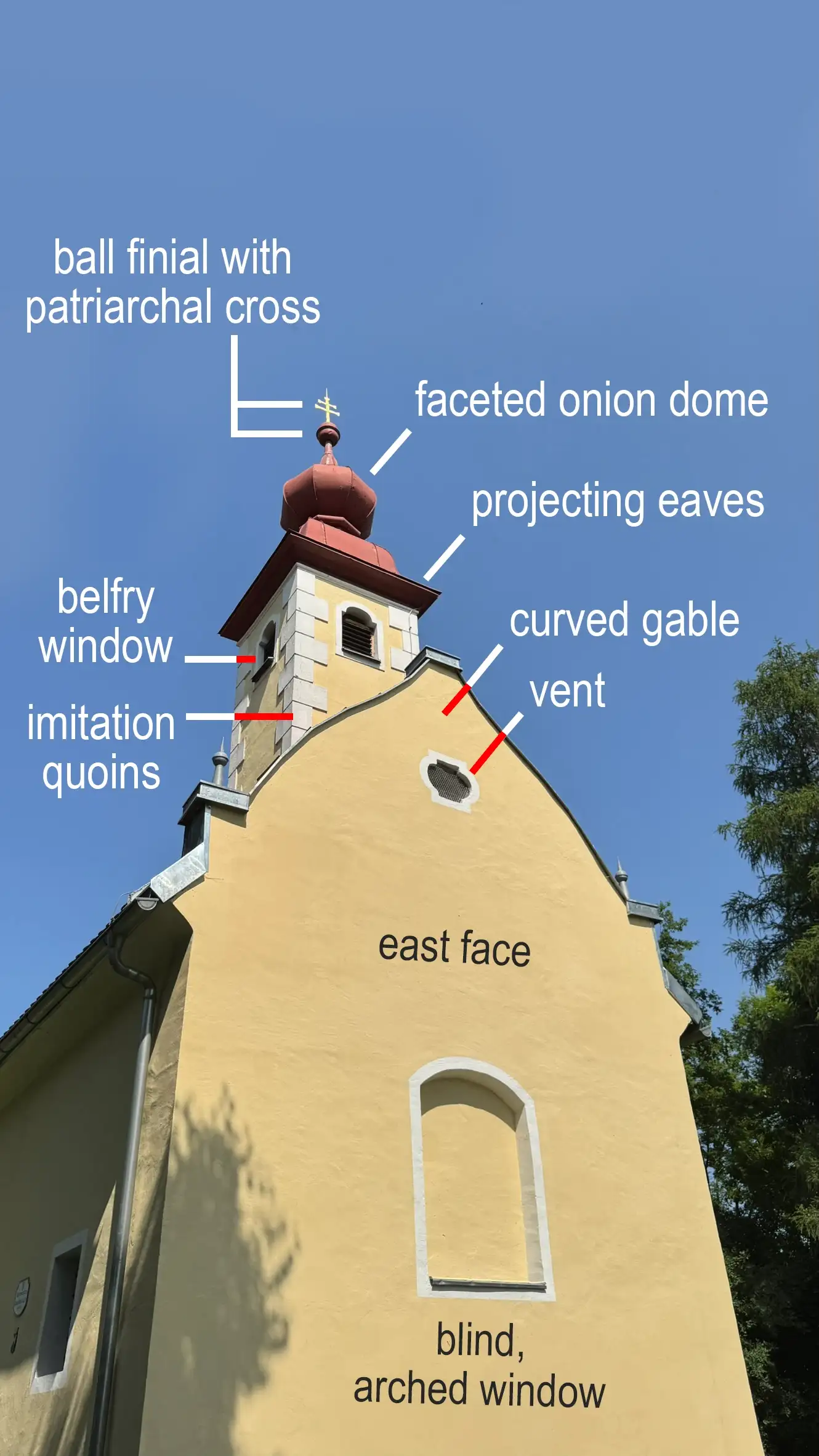
The flat eastern facade has curved gables.
Building
The floor plan of the church is rectangular.
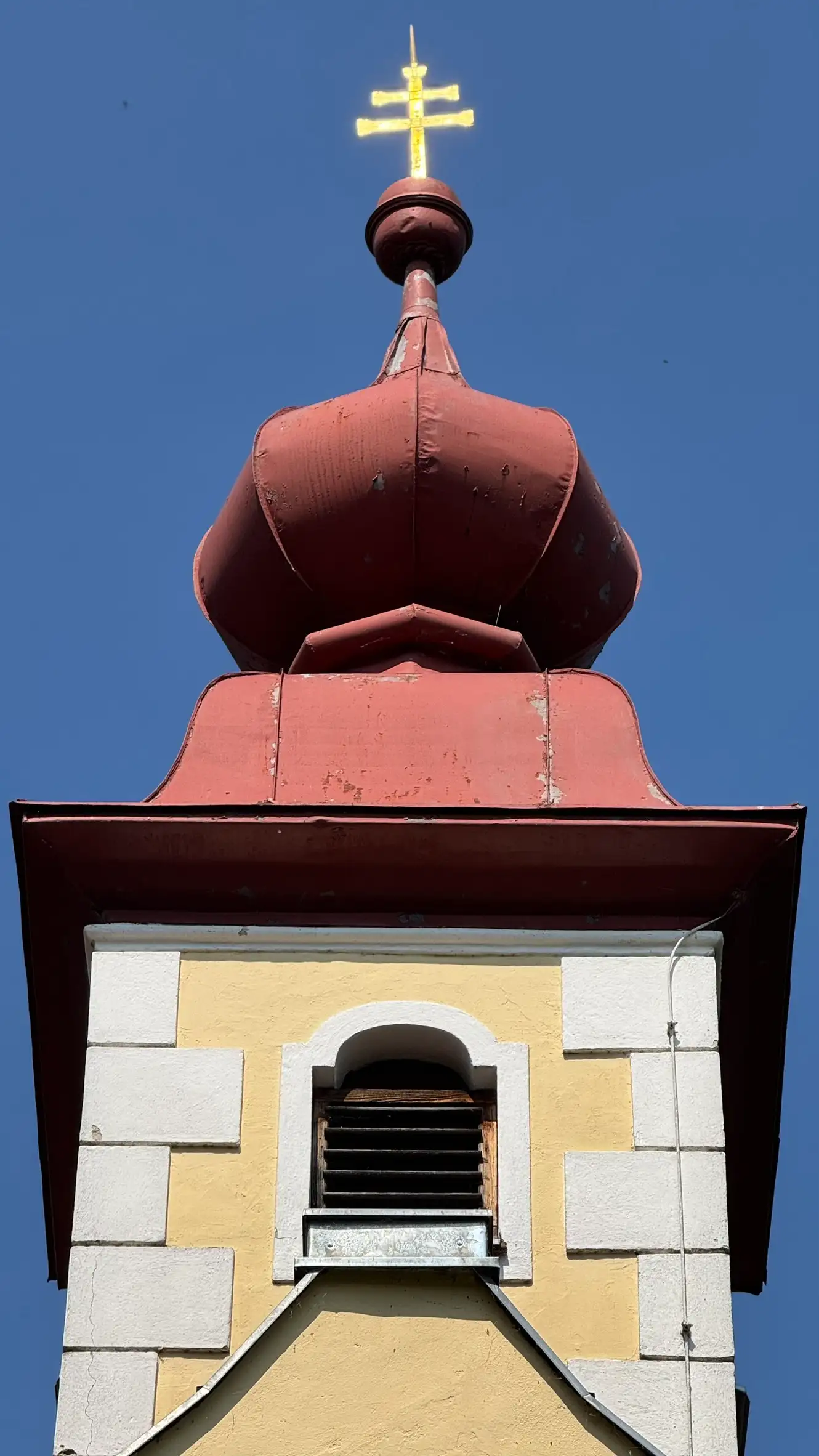
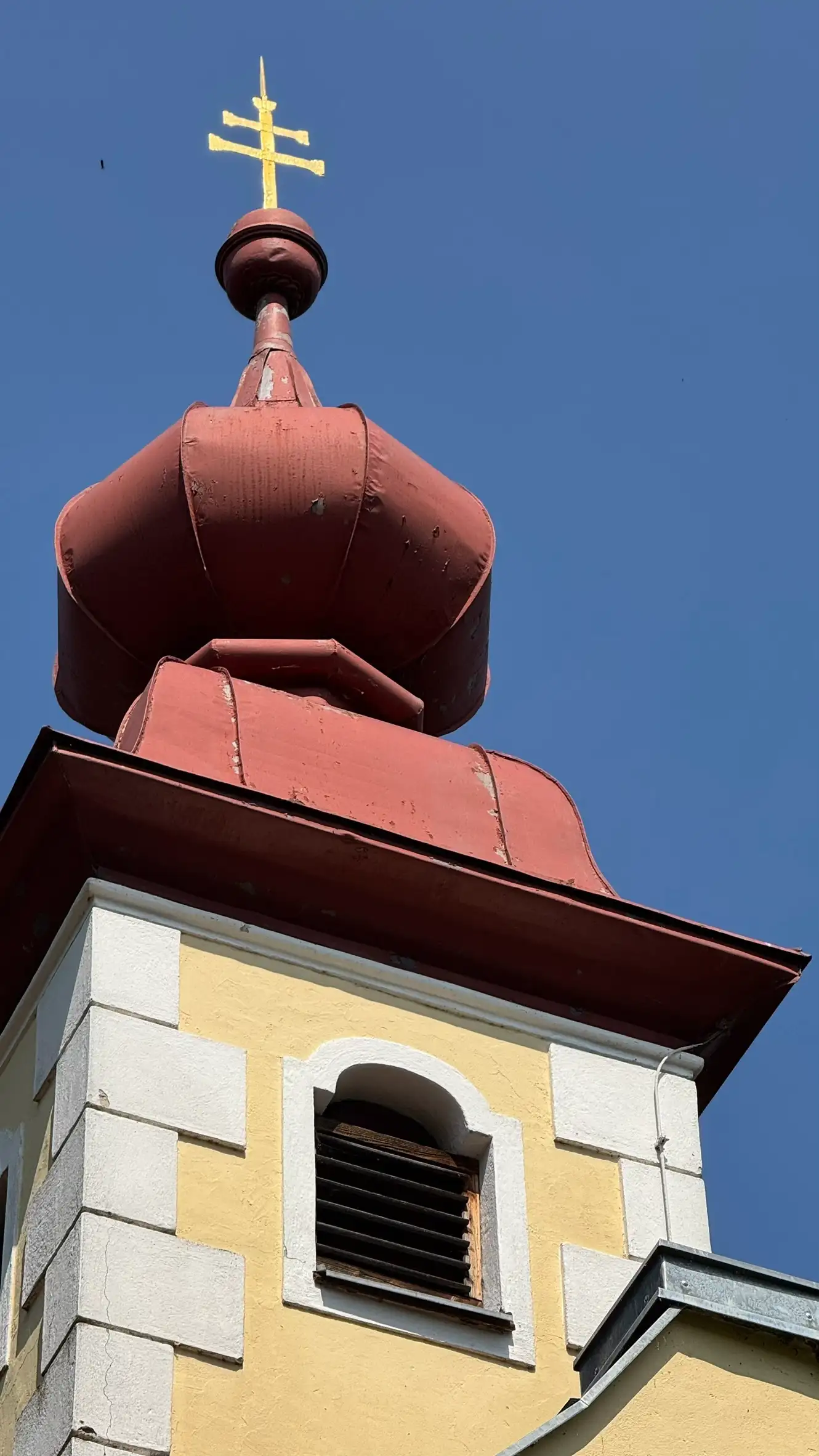
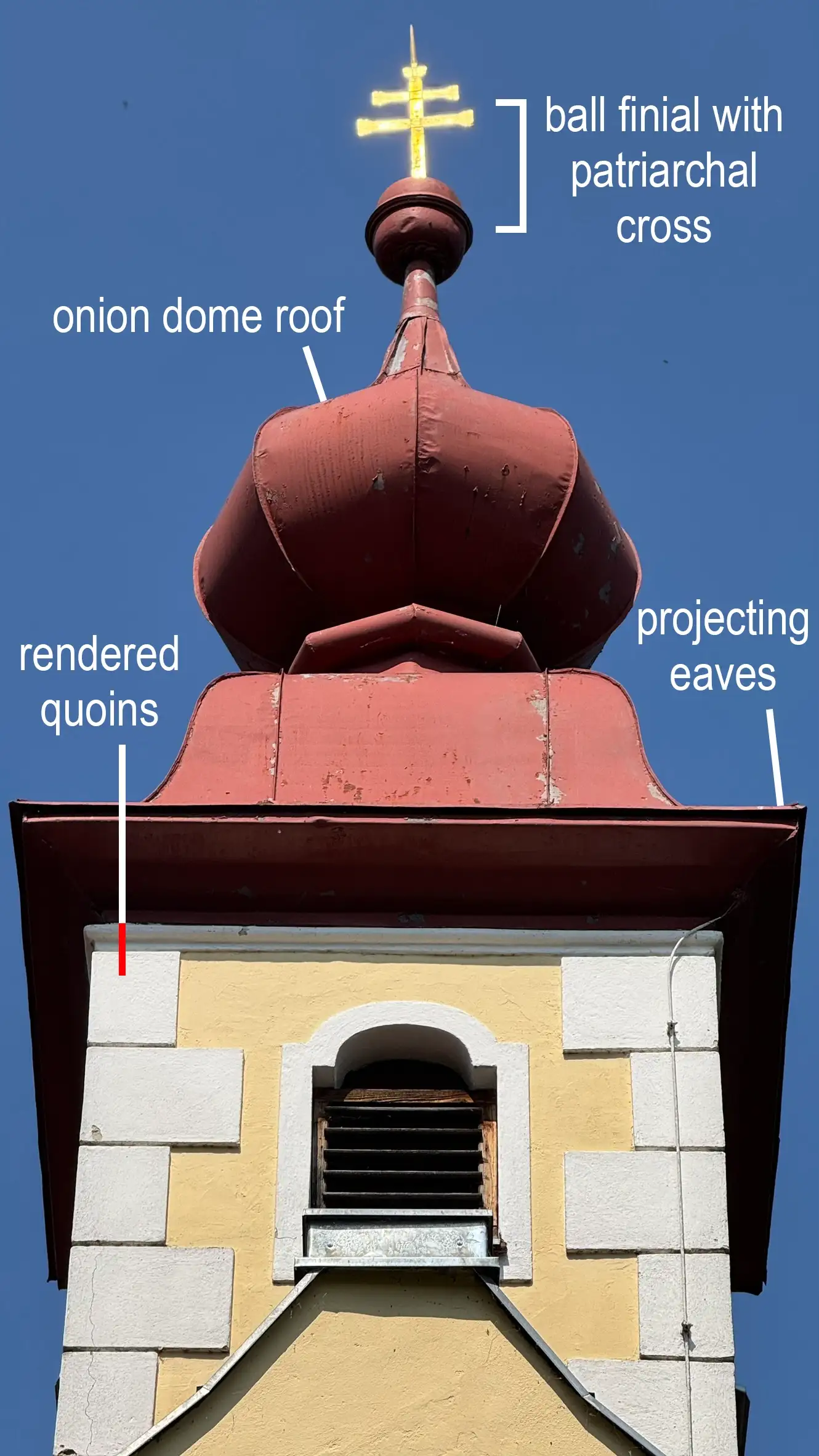
The church tower is crowned by an onion dome roof and is located towards the eastern end of the building.
The iron doors on the north and south sides provide access to the interior.
Church Interior
The church interior is a windowless hall with a barrel vault.
To the east lies a sacristy with a groin vault.
The church’s Marian altar is also from Pacher’s workshop.
The remainder of the church’s interior includes:
– a small freestanding tabernacle altar featuring the Apostles Peter and Paul (Johann Pacher, 1756)
– a sculpture of the “Throne of Grace” (Gnadenstuhl)
– a “Black Madonna”.
Many Loretto churches venerate the Virgin Mary, and the Black Madonna is often central to Marian devotion. As a result, Black Madonna statues are commonly found in Loretto churches.
Restoration Work
In 1990–1991, the original Baroque wall paintings, featuring brickwork decoration and figures of saints, were uncovered.
Baroque Crucifixion Group
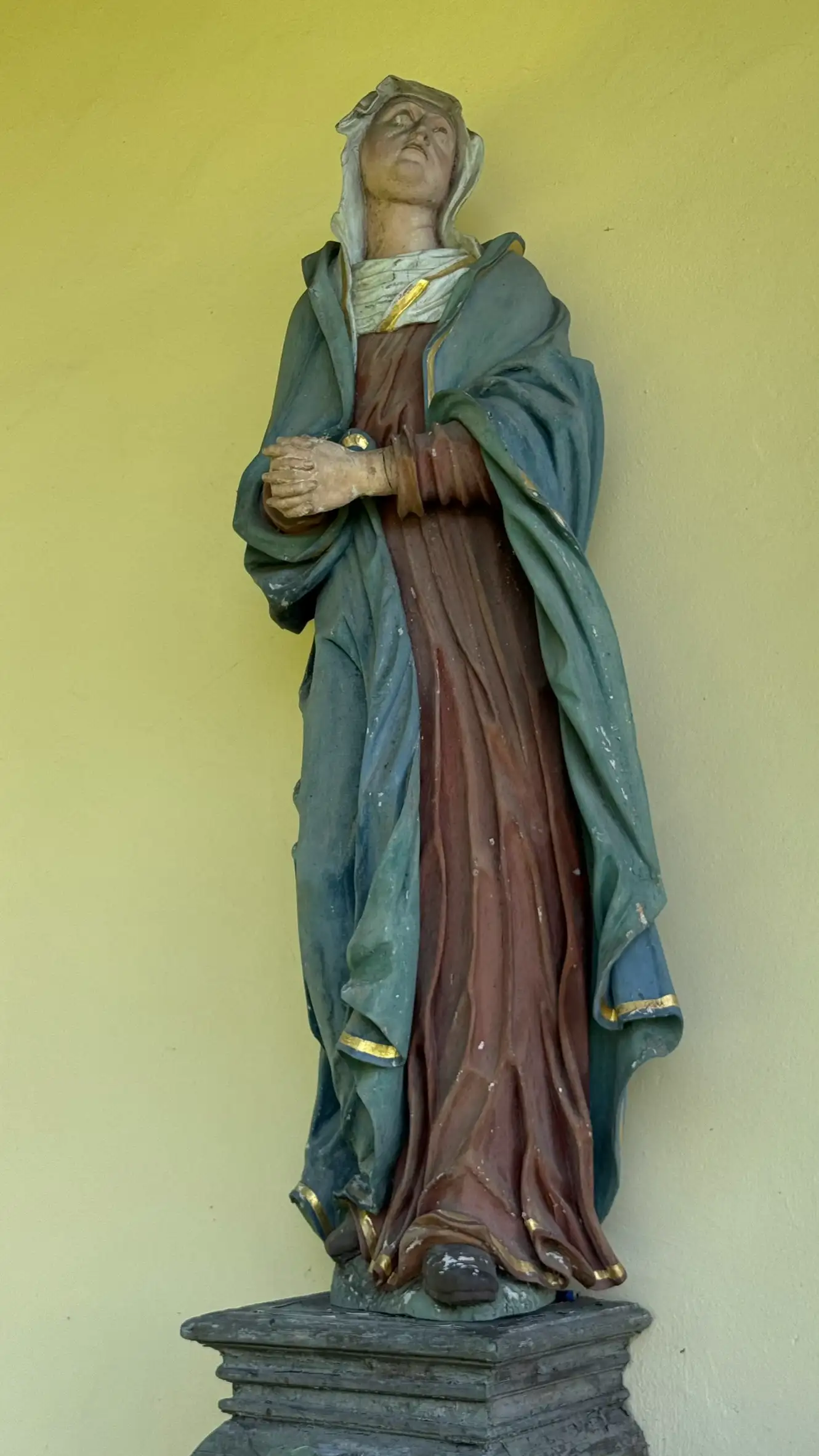
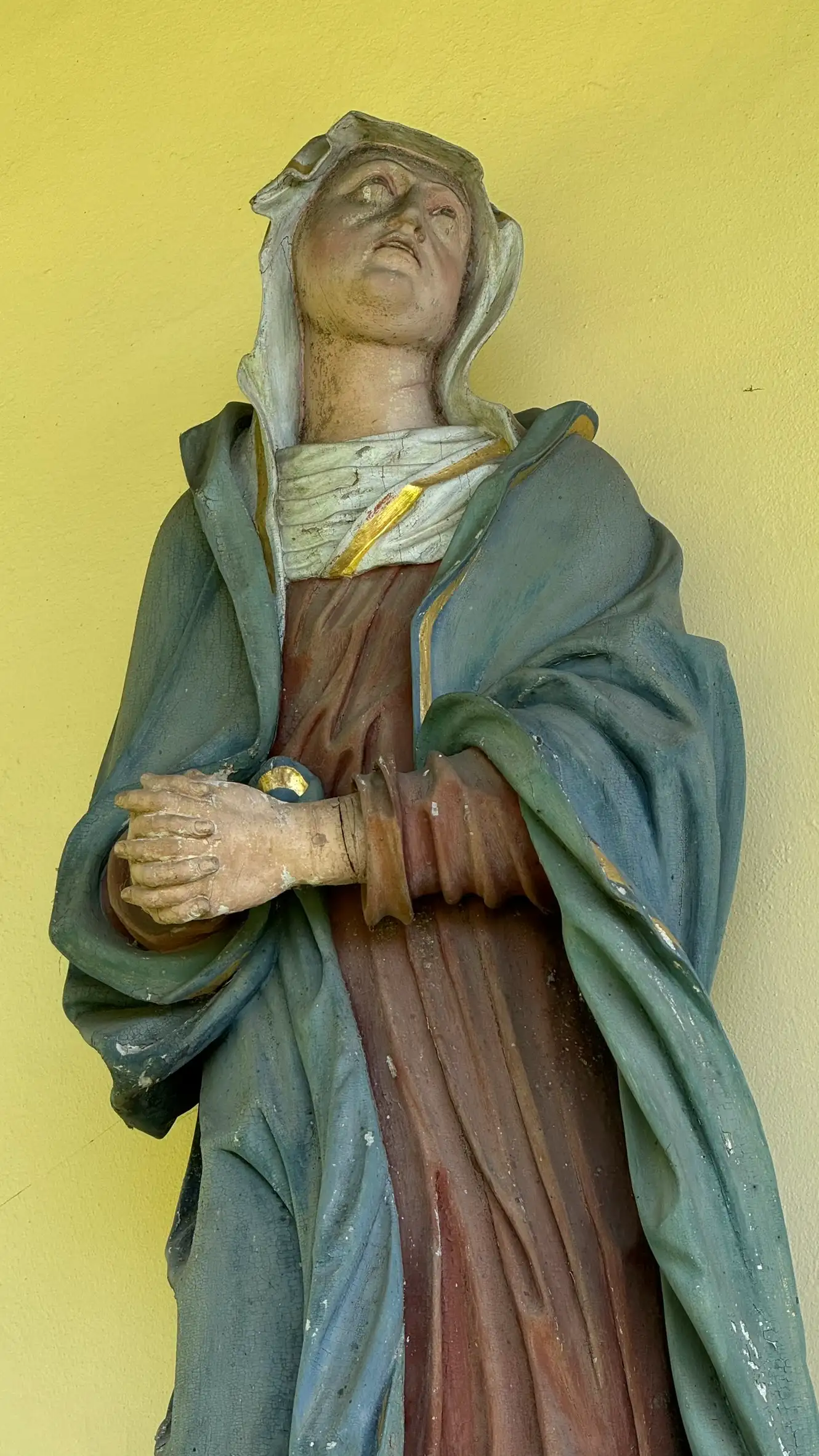
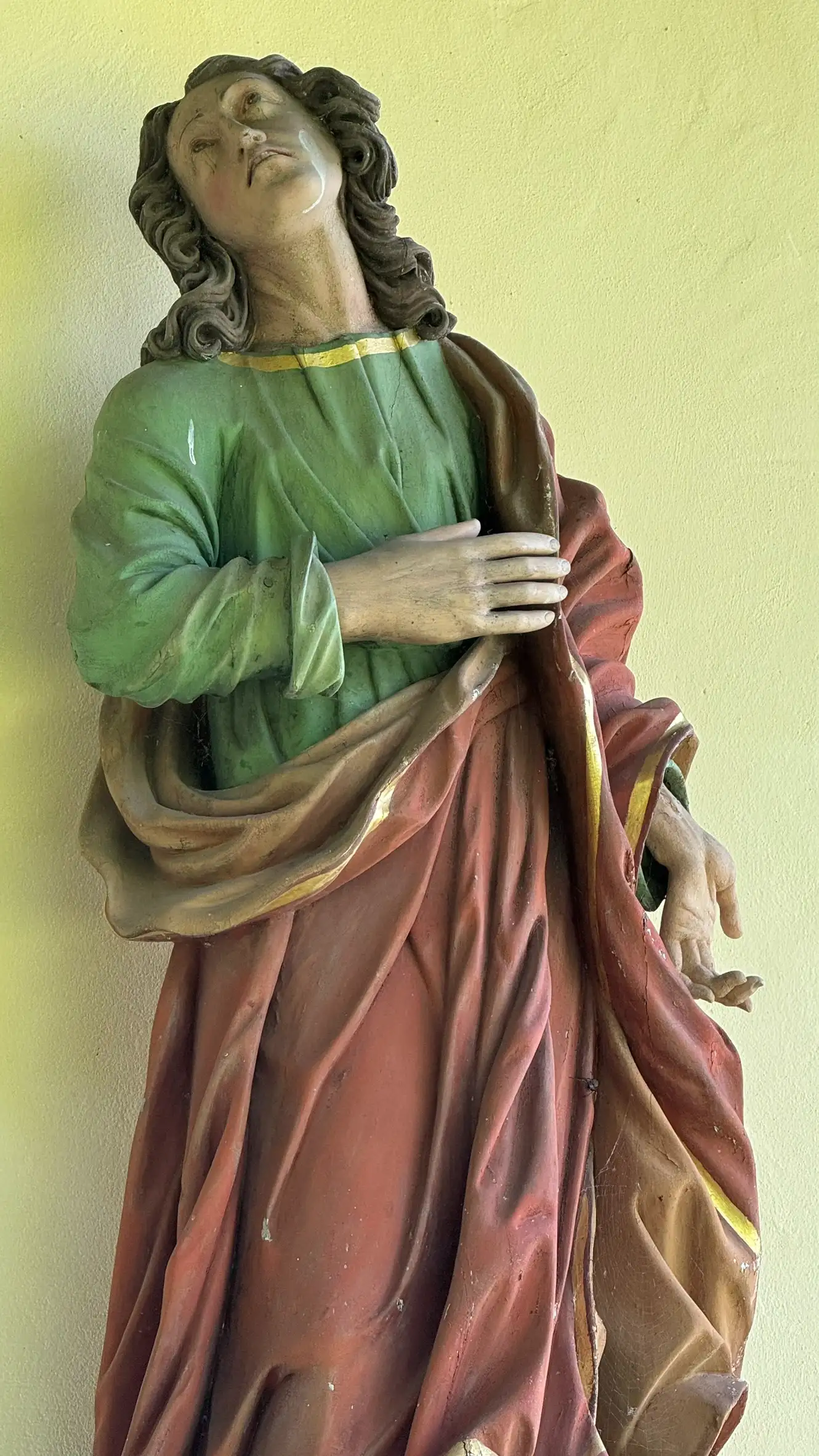
The Baroque crucifixion group, created in 1729, is a polychromed wooden ensemble depicting Christ on the cross, flanked by the Virgin Mary and St John the Evangelist. The work is attributed to the workshop of Johann Pacher, an 18th-century wood sculptor.
Following the theft of the original crucifixion group from the Calvary Church, the parish acquired the Pacher ensemble from the Dominican Convent in Friesach as a replacement.
Historical Photograph
Source: Archive of the Municipal Authority of St. Veit an der Glan
Crucifixion Group at the Calvary Church
Photograph taken around 1960