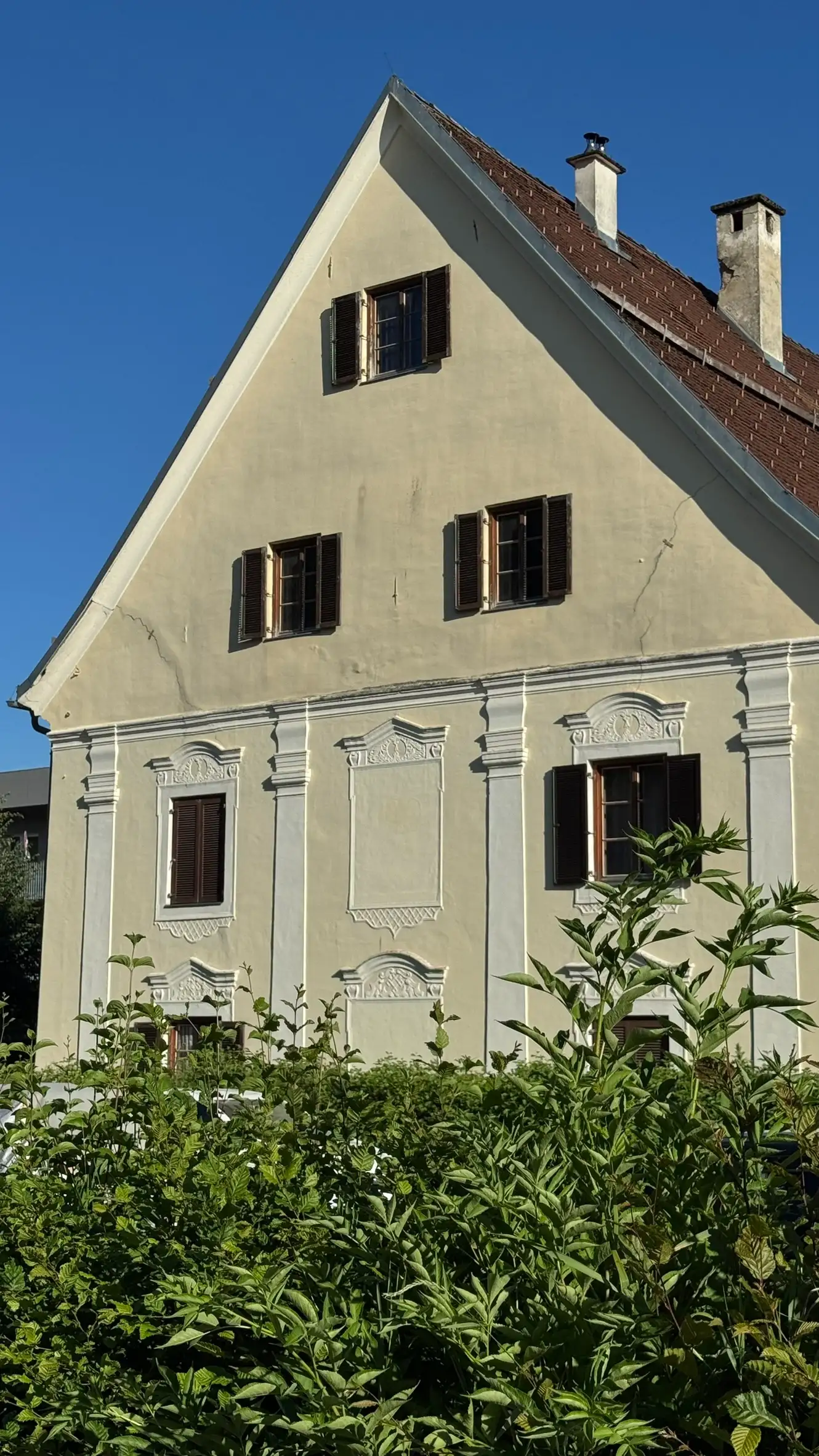
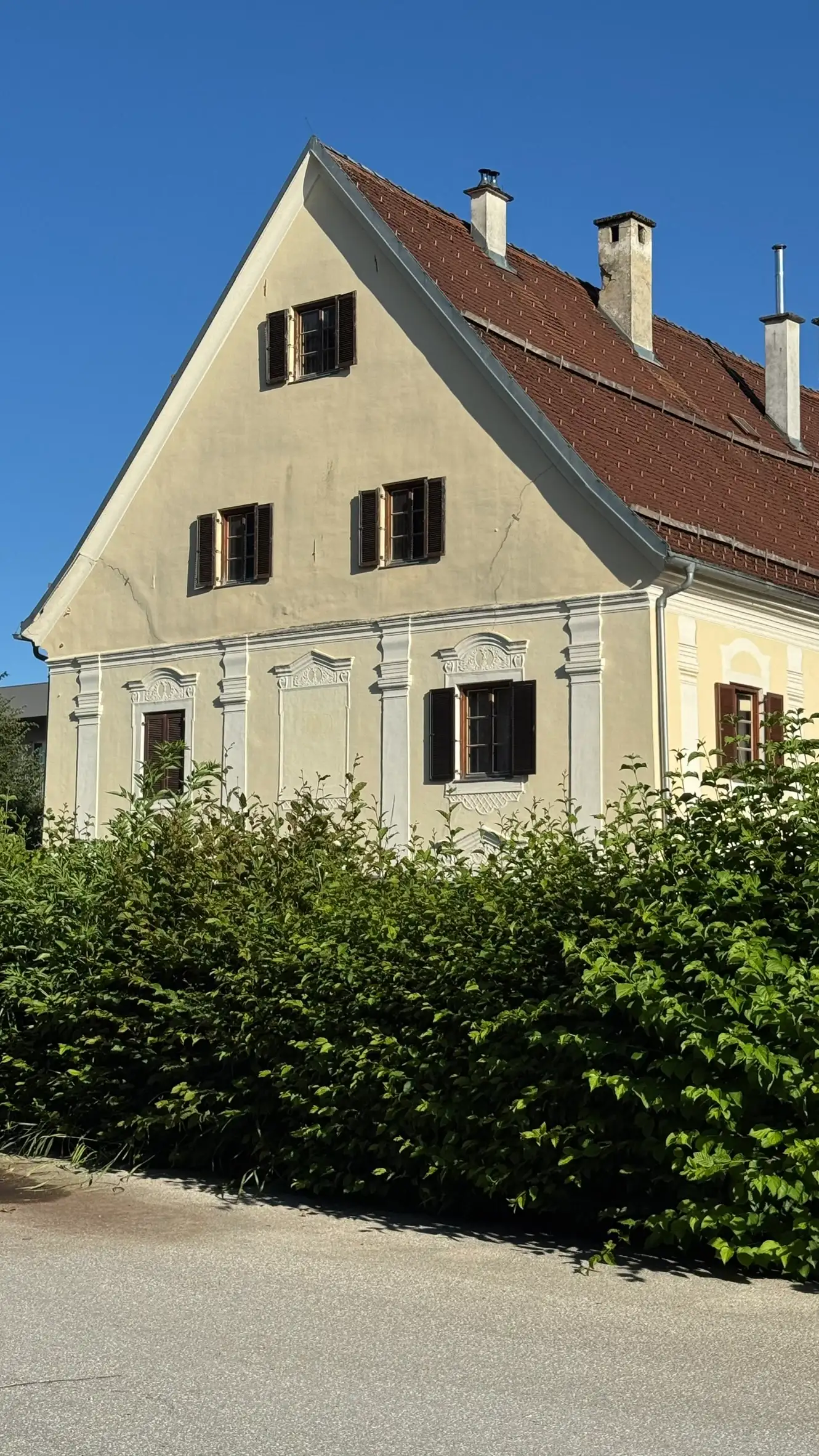
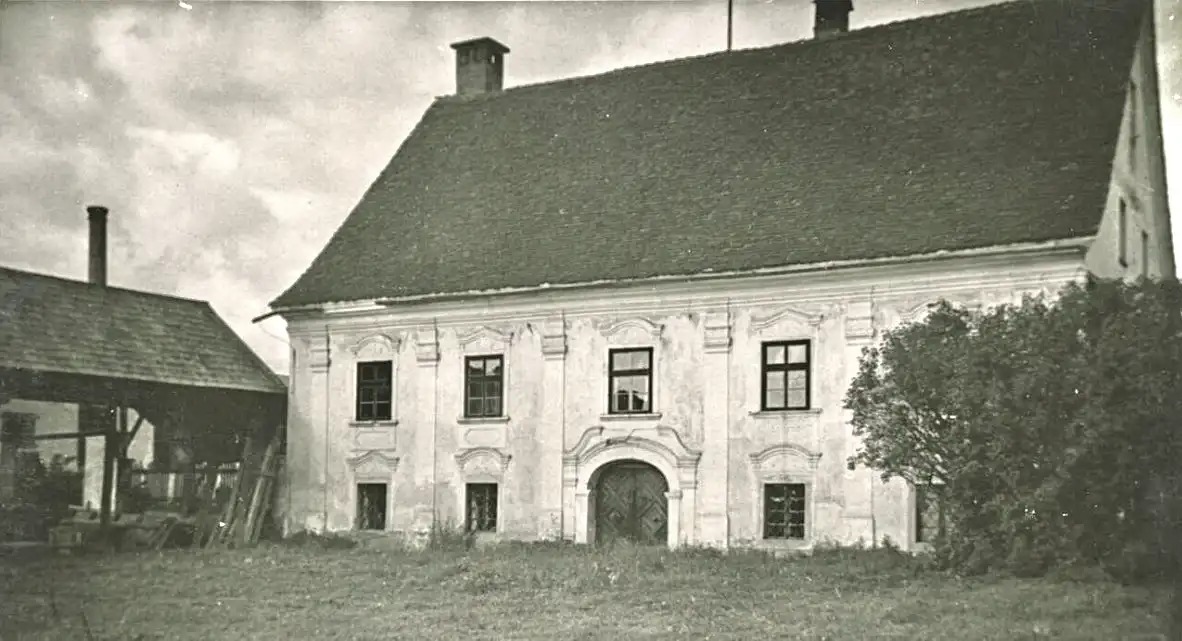
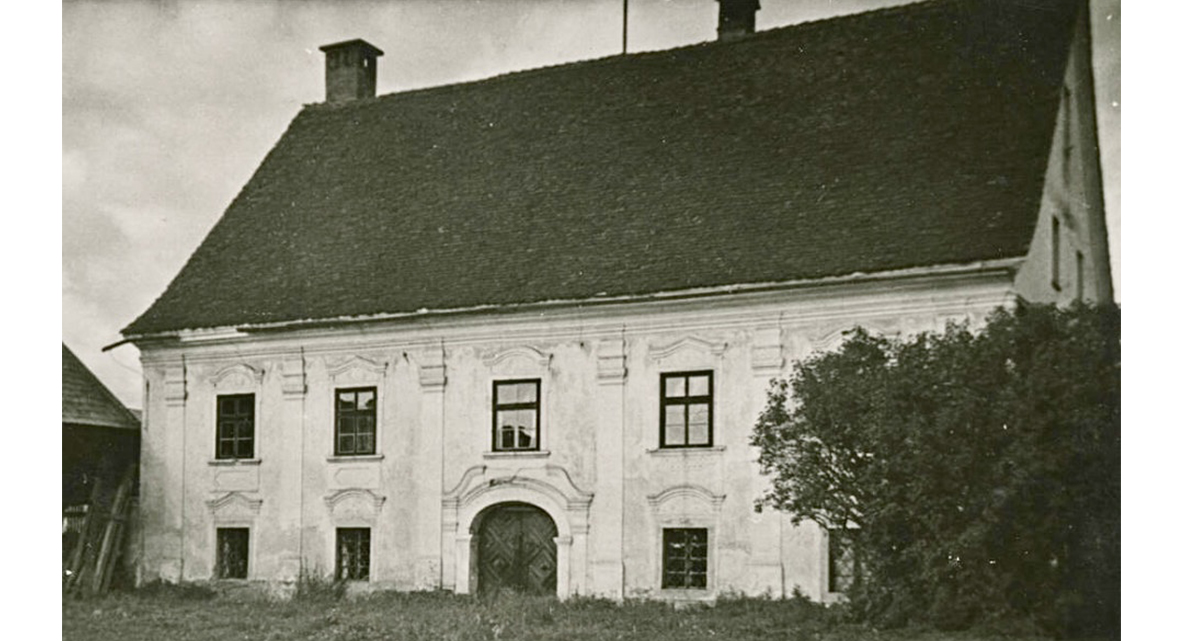
The manor house dates from between 1725 and 1750 and was once part of a paper mill that operated from 1550 to 1863.
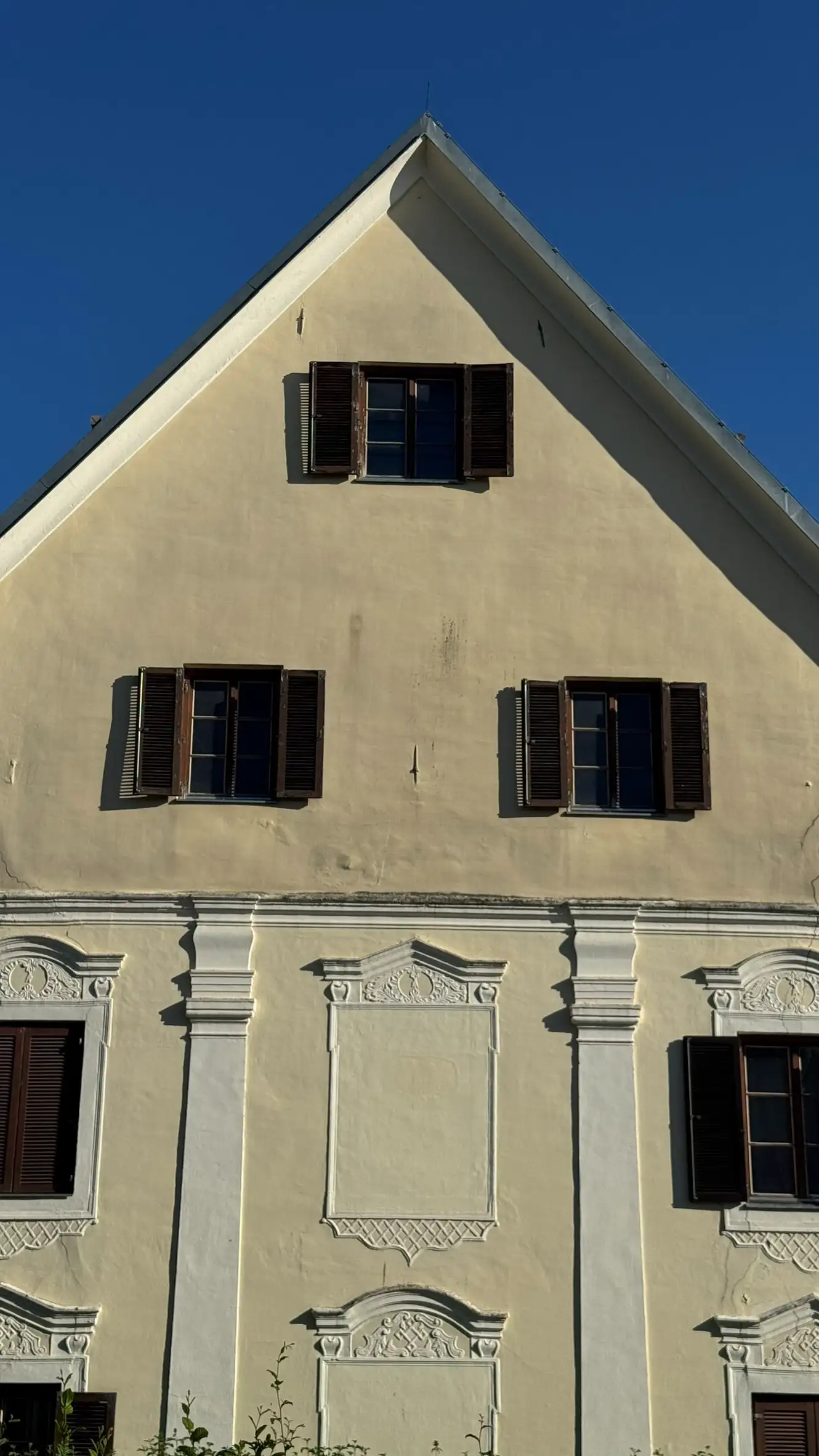
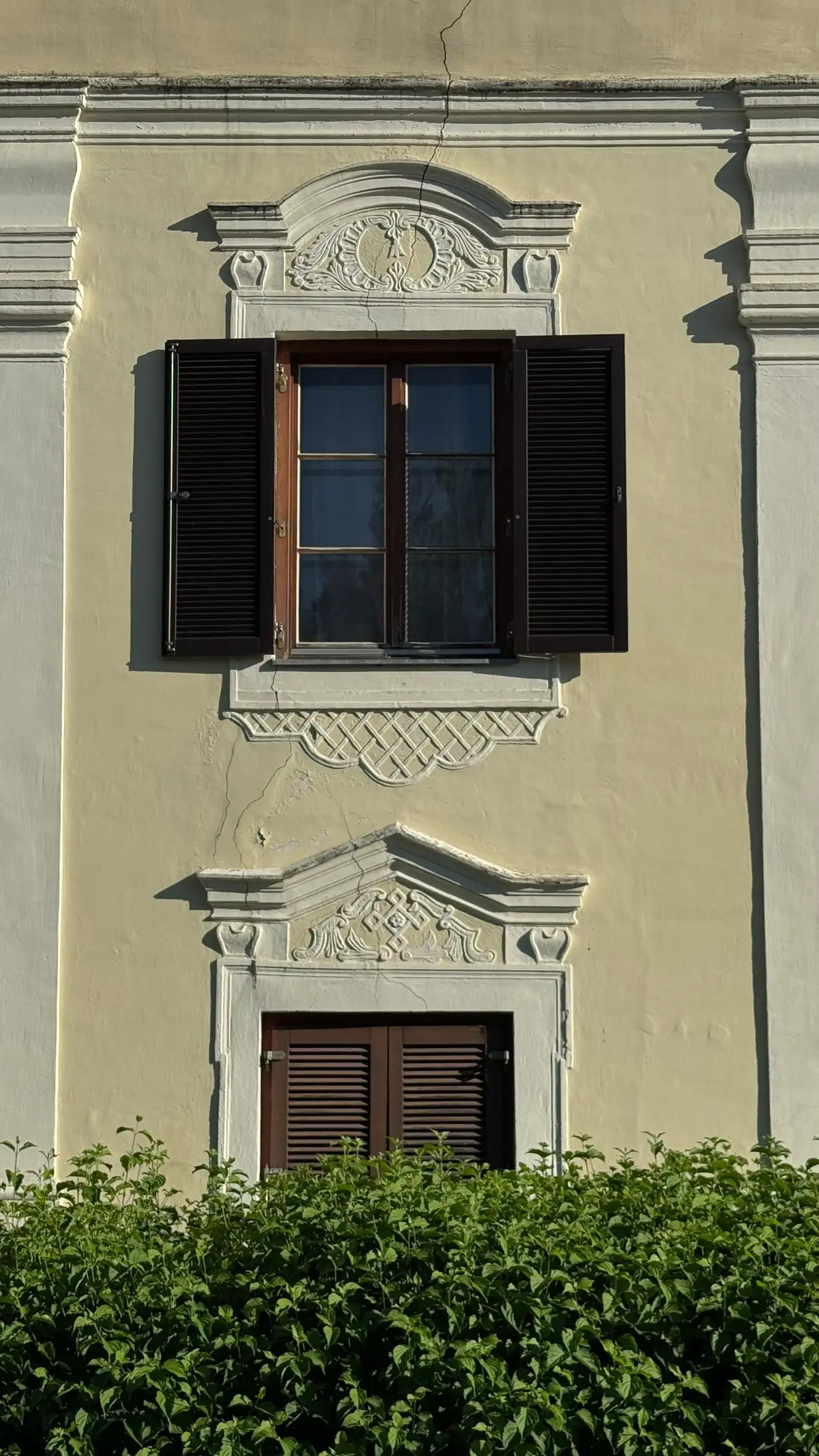
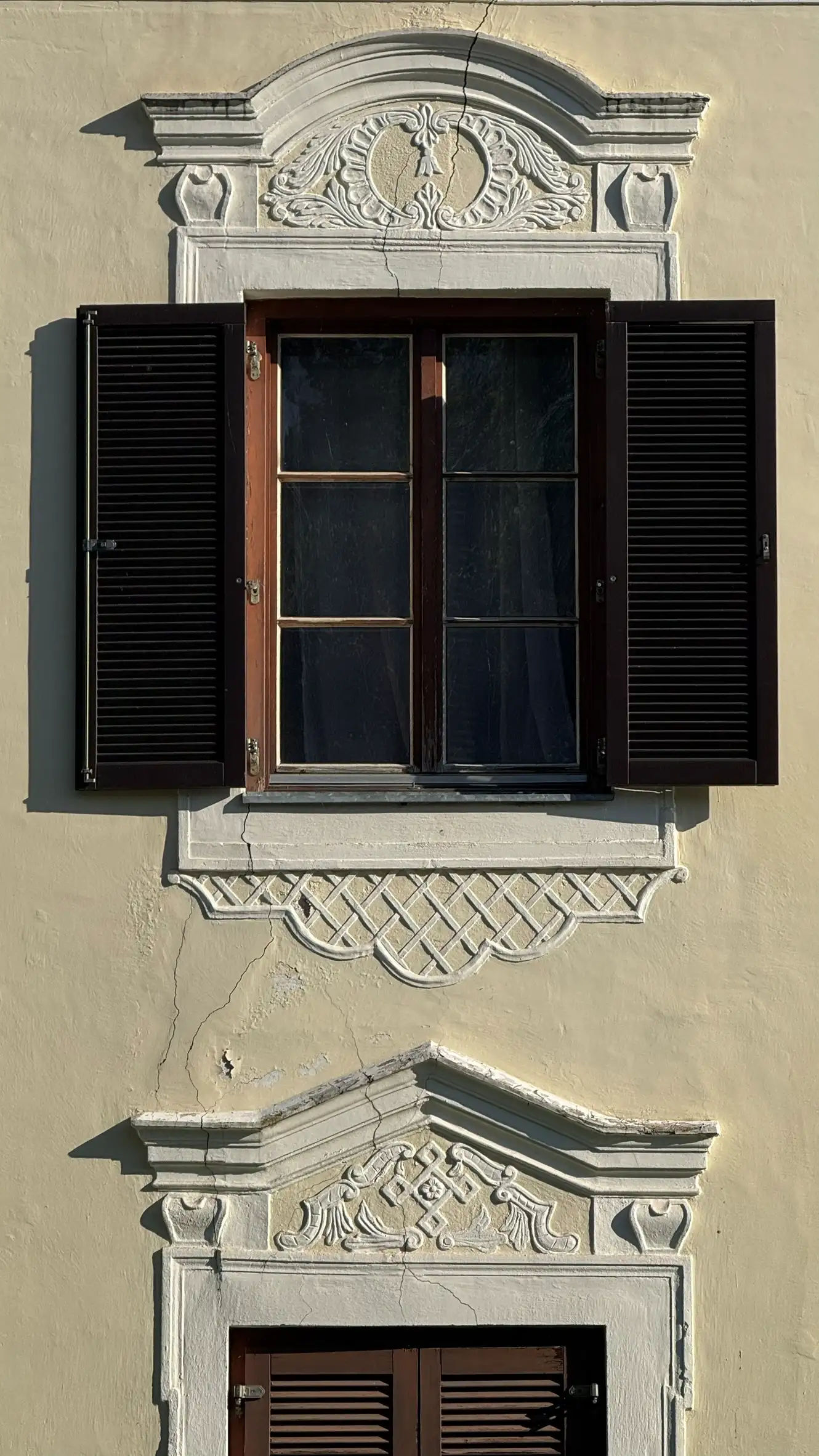
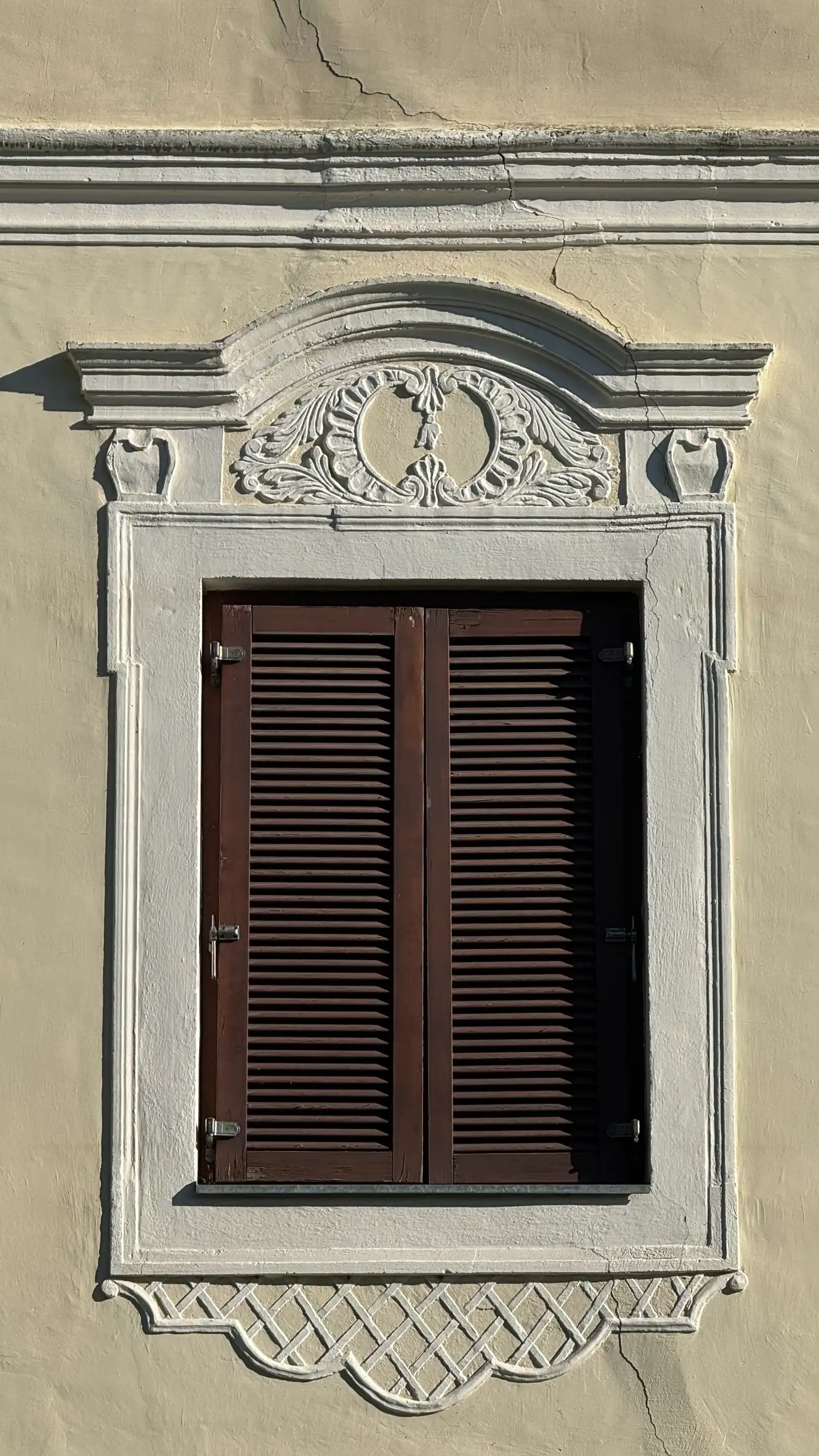
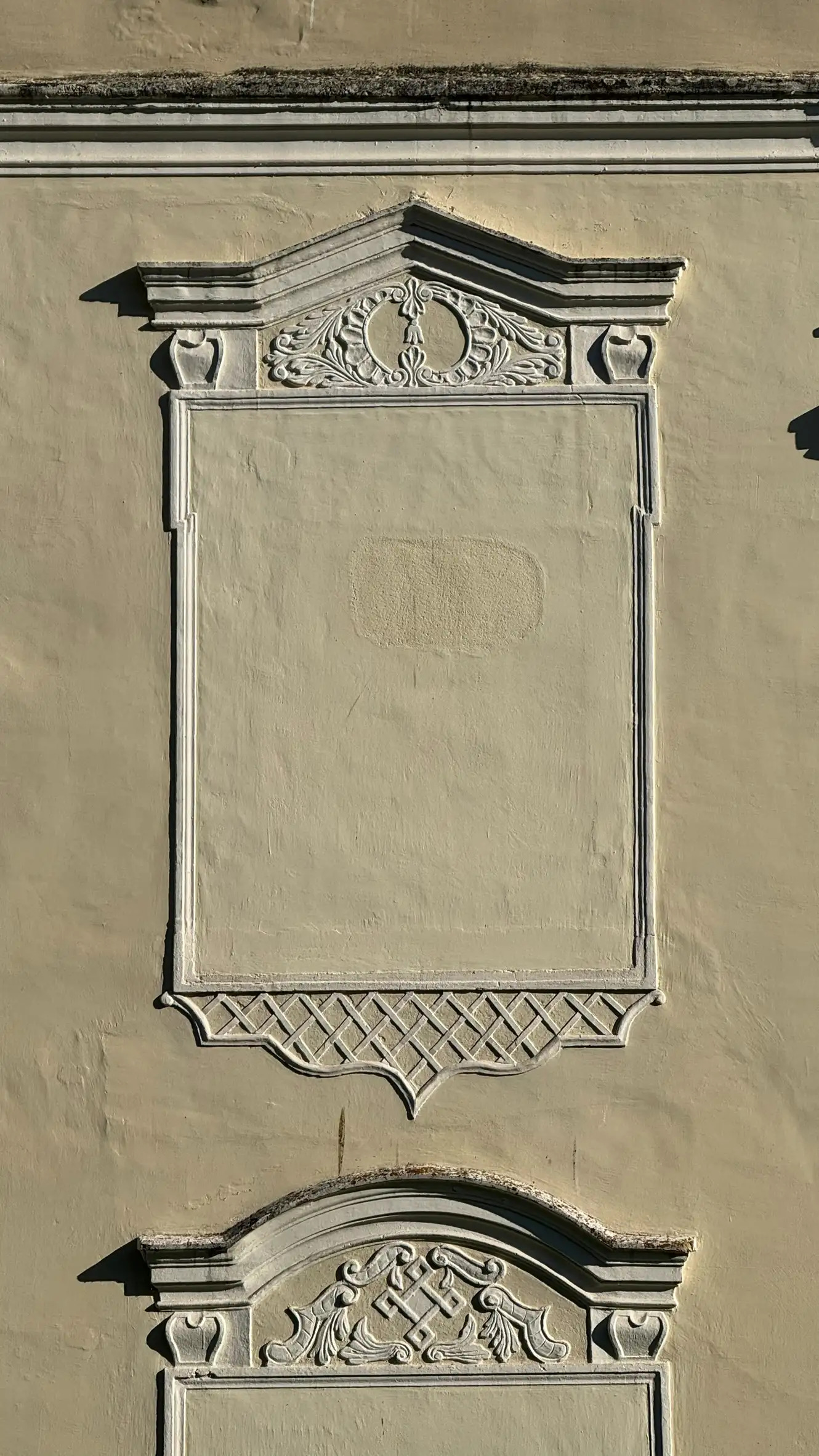
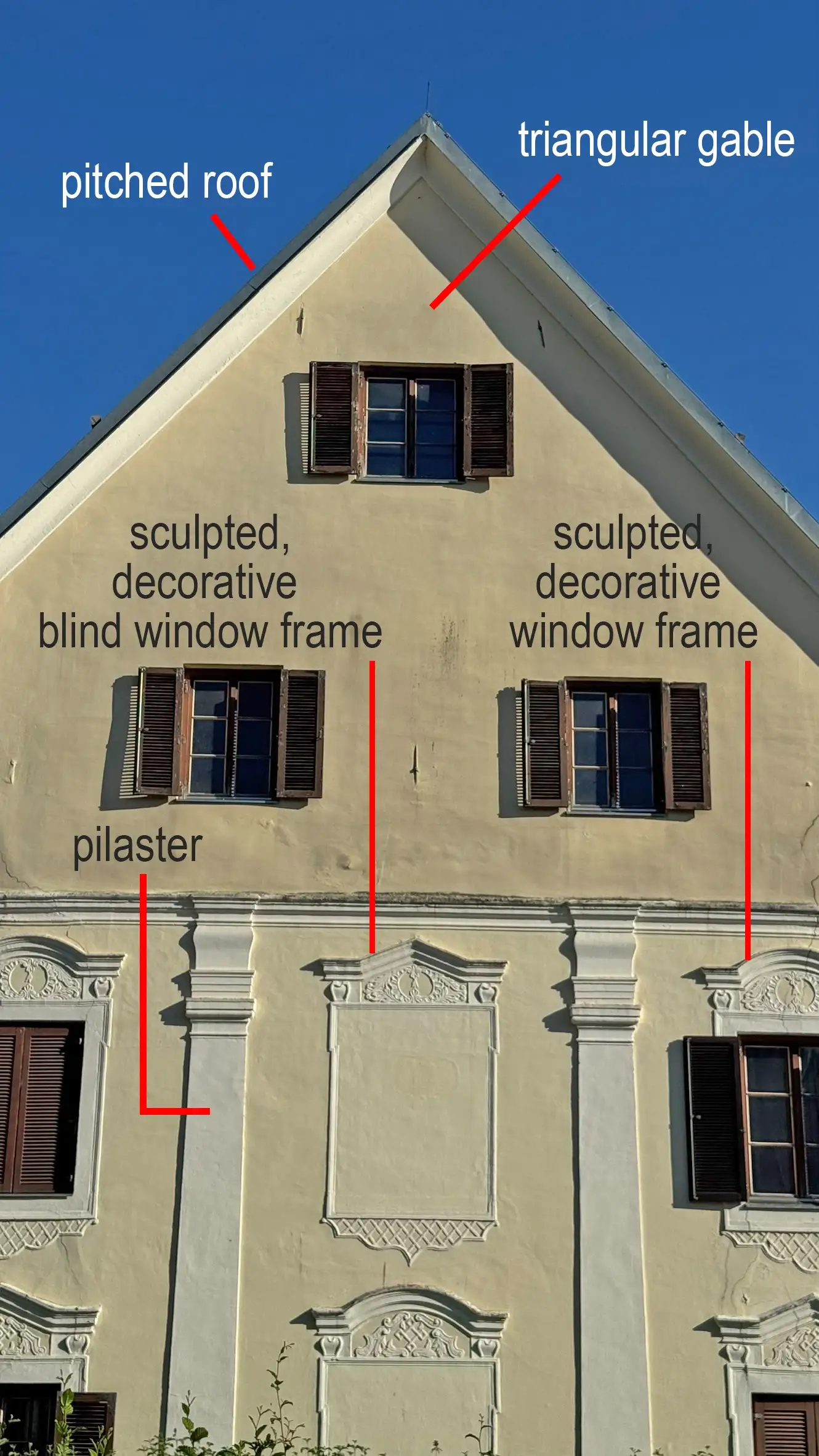
The Baroque building has two storeys and features a round-arched entrance portal. It is topped with a pitched roof and characterised by prominent, large-scale pilasters. The windows are adorned with decorative frames, some of which are sculpted, while others are painted.
Paper Production in St. Veit
The former paper mill near the old Glan is a significant site of early industrial activity in the region. Papermaking spread from China via Baghdad and Cairo to Spain (1150), then to Italy (1276), France (1350), and Nuremberg (1390). Nuremberg merchants, including the Gleismüllner and Kaltenhauser families, brought the craft to St. Veit.
A historical site plan shows the arrangement of buildings between the Glan River and the canal. Handmade paper was produced here from the 15th century and supplied to courts, parishes, and monasteries across Carinthia. Many archival documents bear watermarks of Saint Vitus, often alongside letters identifying the mill’s owners. Whether these marks were used from the start or introduced later under Maria Theresa remains unclear.
The Site on the Glan River | Vinegar Manufactory
The Glan’s higher, unregulated waters once formed a natural waterfall that powered the mill. From theearly 1800s, the property saw several owners: Peter Sommerhuber, then Antonie Kronawitter (1836), followed by the St. Veit Citizens’ Guild (1867), and eventually the Hüttenberger Union. The manor house (now Glangasse No. 71) remained separately owned.
In 1880, Maria Kobl bought the estate, passing it to Aloisia Puntschart in 1882. A fire damaged the factory in 1864, and by around 1890, Franz Puntschart converted the remains of the former paper mill into a vinegar manufactory. He likely acquired the manor as well, where he and his wife later died (1915 and 1930). In 1903, Fritz Knaus purchased the vinegar factory, earning acclaim for his wine vinegar—though he never lived on the premises. In the course of the 20th century, one of his descendants moved the business to Villach. Unfortunately, “Knaus Vinegar” no longer exists today.
Around 1890, the remains of the former paper mill were converted into vinegar works.
Two-storey Baroque building with a double-pitched roof; gable with three windows; four pilasters articulating the facade in view
Gable with three windows; two pilasters in view; central blind windows framed by decorative moulding
Two pilasters in view; windows with ornamented pediments
Close-up of the ornamented pediments above the windows
Close-up of a window with surround; pediment above the window; ornamentation above and below the window
Close-up of a rectangular blind window with sculpted surround and pediment; ornamentation above and below the blind window
Two-storeyed Baroque building with pitched roof
Historical Photograph Source: Archive of the Municipal Authority of St. Veit an der Glan
Former Administrative Building of the Paper Mill Photograph taken around 1920