Monastery Church (Klosterkirche)
Introduction
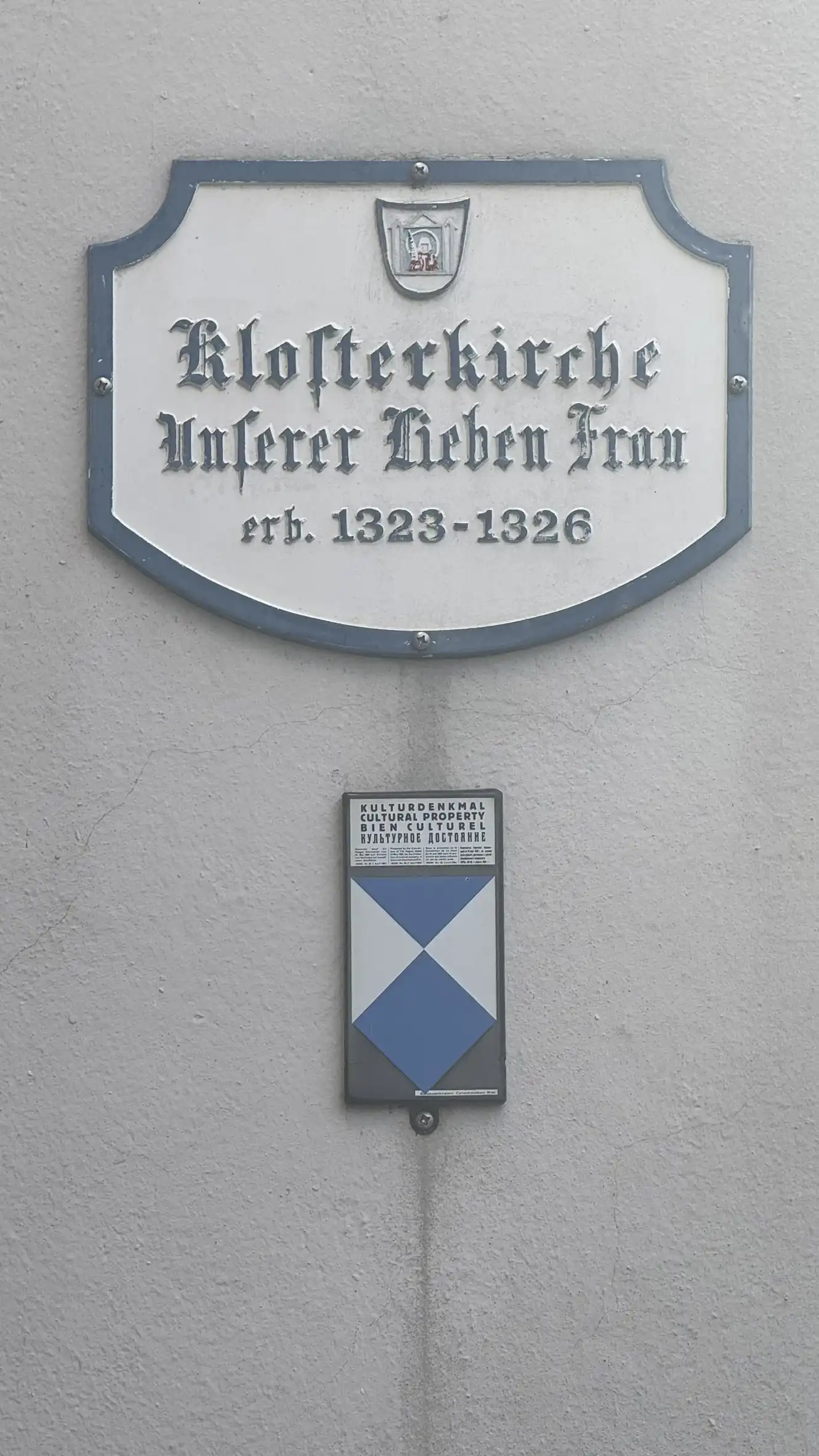
The convent church Unsere Liebe Frau (“Our Lady”) is an Early Gothic hall church, constructed between 1323 and 1326 as part of a Poor Clares convent.
The foundation of the monastery was endowed by Konrad von Auffenstein, who served as provincial governor at the time. Inside the church, foundation stones display an owl – the heraldic symbol of the Auffenstein family.
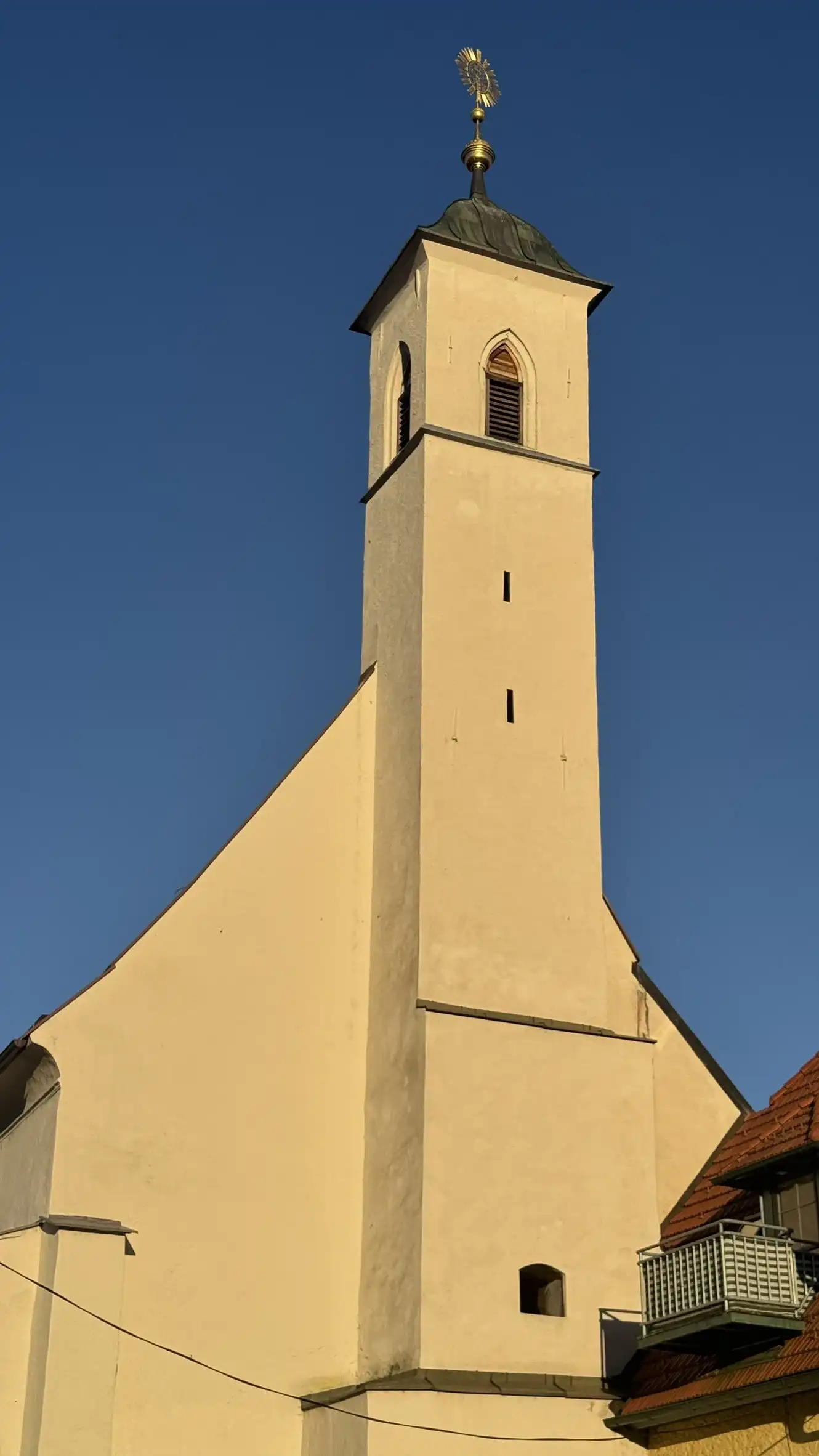
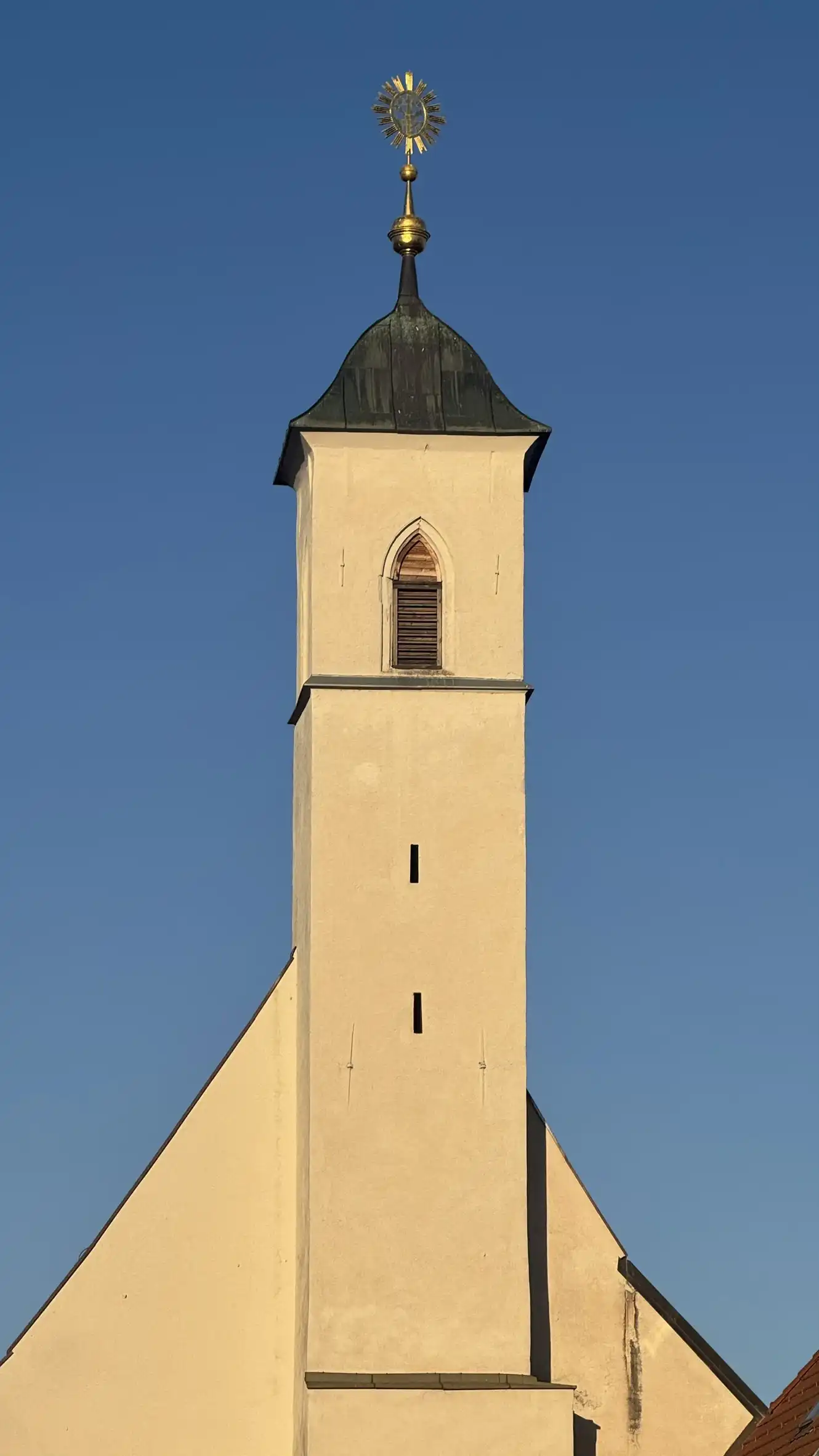
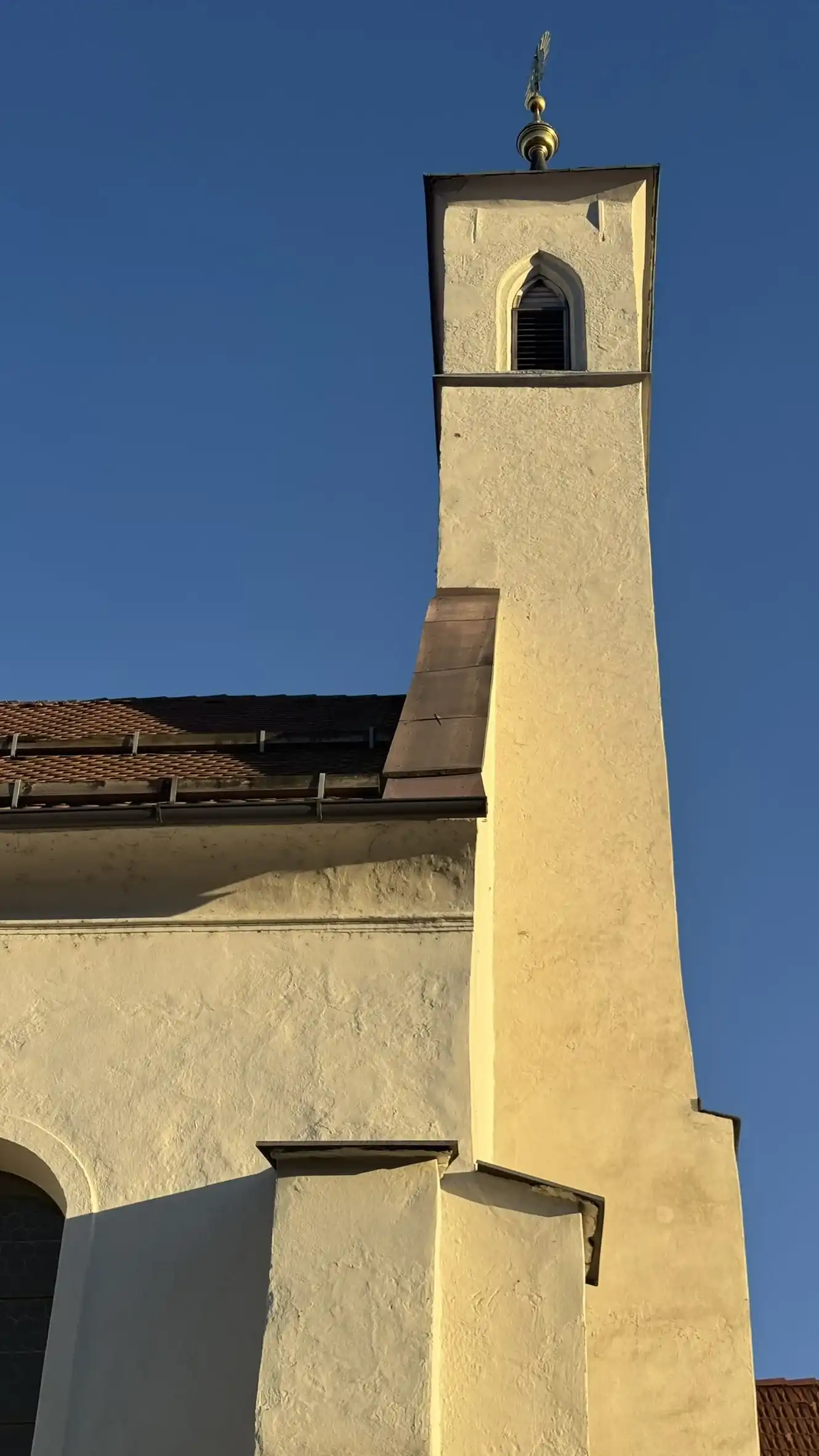
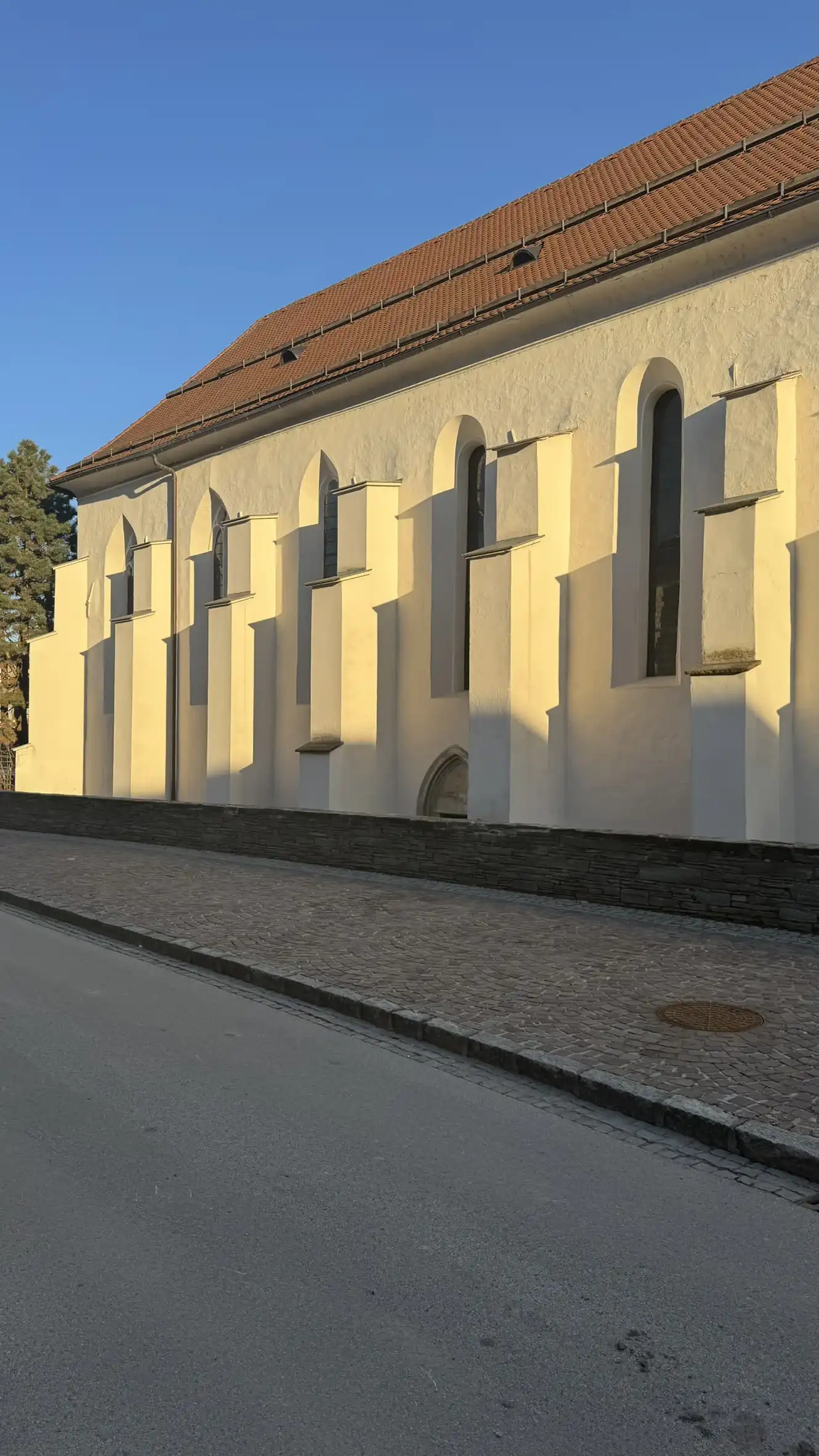
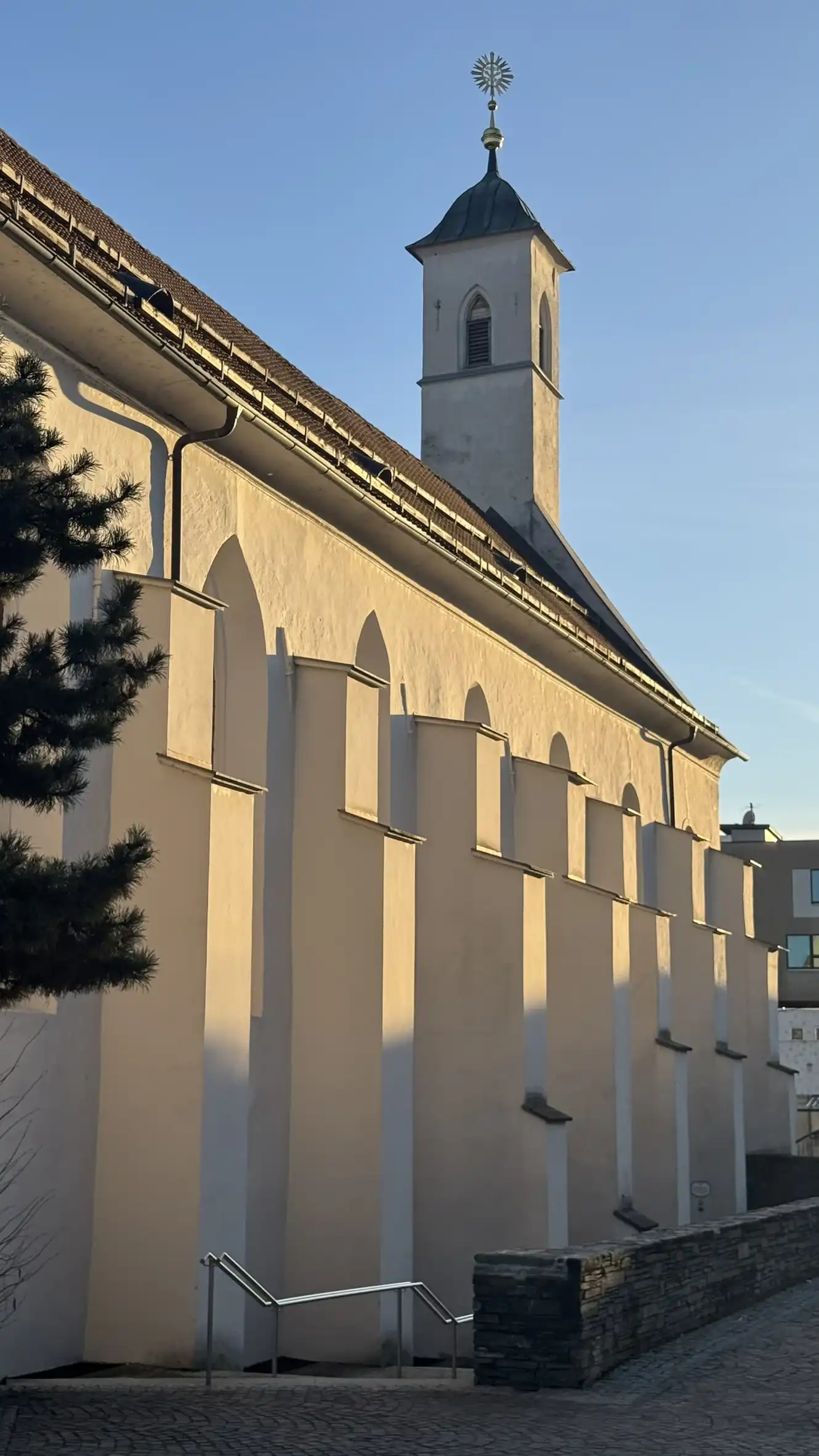
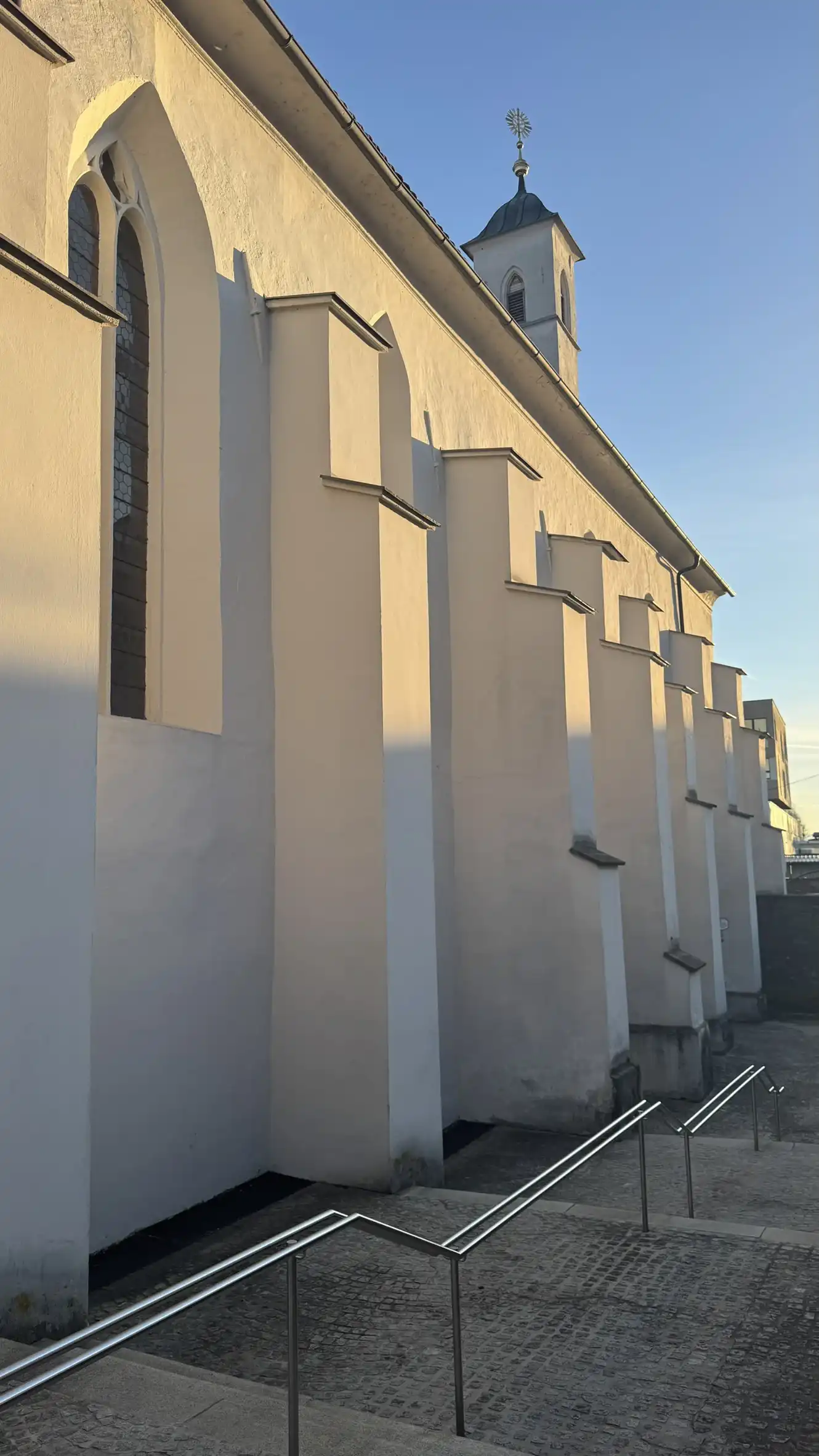
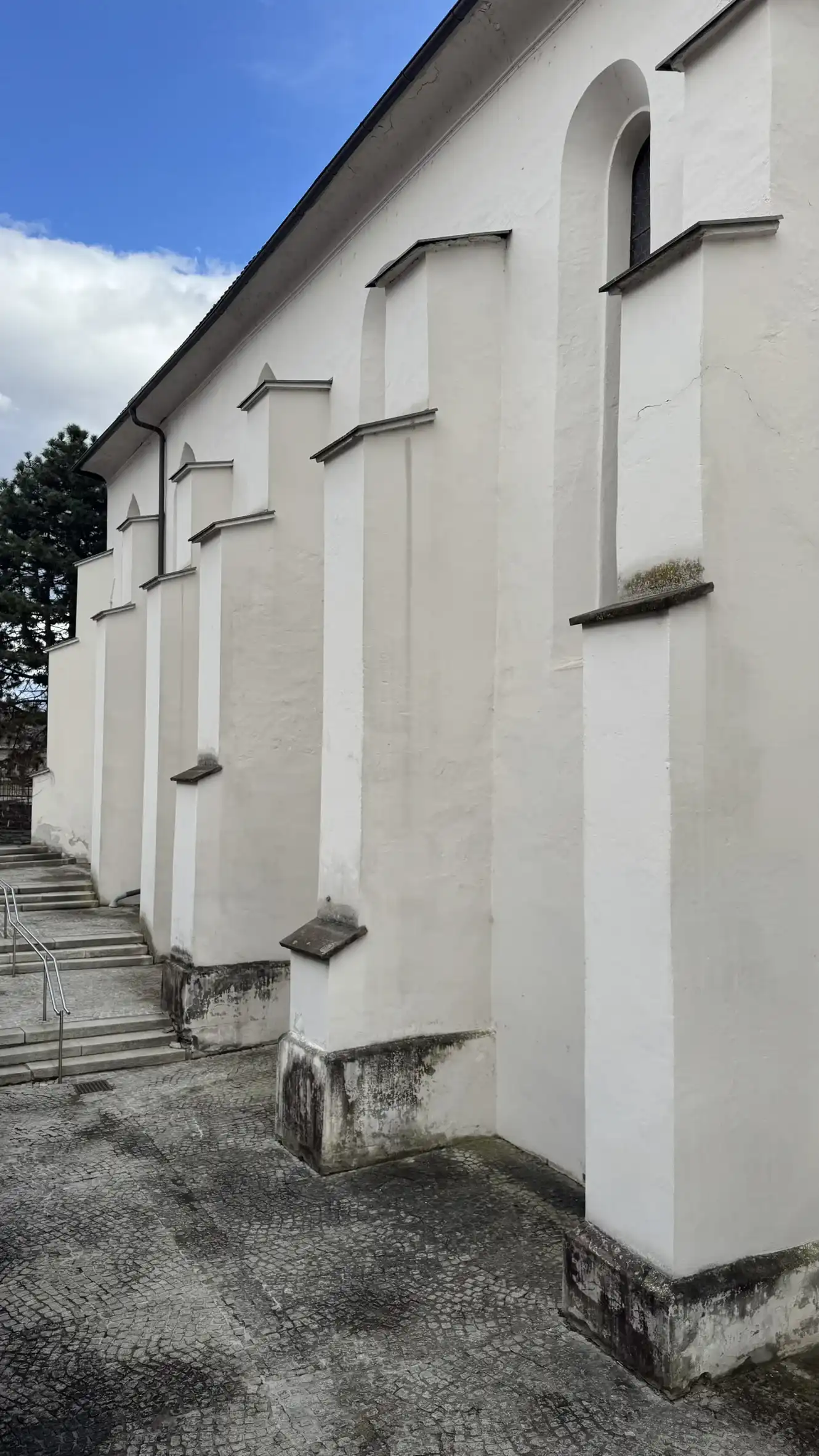
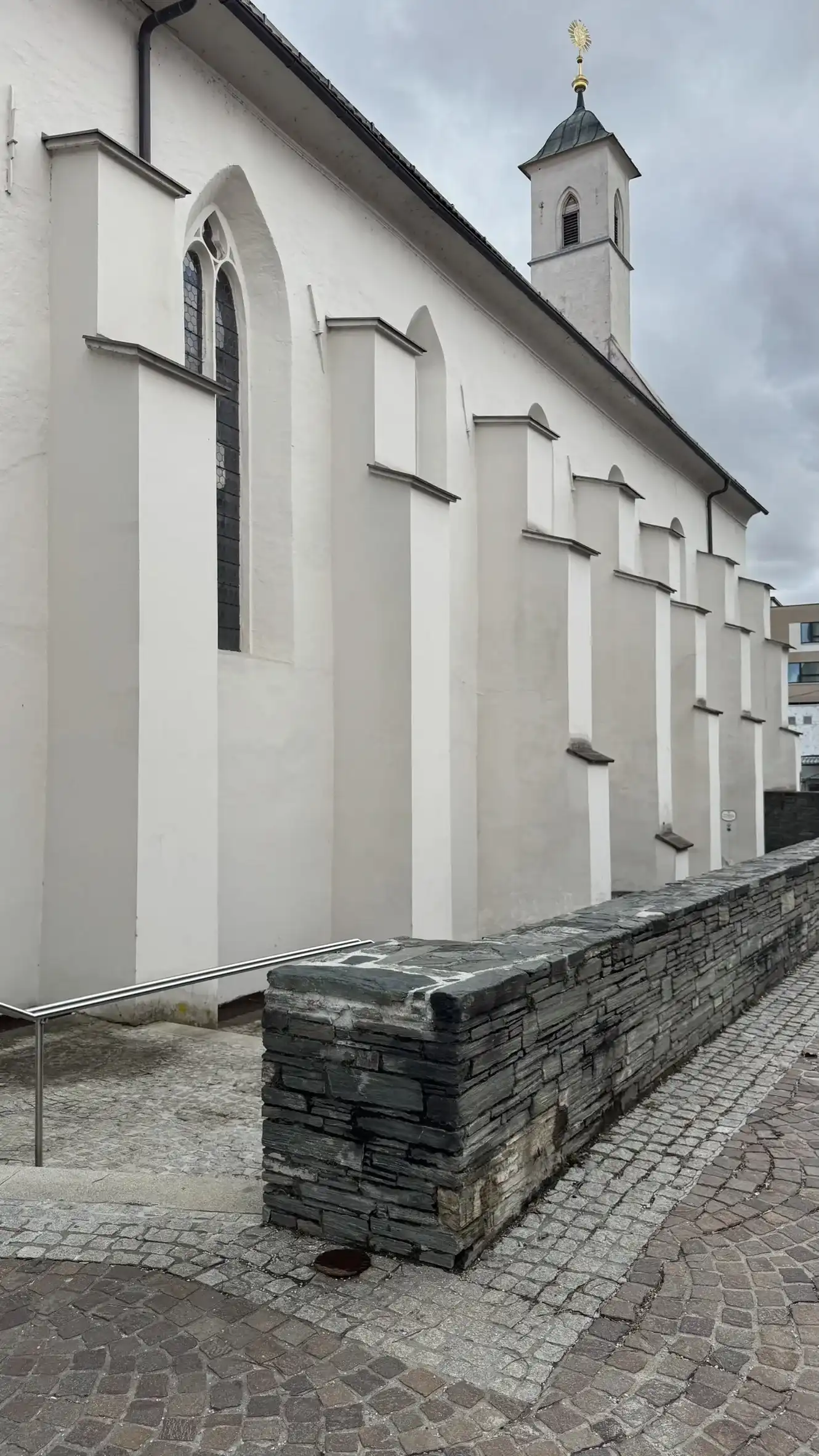
The elongated structure impresses with its understated elegance and features typical elements of early Gothic architecture – including massive buttresses, a slender tower, and a ribbed vault with relief stones dating back to the 14th century.
On the south side of the church are Baroque additions, such as chapels and the sacristy. The interior combines Gothic simplicity with Baroque splendour: highlights include the magnificent high altar by Johann Pacher, a prominent wood sculptor from St. Veit in the 18th century, as well as a valuable Baroque organ from 1731. The instrument includes a chest division (Brustwerk ) located beneath the main organ, both housed in a single casing.
Several historical tomb slabs within the church bear witness to its long history and former role as a place of monastic devotion. Today, the monastery church remains a place of peace and spiritual reflection.


History of the Monastery Church
The monastery church “Our Lady” was founded between 1323 and 1326 at the initiative of the nobleman Konrad von Auffenstein and his wife. It formed part of a “Poor Clare Convent” and is documented as early as 1323.
A “Poor Clare Convent” is a monastery for nuns of the Order of Saint Clare, also known as the “Poor Clares”.
In 1383, the Lords of Kraig established a chaplaincy here.
Following the Reformation, the convent was dissolved and later used as an almshouse. A proposed handover to the Jesuits in the 17th century was unsuccessful.
In the 17th century, the Franciscans took over the complex and rebuilt it extensively by 1648.
During the Josephine reforms, the monastery was dissolved in 1786.
A fire in 1829 destroyed the eastern wing, which was subsequently demolished.
The western wing survived and was later used as a school and administrative building.
Between 1963 and 1965, the church underwent comprehensive restoration.
Architecture | Exterior
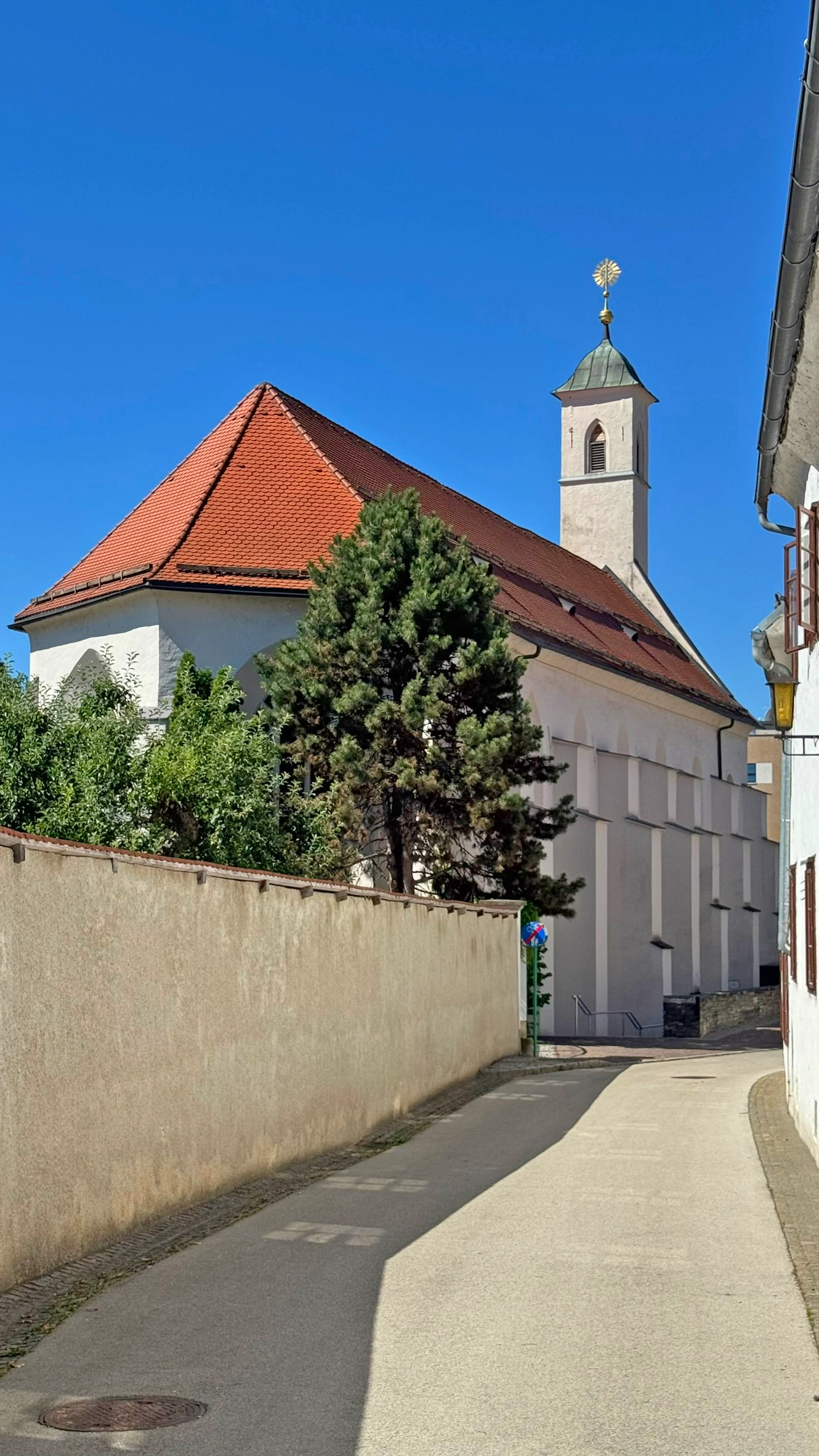
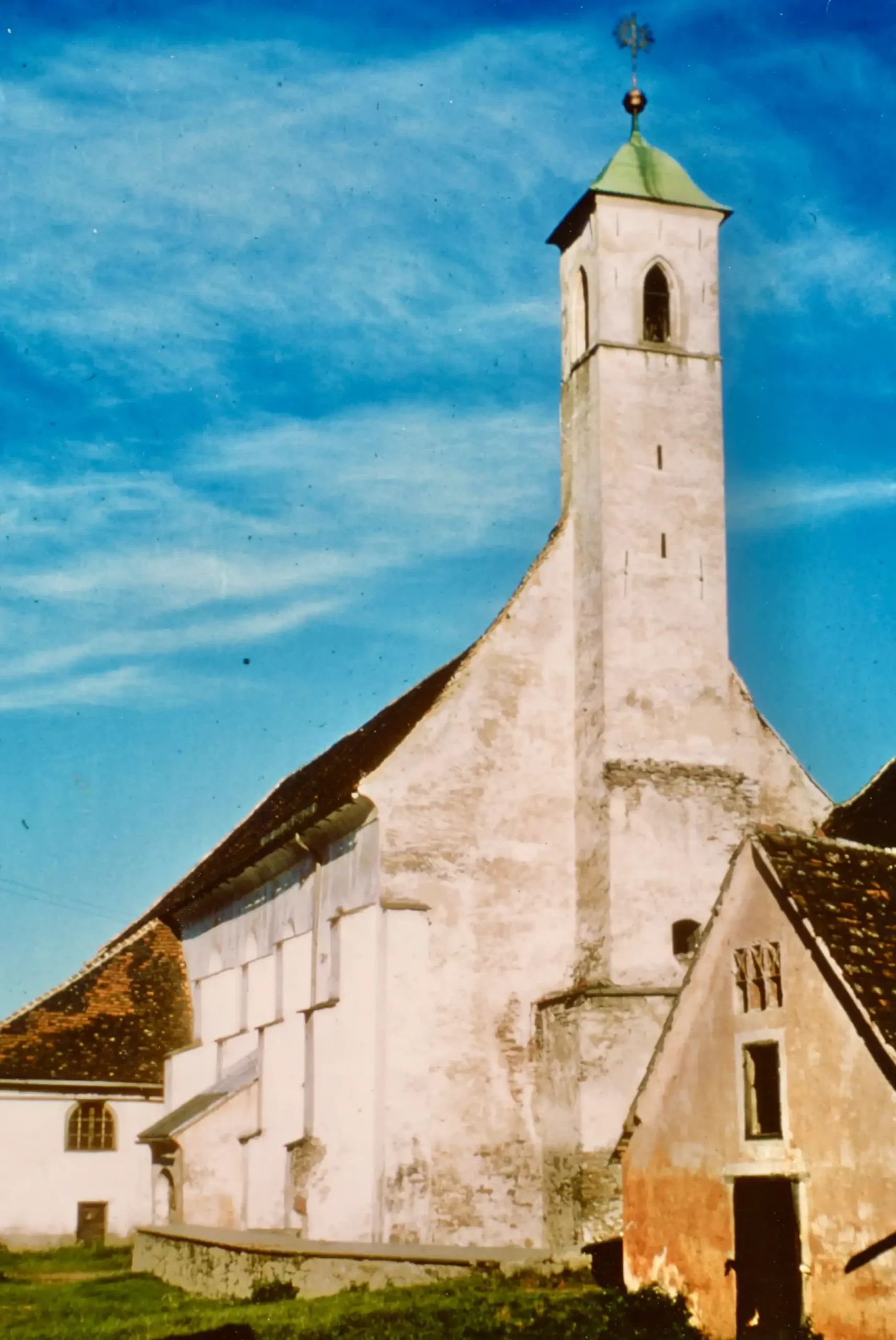
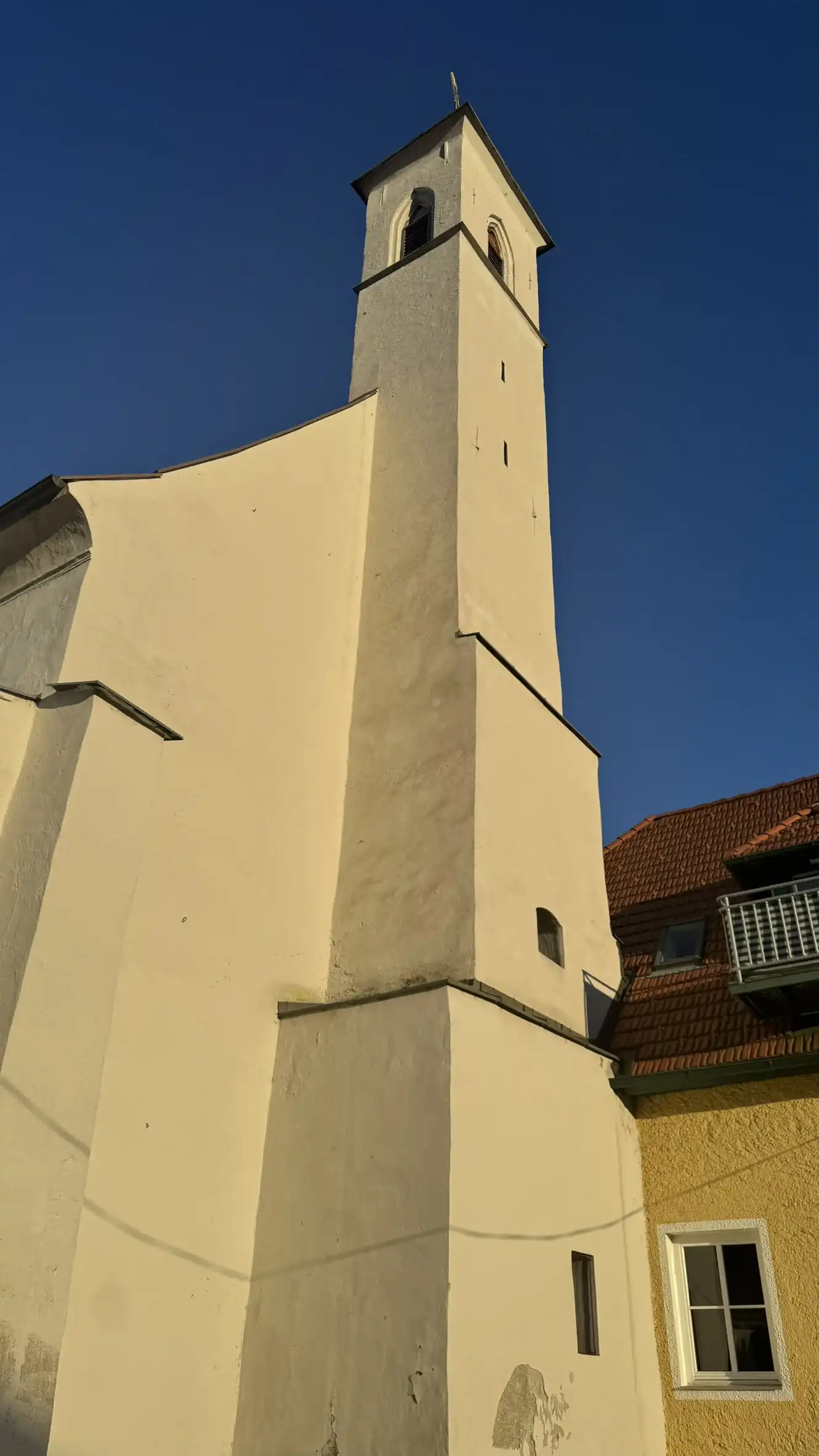
The monastery church is a single-nave Gothic hall church with a hexagonal apse and robust stepped buttresses. A defining feature is its slender western tower, topped with a flattened Baroque-style dome. The design reflects the architectural principles of mendicant order churches.
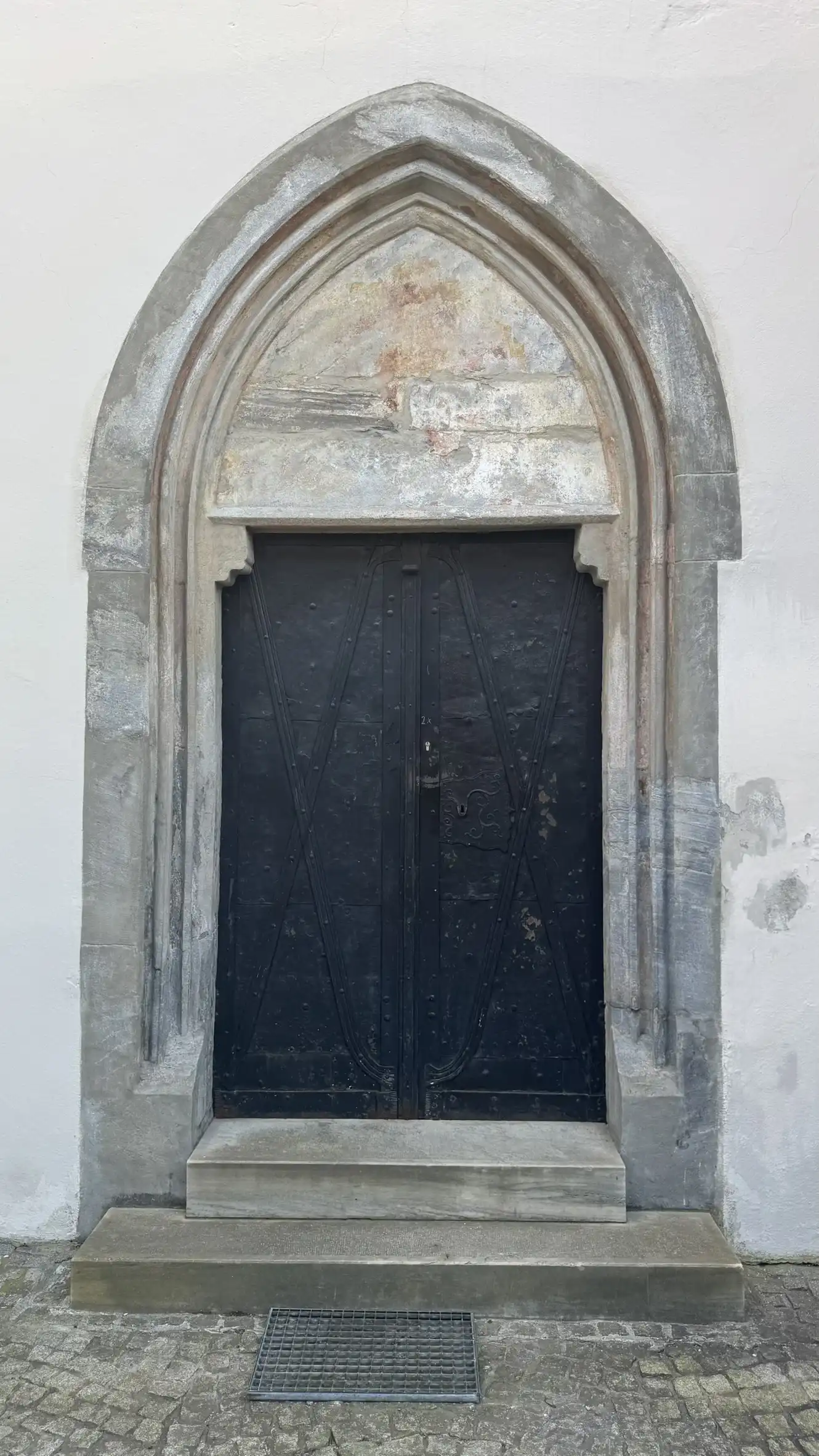
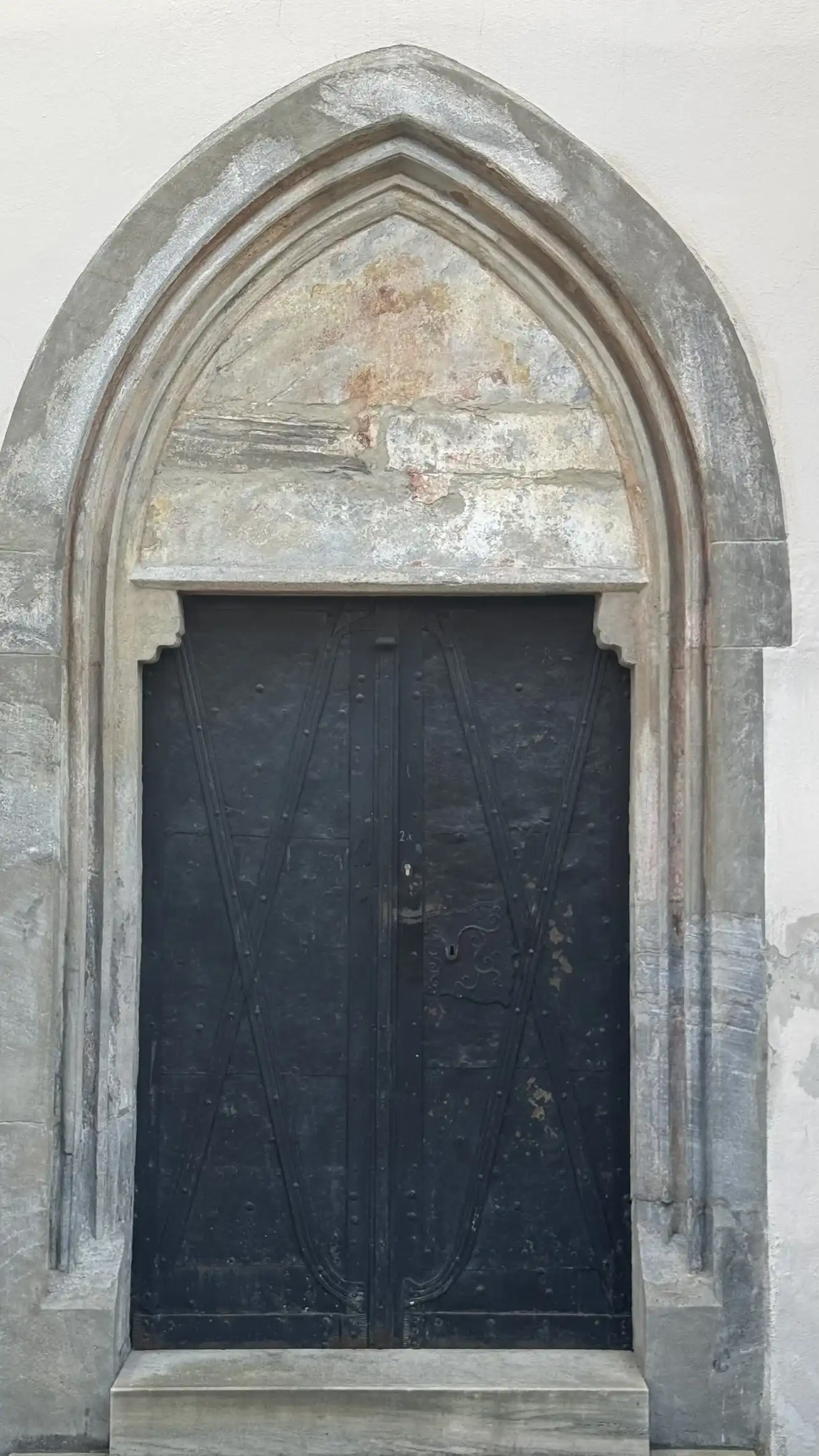
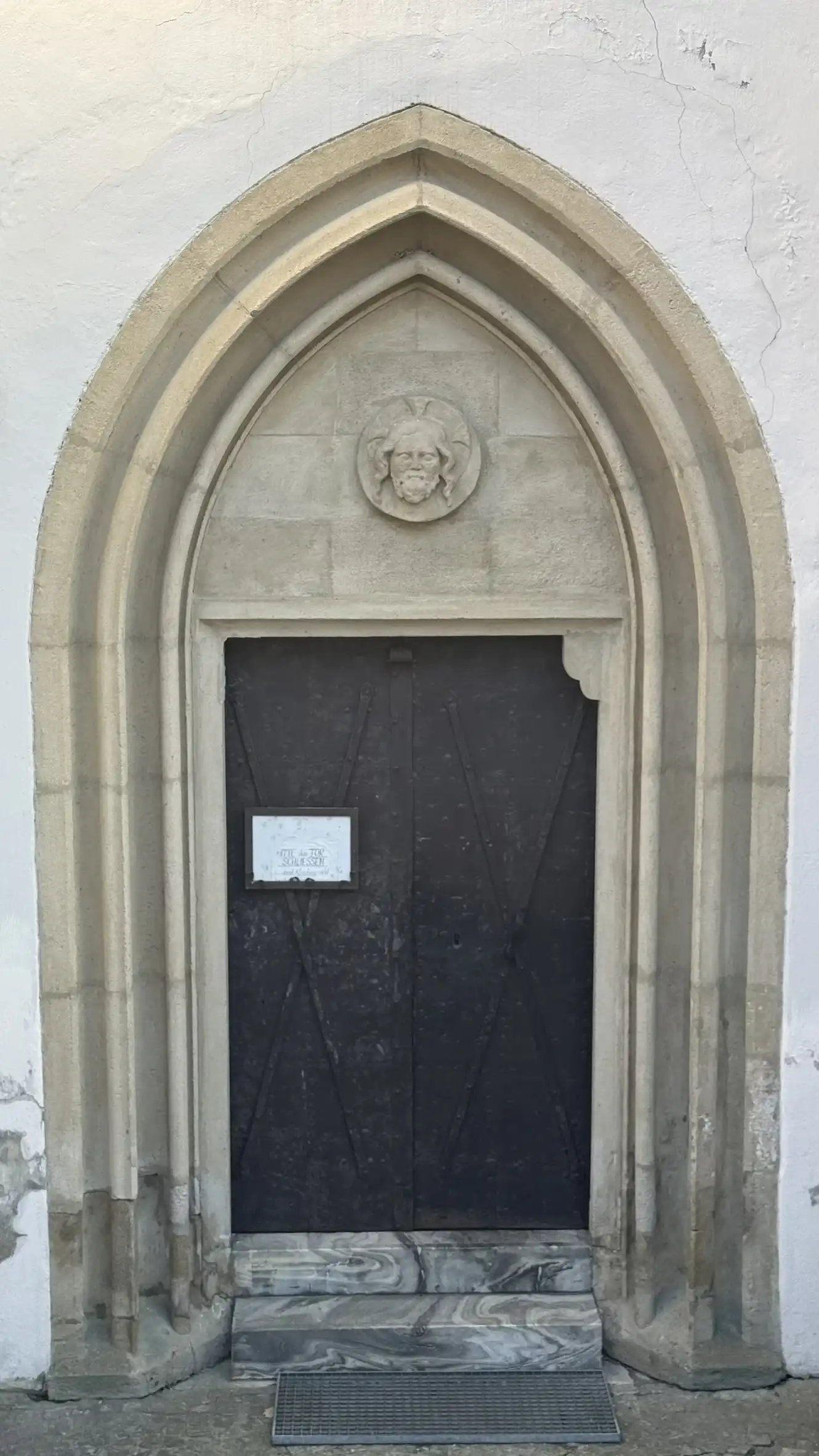
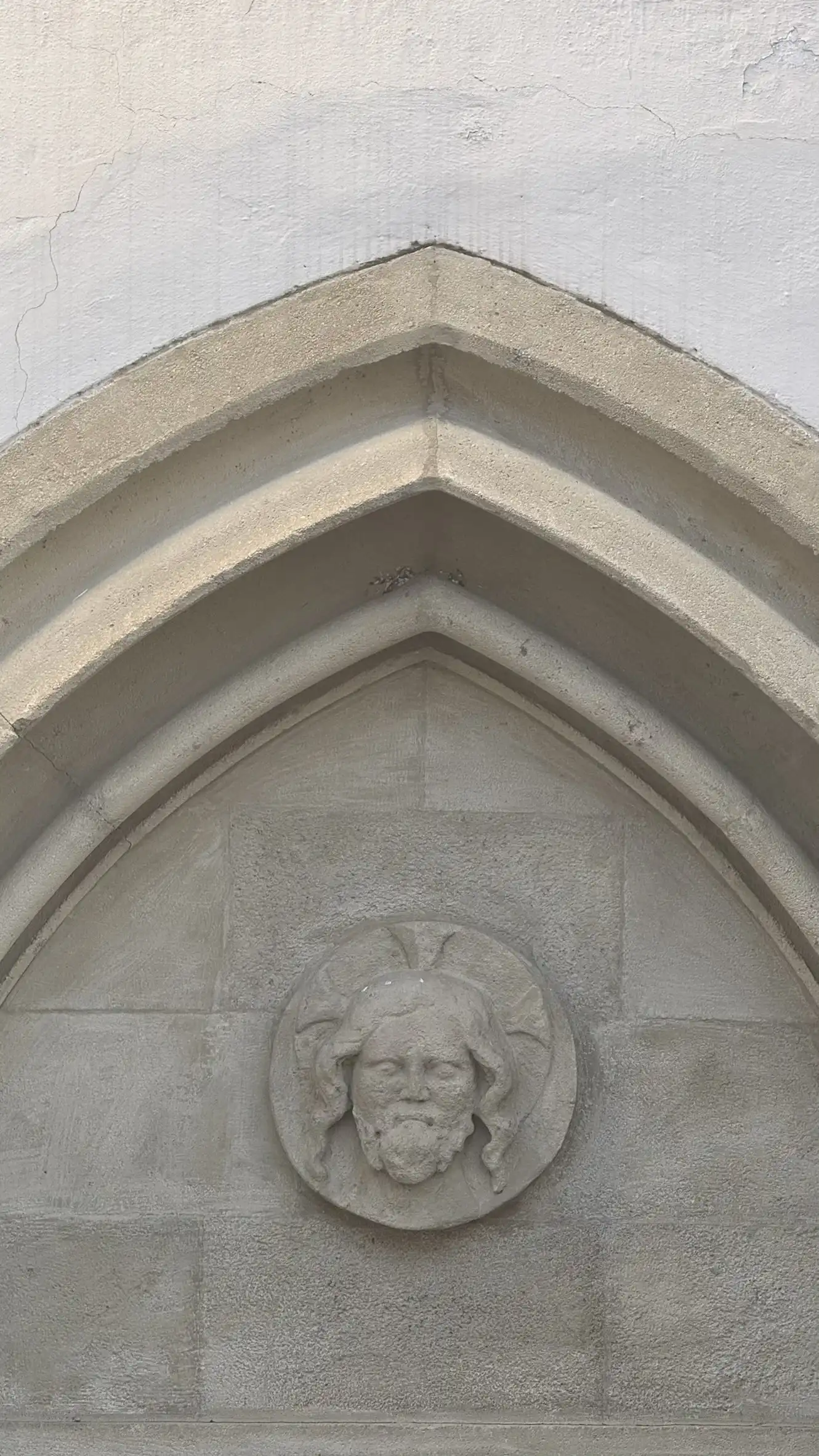
The northern portal features a richly profiled archway, with a Christ’s head in the tympanum, bearing traces of colour.
Interior and Fittings
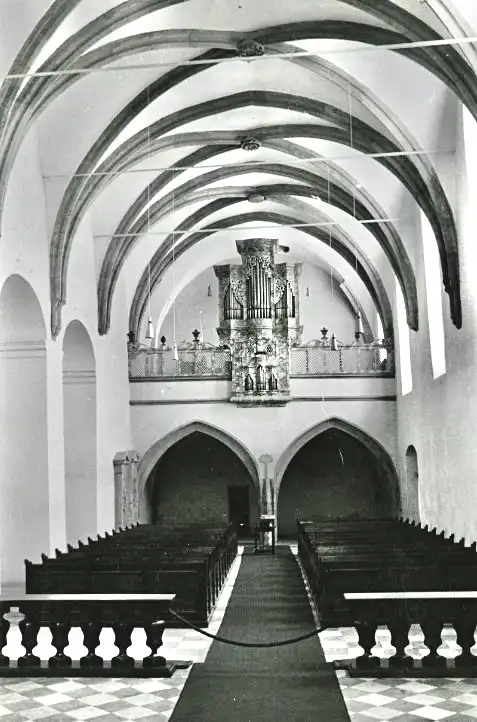
The interior is simple but includes an elegant ribbed vault, the keystones of which depict symbolic reliefs such as the Lamb of God, a rosette, and a pelican.
The high altar, dated 1734, was created by the sculptor Johann Pacher.
The central painting shows the Immaculate Conception, flanked by statues of saints. The polychromy is believed to be the work of Josef Anton Schwämbacher (1739).
On the southern side are three Baroque chapels (1666–1669), originally intended as burial chapels.
Notable features include:
– a Lamentation Chapel with carved altar frame and painting
– a Chapel of the Annunciation
– a double-bay chapel with a Crucifixion group from around 1780.
Other highlights include a late Gothic holy water stoup, several historical gravestones, and a Roman inscription slab repurposed as a crypt cover.
Organ
The Baroque organ, built in 1731 by Franz Knoller. It was likely modified by Joachim Prugger around 1777. It was restored in 1970.
It features a Brüstungspositiv (balustrade-mounted division) that harmonises visually with the high altar. Both design and tonal character reflect late Baroque aesthetics.
Location and Use
The church is located south-west of St. Veit’s historical old town, next to the former civic hospital. Today, it serves as a chapel of the parish of St. Veit. The remaining monastery buildings are used mainly for residential and administrative purposes.
The church is open for guided tours or special events.
Historical Photographs
Image Source: Archive of the Municipal Authority of St. Veit an der Glan

Monastery Church (Klosterkirche)
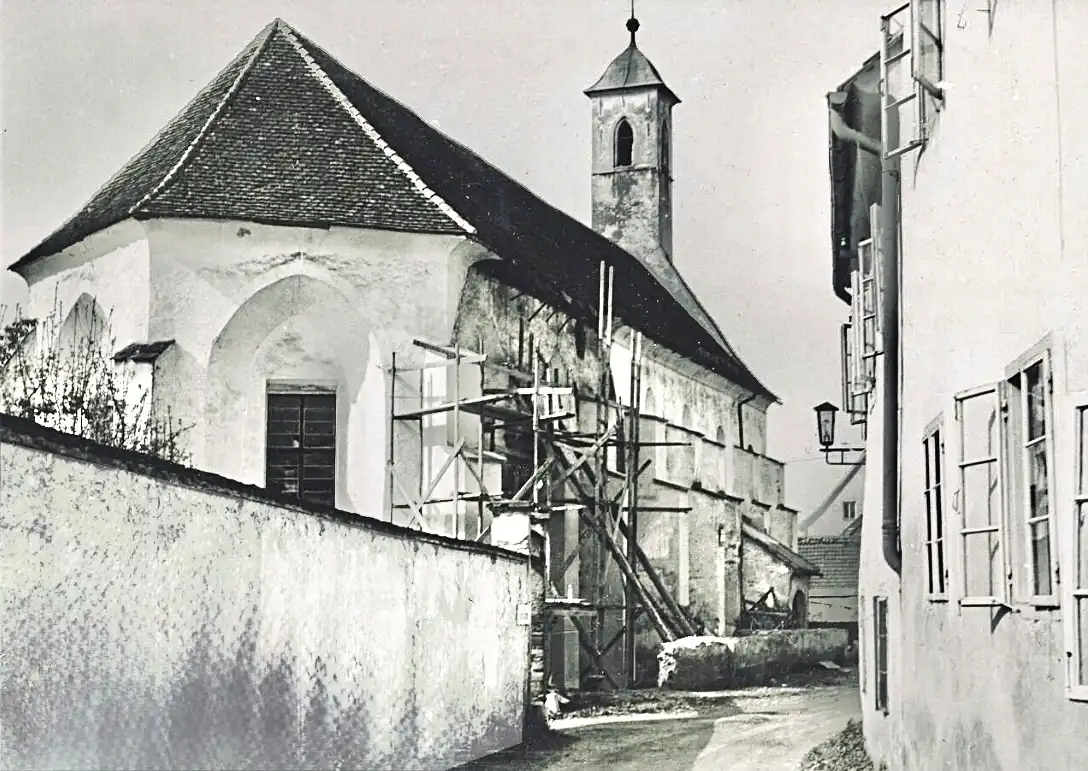
Photographed around 1960
This photograph shows the west tower, the buttresses of the north facade, and the north chapel.

Monastery Church (Klosterkirche)
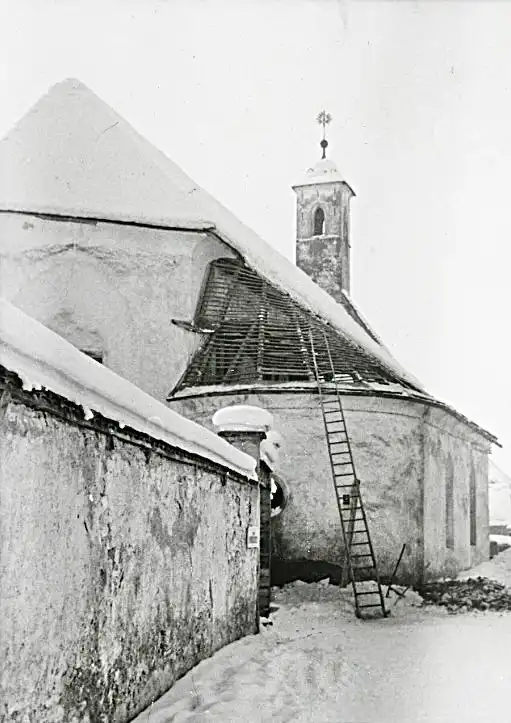
Photographed in 1963
View Direction: East
This photograph was taken shortly before the demolition of St Anthony’s Chapel.

Monastery Church (Klosterkirche)
Photographed in 1963
View Direction: West
This photograph was taken shortly before the demolition of St Anthony’s Chapel.

Monastery Church
(After the Demolition of the Annex)
Photographed around 1965

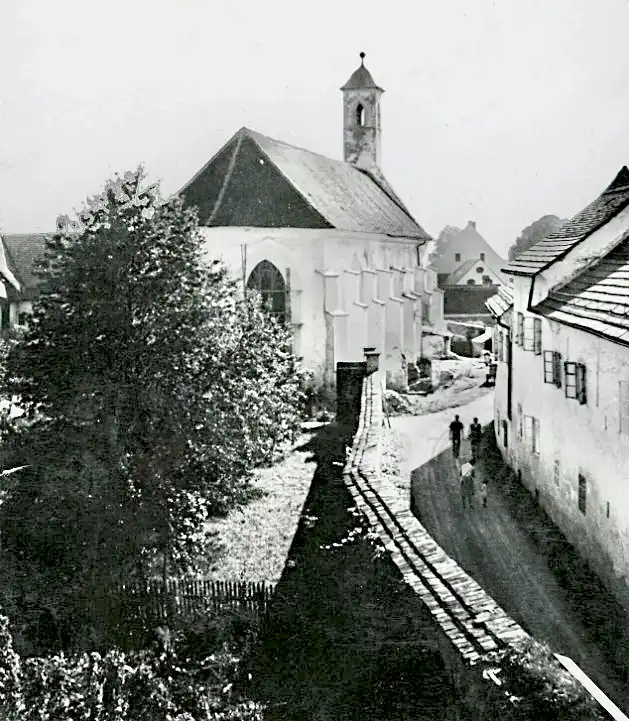
Monastery Church and Bürgergasse
Photographed in 1966
View Direction: West

Monastery Church – Interior
Photographed in 1966
Konrad von Auffenstein
Konrad III von Auffenstein (d. 1368) was a leading Carinthian nobleman, serving as Marschall (Marshal) and later Landeshauptmann (Governor) of Carinthia. Originally from Tyrol, he rose to prominence under Duke Meinhard II of Görz–Tyrol after the suppression of the Carinthian nobles’ revolt in the 1290s.
Konrad was rewarded with extensive estates, including Karlsberg Castle near St. Veit an der Glan, and expanded his holdings across Carinthia and Tyrol. In 1323, together with his wife Dietmut, he founded the Poor Clare convent in St. Veit, establishing the Klosterkirche Unsere Liebe Frau, which became the family burial place.
After 1335, he supported the Habsburg takeover of Carinthia, though this cost him parts of his Tyrolean inheritance. He died in 1368 at Strechau Castle. His sons later rebelled against the Habsburgs and were imprisoned for decades.