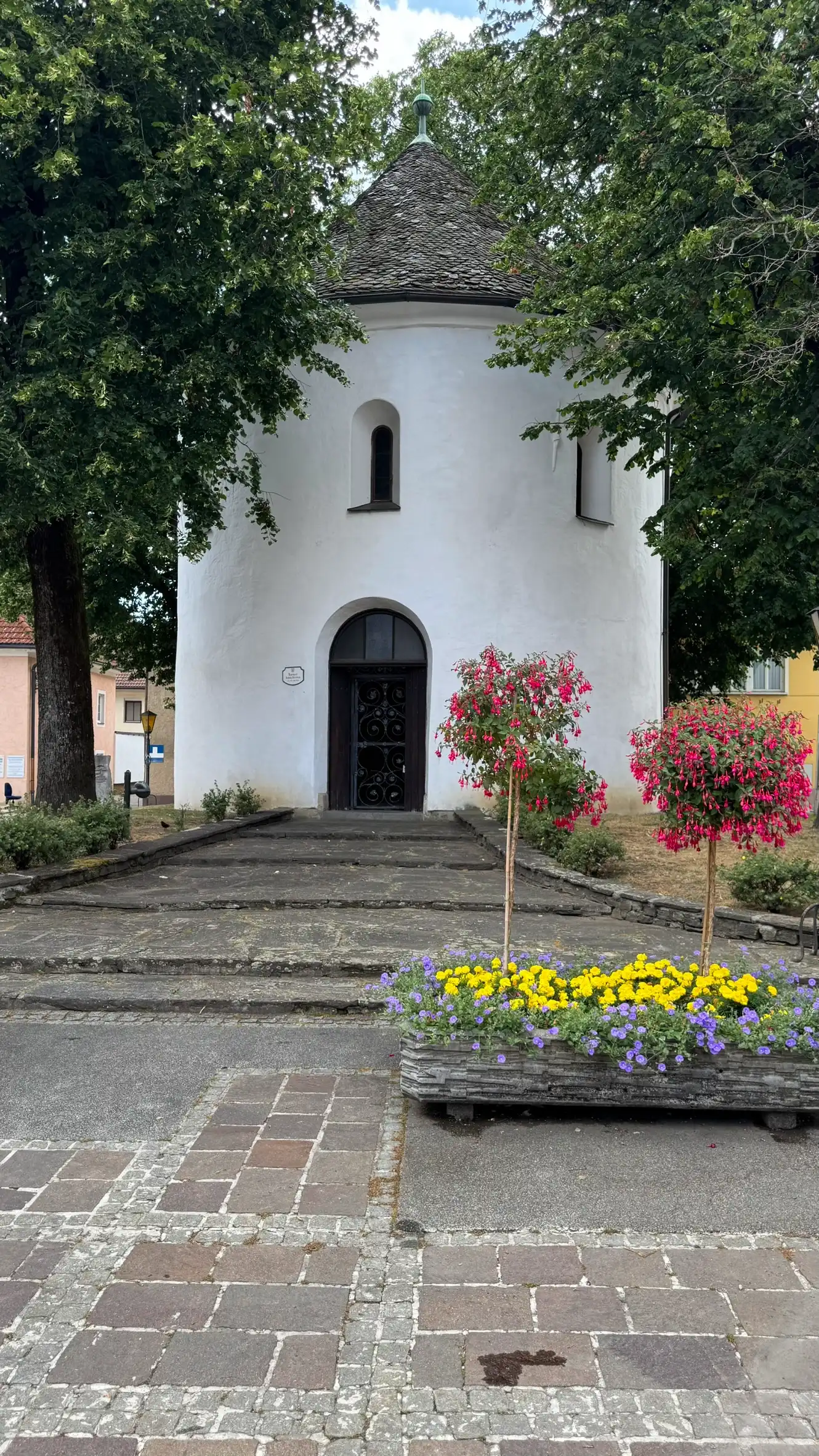
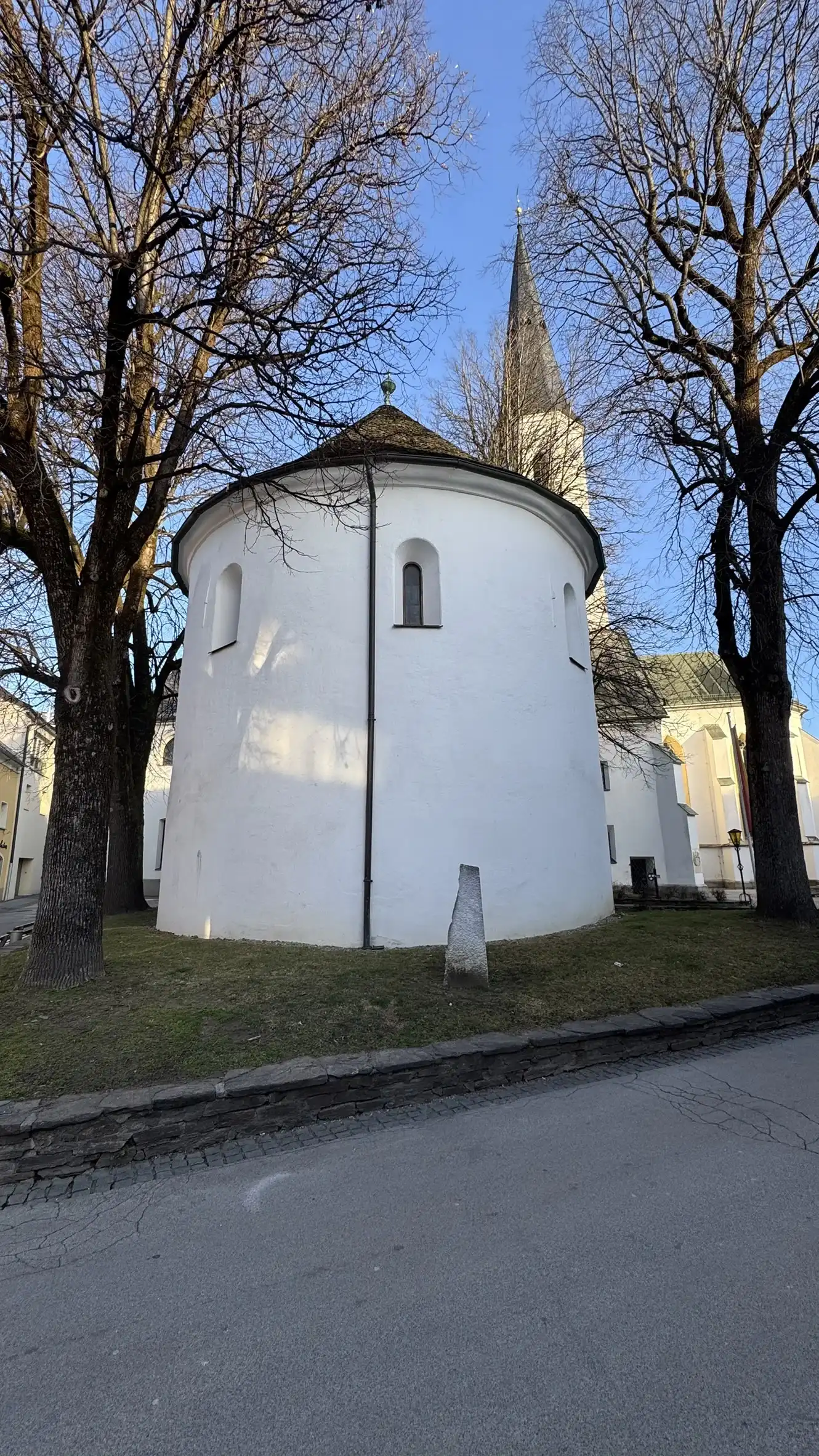
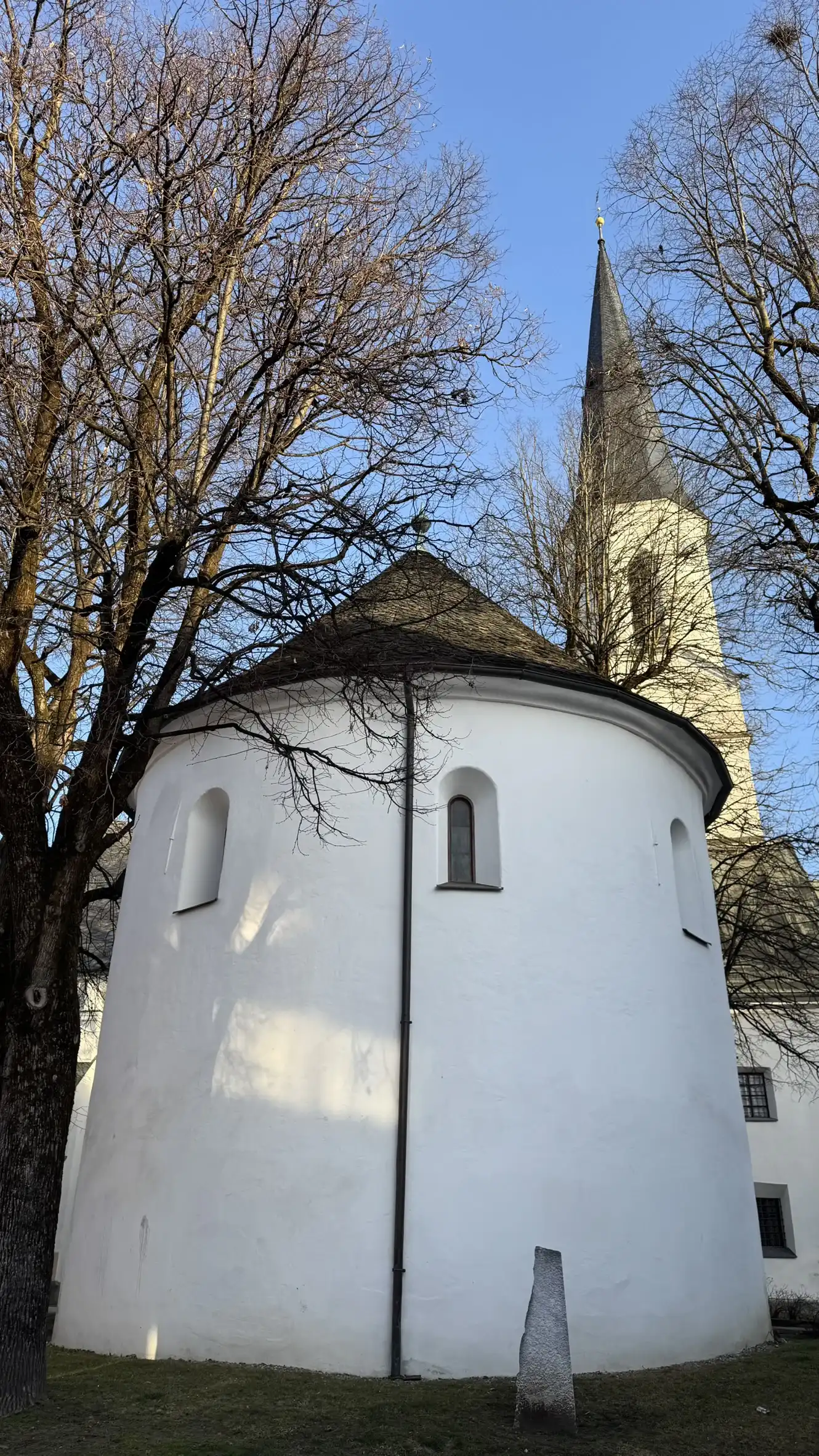
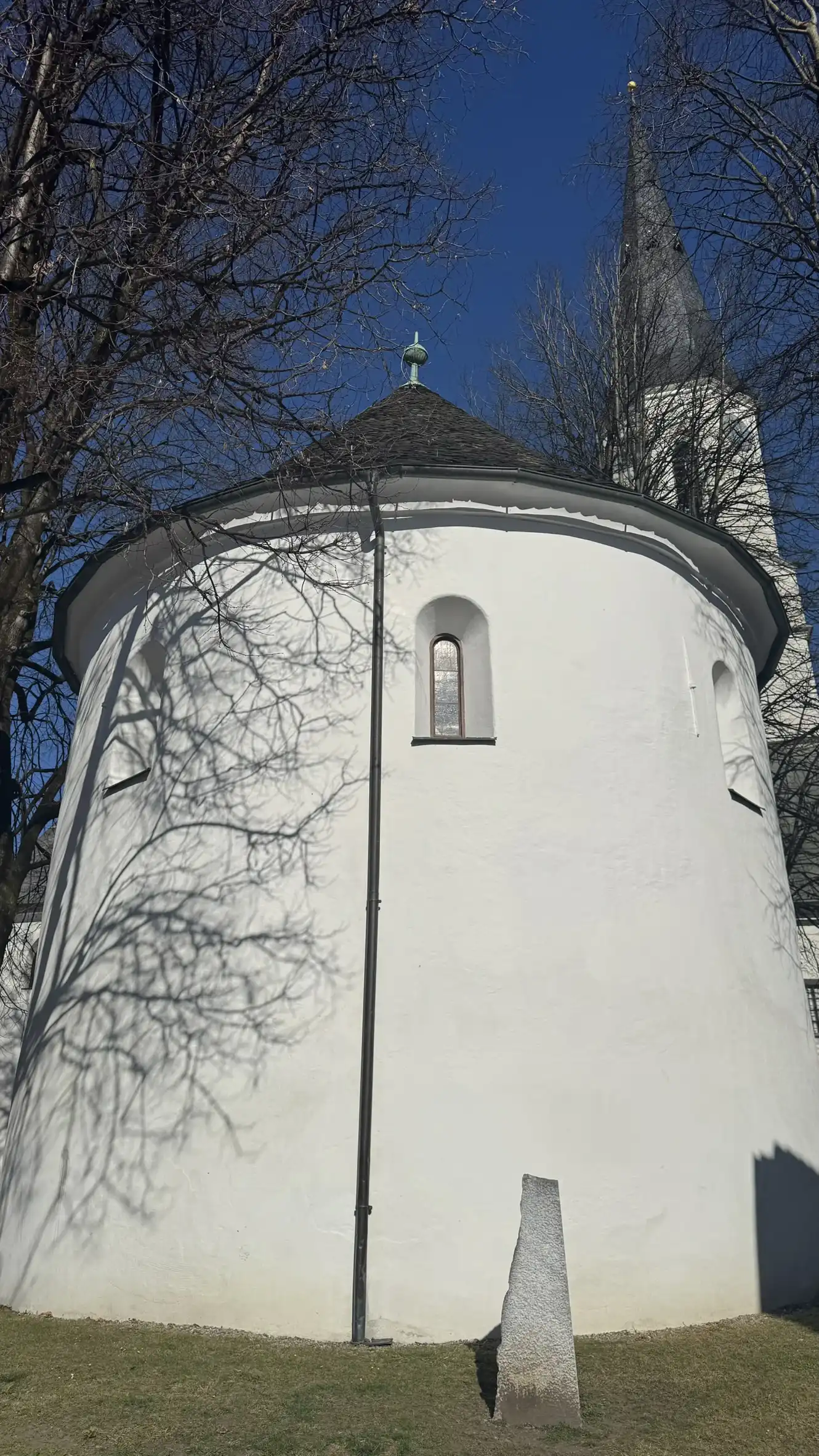
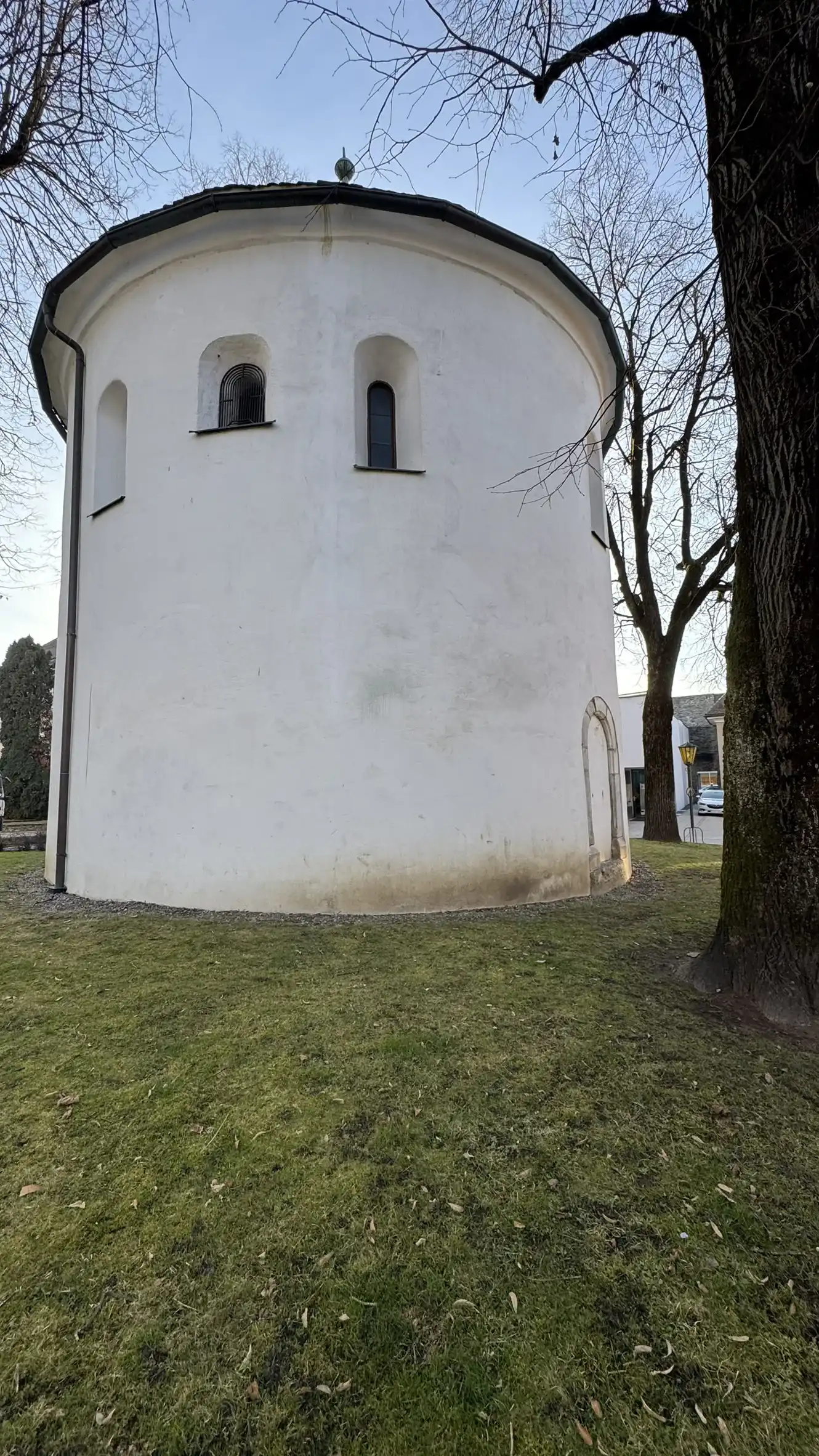
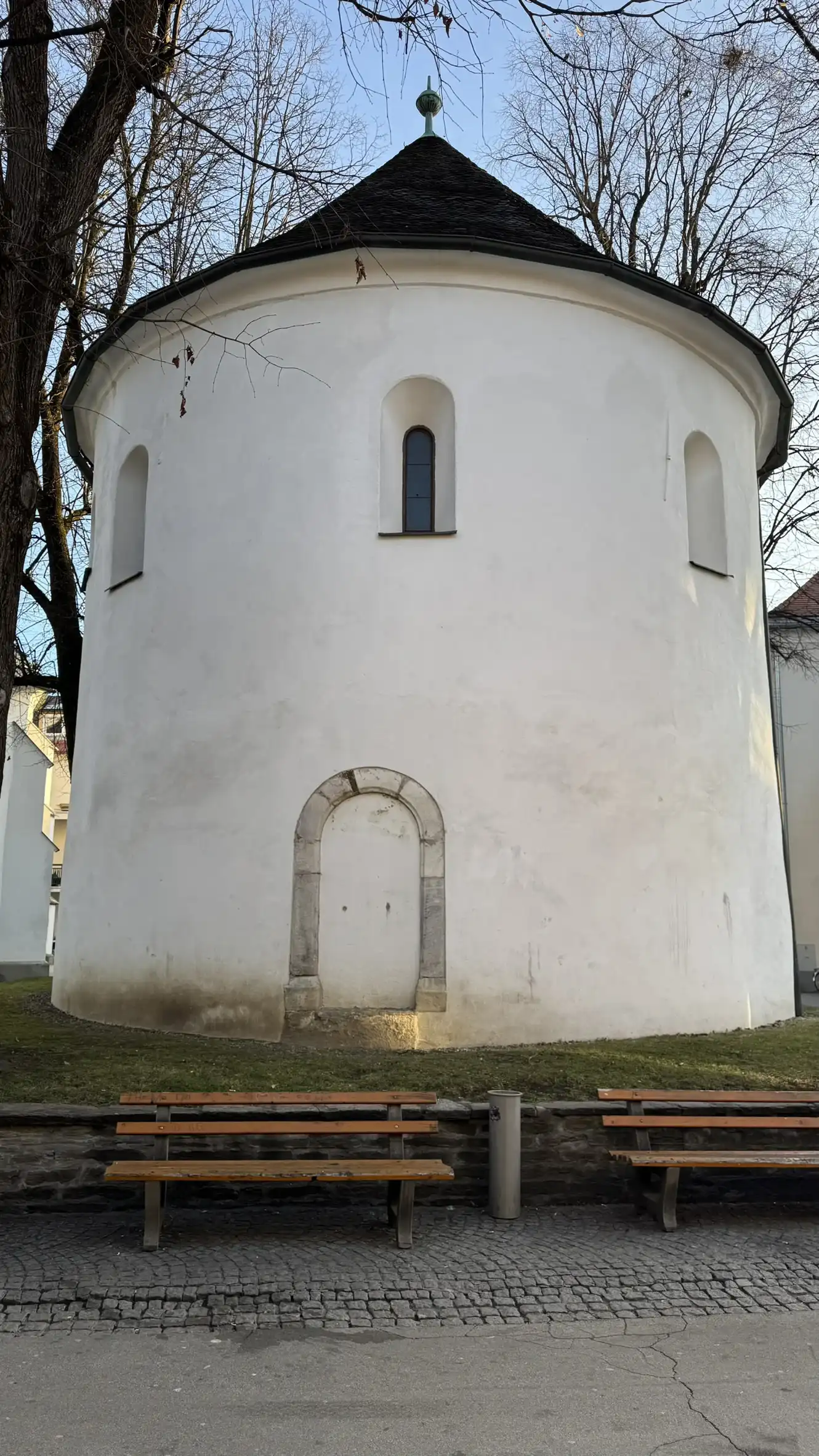
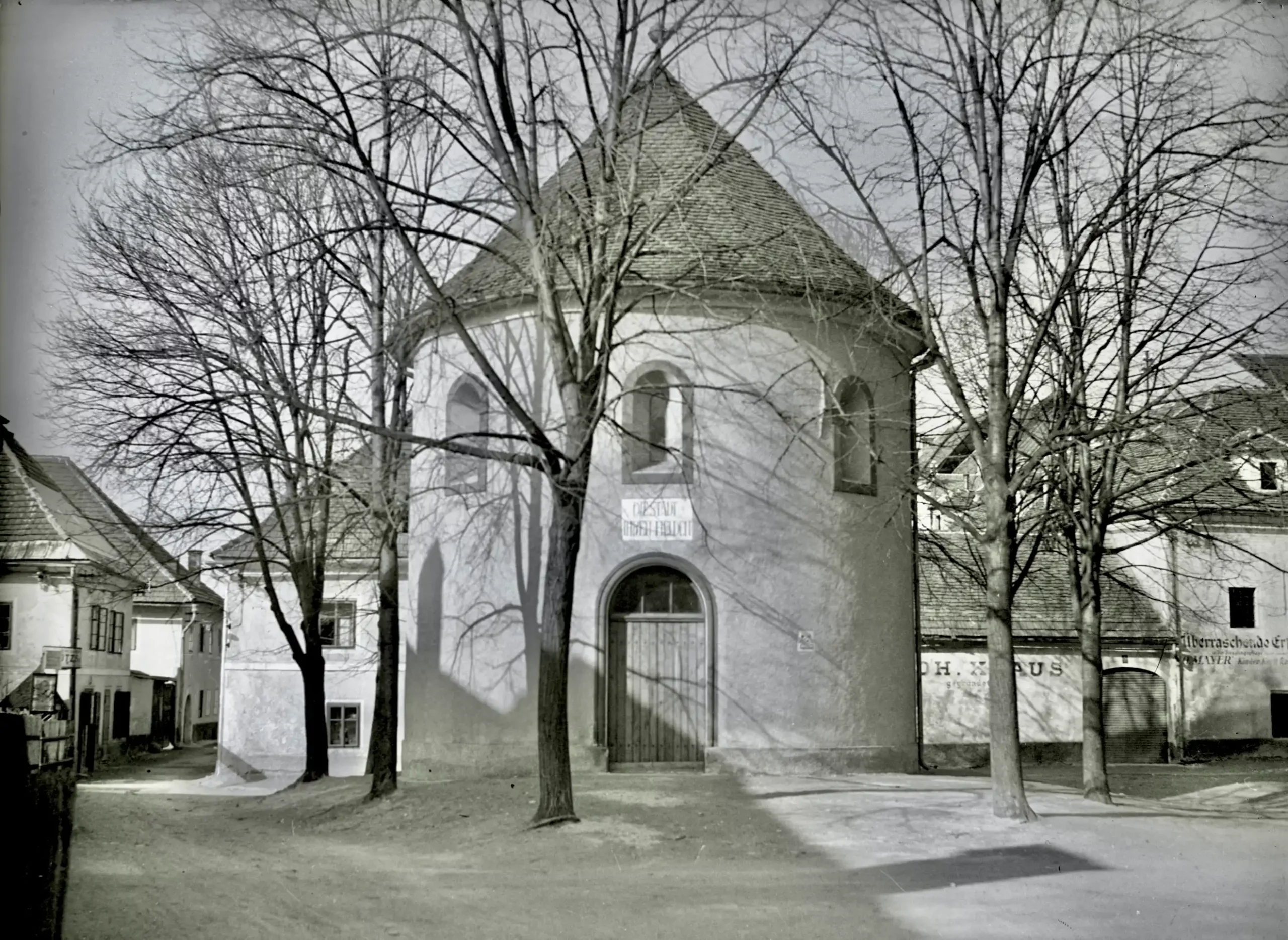
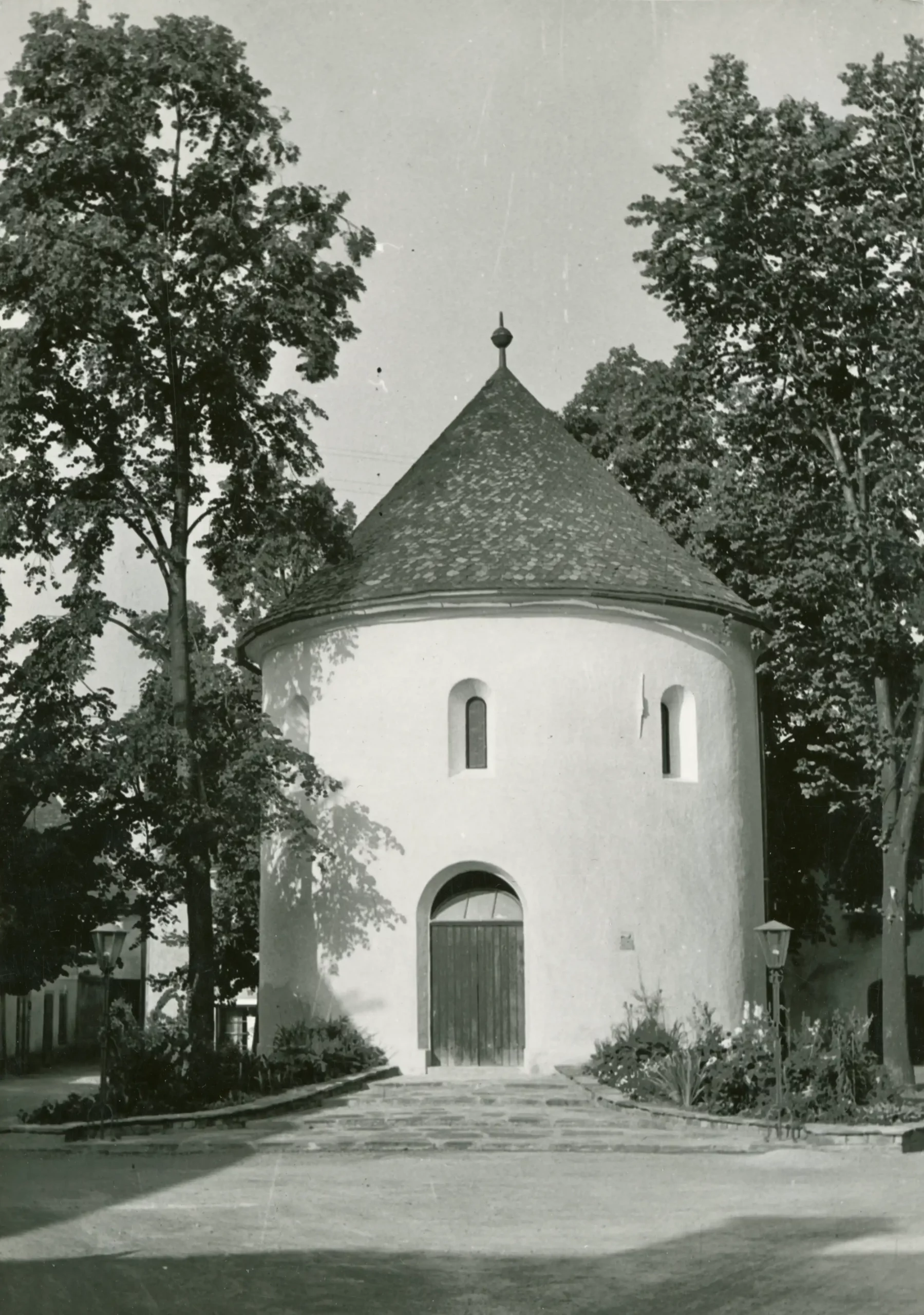
Located to the south of the Parish Church of Saint George, the Romanesque charnel house is a two-storey circular structure dating from the 12th or 13th century.
Largest Charnel House in Carinthia
Originally constructed as a charnel house, it served to store the bones exhumed from nearby graves. It is regarded as the largest charnel house in Carinthia and ranks among the most notable structures of its type in the German-speaking world.
Architecture
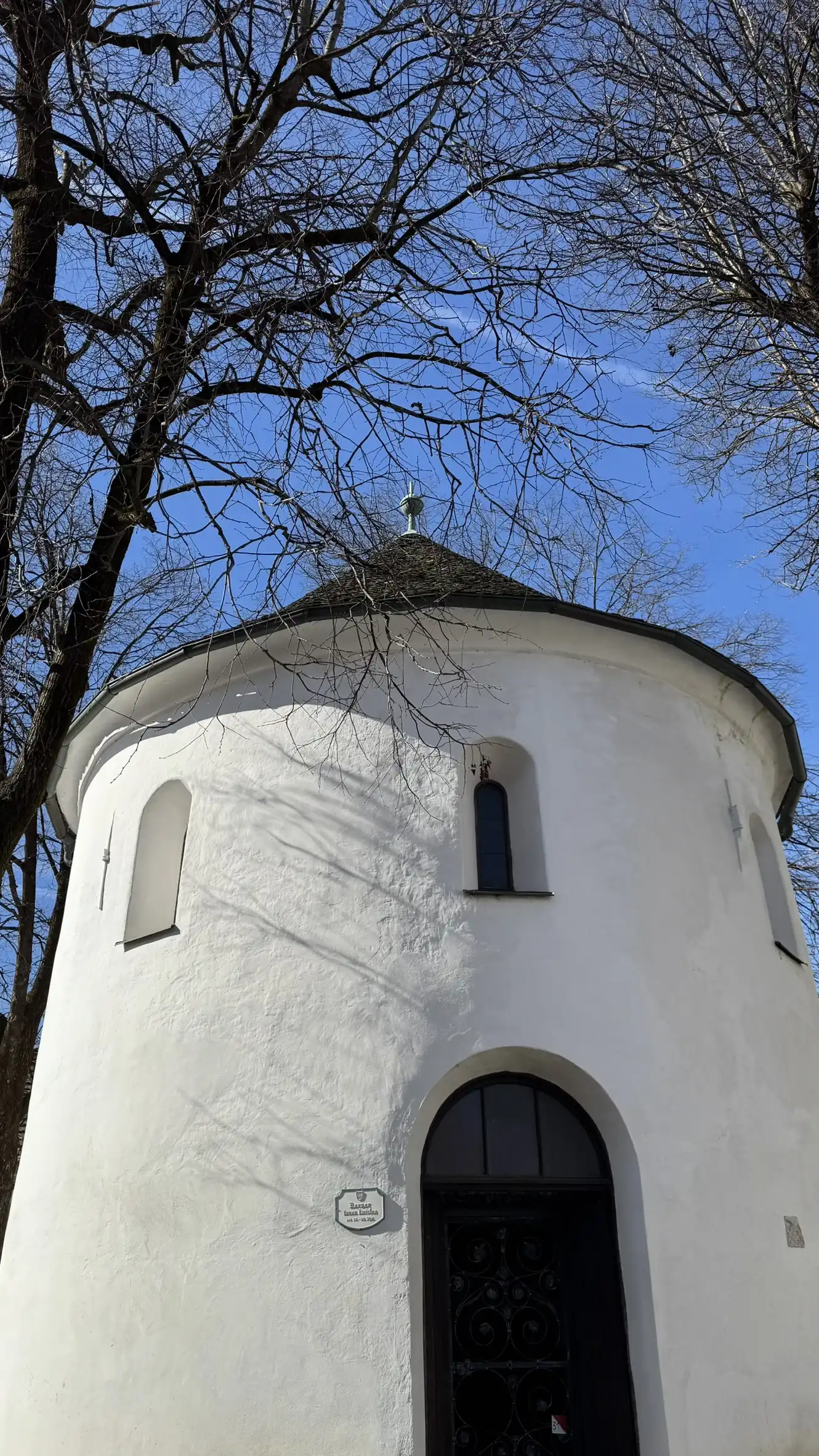
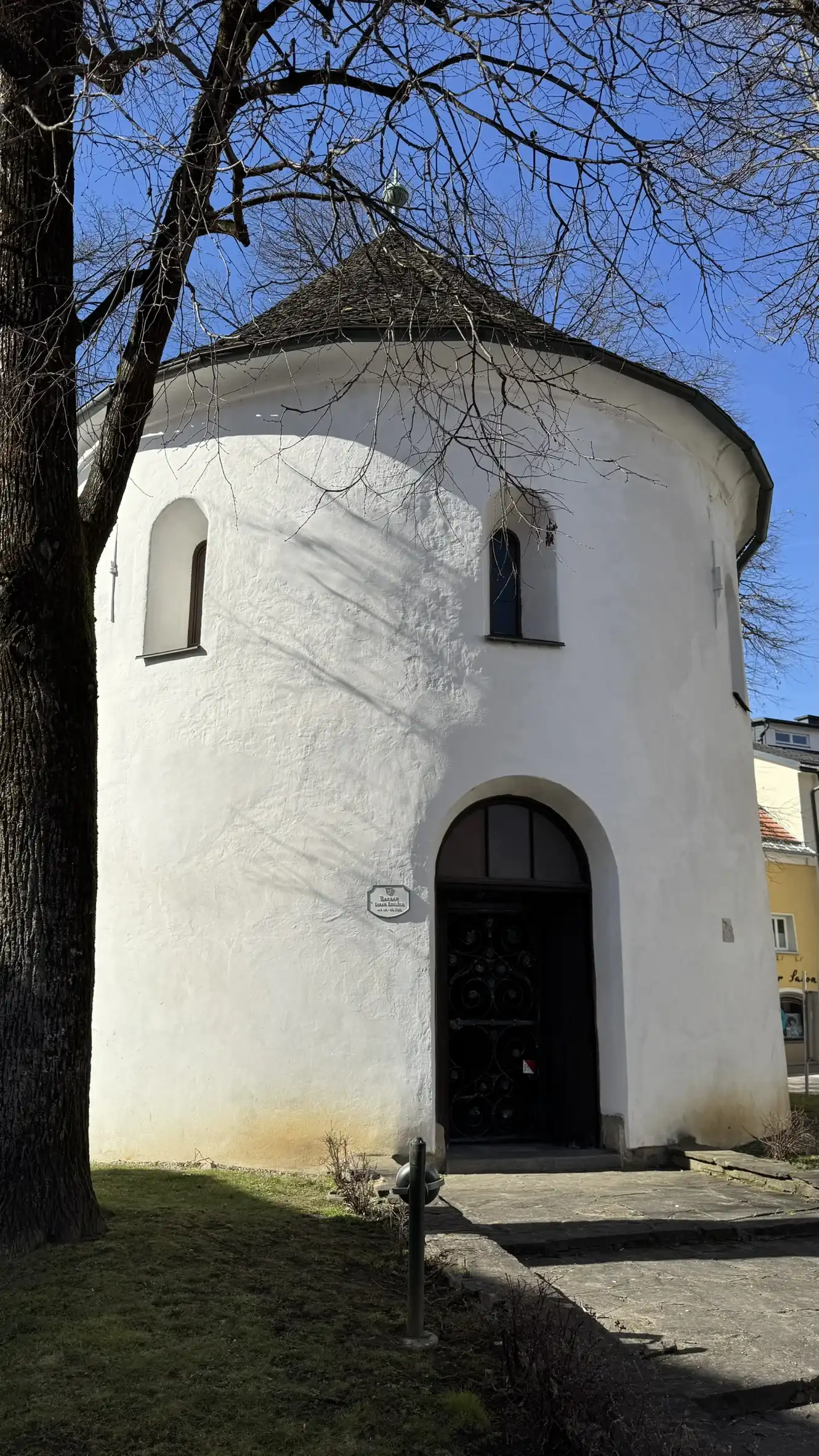
The two-storey circular structure from the Romanesque period is characterised by its solid masonry, conical shingle roof, and plain facades.
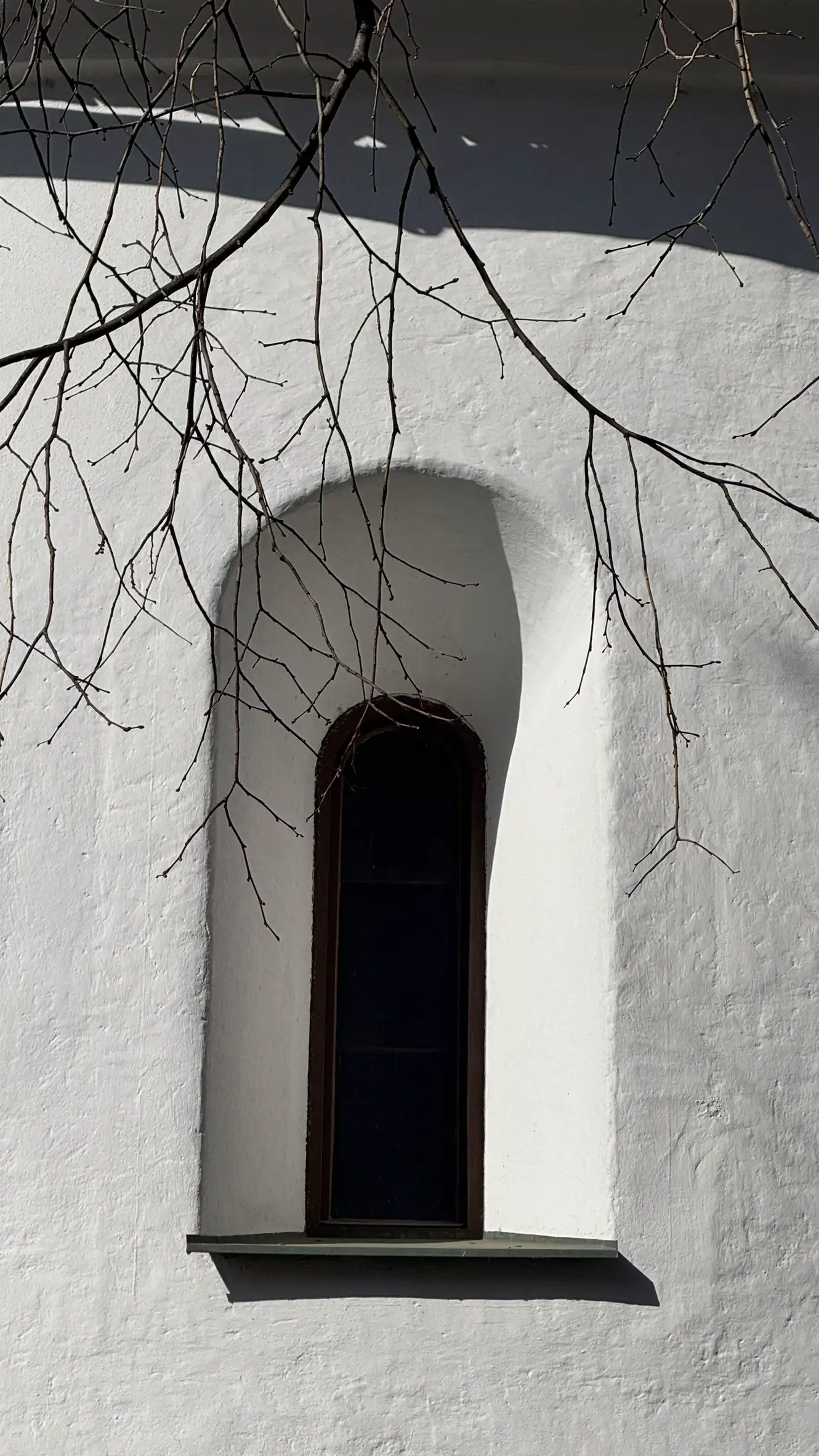
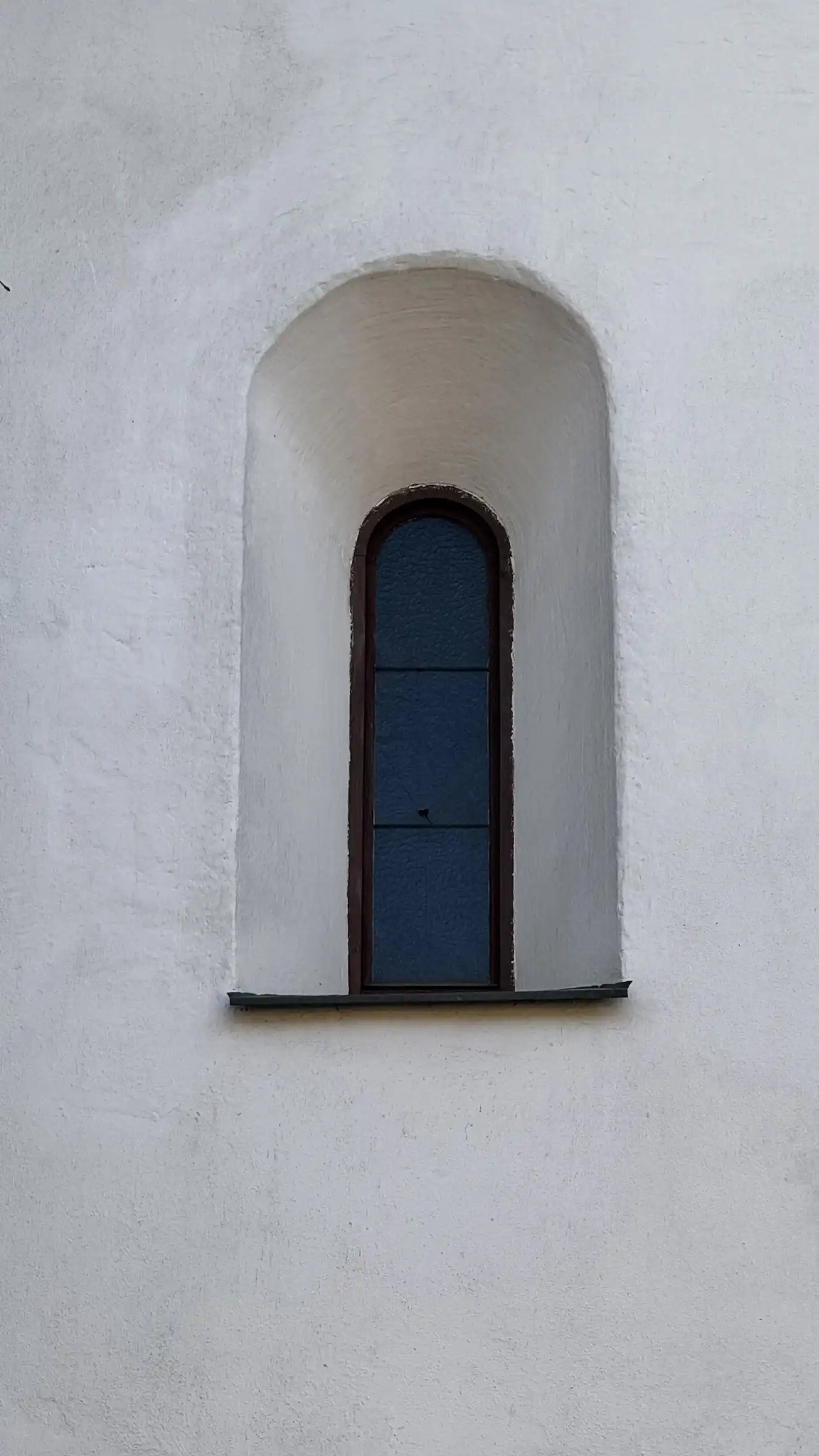
Romanesque round-arched windows and a restrained, clear design define the building’s external appearance.
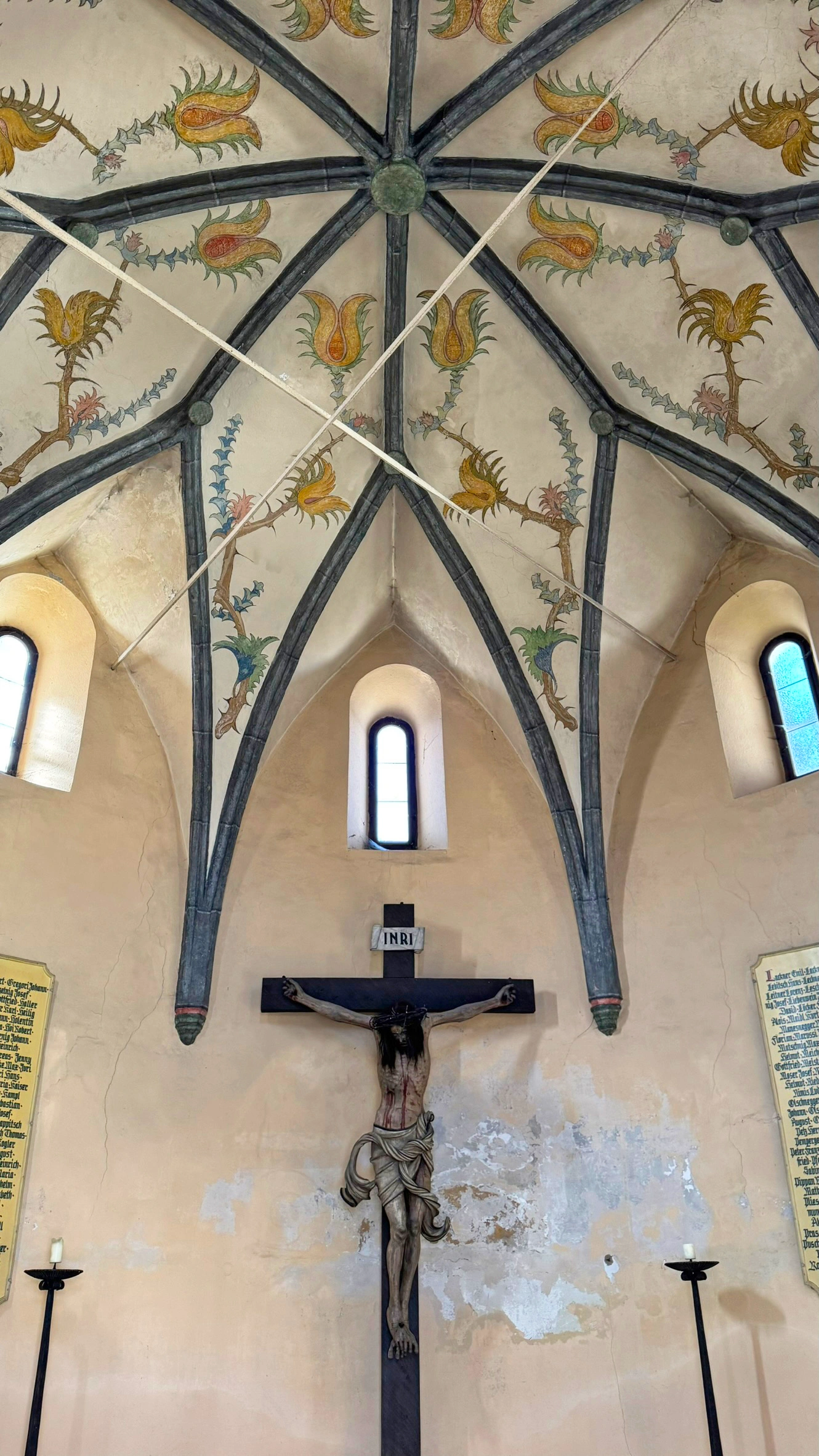
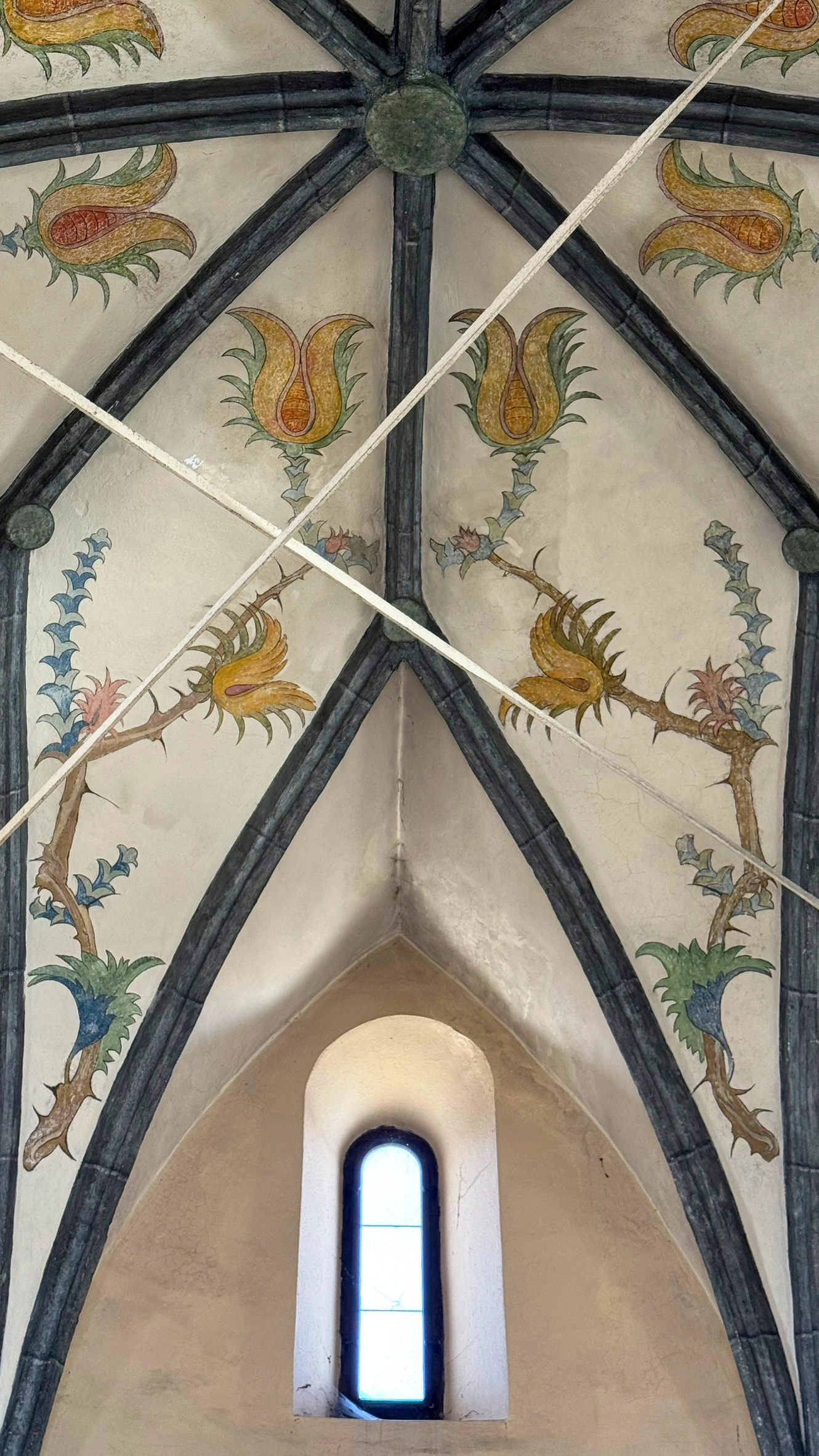
The charnel house presents a harmonious combination of Romanesque architectural form, a late Gothic ribbed vault and a quiet, contemplative atmosphere.
Entrance
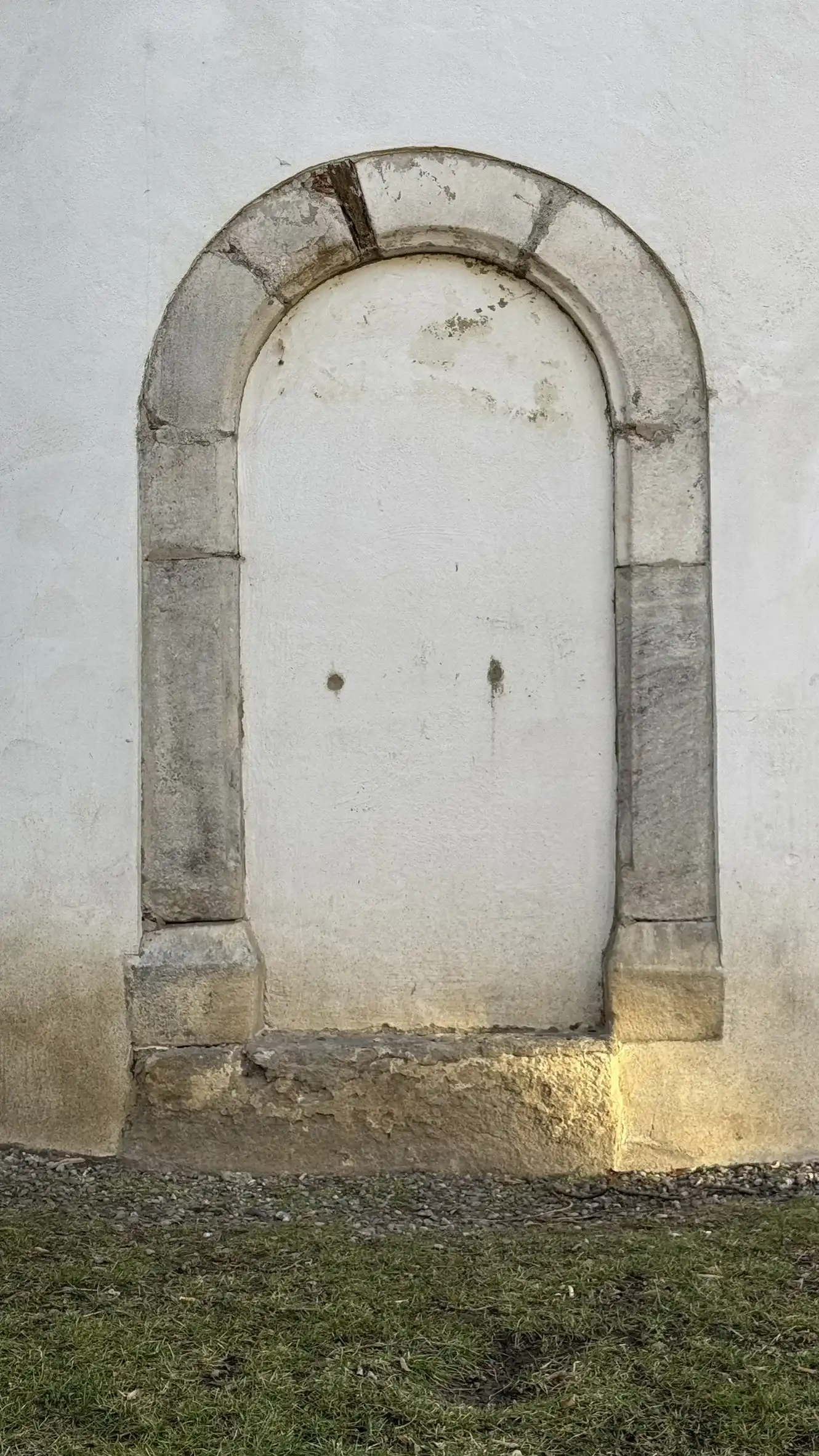
The entrance, originally situated on the eastern side, was later relocated to the north. The lintel is formed from a fluted Roman pilaster.
Oldest Stone Monument in St.Veit
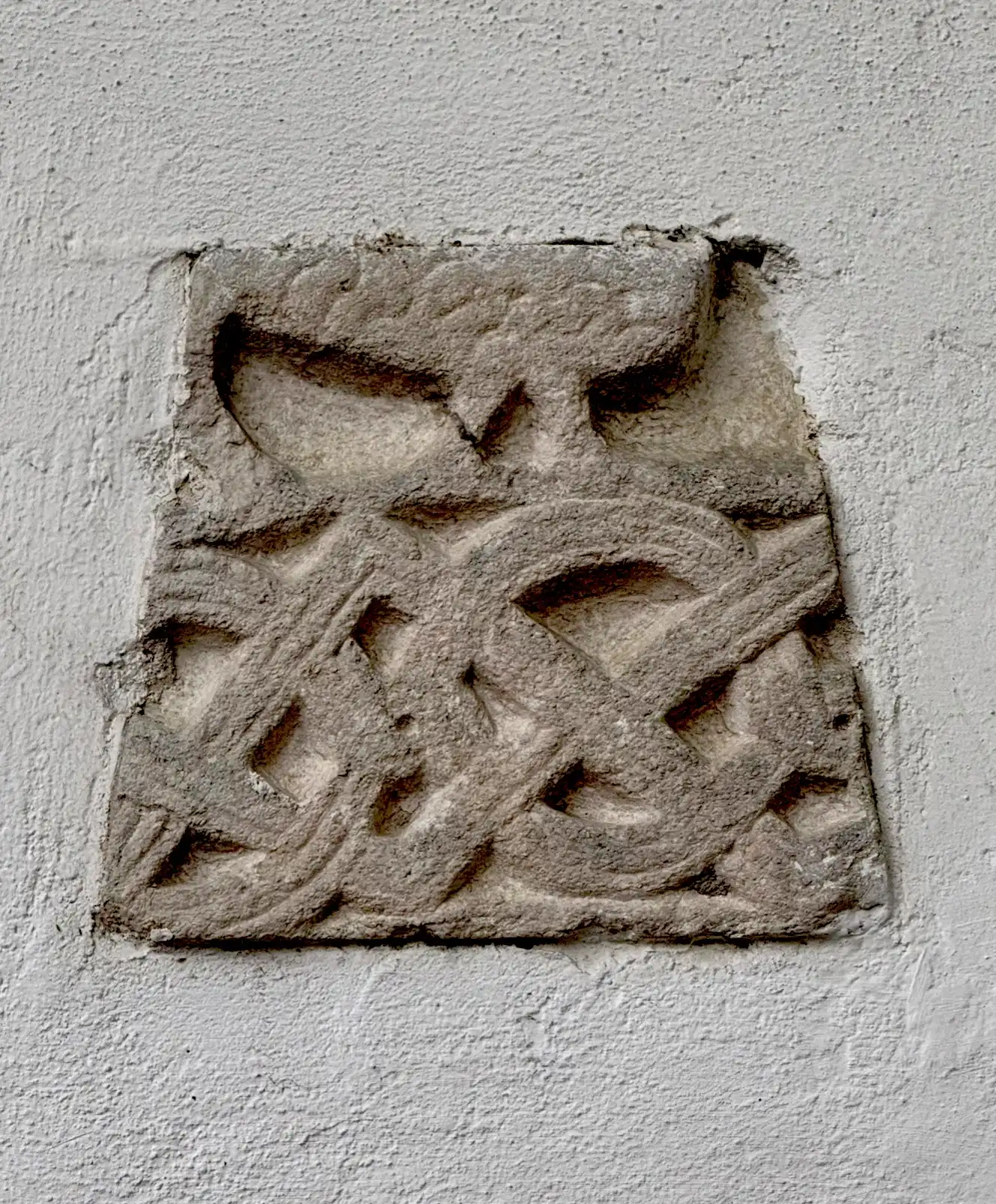
To the right of the entrance is a fragment of a Carolingian interlace stone, regarded as the oldest stone monument in St Veit. It provides valuable evidence of a possible Early Medieval settlement in the area.
Interior
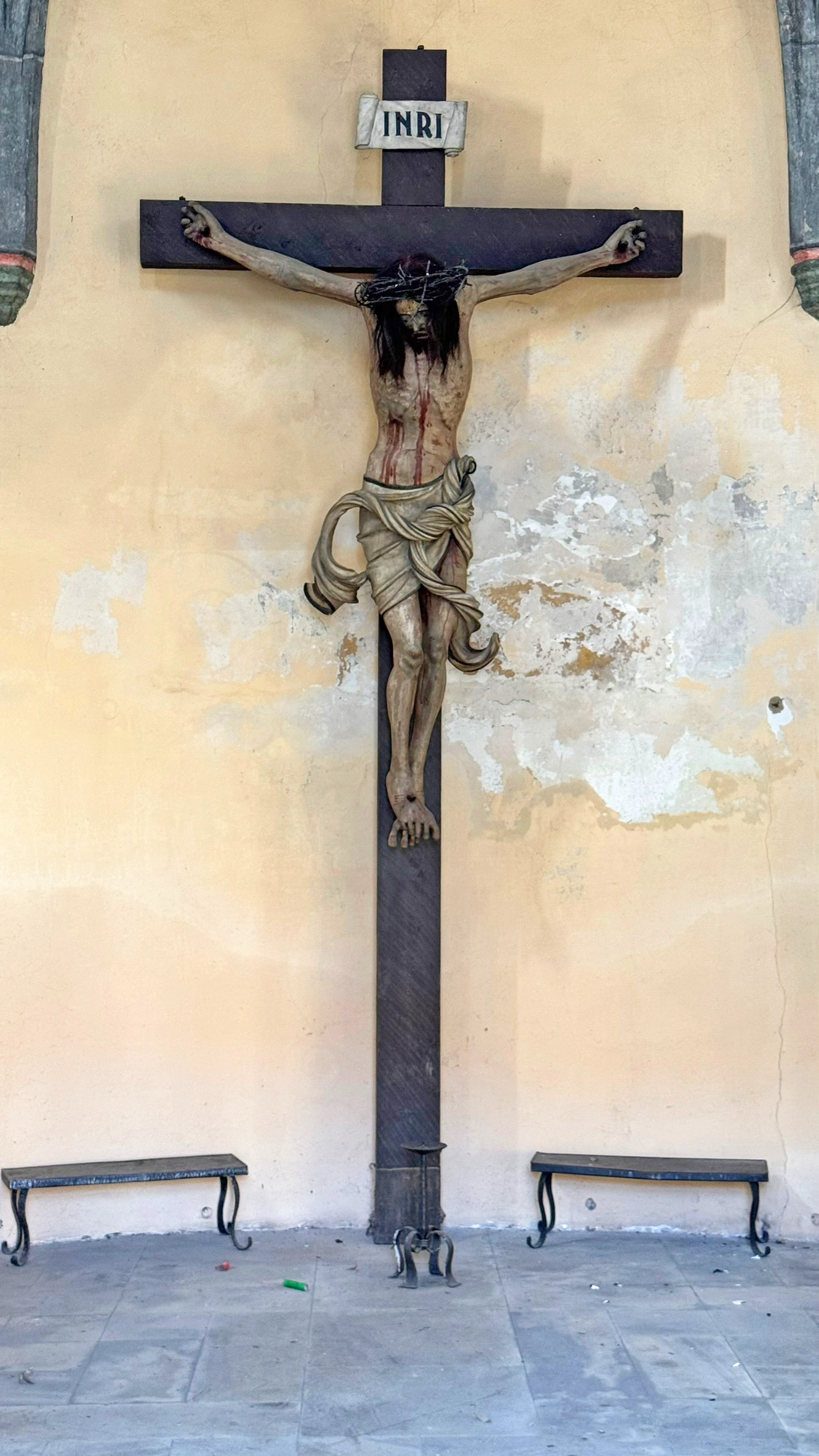
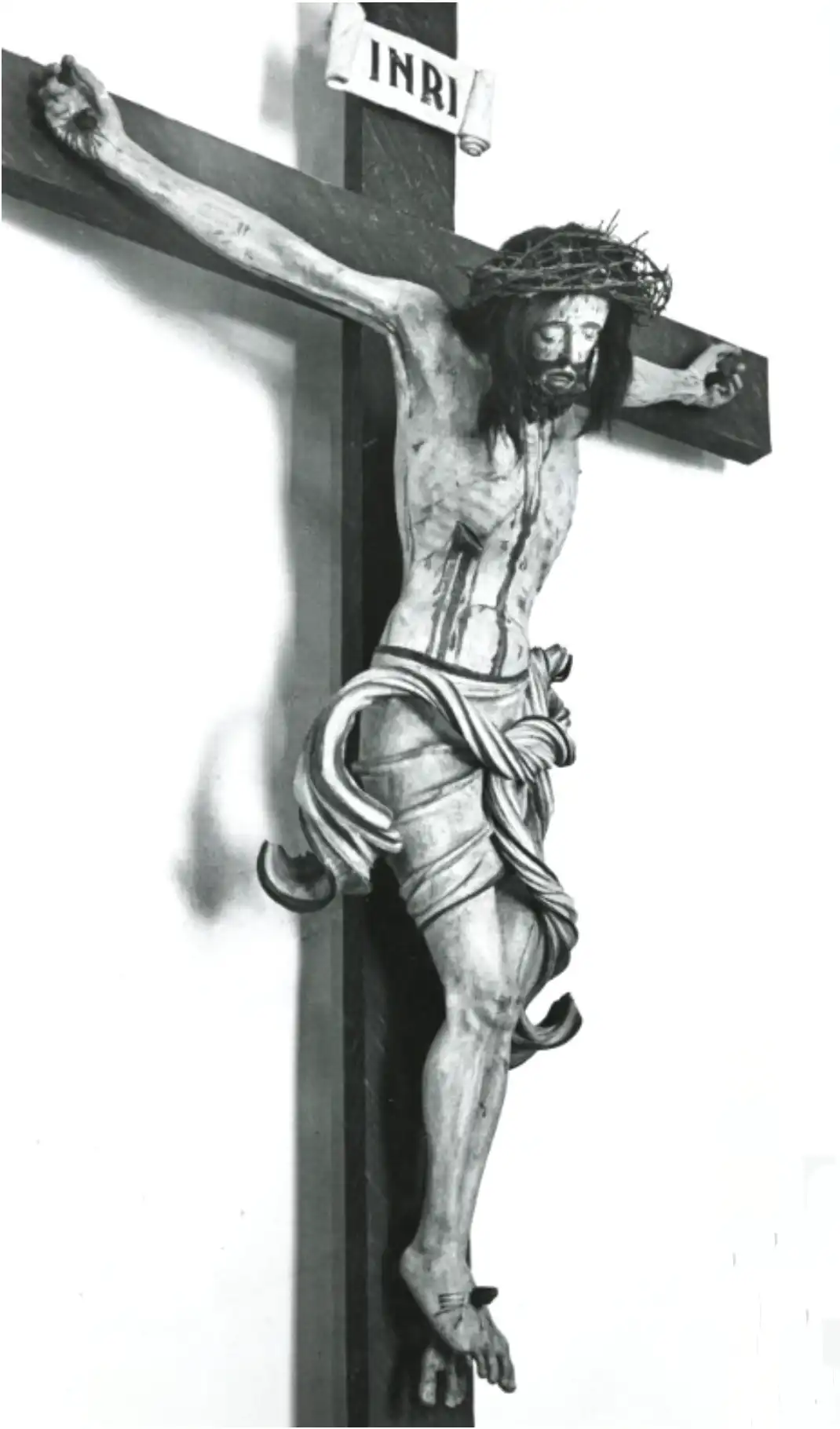
The interior is dominated by a larger-than-life Late Gothic crucifix, a masterpiece of woodcarving from around 1500. This Crucifix formed part of a larger Crucifixion group and was installed here during a redesign in the mid-20th century.
Inside the building, there is a Roman votive inscription dedicated to the god Jupiter Dolichenus, donated by Ti. Claudius Quitilianus and Rutenia Severina (CIL III 4790).
Repurposed as a War Memorial
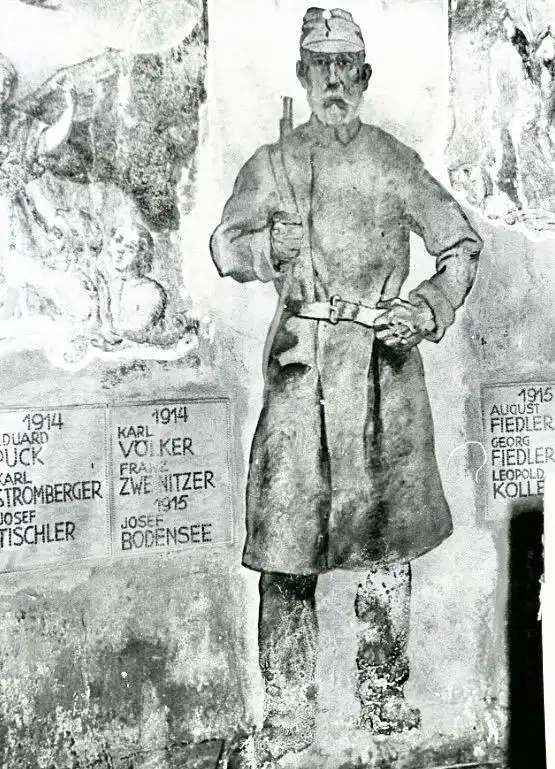
In 1930, the building was repurposed as a war memorial for the town. Frescoes by Switbert Lobisser and a monumental serpentine sarcophagus were added at the time but were later removed.
Restoration
The interior was comprehensively restored in 1987.
Charnel house, viewed from the eastern end of Kirchplatz
Circular, tower-like structure with a conical roof
Round-arched entrance with three recessed windows visible
Charnel house, viewed from the southern end of Kirchplatz
Foreground: charnel house; background: church tower
Charnel house, situated to the south of the parish church
Charnel house, viewed from the western end of Kirchplatz
Blind stone arch with three recessed windows
Blind stone arch
Close-up of recessed round-arched window
Close-up of recessed round-arched window
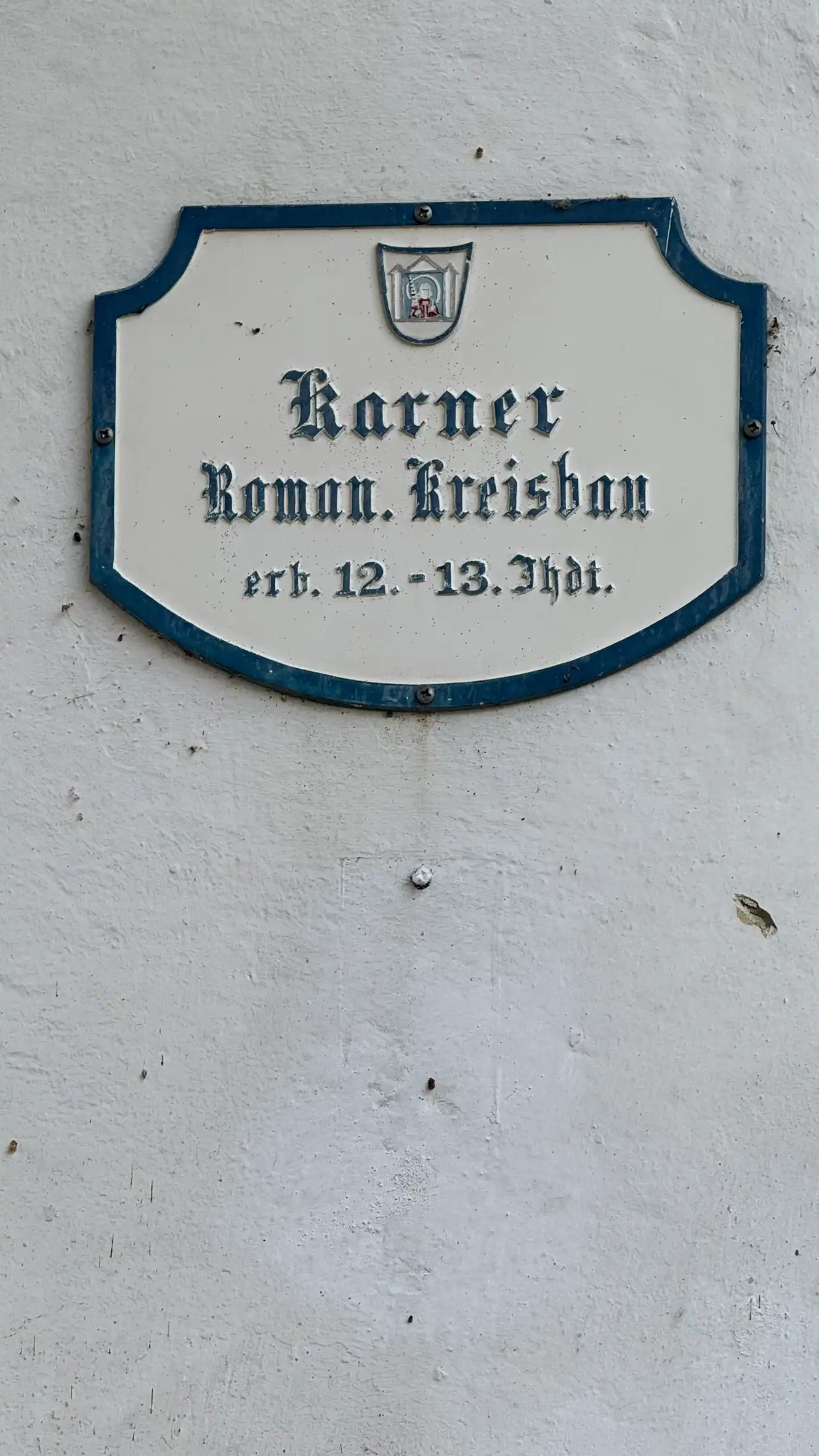
Signage: Charnel house, Romanesque round tower, built in the 12th–13th century
Crucifix; row of recessed round-arched windows; ribbed vault; frescoes
Close-up of ribbed vault and frescoes
Larger-than-life crucifix at the western end of the circular wall
Historical Photographs Source: Archive of the Municipal Authority of St. Veit an der Glan
Charnel House, located on Kirchplatz Photograph taken around 1930
Charnel Housewith Arched Entrance Photograph taken in 1966
Late GothicCrucifix Photograph taken around 1965
A masterpiece of woodcarving from circa 1500
Charnel House Interior Photograph taken around 1955
The interior view of the charnel house shows frescoes featuring soldier motifs by Swibert Lobisser. These were painted on the walls because the building was used as a war memorial from 1930 onwards. The photo was taken before the renovation.