St Vitus as Patron and Namesake of St Veit an der Glan
The town of St Veit an der Glan takes its name from St Vitus, one of the Fourteen Holy Helpers and a popular saint in medieval Europe. His relics were venerated in many regions, and his cult spread widely from the early Middle Ages onwards.
In Carinthia, devotion to St Vitus became so prominent that the settlement was named in his honour. The parish church was dedicated to him, and his image and attributes – most notably the cauldron, symbolising his martyrdom, and the raven, his protector – appear frequently in the town’s art and heraldry.
Thus, St Vitus is both the patron saint and the spiritual namesake of St Veit an der Glan, shaping the town’s identity and cultural heritage across the centuries.
Mosaic | St Vitus | Gallery 1
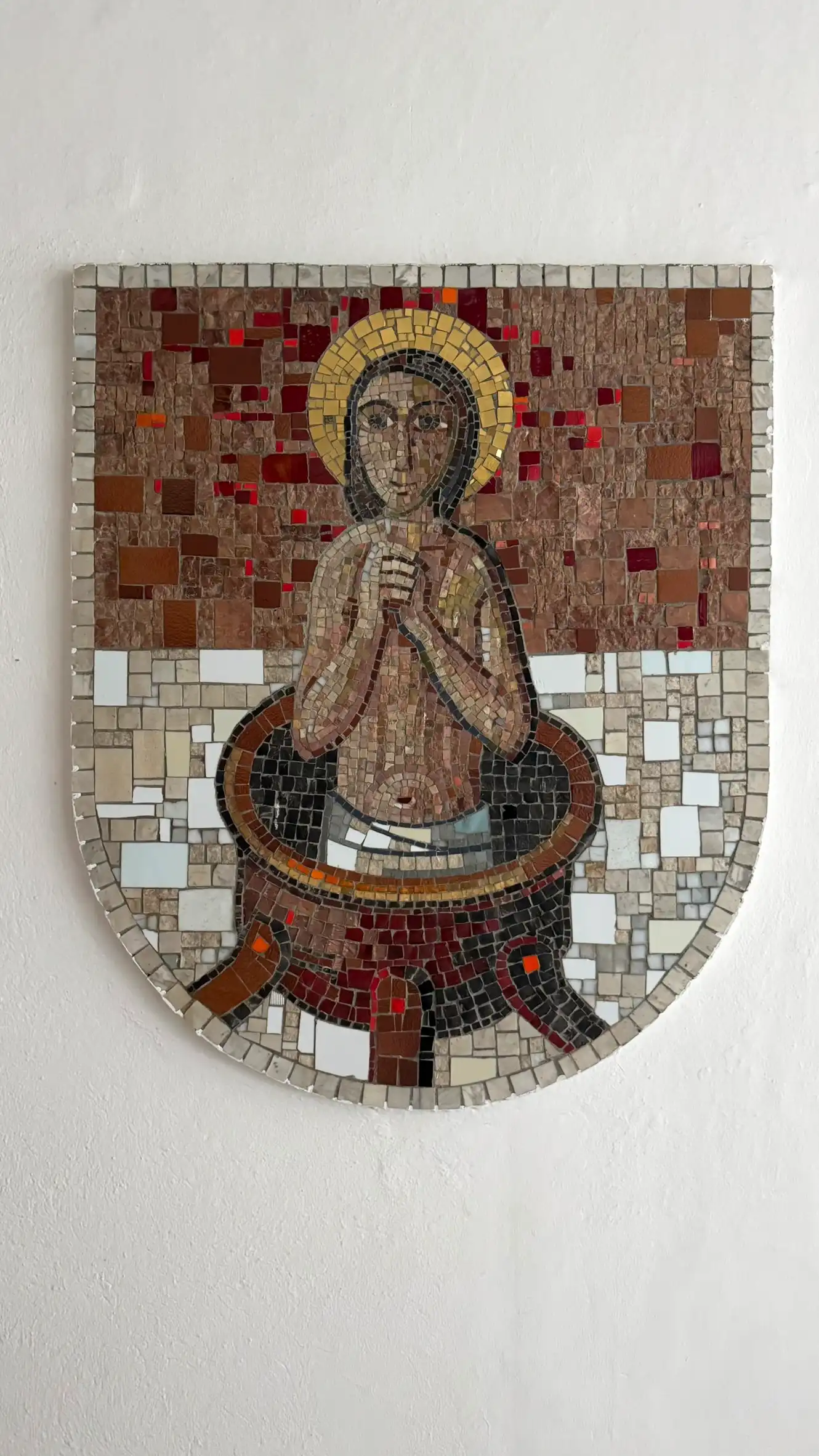
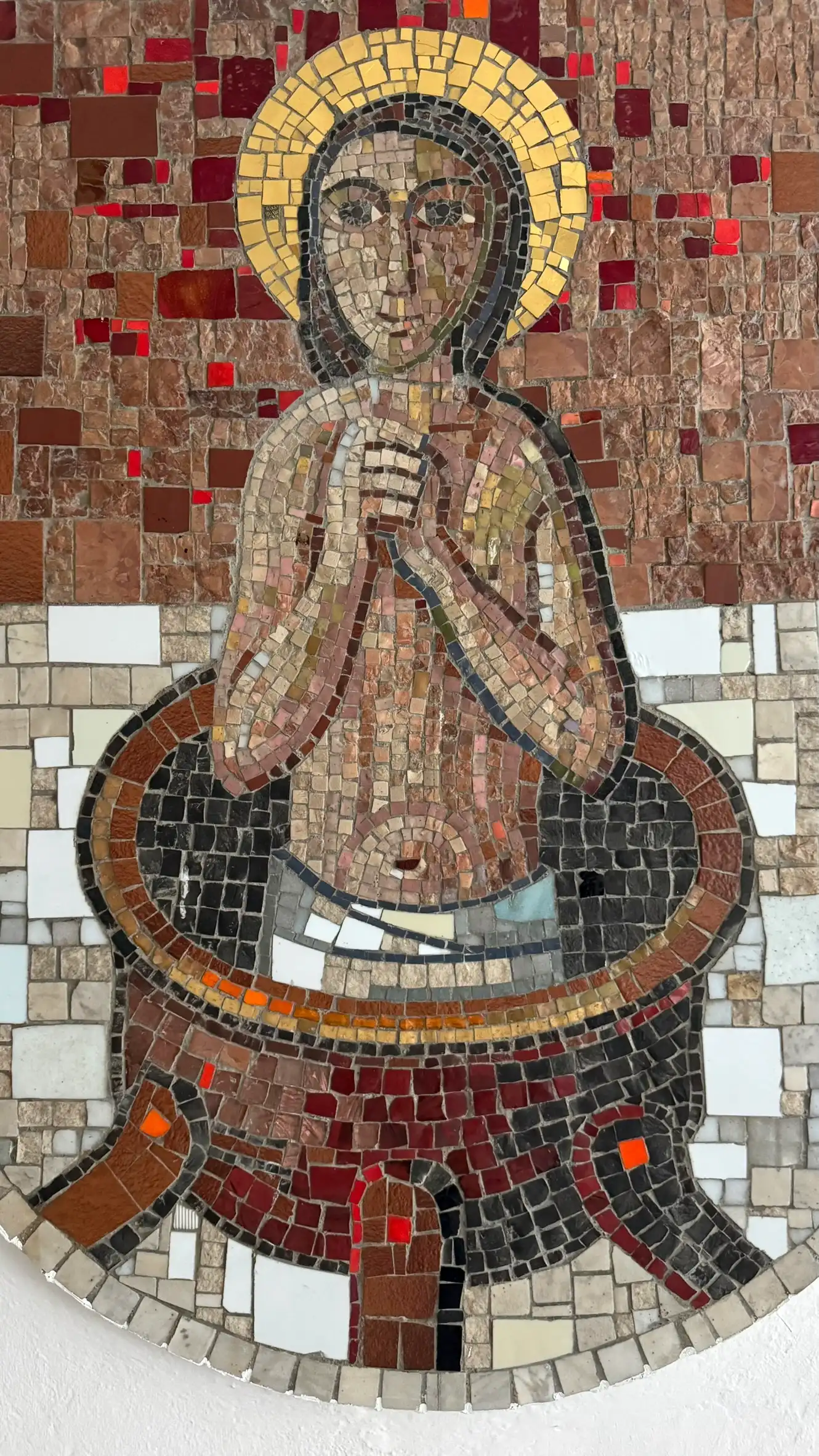
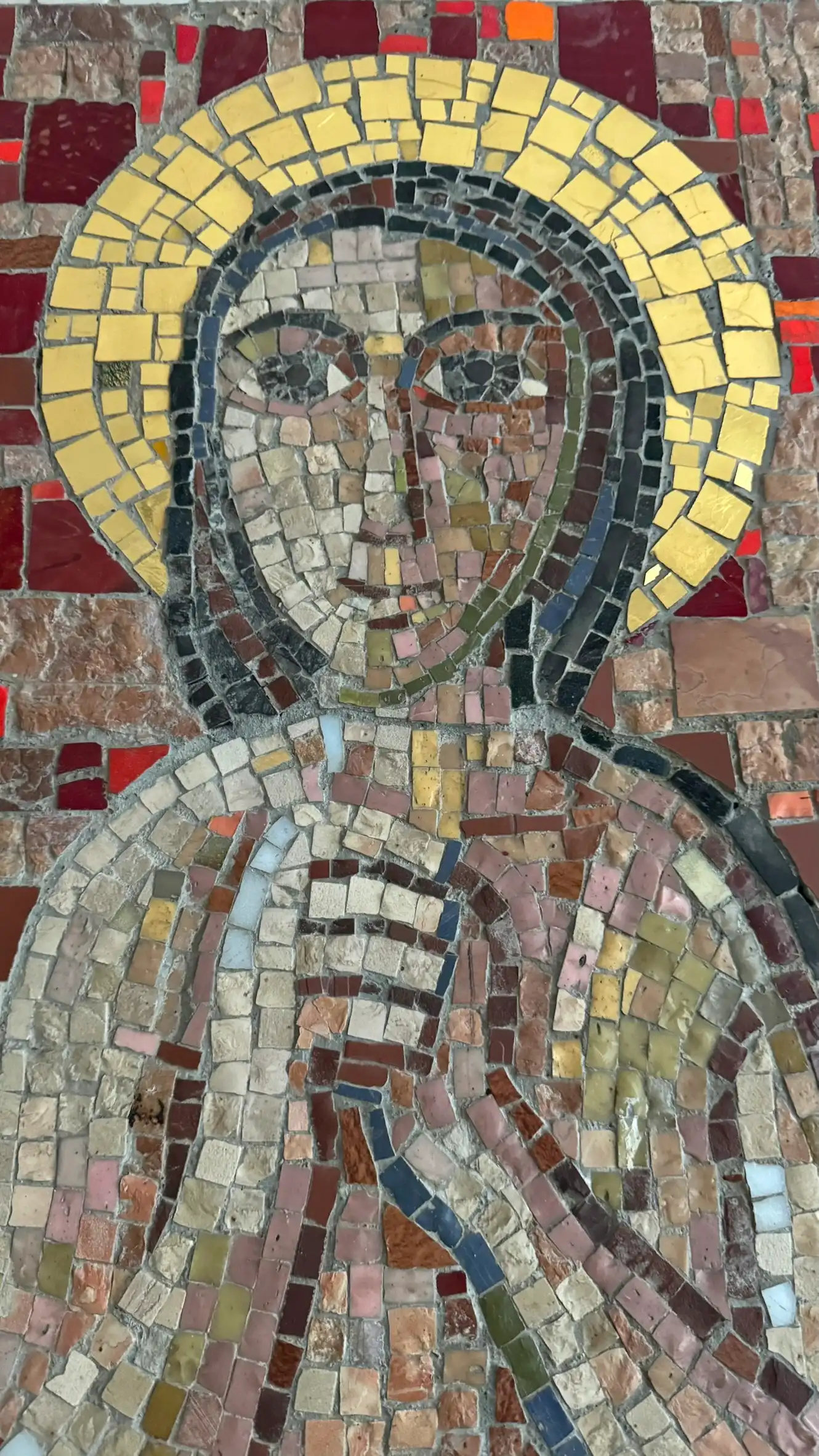
This mosaic depicts Saint Vitus immersed in a cauldron, with hands clasped in prayer and a golden halo framing his head.
St Vitus is shown in a cauldron, symbolising the legend of his martyrdom in boiling oil.
The composition is crafted with tesserae in deep reds, browns, creams, and metallic tones.
Mosaic of St Vitus immersed in a Cauldron of Boiling Oil
This mosaic depicts St Vitus, the town’s patron saint, immersed in a cauldron of boiling oil, one of the traditional scenes of his martyrdom. The figure is rendered in stylised form, with a golden halo and hands raised in prayer, set against a patterned background of red and brown tesserae. The mosaic is displayed inside the Town Hall of St Veit an der Glan, where it recalls the town’s historical association with its namesake saint.
Mosaic | St Vitus | Gallery 2
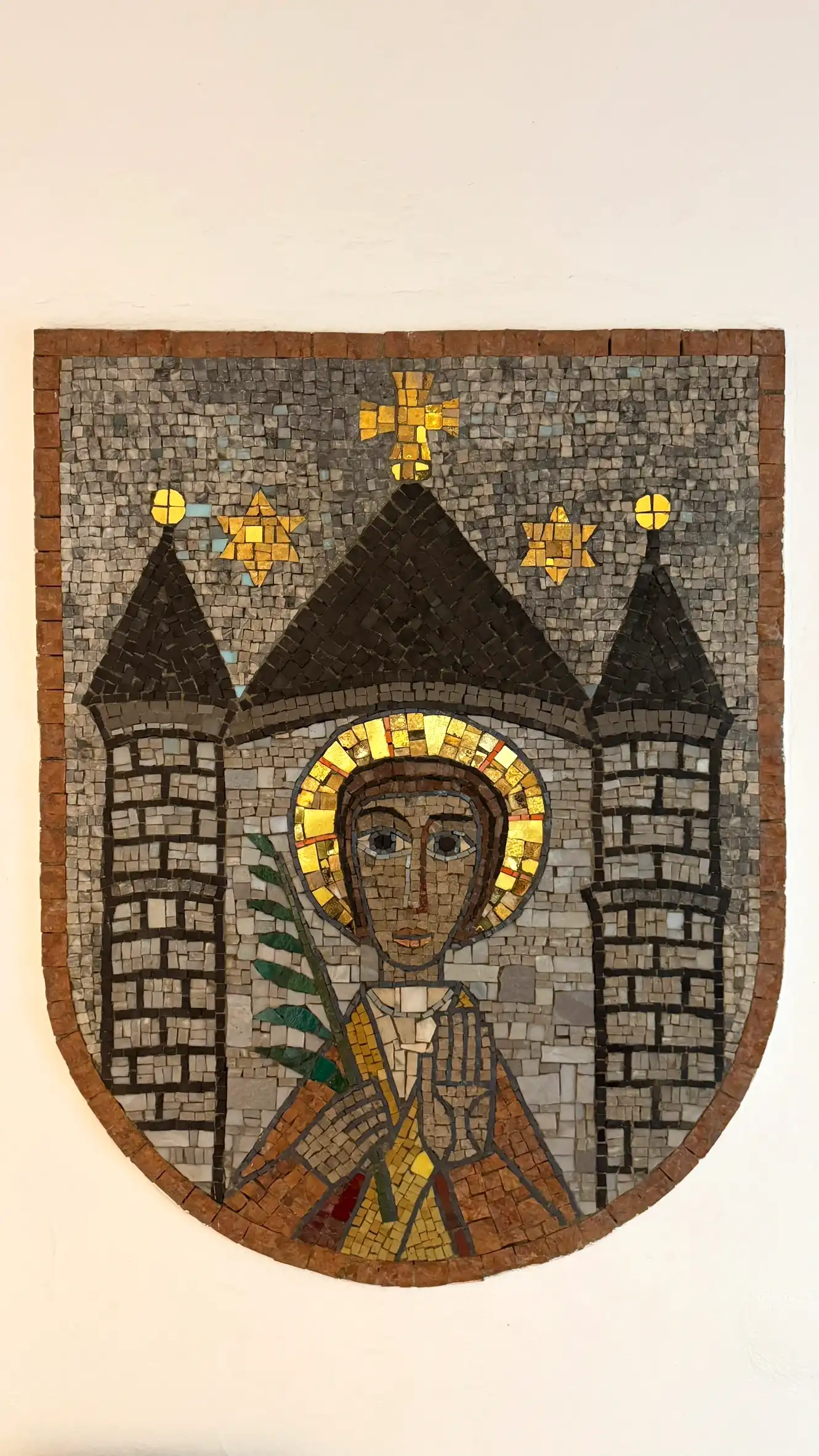
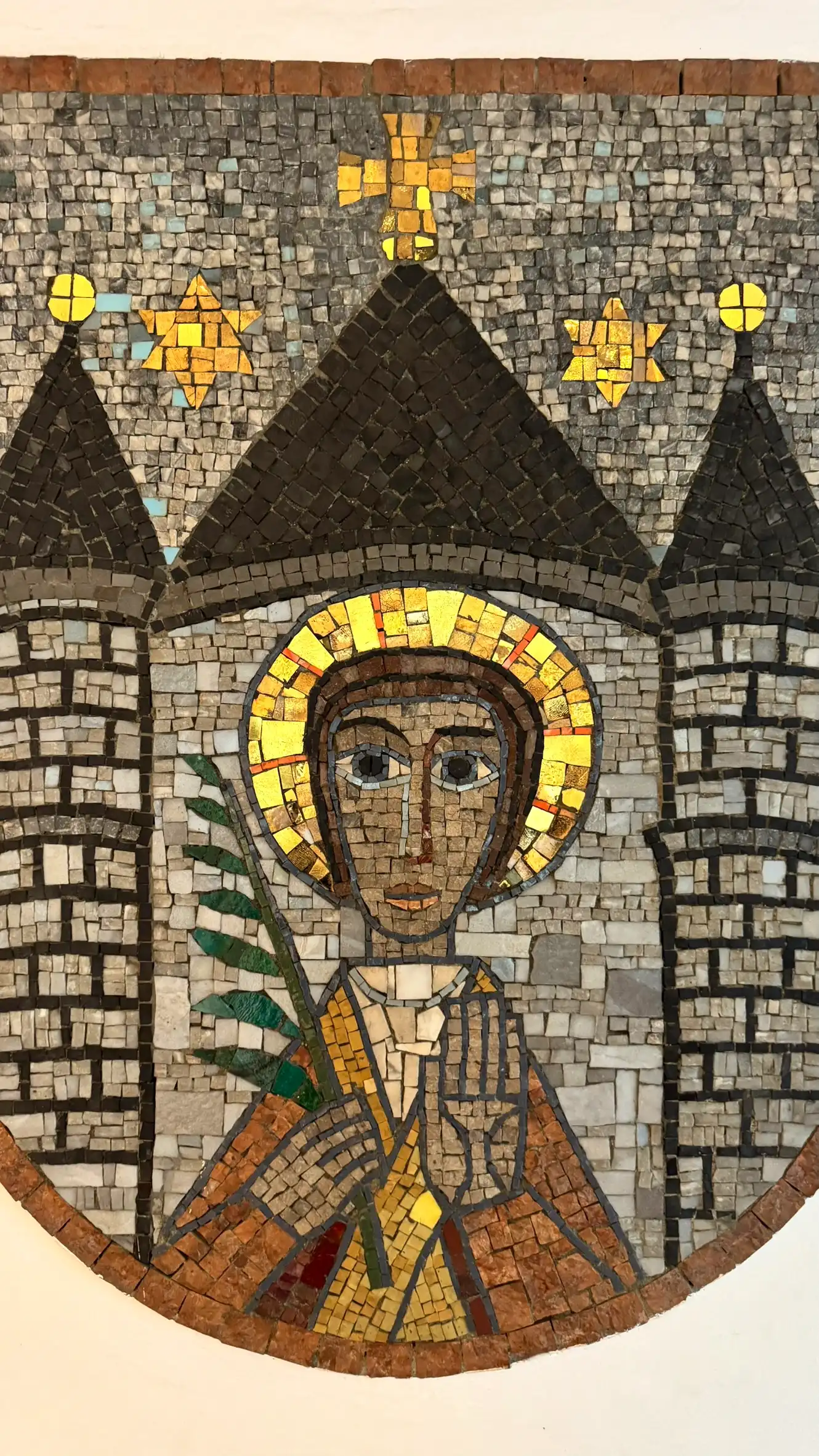
The saint is shown frontally, framed by the stylised architecture of a fortified gateway with two towers and a central roof.
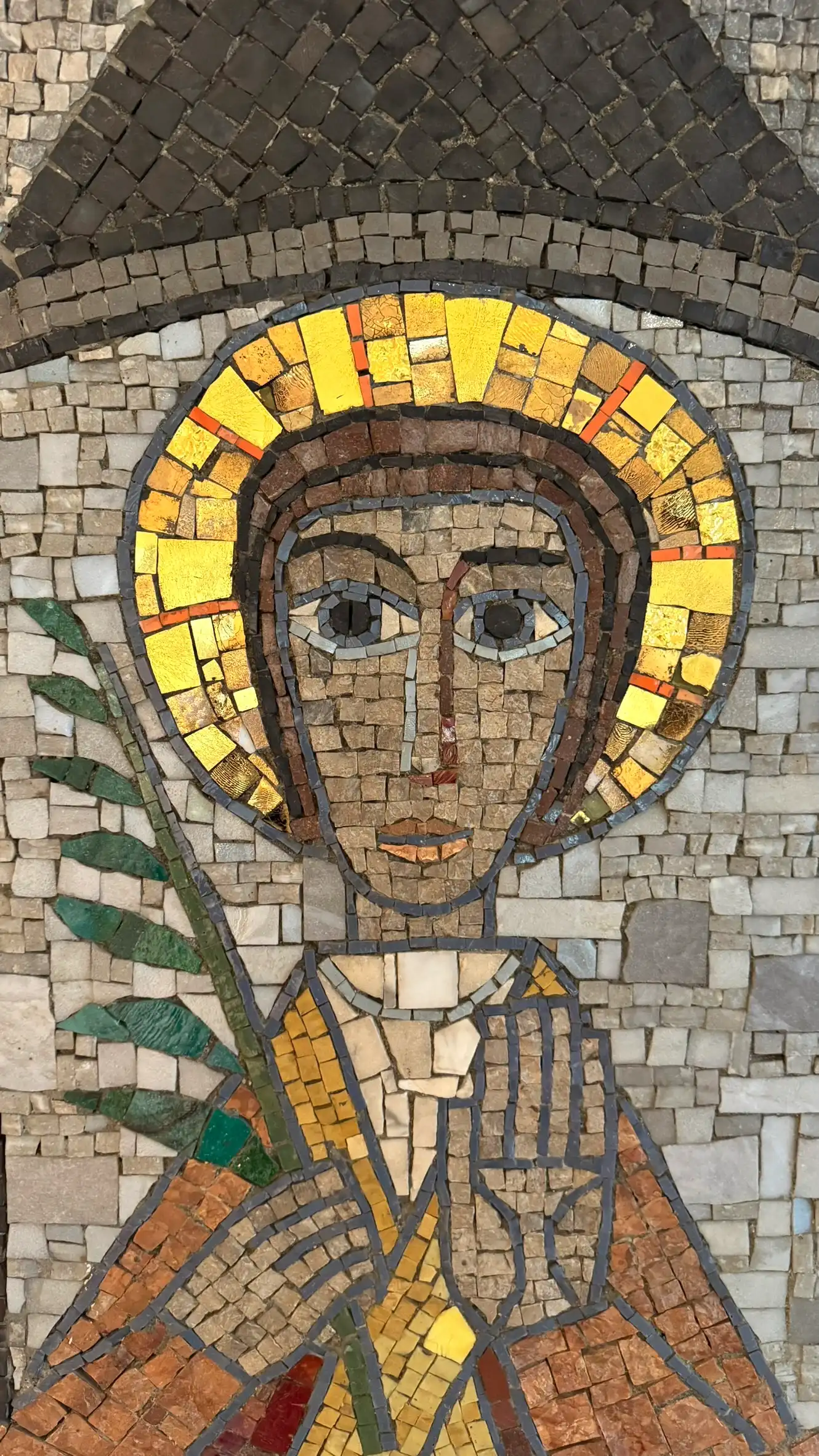
The head of Saint Vitus is framed by a golden halo. His hands are clasped in prayer, while in the other he holds the green palm branch as a symbol of martyrdom.
The background is formed of grey tesserae, while the saint is depicted in brown, with a golden halo.
Mosaic of St Vitus framed by a Stylised Gateway
Displayed in the Town Hall of St Veit an der Glan, this mosaic presents St Vitus frontally, framed by a stylised gateway with flanking towers and a central roof. A radiant golden halo in tesserae encircles his head, accentuating his solemn features. The saint clasps his hands in prayer while holding a green palm branch, the symbol of martyrdom. The background is composed of grey tesserae, enlivened by golden stars and a cross, symbolising divine light and victory over suffering. Blending heraldic elements with devotional art, the work emphasises the dual role of St Vitus as protector and patron.