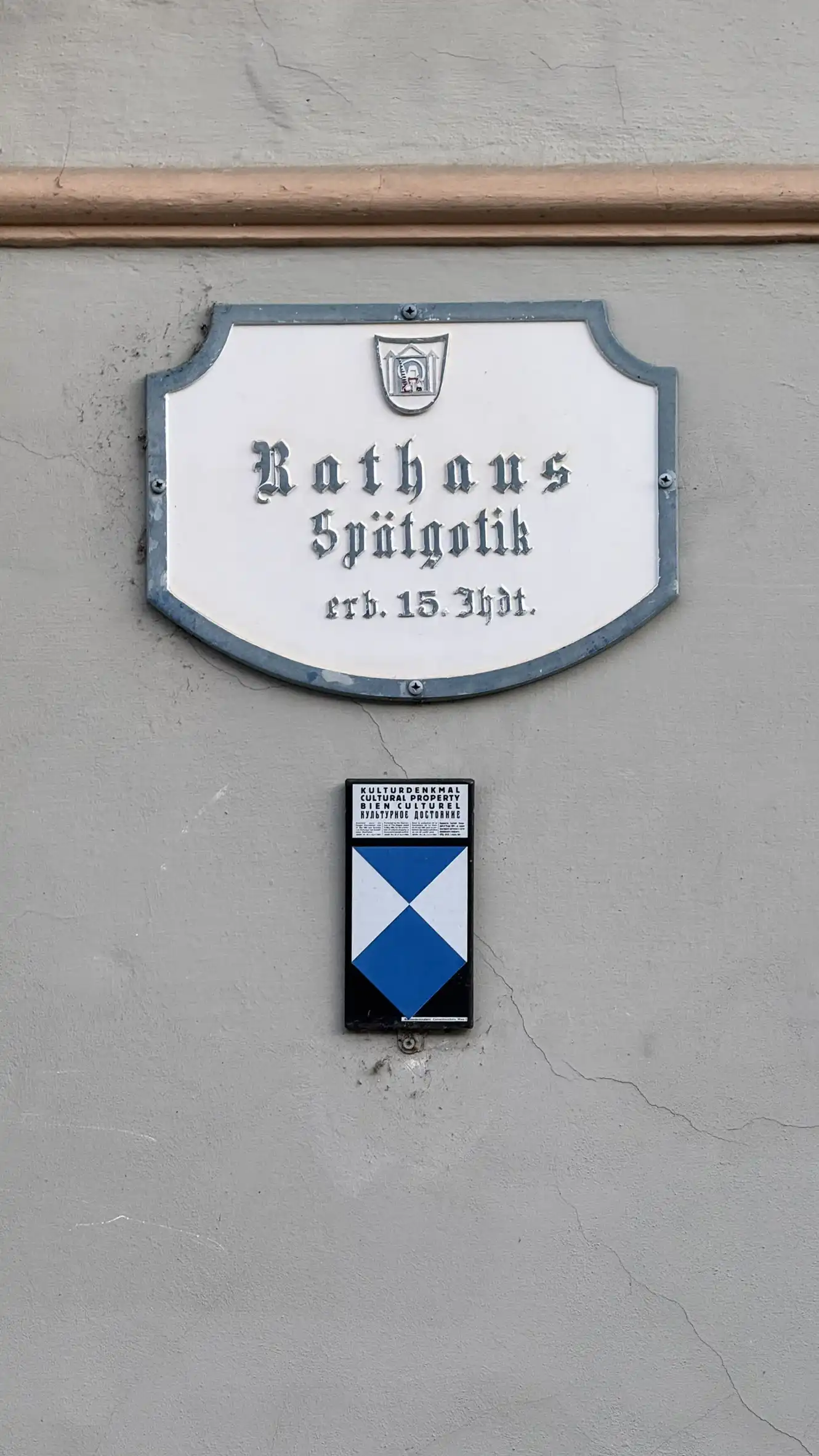
The town hall of St. Veit an der Glan stands on the northern side of the main square and is one of the most striking buildings in the historical centre. Originally constructed in the 15th century in the Gothic style, the building underwent significant alterations in the 16th and 18th centuries.
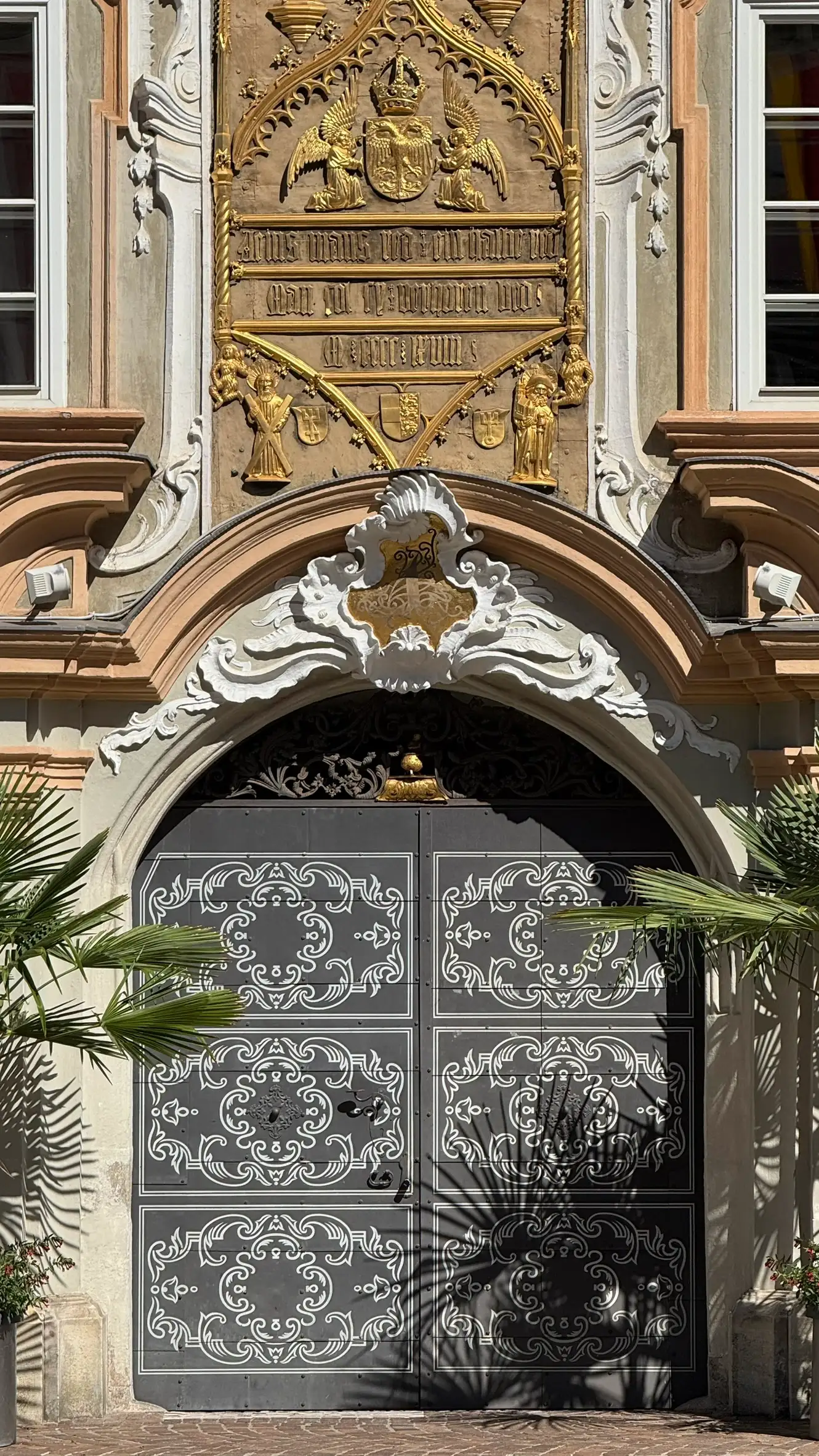
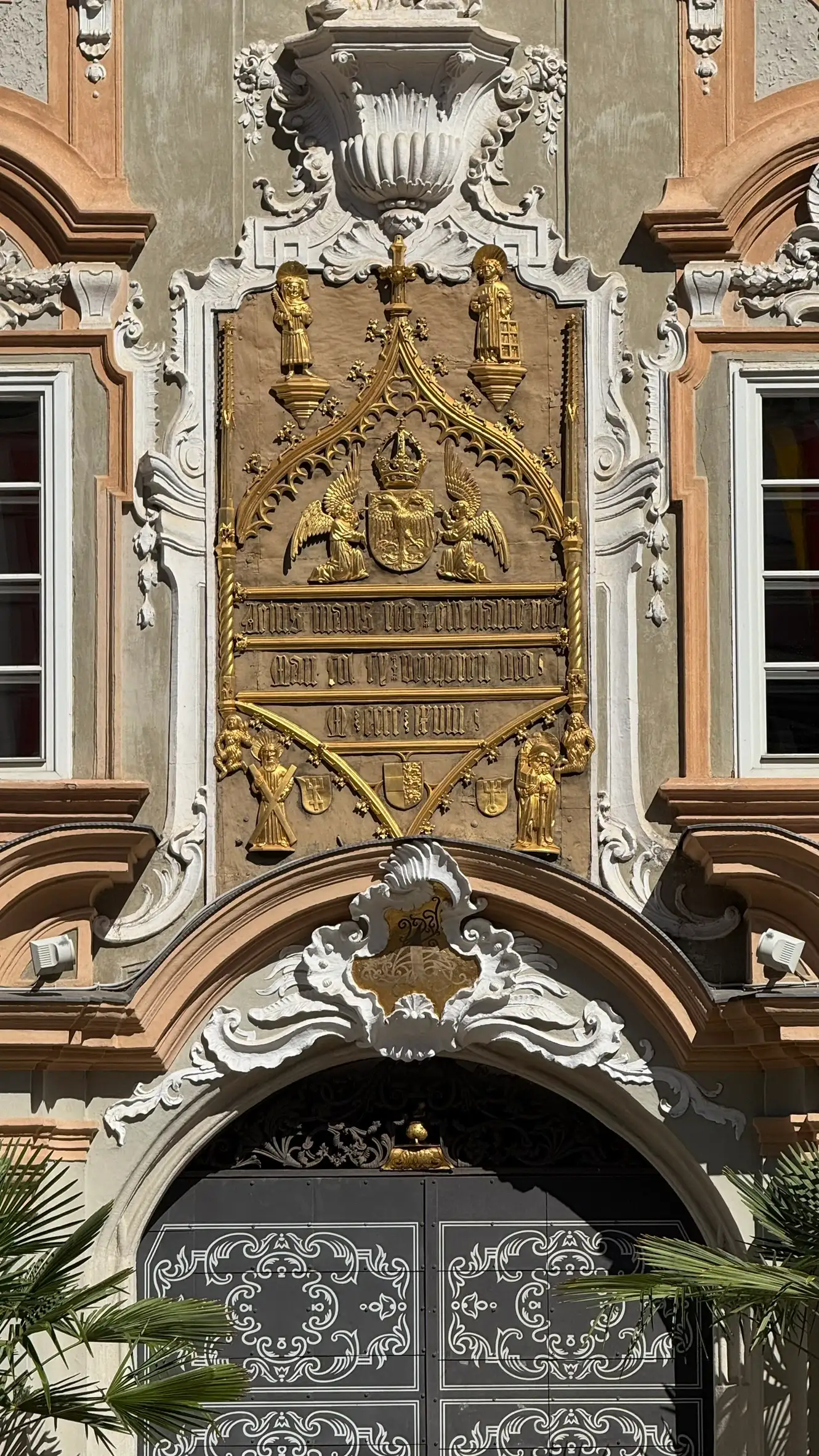
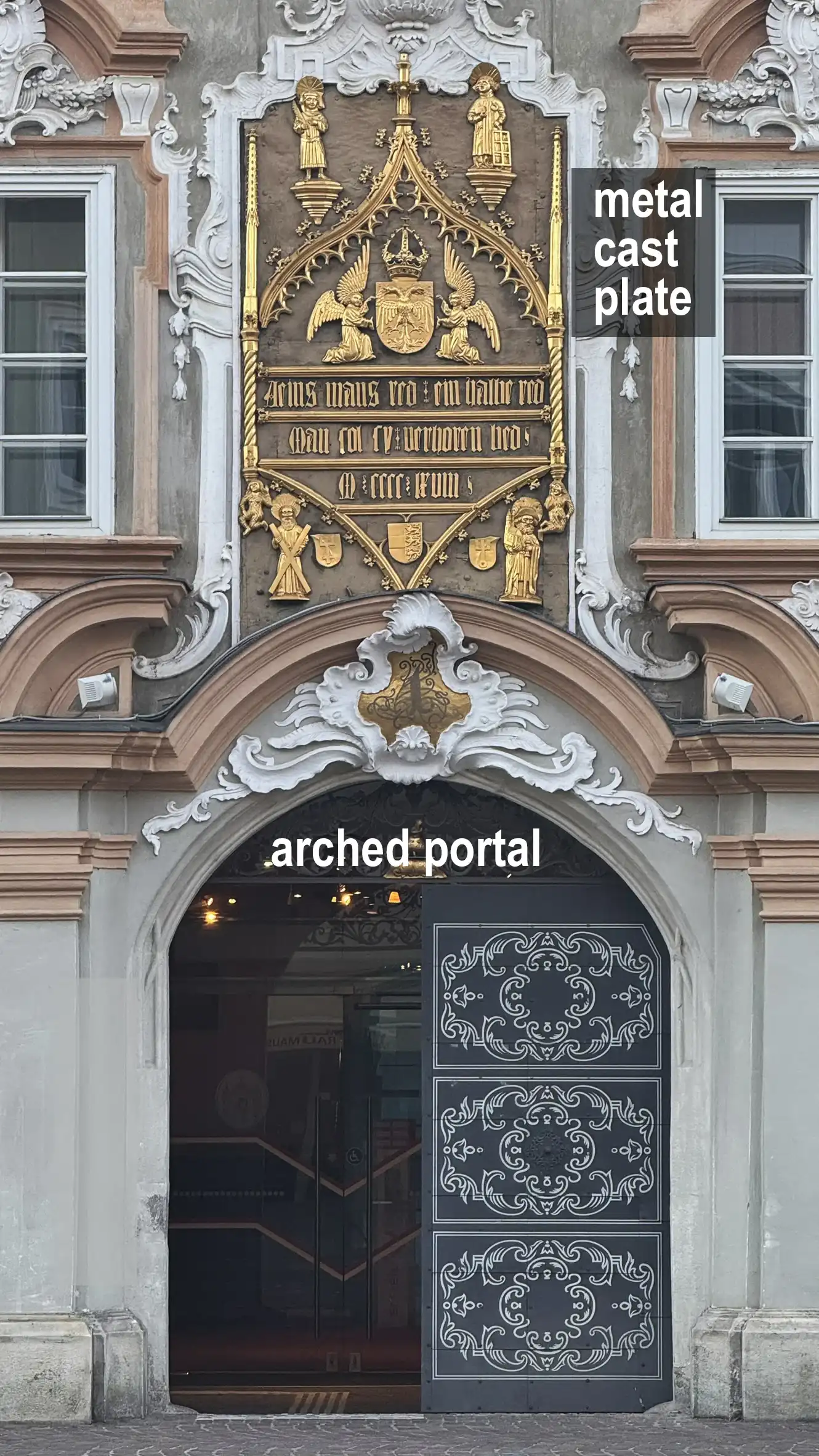
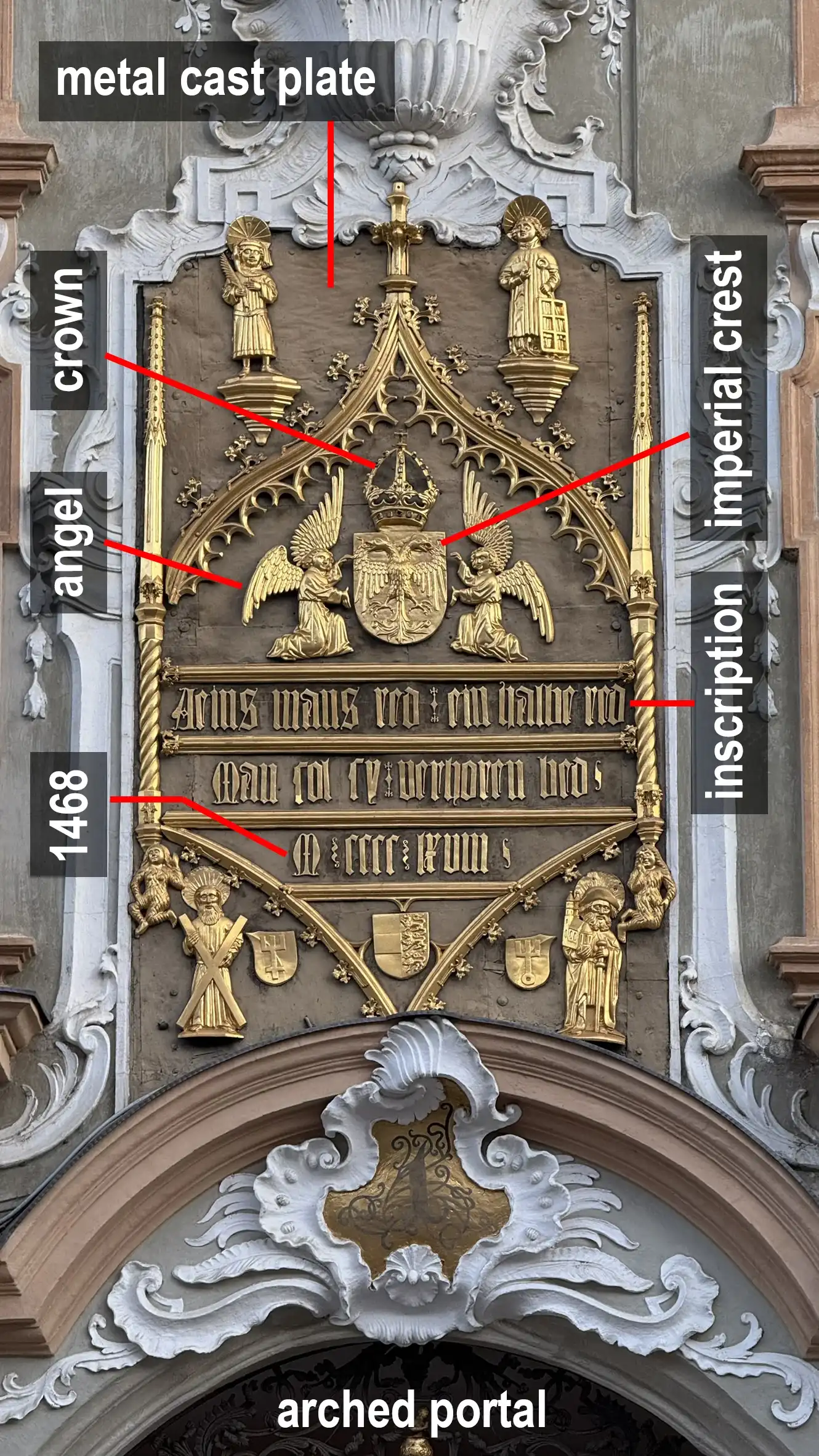
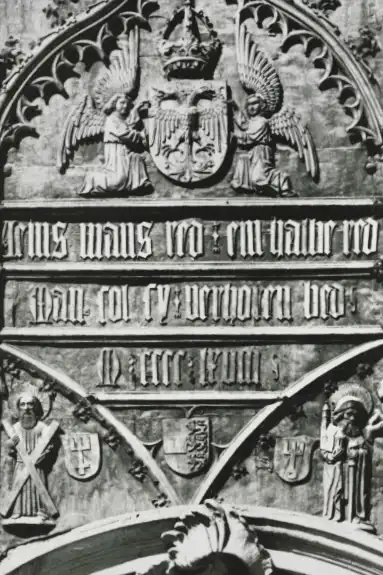
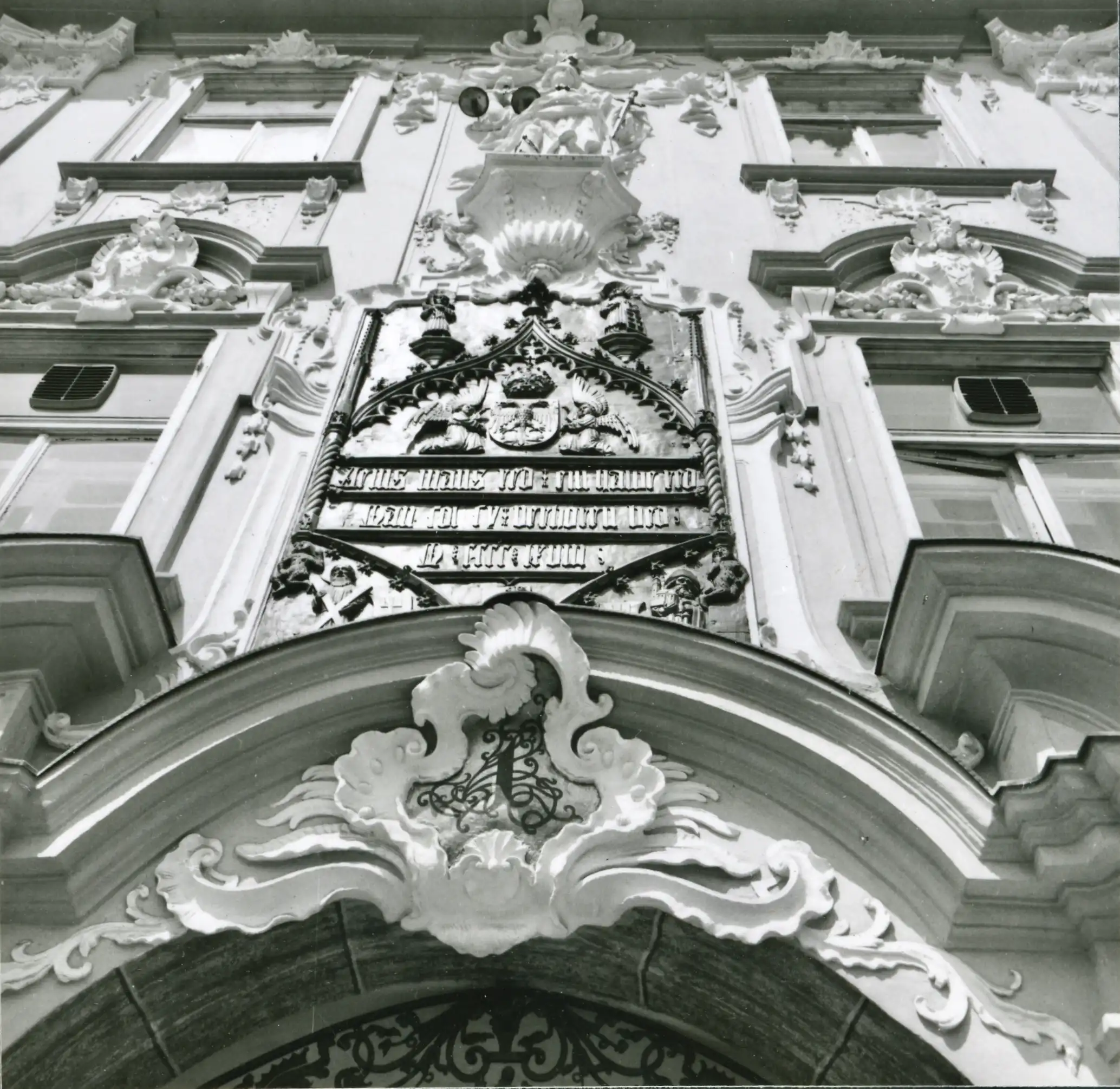
A particularly striking feature is the cast metal plaque mounted above the portal, bearing the year 1468. It depicts four saints, the Carinthian provincial coat of arms, the imperial coat of arms, the heraldic signs of the Gleismüller and Kaltenhauser families, and a quotation from the medieval legal code Sachsenspiegel. Together, these elements recall the building’s former function as a site of judicial authority.
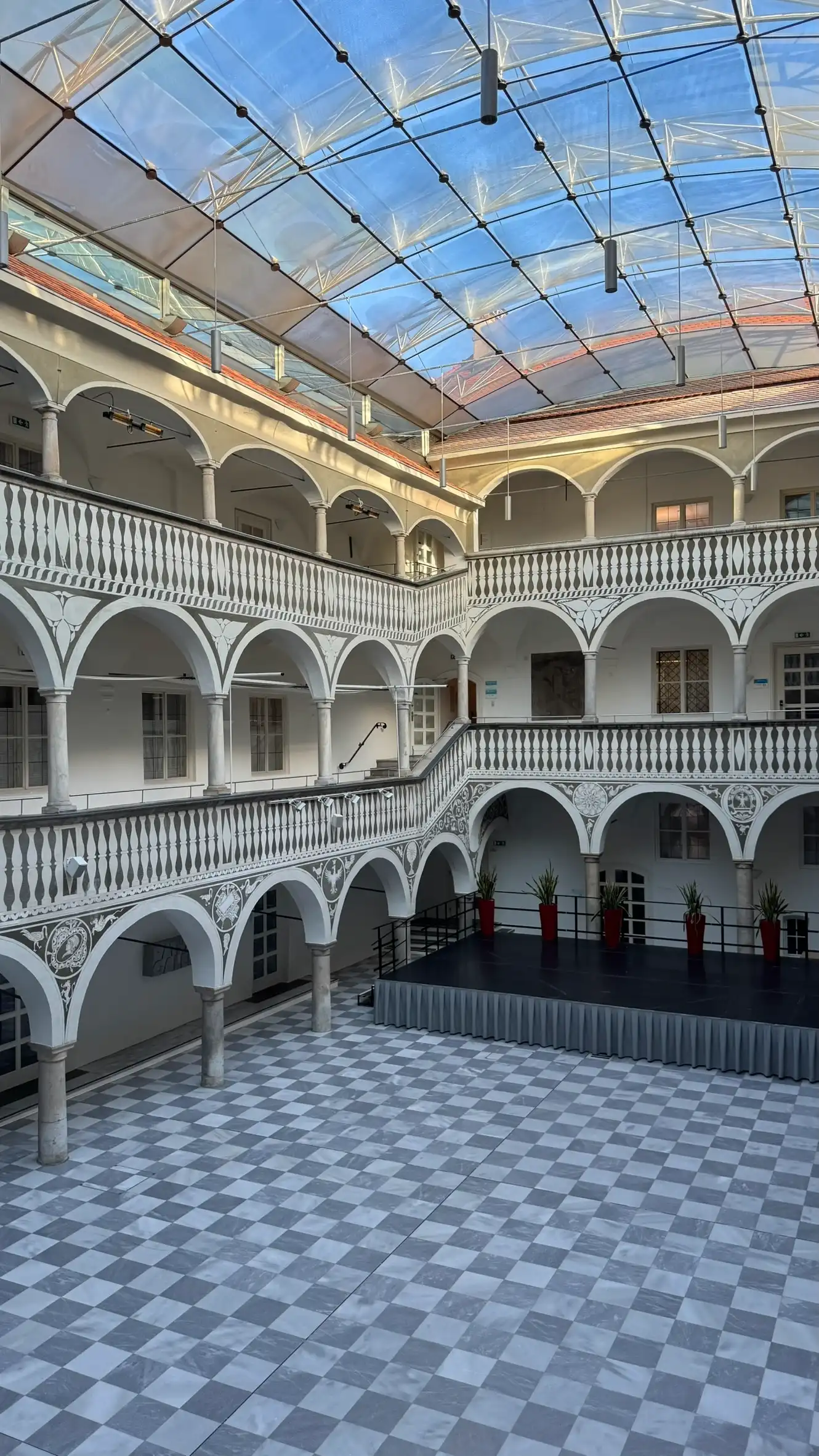
The original Gothic structure was extended and remodelled during the 16th century, with the creation of a newly designed three-storey arcaded courtyard as a major addition. This arcaded courtyard was built around 1540, featuring Tuscan columns and elaborate sgraffito decoration, which continues to impress visitors today.
Further extensions followed: in the 17th century to the north side, and in the 20th century to the east and south sides of the building.
The sgraffito work in the courtyard was restored in 1953.
In 1998, the courtyard was given a glass roof, based on the design of architect Herfried Peyker, transforming it into a venue suitable for public and cultural events.
Architecture
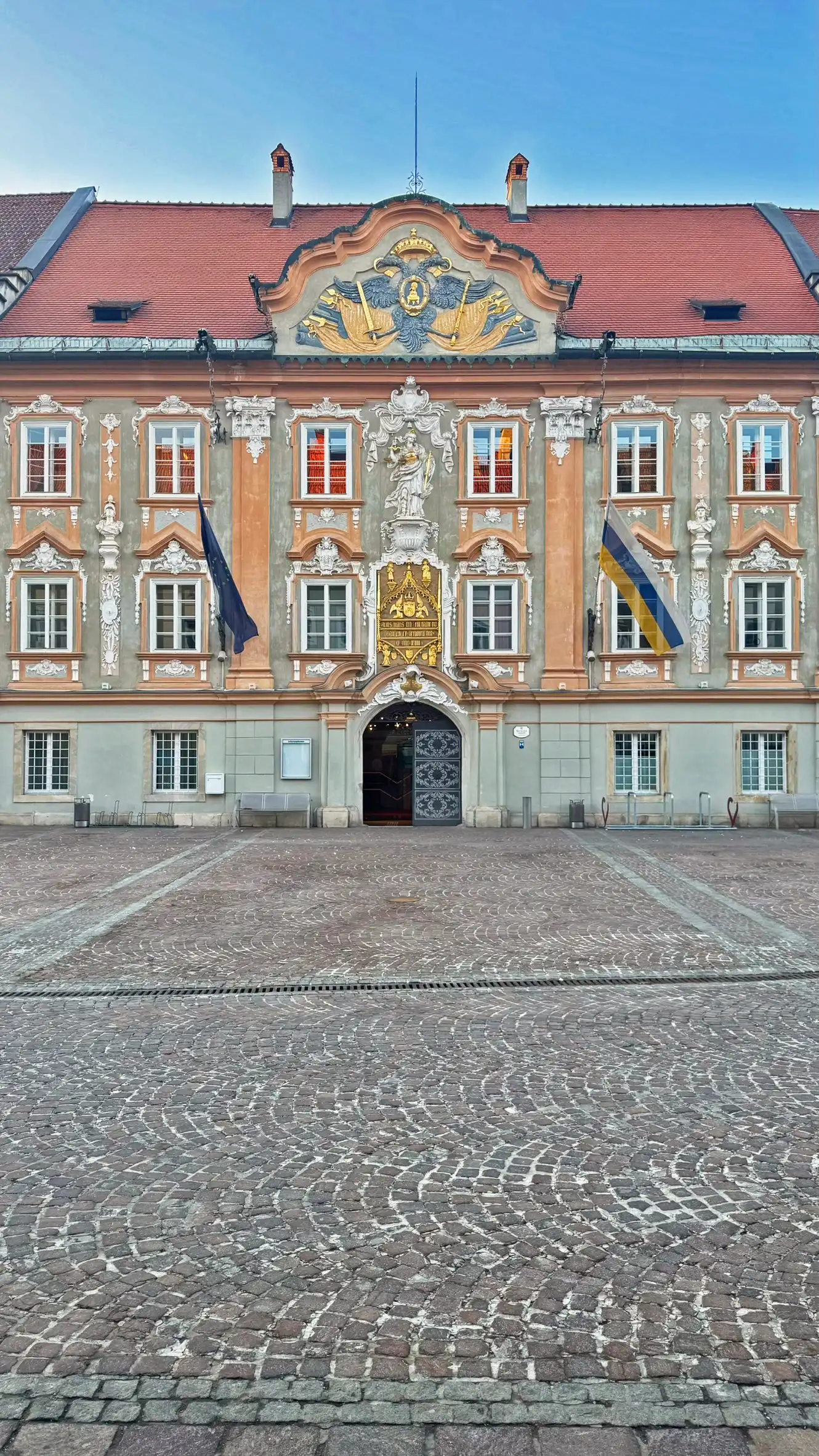
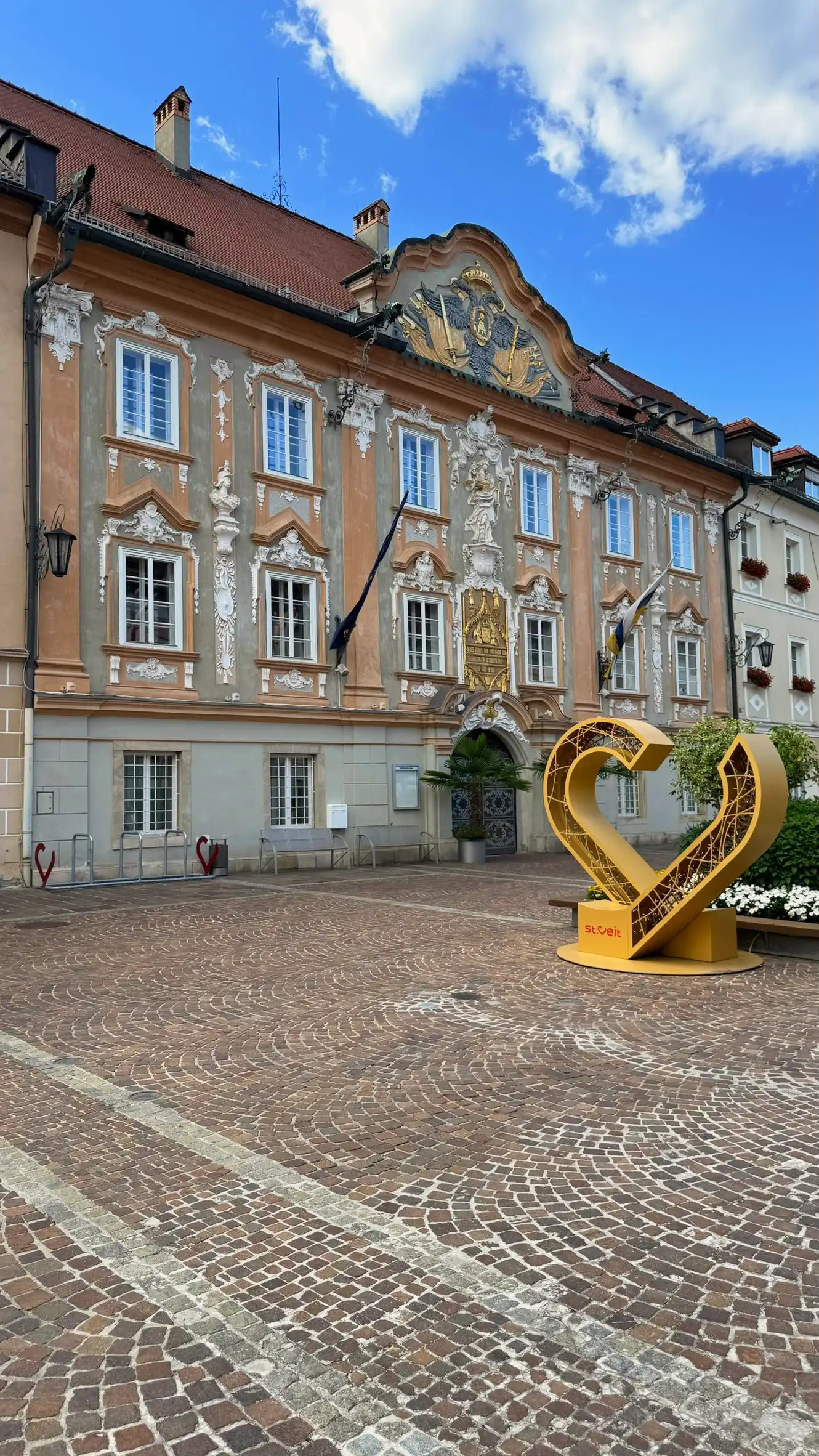
The town hall is a three-storey, six-bay building that combines its Gothic origins with an impressive LateBaroque facade.
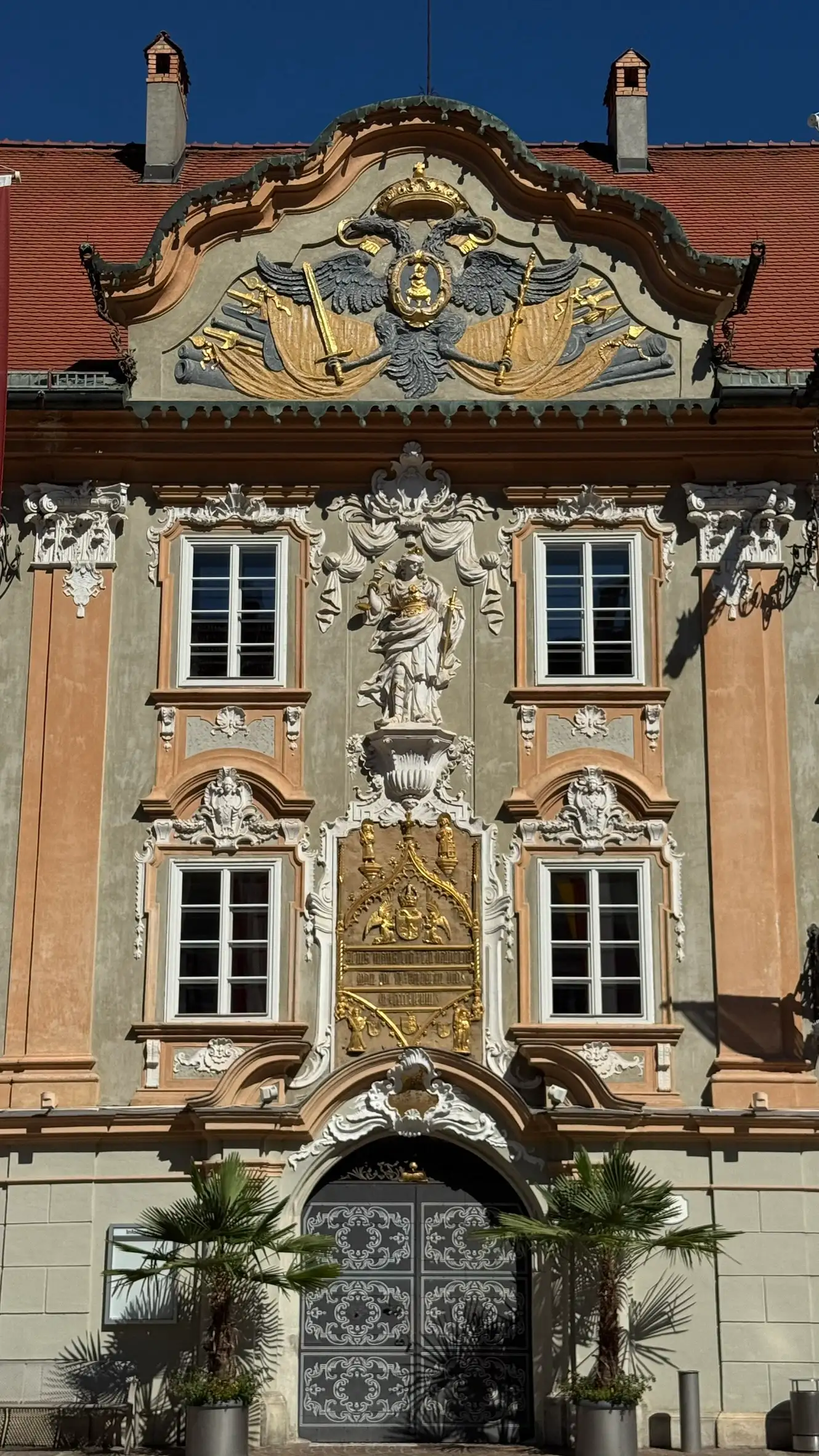
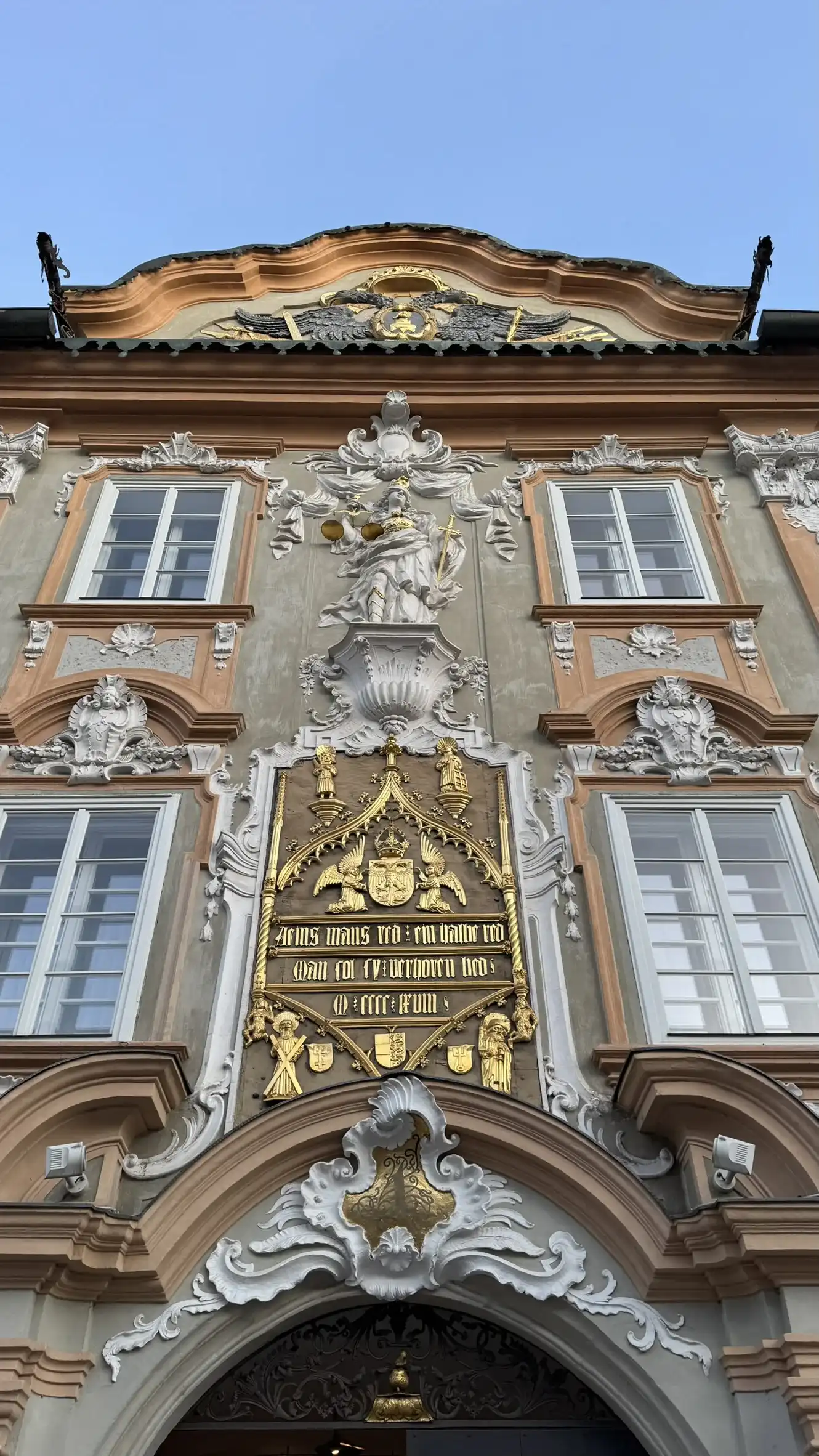
This LateBaroque exterior, created in 1754–55 under the direction of Marx Josef Pittner, features richly modelled stucco decoration, including floral garlands above the windows, trophy motifs between the bays, and a distinctive curved gable.
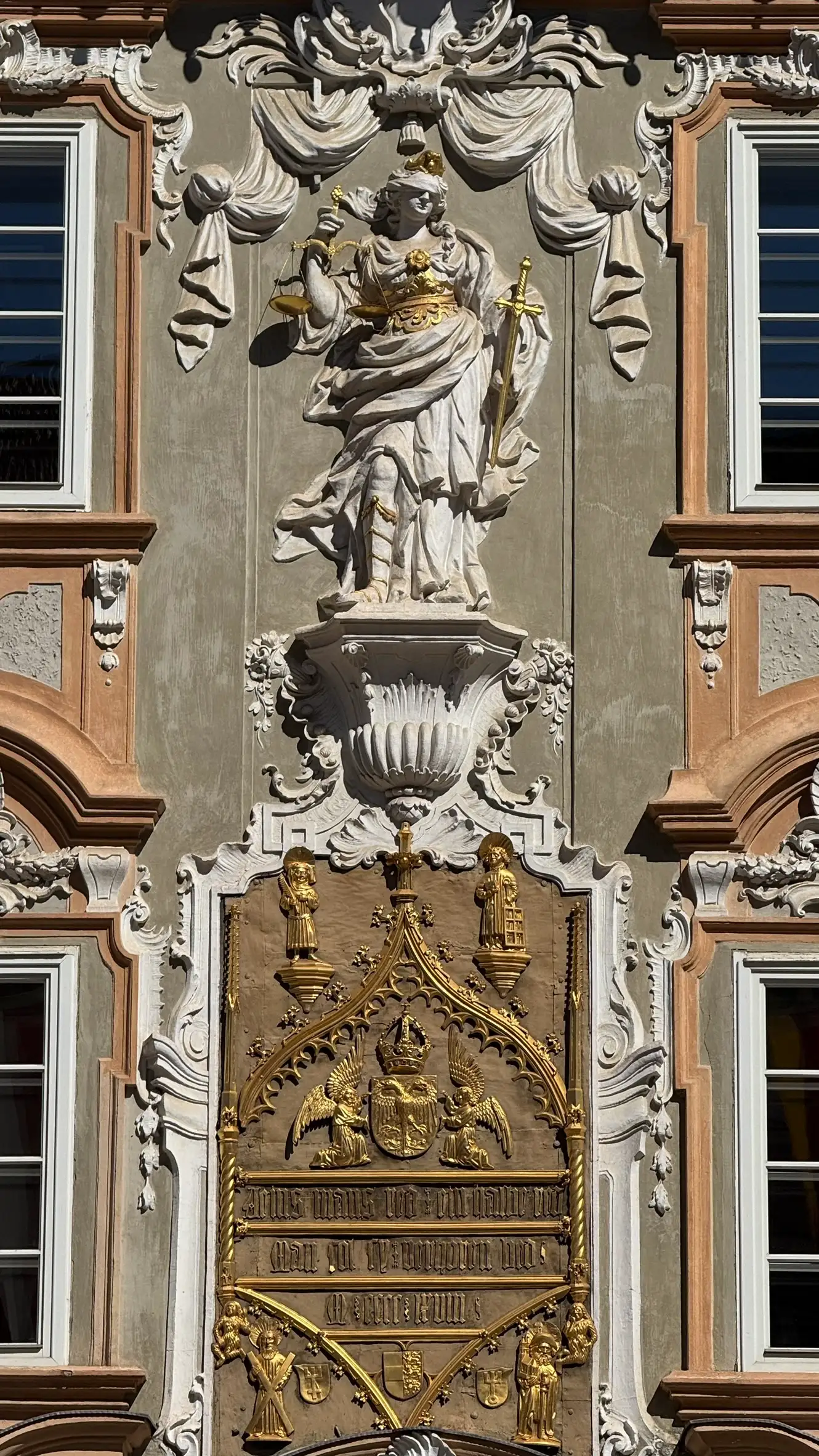
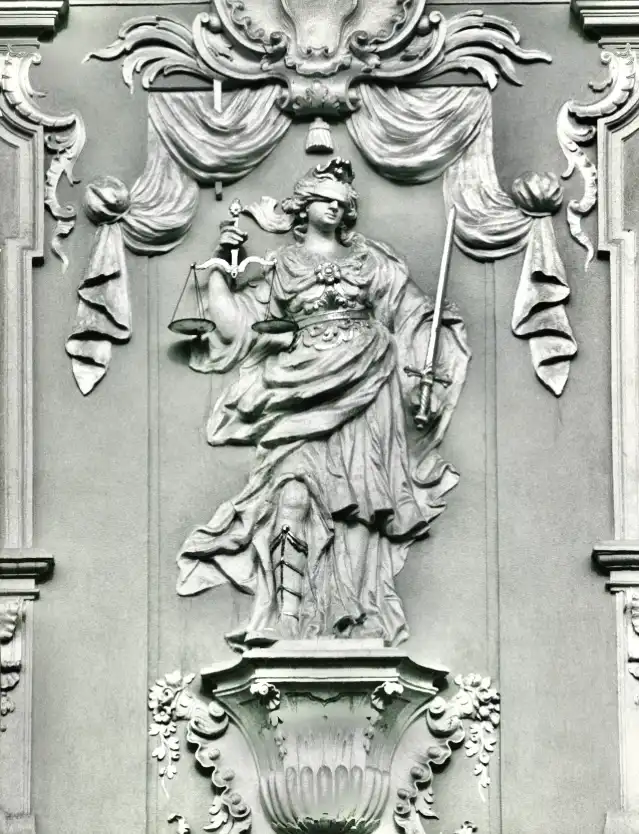
The statue of Justitia, positioned at the centre of the gable, is attributed in its design to the sculptor Johann Pacher.
Further decorative highlights include dragon-shaped gargoyles, a finely crafted transom grille depicting Saint Vitus, and wrought-iron railings at the entrance, created by Franz Ortner.
The first floor houses the main council chamber, which is adorned with an ornate stucco ceiling dating to 1754, also attributed to Pittner.
Main Facade
As part of the Late Baroque redesign of 1754–55, the street-facing facade was reimagined and now features a graceful curved gable and finely detailed stucco ornamentation.
Above the entrance portal, remodelled in the Baroque period, is an impressive metal plaque dating from 1468, adorned with heraldic symbols and a legal inscription from the Sachsenspiegel, a medieval law book – a unique testament to the town’s medieval legal culture.
The architectural impact of the main facade is further enhanced by the figure of Justitia, the waterspouts and the ornate ironwork of the overlight grille.
Late Baroque Facade | Gallery 1
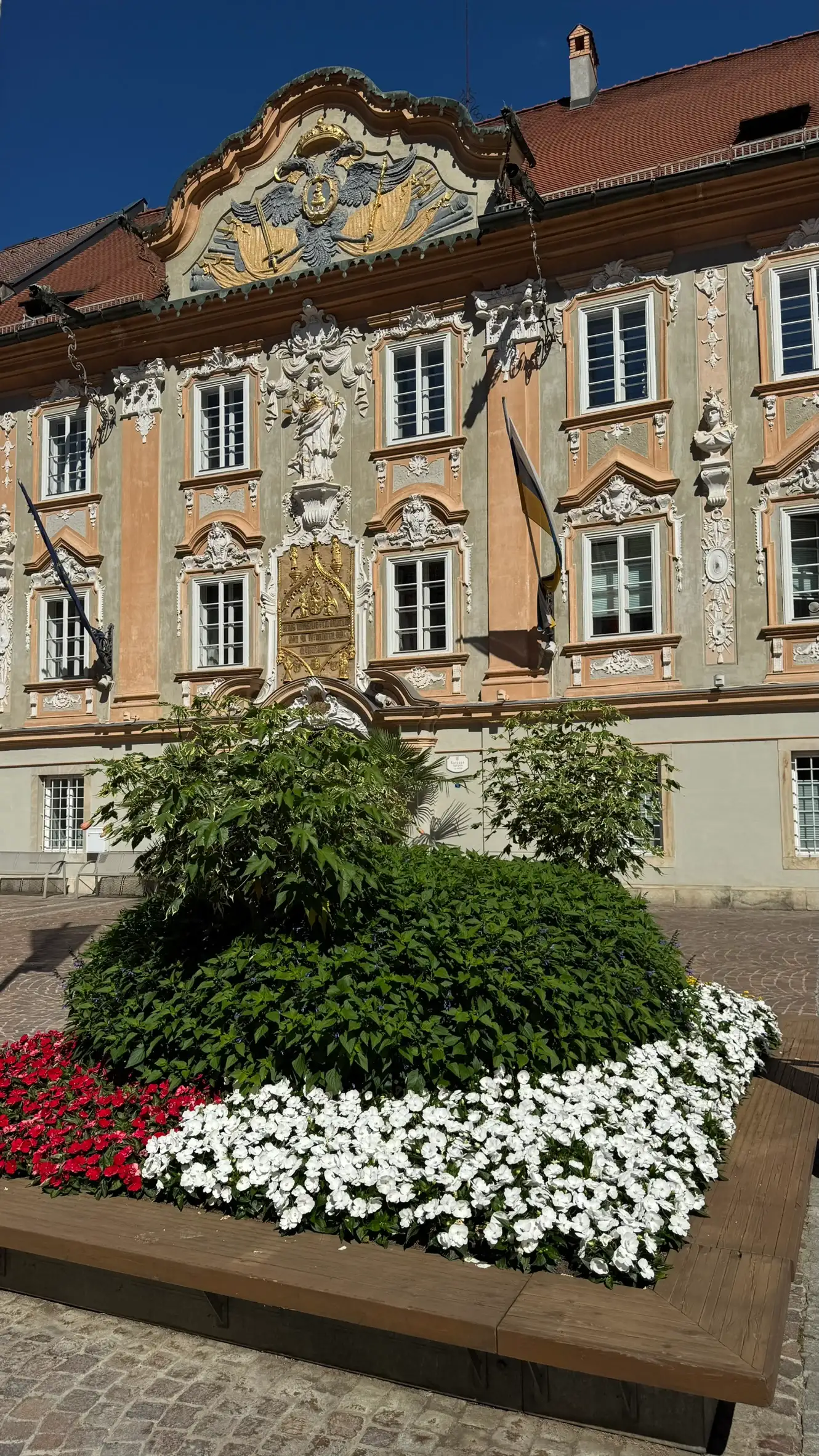
Ornamental flower bed next to the town hall
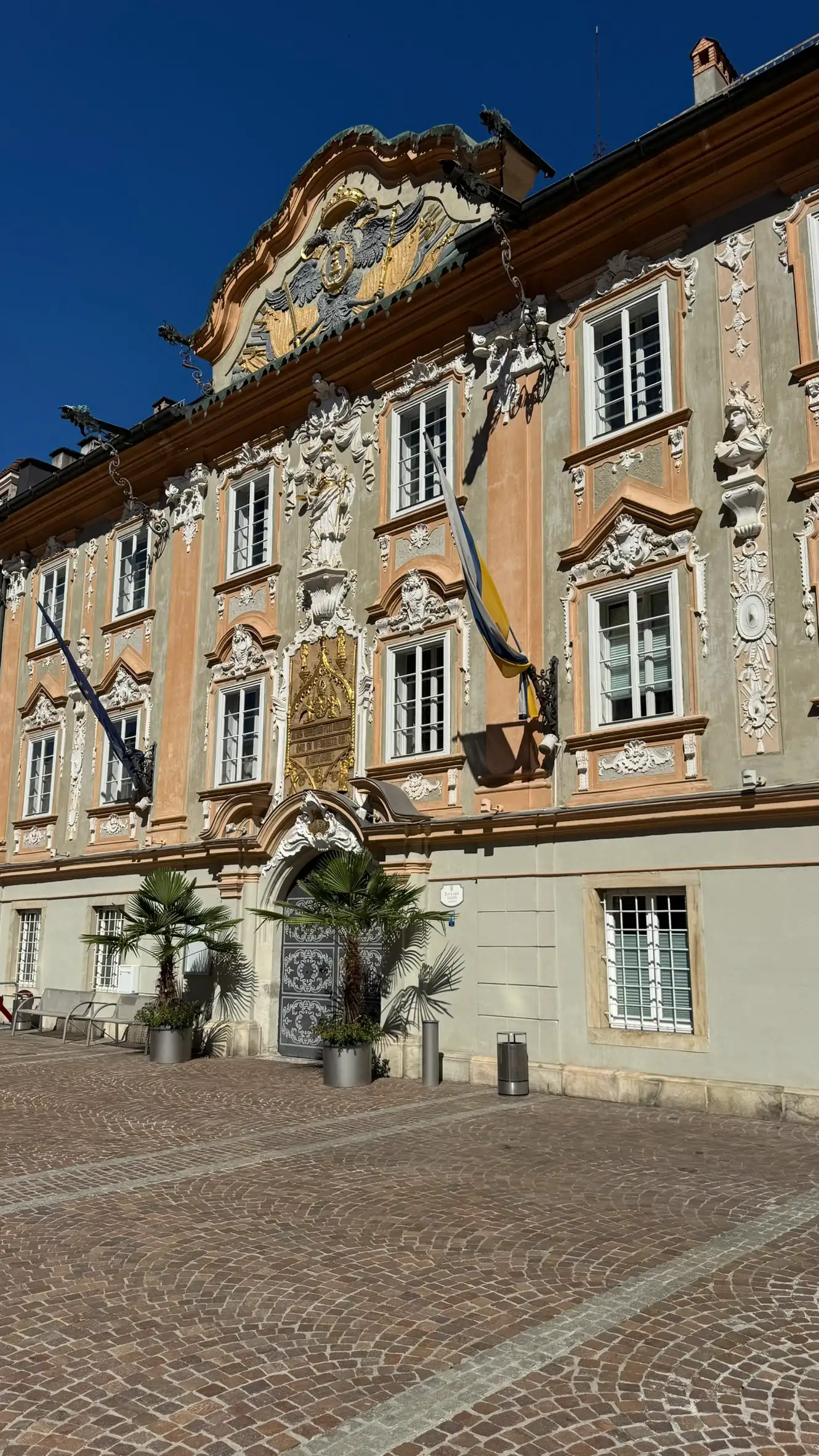
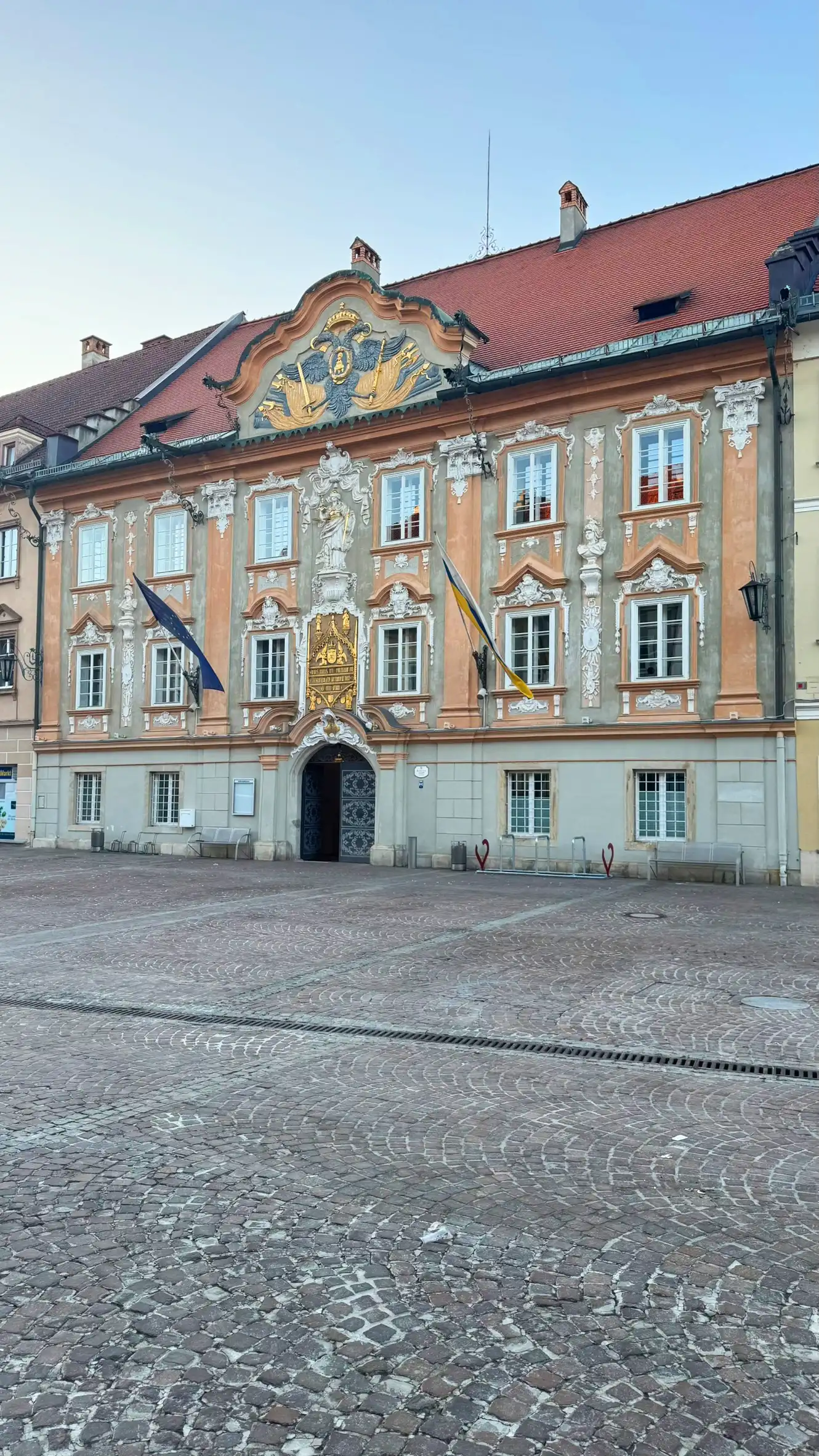
Late Baroque facade of the town hall, viewed from the right
Central part of the facade (top to bottom): Baroque swung gable, Justitia figure, metal cast plate, arched portal
The Late Baroque facade was created during the remodelling of the Gothic building.
Town hall viewed from the right. The building features three storeys.
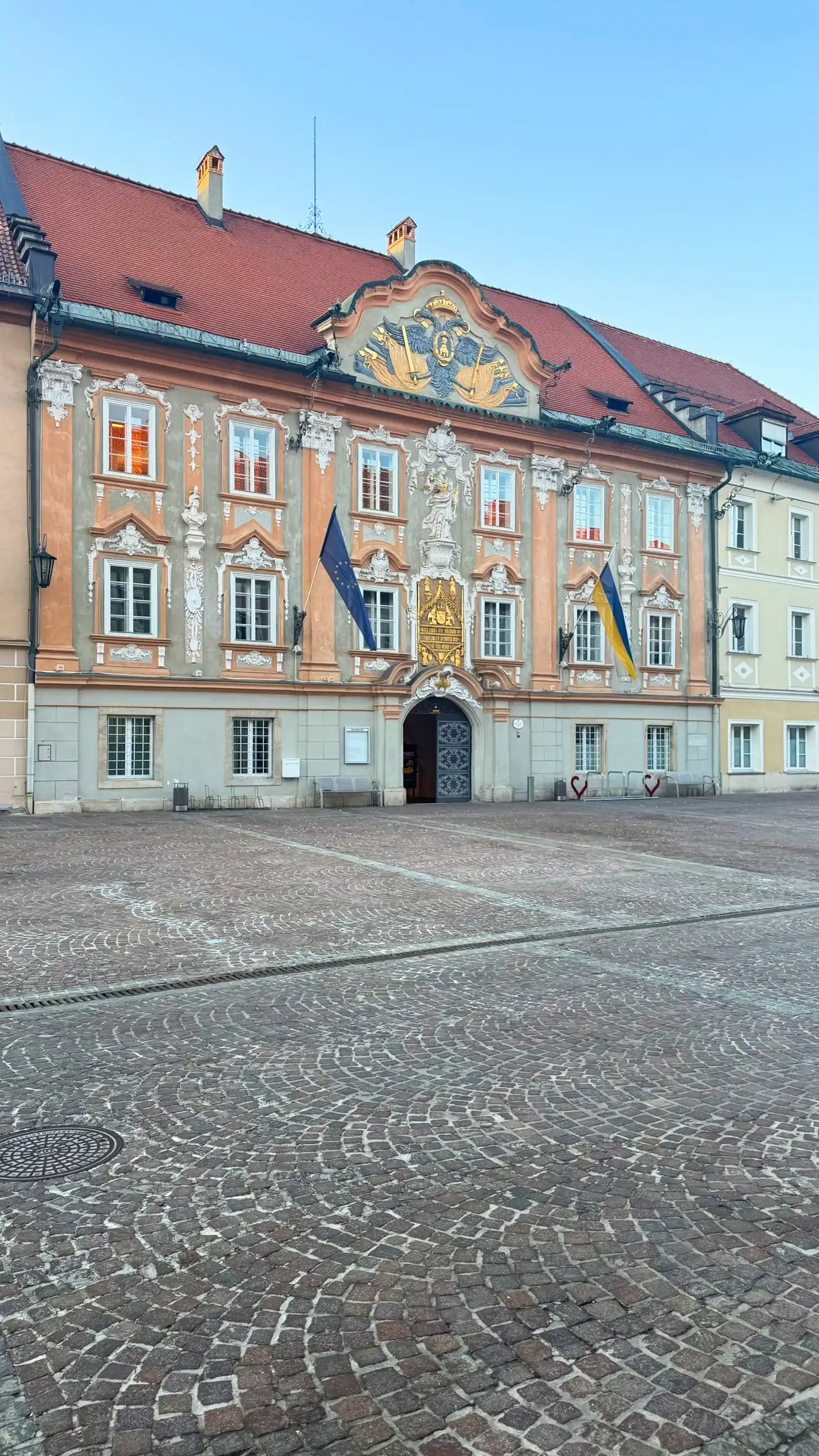
Town hall viewed from the left. There are six pilasters on the upper floors and four on the ground floor.
St Veit logo installation in front of the town hall
Labelled Images
Arched portal and metal cast plate
Metal cast plate
Metal Cast Plate
Beneath an ogival arch is the imperial coat of arms, surmounted by a crown and supported by two angels.
The crest is supported by two angels, and below it is a quote from the Sachsenspiegel, the most important legal code of the German Middle Ages: “Ains mans red ein halbe red, man sol sy verhoren bed” – meaning that a judge must hear both parties, not just one, in order to deliver a fair judgment.
Below this, the year MCCCCLXVIII and the Carinthian crest are displayed.
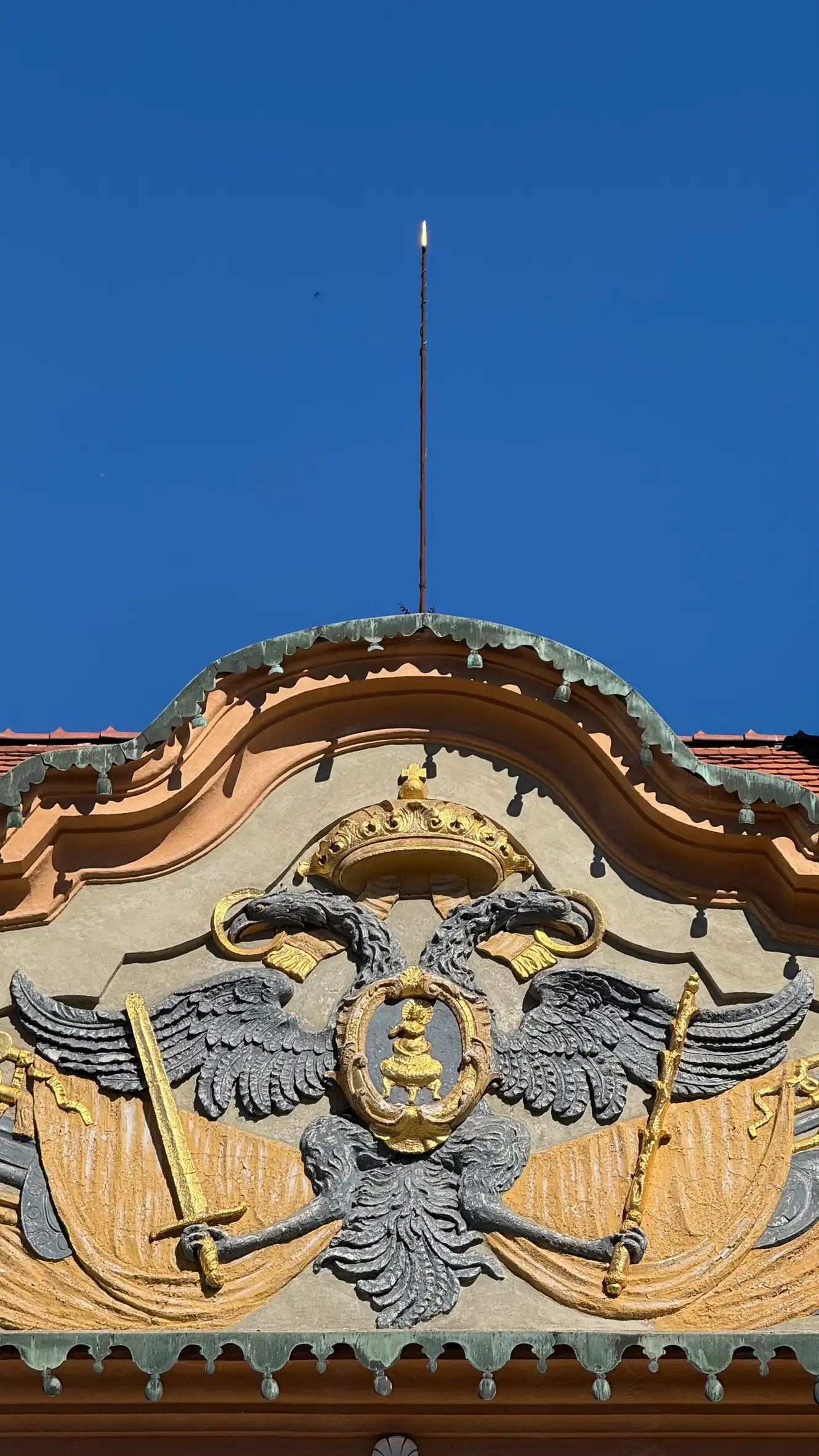
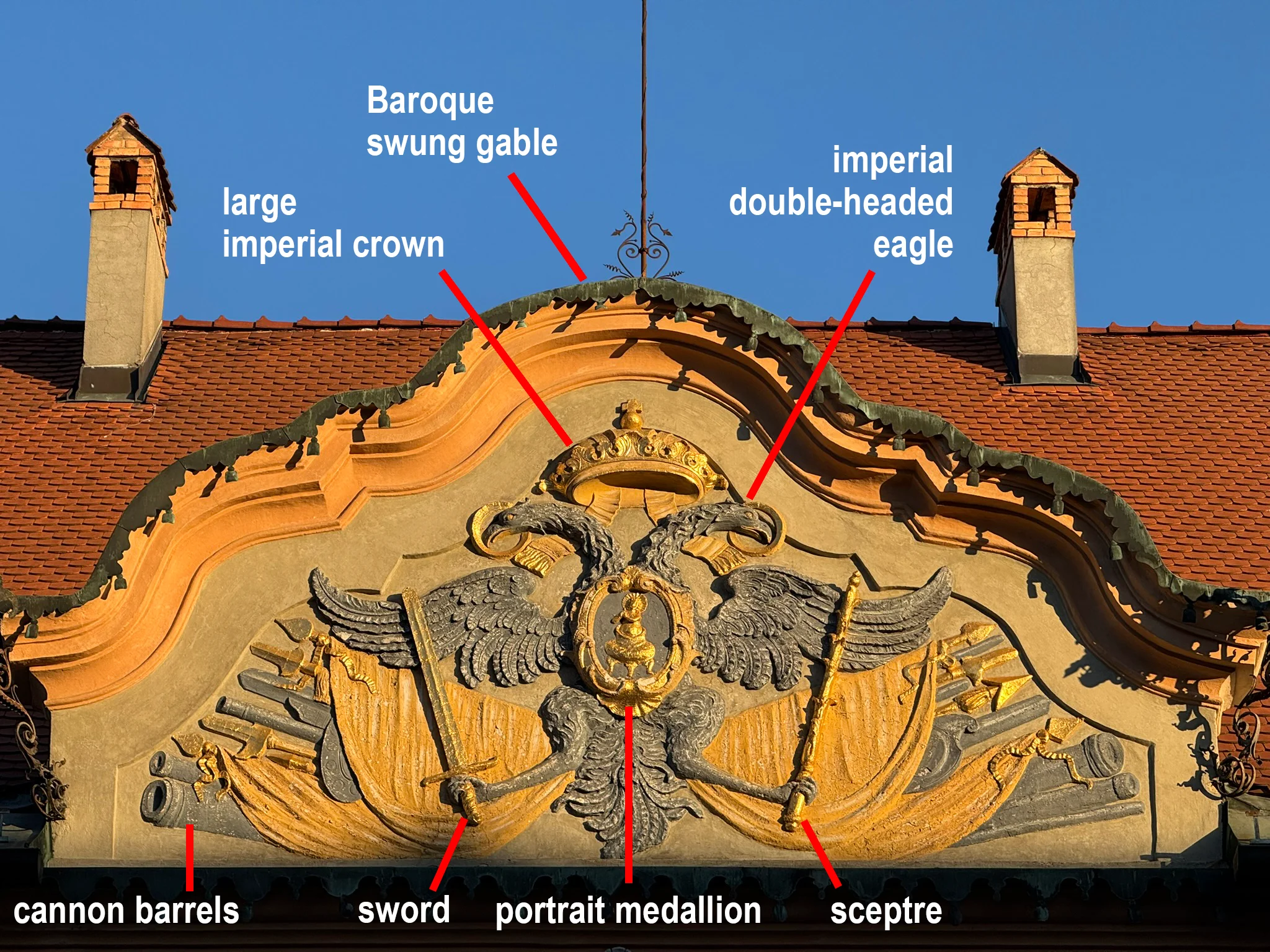
Baroque Gable
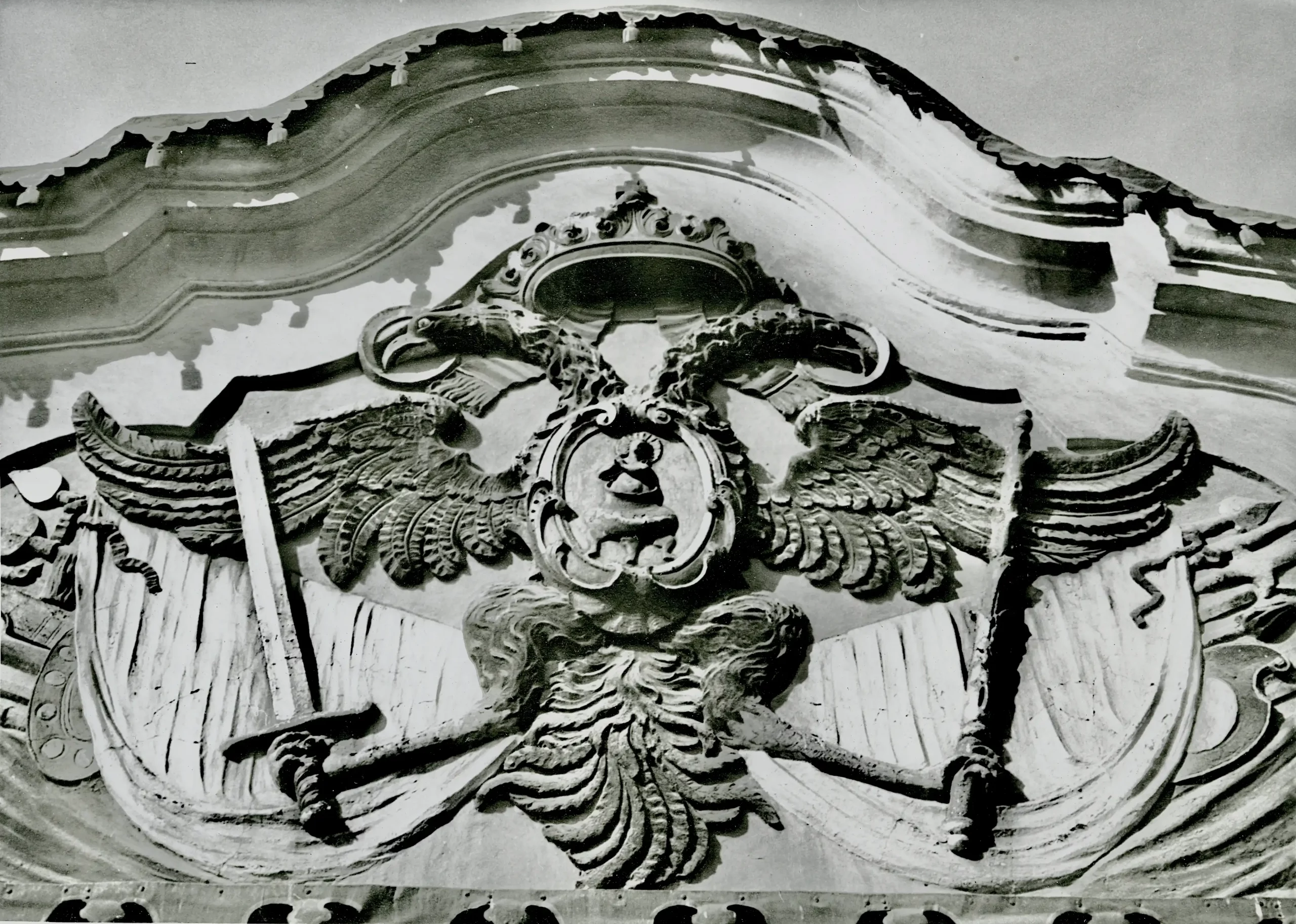
This richly ornamented Baroque gable crowns the central axis of the St. Veit town hall. Its curved and scroll-like outline is typical of Baroque swung gables (Schweifgiebels), which add dynamic movement to the facade. At the centre of the tympanum, an elaborate imperial double-headed eagle is displayed, holding a sceptre and sword.
Above the eagle rests a large imperial crown, while a portrait medallion depicting Saint Vitus in the cauldron adorns the chest of the heraldic creature. The scene is framed by draperies, cannon barrels and other military symbols – a reference to the town’s historical loyalty to the Habsburg Monarchy.
Arcaded Courtyard
The arcaded courtyard, built around 1540, showcases a finely detailed arrangement with Tuscan columns and decorative sgraffito, designed to mimic baluster columns and filling the spandrels between the arches with rhythm and ornament.
Over the following centuries – particularly in the 17th and 20th centuries – the courtyard was extended. The original sgraffito was carefully restored in 1953.
In 1998, the space was thoughtfully roofed with glass, creating a welcoming and atmospheric setting that is now regularly used for cultural events and public gatherings.
16th Century Arcaded Courtyard
The three-storey arcade courtyard from the 16th century
Historical Photographs Image Source: Archive of the Municipal Authority of St. Veit an der Glan
Gable on the Town Hall Facade Photograph, c. 1950
High Relief Sculpture of Justitia on the Town Hall Facade Photographed around 1950
Bronze Plaque on the Town Hall Facade Photograph, c. 1950
Three-Storeyed Town Hall Facade Photograph, c. 1950