Tombstone of a Roman Family
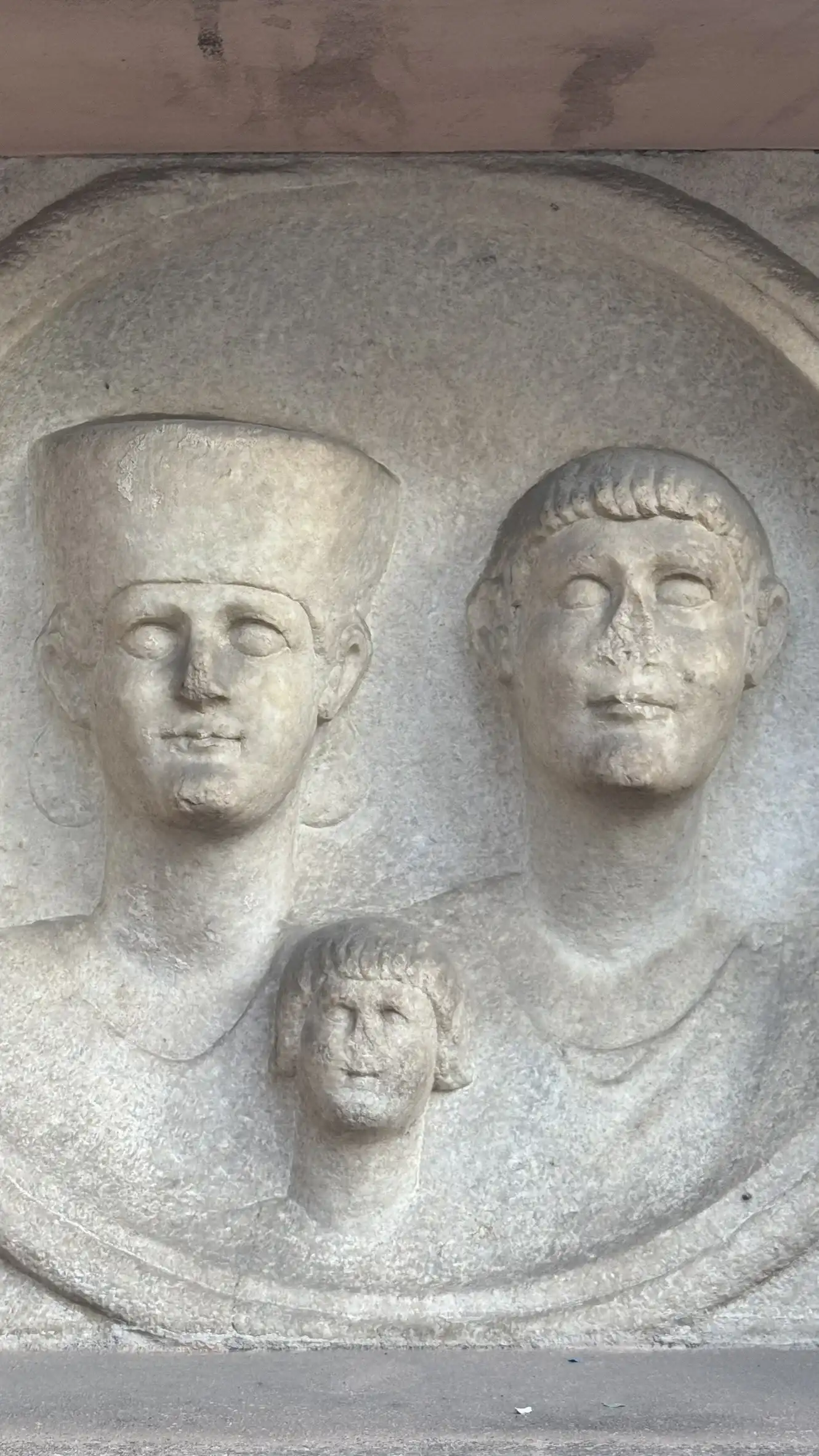
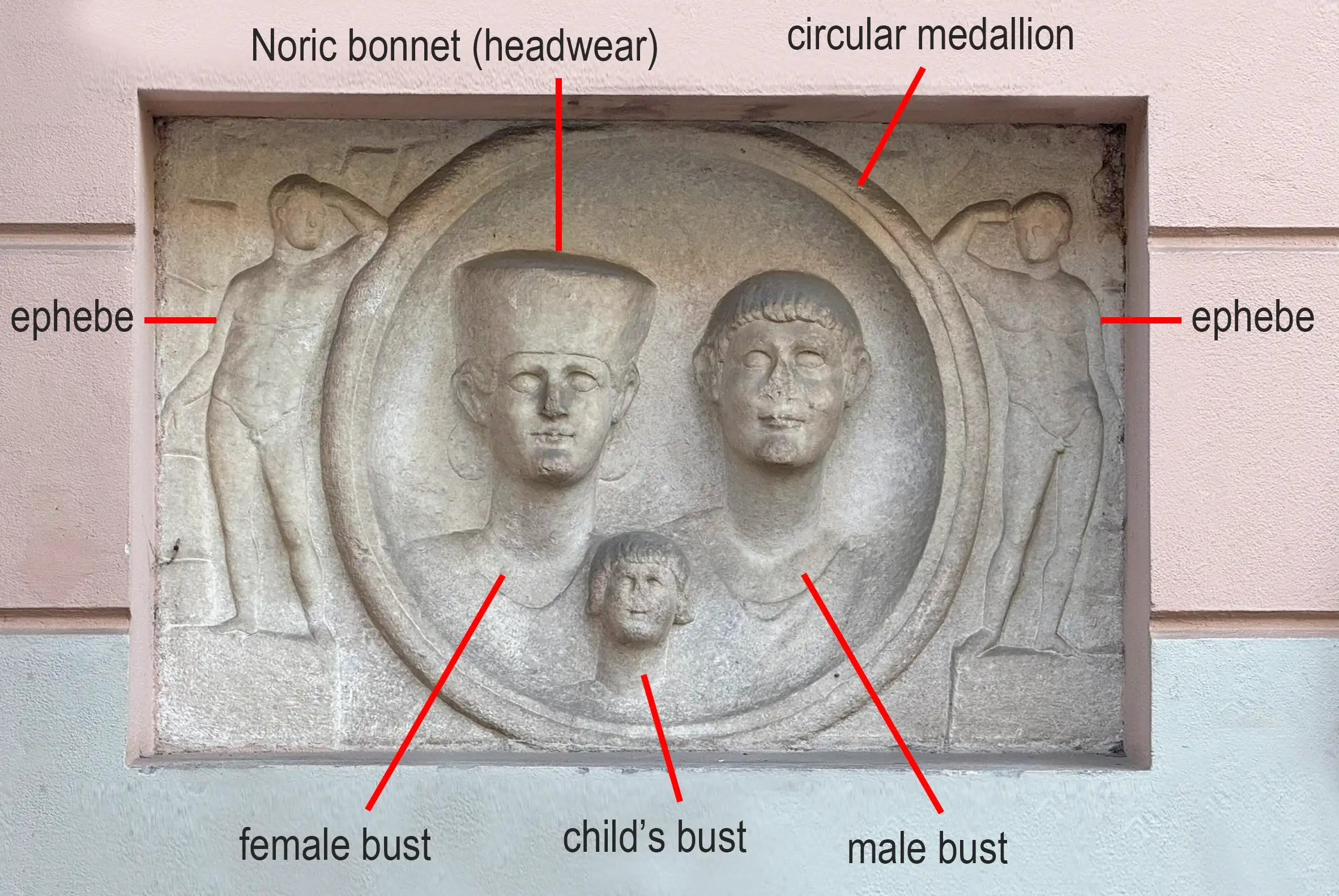
Mounted on the facade of Hauptplatz No. 24 is a rectangular Roman-era family tombstone. A round medallion features the relief busts of a married couple with their child, flanked by two idealised nude youths (ephebes).
The female figure wears the characteristic Noric headdress typical of the region.
History
The Roman-era tombstone is believed to have originally stood at Spitalgasse No. 2 before being relocated to its current position.
Ephebes | Depiction and Symbolism
singular: ephebe
plural: ephebes
In Roman tombstones, ephebes often appear as flanking figures, possibly serving as funerary attendants. They symbolise youth, vitality and beauty.
In Roman funerary art, an ephebe is an idealised naked youth, often portrayed as:
– slim and athletic, with classical proportions
– unclothed or lightly draped, symbolising purity, beauty, and the spirit of youth
– standing, reclining, or flanking figures.
Ancient Roman Stone Medallions
Ancient Roman stone medallions, used to honour the deceased, were typically circular or oval plaques, often crafted from marble or limestone. These served as memorials for individuals who had passed away.
The medallions were usually placed on tombs or funerary monuments as a way to commemorate the deceased.
The medallions often featured a detailed relief portrait of the deceased, showing their face in a lifelike or idealised manner. In addition to the portrait, the medallions sometimes included inscriptions with the person’s name and family details. Some medallions functioned as an epitaph with a brief description of the person’s life. Some medallions also depicted scenes from the deceased’s life, such as their profession, achievements, or symbols of their social status, which reflected the importance of the individual.
The purpose of these stone medallions was to preserve the memory of the deceased and to ensure their place in the afterlife. These memorials were often placed on tombs along with other funerary items, contributing to the Roman tradition of respecting and remembering the dead.