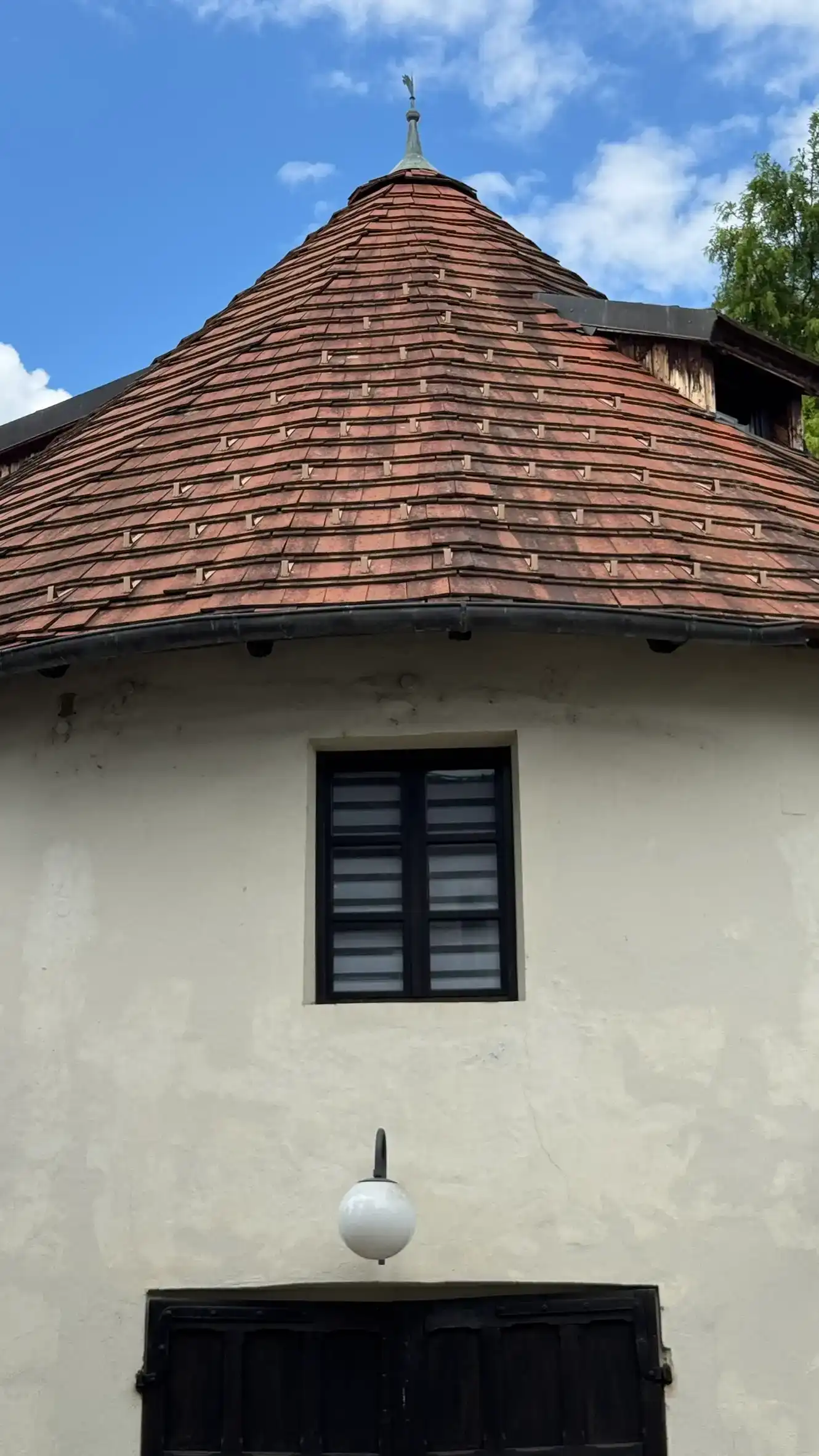
Mint Tower
Since the 13th century, St. Veit an der Glan has played an important economic role for the Dukes of Carinthia.
The mint was a key asset, with coins being struck here as early as the final decades of the 12th century.
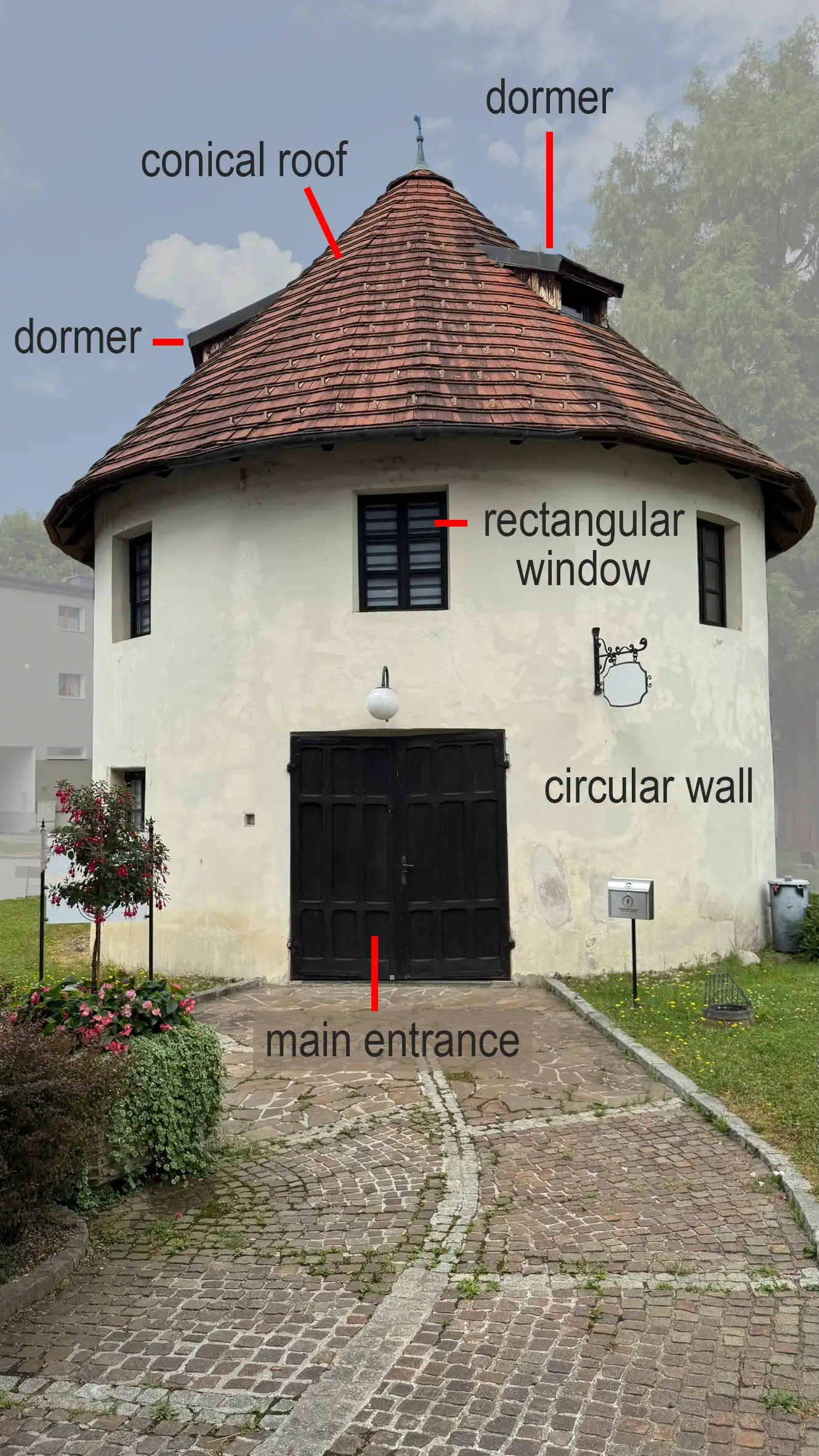
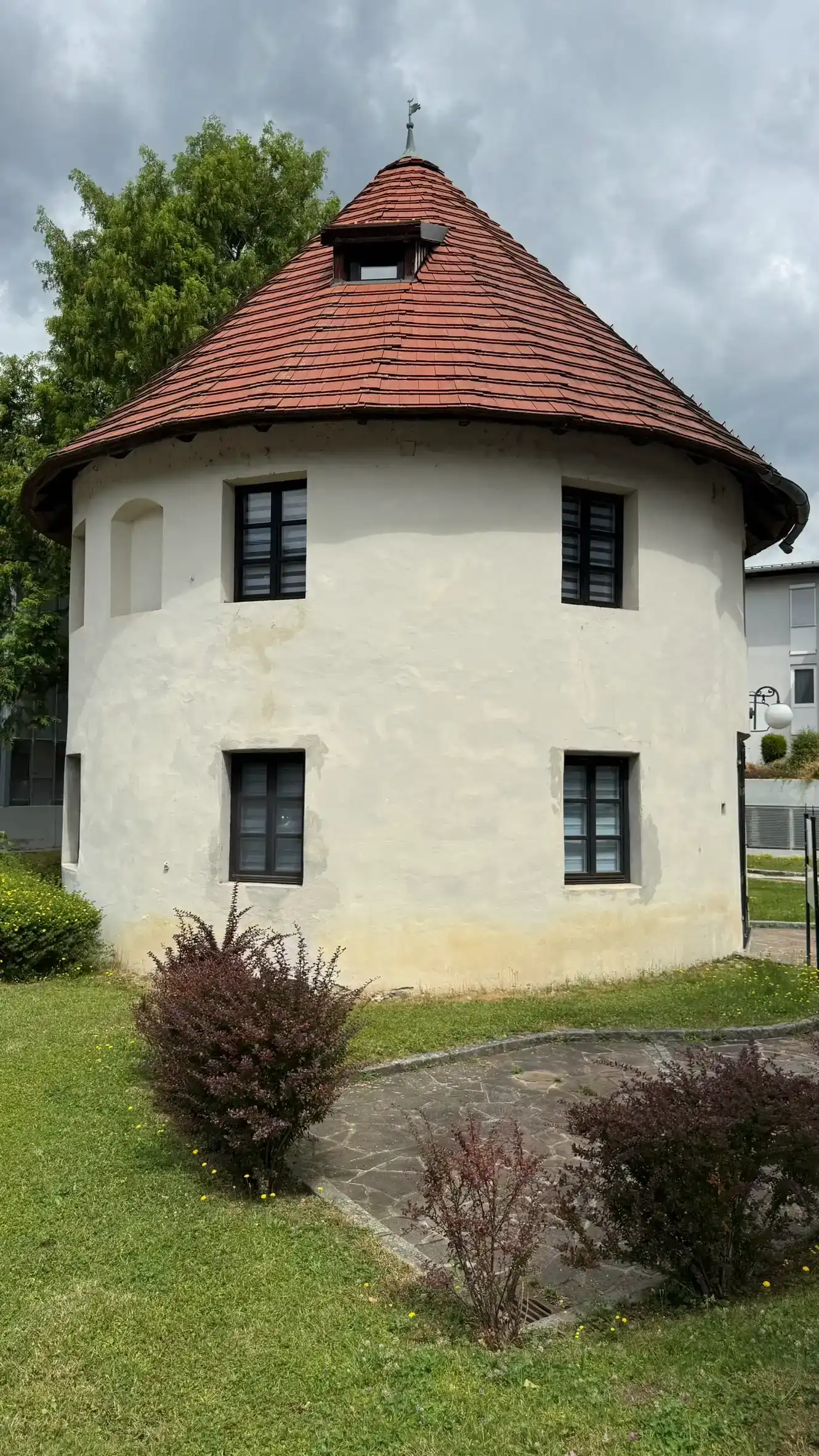
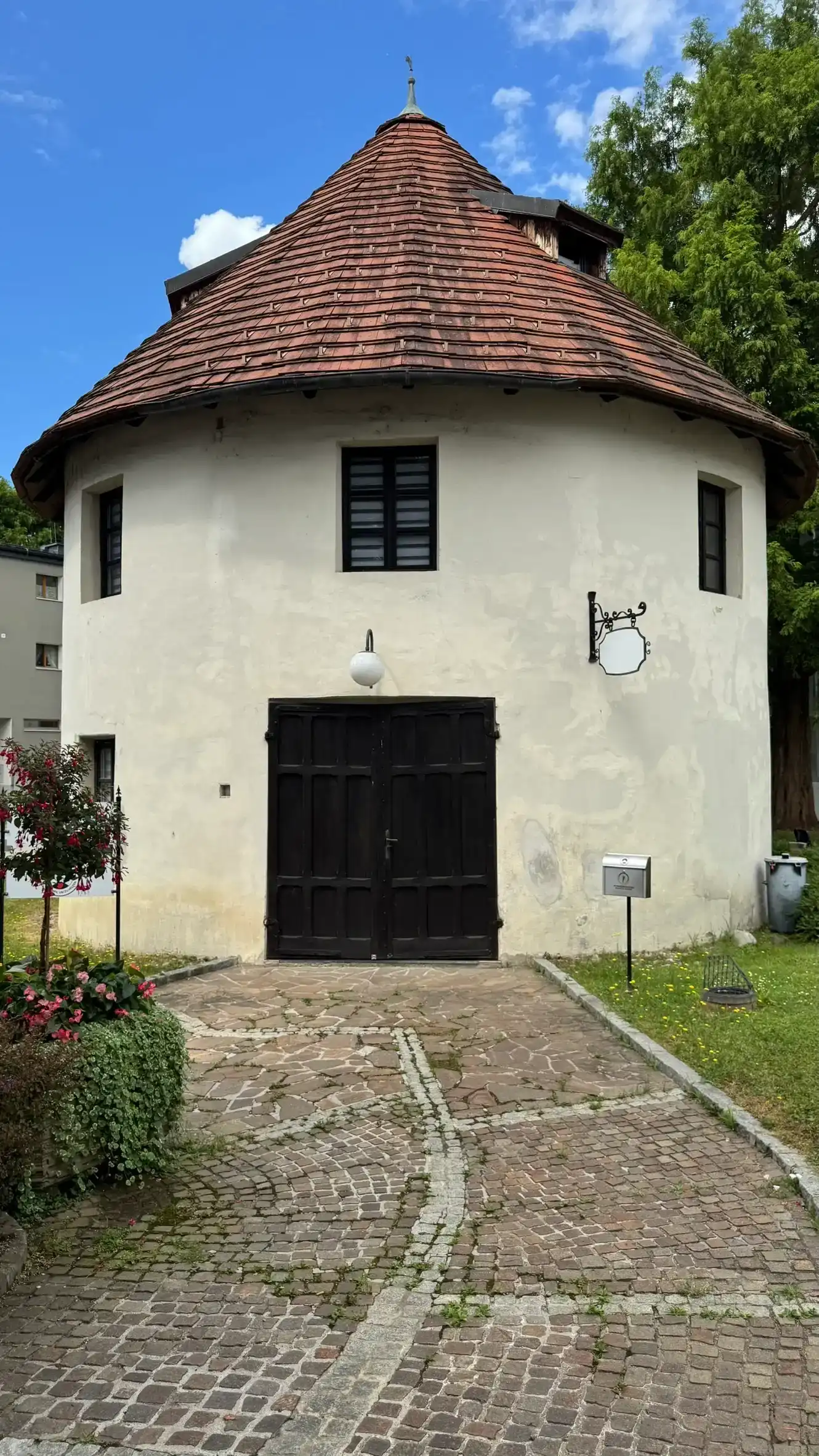
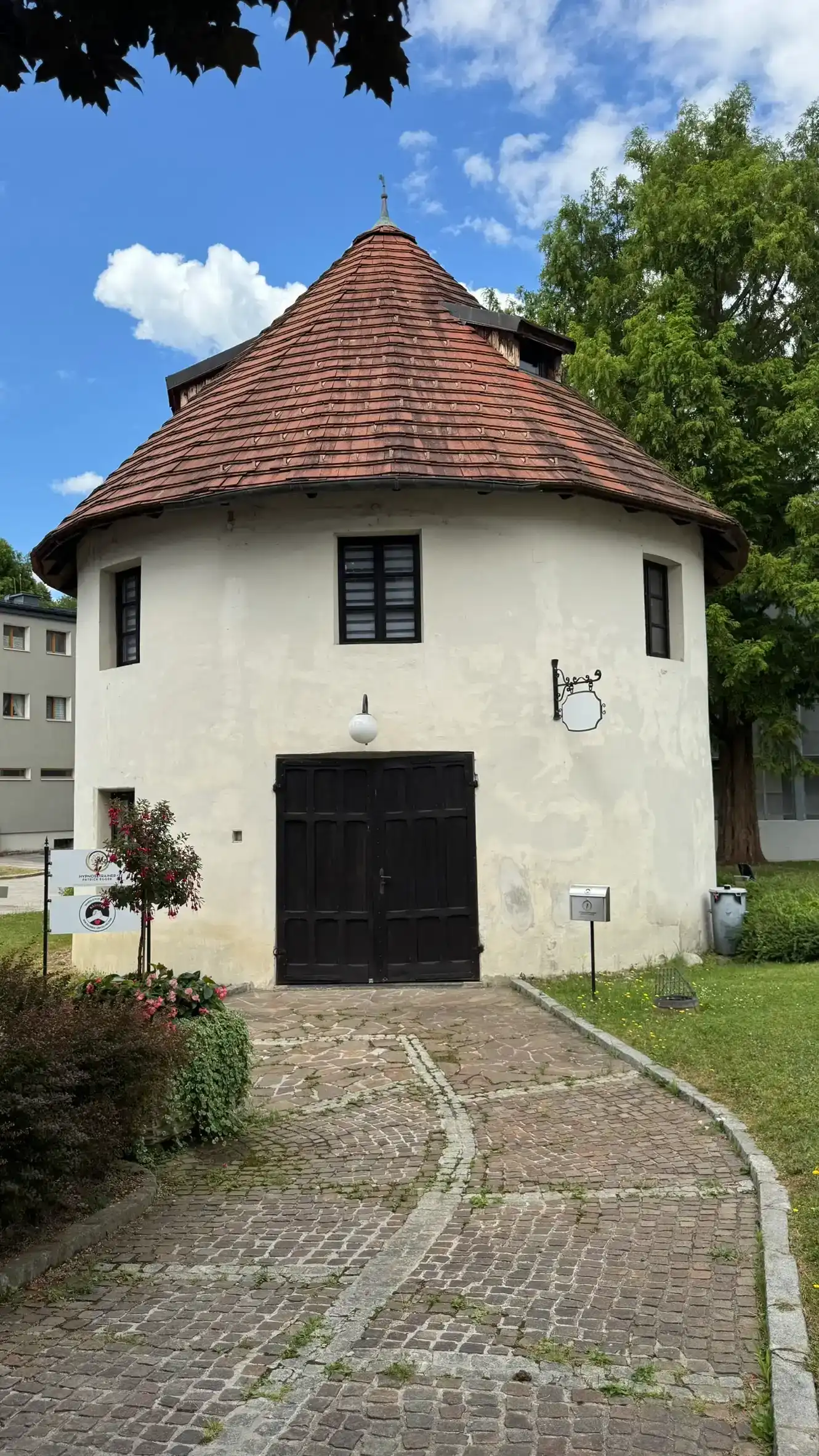
The Mint Tower, a distinctive historical structure located northwest of the old town outside the medieval walls, may have been connected with local coin production. It is believed that this site formed part of the mint in the Middle Ages and thus played an important role in the town’s economic development.
Alternatively, researchers interpret the tower as an outwork of the town’s main defence system – a similar tower once stood on the northern side of the town and served as a civic shooting range. Both towers were probably built in the 16th century to provide better visibility and control over the elevated terrain lying beyond the fortifications.
Minting History of St Veit an der Glan
The ducal mint in St. Veit an der Glan was established in 1205 and remained in operation until 1725.
Under Duke Bernhard of Spanheim, the town experienced a period of prosperity which also included the founding of the mint. Among other things, the oldest surviving coin with a German inscription was struck here in 1220.
St. Veit was once not only a flourishing centre of mining and minting, but also a town of art and culture.
Details of the Mint’s History
First Period of Prosperity:
Around 1205 the duke transferred the mint to St. Veit, which marked one of the town’s golden ages, particularly under Duke Bernhard of Spanheim.
Oldest German Inscription:
In 1220 the oldest known coin bearing a German inscription was struck at the mint.
Significance:
The mint contributed to the town’s economic importance and wealth, standing as a testament to its former power.
End of Minting:
The operation of the ducal mint came to an end in 1725.