Located in the centre of St Veit an der Glan, the parish church is dedicated to Saint Vitus. Since the 18th century, it has also borne the dedication to the Holy Trinity.
Romanesque Beginnings and Structural Design
Originally built around the year 1200 as a flat-roofed Romanesque pillar basilica, the church had three naves and five bays. It originally terminated in the east with three round apses arranged in a stepped configuration.
Present-Day Exterior
Following a devastating fire in 1829, the church was extensively restored. The side aisles were increased in height and galleries were added, giving the church its present appearance.
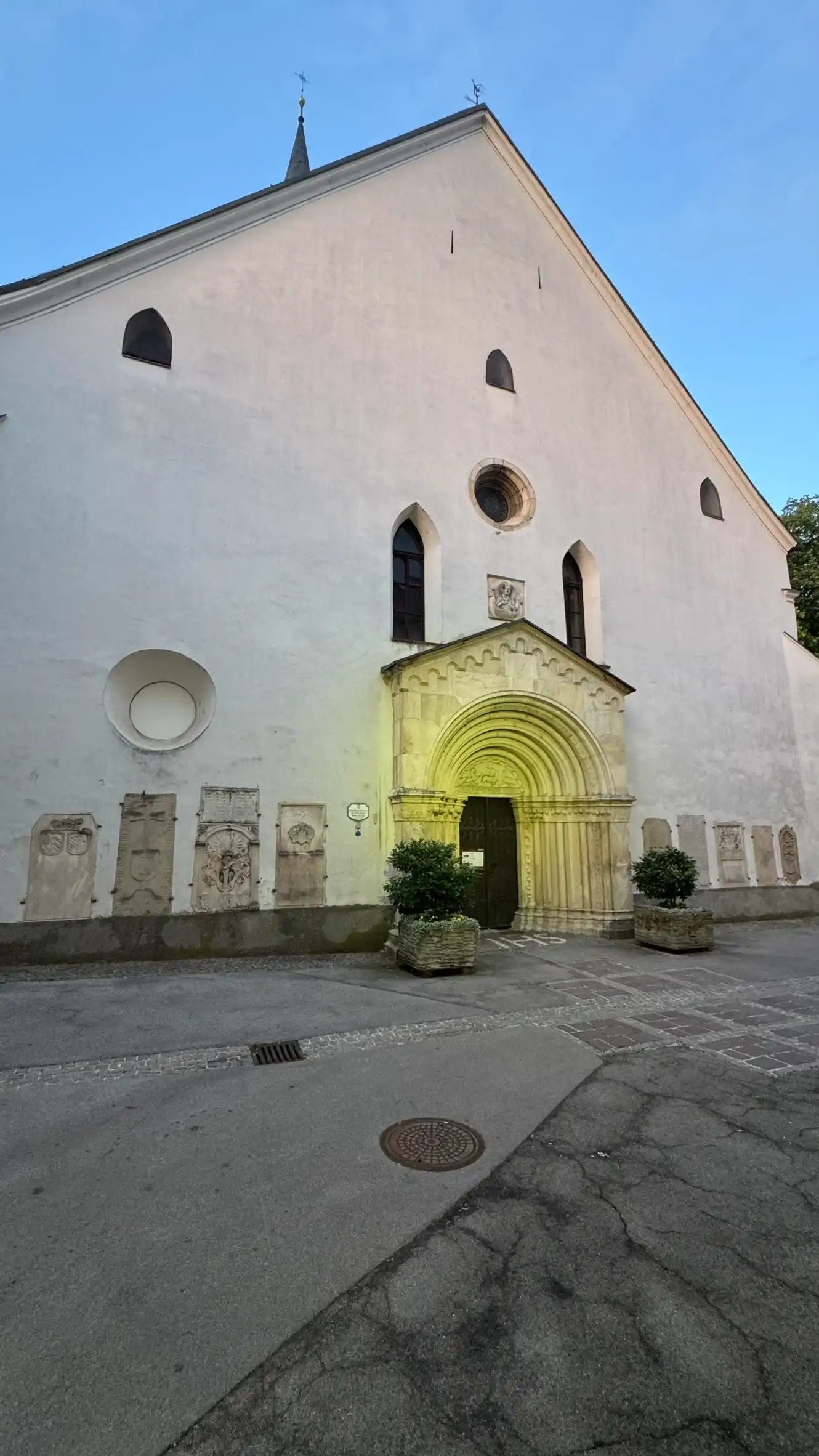
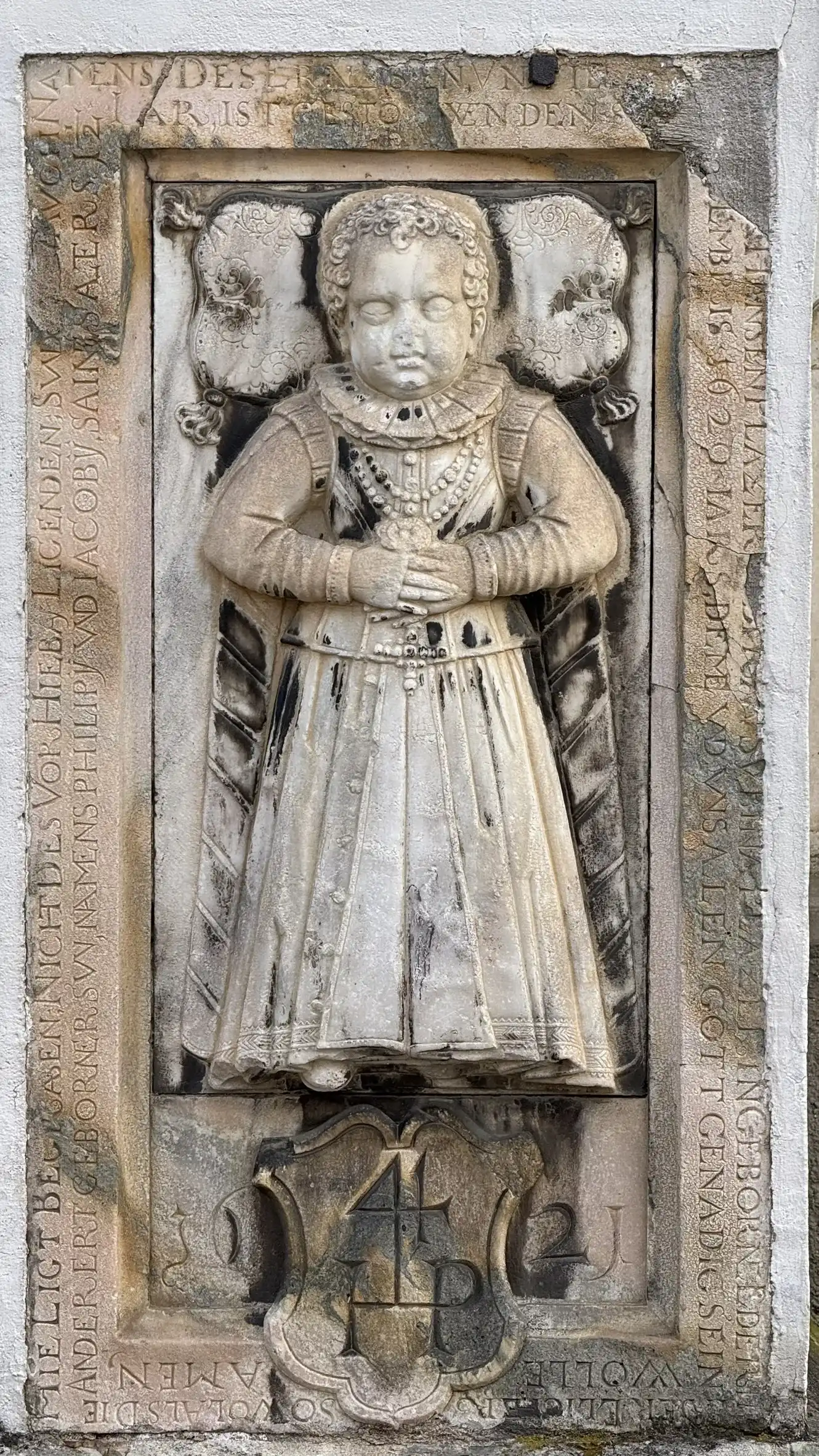
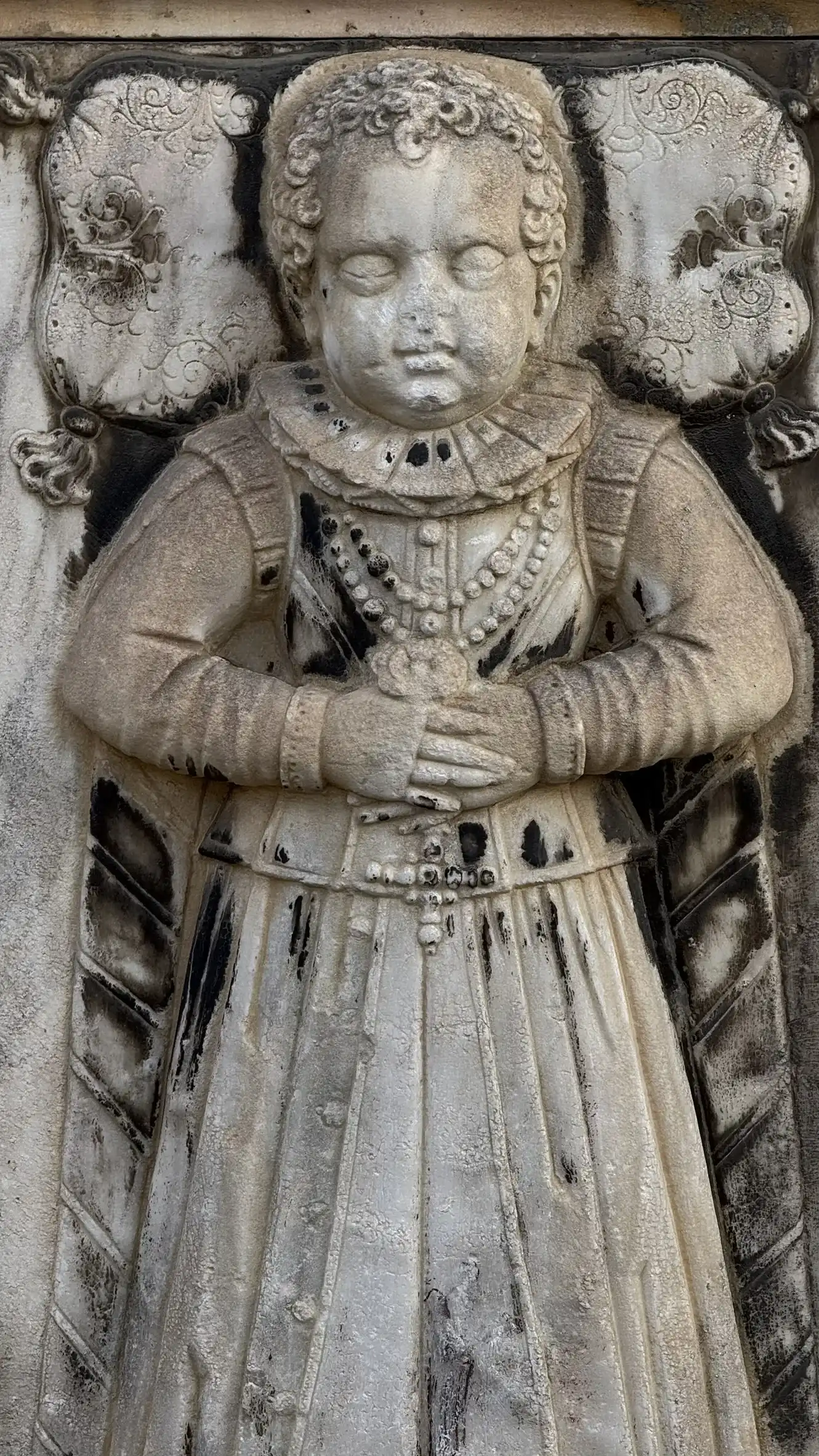
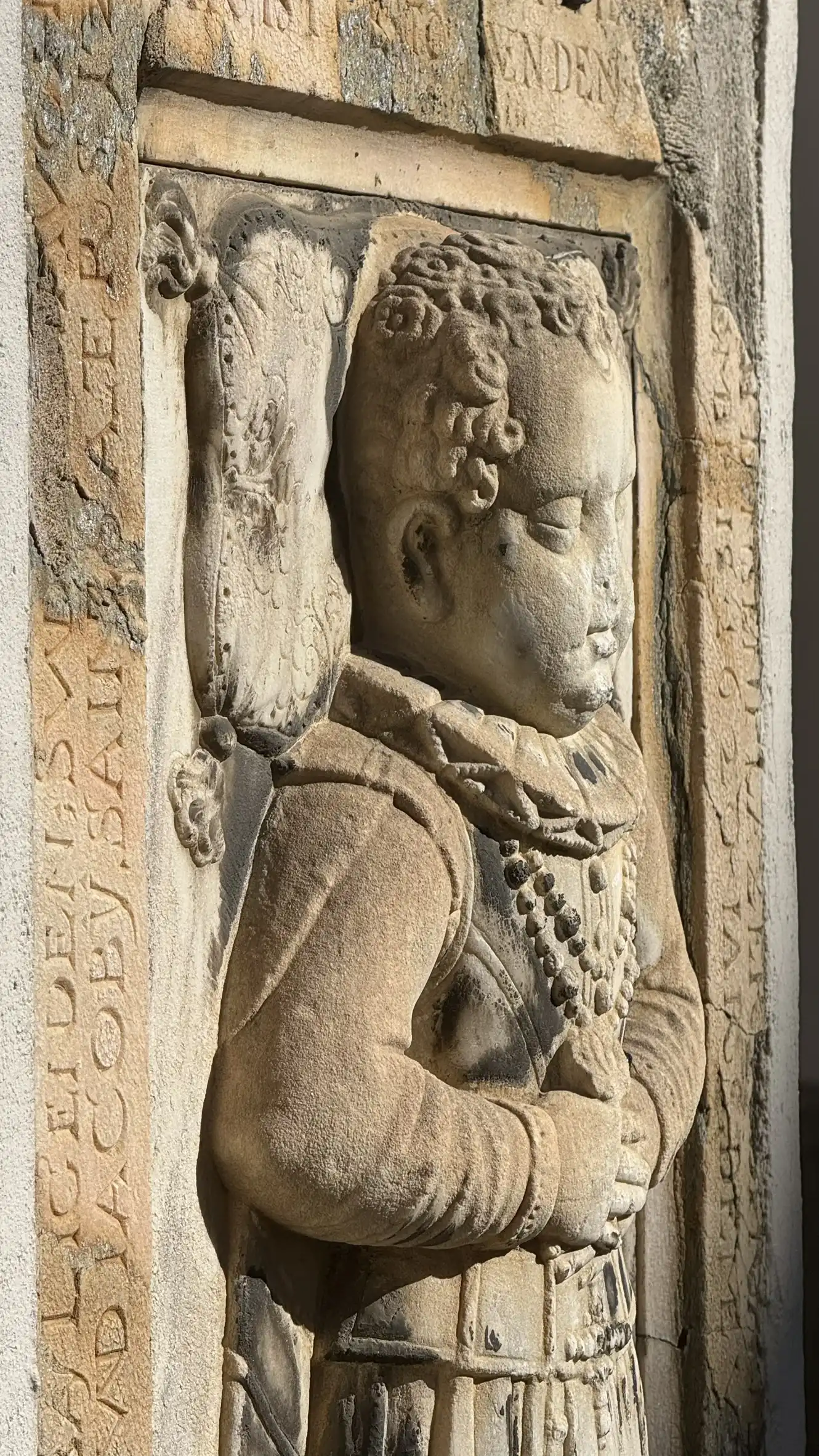
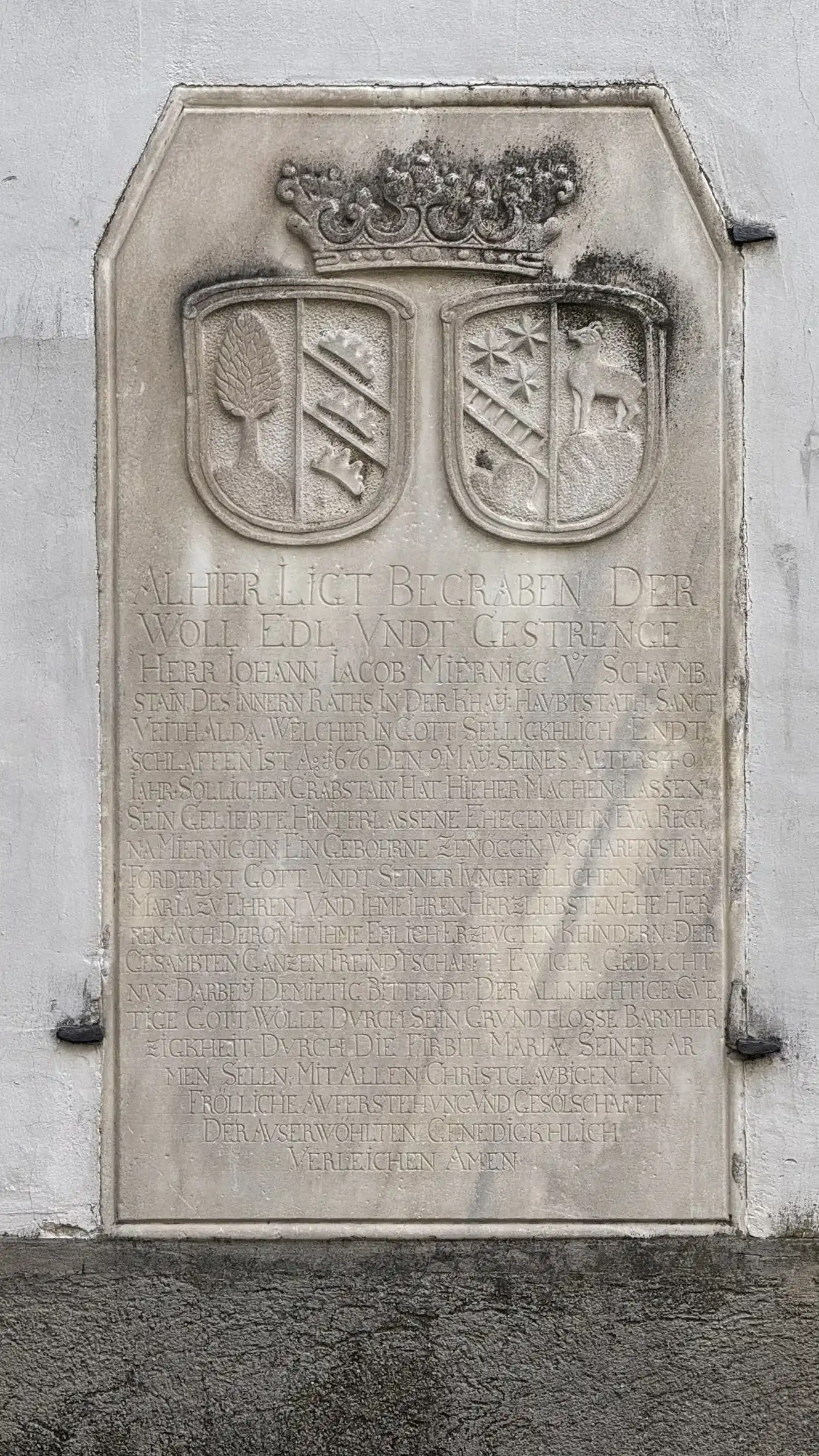
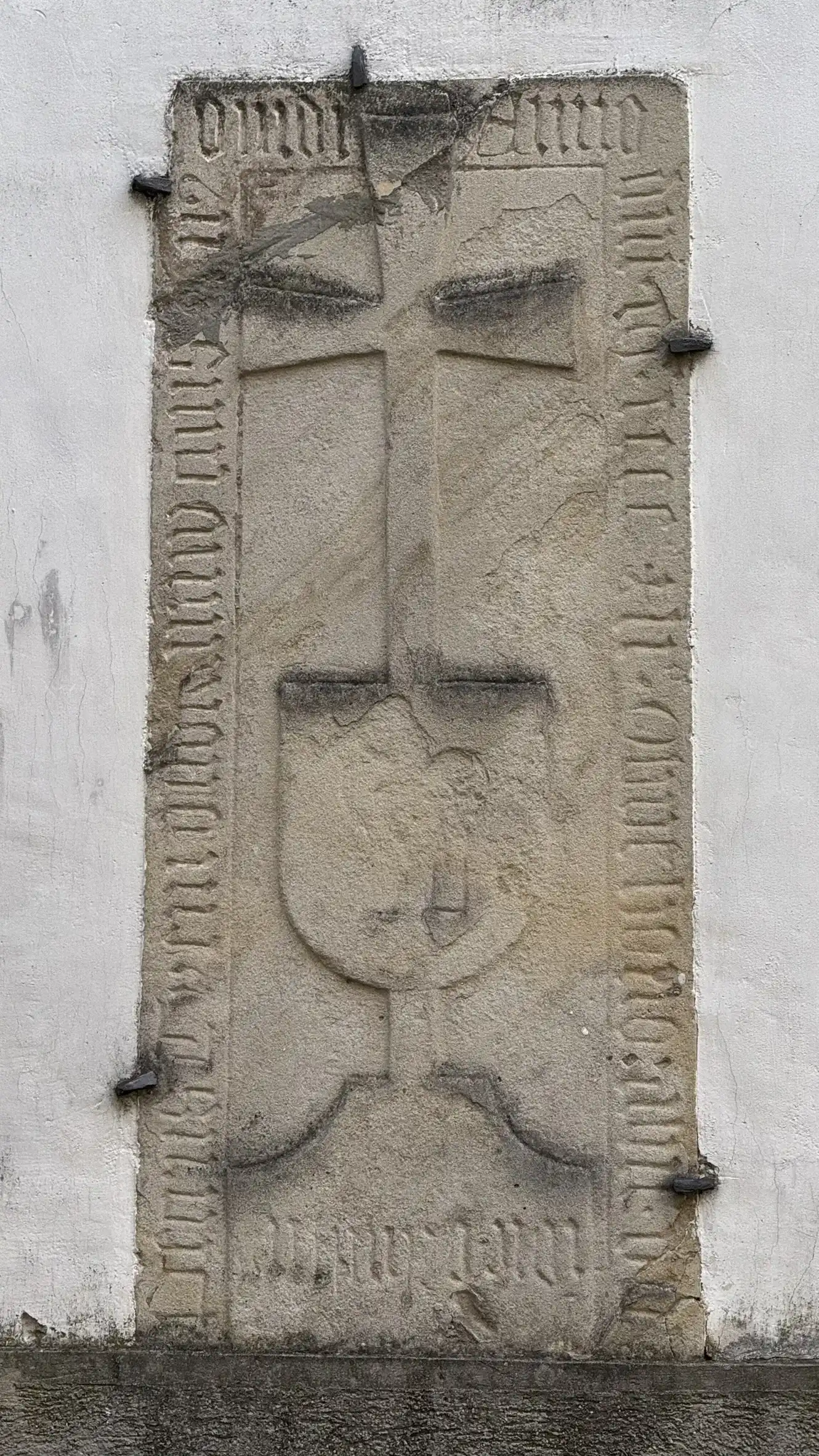
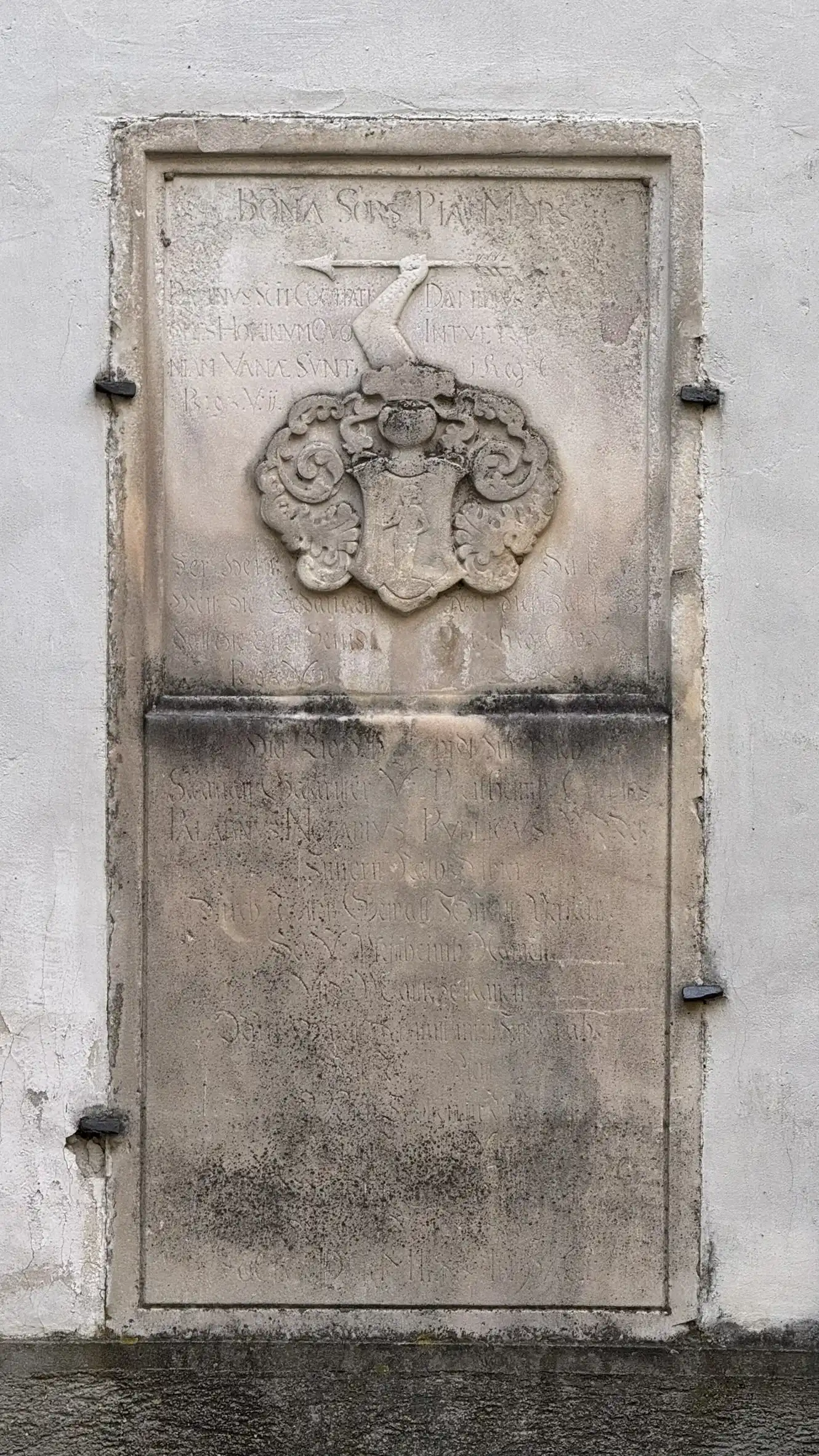
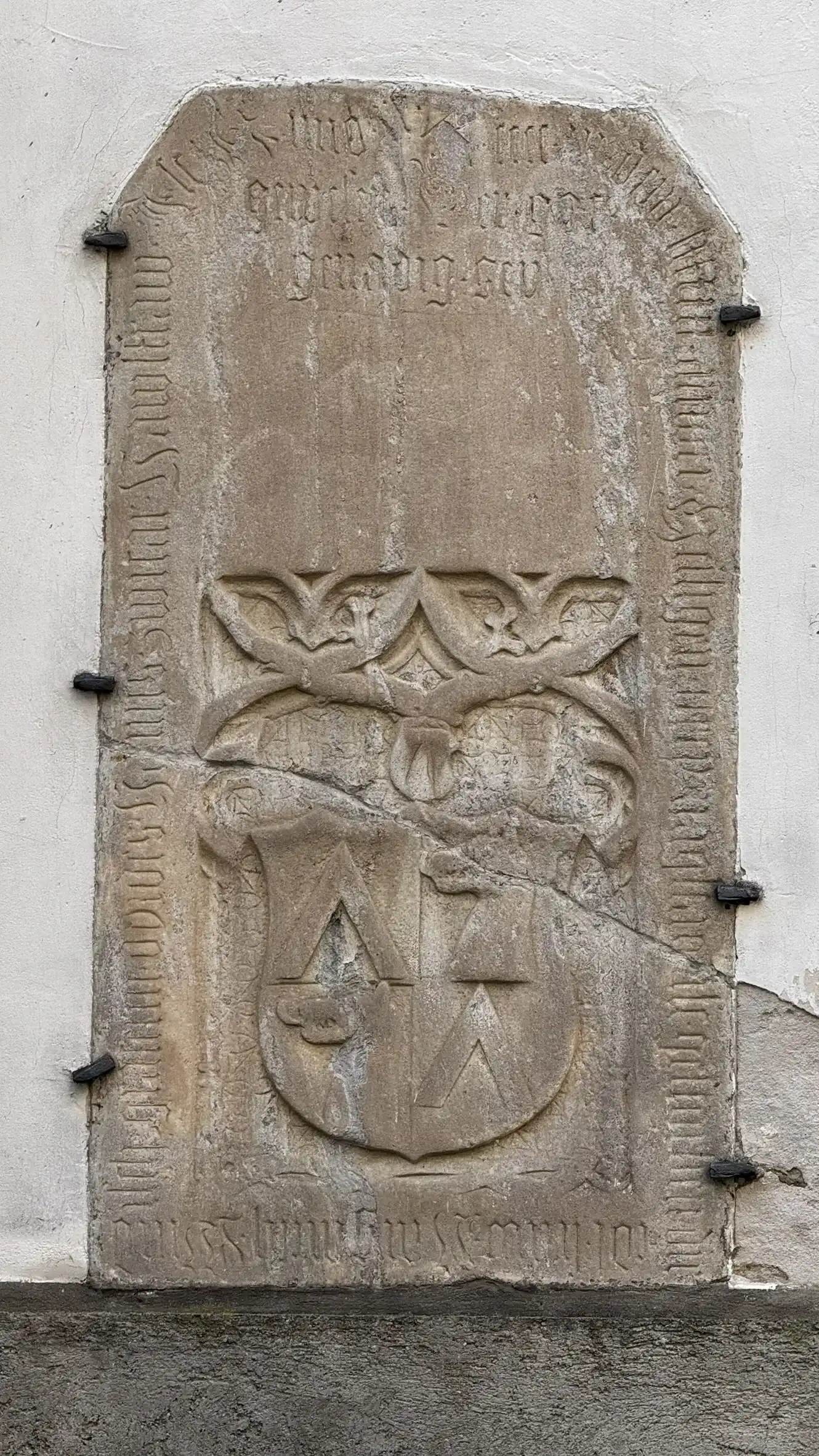
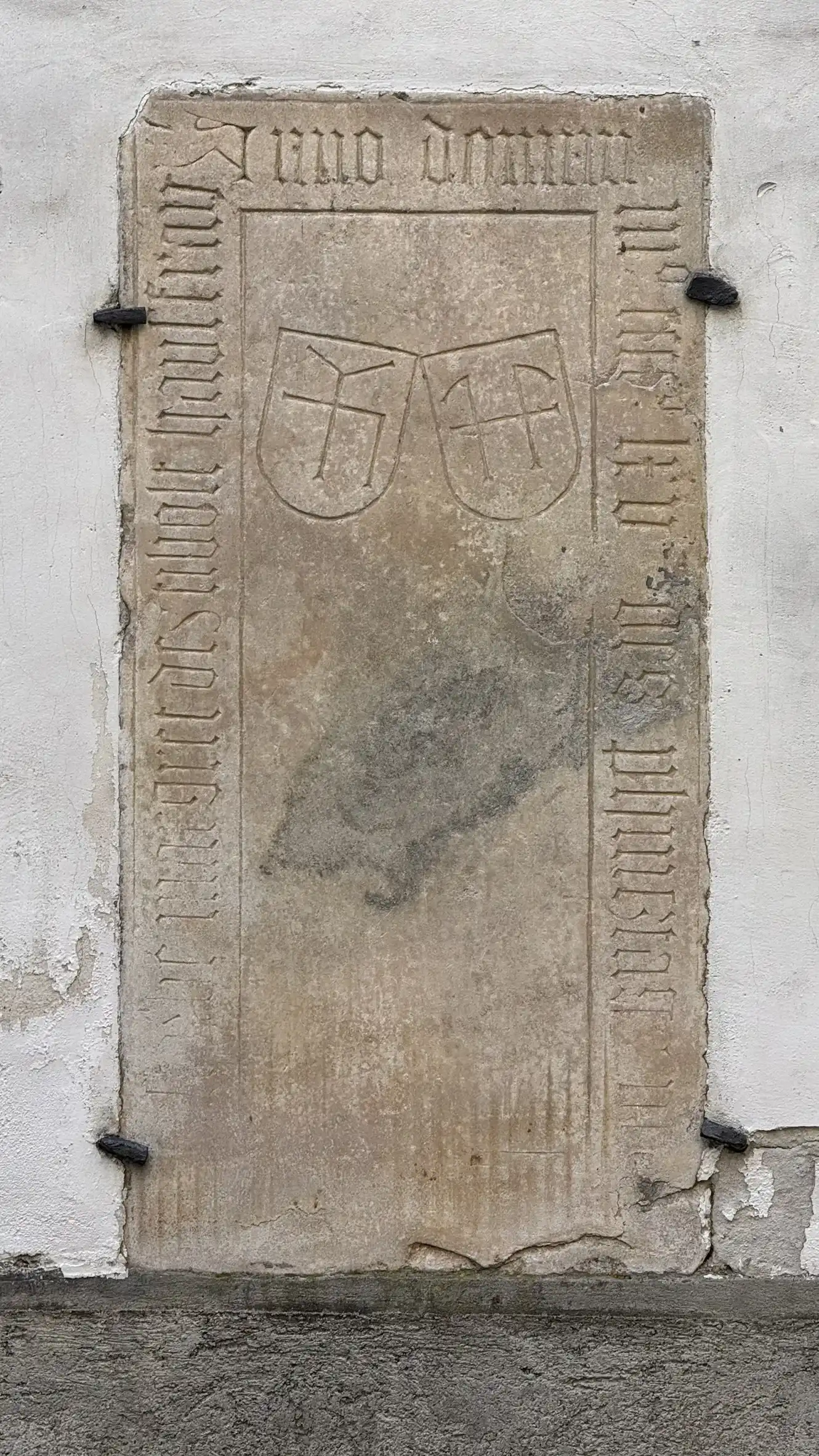
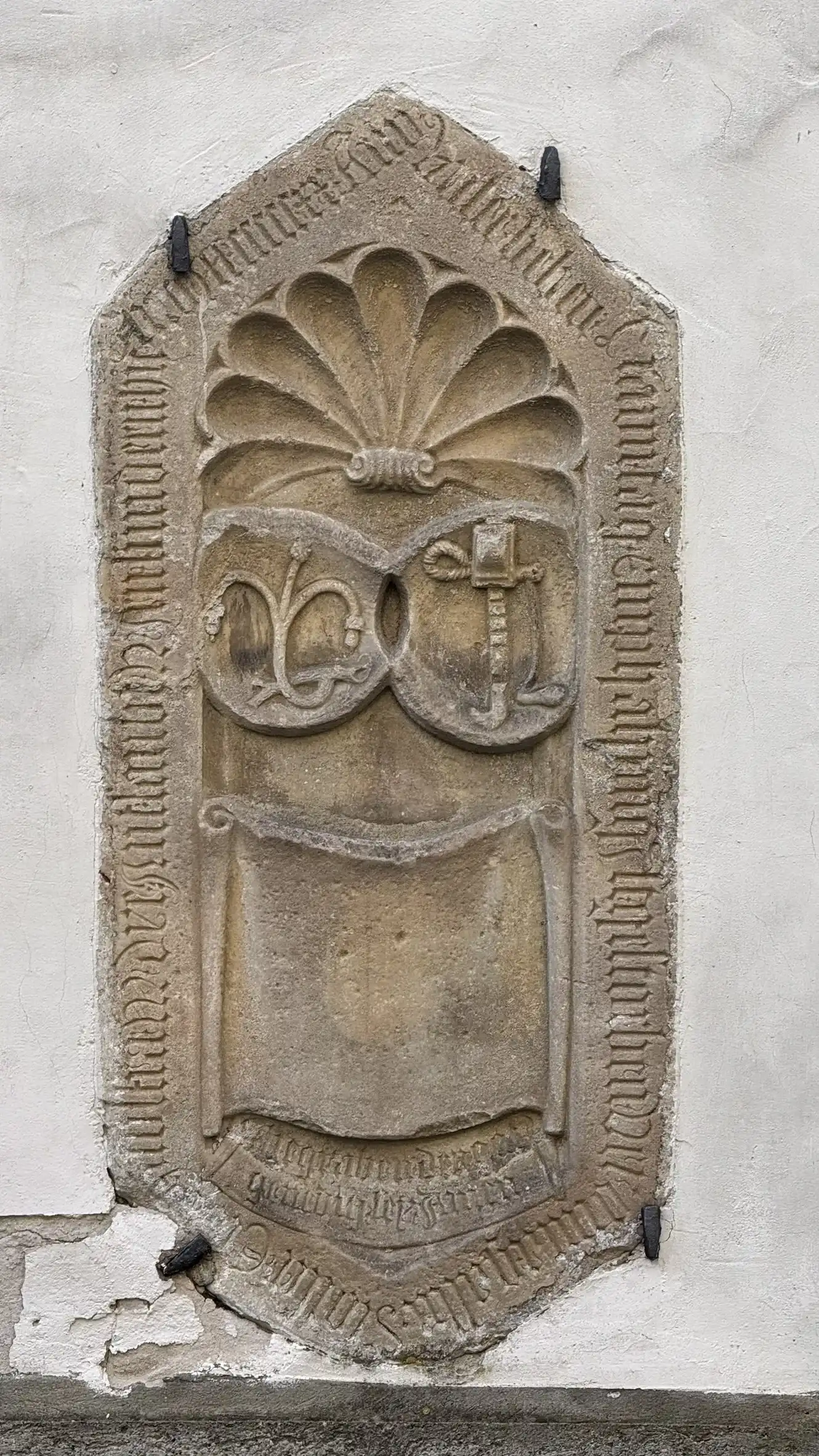
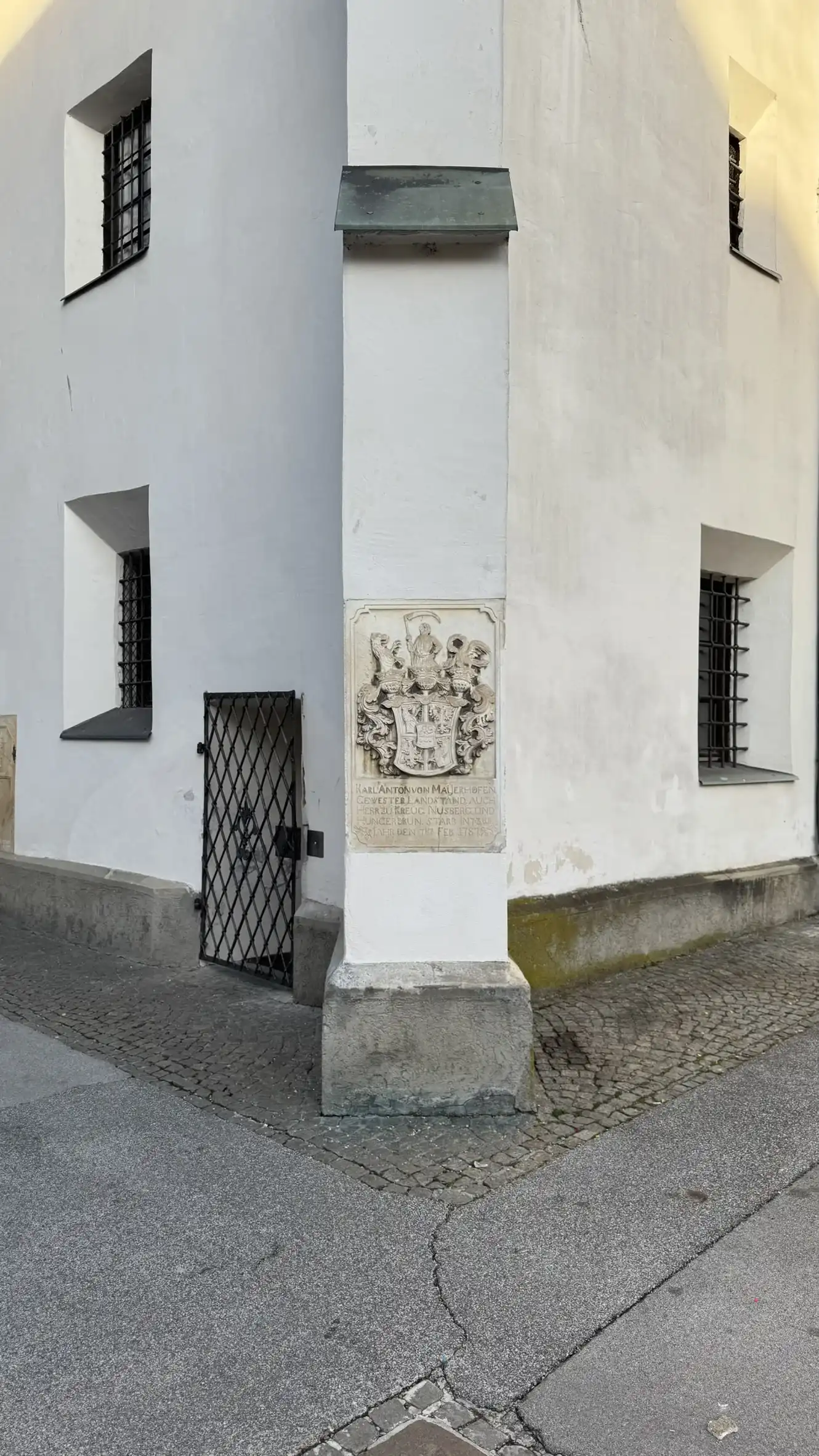
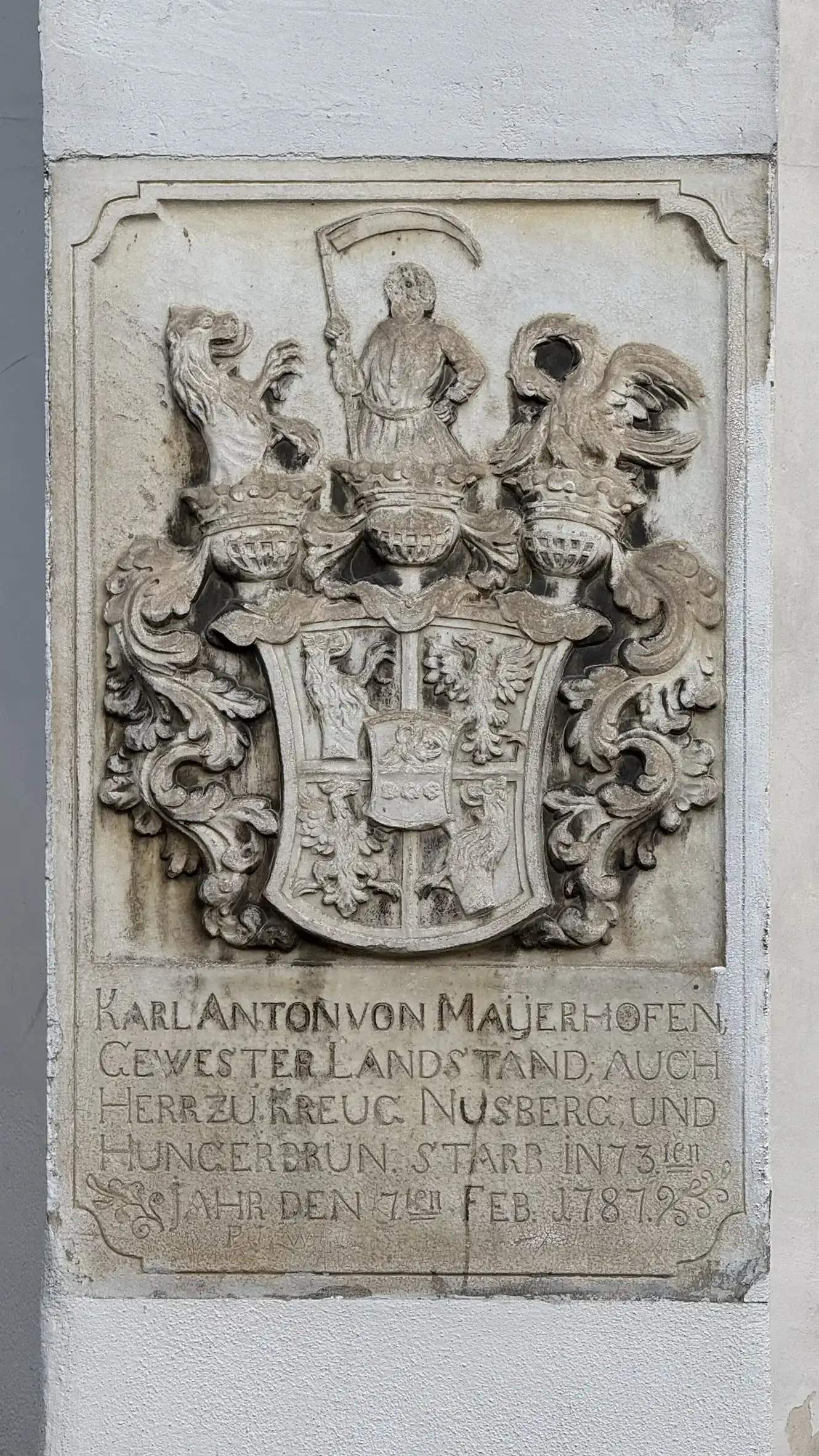
The exterior walls are adorned with numerous gravestones from the 15th to 18th centuries, once part of the former churchyard.
Chancel Tower
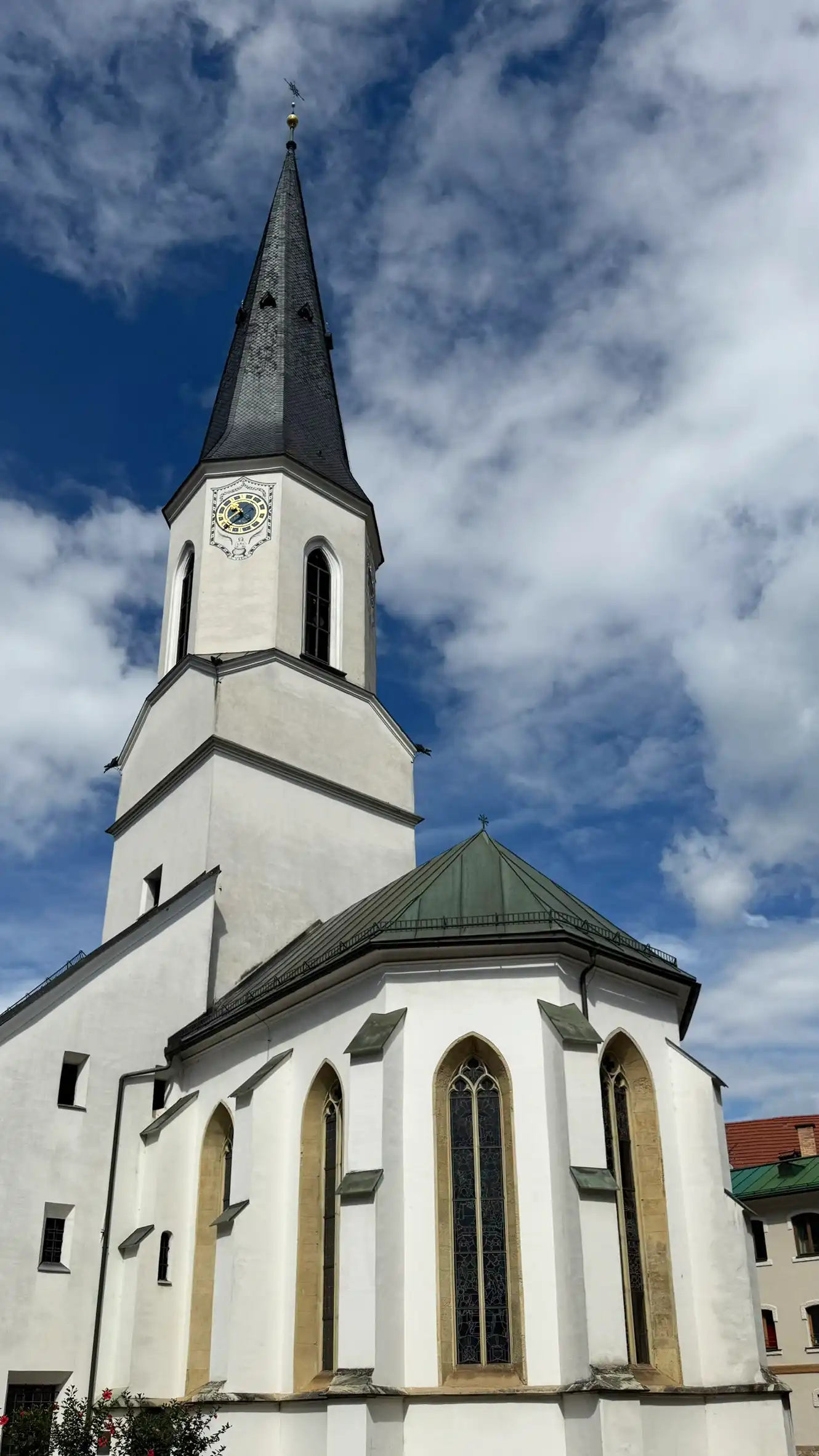
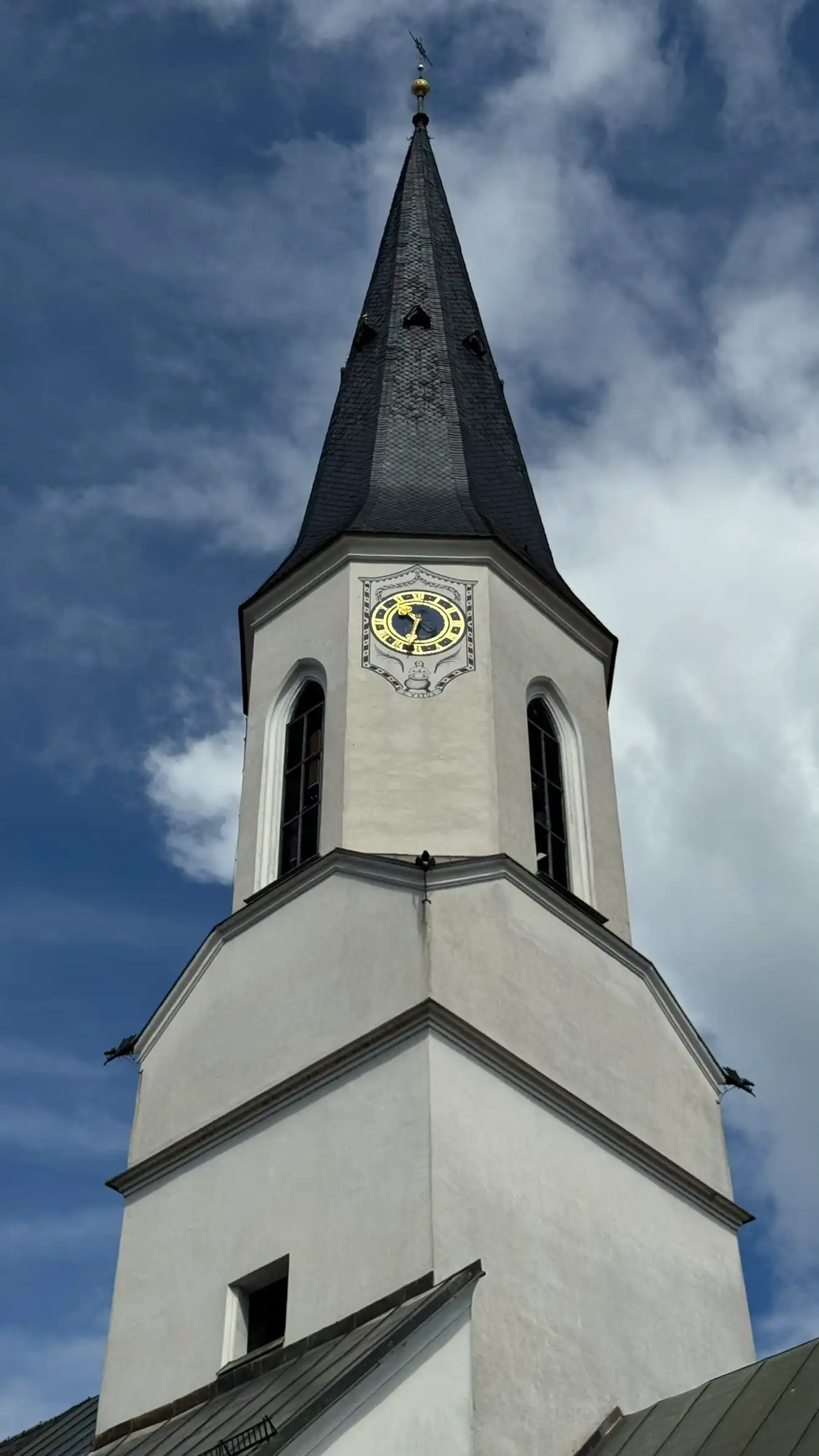
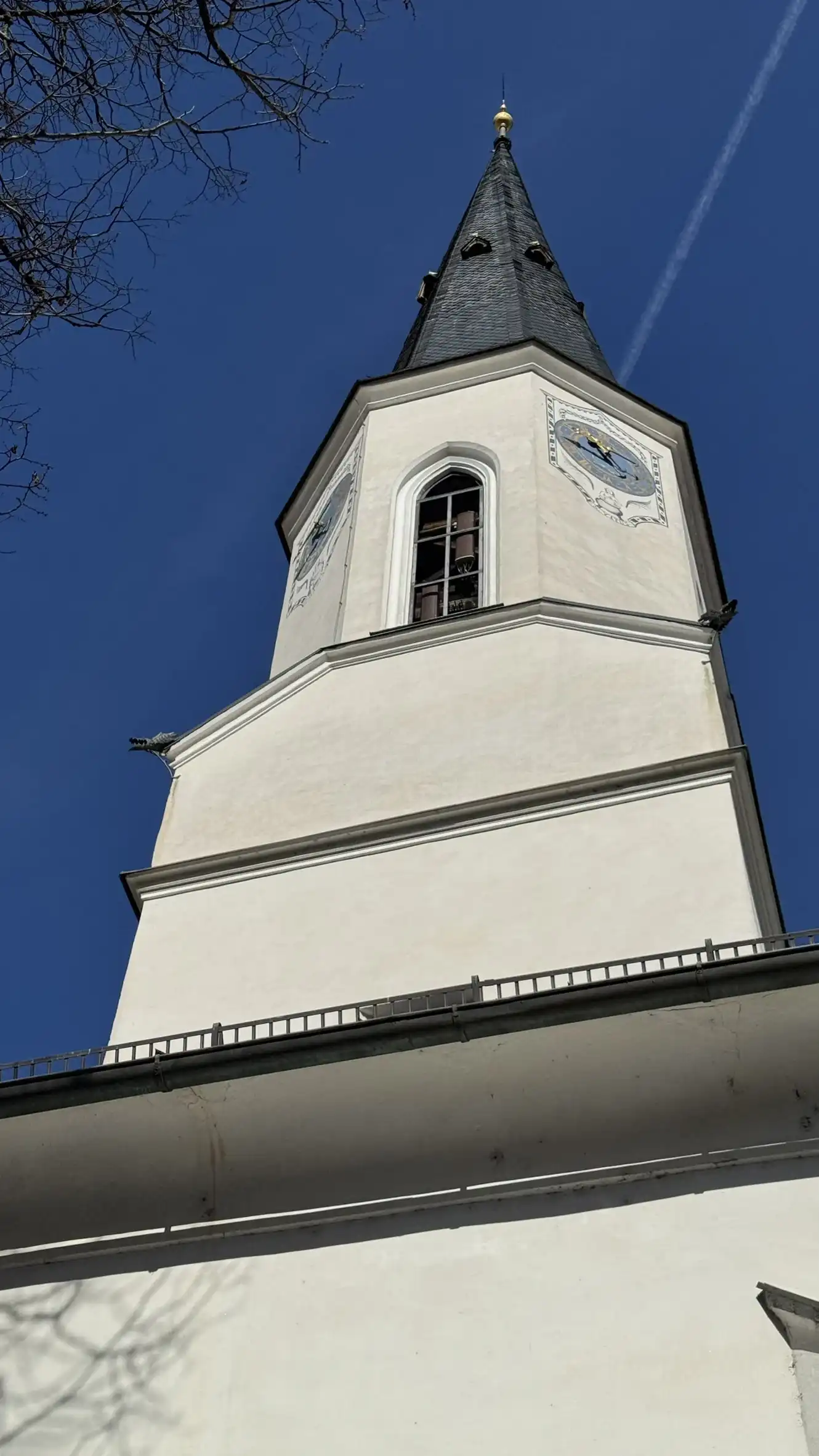
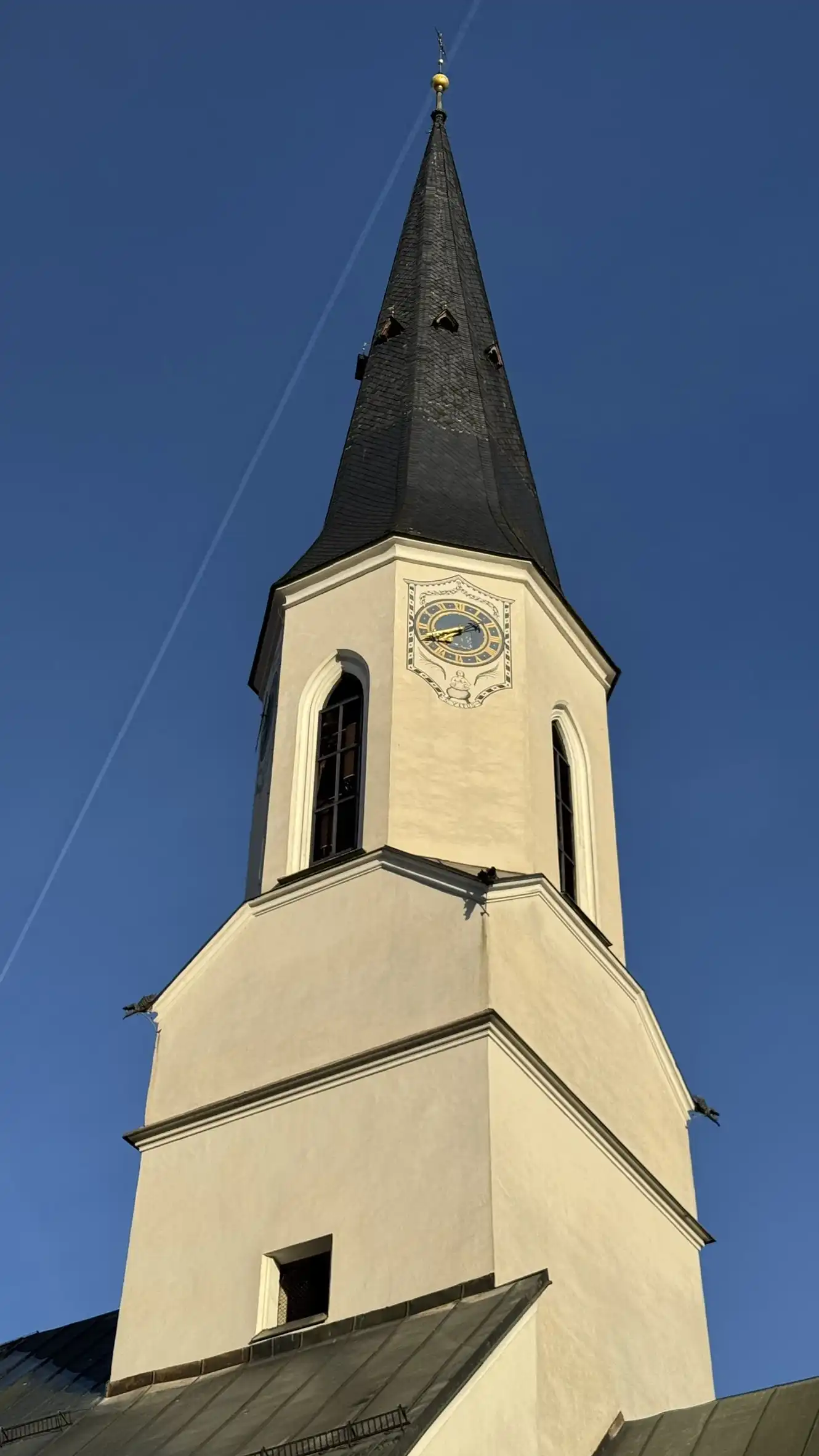
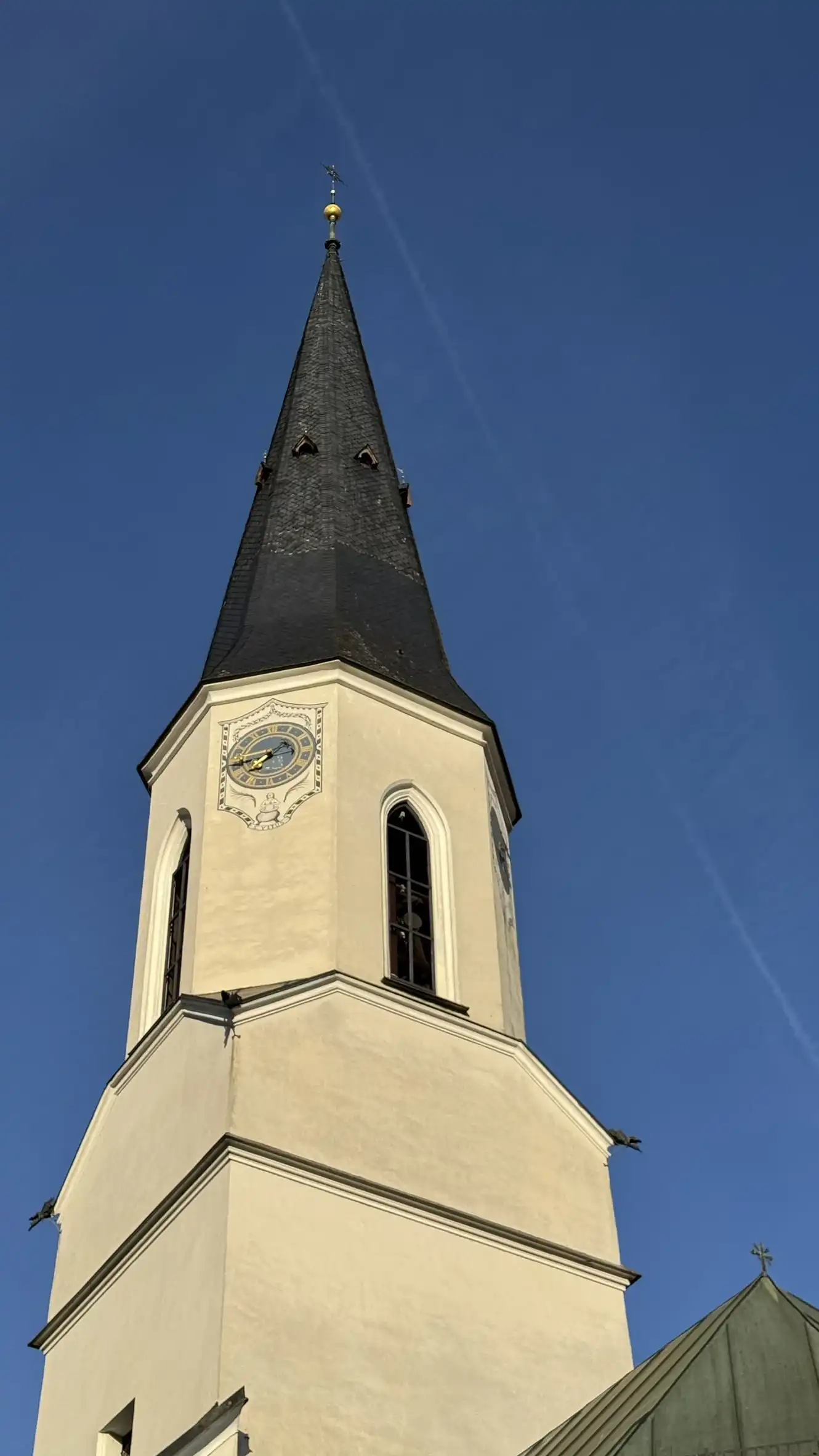
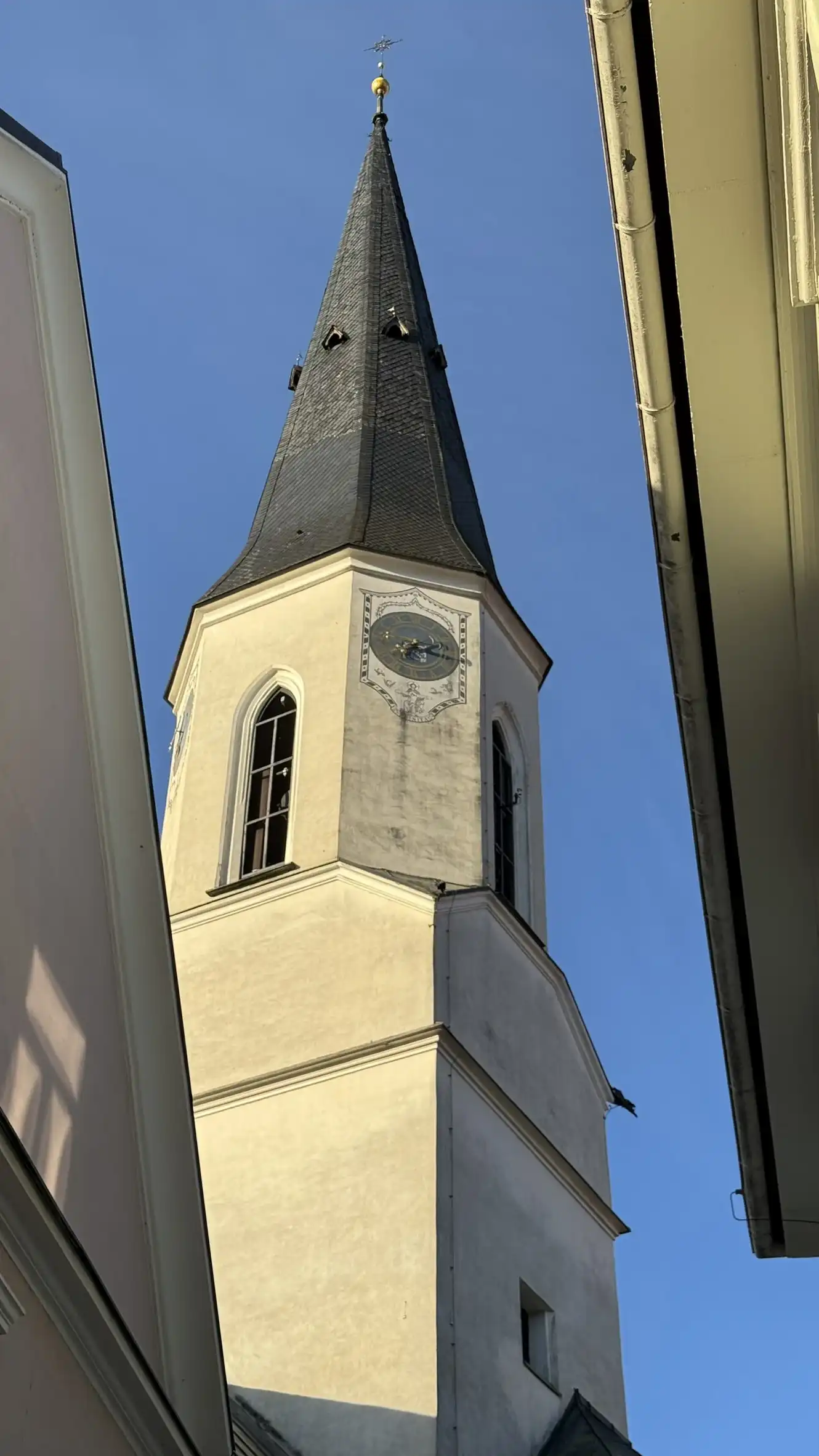
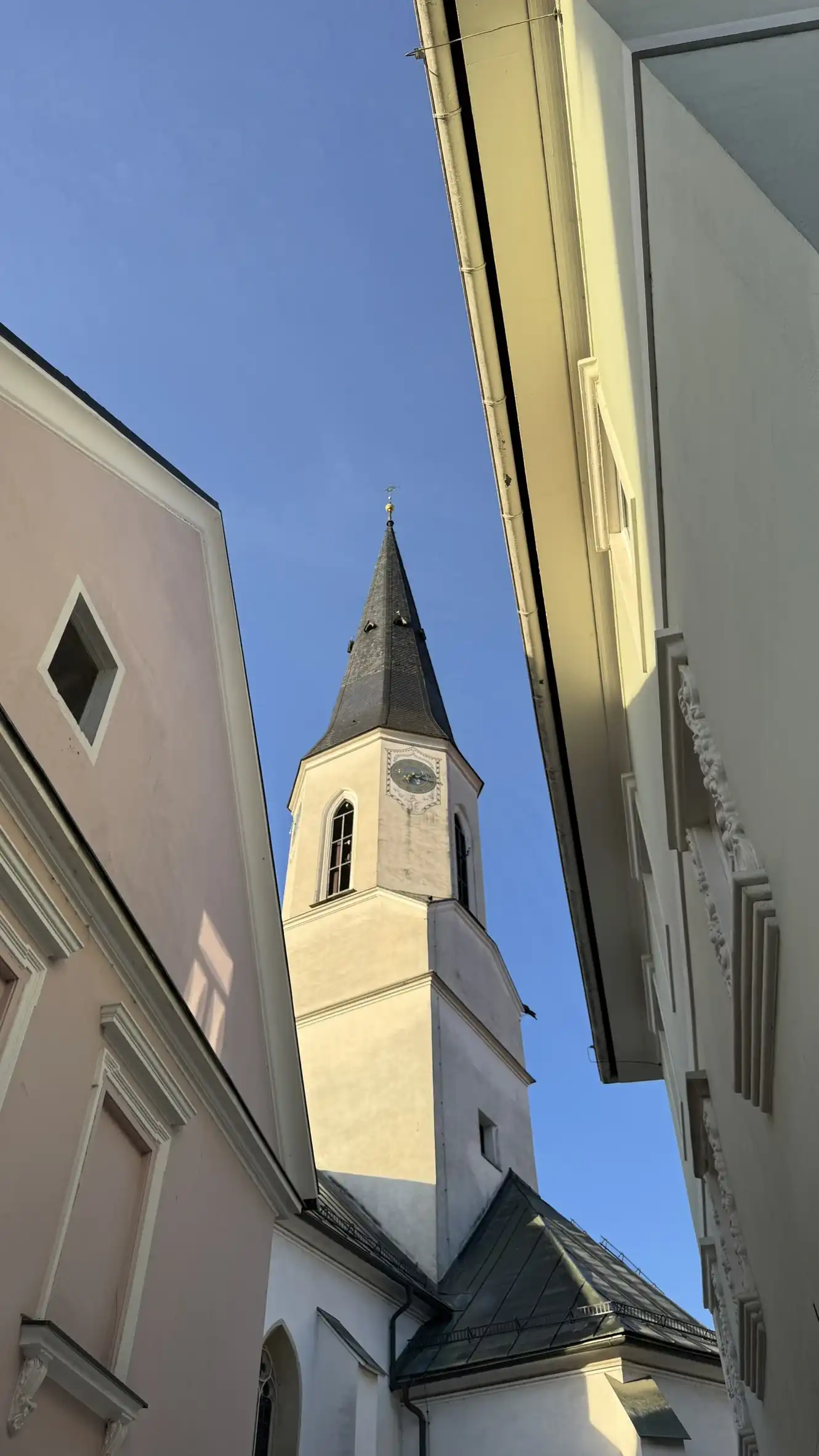
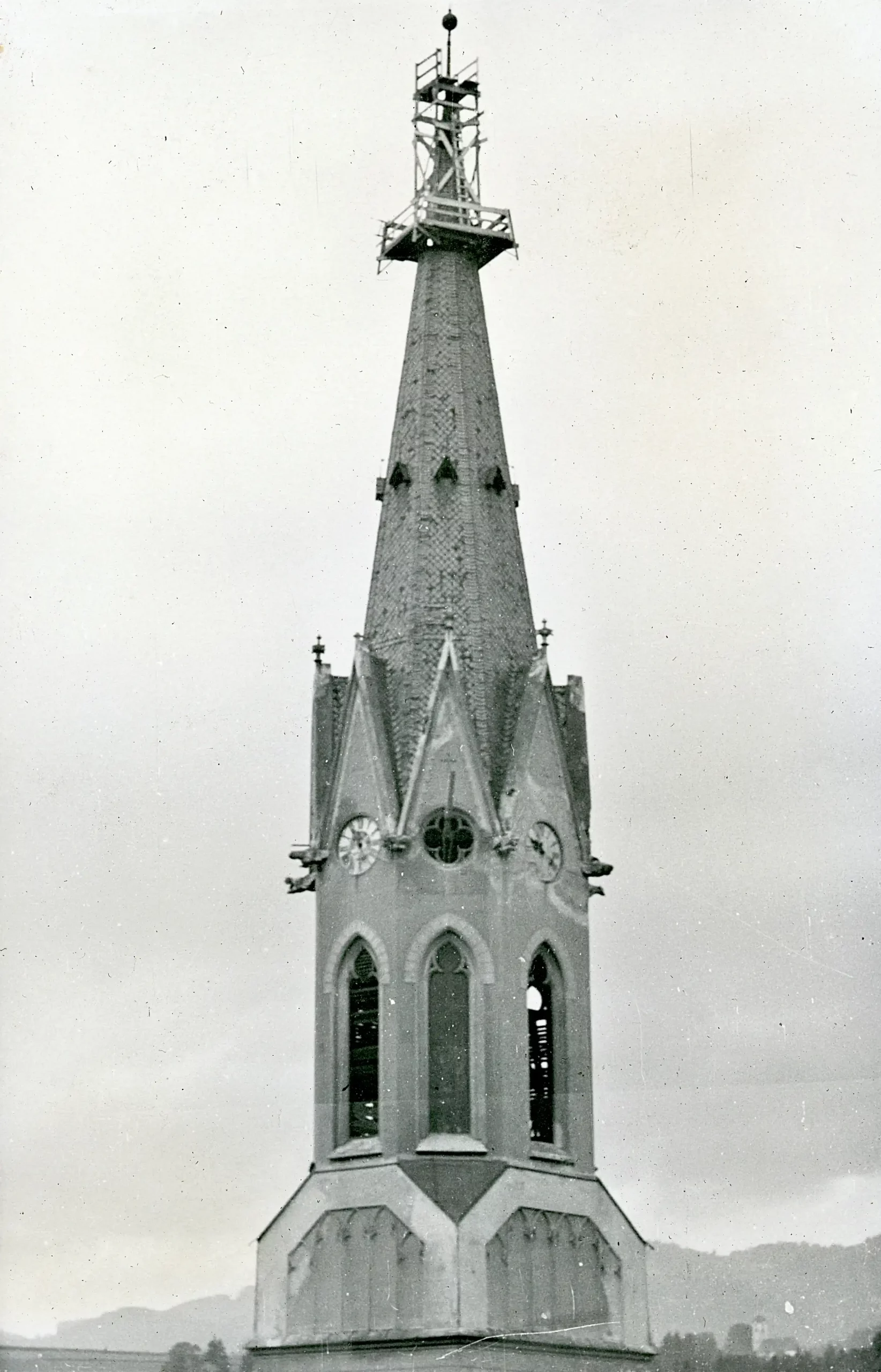
The square base of the tower transitions into an octagonal upper section. A neo-Gothic spire, dating from 1884 to 1891, crowns the structure. The spire was simplified during restoration in 1961.
Funnel Portal
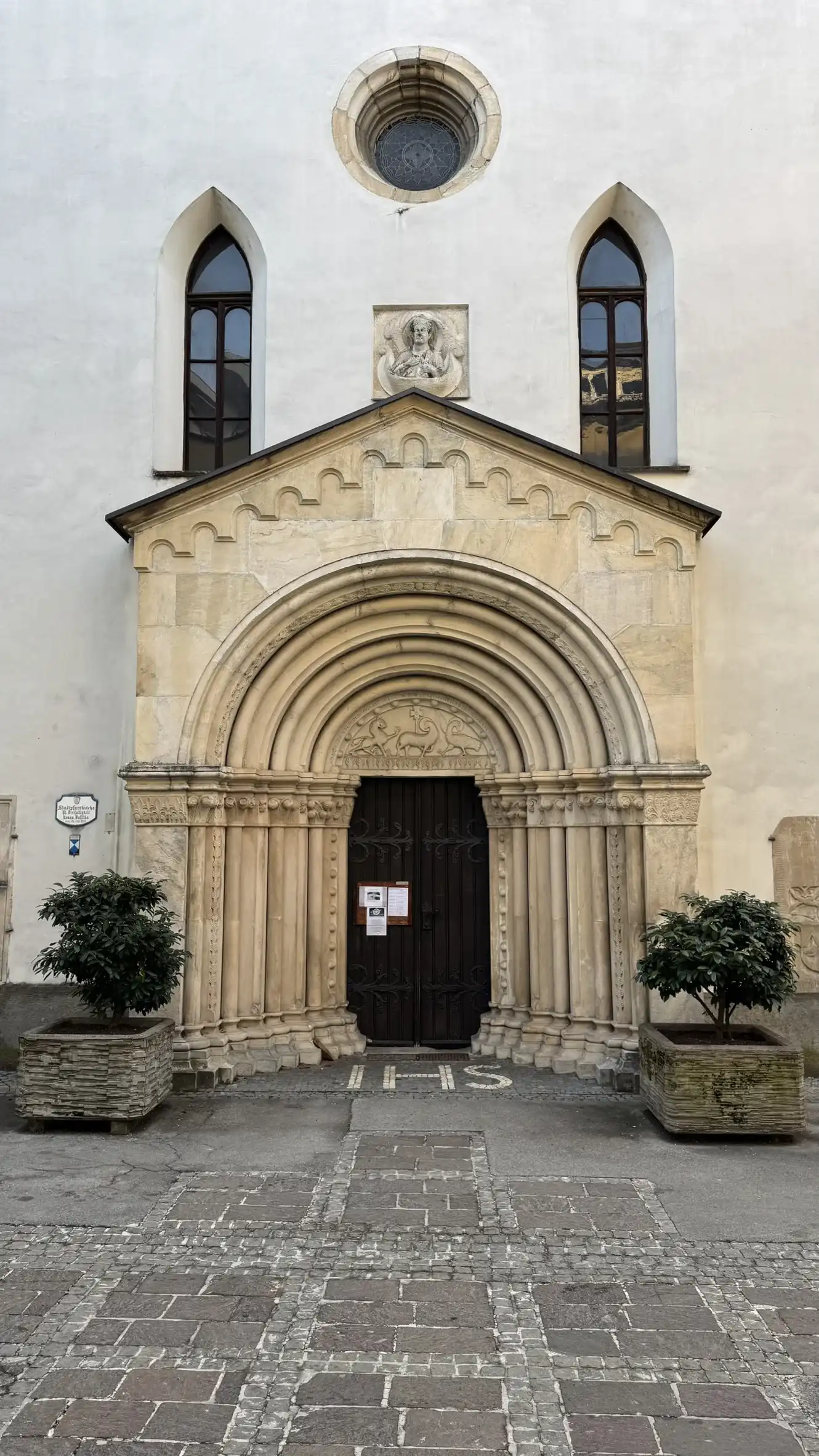
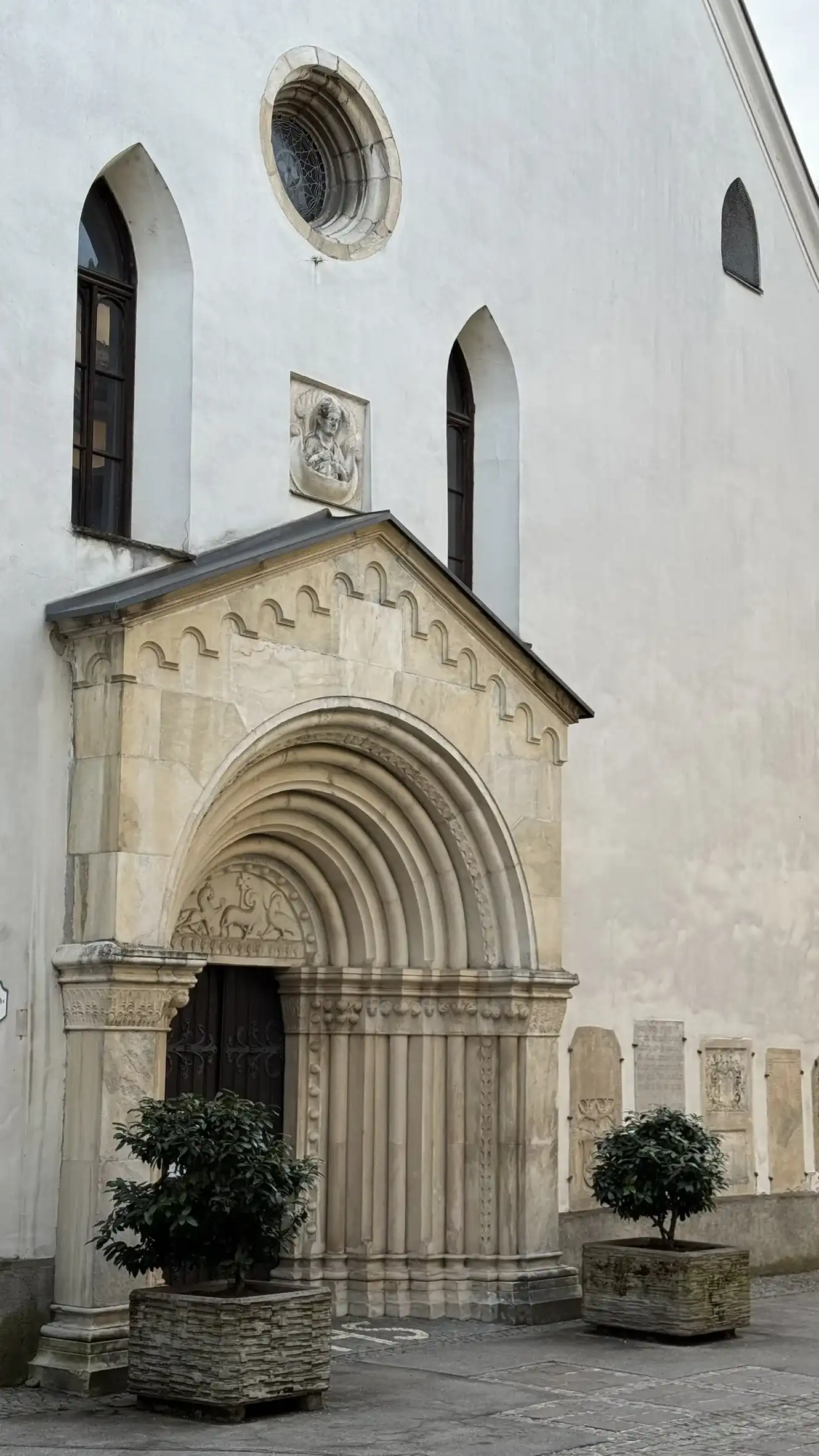
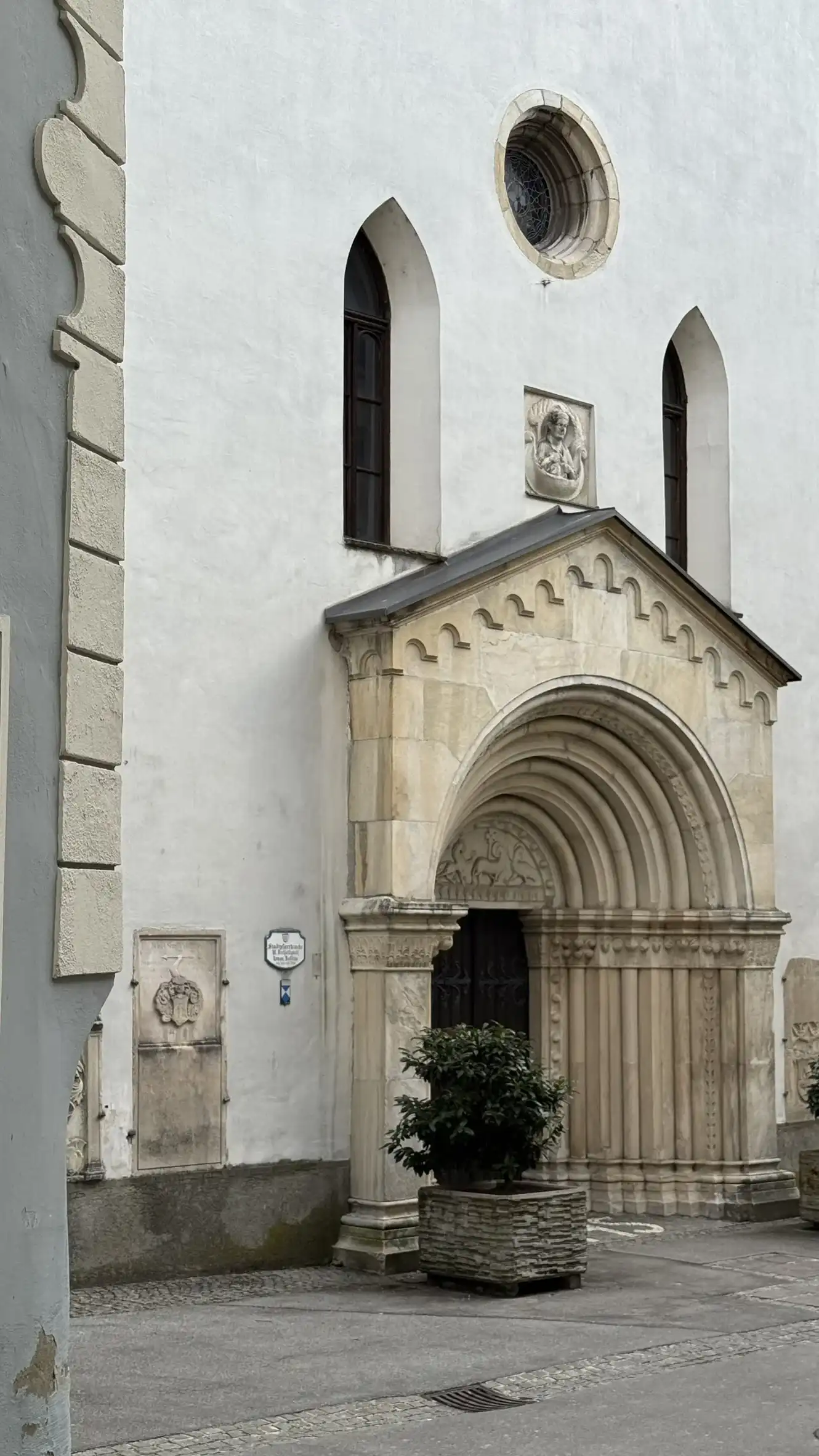
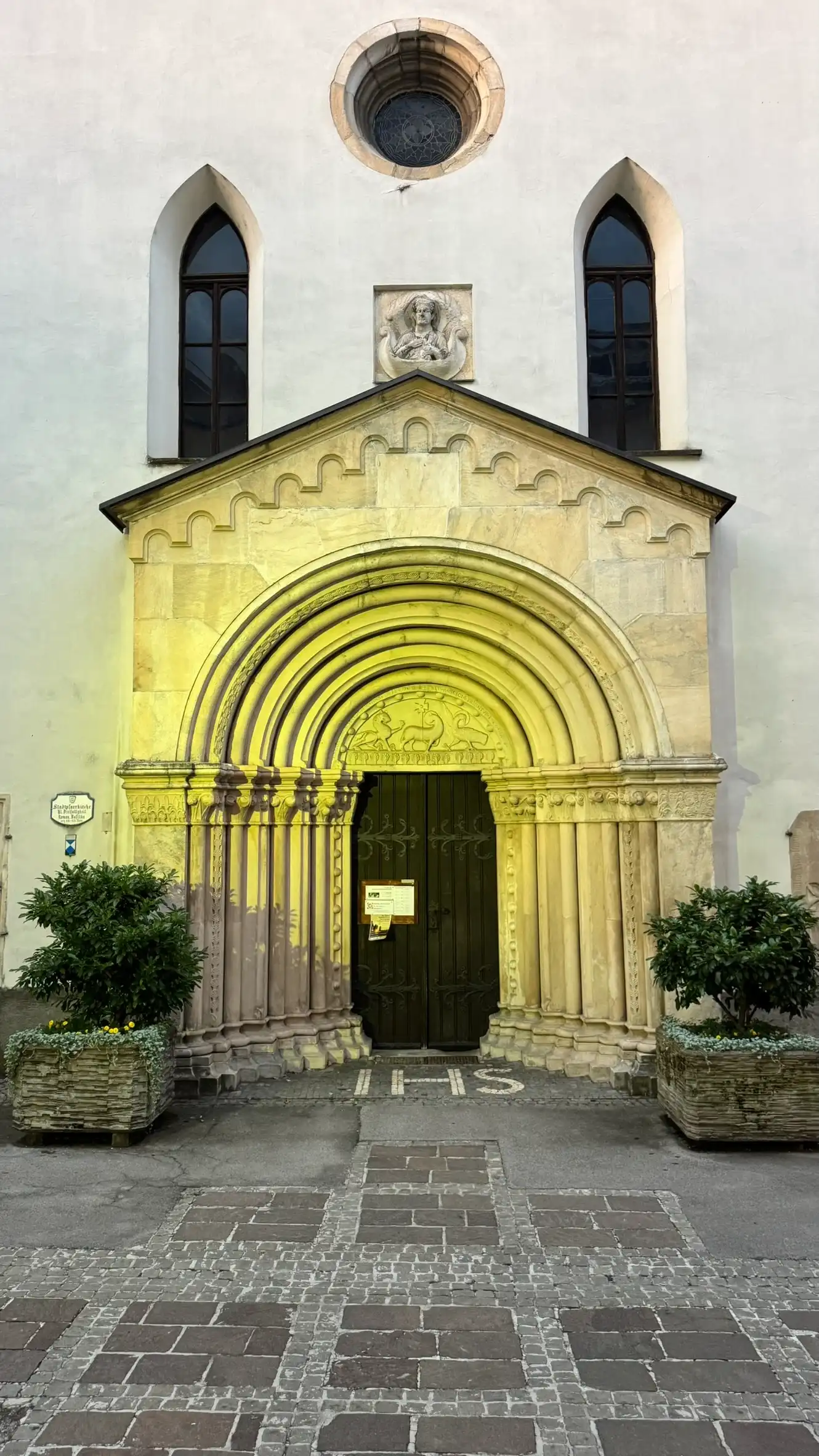
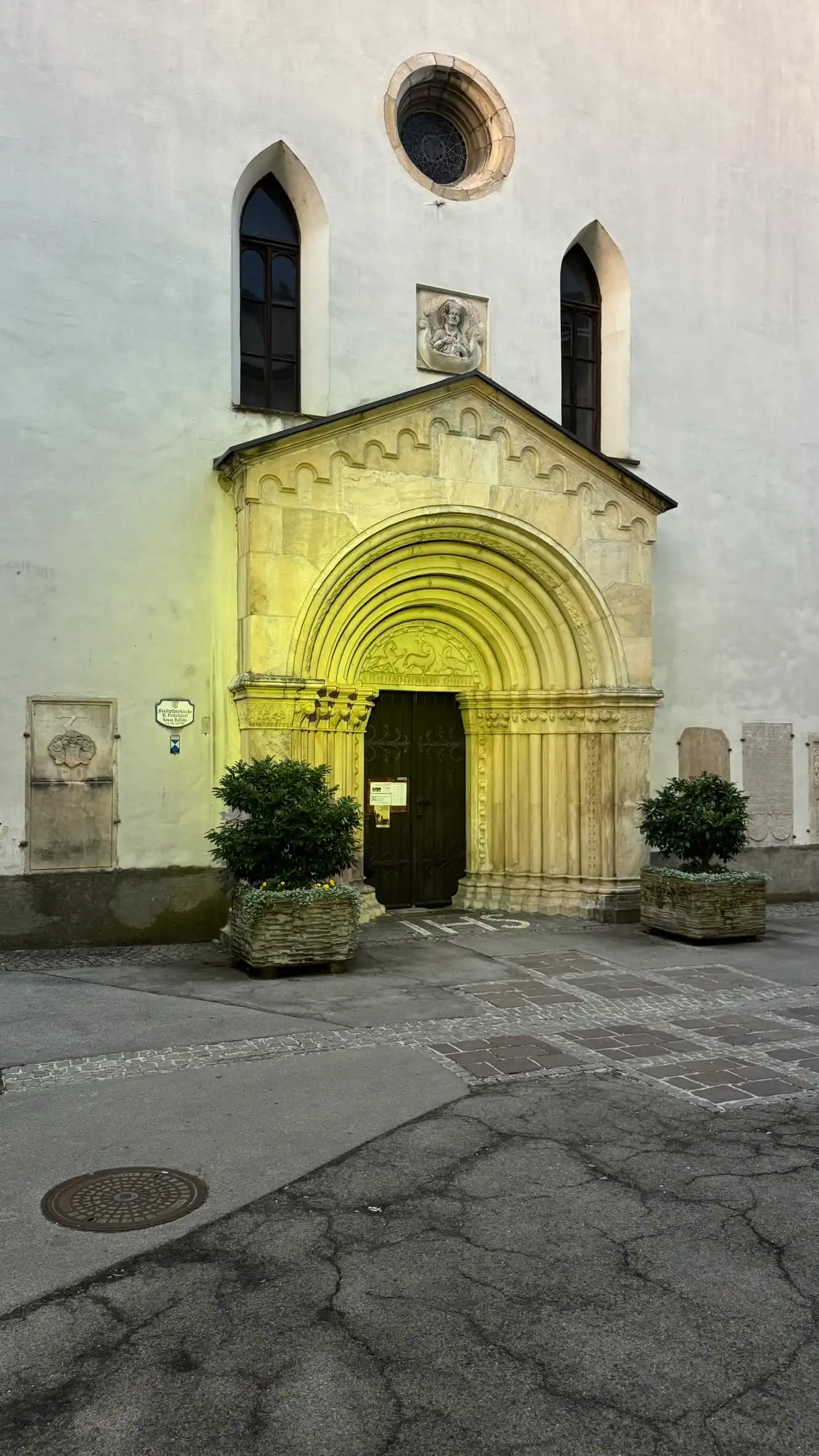
On the western facade is a richly ornamented late Romanesque portal from the 13th century, which was largely renewed between 1888 and 1893.
Only the round-arched tympanum remains in its original state, dating to around 1210. It shows a relief of the Lamb of God surrounded by the symbols of the four Evangelists.
The tympanum also bears a Latin inscription inviting visitors to enter the church.
Church Interior
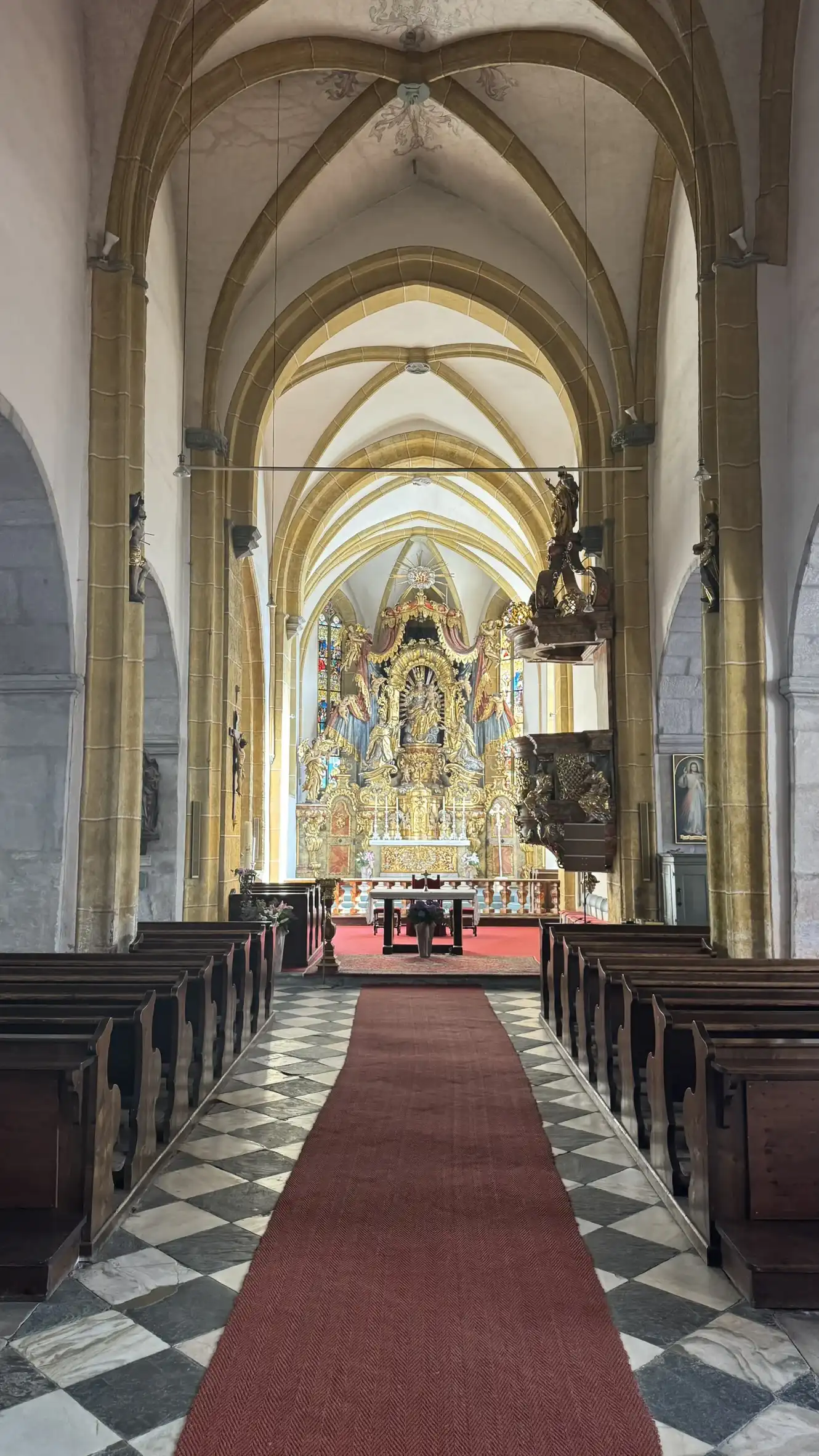
The church interior retains strong Romanesque characteristics. The heavy round-arched arcades date back to the original structure.
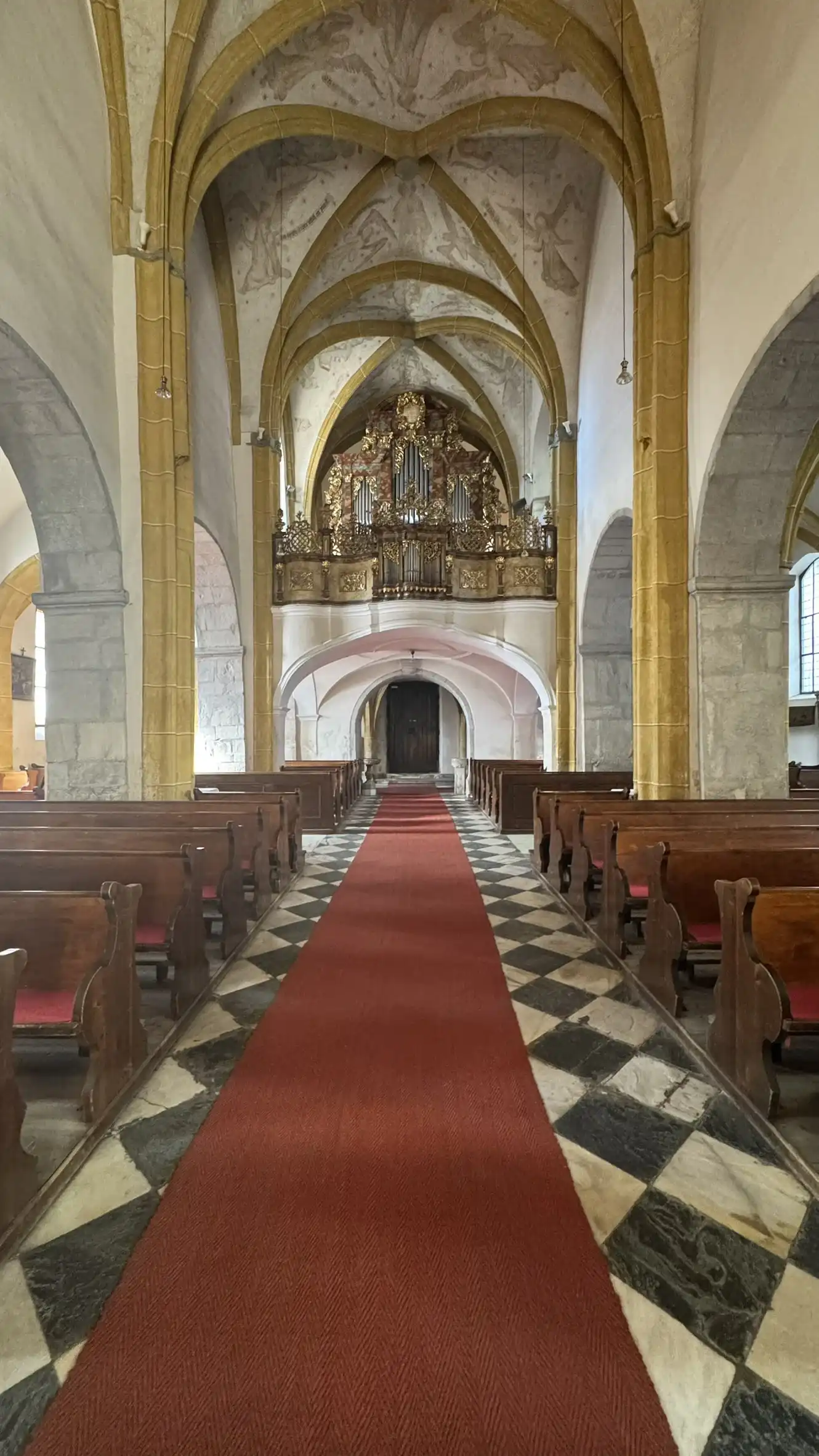
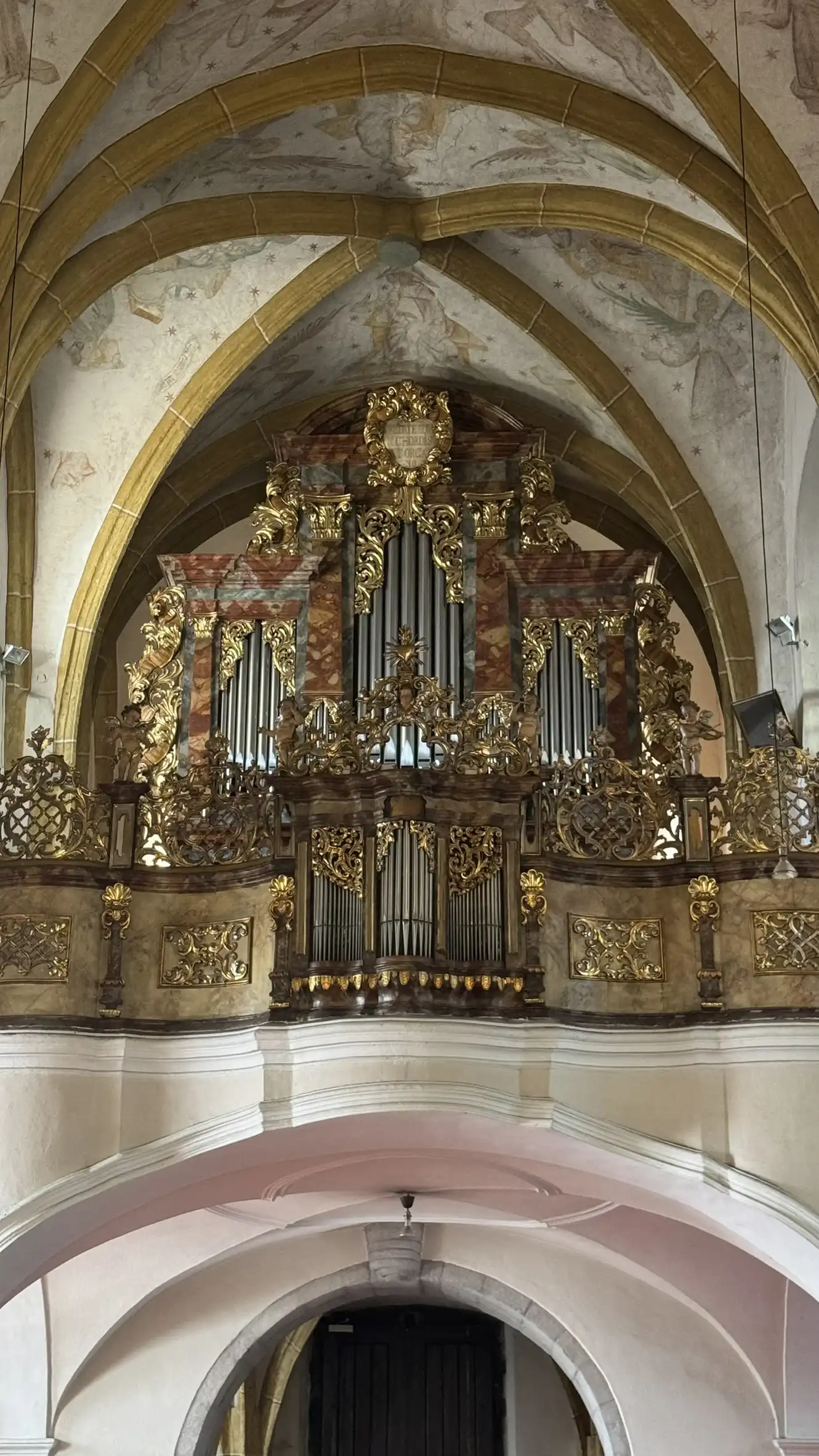
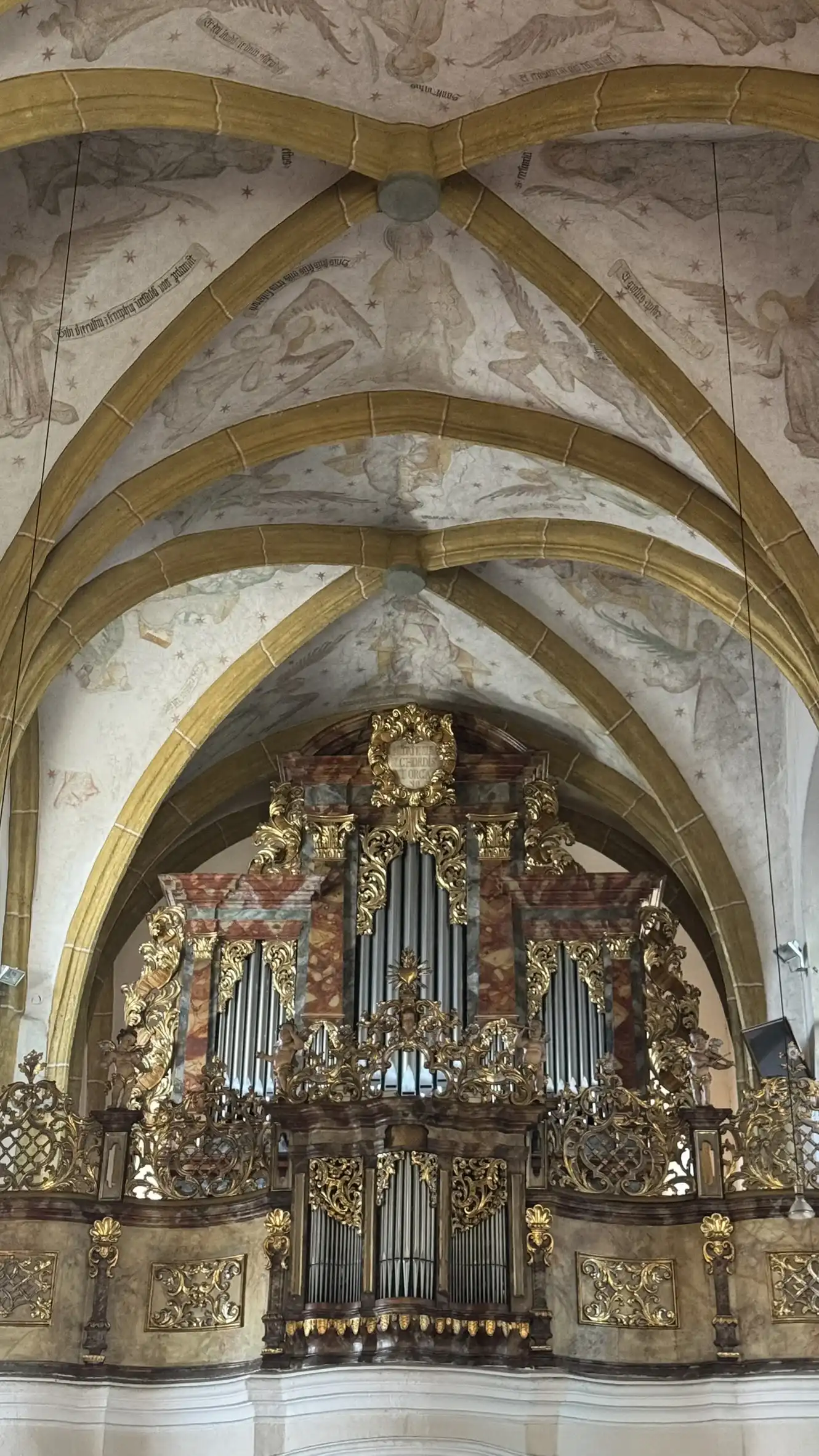
During the 14th and 15th centuries, rib and star vaults were added to the ceilings.
The northern side aisle features rib or star vaulting.
The southern aisle received new groin vaulting after the fire.
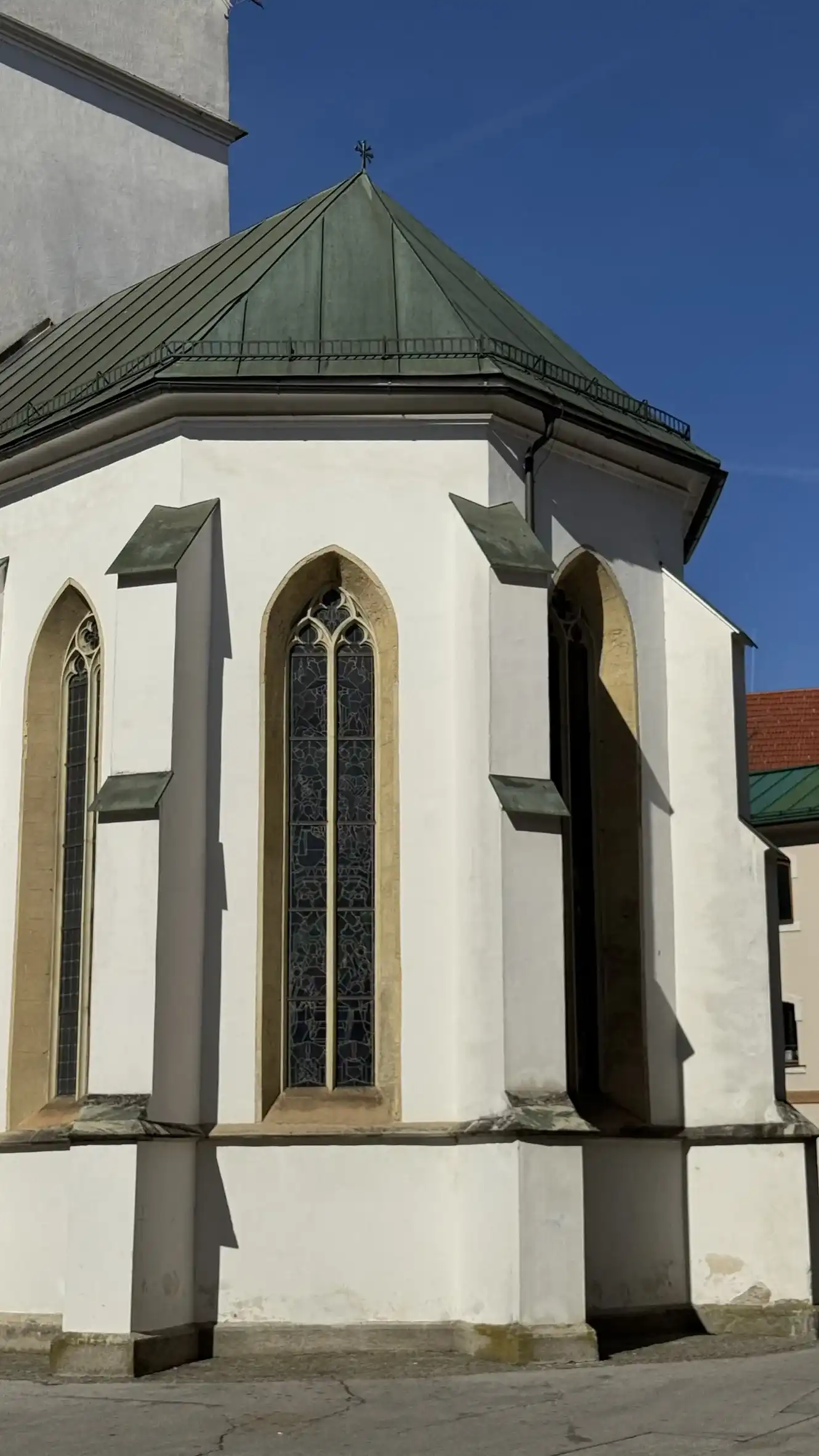
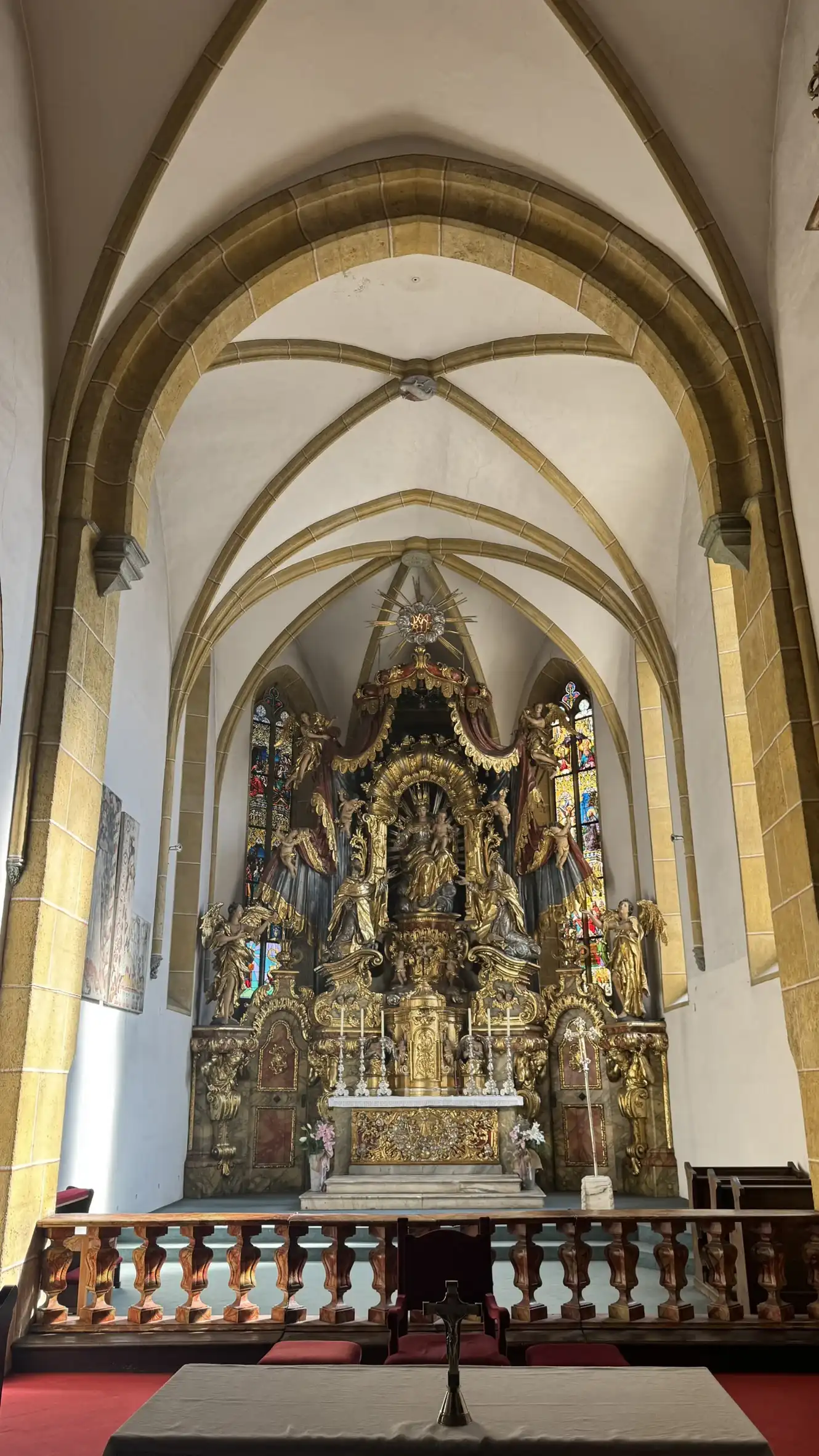
The original three apses were removed and replaced by a single bay choir in the width of the central nave, terminatingin a five-eighths apse with a late Gothic star-ribbed vault.
Frescoes
In 1959, wall paintings from 1406 were uncovered in the southern side aisle and transferredto the chancel. They depict, among other subjects, the martyrdom of Saint Acacius, a seated Madonna with Saint Wolfgang, and Saint Anthony with a donor couple.
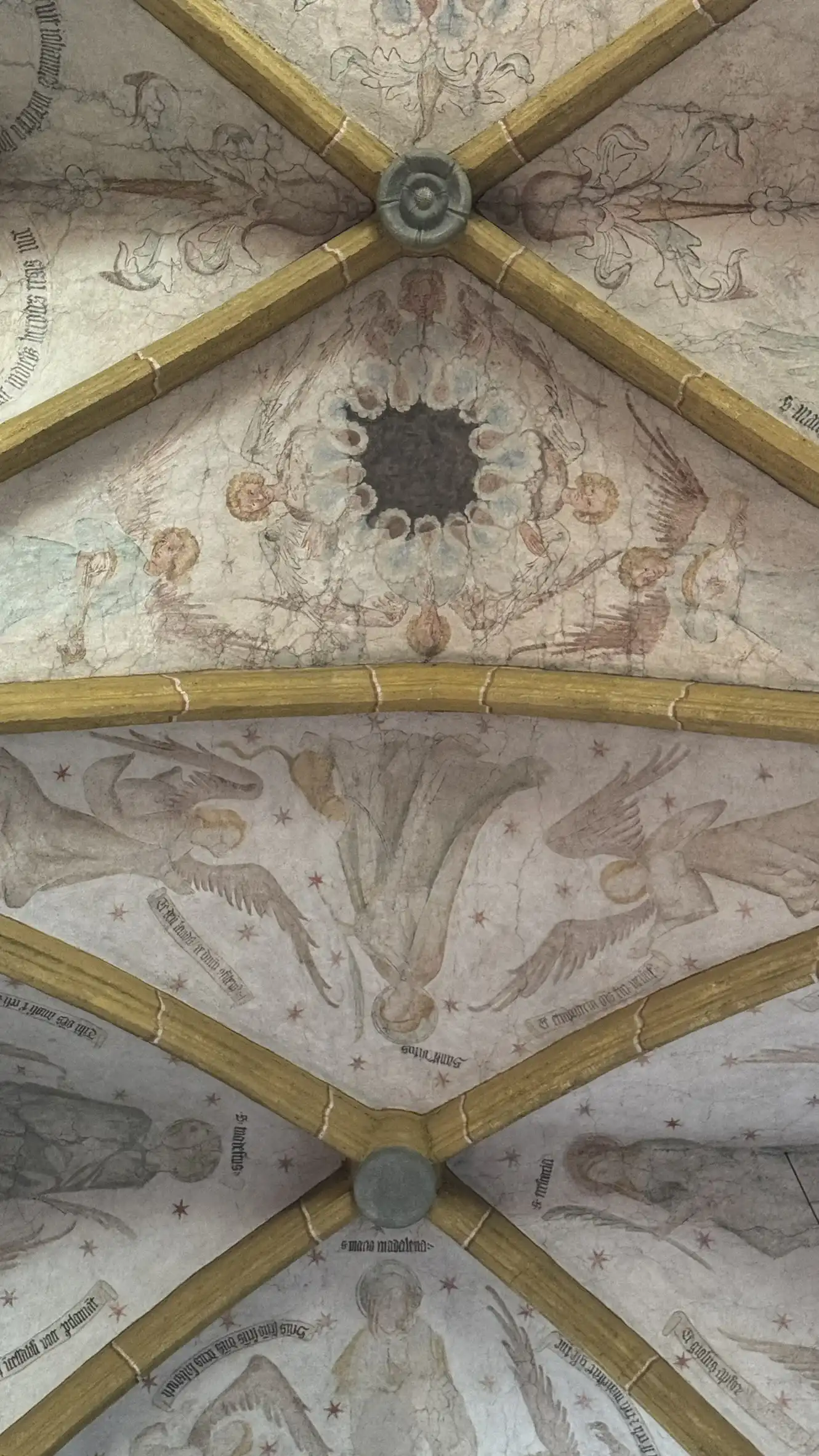
Additional frescoes were discovered in 1987 and 1989 in the nave vaulting. These late Gothic works (c. 1450) feature symbols of the Evangelists, musical angels, the four Latin Church Fathers, and numerous saints.
High Altar
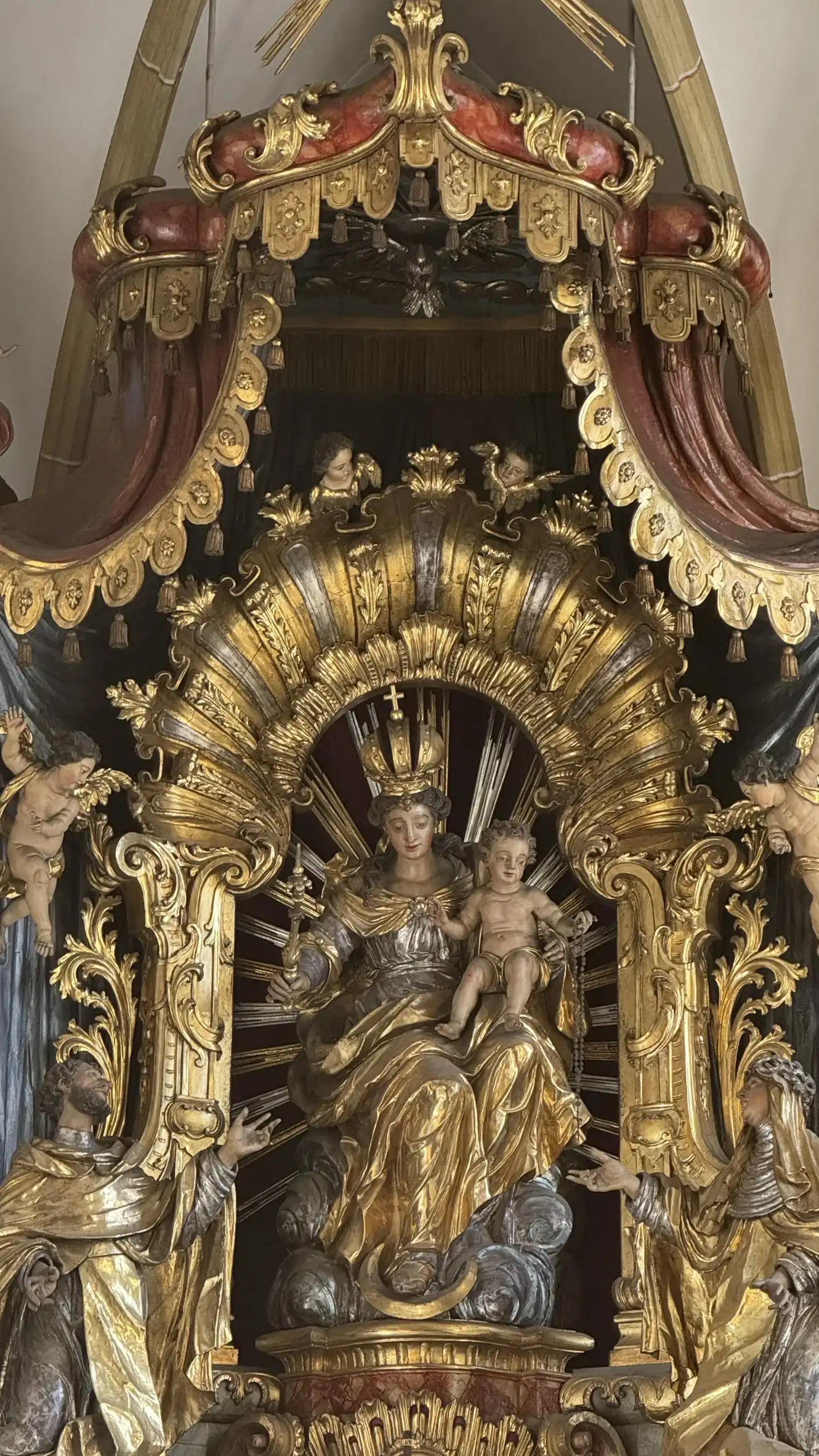
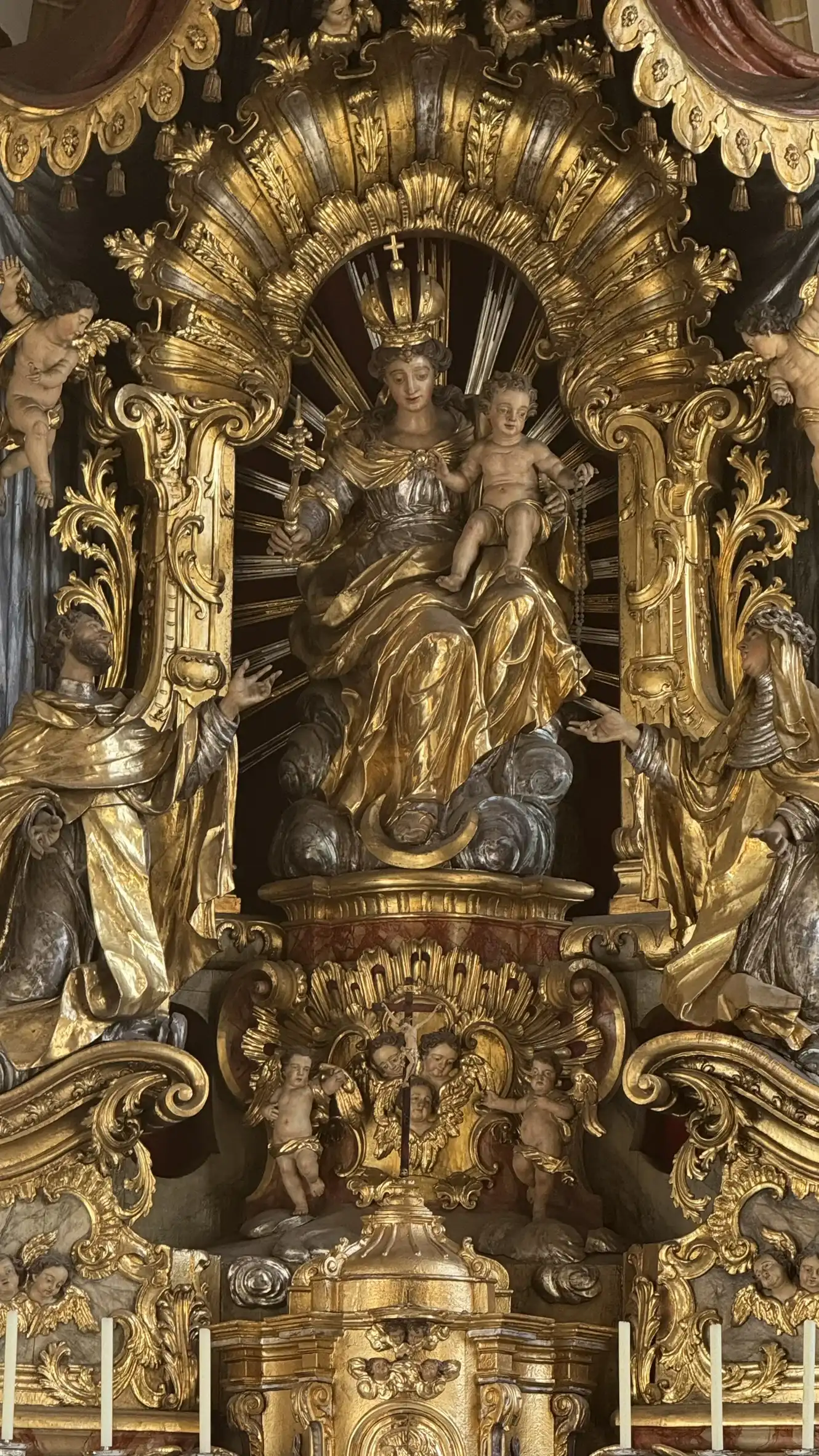
The baroque high altar was created by Johann Pacher in 1752. It is a richly carved baldachin altar with processional portals. The central group shows the Virgin Mary flanked by Saints Clare and Dominic.
Cross Altar
In the northern side chapel stands the Cross Altar, also by Pacher (1745). It features a Pietà (Virgin Mary with the body of Christ), Saint Rupert, and flanking statues of other saints.
Florian Altar
In the southern aisle is the Florian Altar (1747), likewise created by Pacher. The altar painting shows Saint Florian with a view of the town of St Veit, flanked by carved figures of saints.
Pulpit
The pulpit dates to 1734 and is attributed to Johann Pacher. Originally from the monastery church, it displays figures of the four Evangelists in niches on the pulpit basket.
Parish church seen from Kirchplatz’s eastern end, with the tower and apse in view
Polygonal apse facing the east; Gothic windows and three-stepped buttresses
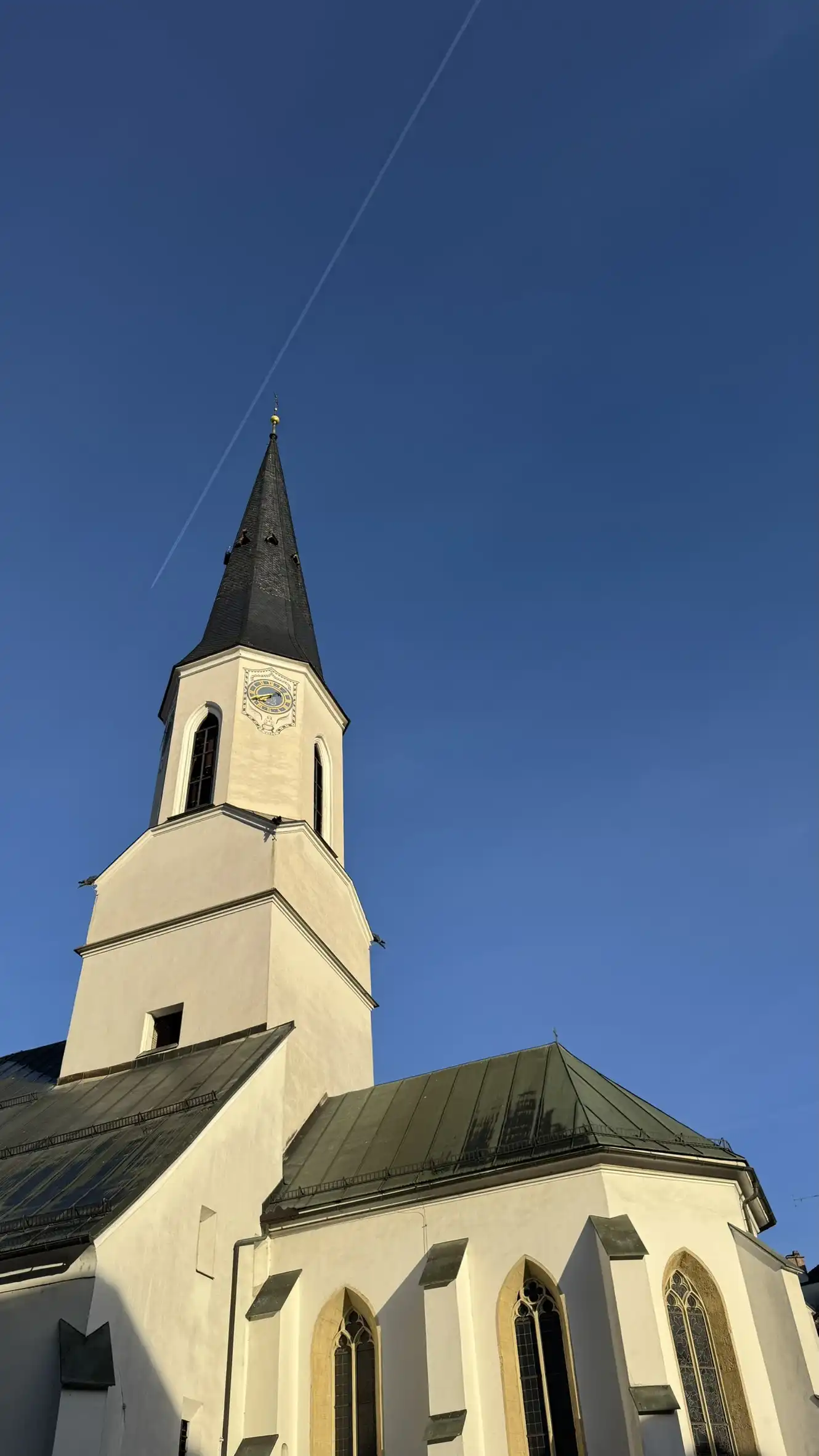
Church tower: four-sided lower section; eight-sided upper section; polygonal spire tapering to a point
South face of the tower: upper section with alternating windows and clocks
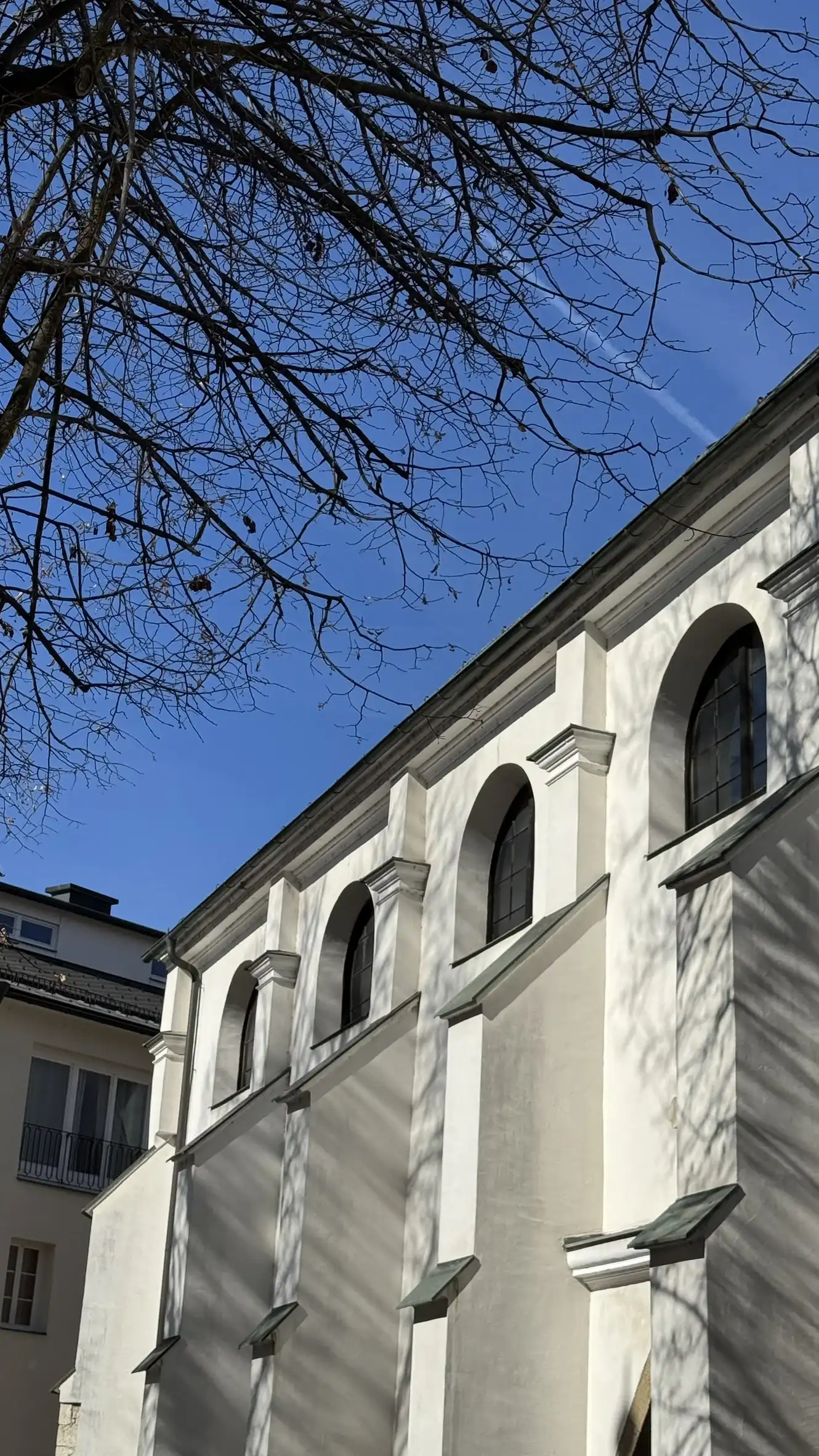
South face of the nave featuring buttresses and clerestory windows
Church tower and apse in early morning golden light
Church tower illuminated by early morning light
Church tower illuminated by early morning light
Church tower illuminated by early morning light
Church tower illuminated by early morning light
Baroque west portal, created in 1752
Baroque portal with jambs and archivolts
Baroque portal with jambs and archivolts
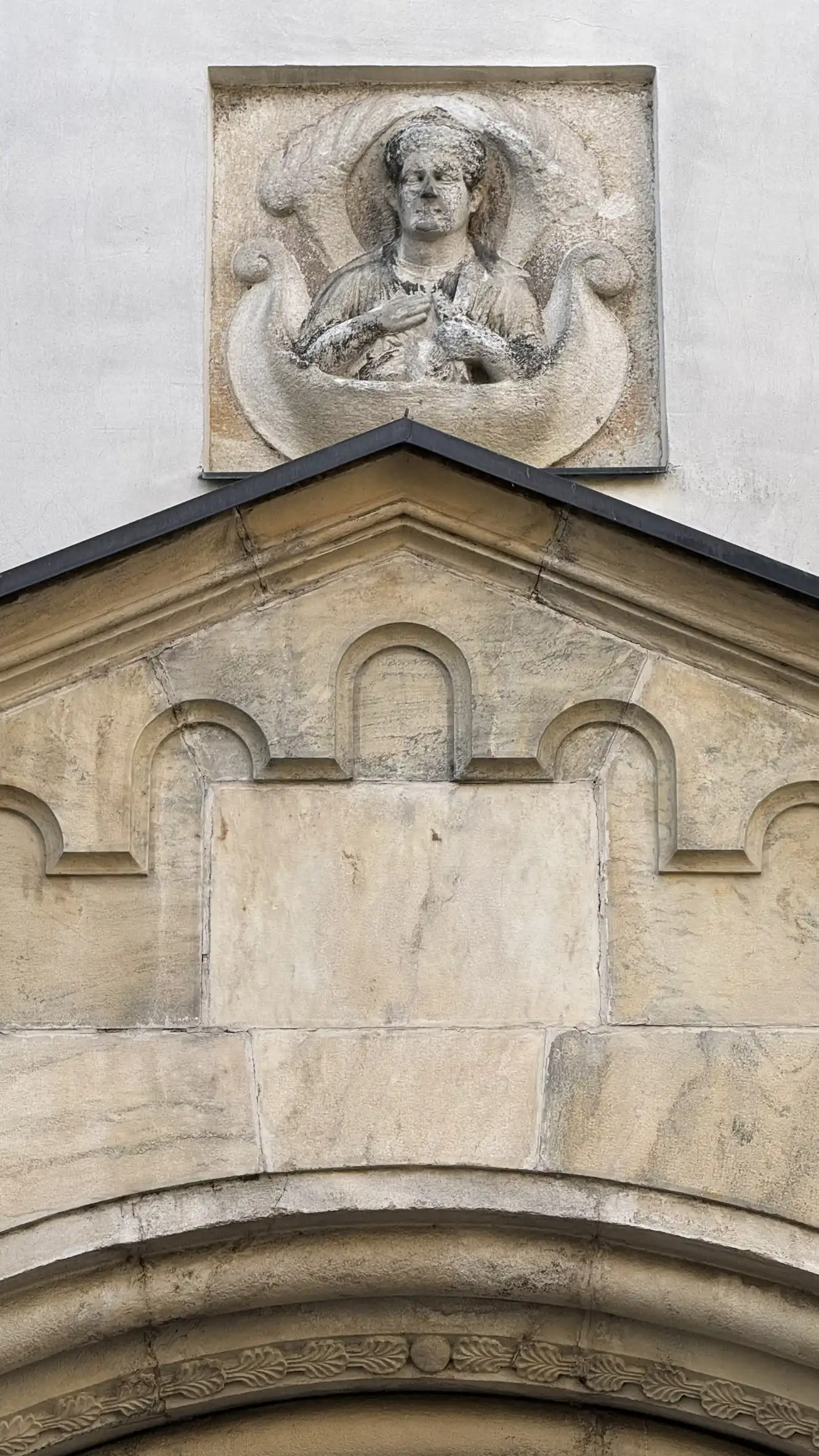
Triangular pediment above the tympanum and archivolts
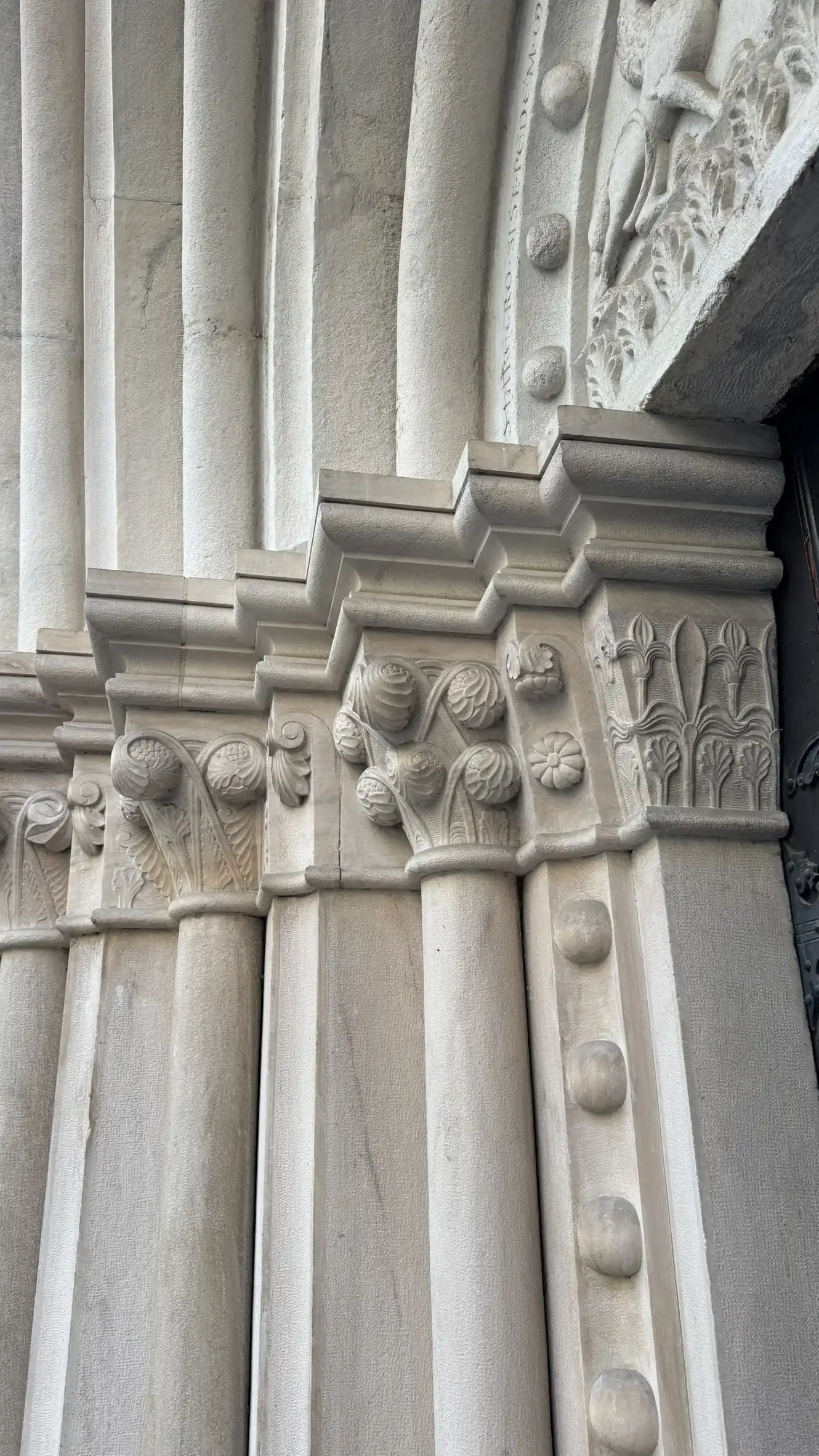
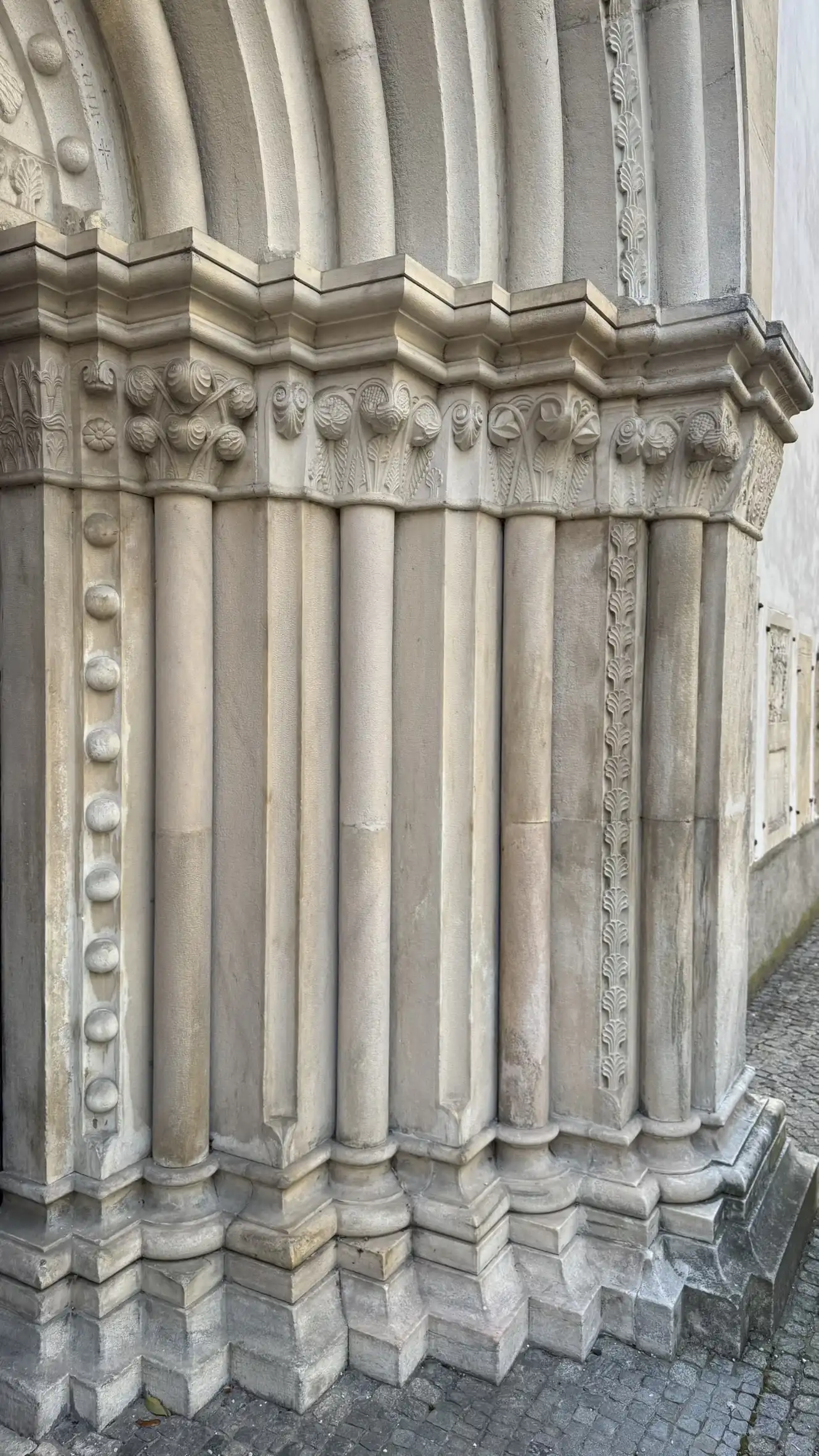
Close-ups of the jambs with sculpted decoration
From bottom to top: jamb bases, jambs, jamb capitals
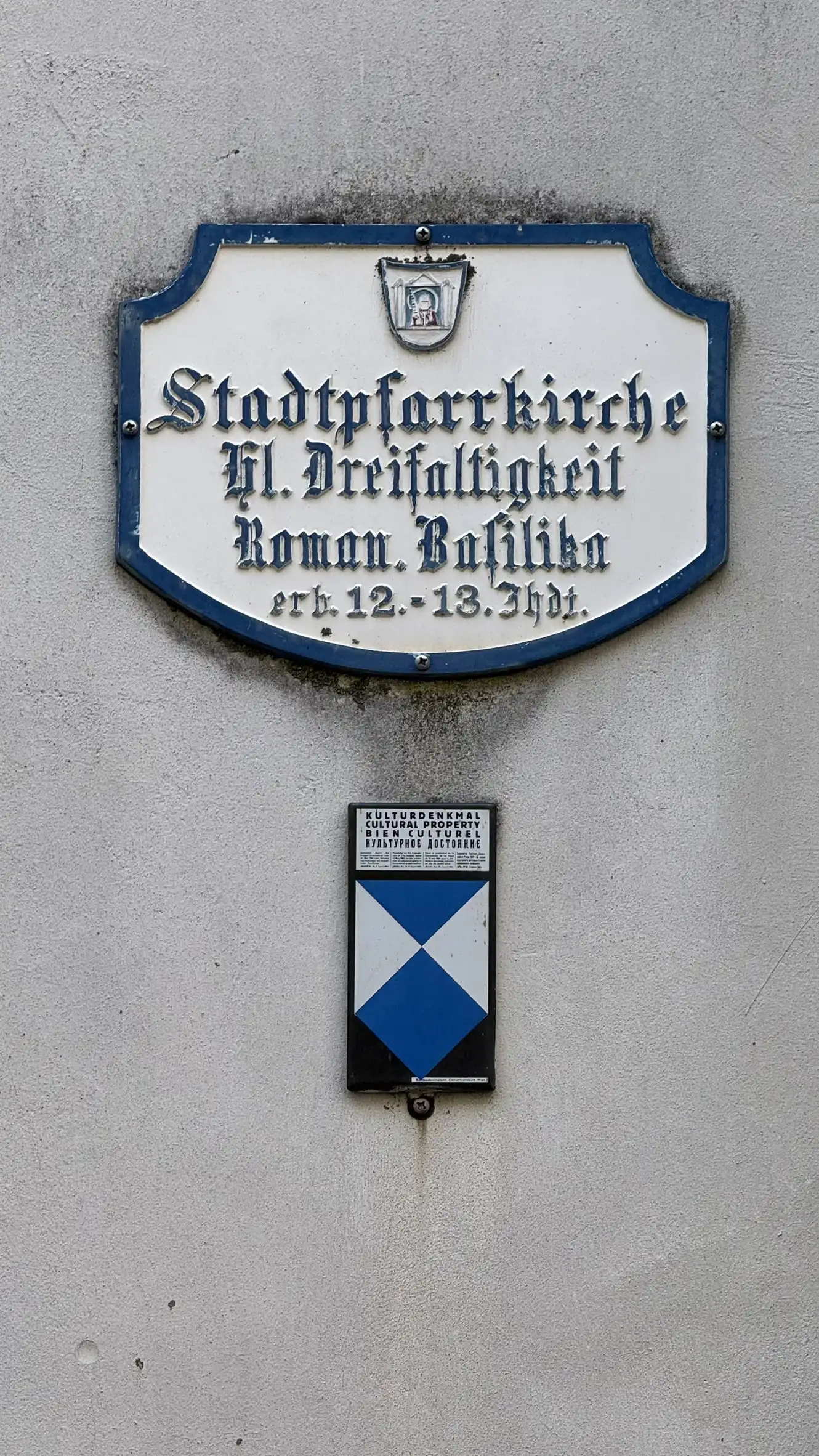
Signage: Parish church dedicated to the Holy Trinity; Romanesque Basilica; built in the 12th–13th century
West portal, featuring tympanum, jambs, archivolts, two pointed windows, and a central circular window
West portal illuminated at night
Westwork, featuring the west portal and embedded gravestones
Tombstone embedded in the facade
Tombstone embedded in the facade
Tombstone embedded in the facade
Tombstone embedded in the facade
Tombstone embedded in the facade
Tombstone embedded in the facade
Tombstone embedded in the facade
Tombstone embedded in the facade
Tombstone embedded in the facade
Tombstone embedded in the facade
Tombstone embedded in the facade
Altar, viewed from the western end of the nave
Baroque altar, created in 1752 by Johann Pacher
Detail, Baroque altar
Detail, Baroque altar
West-portal and church organ, viewed from the eastern end of the nave
Church organ above the west-portal
Church organ and vaulted ceiling
Vaulted ceiling and frescoes
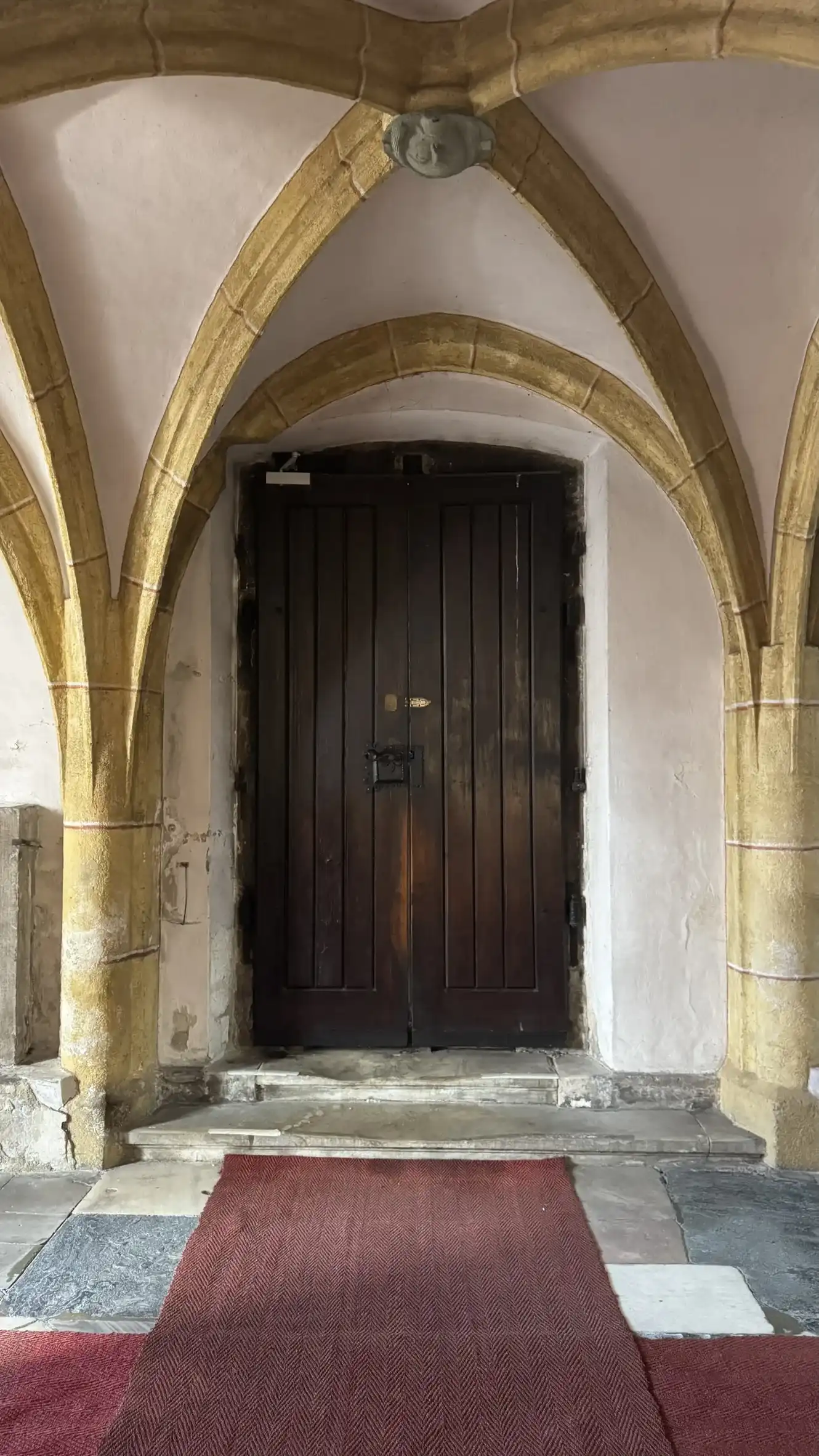
Door, west-portal
Historical Photographs Image Source: Archive of the Municipal Authority of St. Veit an der Glan
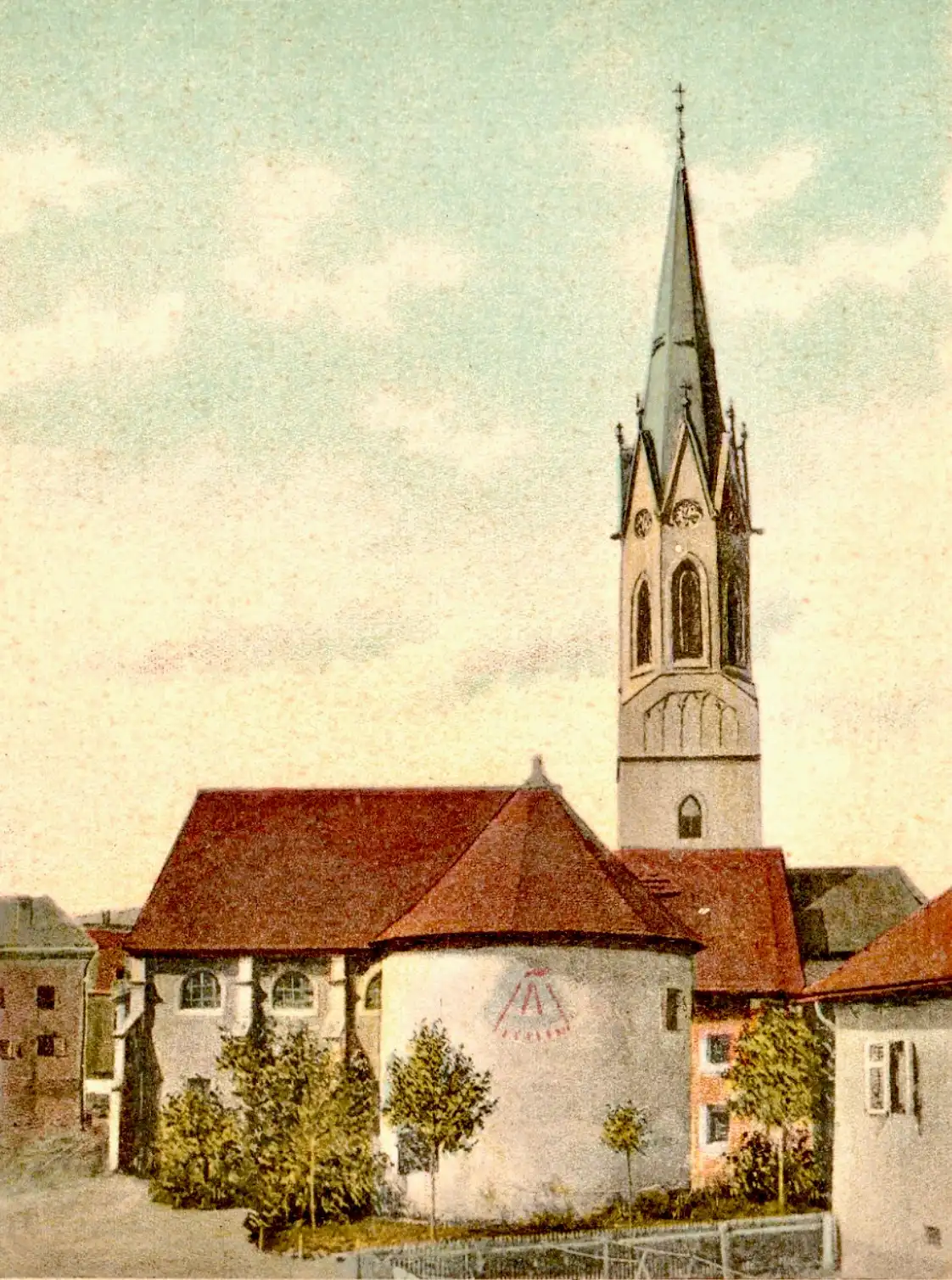
Kirchplatz, View Towards the North Postcard, 1902
This postcard presents a northward view across the Kirchplatz. The charnel house is in the foreground, while in the background the tower of the parish church rises above the scene.
The image was produced using the hand-coloured photographic technique, which was popular at the time.
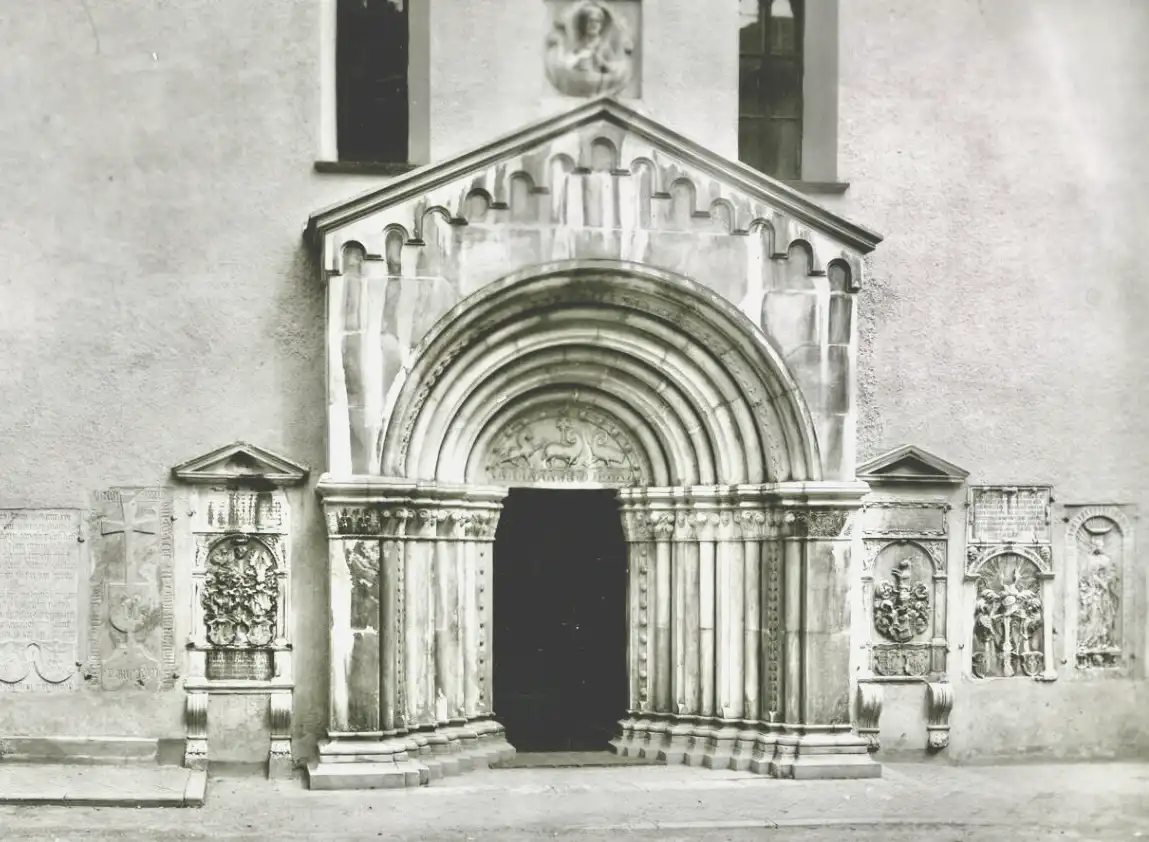
Portal of the Parish Church Photograph, c. 1960
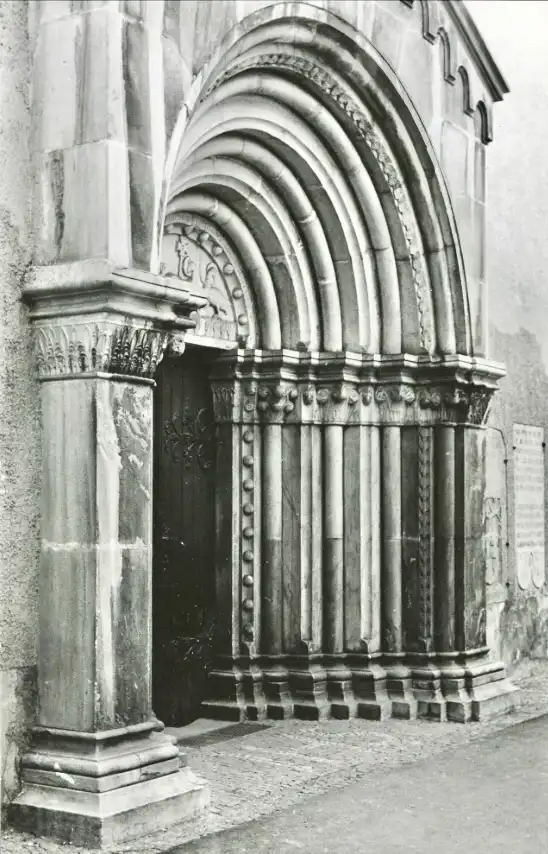
Portal of the Parish Church Photograph, c. 1965
The Tower of the Parish Church Photographed in 1952
This photograph features the parish church tower before it was renovated.
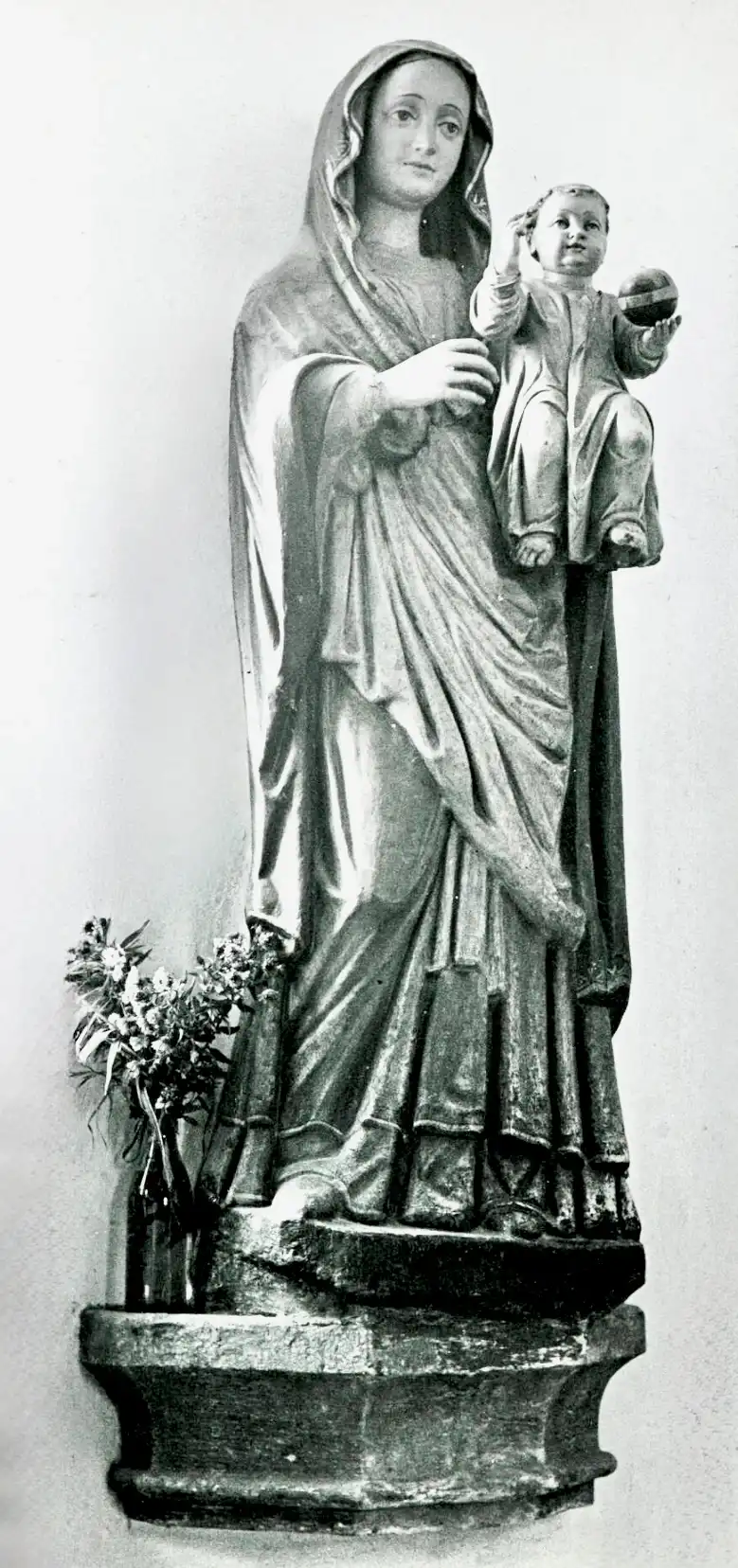
Stone Madonna Statue in the Parish Church
The statue was originally in the Monastery Church.