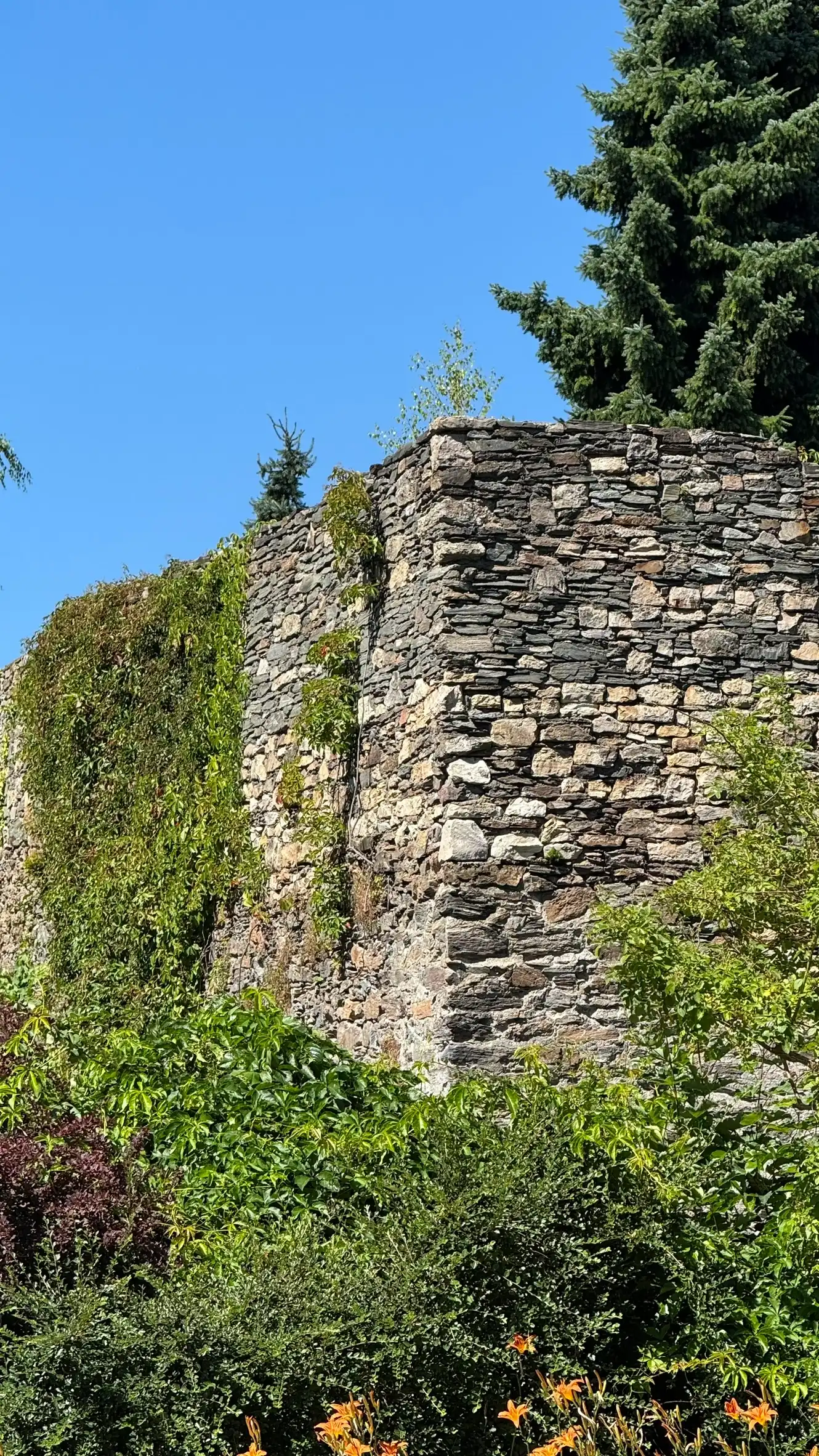
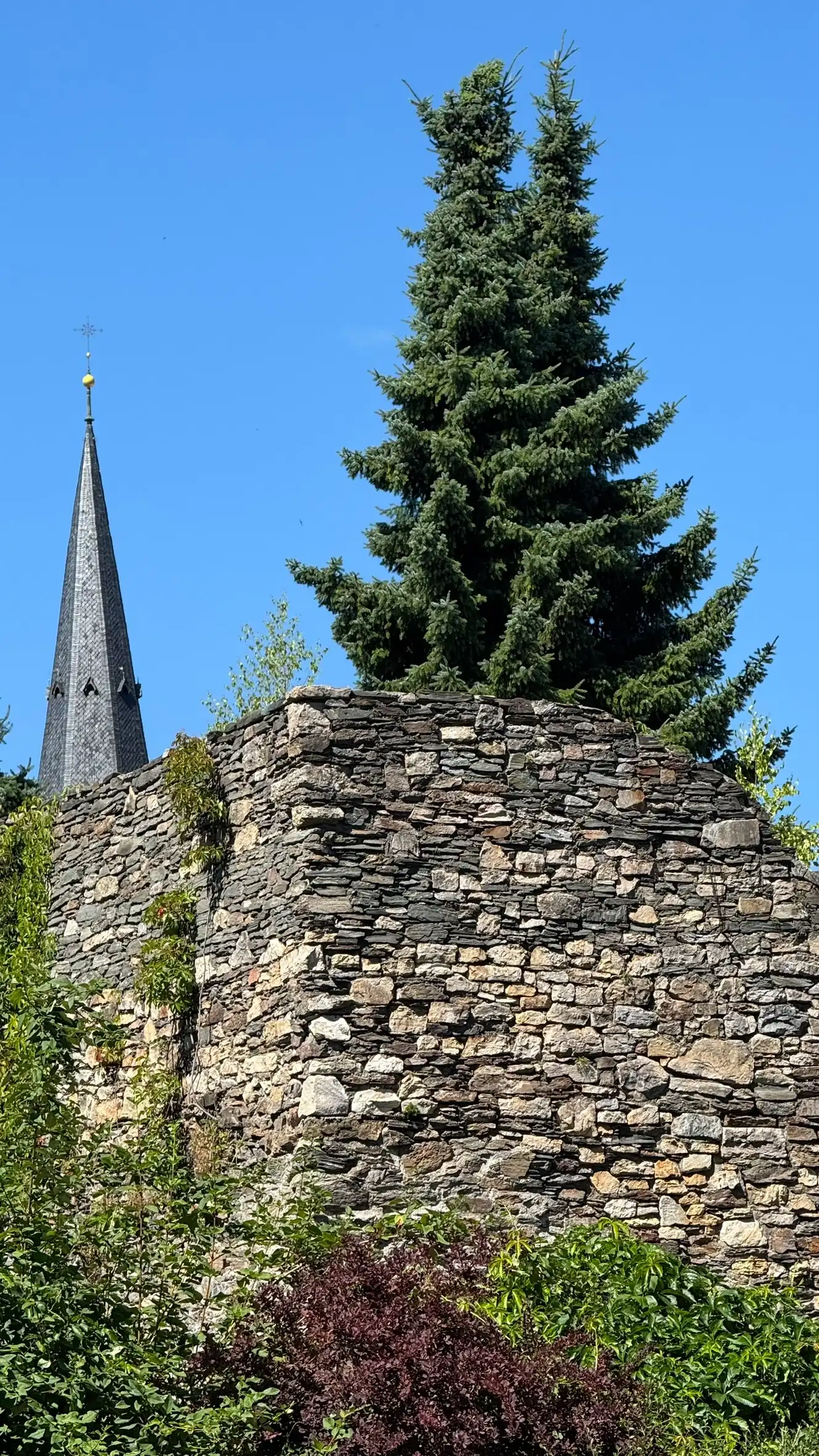
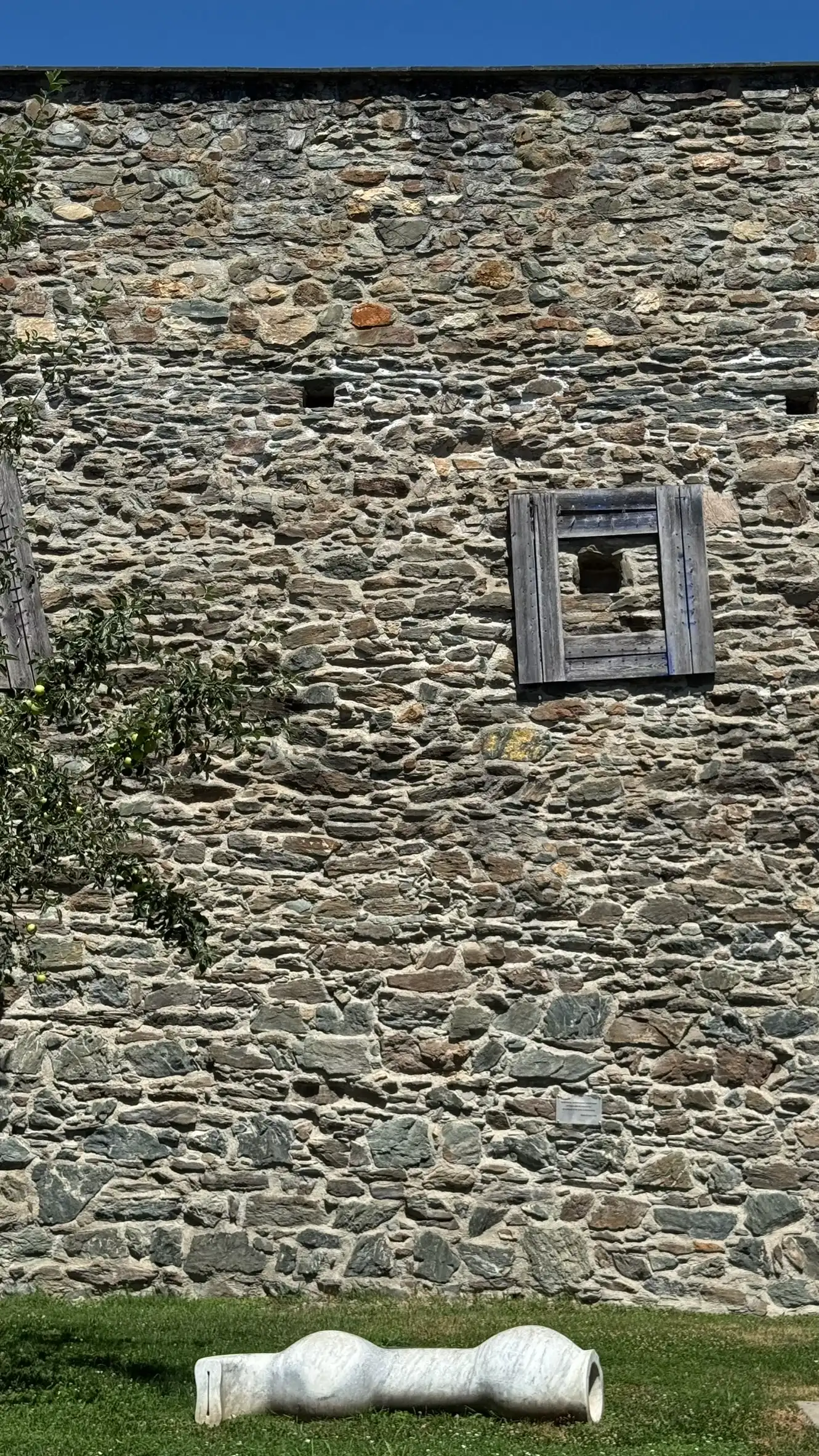
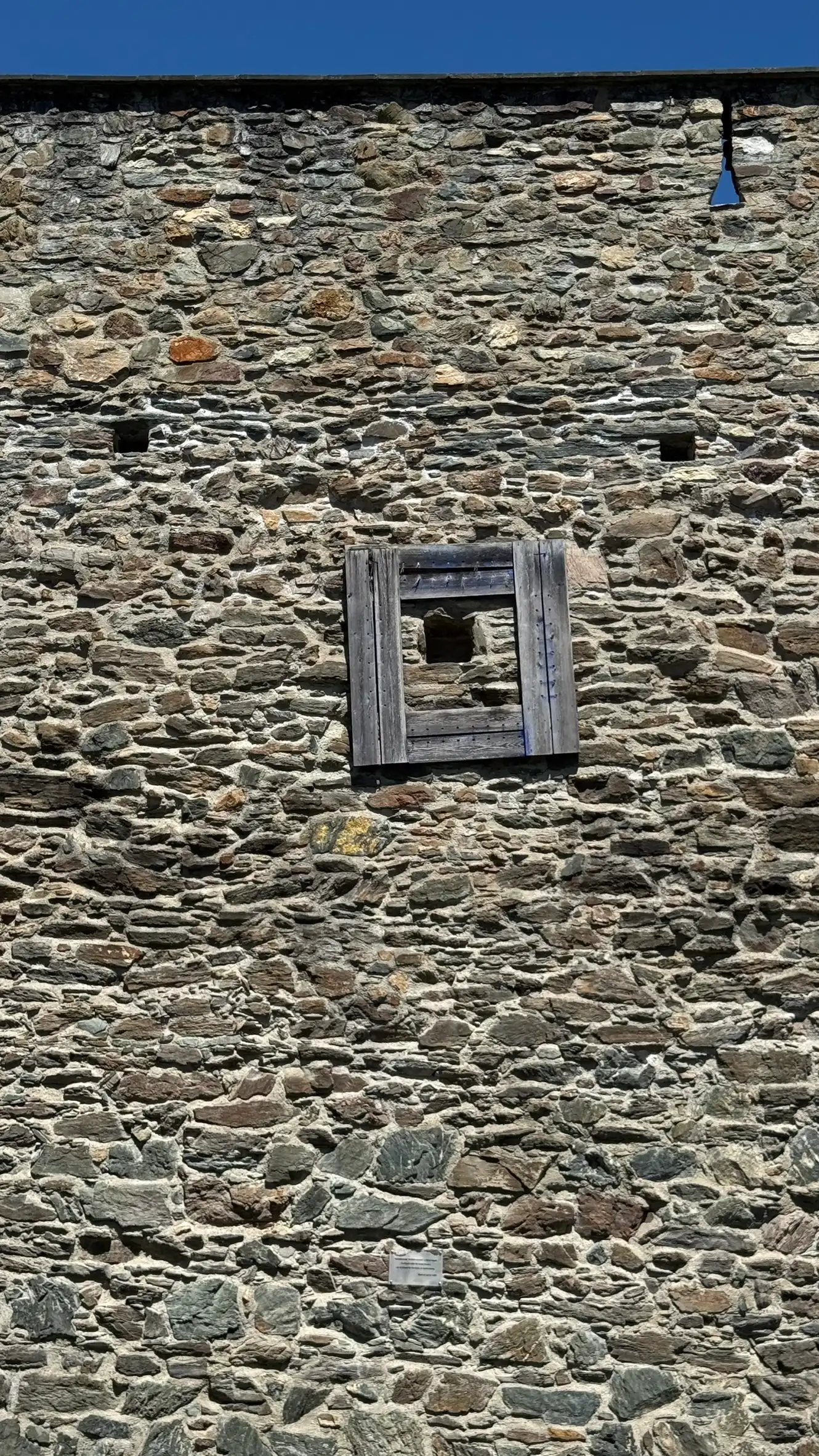
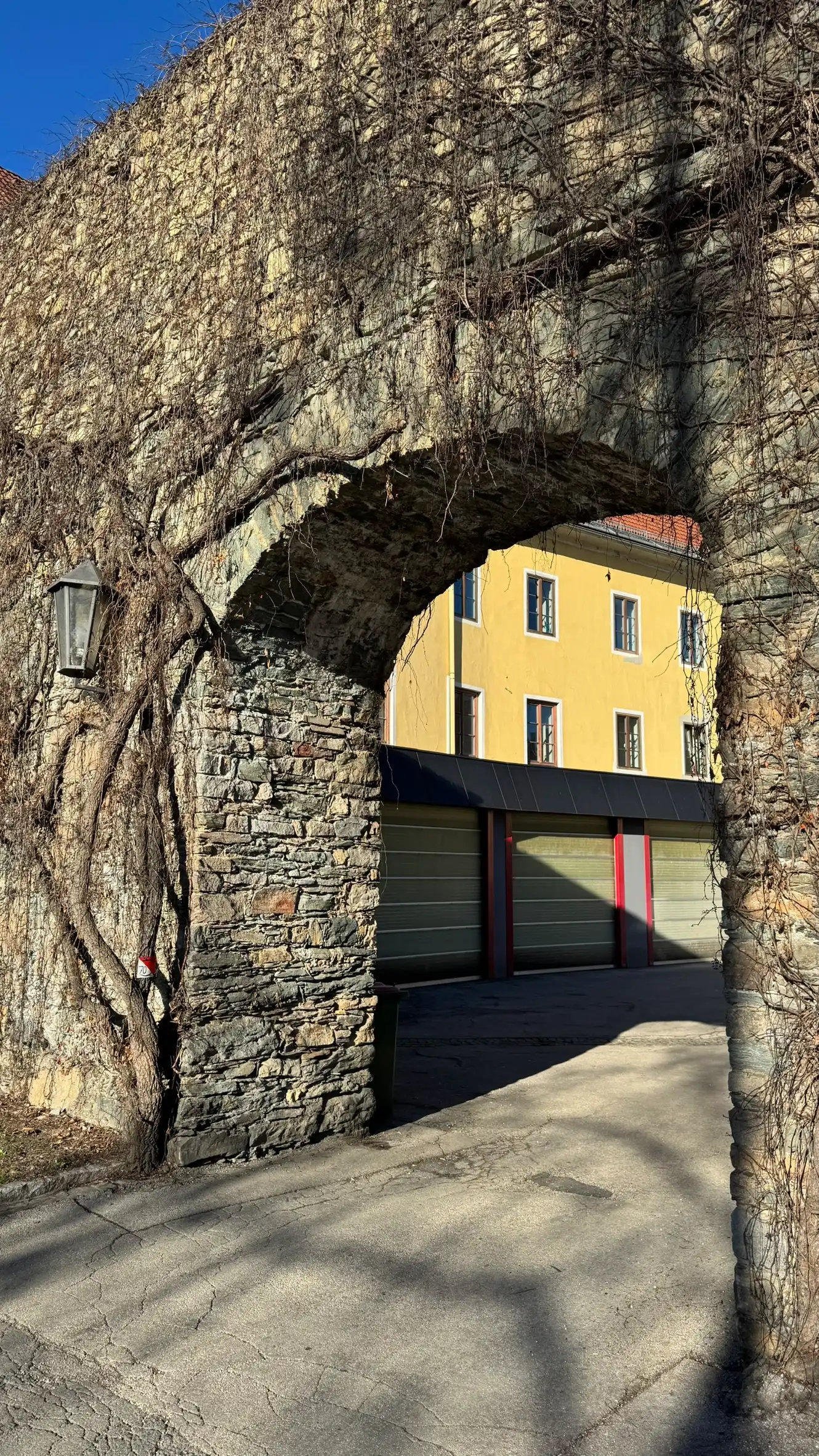
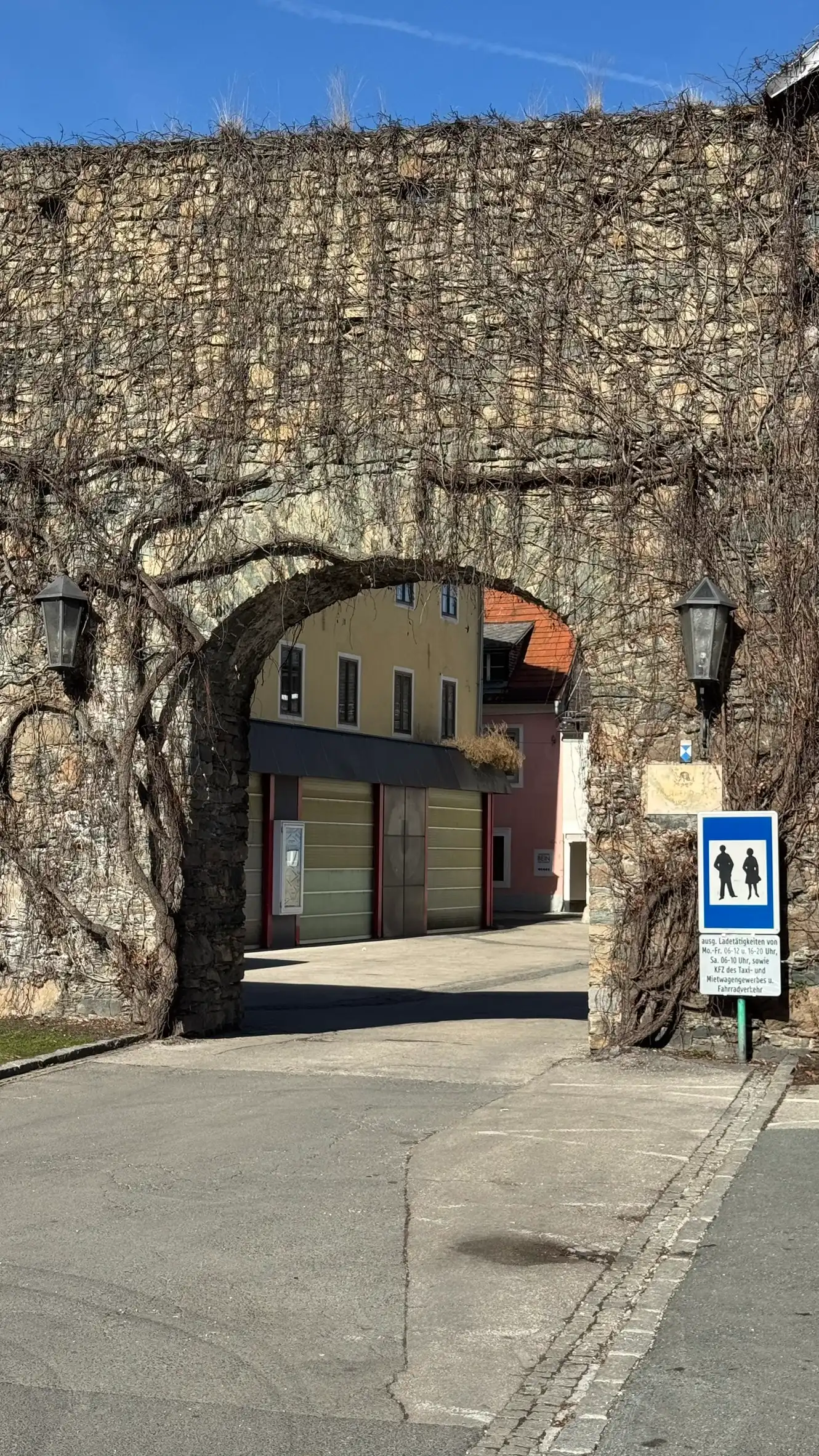
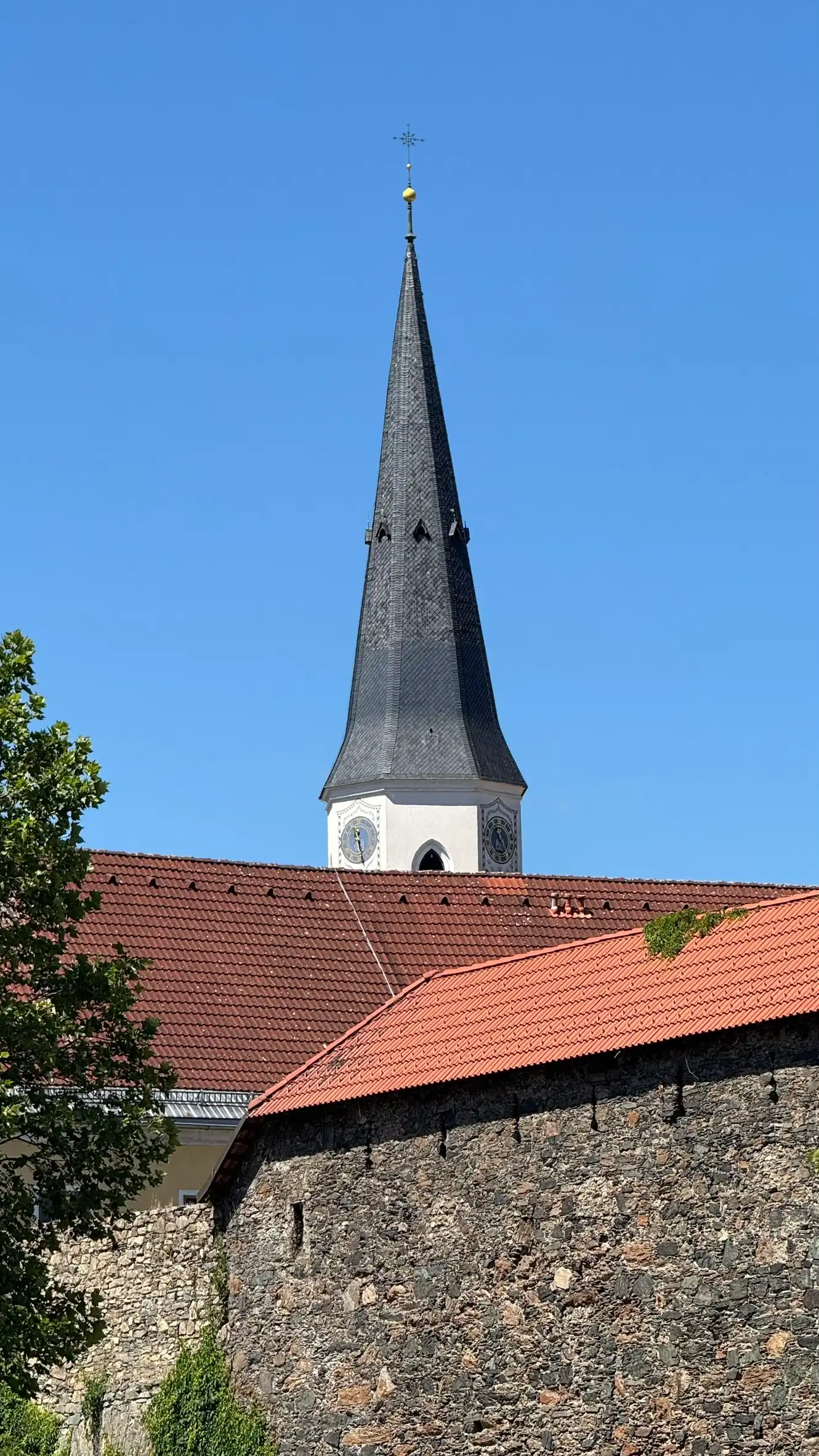
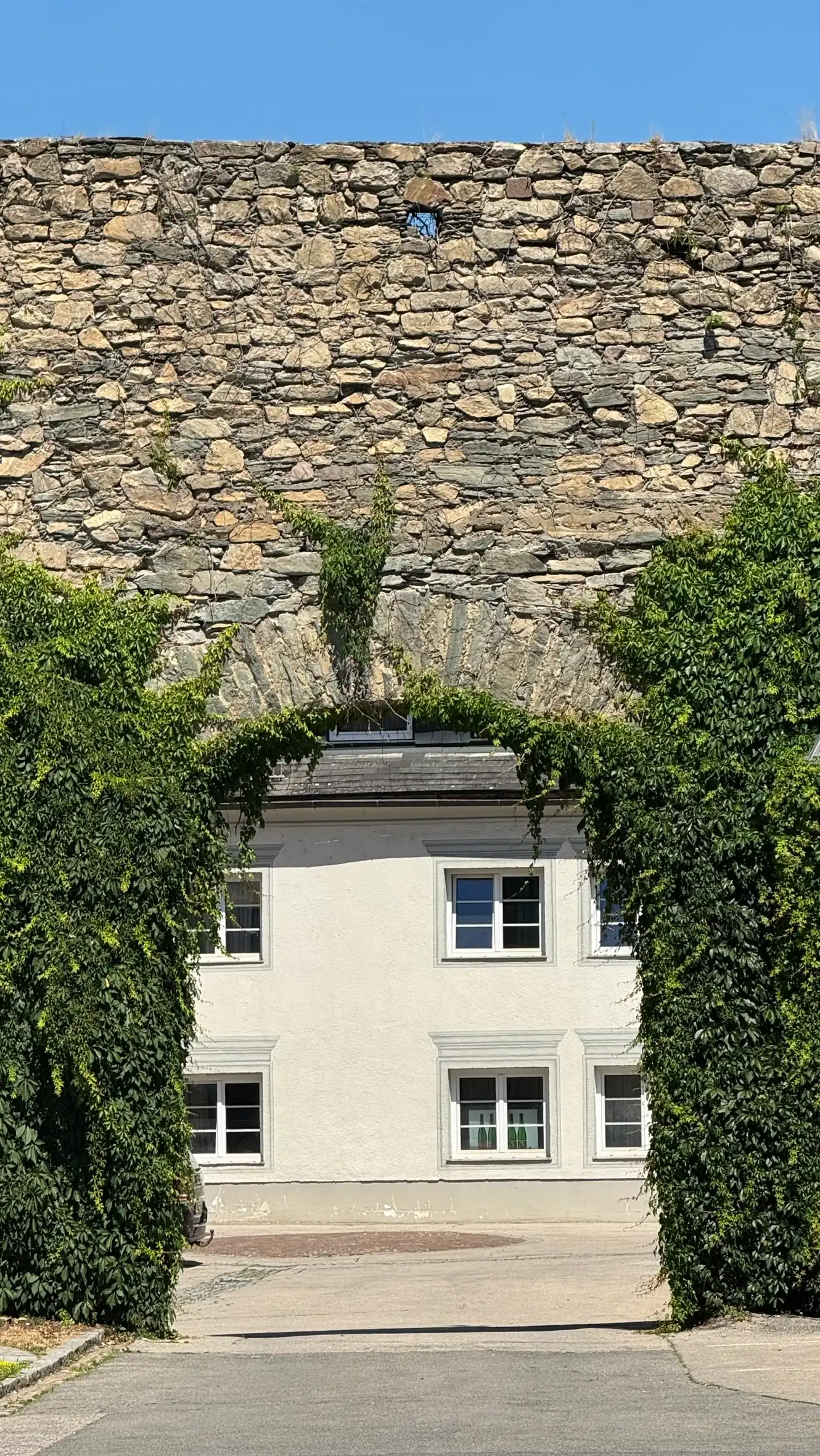

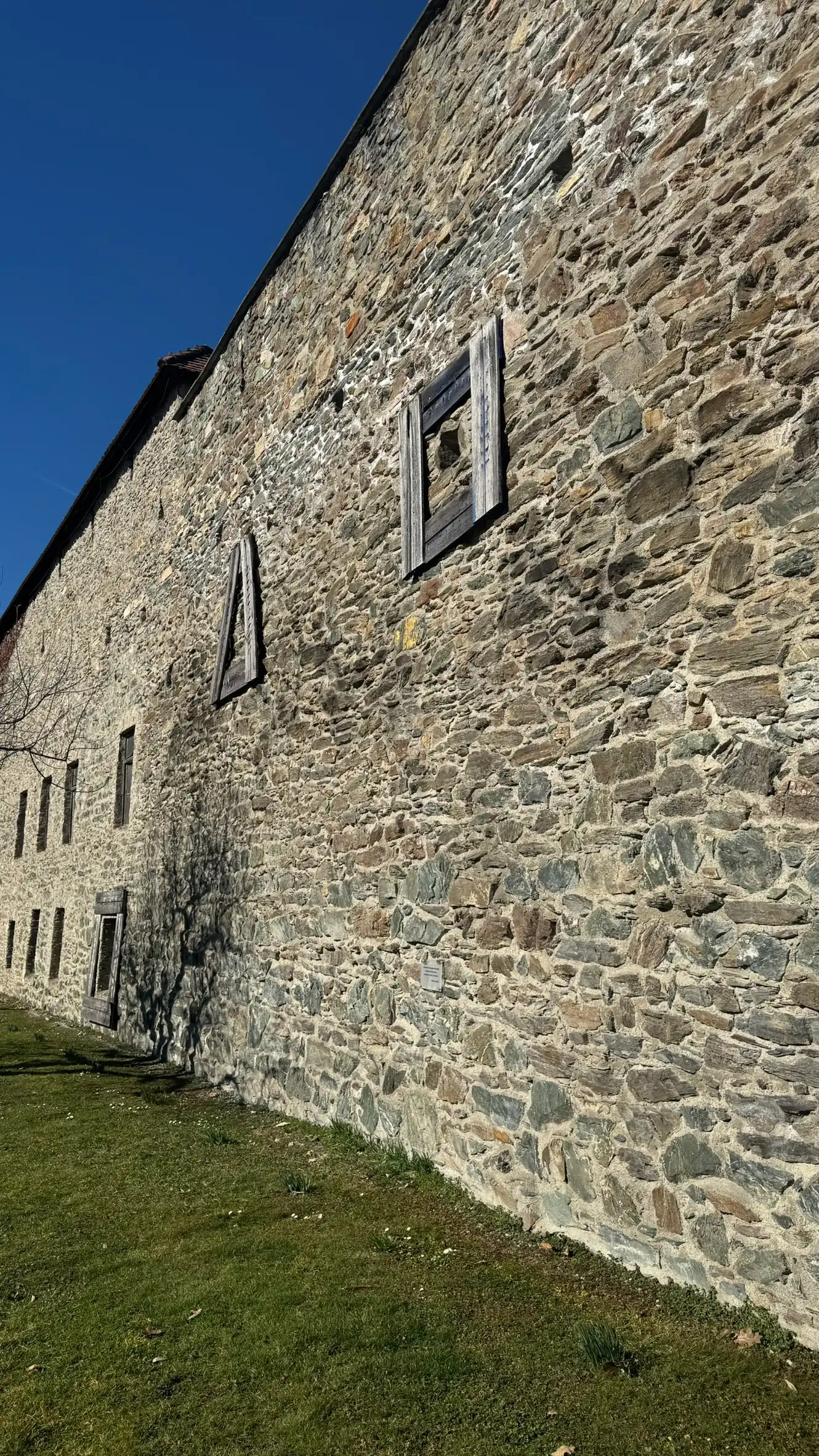
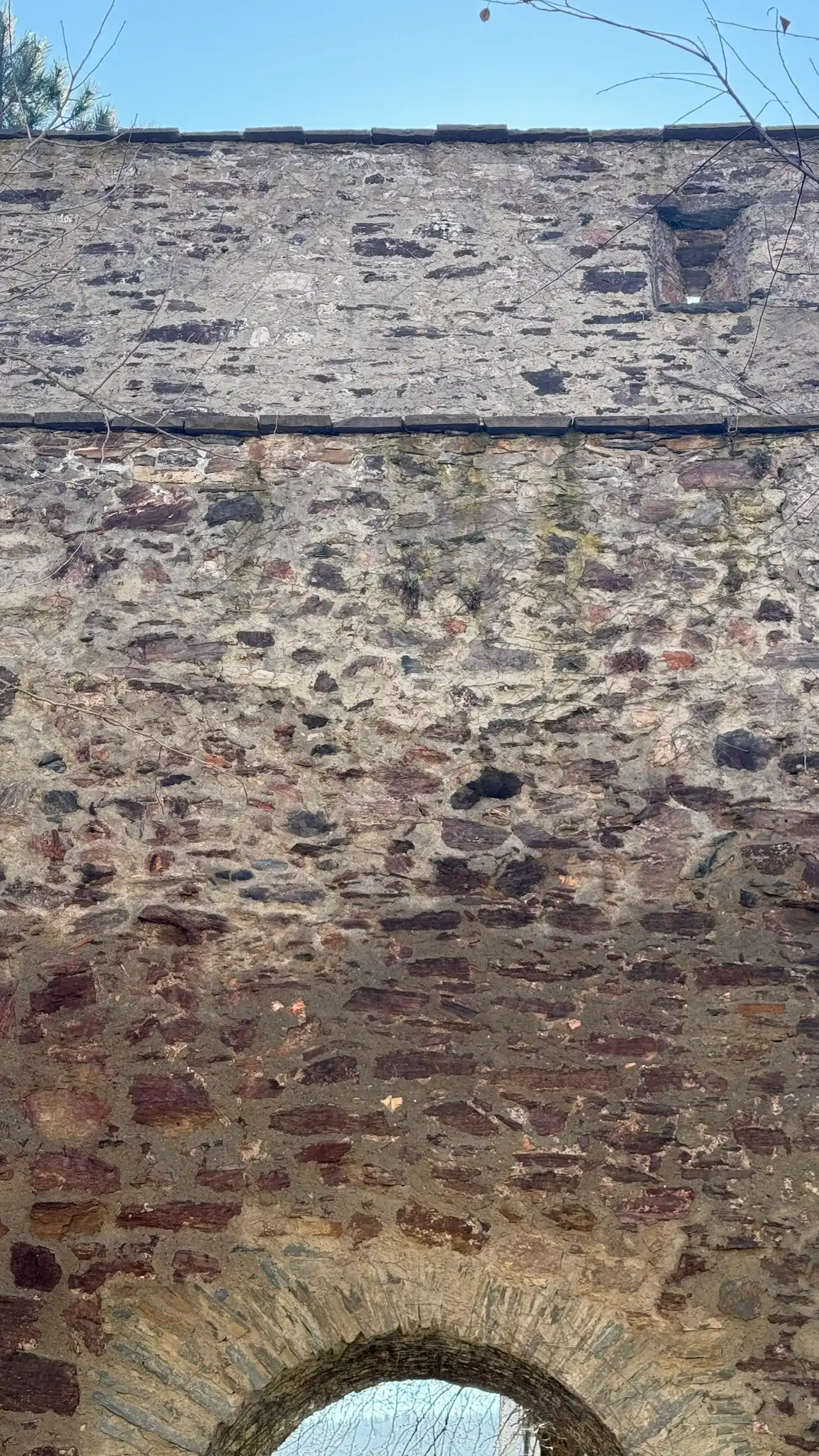
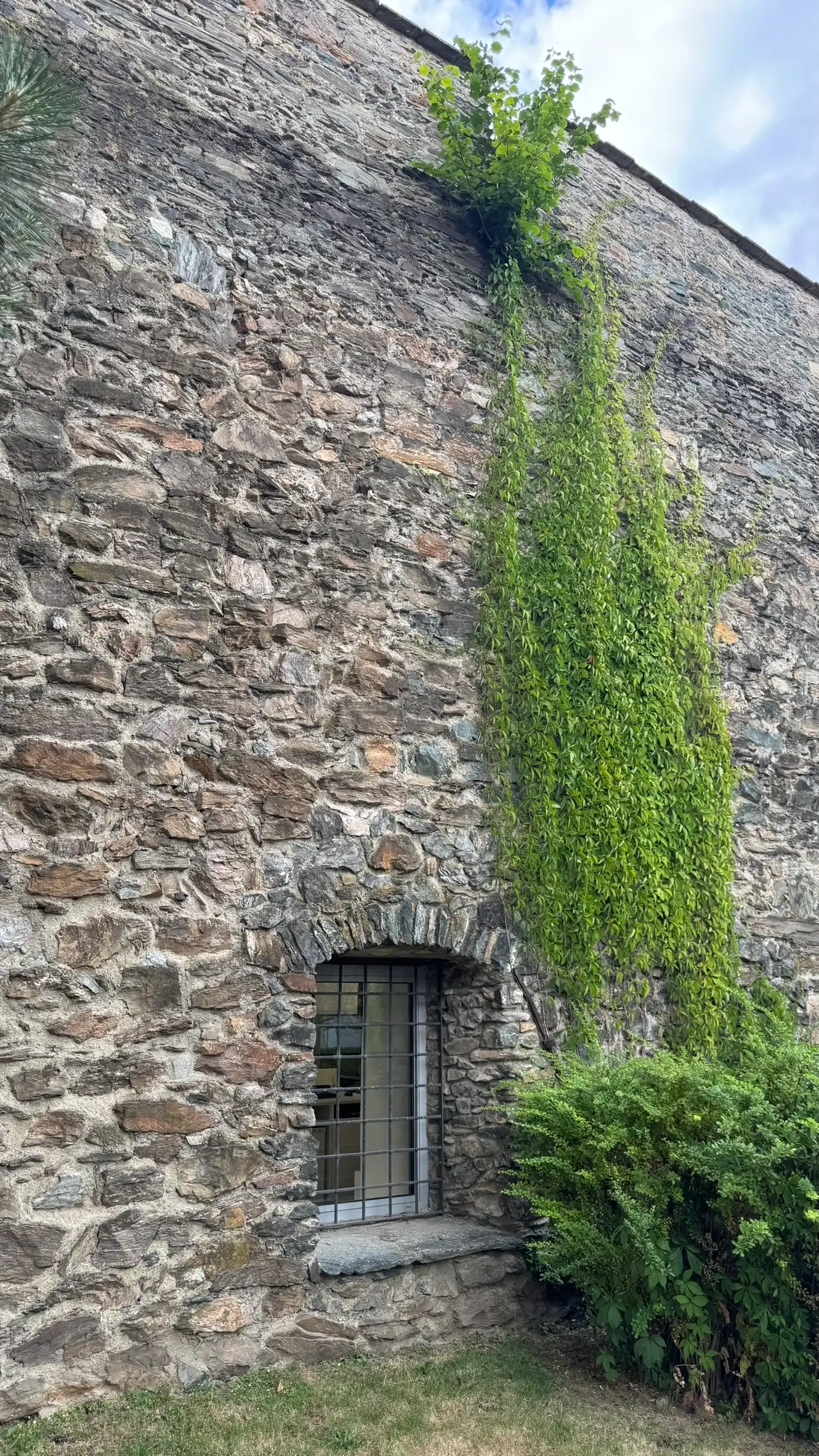
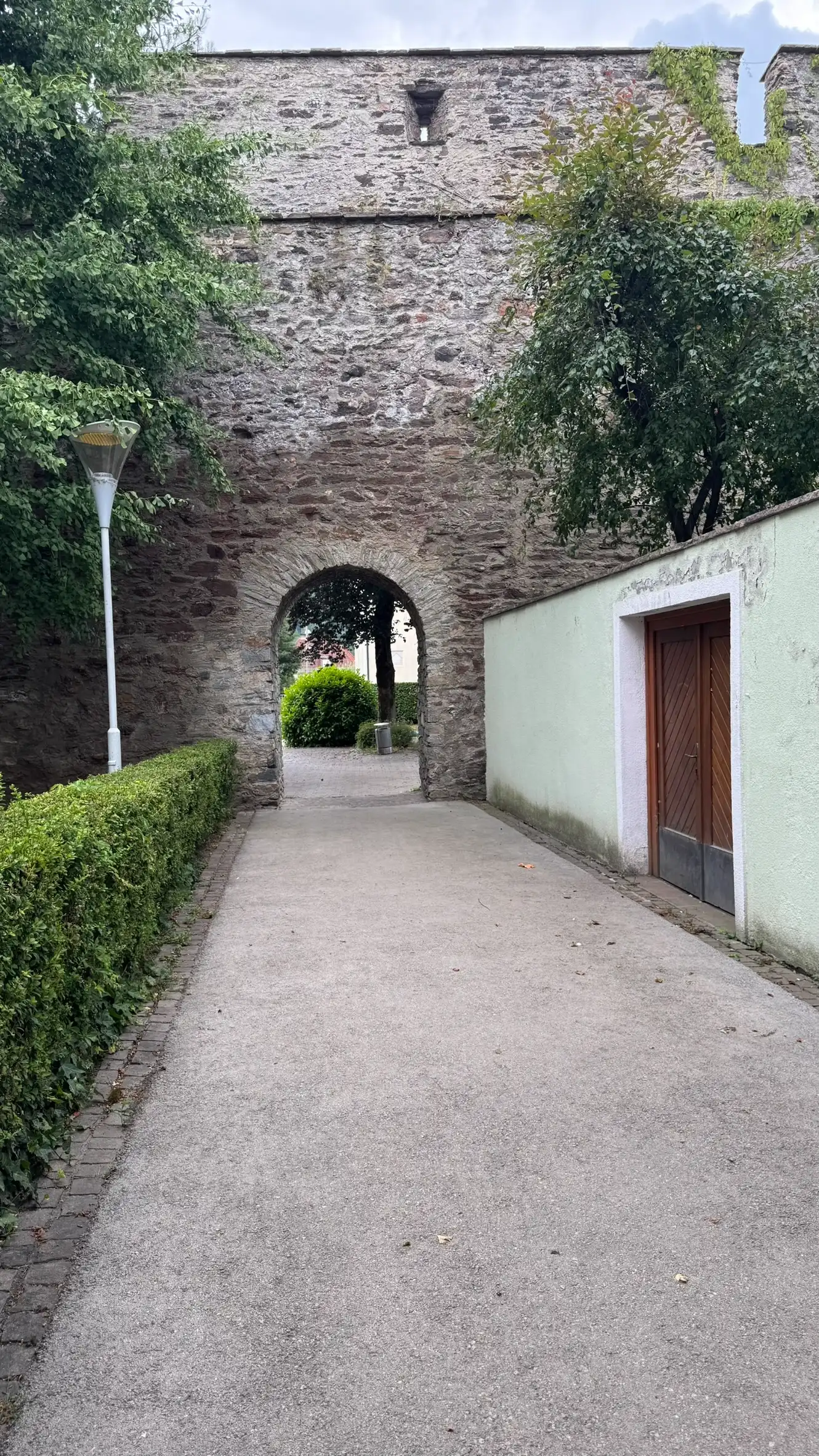
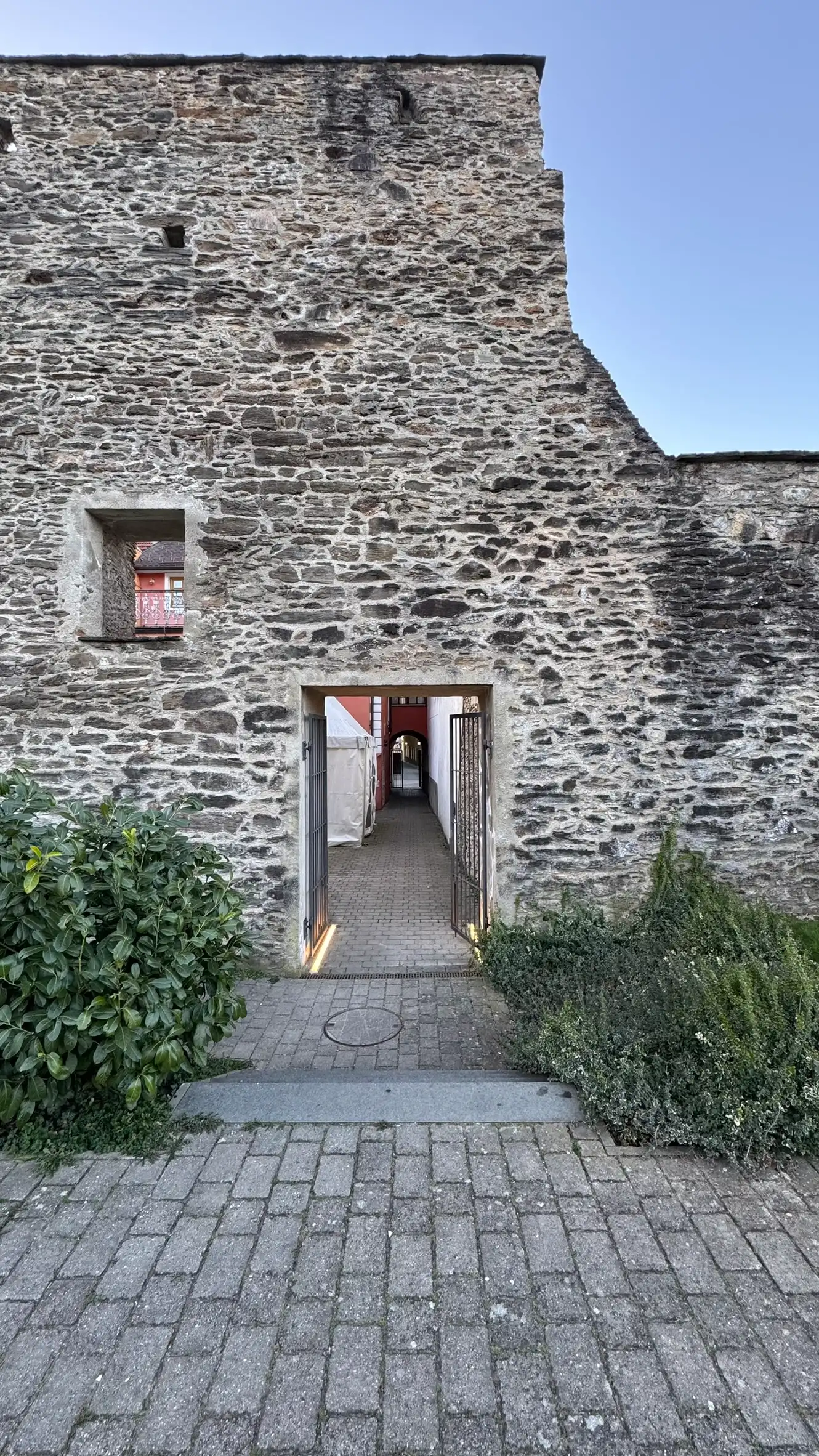
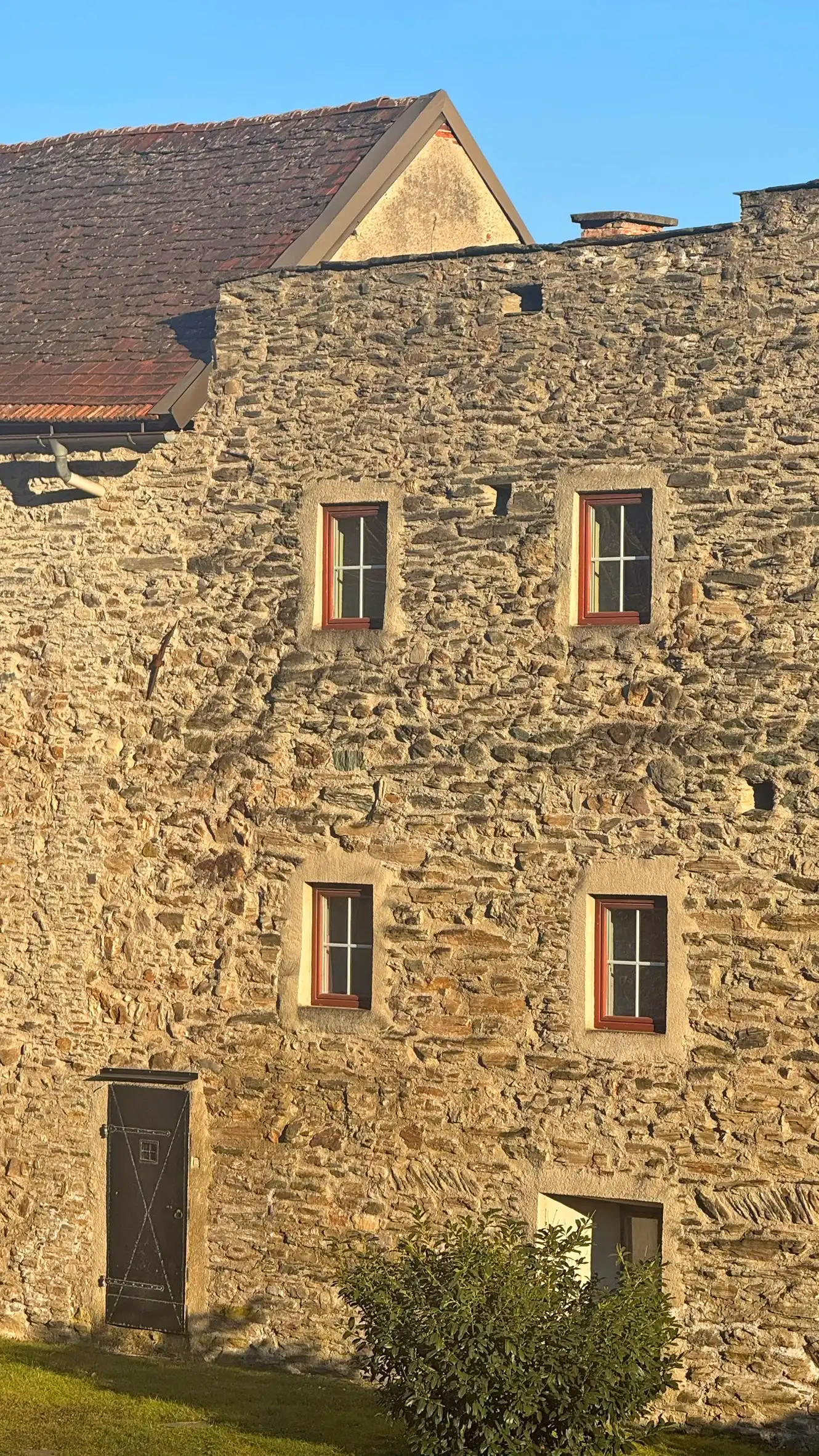
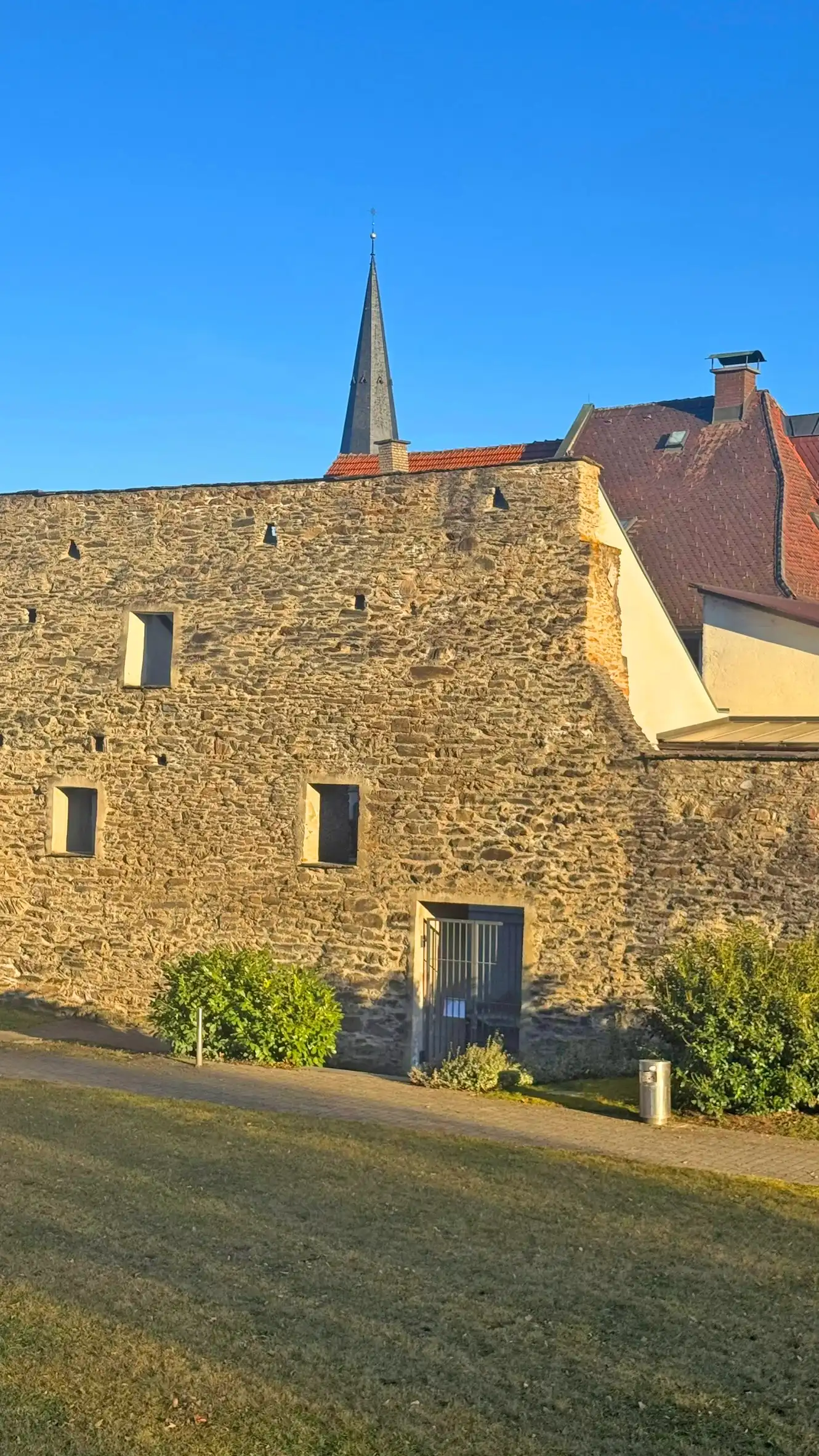
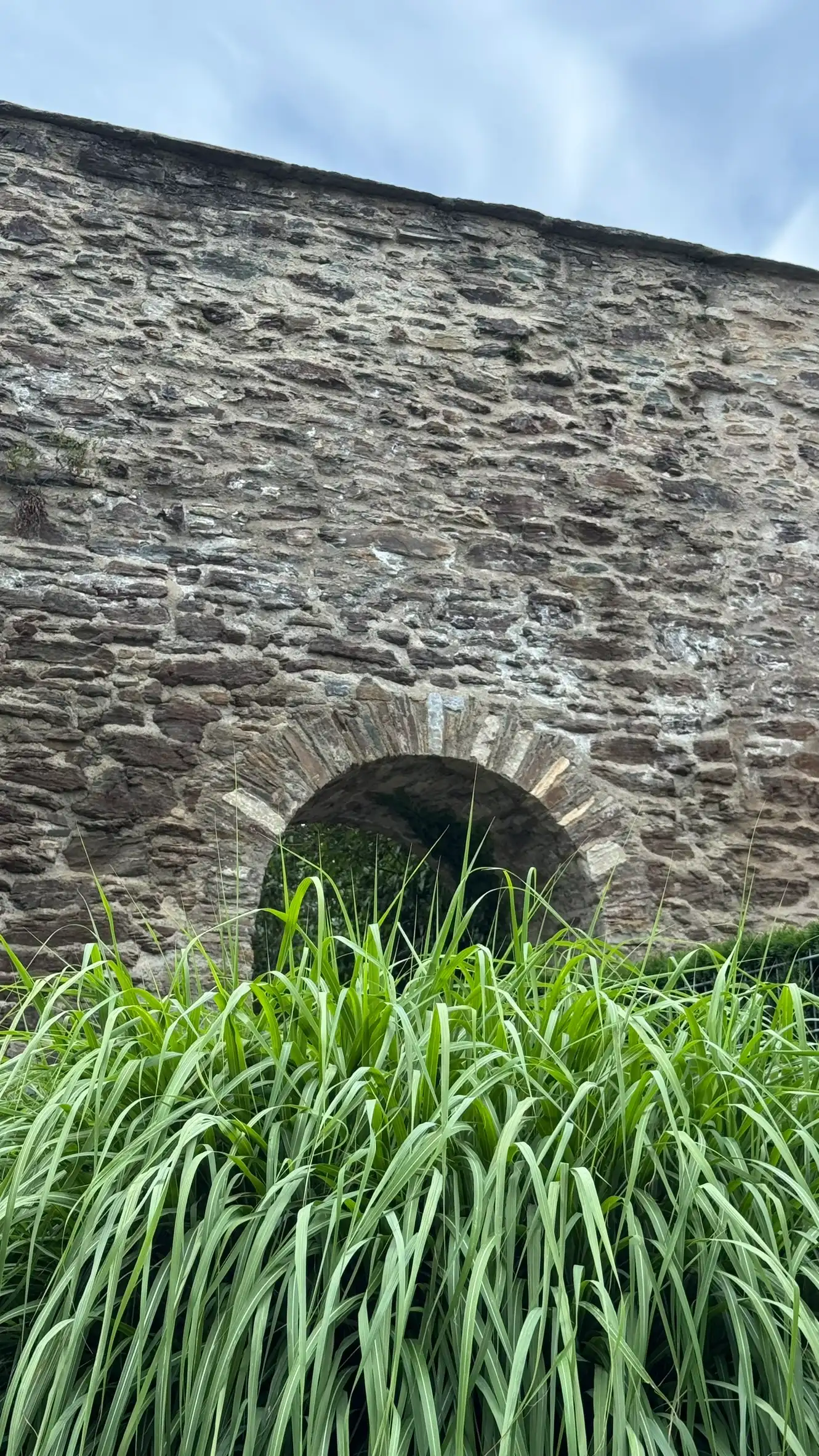
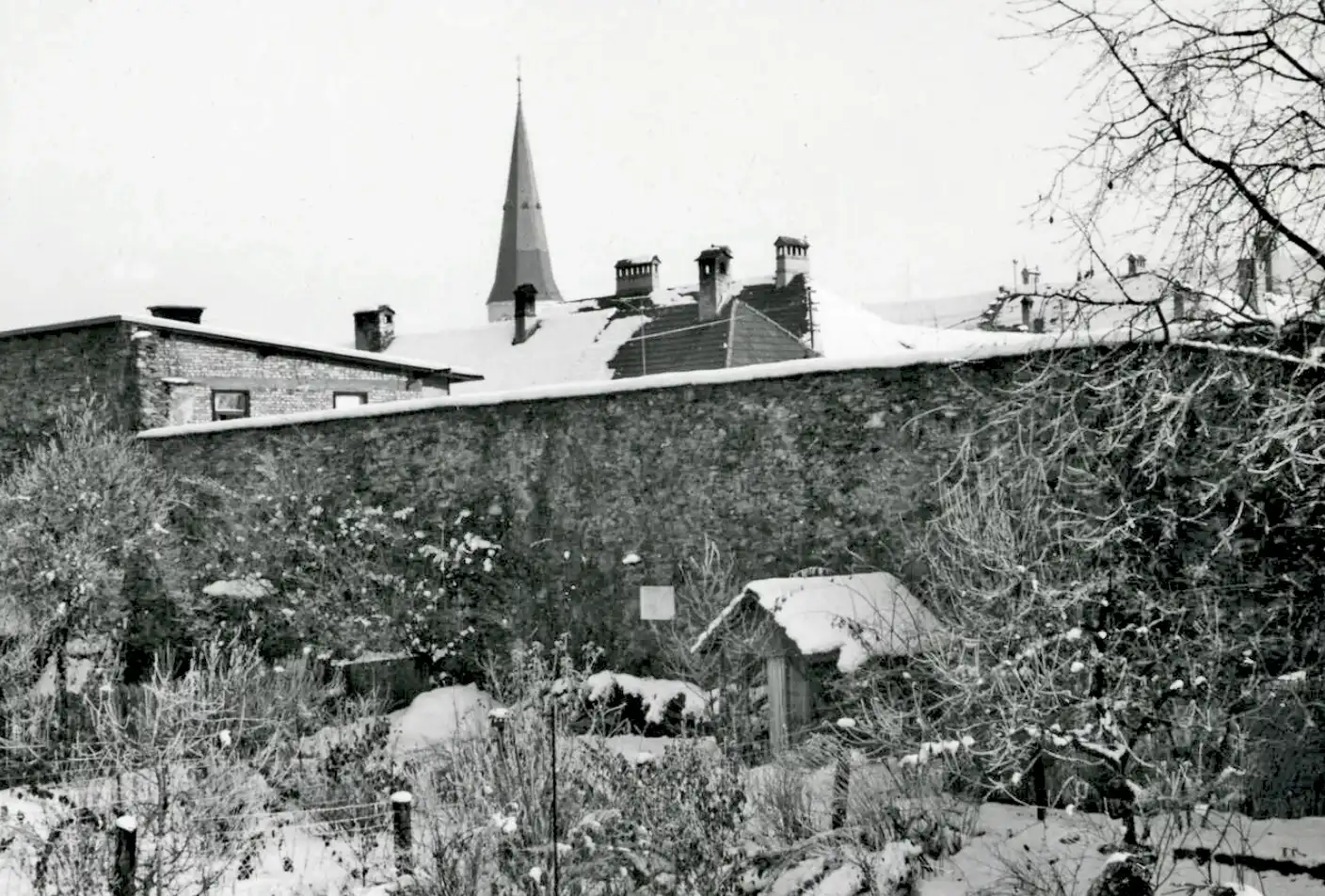
Fortified Town Wall, St. Veit an der Glan
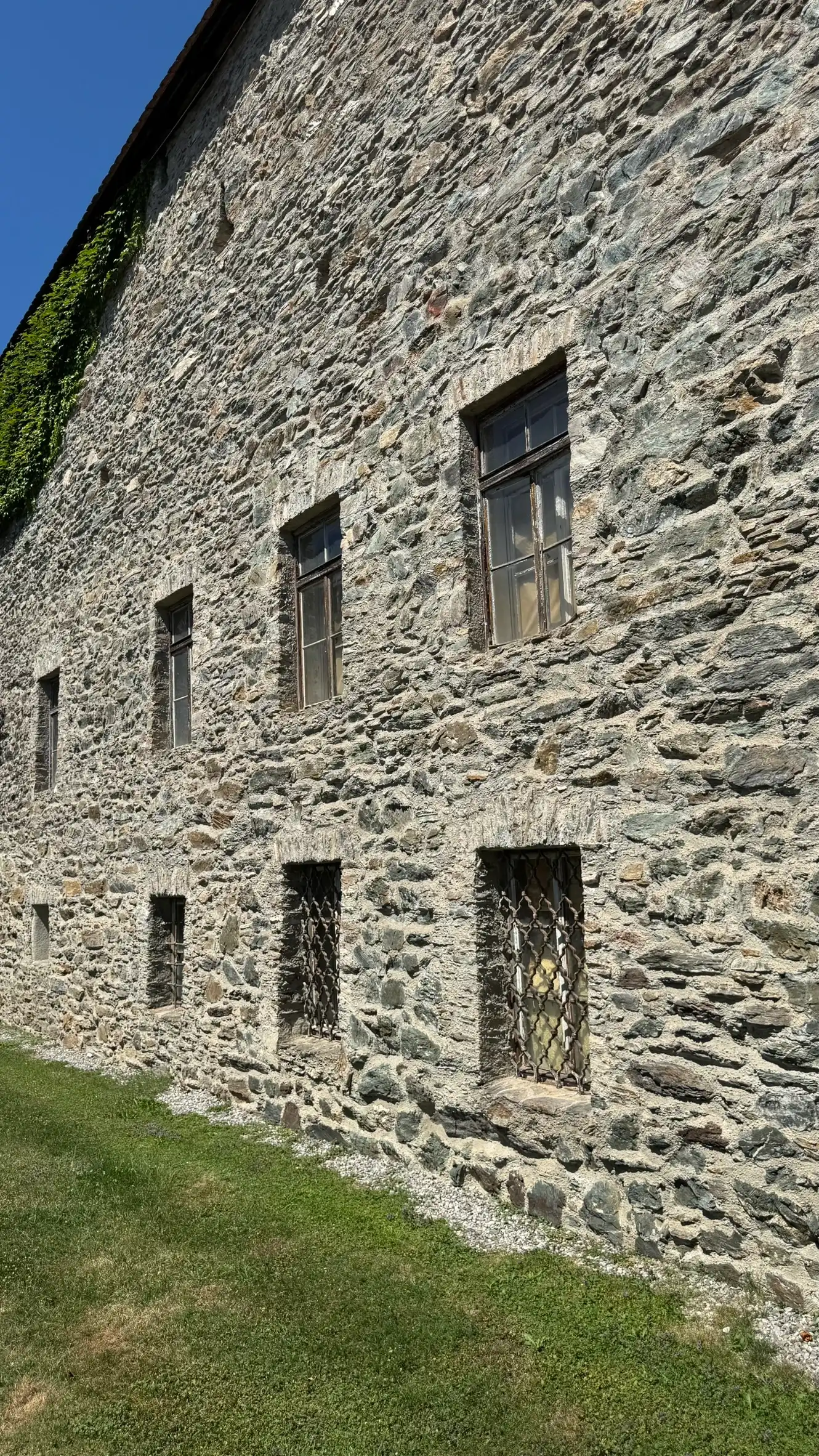
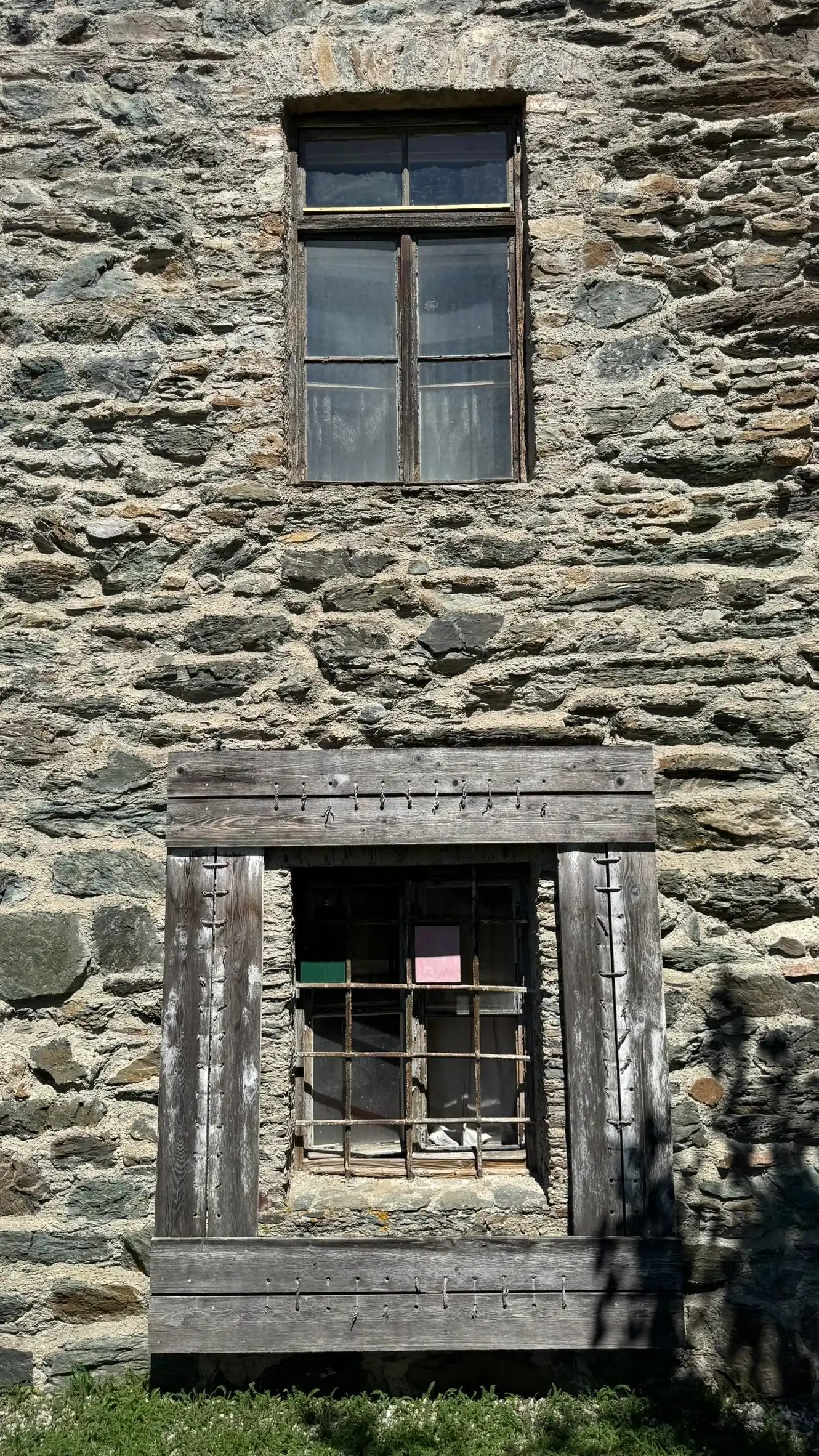
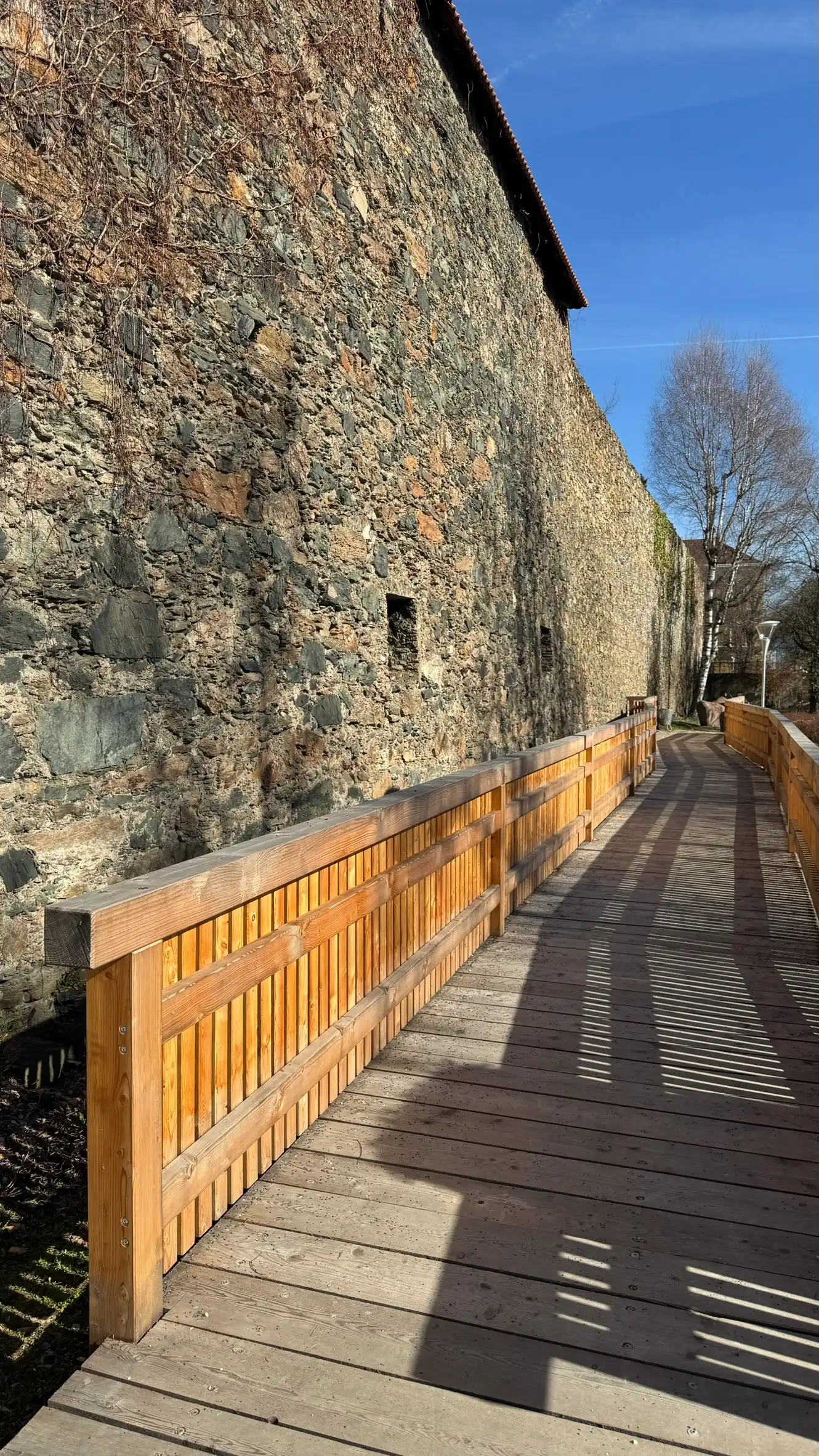
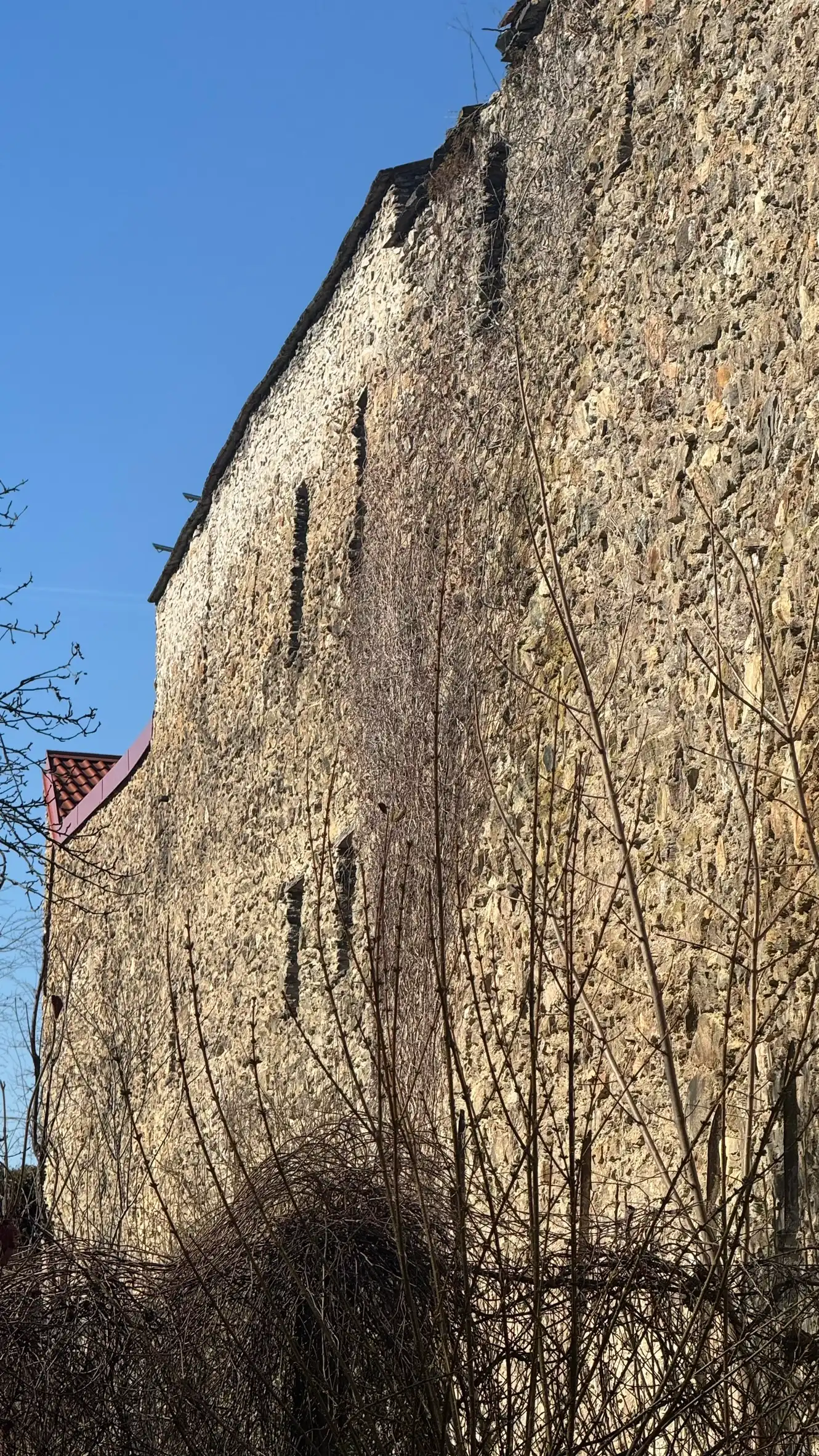
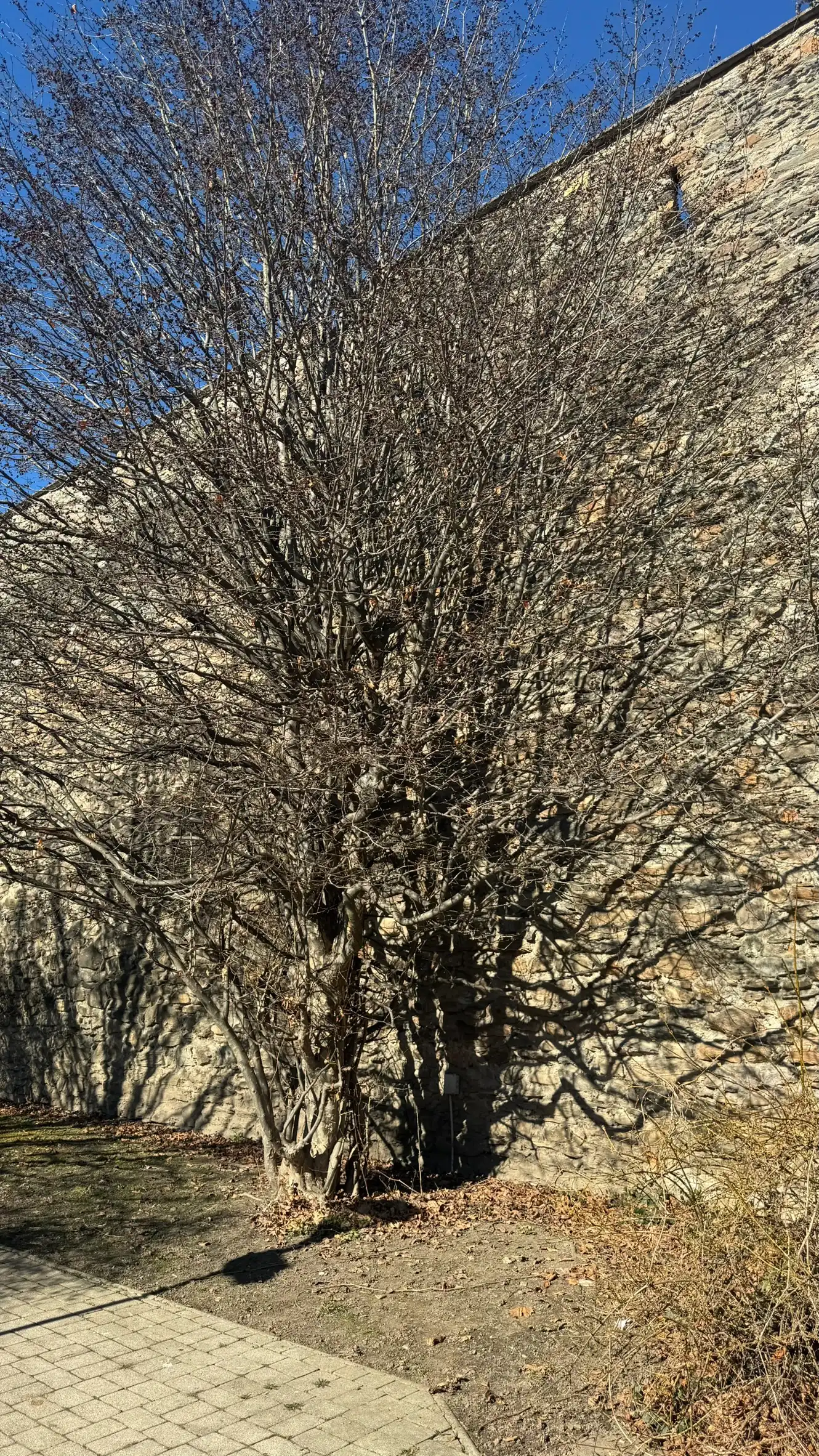
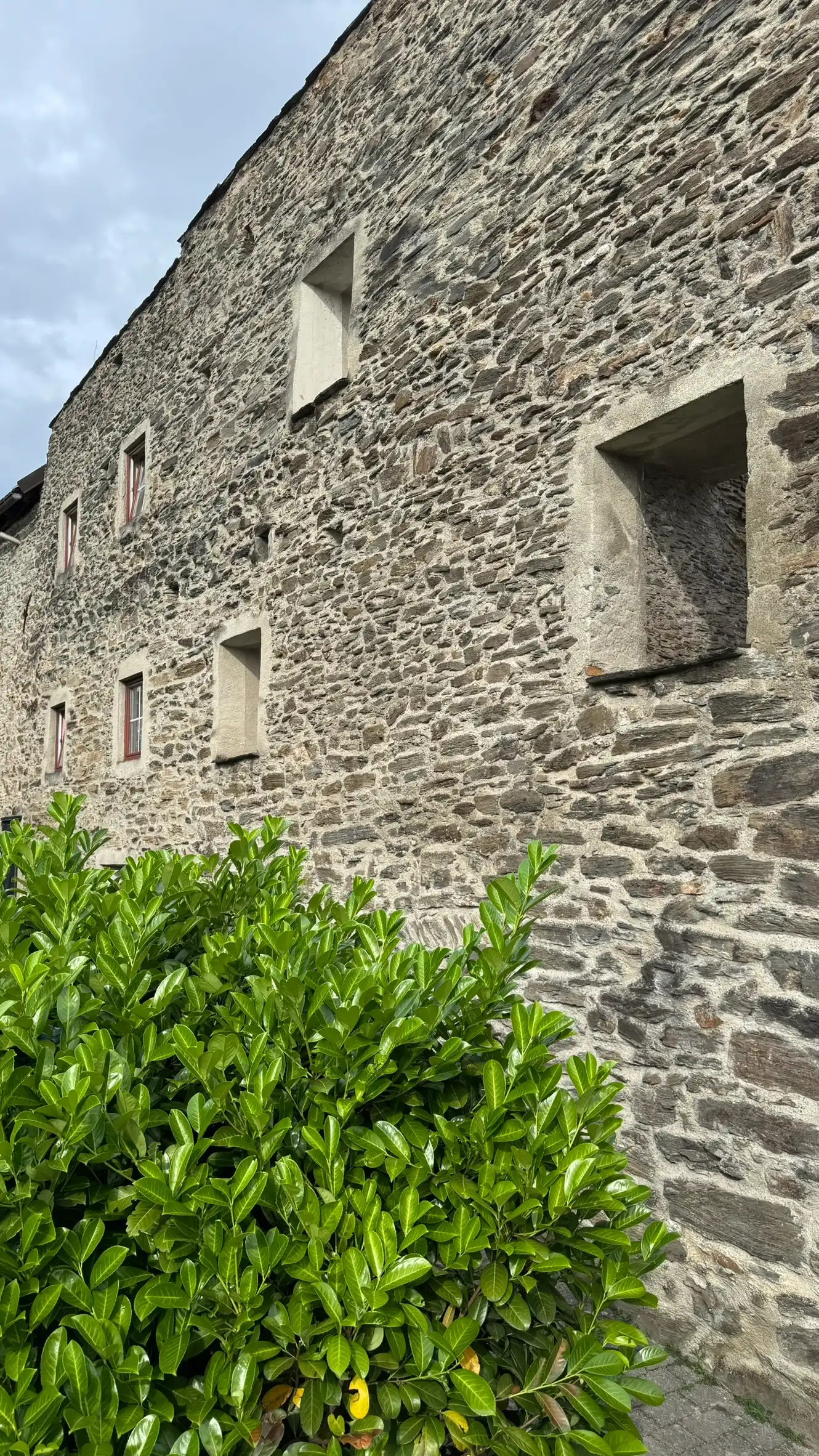
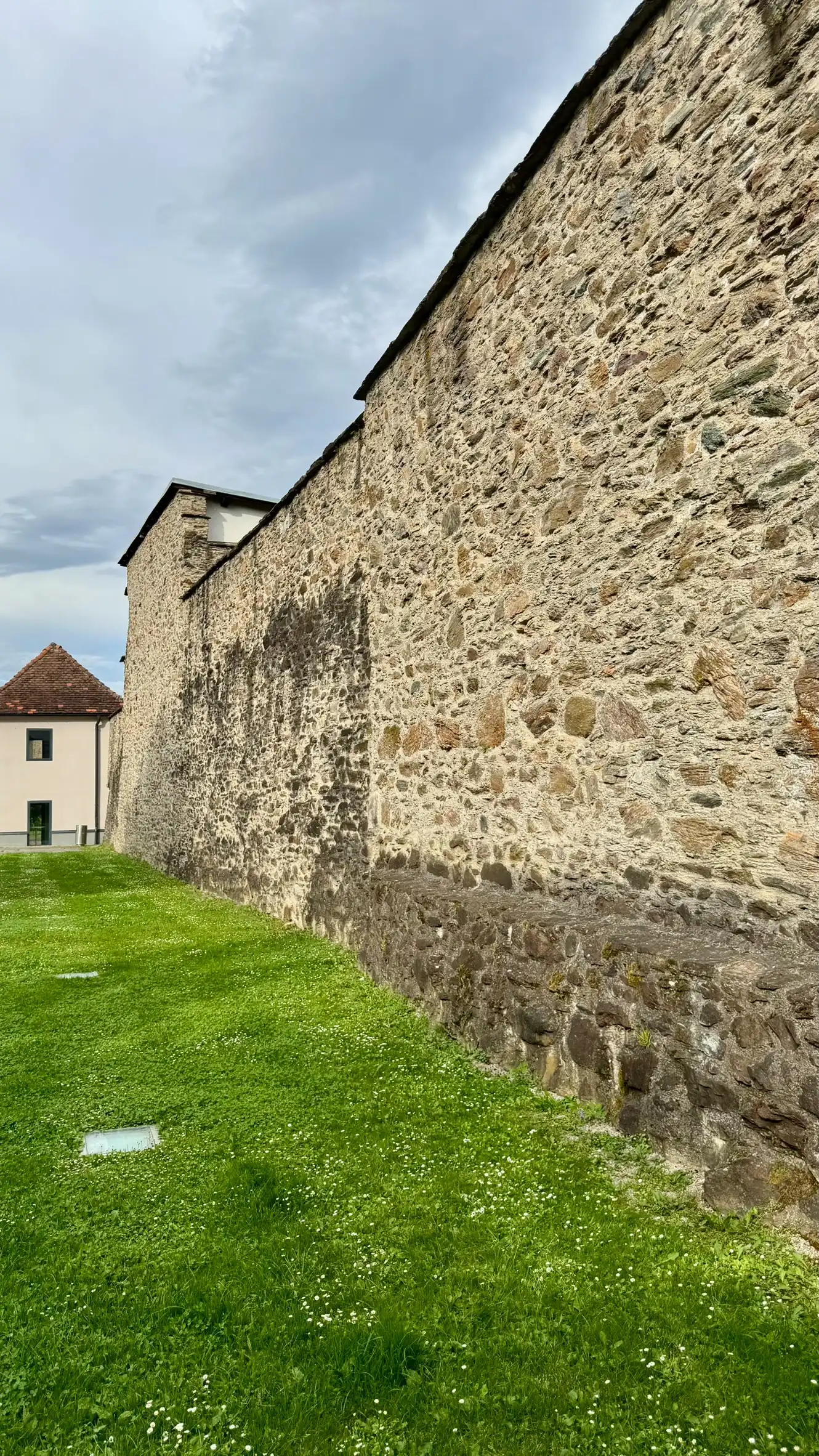
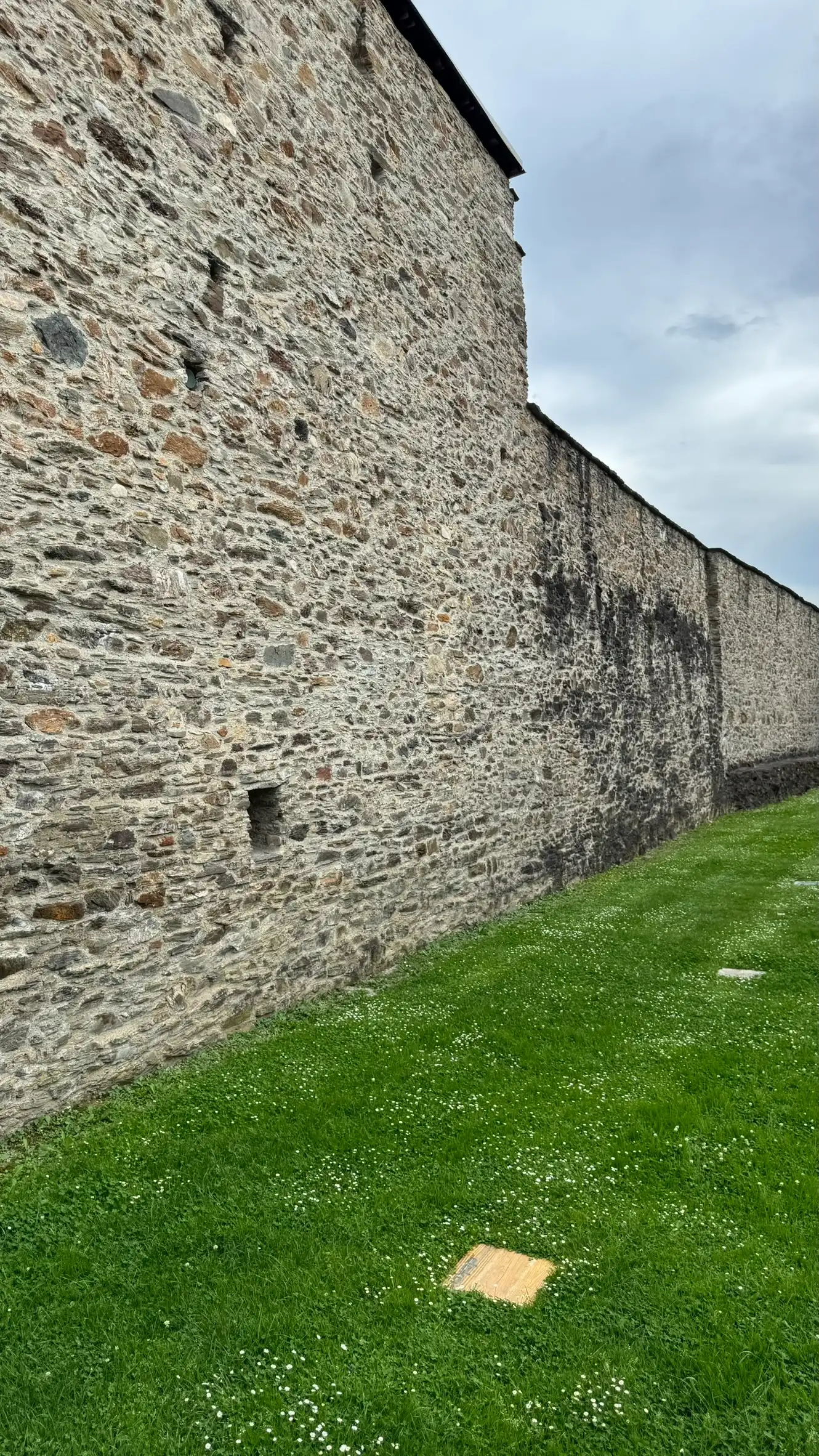
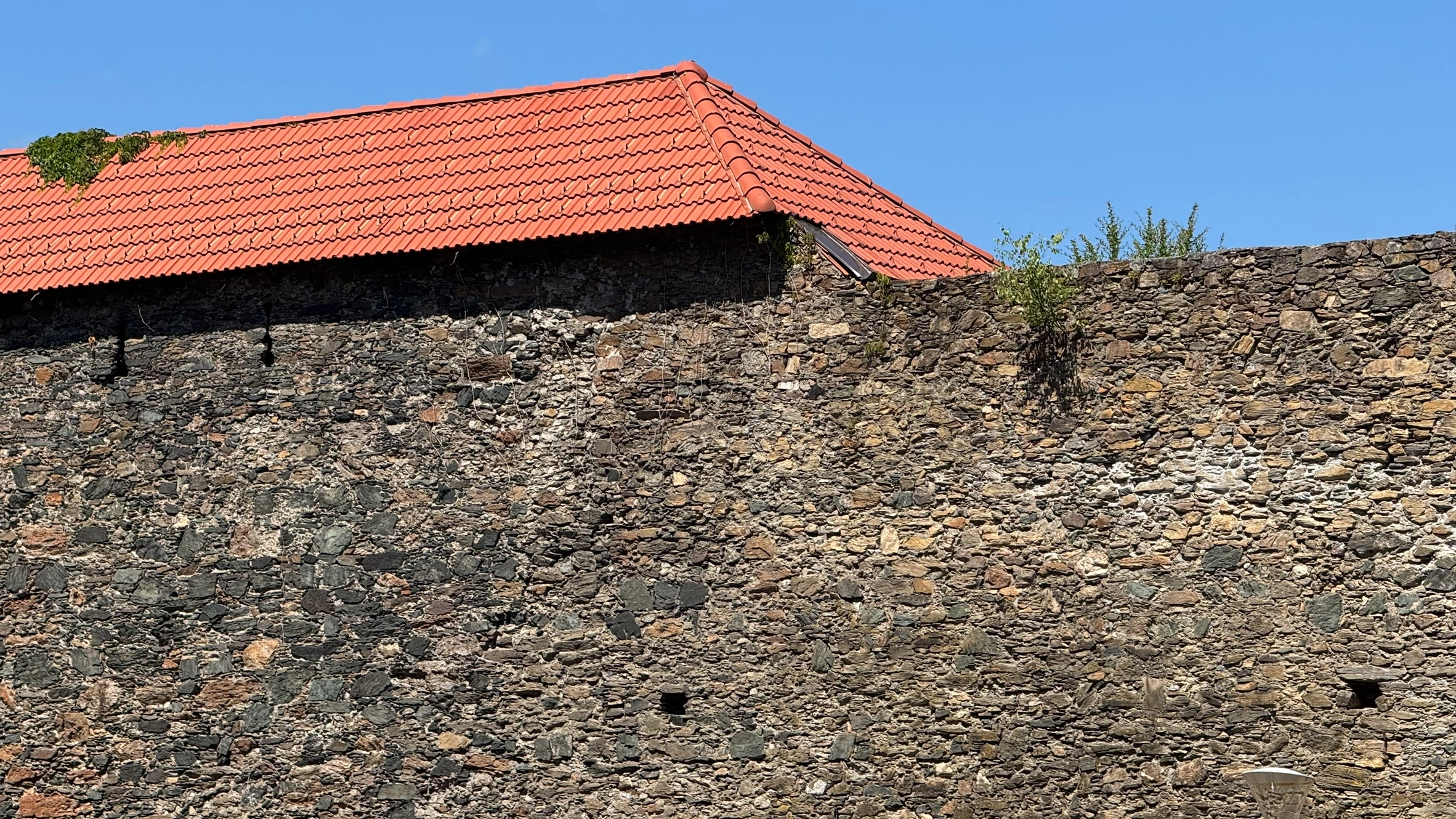
The town fortifications of Sankt Veit an der Glan were first documented in 1228. The structure that remains today largely dates back to the 15th century. The town wall, which is up to 1.7 metres thick in some sections, has been preserved along more than 1,000 metres and reaches an average height of around 10 metres. The former moat in front of the wall, once 20 to 25 metres wide, was drained but has remained largely undeveloped.
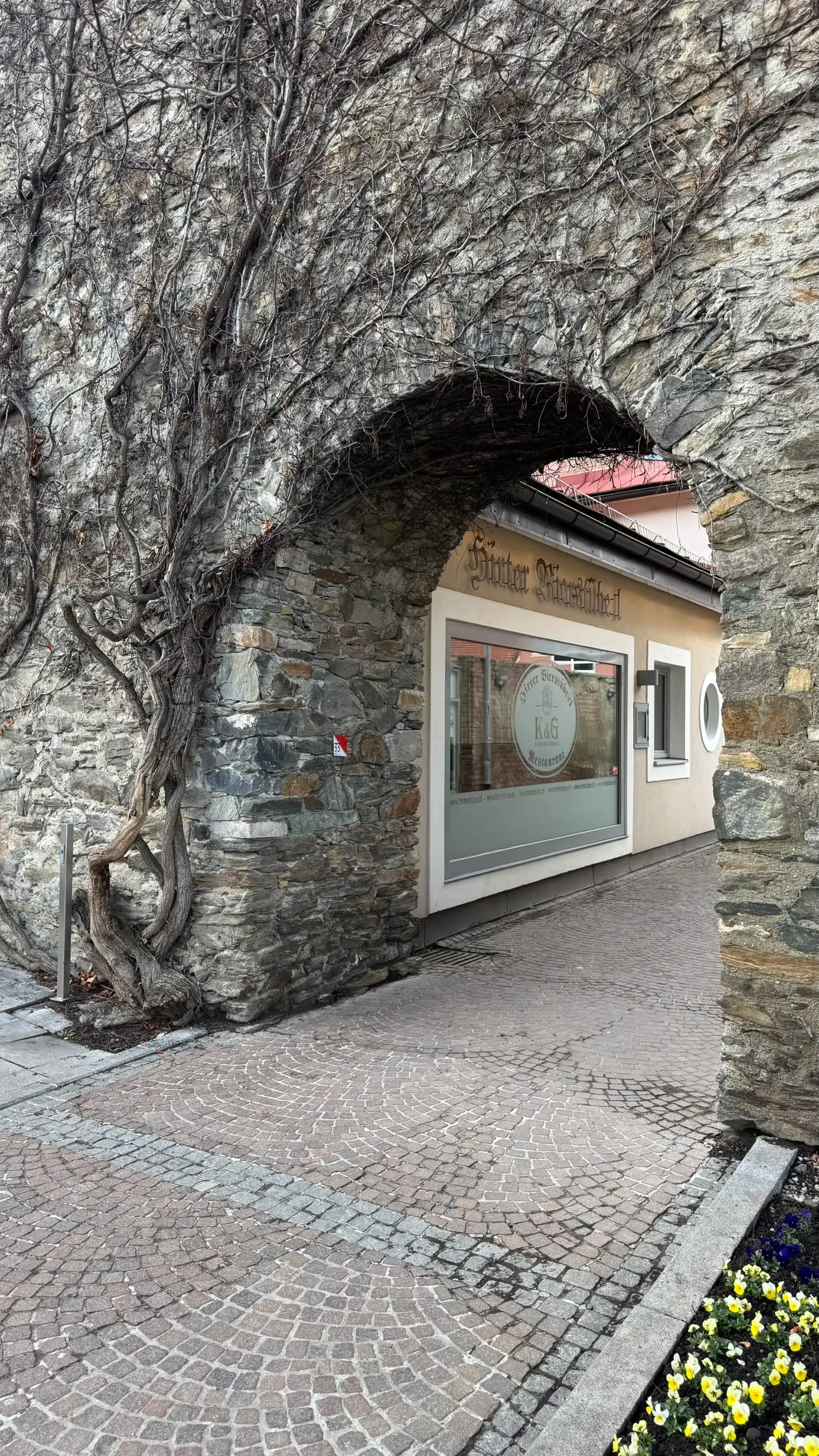
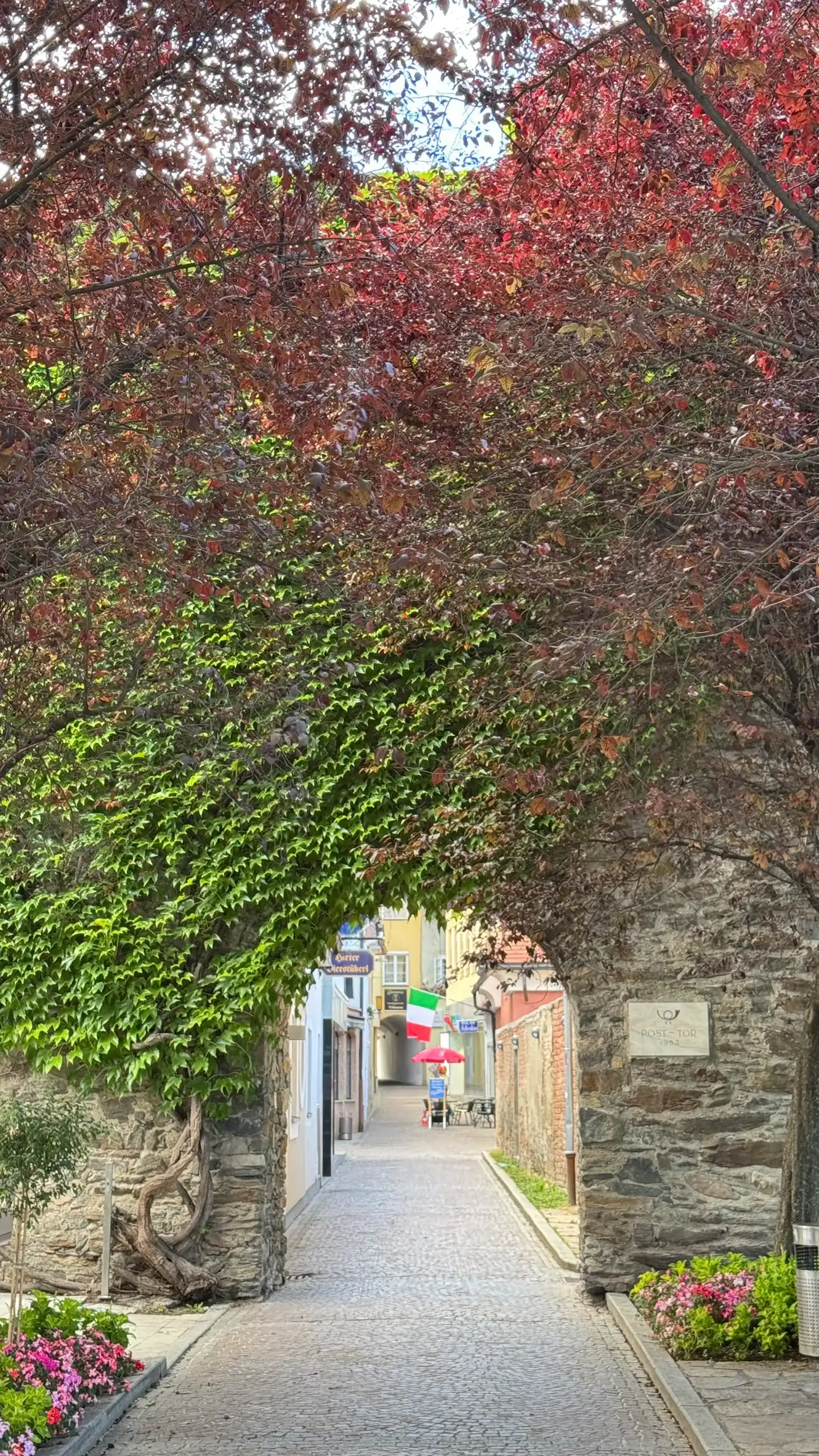
In the 16th century, the fortifications were extensively reinforced in response to advancements in military technology. A roughly 7-metre-wide outer ward (Zwinger) was added and strengthened with shell towers. In the north-west corner of the town wall, a heavily restored bastion tower survives as a projecting round structure; a stone embedded in the masonry bears the date 1532. The ducal castle (Herzogburg) was integrated into the defensive system. The four fortified town gates were demolished between 1851 and 1890. The gates currently visible in the town wall date from the 20th century.
Heritage Status
The town wall is a protected monument. The 15th-century wall, approximately ten metres in height, has been preserved over a length of more than one kilometre.
Southeastern Corner of the Curtain Wall | Image Gallery 1
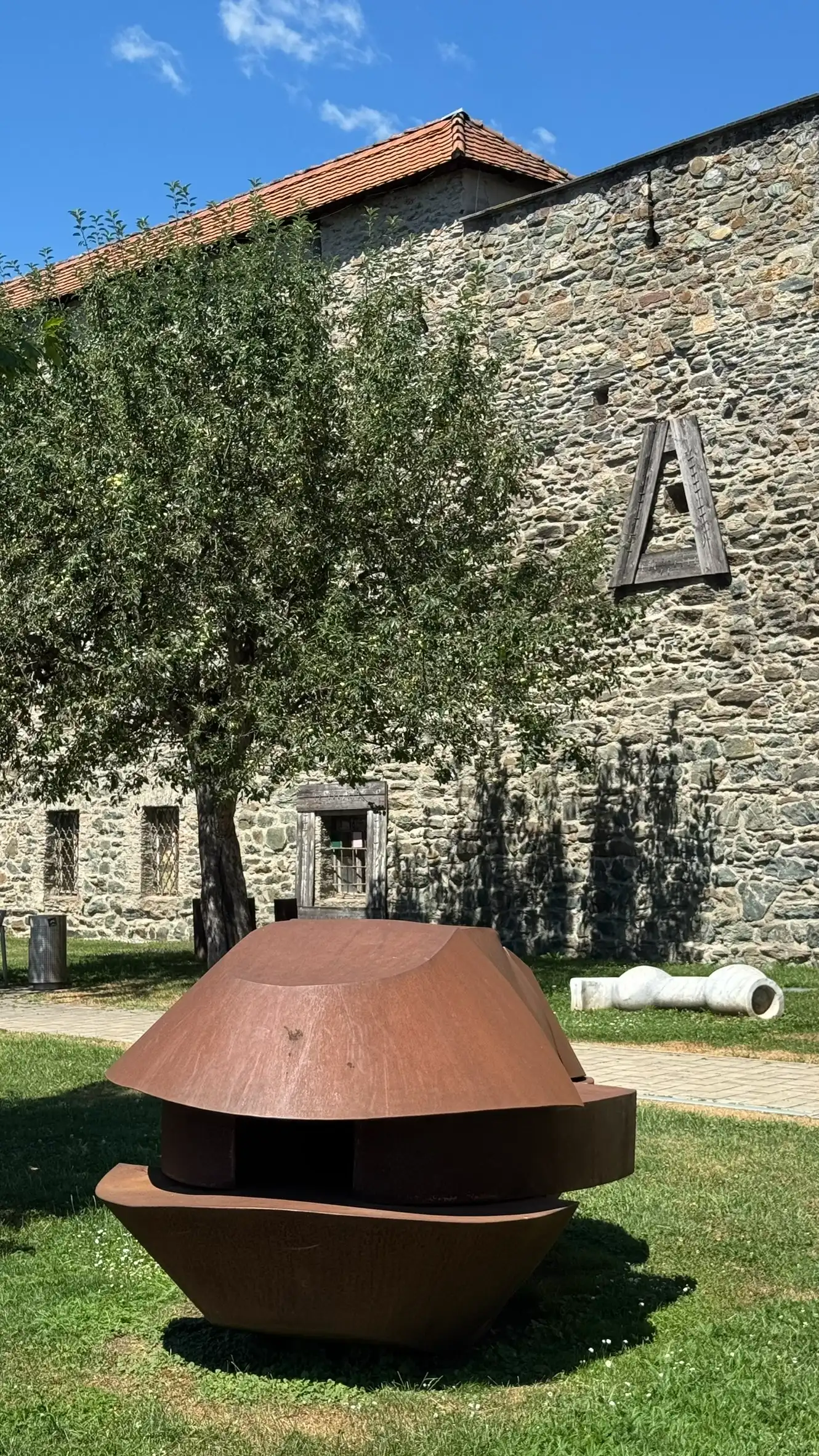
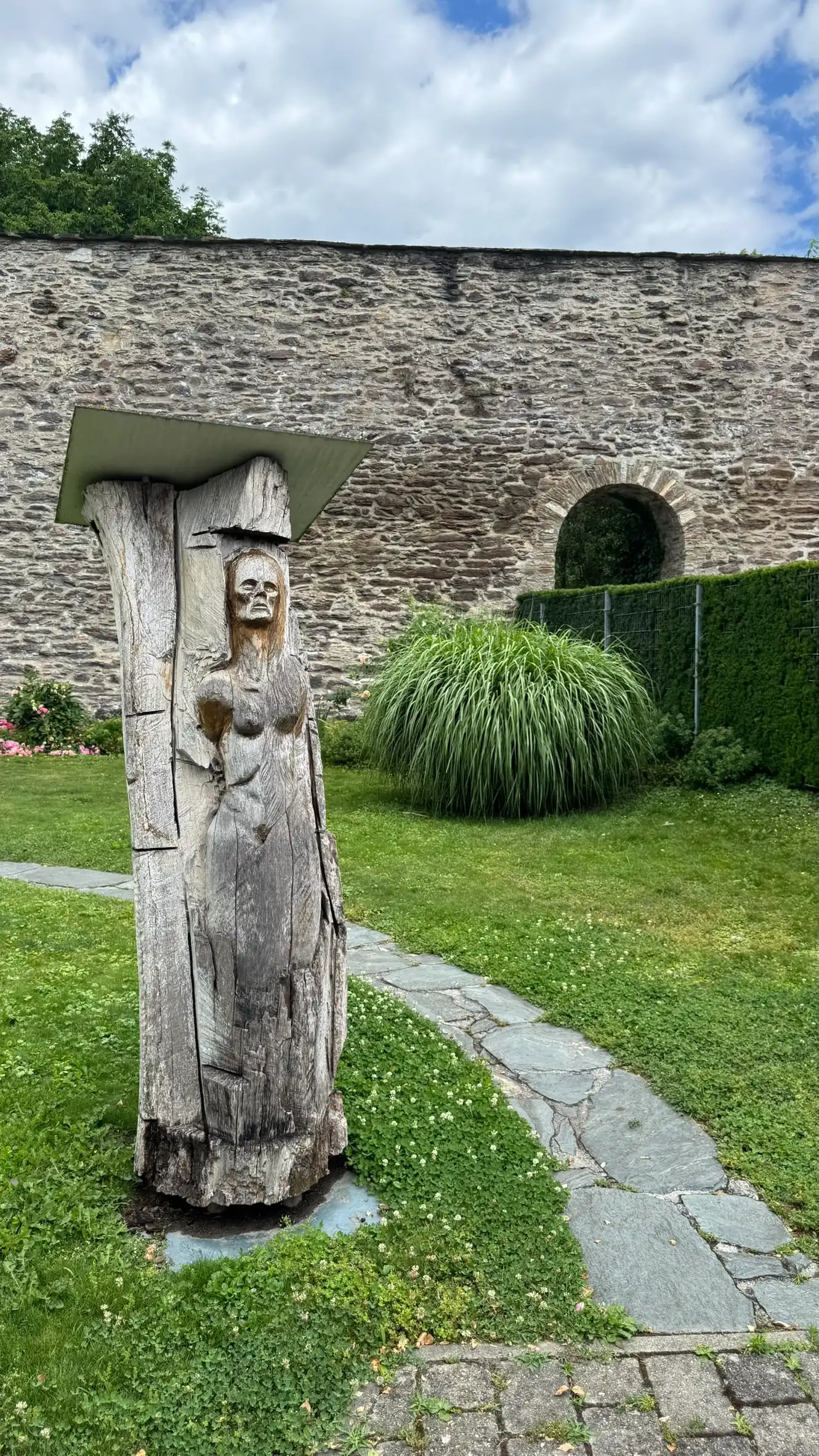
Southeastern Section of the Curtain Wall next to the Sculpture Park | Image Gallery 2
Fire Station Gate and adjacent Curtain Wall | Image Gallery 3
Post Office Gate and adjacent Curtain Wall | Image Gallery 4
Duke Bernhard’s Gate and adjacent Curtain Wall | Image Gallery 5
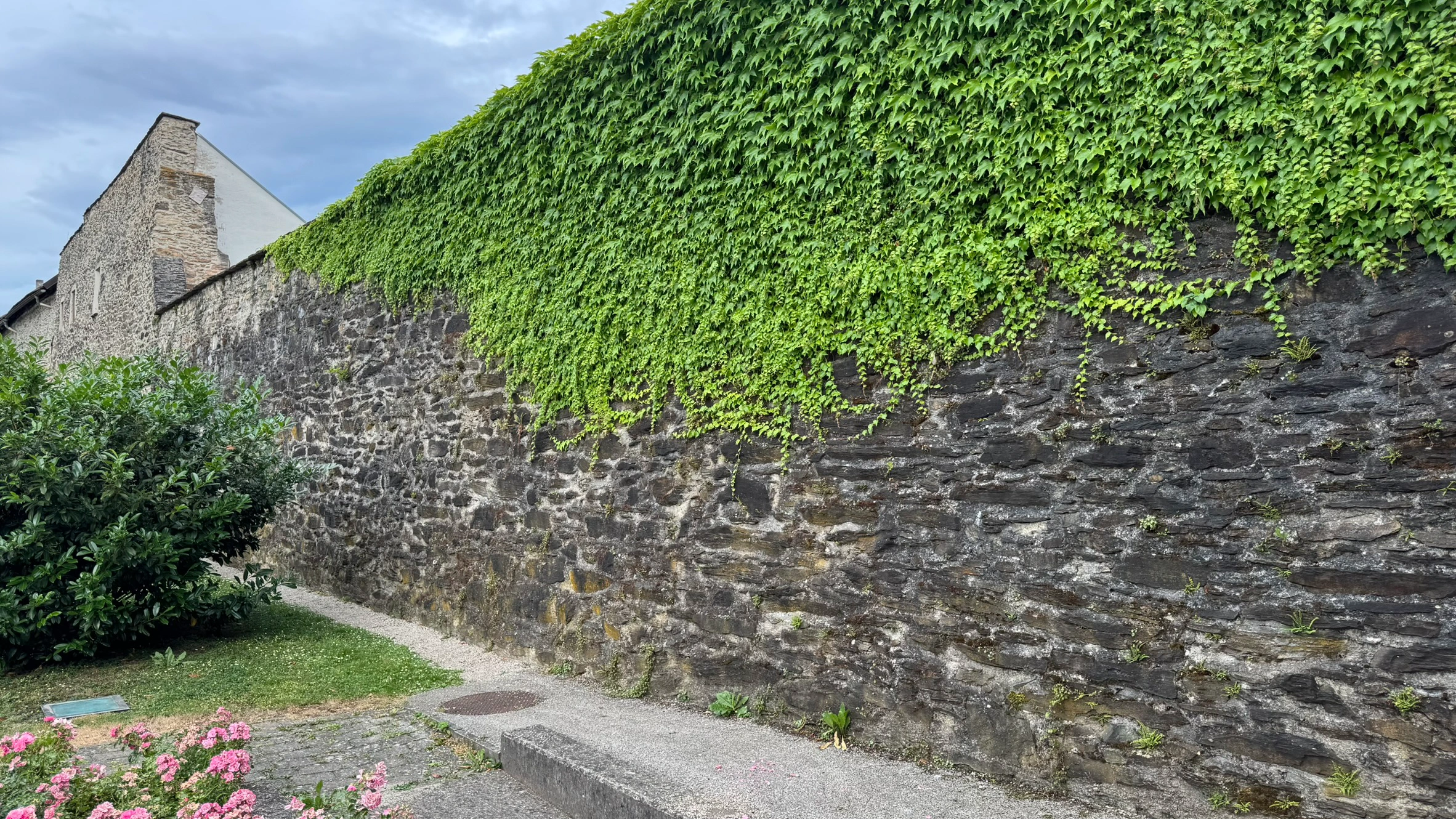
Northwestern Section of the Curtain Wall next to the Grabengarten | Image Gallery 6
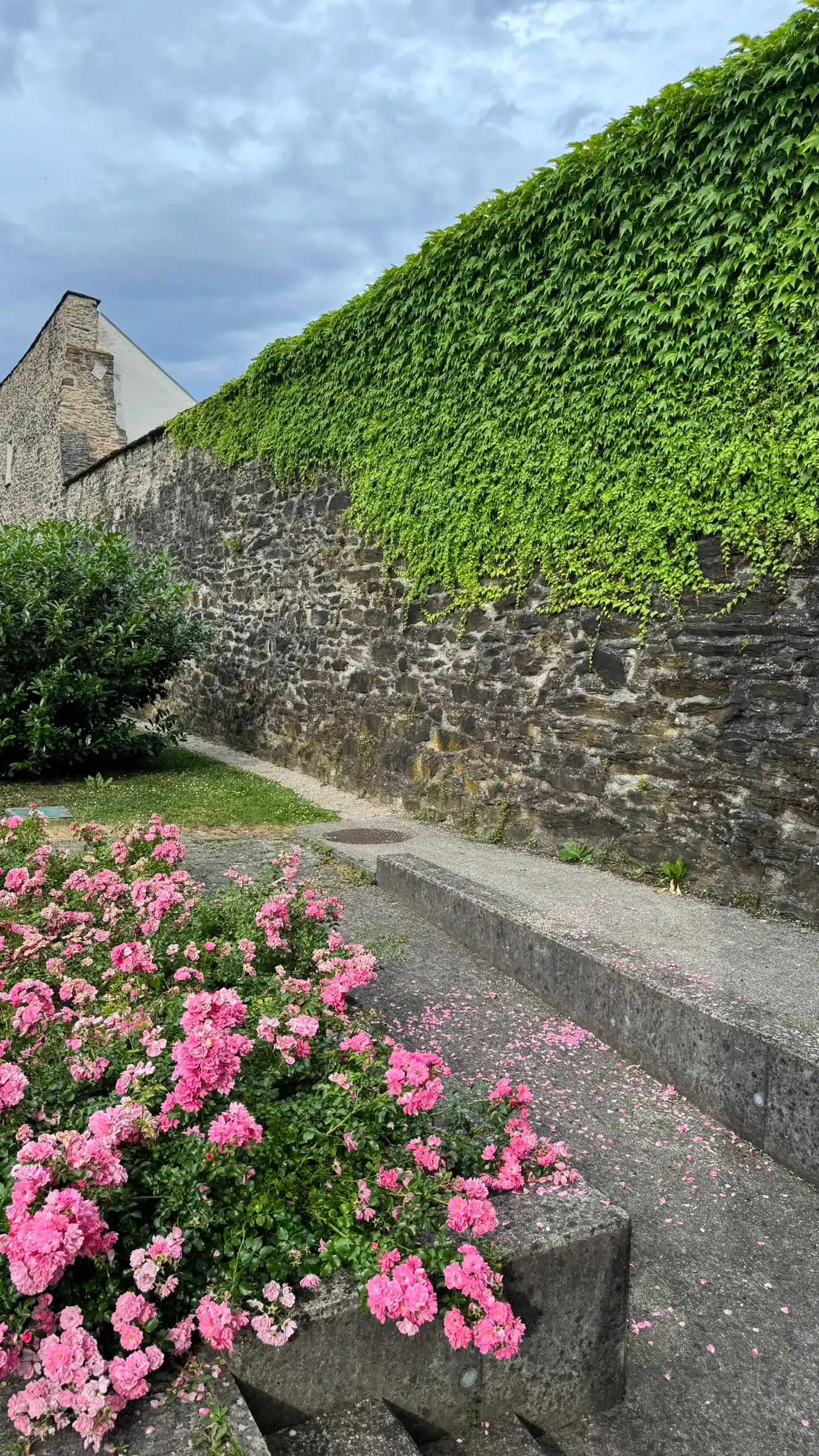
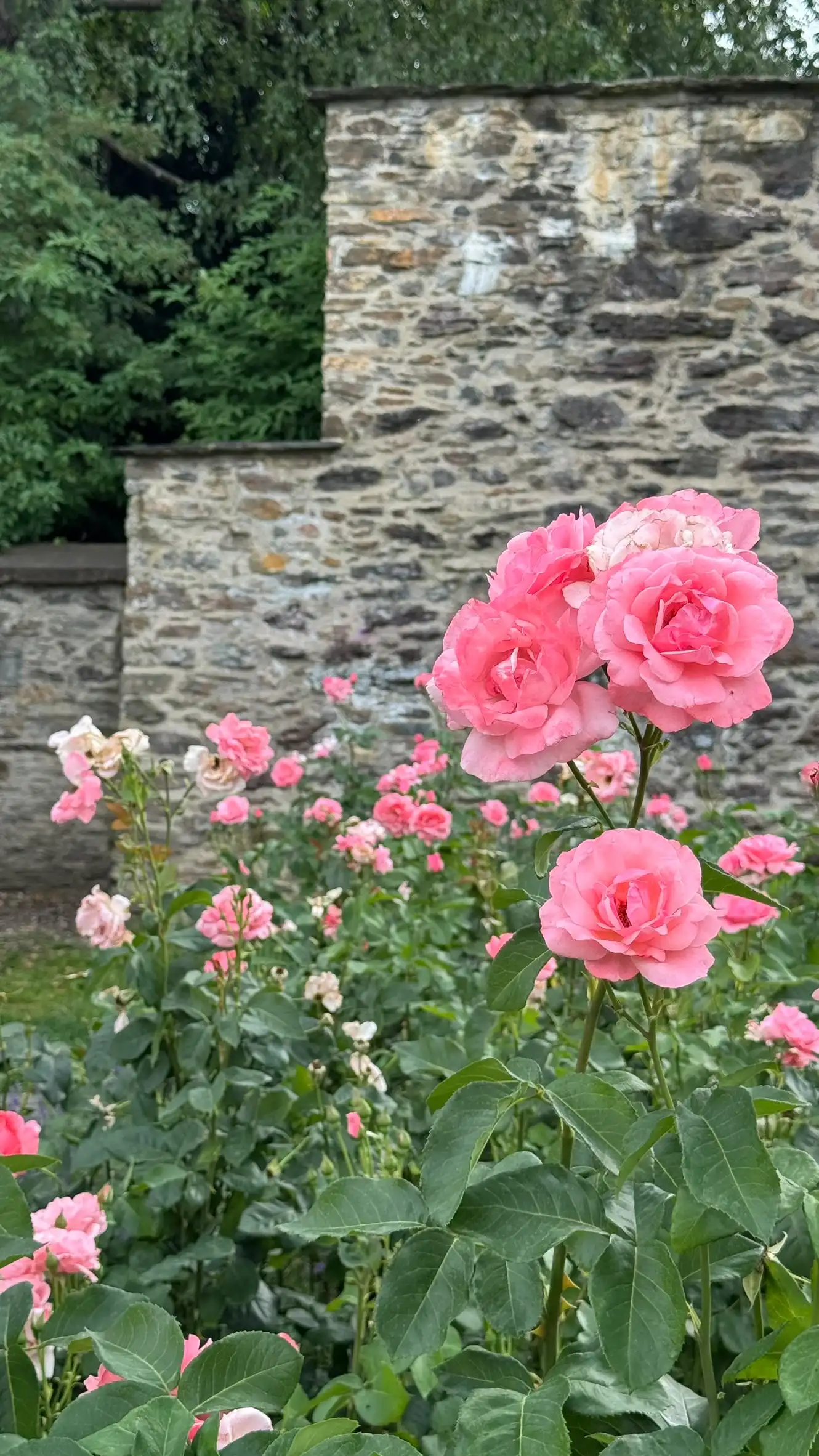
Northwestern and Western Sections of the Curtain Wall next to the Rose Garden | Image Gallery 7
Curtain Wall | Image Gallery 8
Town Wall | Main Facts, Listed
First Mention: The medieval town wall of Sankt Veit an der Glan was first documented in 1228.
Reinforcement: The fortified wall largely dates from the 15th century. Significant reinforcement was carried out in the 16th century.
Length: Over 1 km of multiple sections of the wall still stand today.
Thickness and Height: The wall is up to 1.7 m thick and around 10 m high.
Moat and Zwinger: The original moat (20–25 m wide) was drained and mostly left undeveloped. A seven-metre-wide zwinger (outer wall enclosure) and round bastion towers were added in the 16th century. The bastion tower at the north-west corner still exists. It bears the date 1532.
Herzogburg: The so-called Herzogburg (Ducal Castle), dating from the 13th century, was integrated into the town wall at its north-eastern corner.
Four Fortified Town Gates: The medieval town could be accessed through four fortified gates. All gates were demolished between 1851 and 1890.
Modern Gates: All modern gates date from the 20th century.
Current Use: Many sections of the wall now form the rear wall of historical houses. The former moat area serves as public and private gardens. These gardens can be accessed through openings in the wall.
Explore More | Fortified Town Wall and Fortification System
The town wall of Sankt Veit an der Glan was first documented in 1228, following the town’s attainment of civic status in 1224 under Duke Bernhard of Sponheim.
Constructed mainly during the 15th century, the surviving wall stretches for over 1,000 metres, reaches approximately 10 metres in height, and measures up to 1.7 metres in thickness.
By the 16th century, the emergence of firearms prompted extensive fortification enhancements: notably, a 7-metre-wide zwinger (outer corridor), equipped with bastion towers, was added. A restored bastion tower at the north-west corner bears an inscribed date of 1532.
At the north-east corner stands the so-called Herzogburg, an integral part of the curtain wall. Its core dates back to the 13th century, but it was extensively remodelled between 1523 and 1529 to serve as a ducal armoury, featuring a five-storey corner tower, arcaded wings, and a painted sundial from 1529.
Four fortified gates were part of the medieval defences. These gates were demolished between 1851 and 1890. The present gates date from the 20th century. The original moat, once 20-25 metres wide, was drained and is now largely a green belt featuring private gardens; in many places, the wall remains part of the historical buildings.
In 1292, Salzburg and Heunburg forces attacked St Veit – resulting in damage to the wall. Catastrophic fires in 1374 and 1497 led to reconstruction and further strengthening of the town fortifications.
Today, the medieval wall provides a remarkable example of late medieval town defence in Carinthia. Over 1 km remains standing, with much of the moat area preserved as a green buffer and many sections incorporated into existing buildings.
Historical Photograph
Image Source: Archive of the Municipal Authority of St. Veit an der Glan
Town Wall (North-West Section)
Photographed in 1966