Schloss Kölnhof – An Architectural Jewel in Carinthia
Introduction and Location
Schloss Kölnhof is an outstanding example of Late Baroque and Early Classicist (Early Neoclassical) architecture. The palace reflects the style used to build residences for the nobility in the 18th century.
It is situated at Kölnhofallee 17 in St. Veit an der Glan. Nestled within a landscaped park, the estate combines architectural refinement with a serene setting.
Historical Background and Ownership
The site was first documented in 1378 as “Cholendorff.”
In the 16th century, it came into the hands of affluent burgher and industrial families from St. Veit.
A major transformation was undertaken around 1780 by Salzburg court architect Johann Georg Hagenauer, likely on behalf of Prälat Mayerhofer, the final abbot of the now-dissolved Abbey of Griffen.
Between 1891 and 1953, the property was owned by DrArthur Lemisch, a key political figure and advocate in the Carinthian Defence Struggle.
After his death in 1953, the ownership of the estate passed to Hubert Knaus.
In 1996, the property was acquired by DrKarin Maier, who retains ownership to this day and runs a medical practice within the premises.
Significant damage to the interior occurred in 1945 while the building was briefly occupied by British forces. A comprehensive roof restoration was completed in 2020.
Architectural Description
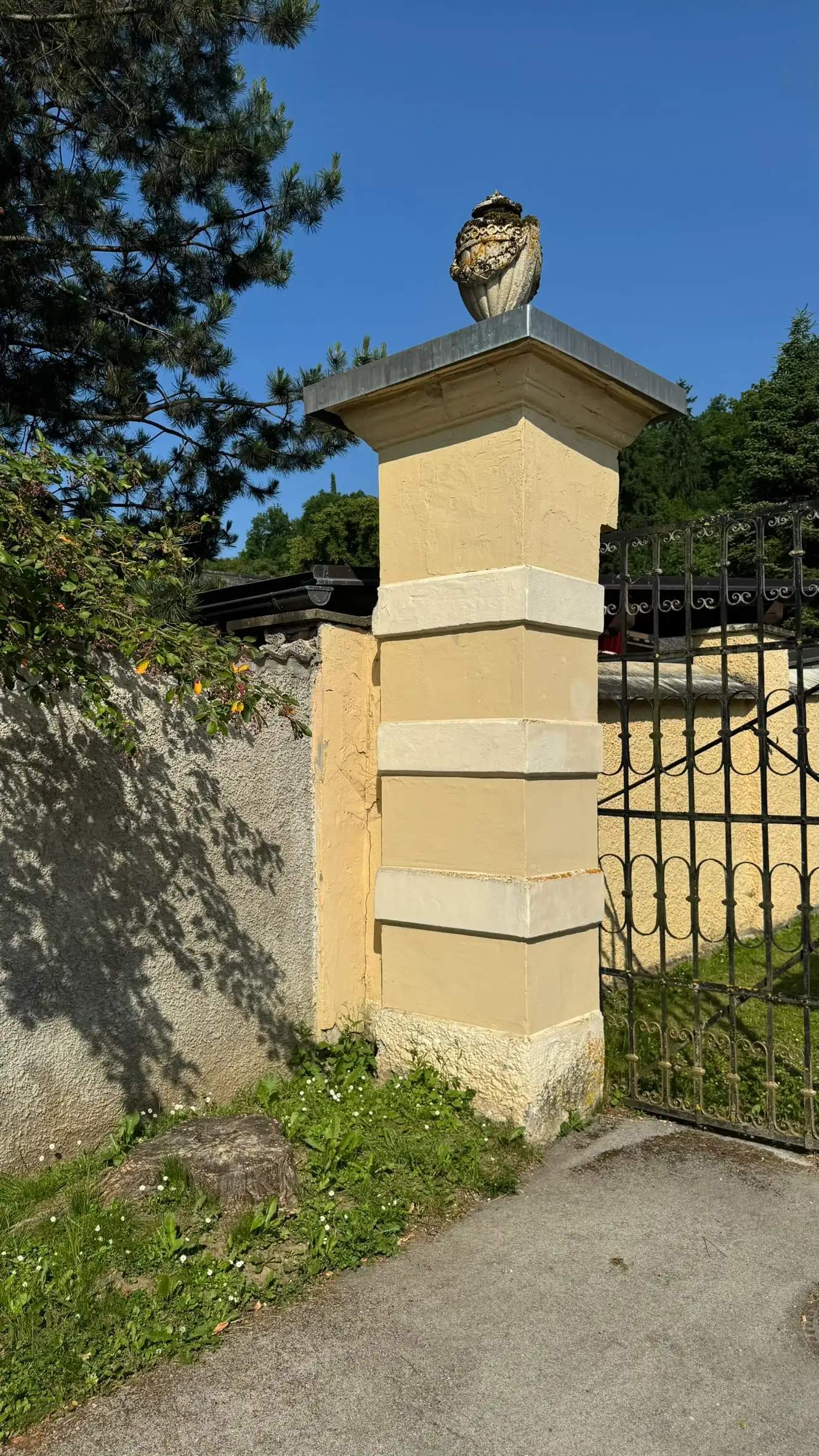
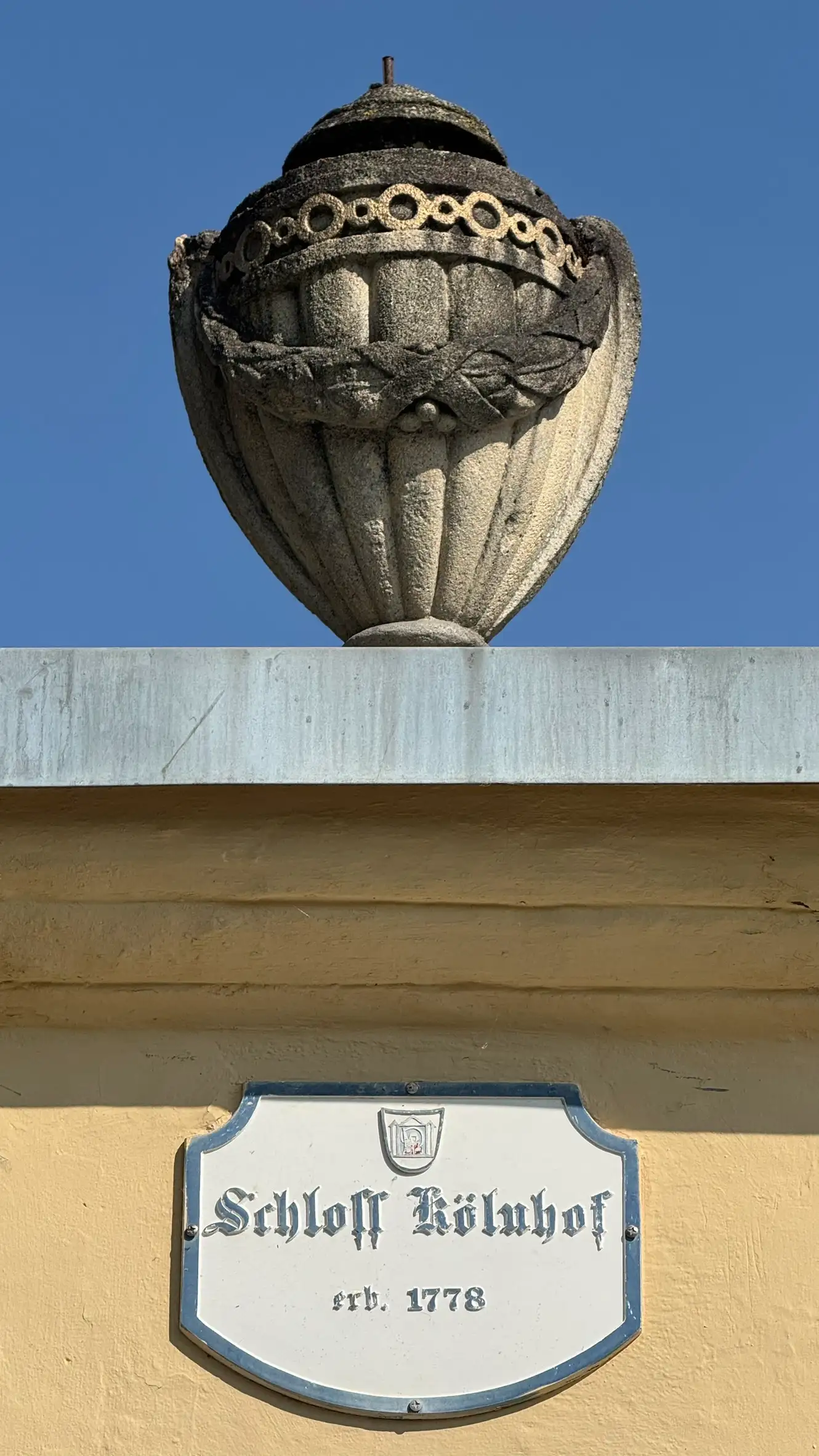
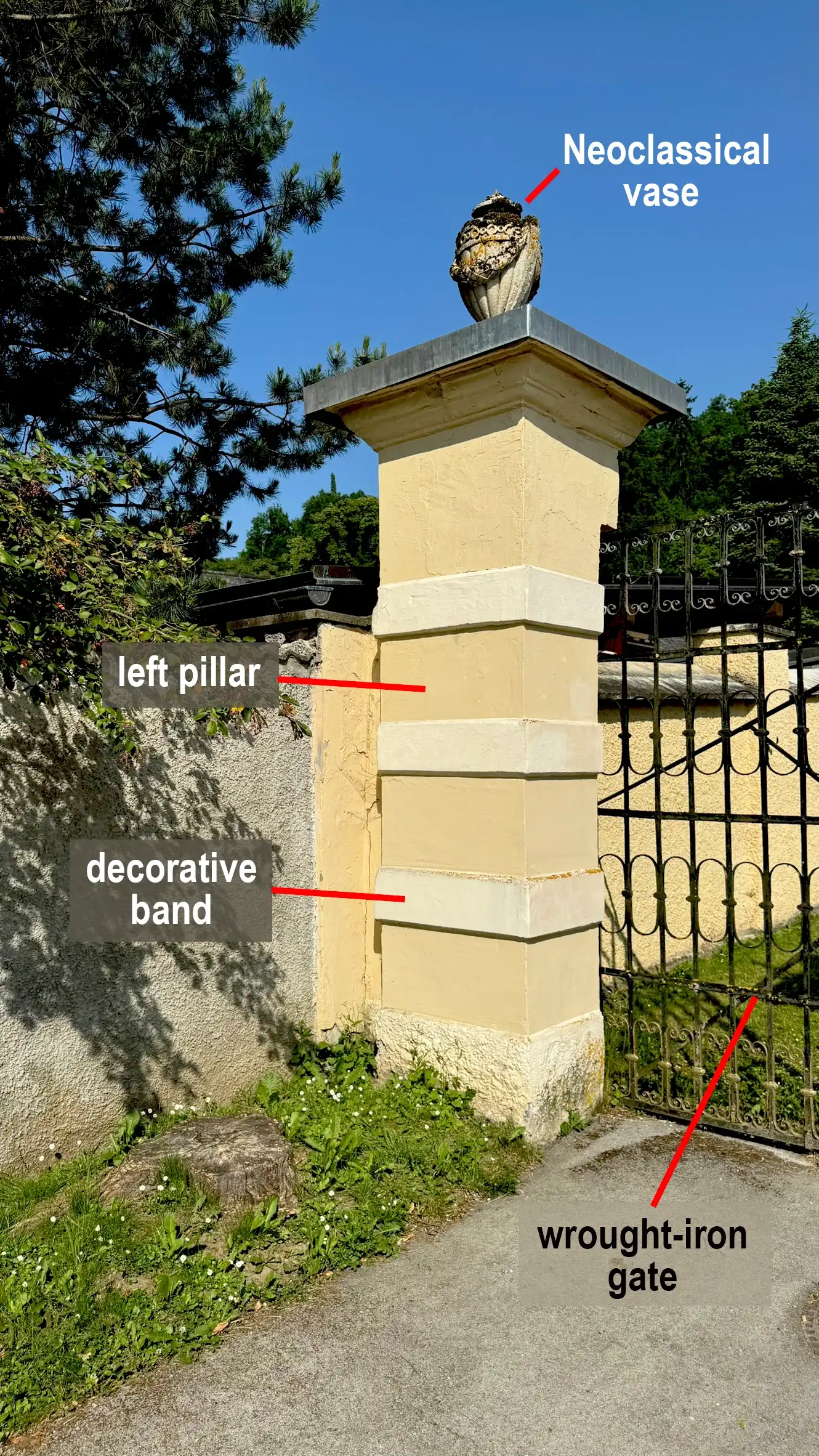
Entrance to the Estate The entrance to the estate is provided by a wrought-iron gate with neoclassical vases set upon pillars.
Original Elements The original building featured Late-Gothic elements, particularly on the ground floor, where one still finds ribbed vaults dating from the 15th century. On the north side, 16th-century wrought-iron window grilles remain preserved.
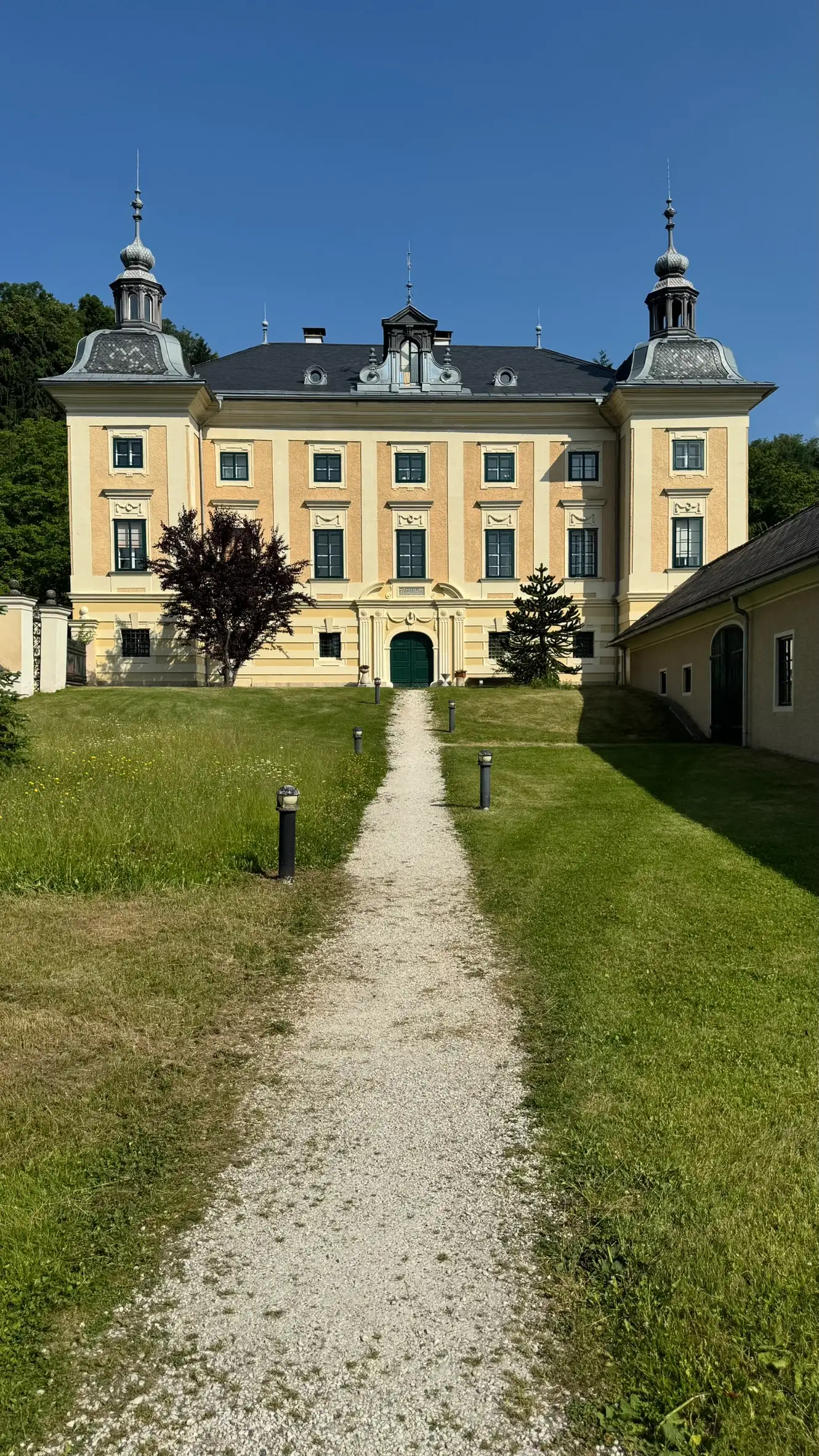
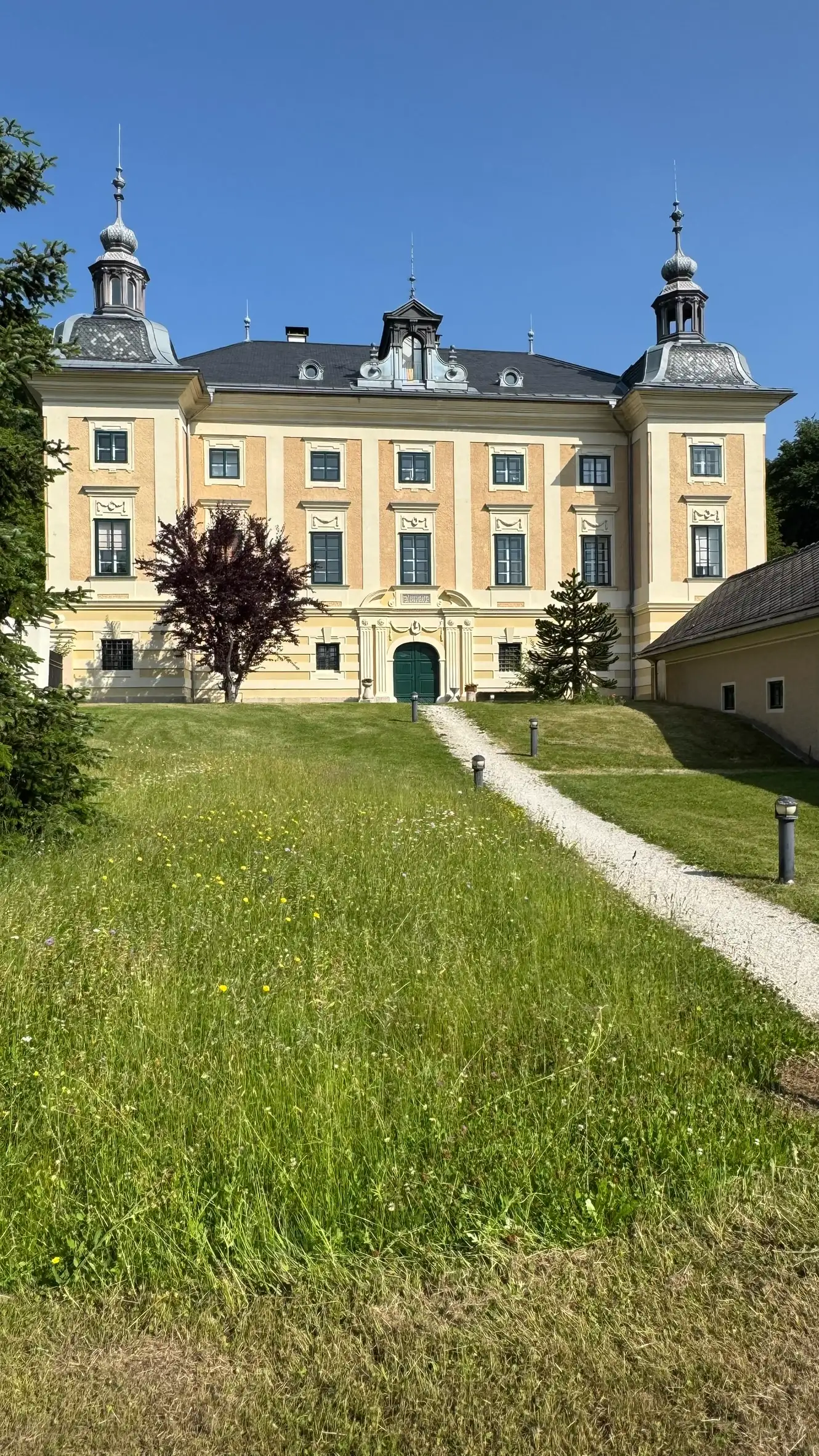
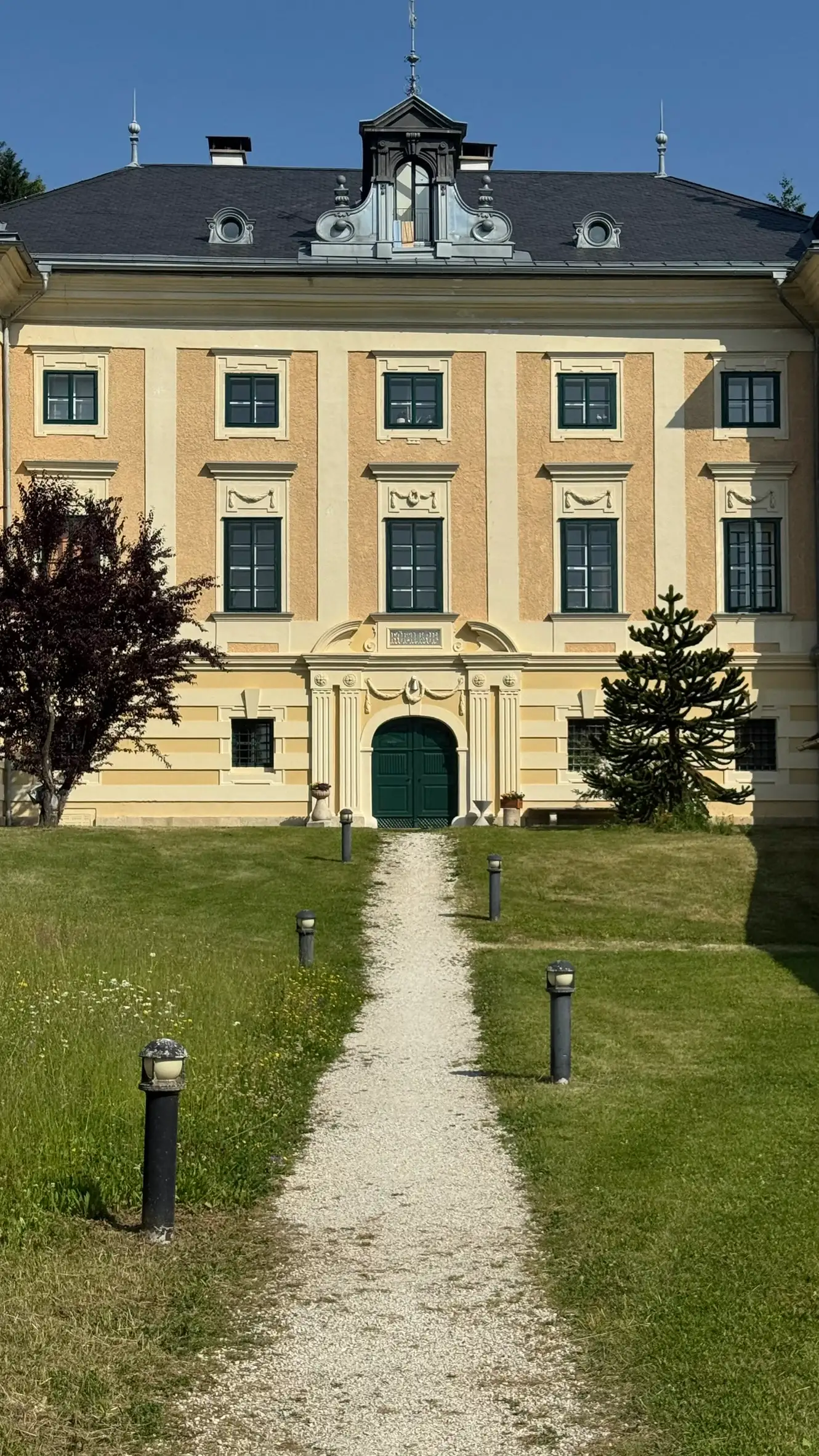
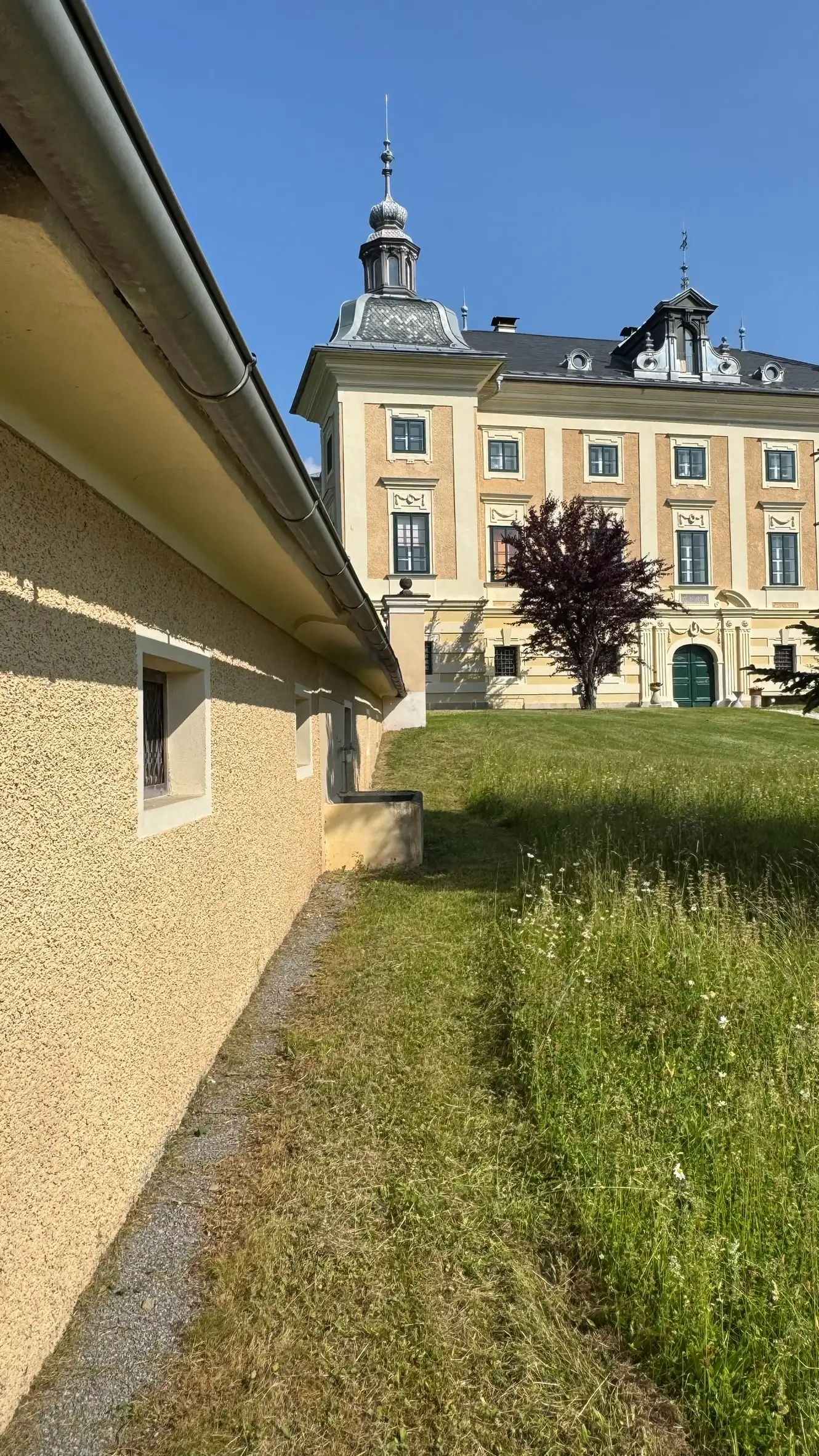
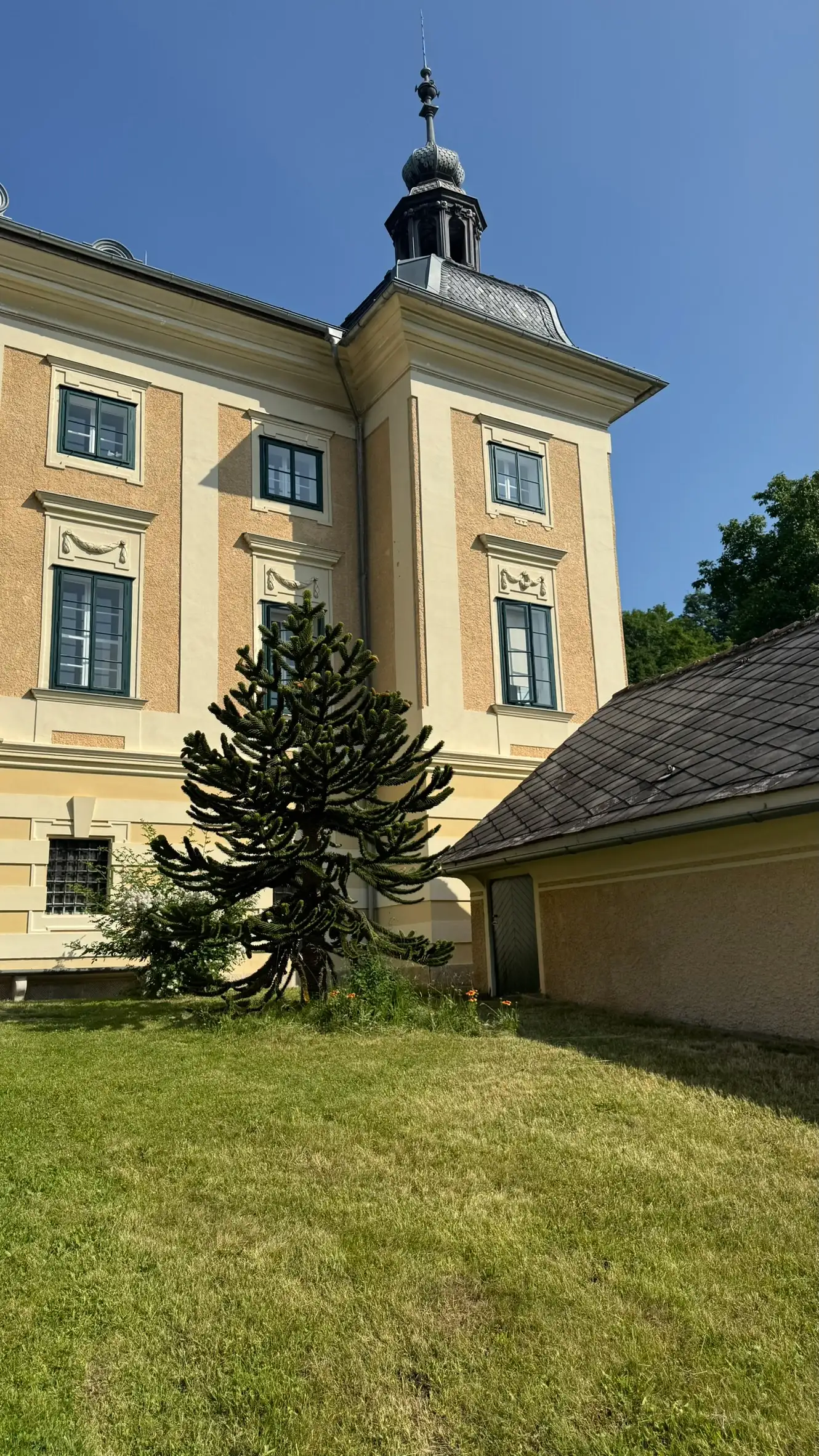
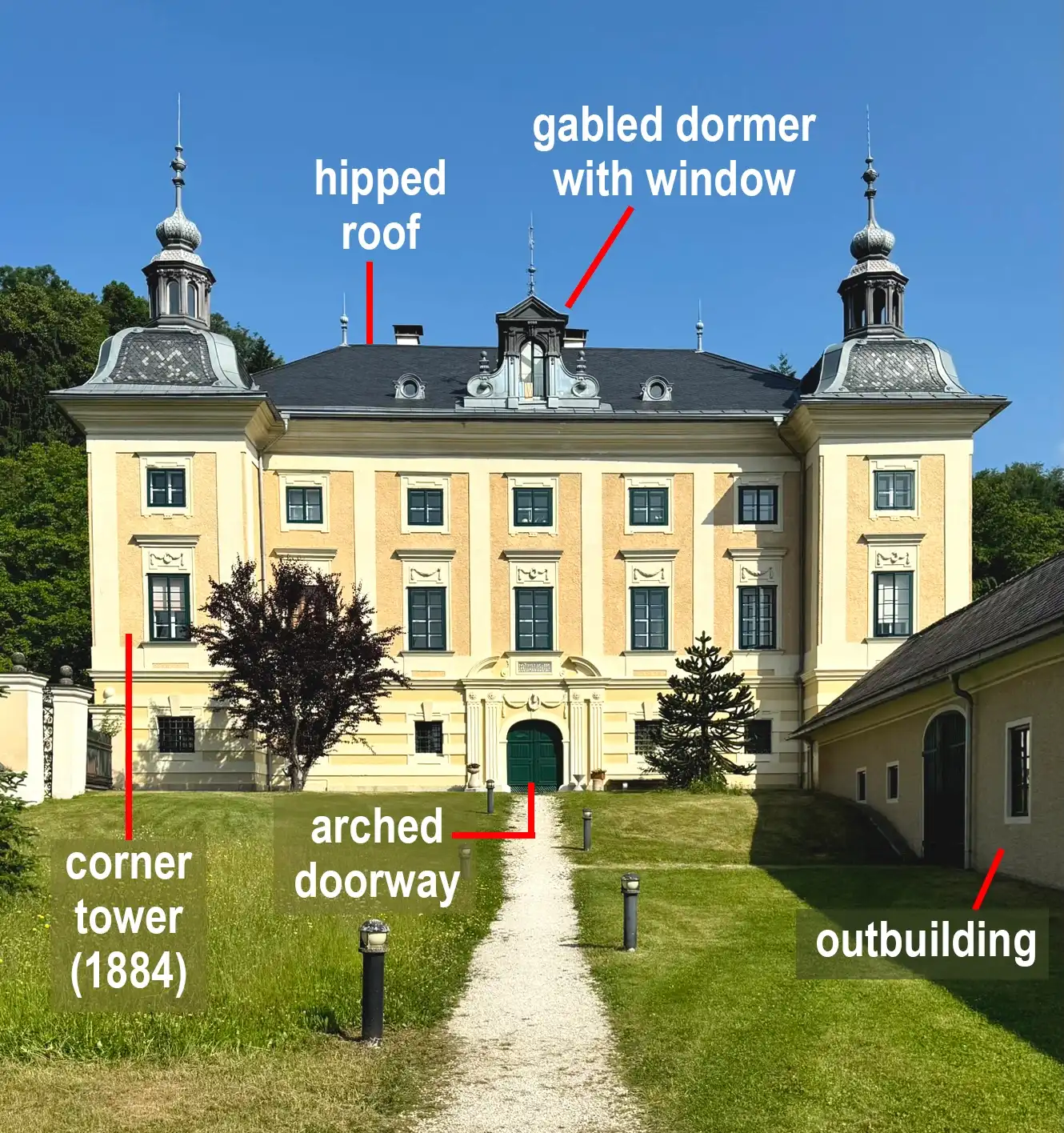
Facade The facade presents an Early Classicist (Early-Neoclassical) design. It features a rusticated ground floor. During the Classicist remodelling around 1780, a third storey was added. The facade was restructured with flatpilaster strips and adorned with braid-style (Zopfstil) ornaments. After the remodelling, the facade now displays a simplified articulation with pilaster strips (Lisenengliederung). This is a typical feature of Early Classicist (Early Neoclassical) architecture. Now the walls are painted in a warmochre yellow, with contrasting white plaster detailing on the quoins, window surrounds and cornices. Pilasters between the windows add vertical emphasis and rhythm.
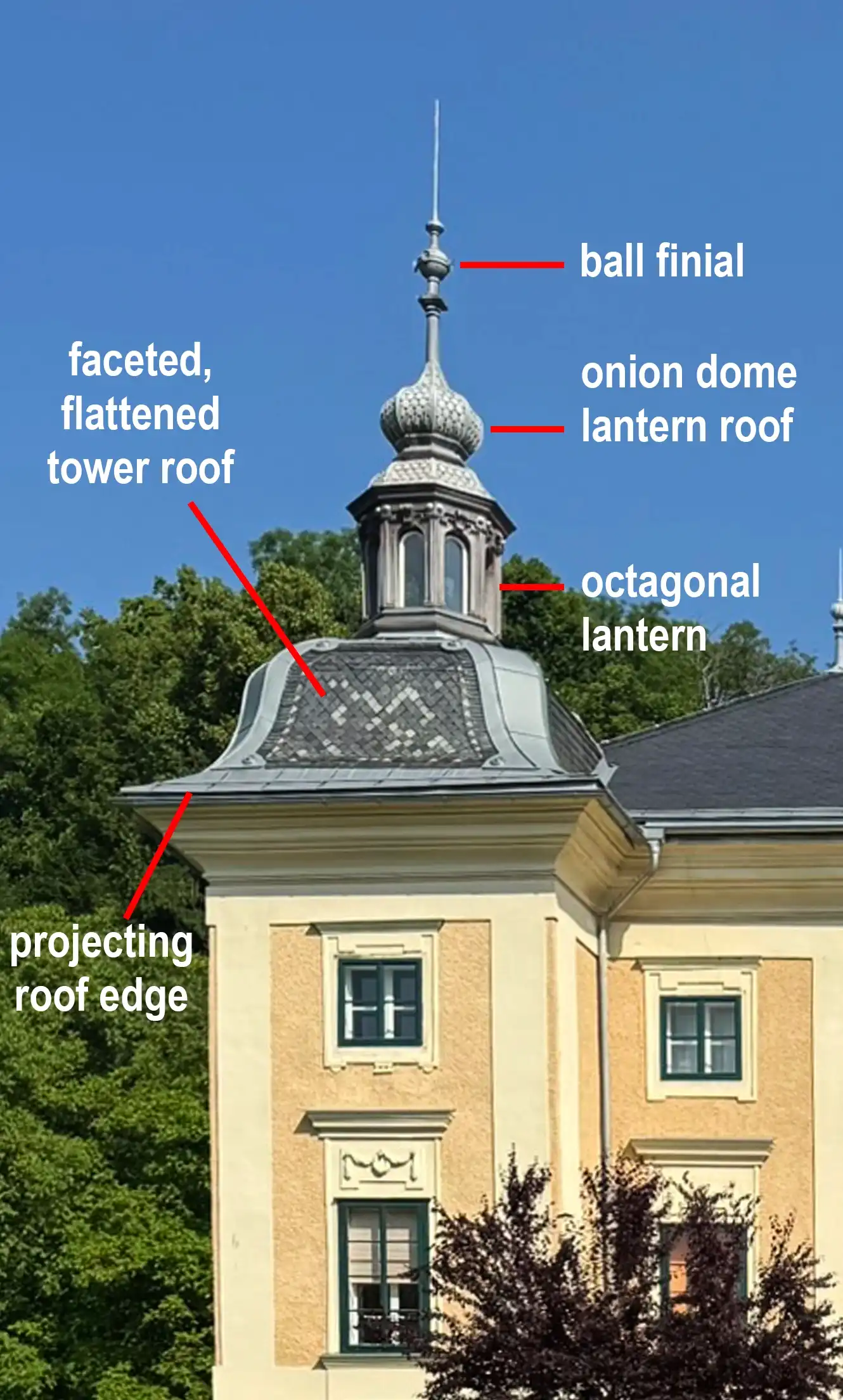
Four Corner Towers Four corner towers, dating to 1884, were added with flat domes and lanterns.
Rosalia Chapel The south-eastern corner tower houses a Rosalia chapel.
Roof Dormers The original gables were replaced with decorative roof dormers.
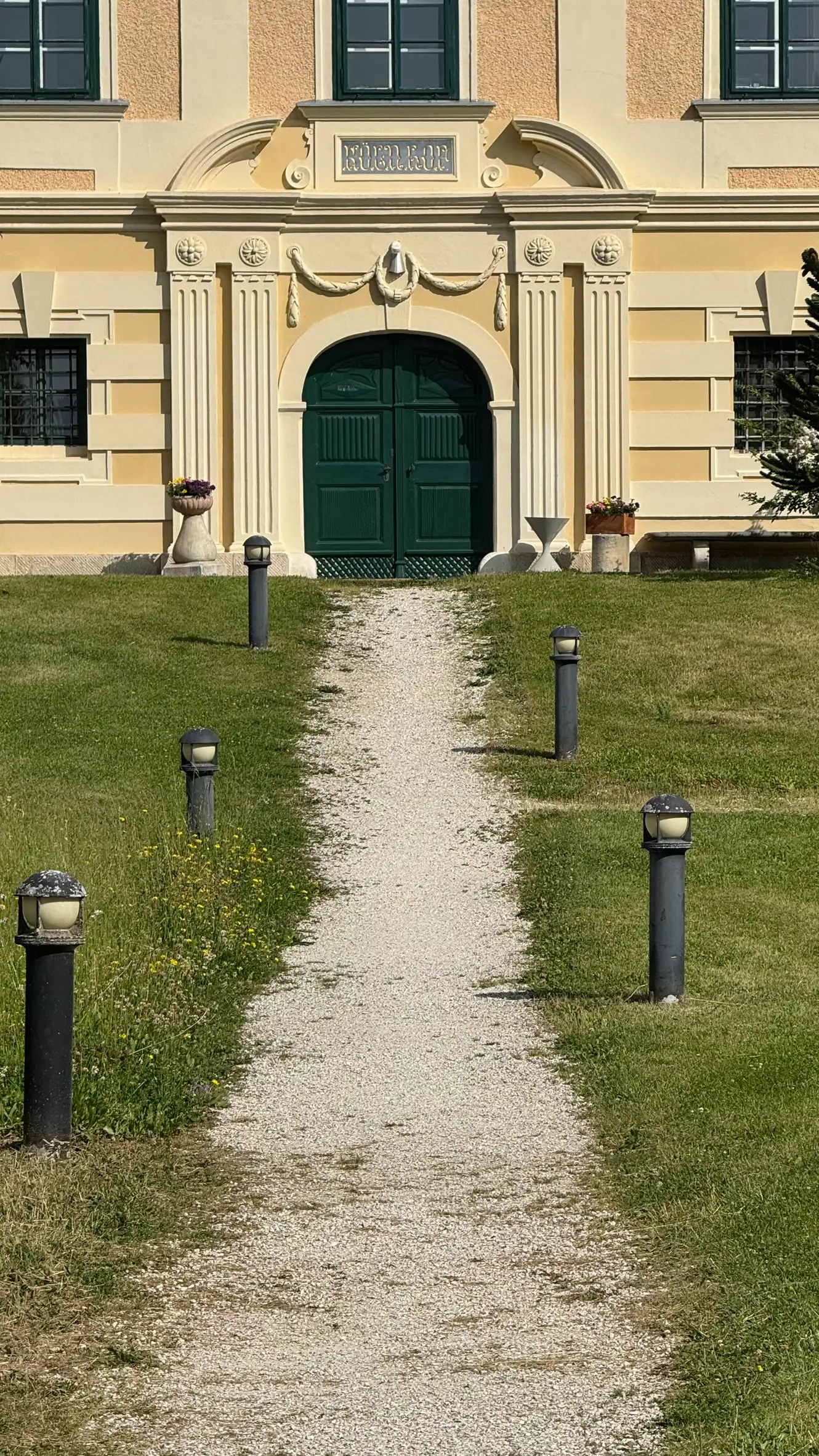
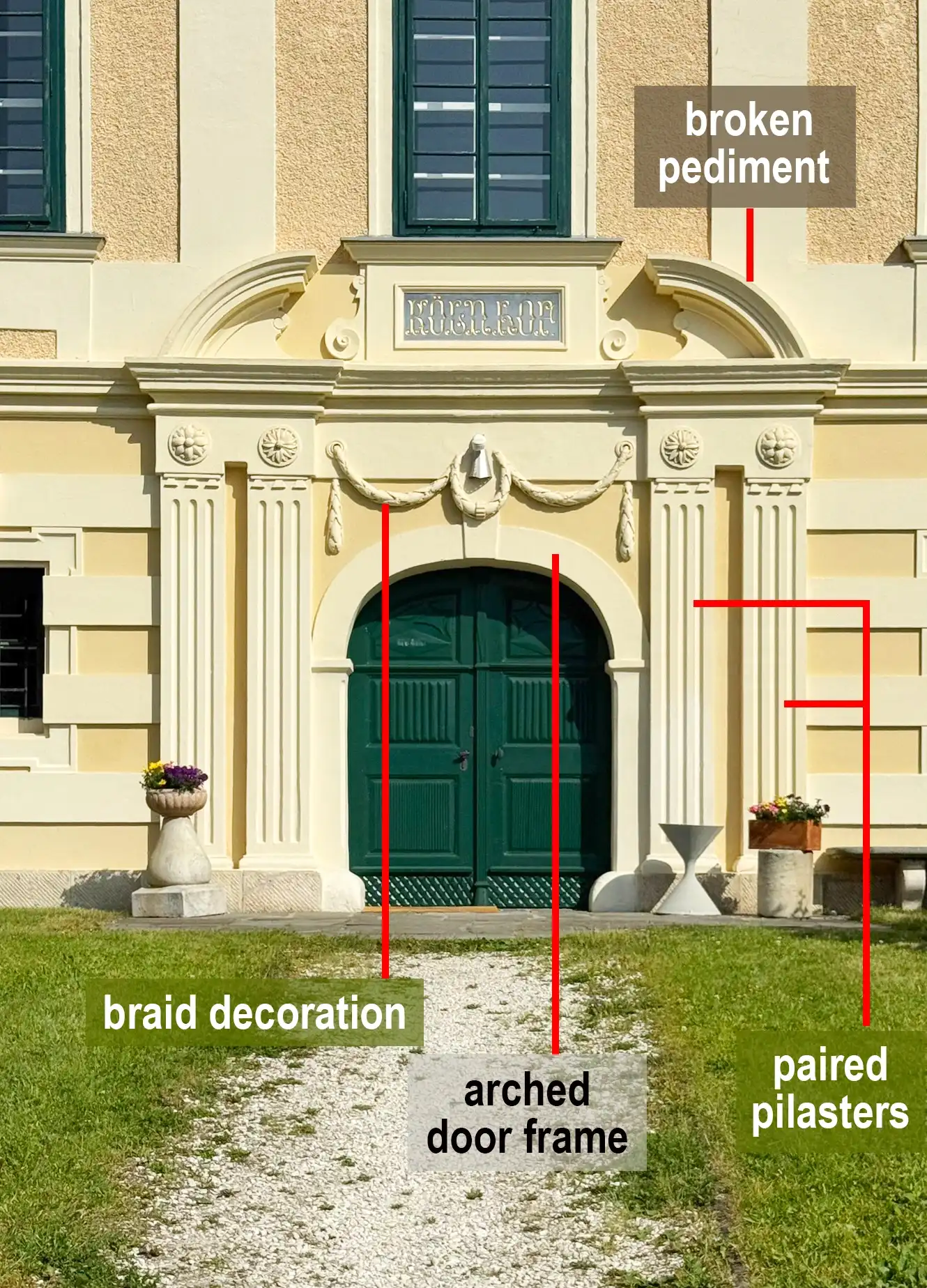
Arched Doorway The arched doorway is flanked by paired pilasters. Sculpted braid decoration and a broken pediment are located above the doorway.
Restoration of the Roof The building’s interior was severely damaged in 1945 during the brief possession by British occupation forces. In 2020, the roof underwent a comprehensive restoration.
Features vs Architectural Styles
Facade → Early Classicist The facade belongs to the Early Classicist style. It is symmetrically composed, with a rusticated ground floor, simple pilaster strips, and restrained braid ornamentation.
Corner towers → Historicist (1884 renovation) The corner towers were remodelled in 1884 in the Historicist style. They project slightly and are topped with flat domes and lanterns.
Entrance portal → Early Classicist The entrance portal reflects the Early Classicist style. It consists of an arched doorway framed by paired pilasters, with braid decoration and a broken pediment above.
Windows → Early Classicist The windows are designed in the Early Classicist style. They are rectangular sash windows framed with simple mouldings.
Roof → Mansard-style (Classicist influence) The roof follows a mansard-style design influenced by Classicism. It is steeply pitched and fitted with dormers, providing attic rooms.
Setting → Baroque tradition adapted to Classicism The setting continues a Baroque tradition adapted to Classicism. The palace is approached by a straight path, flanked by lawns, with outbuildings designed in a harmonious style.
Current Use
Schloss Kölnhof remains in private ownership and is not open to the public. It is currently home to a medical practice, which ensures its careful maintenance.
Although the interior remains closed to visitors, the surroundinggrounds provide a pleasant setting for a walk or photographic excursion.
The castle continues to serve as a visual landmark and cherished heritage site in Carinthia.
The facade presents an Early Classicist design.
The palace is approached by a straight path, flanked by lawns.
The walls are painted in a warm ochre yellow, with contrasting white plaster detailing.
Arched doorway flanked by paired pilasters, with braid decoration and a broken pediment above.
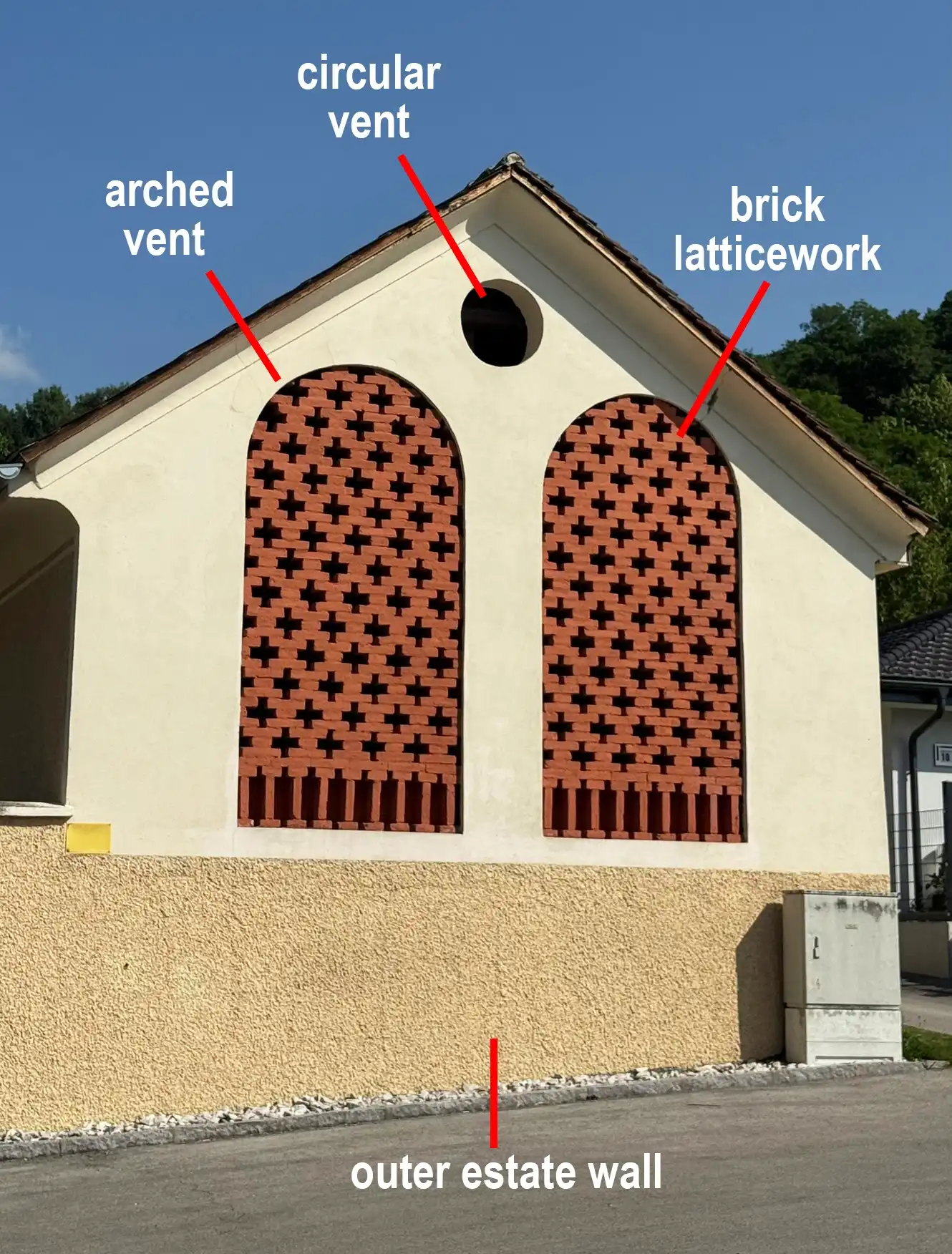
The dependencies (outbuildings) are designed in a harmonious style.
Four corner towers, dating to 1884, were added with flat domes and lanterns.
Wrought-iron entrance gate with neoclassical vases on pillars.
Neoclassical vase on a pillar beside the entrance gate and signage
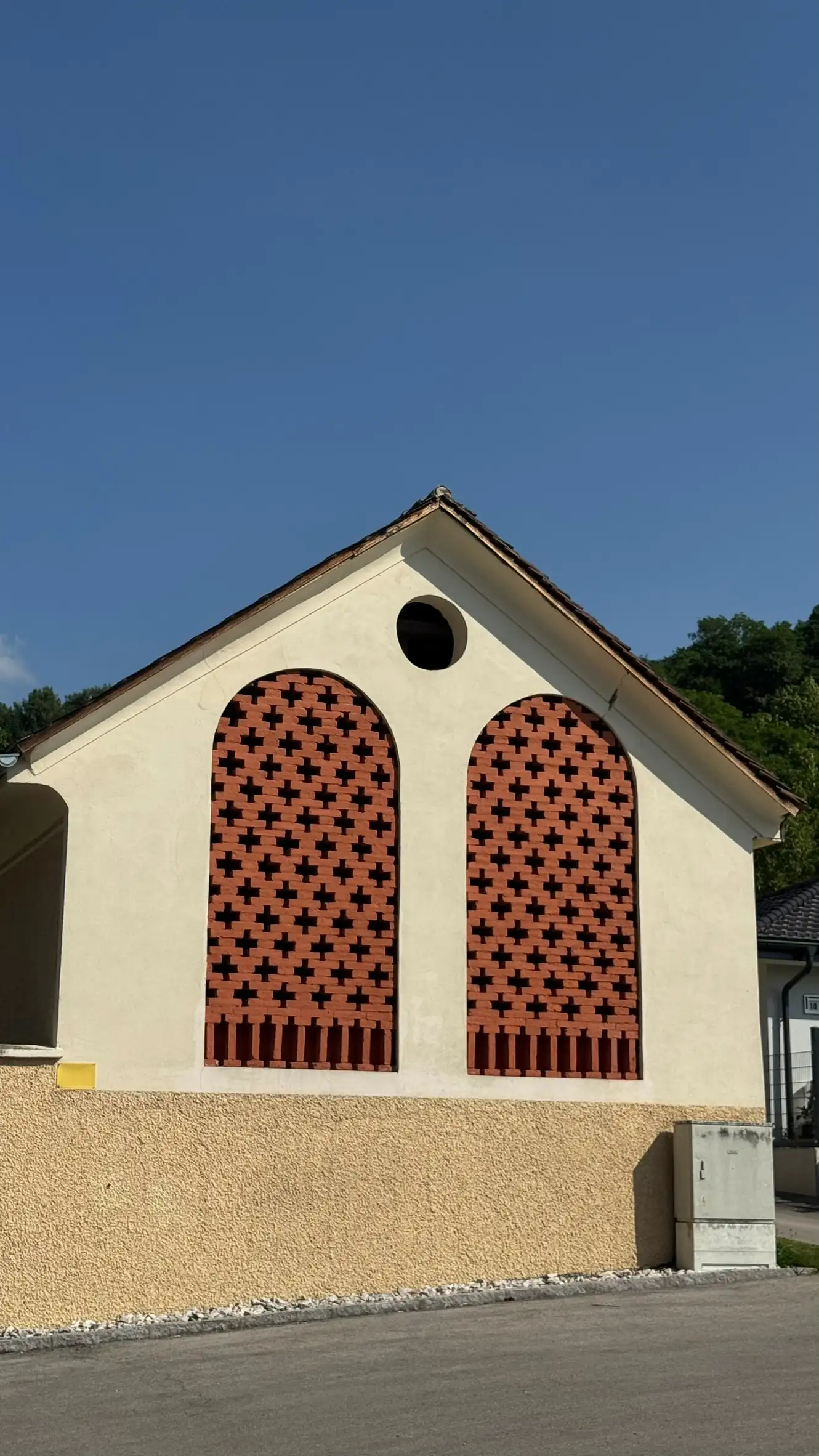
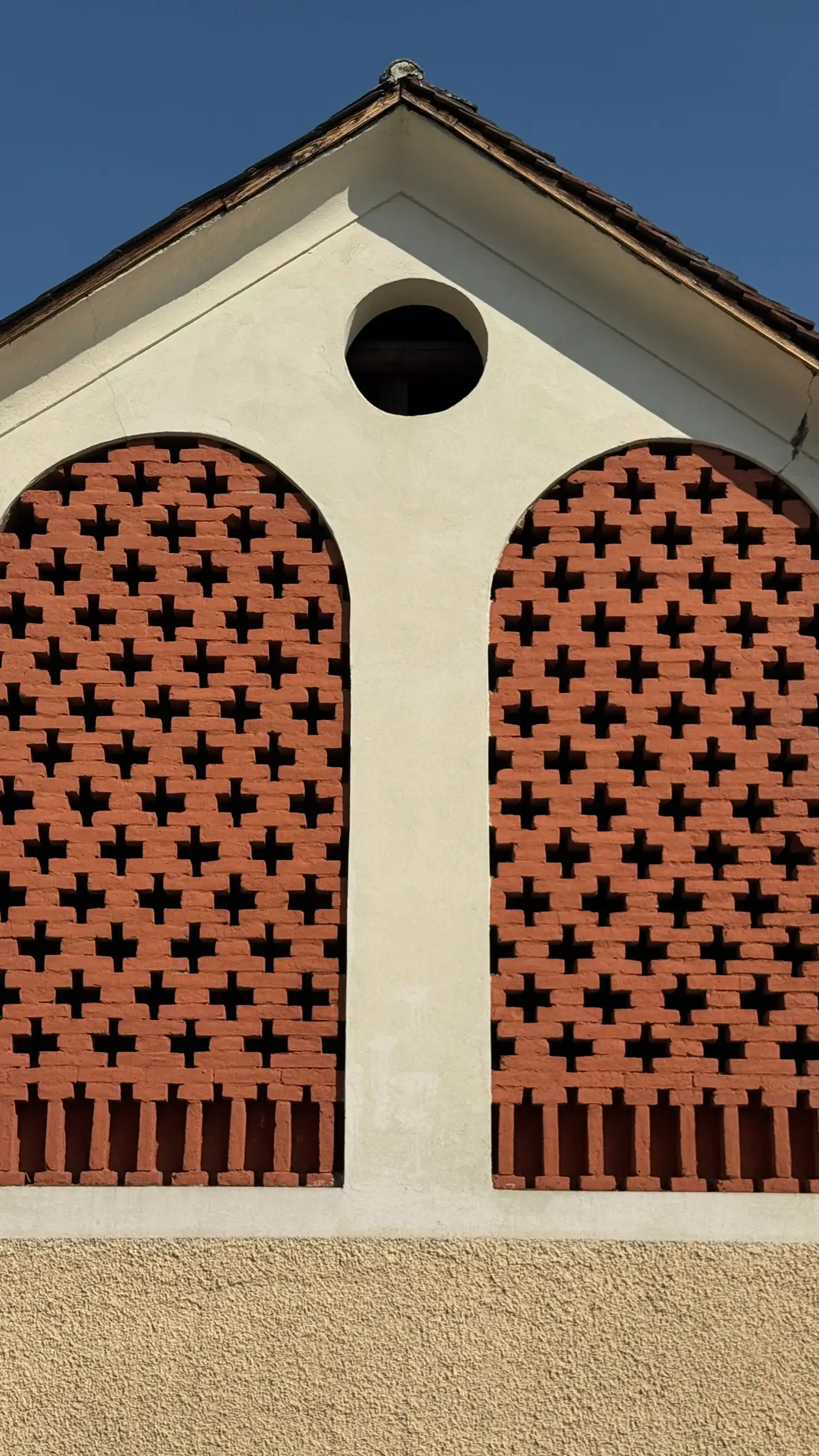
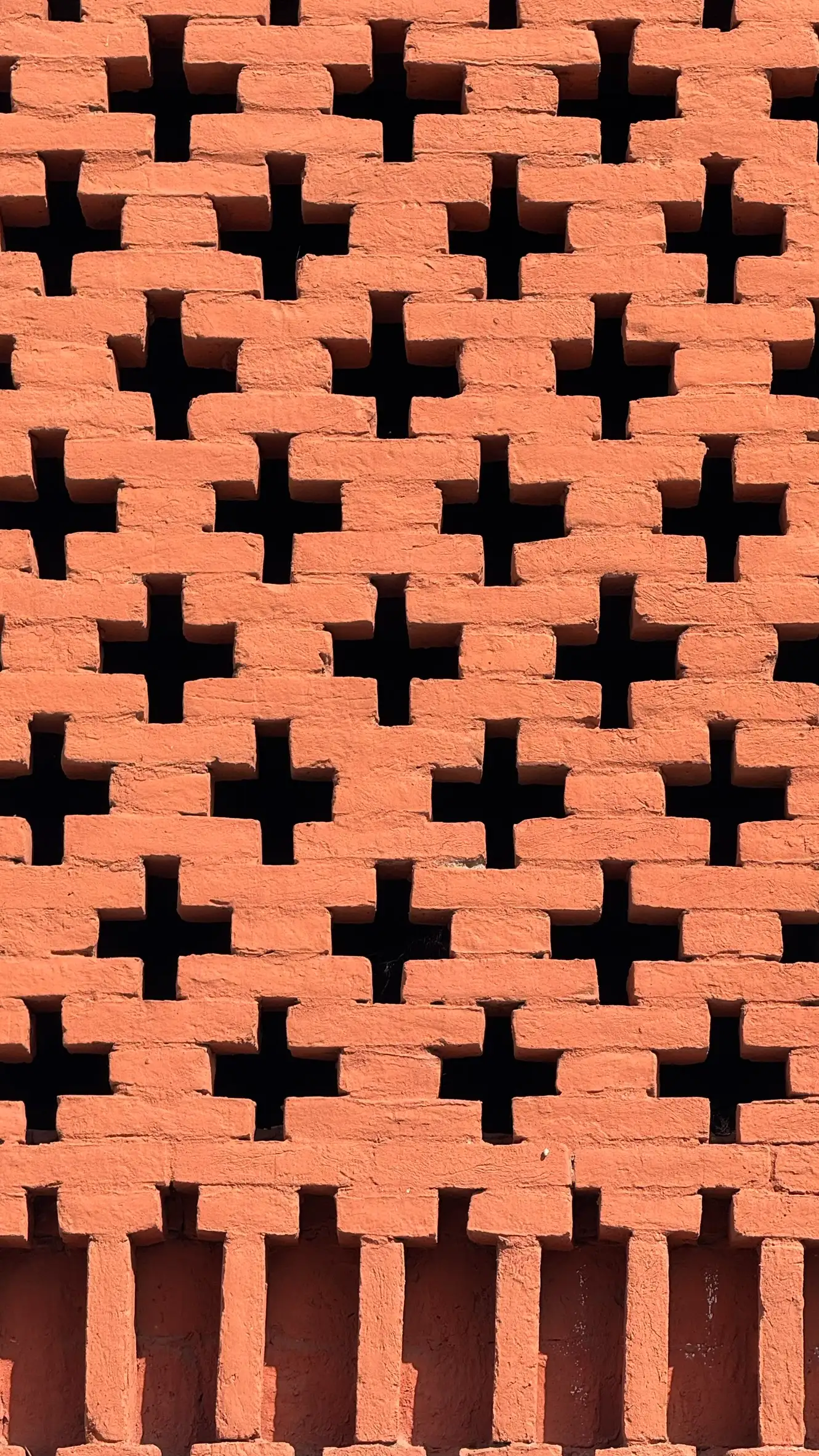
Outbuilding for storage; two tall, arched openings with brick latticework; circular vent
Two arched openings; brick latticework; circular vent