Dr Arthur Lemisch
Residence and Memorial Plaque – Hauptplatz 30
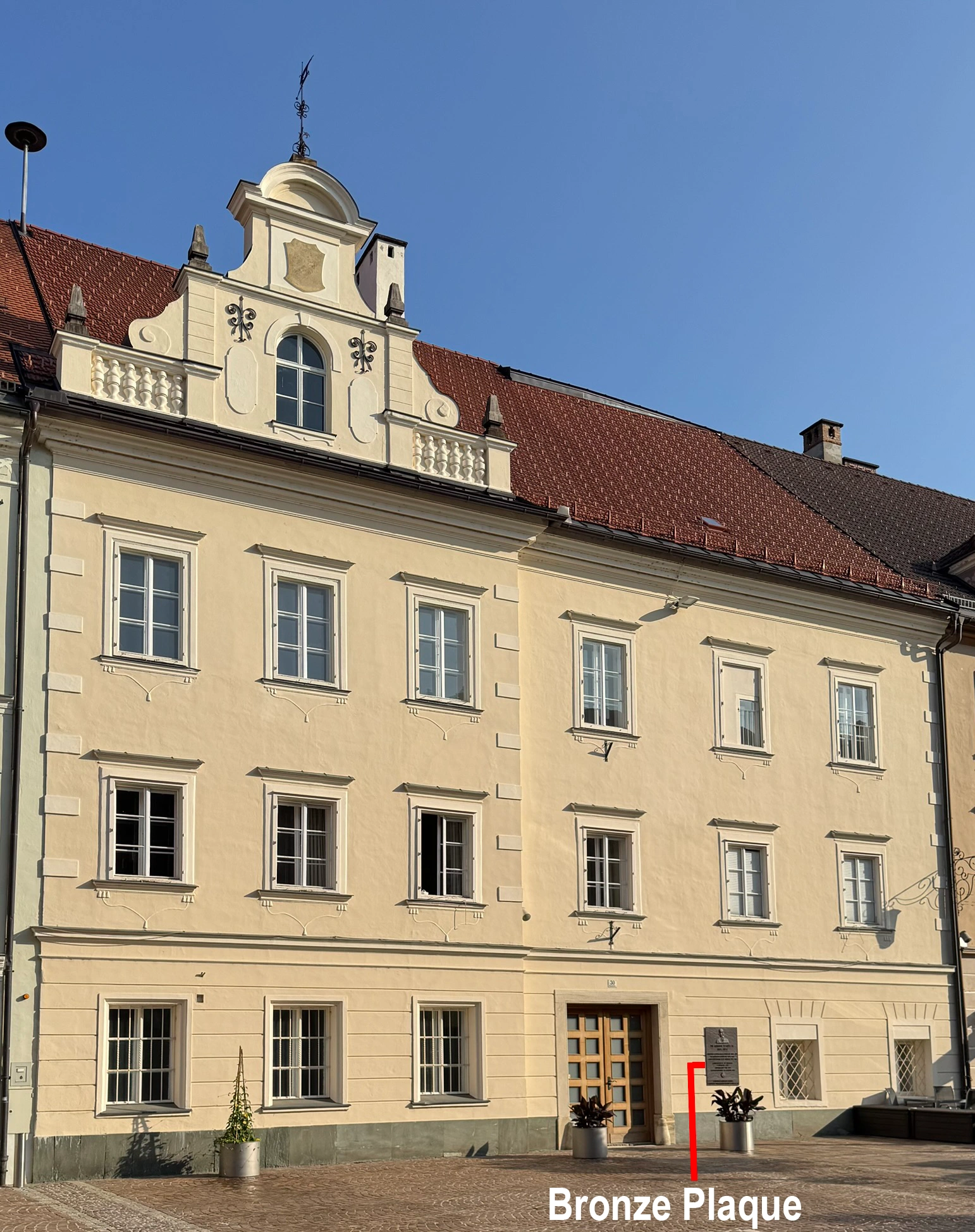
The house at Hauptplatz 30 served as one of Arthur Lemisch’s later residences. This building is just a few steps away from his birthplace (Hauptplatz 24).
Hauptplatz 30 features a refined Neoclassical facade. At this address, the future Governor of Carinthia maintained his town residence, and a commemorative plaque on the building recalls his service to the region.
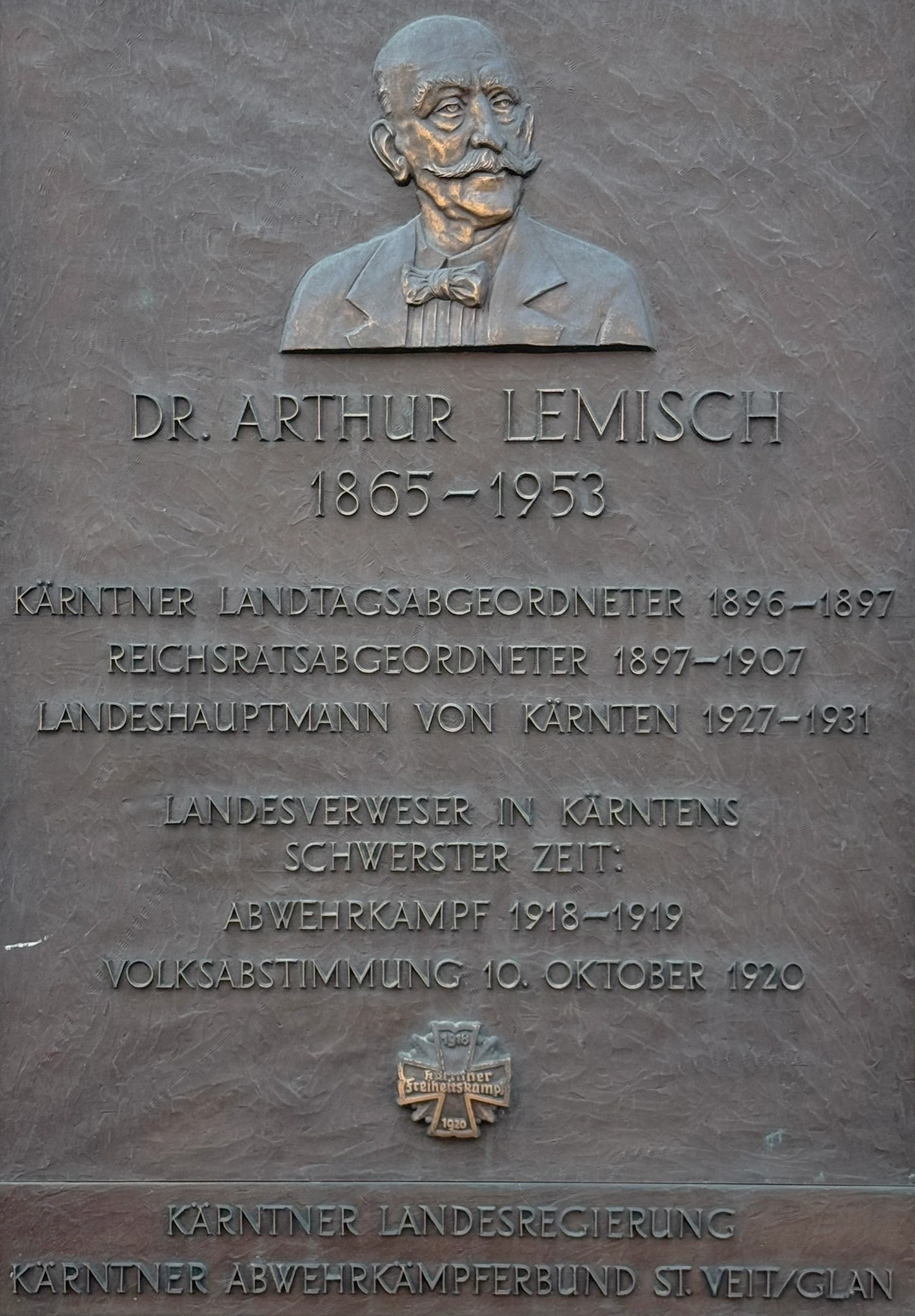
Explanatory Note on the Commemorative Plaque
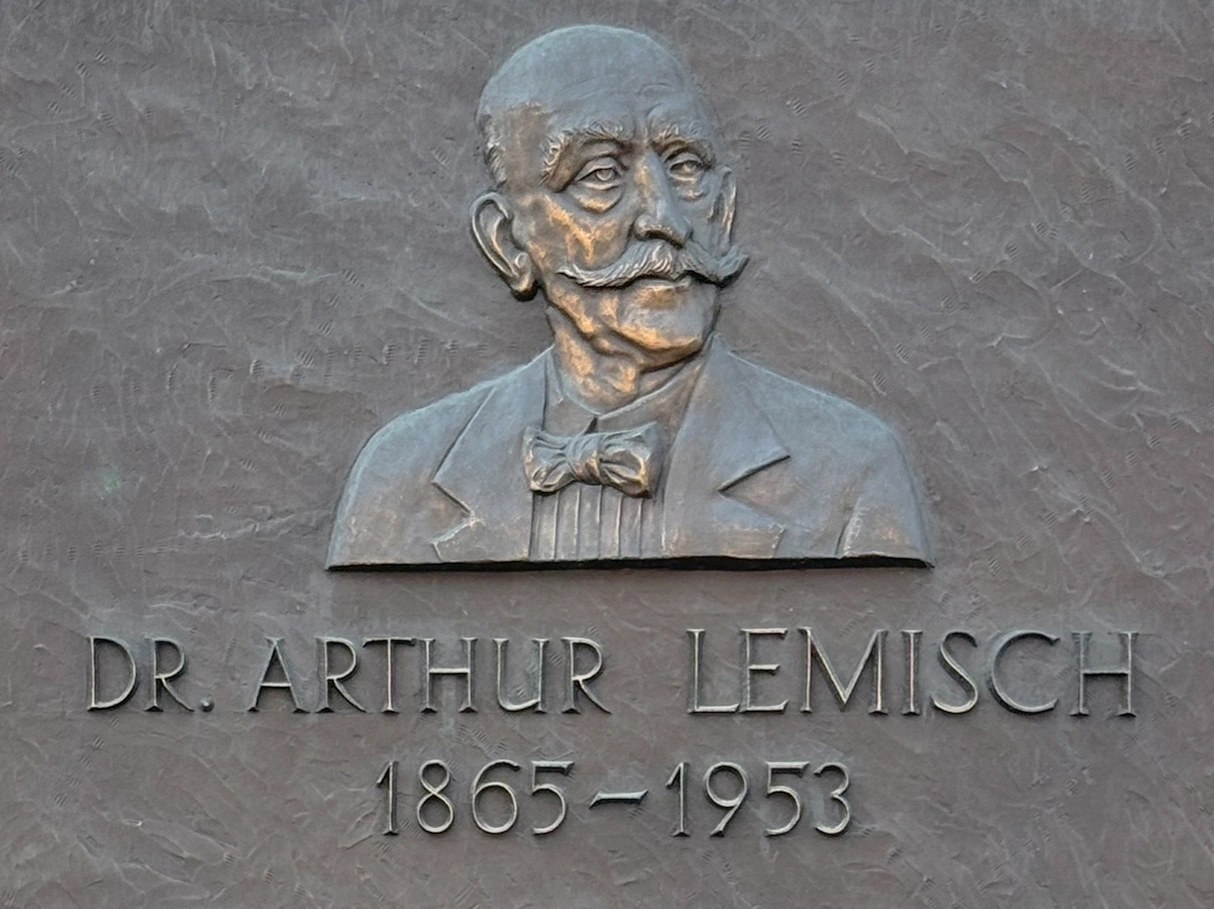
Dr Arthur Lemisch (1865–1953) was a prominent political figure in the history of Carinthia. He first served as a member of the Carinthian Provincial Assembly from 1896 to 1897, and subsequently represented the region in the Imperial Council (Reichsrat) in Vienna from 1897 to 1907.
From 1927 to 1931, Lemisch held the office of Governor (Landeshauptmann) of Carinthia. However, his most historically significant role came in the immediate aftermath of the First World War, one of the most difficult periods in Carinthia’s history. As Landesverweser (provincial administrator), he played a central role in coordinating the region’s defence during the Carinthian defensive struggle (Abwehrkampf) of 1918–1919, which was aimed at countering territorial claims by the newly formed Kingdom of Serbs, Croats and Slovenes (SHS State).
His leadership culminated in the Carinthian plebiscite of 10 October 1920, in which a majority of the local population voted in favour of remaining part of Austria – a pivotal moment for the territorial unity of the country.
Short Biography
Dr Arthur Lemisch (1865–1953)
Dr Arthur Lemisch was born on 6 February 1865 in St. Veit an der Glan. After attending secondary school in Klagenfurt, he studied law, political science, and agricultural science in Innsbruck, Graz, and Vienna, earning a doctorate in law in 1892.
A leading figure in Carinthian politics from the late 19th century onwards, Lemisch served as a member of the regional assembly and the Imperial Council in Vienna.
From 1918 to 1921, he held the office of Landesverweser, a provisional head of the Carinthian government during a period of national upheaval.
He played a decisive role in the Carinthian Defensive Struggle and the 1920 plebiscite, during which the population of southern Carinthia voted to remain part of Austria rather than join the newly formed Kingdom of Serbs, Croats and Slovenes.
From 1927 to 1931, Lemisch served as Governor of Carinthia.
He died on 29 October 1953 at Kölnhof Manor, his residence on the outskirts of St. Veit.